
September 5, 2024 · Updated August 26, 2026
By Alexander Grabovetskiy — Master Woodcarver · Founder, School of Wood Carving · 18 min read
What are the best types of wood for beginners to practice carving?
The best wood for beginners is American basswood, with butternut a close second. I hand basswood to every student who walks into my shop, because at 410 lbf it gives way under hand pressure and still holds detail. Limewood and linden are the same tree. Pine I leave alone.
The short version
The whole answer in five lines, for anyone reading this from a lumber yard.
- The board I put in a first timer's hands is American basswood, and butternut runs a close second.
- Lime and linden grow on Tilia too. Europe's version tests firmer than ours.
- Pine is softer on the chart and meaner at the bench, because its stripes argue with whatever shape you cut.
- Oak and maple want a mallet. Leave them alone until your edge holds an hour.
- My teacher never allowed me to blame a board. Blunt steel and wrong grain direction do most of the damage a beginner sees.
You sit down with a knife and a block, and forty minutes later the surface is furry, your edge is gone, and you are certain the board cheated you.
I said that out loud once. I was the sole apprentice to a fine art master in Russia, sixteen when I started with him, and I stood in his shop and complained that my wood was no good. He did not take my side. What he told me that afternoon runs underneath everything else on this page, so I want to get to it before I give you a single number.
After that you get the two woods I actually put in a beginner's hands, the published hardness figures behind them, my honest reason for keeping pine off my bench, and the way I look a board over at the yard before I pay.
- Side hardness for American basswood reads 410 lbf, and hand pressure alone will carry a full relief panel in it.
- Butternut reads 490 lbf, so it carves nearly as easily, but its grain is loud and it swallows fine work.
- Limewood, linden and basswood are trees of one genus, Tilia, sold under whichever name your country uses.
- Pine is soft on paper and frustrating in the hand, because every stripe of grain pulls your eye off the shape.
- White oak sits at 1,350 lbf and hard maple at 1,450, which is mallet country and no place to learn.
Is the wood really what went wrong?
A poor board slows you down, and it is still almost never the reason a beginner's carving falls apart. I know how unpopular that is. The apprentice version of me said the opposite, loudly.
It went like this. The wood was smushing under my tool instead of slicing, the surface was tearing, and I brought the piece over to my teacher and told him my wood was not good. He looked at it. Then he said to me, "There is nothing to do with the wood."

He said it more than once over the years I studied with him, and eventually he put it in the flat form I still repeat to students: there is no such a thing as not good wood.
What he meant was practical, not poetic. When the surface mushes, the edge is dull. When the surface tears, you are carving the wrong direction for that grain. A crumbled detail means you pressed too hard or came at it from the low side. Every one of those is yours to fix, and blaming the plank puts the fix somewhere you cannot reach.
So the honest version of the question you typed is two questions. Which board makes learning easiest, and which board is quietly teaching you nothing? I will answer the first one straight, and I will keep telling you the truth about the second, because the mistakes beginners actually make are mostly not about species at all.

Which board should a beginner buy first?
American basswood, and I have never given anybody a different first answer. Nicole asked me this on a livestream in April 2020, in almost your words, and what I told her was that the best is of course basswood, especially if you want to start carving.
Two things make it work. It is soft enough that your hand alone does the job, and it carries detail anyway. Basswood can hold the detail with no problem, as long as you do not press it too much and do not make unnecessary passes. That second half matters more than the first, and beginners skip it.
A third reason I like it never makes it onto any chart. It barely has any grain. Working with basswood, I am not fighting stripes for attention, and on a grainy board you start losing the overall picture of what you are carving.
This is the table I would show you at the lumberyard.
| Wood and species | Janka side hardness in pounds of force | Grain look | What a beginner should expect first |
|---|---|---|---|
| Basswood, Tilia americana | 410 lbf, softest board on this list | Barely visible | Hand pressure carries a whole panel |
| Butternut, Juglans cinerea | 490 lbf, a shade firmer than basswood | Loud stripes | Soft to carve, grain fights detail |
| Lime, Tilia europaea | 700 lbf, well above the American basswood | Very quiet | More spring, still no mallet |
| Walnut, Juglans nigra | 1,010 lbf, where the mallet starts appearing | Warm figure | Holds detail well, dulls edges |
| Oak, Quercus alba | 1,350 lbf on the standard American scale | Open pores | Mallet work, and it splinters |
| Maple, Acer saccharum | 1,450 lbf, over three times the basswood | Tight figure | Short bevels, stropping between passes |
| Pine, Pinus strobus | 380 lbf, softer on paper than basswood | Heavy stripes | Crumbles, and grain steals attention |
Every figure above comes from the same source, in this order: basswood at 410 lbf, butternut at 490, European lime at 700, black walnut at 1,010, white oak at 1,350, hard maple at 1,450 and eastern white pine at 380. If the test itself is new to you, we wrote up what Janka hardness of wood means for hand carvers, and the Wood Database explains the ball test in full.
One warning about reading that middle column. The number is a laboratory load, not a promise about how your afternoon will go. Pine sits below basswood on it and is worse to learn on, which tells you the chart is a starting point and your hands are the instrument. Our full wood guide carries a species by species entry, including whether basswood is good for carving.
Are limewood, linden and basswood the same tree?
Close enough that carvers swap the names freely, and far enough apart that the hardness figures do not match. Limewood, linden or tilo are the same tree under different names, and any of them carve the same way.
It does not really matter whether you carve basswood or limewood, when you are in Europe.
The working carver's answer stops there, and I stand behind it at the bench. The botanist has a footnote to add. All of these trees belong to the genus Tilia, and the species inside it are not identical. Over in the States, American basswood reads 410 lbf. European lime comes in at 700. Same genus, and one of them is meaningfully firmer under your thumb.
Neither figure should scare you. Both sit far below the mallet line, both take a knife cleanly, and a student who learns on one will pick up the other in an afternoon. Readers buying in Ireland or Britain should start with our sibling piece on the best woods in Ireland for beginners walks through what the local mills actually stock.
This wood has history behind it, and I find that steadies people. Look at the work of Tilman Riemenschneider in Germany. He used lime wood, the same wood exactly that we use today, and all of his work carries a brownish color. Wikipedia lists him plainly for his limewood altarpieces, and he died in 1531.
The other name I bring up constantly is Grinling Gibbons. He carved limewood, and I believe the first person who brought limewood to England was Gibbons, because in Europe, in Germany and other countries, limewood was already the main timber for carving.
So the board a beginner is handed at the yard is the same material holding up altarpieces carved before 1531. That is not a sales line. It is the reason I refuse to call basswood a practice wood.
What is butternut good for?
Butternut carves nearly as easily as basswood and then shows you its grain whether you wanted it or not. Somebody named Paul asked me about it during an April 2020 livestream, and my answer has not moved since.
Start with the good part. Butternut is beautiful wood. If your piece is not built on large sweeping movements with a lot of detail, butternut is a really great wood, and at 490 lbf it is barely firmer than the basswood beside it. It also has a warmth to it that pale basswood never gets.
Now the part people skip. The only thing I do not like about butternut is the grain. Working on really big movements, when you just see too many stripes, that is not going to be too nice, and butternut does have a pronounced grain.

So it comes down to the piece in front of you. On a simple shape, a spoon or a plain sign, butternut is lovely and the stripes read as character. Put an acanthus leaf with overlapping planes on it and those same stripes cross your shadows, so the eye cannot find the form.
Getting hold of it is its own question. If you are in Pennsylvania, Ohio or Indiana, you are still able to get butternut. Elsewhere it takes a phone call. A fungus called butternut canker kills the trees. Juglans cinerea is a walnut, by the way, which is why some yards file it under white walnut.
Should a beginner carve pine?
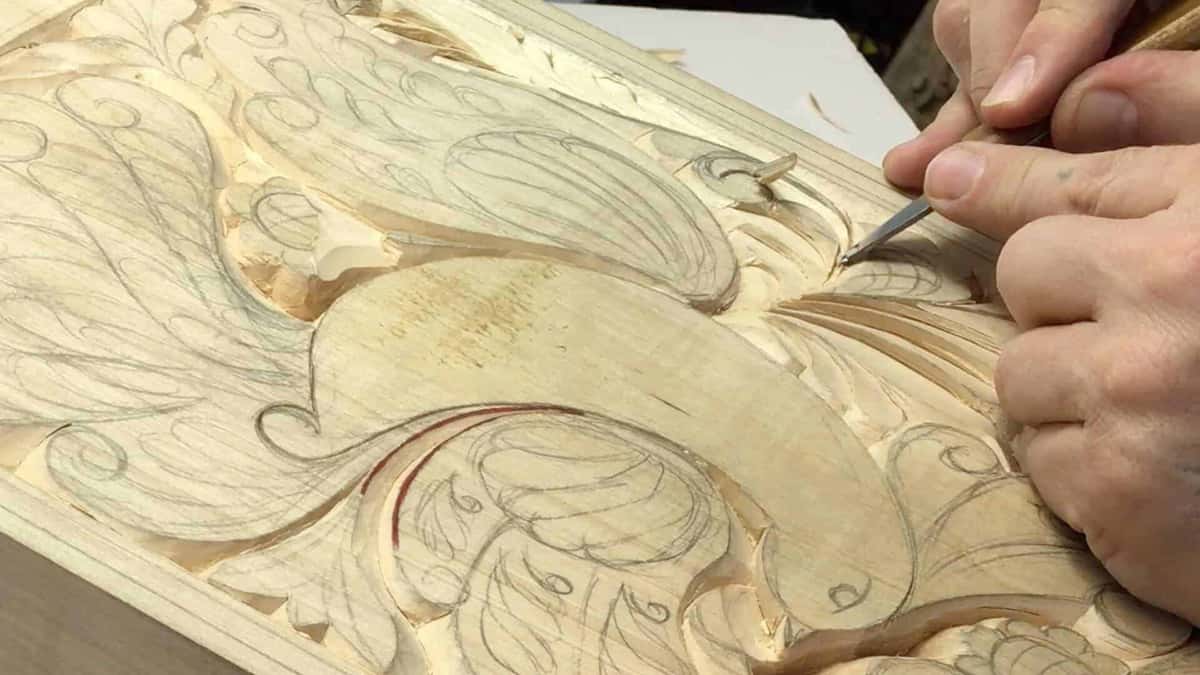
Pine will carve, and I keep it off my bench anyway. Here is my reason, in the words I used on a livestream while carving a piece of it: if I am carving on pine, although I do not like to carve on a pine, because all of the grain is really visible, and it distracts.
Read the chart again and the advice looks wrong. White pine, Pinus strobus, comes in at 380 lbf, which is softer than basswood by the number. Softer should mean easier.
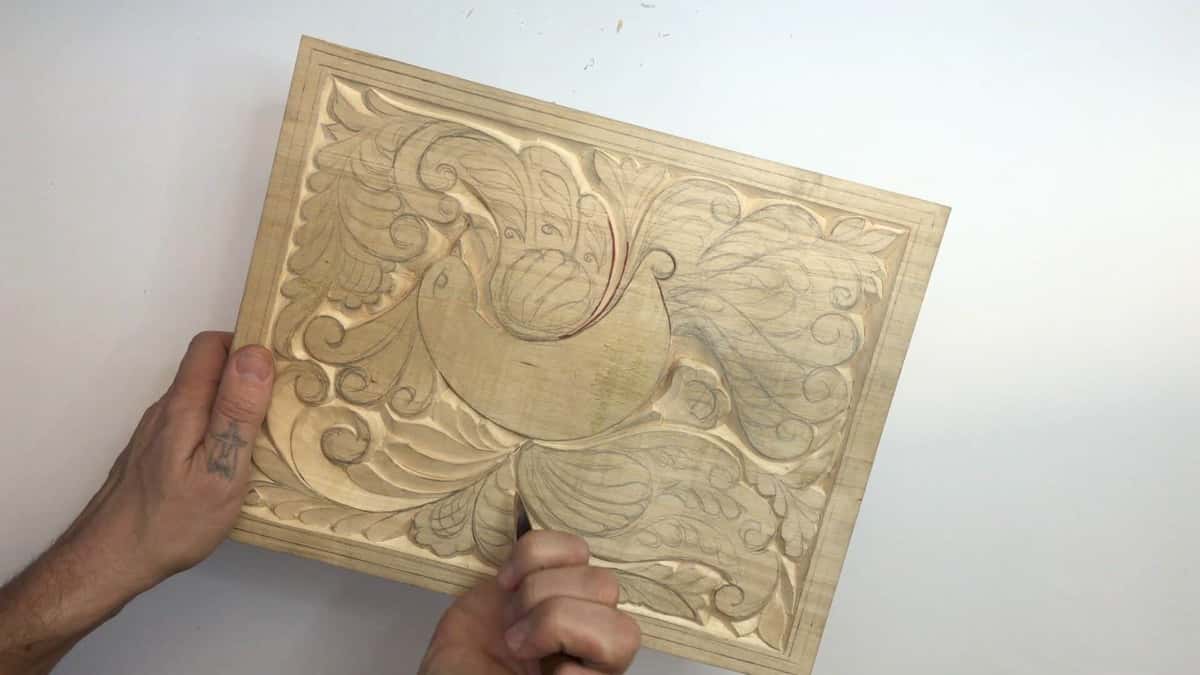
It does not, and the reason is that pine is soft in two different densities at once. The pale bands give way like cheese and the darker bands resist, so a single pass rides up and down instead of running level. Then the eye problem lands on top. Every stripe on that surface competes with the shape you are trying to build, and I lose the piece inside the pattern.
One more thing about construction pine from the home center, which is where most people meet it. That lumber is not dried for carving, it is dried for framing, and it is full of knots and pitch. Our piece on softwoods for beginners goes further into the ones worth trying.
What happens when a beginner reaches for oak or maple?
Your arm gives out before the carving is half finished, and you conclude that you have no talent. That conclusion is wrong, and it costs the craft more students than dull tools do.
Think about the load you are handing your hand. Basswood is 410. White oak is 1,350, and hard maple is 1,450, over three times the load. Oak is a harder wood, and to carve oak, most likely you have to use a mallet. So now you are learning two skills at once, tool control and mallet control, and neither one is getting your attention.
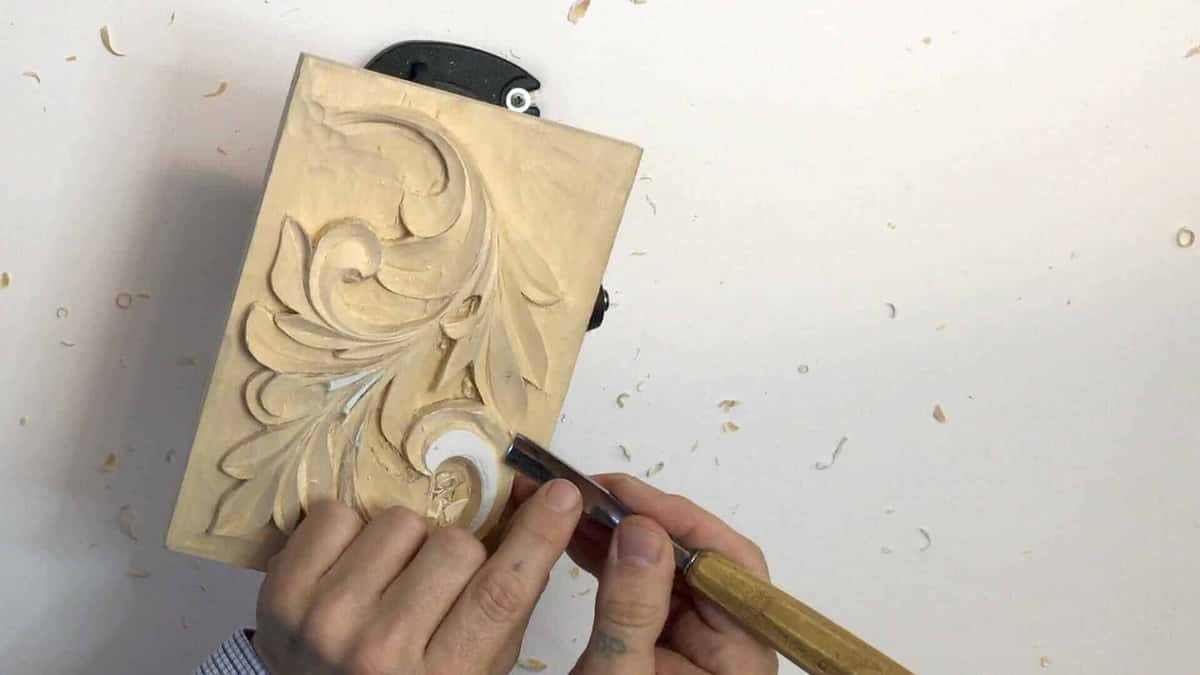
Then there is the surface itself. I never got any splinter from basswood, but from crunchy wood like oak, white oak, if you are going to carve white oak, you will. Those open pores tear out ahead of your edge, and a beginner reads the torn spot as a personal failure.
The bevel changes too. Short bevel, I use harder woods, like oak. A gouge ground for basswood will roll and skate on maple, so the tool you bought for lesson one is the wrong tool for the board you brought home. Our tool sharpening course covers what a bevel is doing and why hard wood wants a different one.
None of that makes oak bad. I love to carve oak, especially English brown oak, and cherry and walnut hold detail really nicely. Come to them in year two with a mallet, a short bevel and a strop you actually use, and they are a pleasure. Start there in week one and you will quit.
How do you read a board before you pay for it?
Look for dark patches, count the knots, and check which way the growth rings run across the end. Nobody at the counter will do this for you, and it does not take long.
Start with color. When you see a dark spot on the lime wood, that means it is already a lot softer wood, and you really have to be careful what tools you are using. The yard is not selling you that piece of information. A pale board with a grey or brownish patch is telling you that one region will collapse under a tool the rest of the board would take fine.

Knots come next. I am always trying to locate my knots, which I do not want to include, and those knots are not as friendly. Turn the board over. A knot that looks like a small freckle on the face can be a hard black plug two inches wide underneath, and it will stop a gouge dead in the middle of a leaf.
Then stand it up and read the end grain. When I buy wood I look for a quarter sawn or a rift cut. On quarter sawn stock the growth rings stand close to vertical across the end, which is the cut that moves the least once it is in your house.
Drying matters as much as sawing. There is natural dryness, air dry, and kiln drying, and what you usually get from a lumberyard is kiln dried. When it is air dried you eliminate that movement. The Wood Database write up on wood and moisture and the general article on wood drying both cover why. If your board is still wet, read how to dry green wood at home before you touch it.
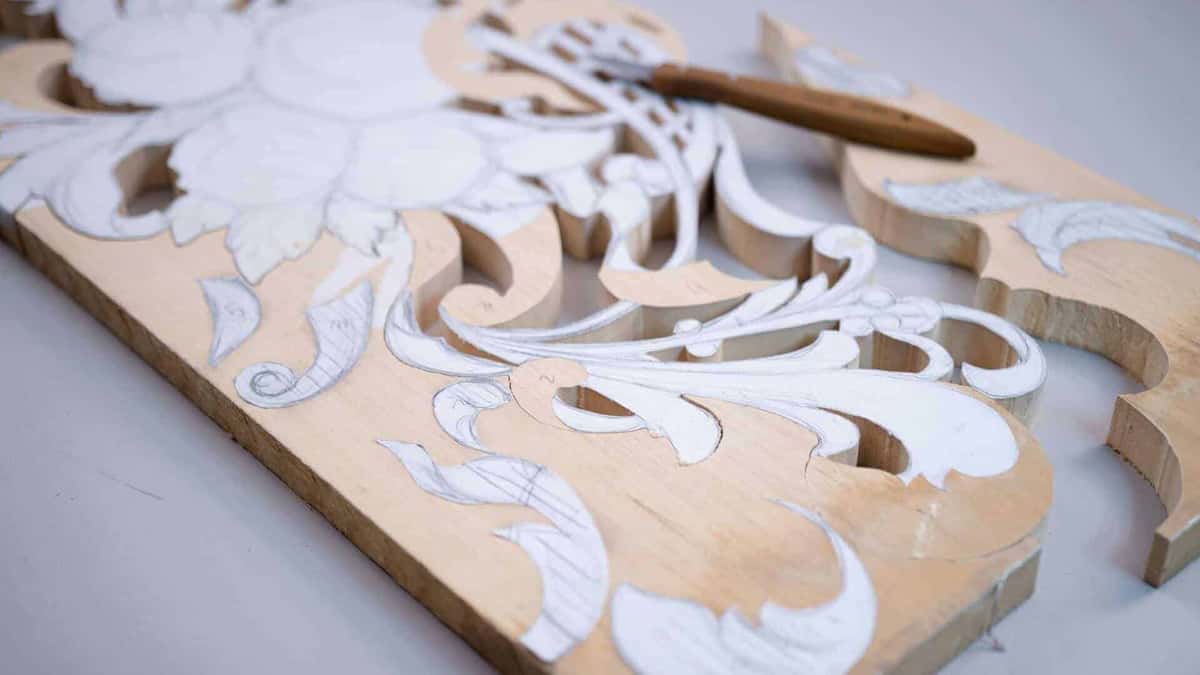
Last, the grain direction on the face. Which way the fibers run decides which way your tool slices and which way it tears, which is the whole subject of carving in the direction of the grain and of handling different grain directions. We also keep a longer piece on why wood grain matters for carving, though the bench teaches it faster than any page.

Why do two boards of one species carve differently?
Every tree grew in a particular place, and the board carries that place with it. This surprises people who have read a chart and expect the chart to hold.
You will feel it yourself soon enough. Sometimes you expect a board would act exactly the same as the one you carved last week, and it is an absolutely different piece of basswood. You take in a new piece of lumber, start carving, and it feels absolutely different.
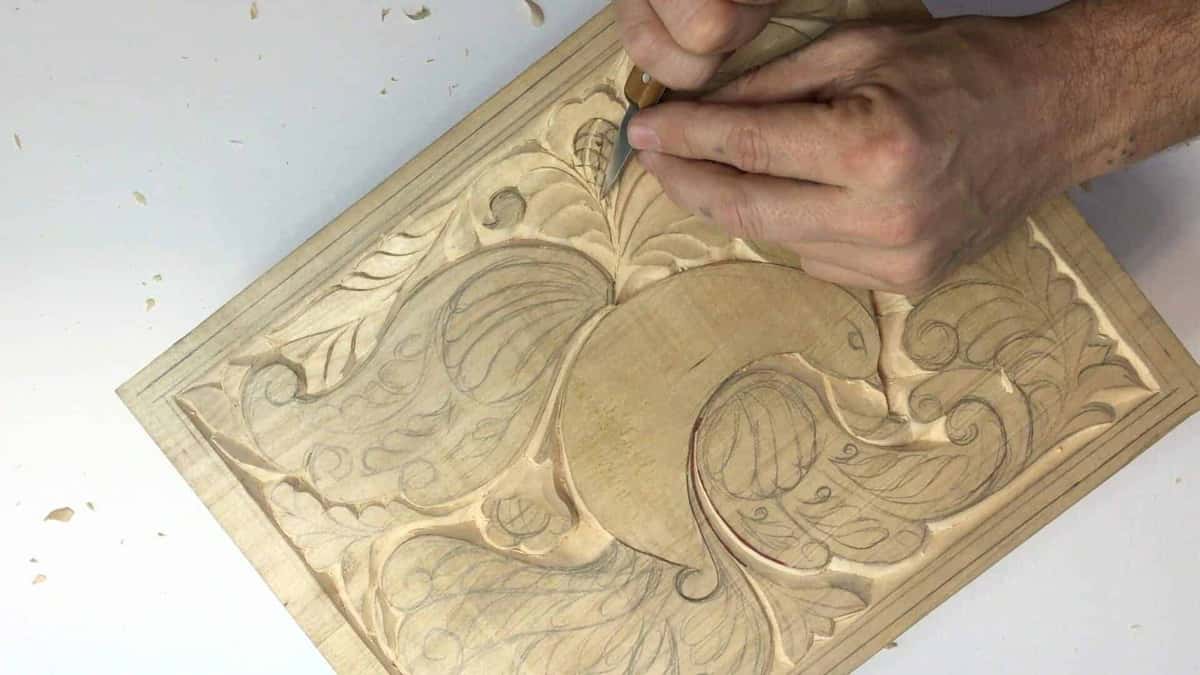
I have a preference about this, and it is not scientific. Between Eastern and Western stock, and between the United States and Canada, I like the Canadian side of basswood more, because there is a lot more forest, a lot less pollution, and that is really good quality of lumber. My own basswood comes on special order through a hardwood lumberyard down in Orlando. Not a building yard. An actual hardwood yard, and they get the basswood in for me.
There are also faults you simply cannot see. Sometimes a piece breaks not because of a mistake by the carver, but because in the wood itself there are small micro cracks, which are sometimes undetectable. When that happens, it is not a verdict on you.
The practical response is boring and it works. Buy two boards, not one, and carve the ugly one first, which is cheap enough that the cost of carving as a hobby barely moves. Before you spend a dollar, how to know if wood is good for carving and the best materials for beginners both go deeper.
How do you pick and prepare a first board?
Buy kiln dried basswood, let it sit in your room, mark around the faults, and carve a corner nobody will see. Six steps, and the whole thing costs less than a set of tools.
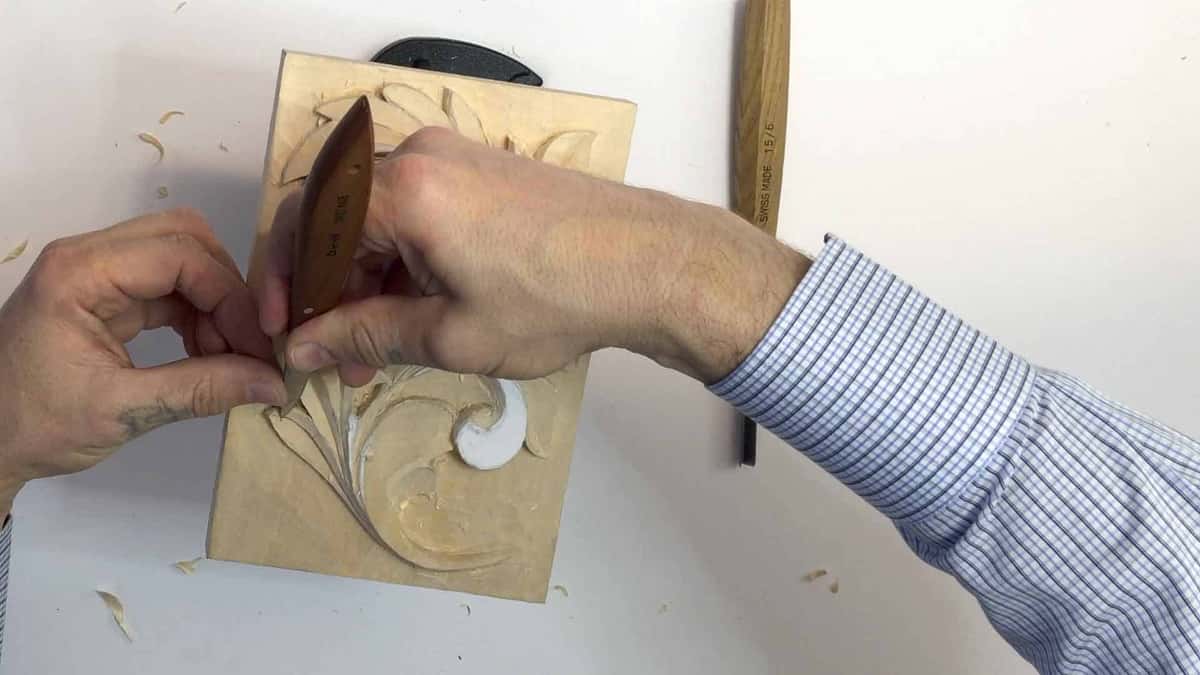
Step 1, call a hardwood yard rather than a home center
Almost every town in the United States has lumber yards, and there are also the Home Depot and Lowe's and Menards type stores. Those big stores carry framing lumber. What you want is the hardwood yard, the one that stocks walnut and cherry and can order basswood in, which is where I place my special order.
Step 2, ask for basswood by thickness, not by board feet
Ask for eight quarter basswood, the trade way of saying two inches thick, or six quarter at an inch and a half. A relief panel wants depth to work into. Buy thicker than your drawing needs, because you cannot add material back once the background is down.
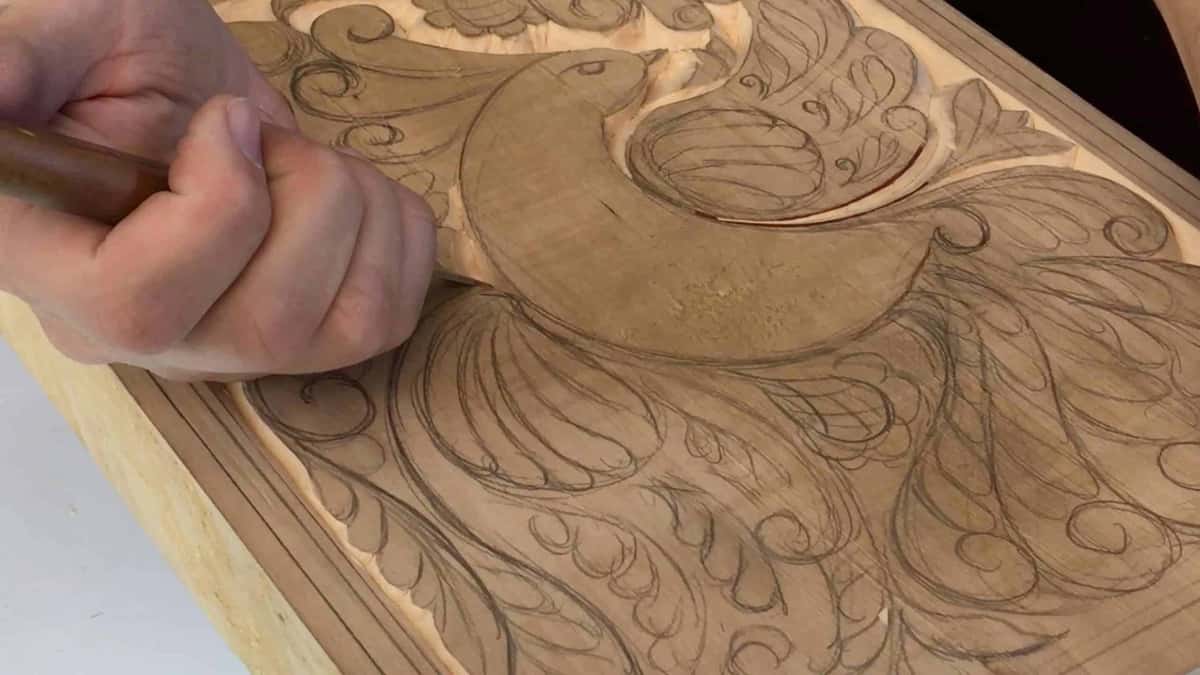
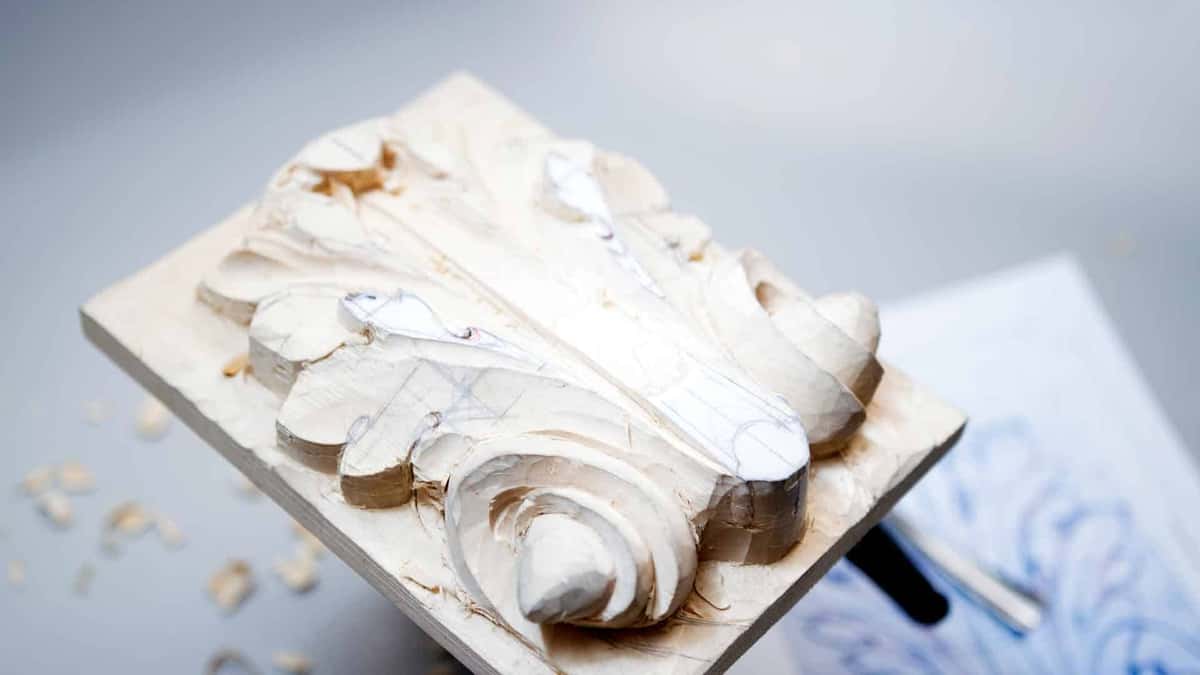
Step 3, look the board over at the counter
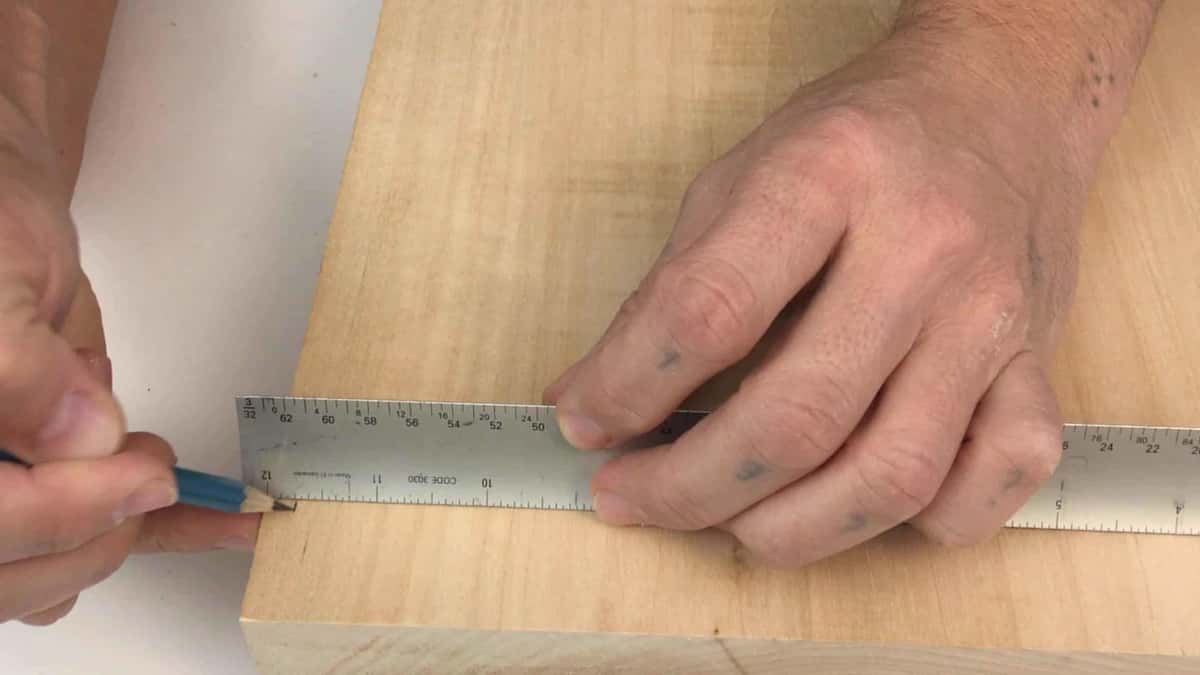
Run the checks from the section above. Dark patches, knots on both faces, rings on the end, grain on the face. If the yard will not let you pick your own board from the stack, buy somewhere else.
Step 4, let the wood sit in the room where you carve
When I buy wood, I place it in my shop and I do not touch it. Wood keeps trading moisture with the air around it, so a board that came from a warm dry warehouse will move for a while in your basement. Leaving it alone a while saves you a split later, and preparing raw wood for carving covers the rest.
Step 5, mark your design around the faults, not over them
Lay your paper pattern down and slide it until the knots fall outside the lines. On a piece with a scroll saw cut coming, I would not leave a spot on my design only one sixteenth of an inch thick in a soft wood, it would be much thicker. Fragile stems over a flaw will break.
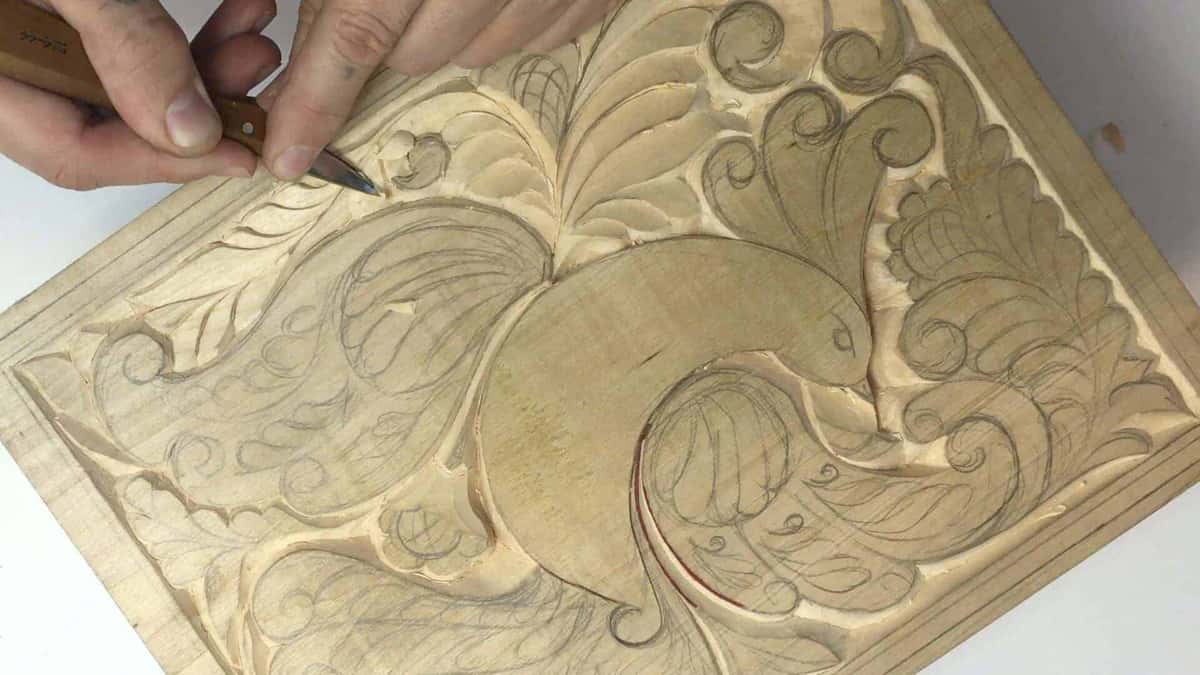
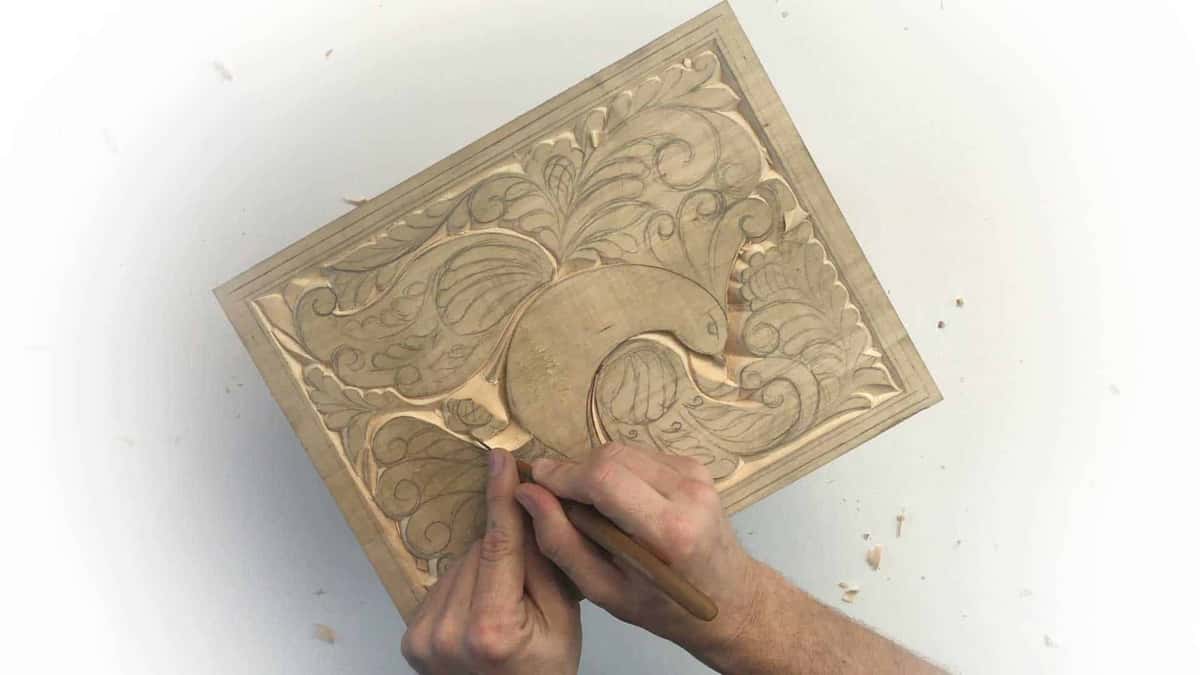
Step 6, carve one pass in a corner that will be cut away
Take your smallest gouge and make a single pass in a scrap area. You are asking the board three things at once: does it slice or crush, does it splinter, and does the edge still feel sharp afterwards. That one pass has saved me more panels than any chart. Our beginner course starts here, and what to look for in a beginner tool set covers the gouge itself.
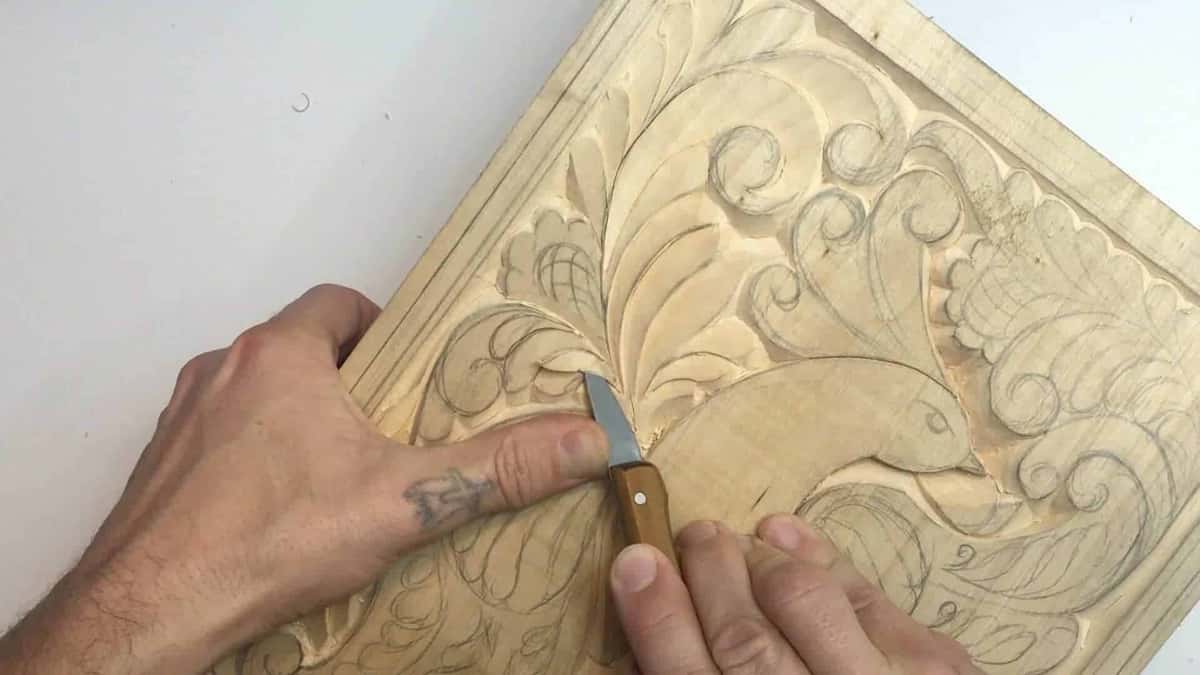
If you want somebody to stand beside you while you learn to read a board and put the first passes in it, that is what the tools course and the rest of the school are for. Shall we carve?
Frequently asked questions
What is the softest wood for a beginner to carve?
White pine measures 380 lbf, lower than any carving wood on this page, and I would still hand you basswood at 410. Softness alone does not decide it. Pine has hard and soft bands in one board, which makes a single pass ride instead of running level.
Can I use basswood from a craft store?
Craft store blanks are real basswood and perfectly usable for a small figure or a spoon. They cost far more per inch and rarely come thick enough for relief. Buy one to start this weekend, then phone a hardwood yard for anything bigger.
Is butternut easier to carve than basswood?
Under the tool they feel close, since 490 lbf sits only 80 pounds above basswood. Butternut earns its reputation on color rather than on ease. The trade you make is grain: those stripes look wonderful on a plain shape and ruin the shadows on a deep leaf.
Why does my basswood tear instead of slicing?
Two causes cover nearly all of it. Your edge has gone dull, or you are travelling uphill against the fibers on that particular curve. Strop the gouge first, since that is quick, then swing round and come at the same spot from the other side.
Do I need a mallet for basswood?
A relief panel in basswood needs no mallet at all. Hand pressure carries the whole job, which is exactly why it suits a first year. Keep the mallet for walnut at 1,010 lbf and above, where pushing by hand will wear your shoulder out long before the design is finished.
How thick should my first practice board be?
I would start a beginner at an inch and a half, which leaves room to model a leaf and still keep background under it. Thinner stock forces every shape flat, and that teaches the wrong habits early. Go to two inches when the yard has it and your pattern has real depth.