
September 7, 2024 · Updated August 17, 2026
By Alexander Grabovetskiy — Master Woodcarver · Founder, School of Wood Carving · 15 min read
What is the best wood for carving in Botswana for a beginner?
The best wood for carving in Botswana is a soft local species such as marula, at roughly 590 kg per cubic meter, not mopane. Mopane measures 1,075 kg and 3,390 pounds on the Janka scale. Marula, mongongo and a bought plantation board will teach your hands. Leave the ironwoods until later.
I have never carved in Botswana. I want to say that on the first line, because you deserve to know what you are reading. What I have carved, for over forty years, is wood at every hardness a bench can hold, and I have ruined good steel learning where the line sits. So this page does one job. It puts real numbers next to real species names, and it tells you which of them will hand a beginner a bad week.
Your problem is not a shortage of trees. Botswana has magnificent hardwood. Your problem is that almost every famous one sits near the top of the world hardness lists, and a beginner cannot yet feel the difference between a dull gouge and a wood that simply will not move.
- Mopane weighs 67 lb per cubic foot and leadwood 76, which puts both among the heaviest woods ever measured.
- Marula reads 590 kilograms a cubic meter, the softest published local figure I could verify.
- American basswood, which is the wood I carve almost every day of my life, sits at 26 lb/ft3 and 410 pounds on that same scale.
- Kiaat behaves beautifully under a gouge, and its export is controlled under Appendix II of CITES.
- Tambootie is the one to refuse outright, because its dust has blinded people.
Which trees in Botswana actually give carving wood?
Nine species are worth knowing by name, and only three of them belong under a beginner's gouge. I built this list from published wood data rather than from folklore, and every figure below comes off a page I opened and read myself.
Read the table as a warning system. The heavier the number, the more the wood fights back, and the faster your edge rolls over. A gouge does not care how beautiful the grain is.
Mopane is the one you will meet first. Mopane woodland covers a wide belt of northern Botswana, and Setswana calls the tree mophane.
| The local name | Botanical name | Hardness or density from a source | What that number does to a beginner's carving edge |
|---|---|---|---|
| Mopane, or mopani | Colophospermum mopane | 3,390 lbf Janka and 67 lb/ft3 dry | Blunts a sharp gouge inside one single afternoon of steady bench work. |
| Leadwood, also called hardekool | Combretum imberbe | 15,880 newtons Janka, heavier than mopane | Tears out unless the cutter is sharp. |
| Camelthorn, giraffe thorn | Vachellia erioloba | 3,680 lbf, the hardest figure here | Workability, shrinkage and strength all read as no data on that page. |
| Rhodesian teak, Zambesi redwood | Baikiaea plurijuga | 2,990 lbf and 56 lb/ft3 | Silica in the fiber blunts an edge severely. |
| Kiaat, mukwa, muninga | Pterocarpus angolensis | 1,360 lbf Janka and about 38 lb/ft3 | Works easily and stays stable, yet it irritates some lungs. |
| Jackalberry, African ebony | Diospyros mespiliformis | 800 to 900 kg/m3 in the PROTA record | Interlocked wavy grain, and tearout arrives with no warning on a tight curve. |
| The silver terminalia tree | Terminalia sericea | 9,200 N side hardness, 840 kg/m3 | Planes and finishes easily for a wood this heavy. |
| Marula, or morula | Sclerocarya birrea | 590 kg/m3 measured air dry | Soft and weak, which a learner wants. |
| Mongongo, or manketti | Schinziophyton rautanenii | Very light, although no figure was published | Sold as a balsa substitute, and it saws out rather woolly. |
Tambootie (Spirostachys africana) belongs on a list of its own, further down this page. Its timber runs 60 lb/ft3, it smells sweet while you work it, and I would not put a board of it on a beginner's bench for any money at all.
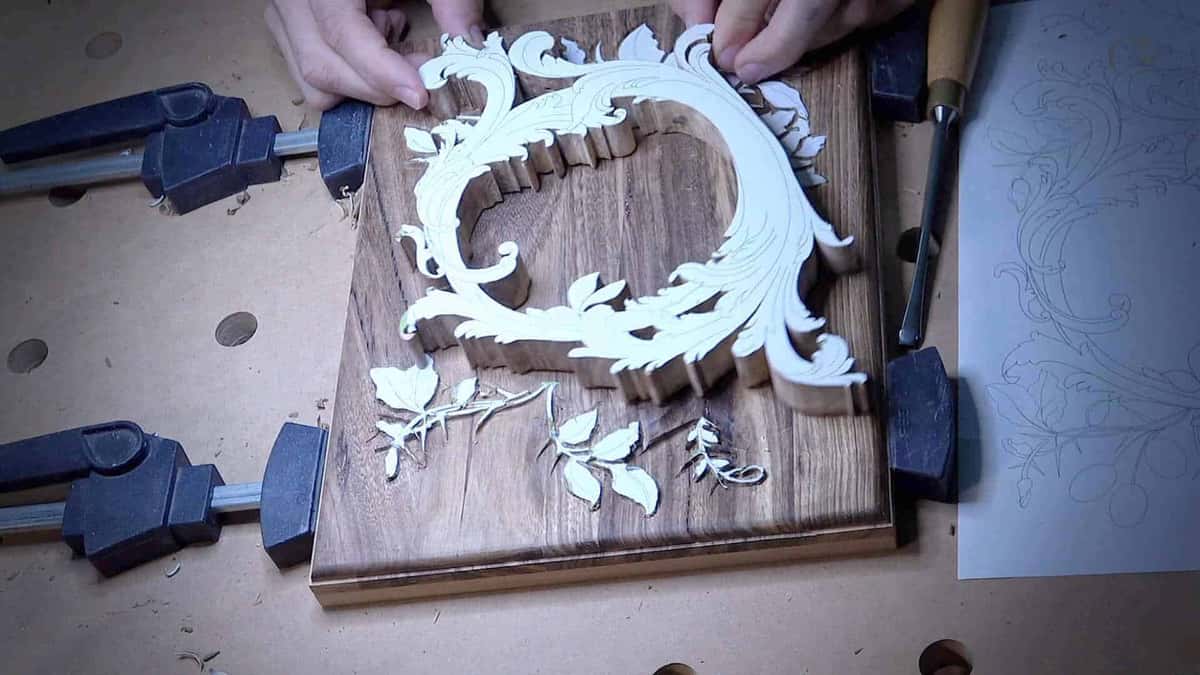
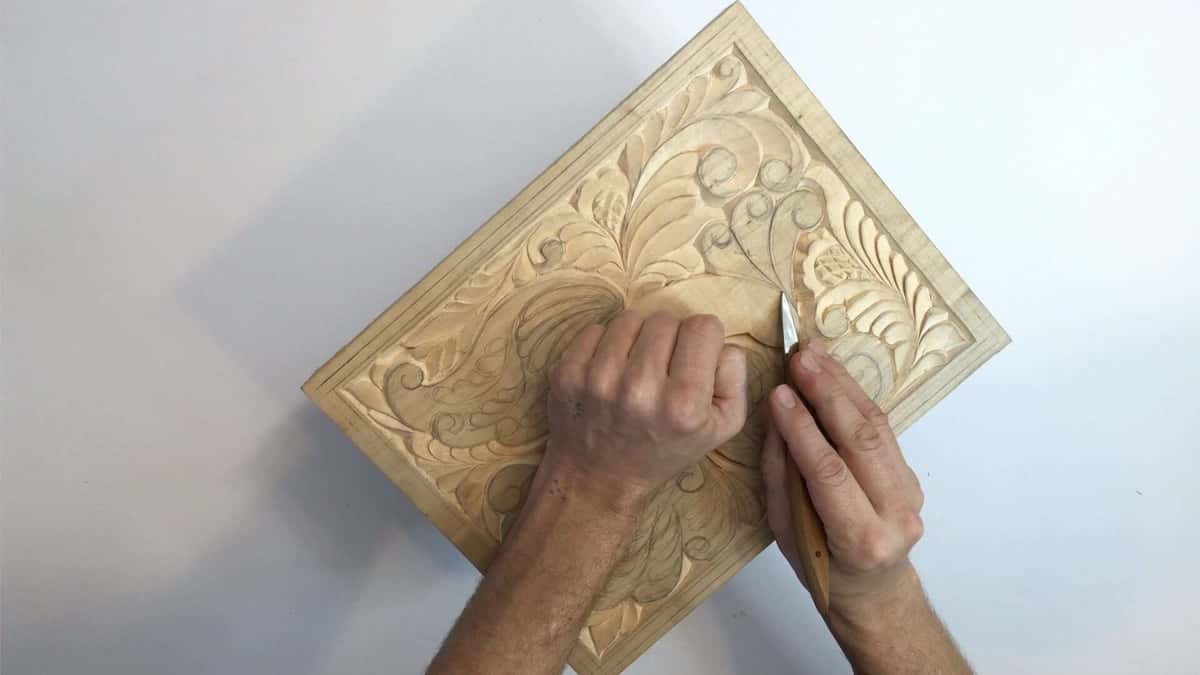
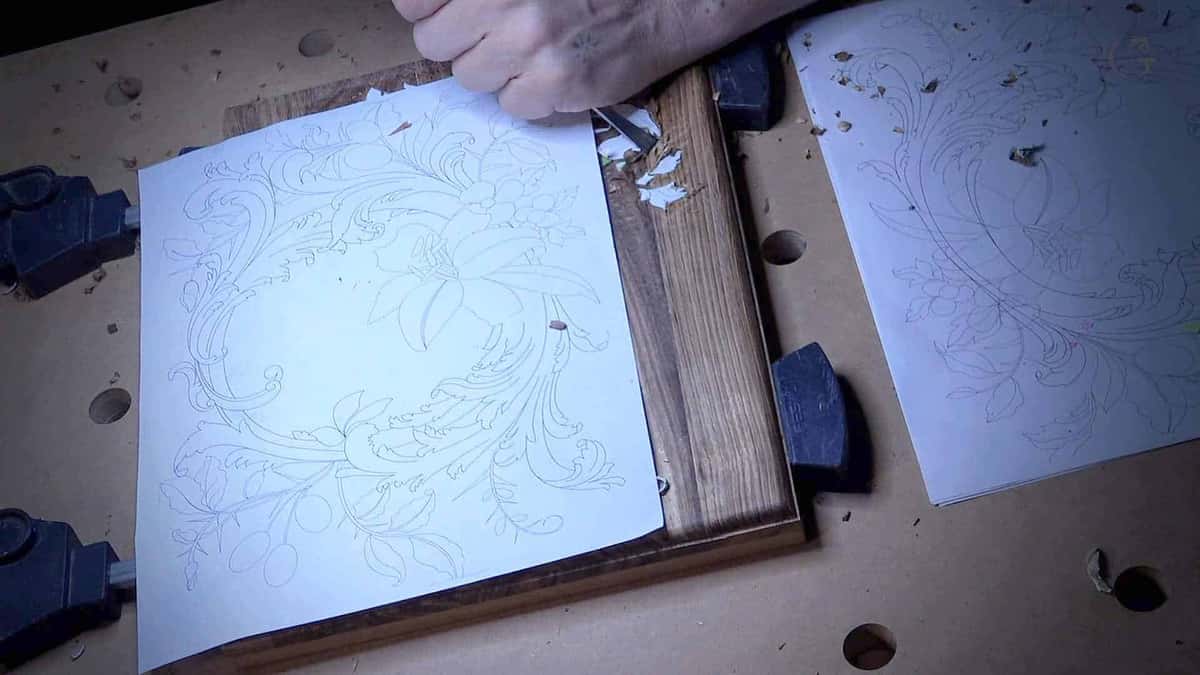
The board underneath the pattern is olive wood, and you can see why a figured hardwood tempts a learner long before their edge is ready for it.
Why does mopane punish a beginner's gouge?
Mopane reads 1,075 kg per cubic meter and 3,390 pounds on the Janka hardness scale, over eight times the figure for the basswood I carve. The wood database entry for mopane calls it difficult to work on account of its density, with a severe blunting effect on cutters.
Eight times. Sit with that for a second.
American basswood measures 415 kg/m3 and 410 pounds, and that same page calls it perhaps one of the most suitable species for hand carving. My whole teaching method assumes wood in that neighborhood. In my acacia and olive wood lily box course I carve a genuinely hard, figured board. Here is what I say while I am doing it: of course, it is always important to have sharp tools, but especially on those hard woods that catch fibers.
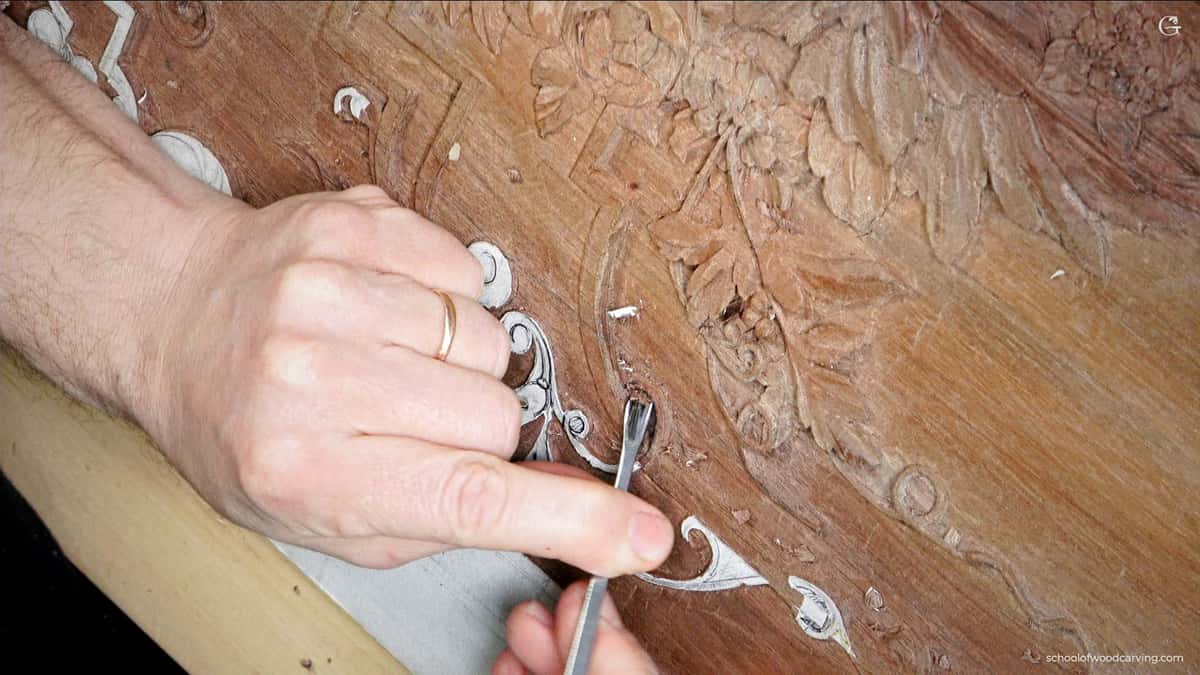
Density is only half the trouble. The other half is what dense fiber does when it finally lets go. It does not shear off in a curl. It snaps.
In that same course I say it plainly, because I was watching it happen on camera: that is how crunchy that wood is, and how many imperfections are inside. Snapping matters more than blunting does, because a snapped leaf tip is simply gone. You cannot glue confidence back on. Our page on stopping a thin carving from breaking covers the repair side of that story.
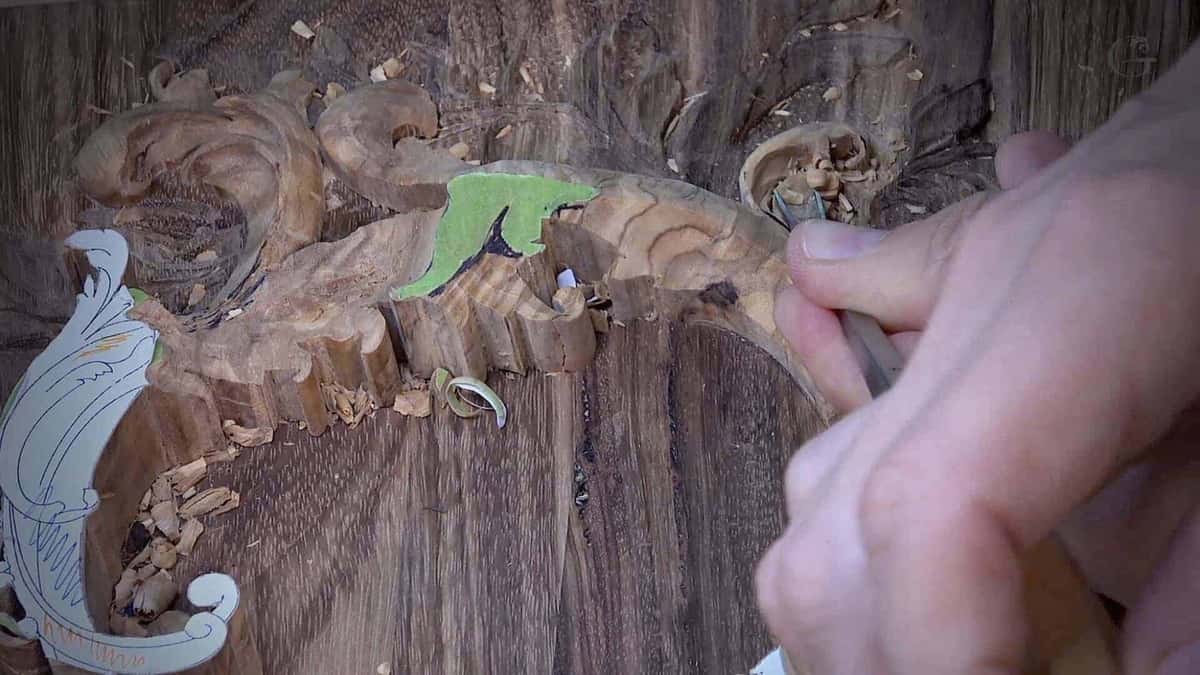
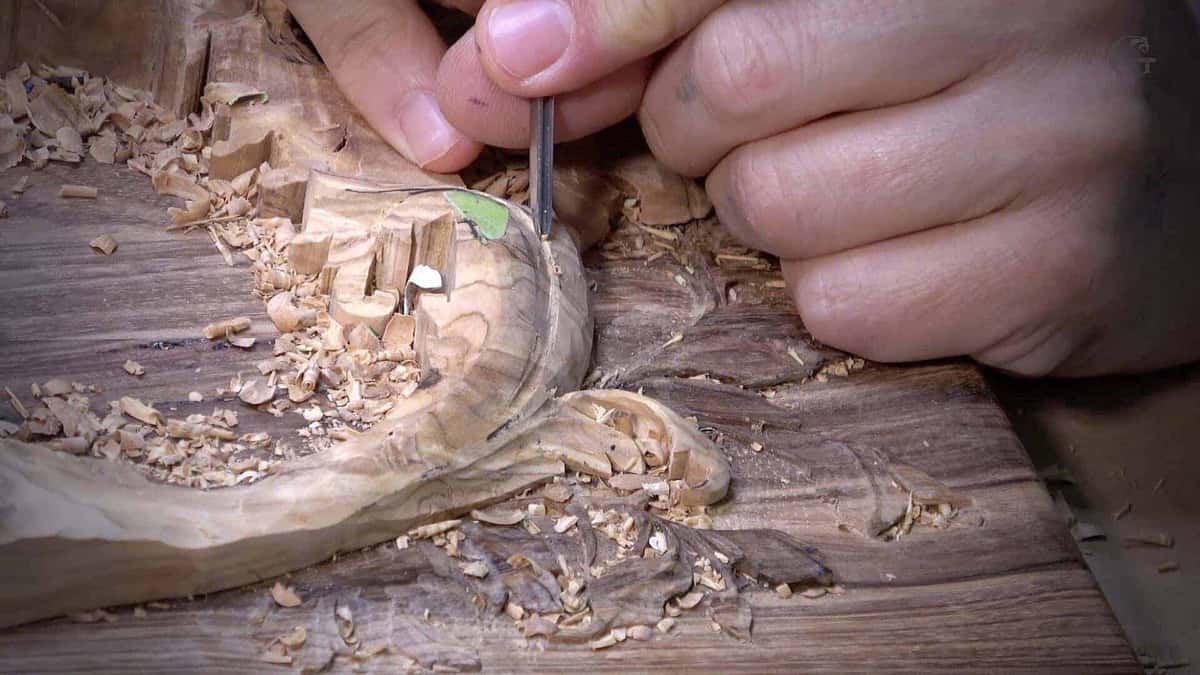
Look at the chip pile rather than the carving. Short, broken flakes mean the fiber is snapping instead of slicing.
One more honest complication. A published figure is an average taken across many trees, and your board is one tree. Even inside a single species I watch it move around, and I said so in the Venice Room workshops: even with the same lime wood, you can see variations of softness, and you can see the color actually changing. To judge the board in front of you rather than the species, read how to tell whether a board is good for carving.
Which Botswana wood is kindest to a learning edge?
Marula, at about 590 kilograms a cubic meter, is the softest local species I found a published density for. The PROTA record for Sclerocarya birrea gives that figure, names Botswana inside its range, and describes the wood as coarse in texture, low in strength and poor in durability.
Poor durability sounds like an insult. For a practice board it is a gift. Soft, weak, coarse fiber is what lets a beginner feel the bevel bite, and nobody on earth needs a hundred-year practice board.
Two warnings ride along with marula. The wood is liable to distort while it dries, so buy it dry rather than green, and the tree became protected in South Africa back in 1962. Whether a board needs drying at all before you start is covered in do I have to dry wood before carving. Botswana is a different country with different rules, and I am not going to invent them for you.
Mongongo, sometimes sold as manketti, is the other soft option. Its PROTA entry for Schinziophyton rautanenii puts the tree in Botswana and warns that the wood goes woolly on the saw and wants sharp tools for a clean surface. Another reading of the same species data, over at Useful Tropical Plants, calls the timber a balsa substitute.
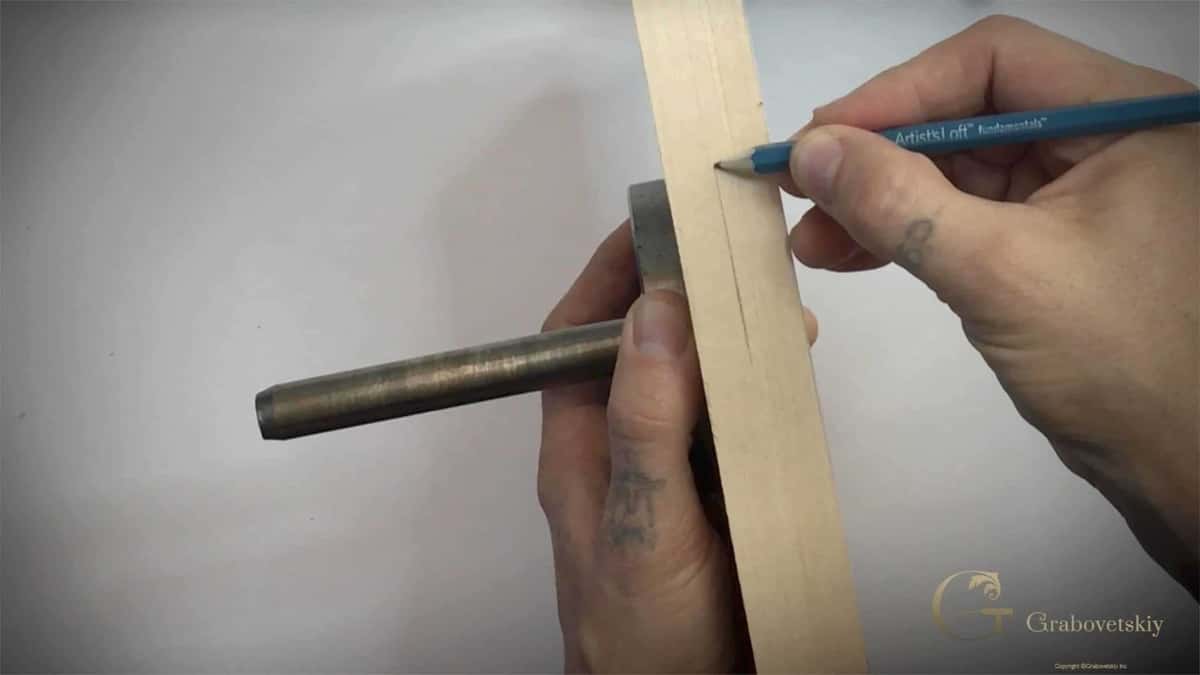
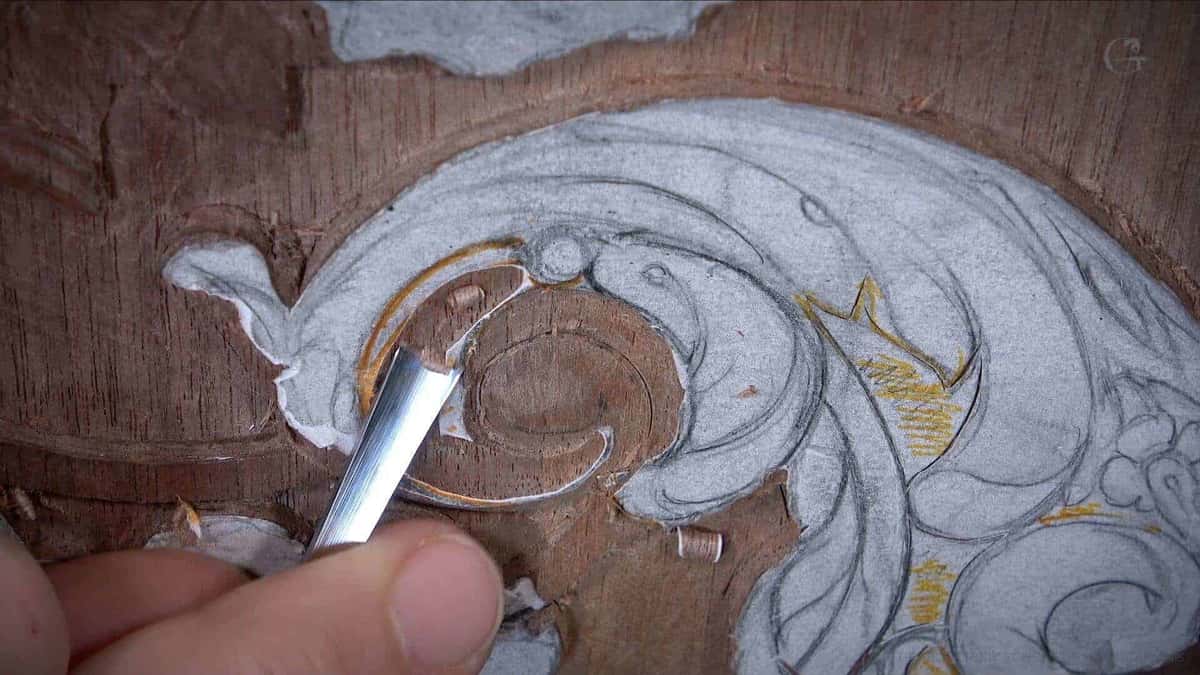
A pencil line on a plain strip tells you more about a species than any table can. Draw, carve, toss it, repeat.
Then there is kiaat, which the trade also calls mukwa or muninga. Its wood database page gives 1,360 pounds Janka and roughly 38 lb/ft3, calls it generally easy to work, and reports outstanding stability through seasonal change. That is a real carving wood, and the one I would graduate to. The IUCN still records large kiaat stands inside Botswana's protected areas, so kiaat is a tree of your own country as much as it is bought timber.
Kiaat carries two conditions. Carvers have reported skin and respiratory irritation from it, with asthma-like symptoms, which my page on what can actually hurt a beginner in wood carving puts in context alongside the rest of the dust problem. The whole genus is also trade-controlled now, which I cover further down.
Silver terminalia deserves a mention nobody ever gives it. A PROTA page on Terminalia sericea measures 840 to 920 kg/m3 with a Janka side hardness of 9,200 newtons, and then says the wood works well with hand tools and planes and finishes easily. Heavy and cooperative is an unusual pairing. The same page warns that its sawdust inflames the airways and the skin, so wear the mask for this one too.
Which Botswana woods should a beginner leave alone?
Tambootie, leadwood, camelthorn and African blackwood all belong in your second decade, and one of them belongs nowhere near you at all. Hardness is the smaller reason here. Health and paperwork are the bigger ones.
Start with the refusal. Tambootie measures 955 kg/m3, and the sap of a standing tree is highly irritating to skin. Its sawdust has caused eye and skin irritation, and in extreme cases blindness after long occupational exposure. Even the smoke off burning it is toxic. Beautiful wood. Not your wood.
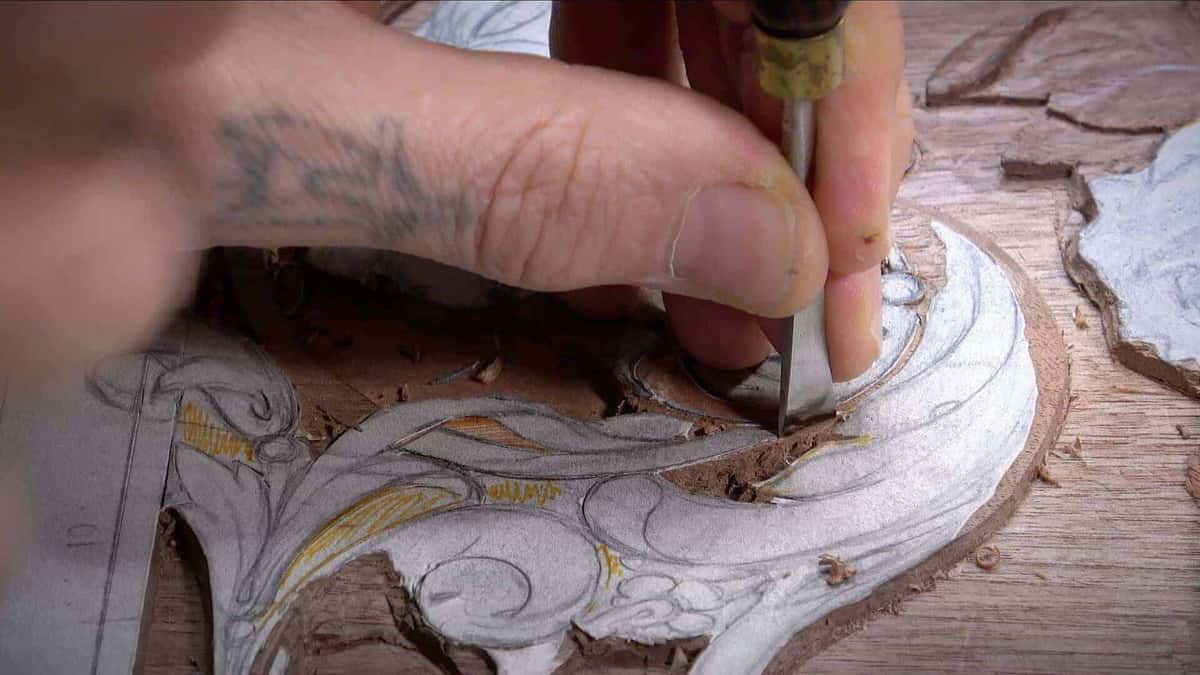
Leadwood is heavier than mopane at 76 lb per cubic foot and 15,880 newtons Janka, and its own page says sharp cutters are needed to avoid tearout. It is a protected tree in South Africa. Camelthorn is harder still at 3,680 pounds, and here is the honest part: the wood database prints no workability, shrinkage or strength figures for it at all.
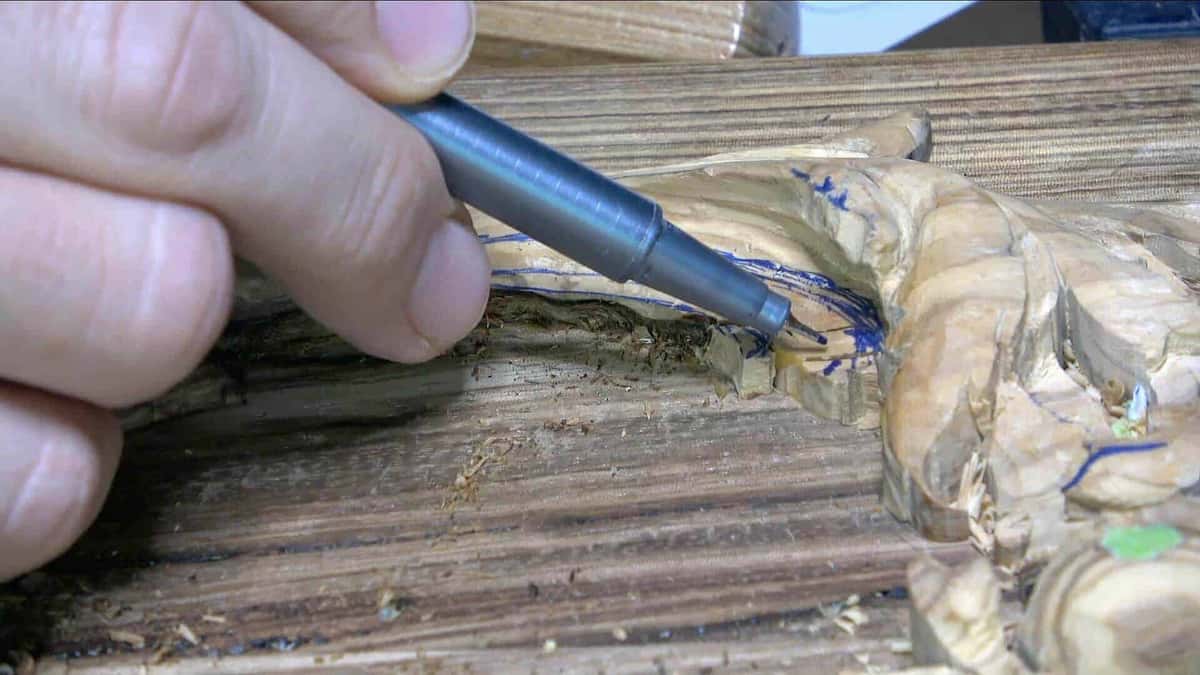
Rhodesian teak, sold as Zambesi redwood, looks friendlier at 890 kg/m3. Its database entry then explains that silica in the fiber blunts cutting edges severely, and the IUCN reports the species as near threatened. Silica is grit. Grit and a fine carving edge are enemies.
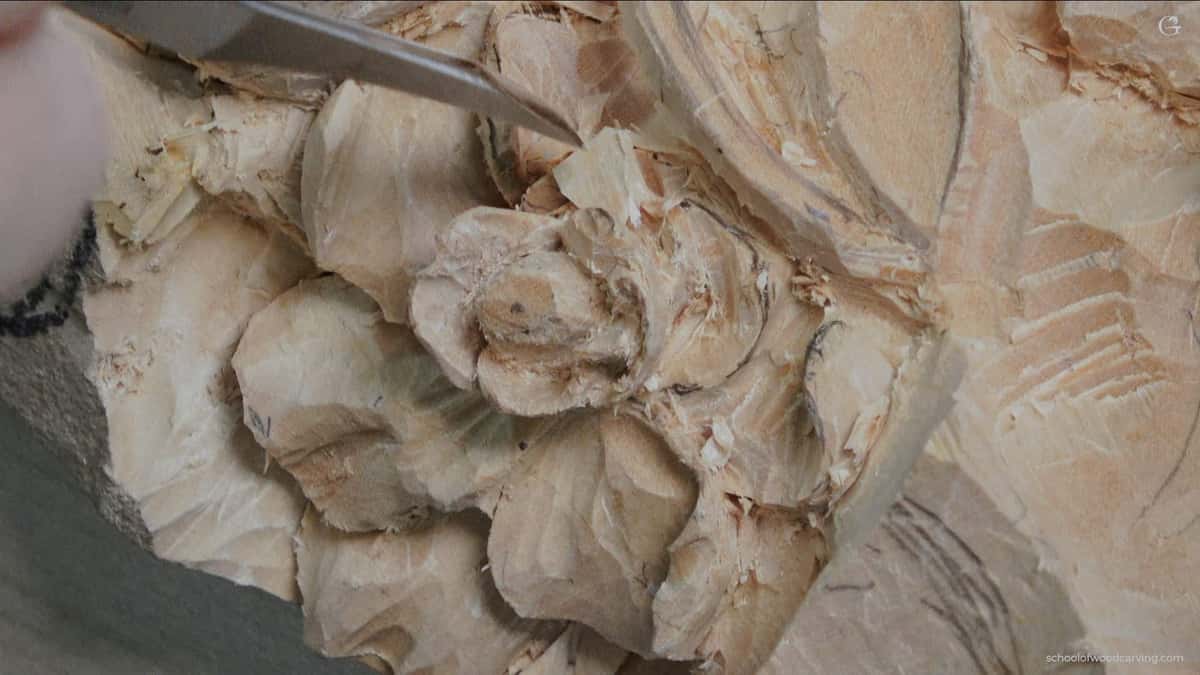
Count the layers. Each one is a separate depth, and each depth needs its own fresh edge.
African blackwood is the famous one at 1,270 kg/m3. It sits on CITES Appendix II under the restriction that covers every Dalbergia species. Our own wood guide page on African blackwood goes through what it is like under a gouge. Jackalberry lands in the middle, between 800 and 900 kg/m3, with trouble that is grain rather than weight: wavy and interlocked, which is a subject in itself over on reading grain direction while carving.
How do I set a gouge up for wood this hard?
Shorten the bevel, round the heel, pick up a heavier mallet, and take a smaller bite than your pride wants. I answered exactly this question on camera years ago, and my answer has not changed since.
What to actually own is a different question, and what is needed to carve wood answers it; this is only about keeping an edge alive in timber this heavy.
Step 1, shorten the bevel before you touch a hard board
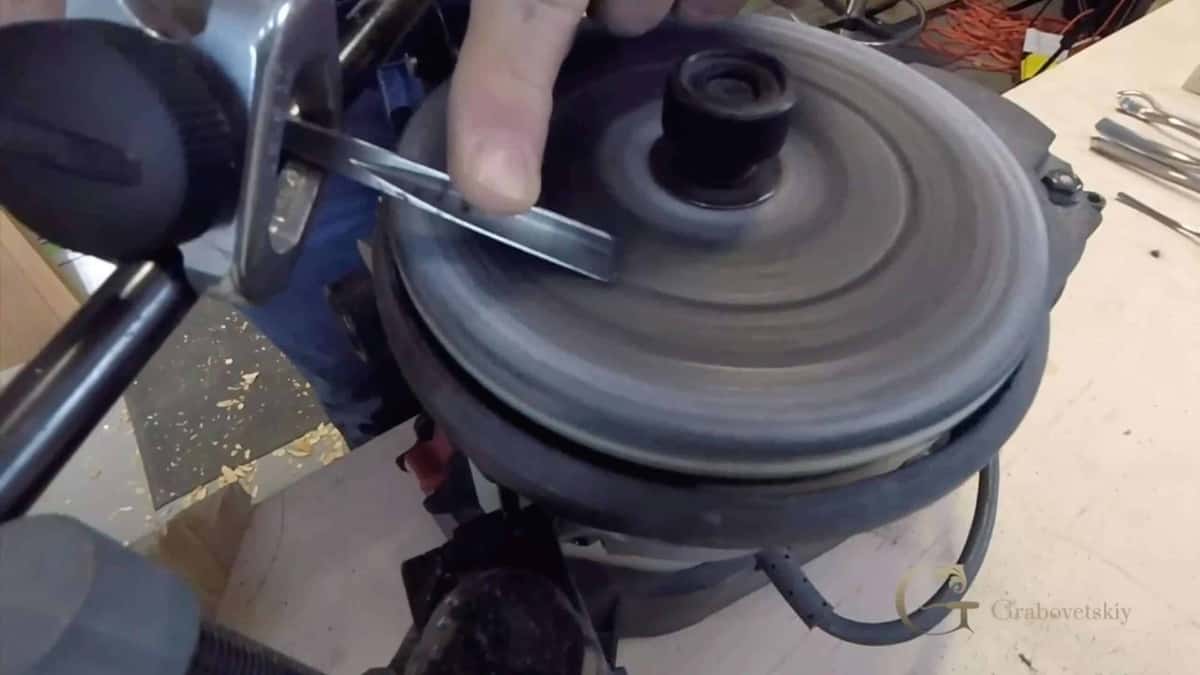
Here is the reasoning in my own words from that lesson: on the harder wood, when you create a really long bevel, there is a problem, because this metal becomes really weak at the point. So for those hardwoods I use a really short bevel most of the time. In basswood a long bevel is lovely. In mopane the same grind costs you steel.

My own annotated frame of a low bevel, the grind I keep for softer wood. A dense board wants the short, strong version instead.
Step 2, round the heel so your wrist survives the week
A short bevel forces you to raise the handle, and a raised handle lifts the elbow and then the shoulder after it. Do that all day and you get sore. Rounding the heel away solves it: the edge stays strong and my hand stays low.
Step 3, pick up a mallet with real mass
On hardwoods you usually reach for a heavy mallet. Mine weighs two pounds, 32 ounces. Mass does the work so your arm does not have to swing for it.
Step 4, take half the bite you think you can
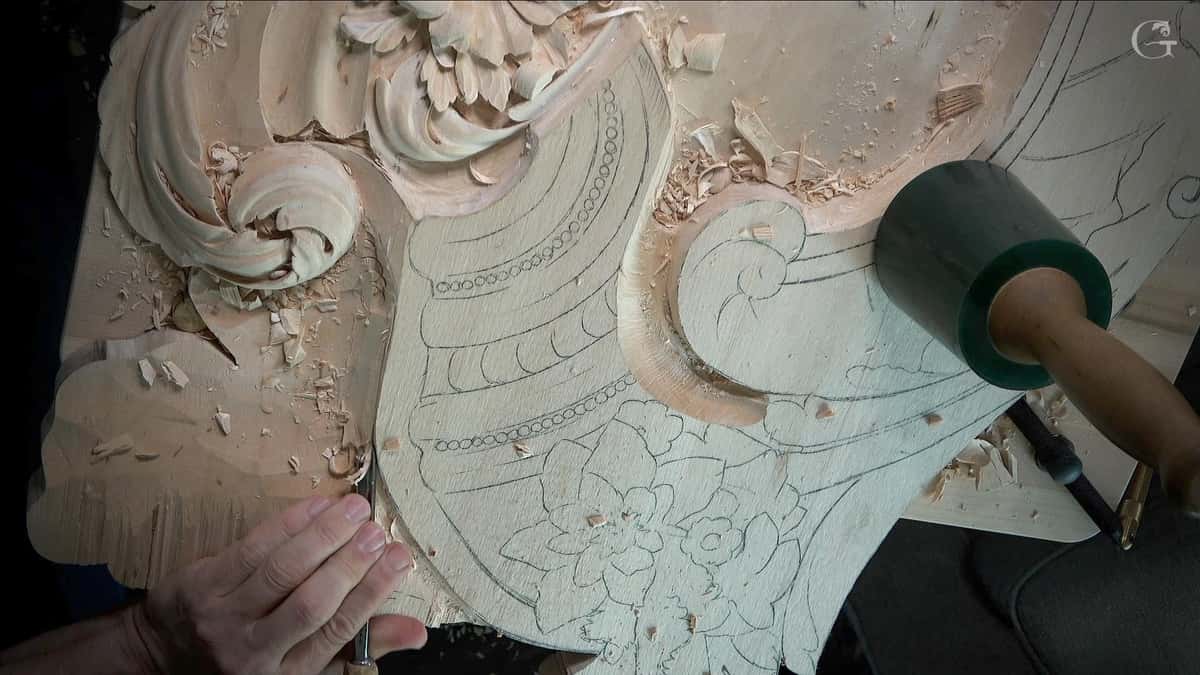
Dense fiber gives no warning before it breaks. In one furniture panel workshop I put it this way: some of the species are really crunchy, and if you take too much in one pass you can snap off the whole detail. Two shallow passes beat one brave one.
Step 5, sharpen far more often than feels reasonable
A dull edge is the real danger in hard wood, because a dull edge needs force, and force is what slips. Buff the steel back every few minutes rather than every few hours. My course on tools for wood carving works through every grind.
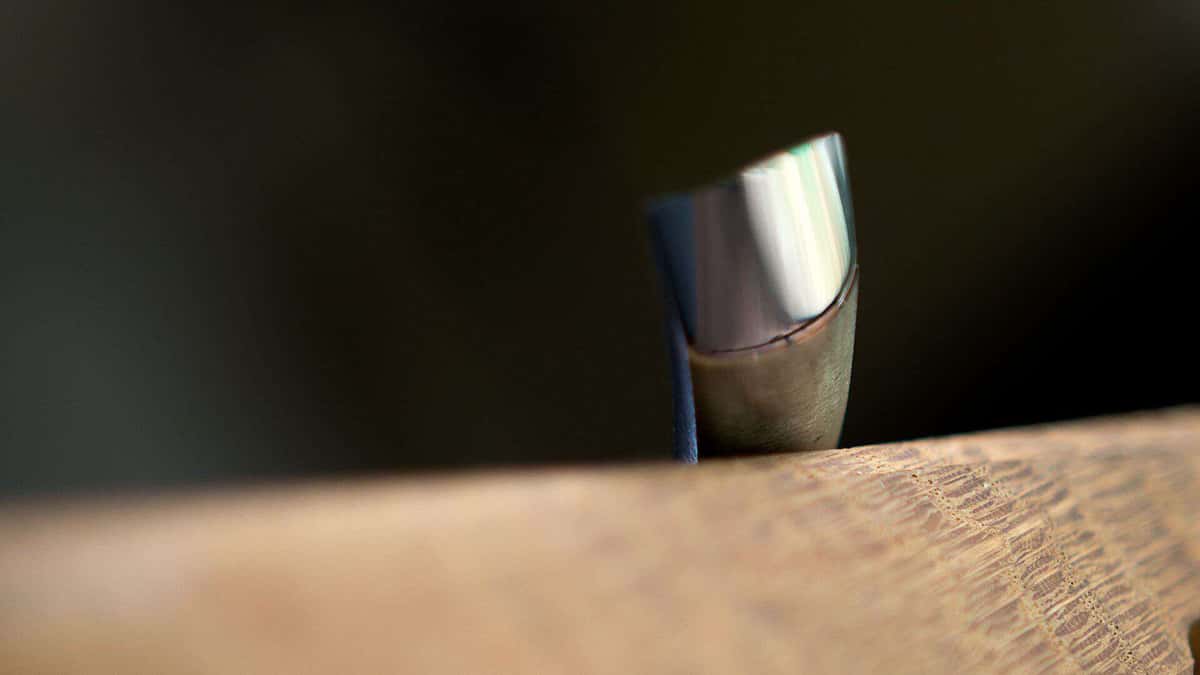
Hold the tool up to a lamp and look straight down onto the steel. A glint there means you have not finished sharpening.
Where do I get a legal board in Botswana?
Buy from a sawmill or a timber yard, ask for offcuts, and check the CITES list before anything crosses a border. Two species here are trade-controlled, which you can look up yourself.
A published list of restricted and endangered woods places every African Pterocarpus species in Appendix II of CITES since February 2023. The listing carries annotation 17, which covers logs, sawn wood, veneer sheets and plywood. So a kiaat board now travels with paperwork. Every Dalbergia species sits in that same appendix, and African blackwood is one of them too.
Now the part where I stop. Botswana's own list of reserved and protected trees is a legal question, and I could not confirm that list from a source I trust. So I am not printing one. Ask at the timber yard or at your local forestry office before you take a living tree, and get the answer from them rather than from an article written in Florida.

A learner does not need a living tree at all. Sawmill offcuts, a branch a farmer dropped while clearing, a broken piece of furniture, an imported plantation board off a hardware shelf: any of those will hold a practice carving. For turning rough stock into something you can clamp, see preparing raw wood for carving.
And please do not try to soften your way out of a hard species. People boil these woods hoping to make them behave, so read what boiling water really does to wood and softening a hard block before carving before you put a kettle anywhere near a board this heavy.
What should I carve first on a Botswana board?
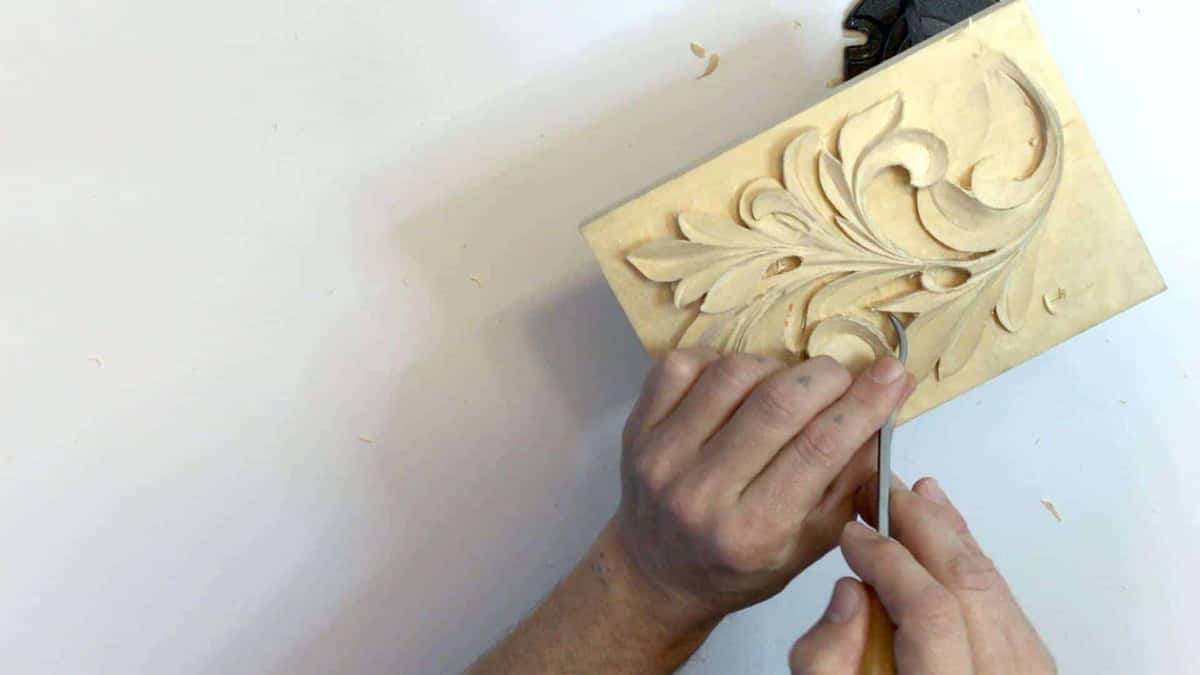
Carve a flat practice board with one simple leaf on it, in the softest wood you can get, and let it go when it is finished. A board, though, and not a figure or a gift for anybody.
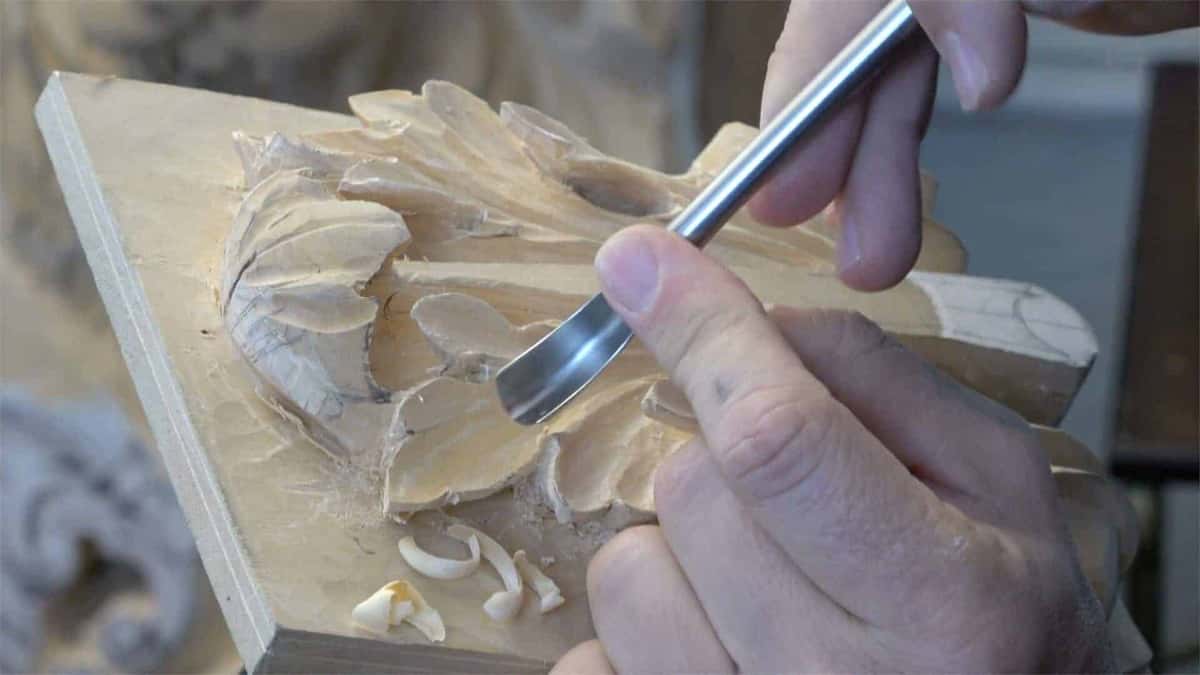
A practice board teaches three things that a finished project hides. Where your edge goes dull, how the grain turns under a curve, and how much force this particular species wants out of you. Then it goes on the fire, which is the part beginners refuse to do.
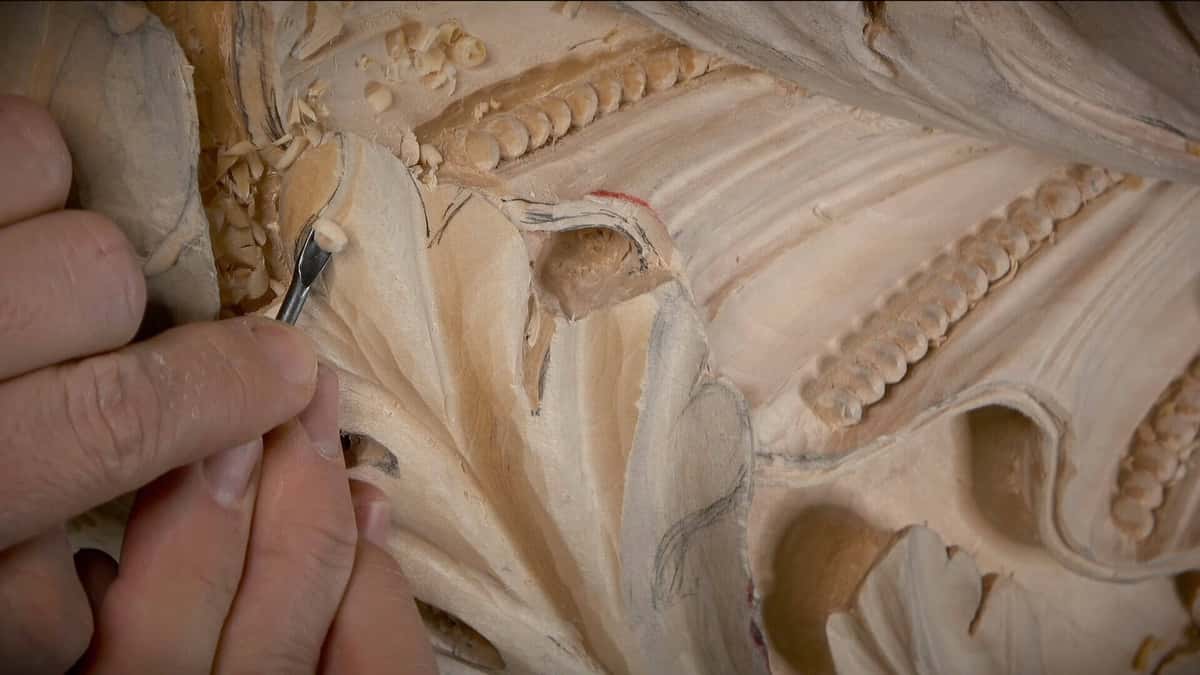
From my flower rosette course, on the wood I choose: I found it is one of the best woods for wood carving for a long time, and that is exactly the same wood, lime wood or basswood, that other carvers in history used. Get a limewood or basswood board imported if you possibly can, and keep the local hardwood for the piece you carve after it. Our basswood entry in the wood guide sets out why.
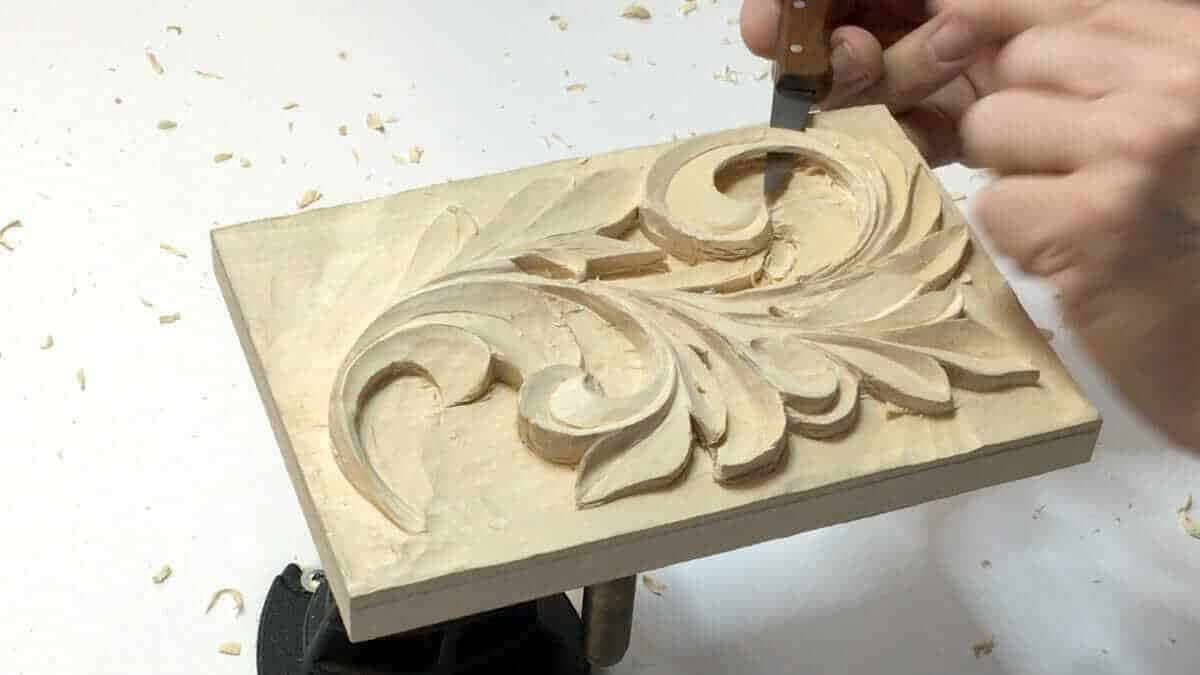
For the wider argument about species and density rather than this Botswana shortlist, the general beginner wood guide and the neighboring South African species page both go further than I can here. On the physics of why heavy wood behaves the way it does, there is whether dense wood floats and what the elastic modulus of wood means. The USDA Wood Handbook is where the underlying science lives, should you want the full engineering treatment.
God gave you hands and a country full of magnificent timber. Use the soft stuff to learn on, and earn the ironwood.
Frequently asked questions
Is mopane good for carving at all?
Mopane is excellent for turned objects and small detailed work in trained hands. At 15,060 newtons it demands a short bevel, a heavy mallet and sharpening every few minutes. A first-year carver will blunt every tool they own and then blame themselves instead of the board.
What is the softest wood I can find locally?
Marula, at roughly 590 kg/m3, is the softest local species with a published density that I could verify. Mongongo is described as lighter still, although I found no reliable number for it anywhere. Both of them saw and carve very much better under a genuinely sharp edge.
Do I need a permit to carve kiaat or mukwa?
Carving a board you already own is not a trade activity. Moving one across a border is, because African Pterocarpus species sit in CITES Appendix II and annotation 17 covers sawn wood. Ask your seller for the paperwork trail before you buy a large board.
Which local wood is dangerous to breathe?
Tambootie is the serious one, with blindness reported after long exposure to its sawdust and skin irritation from the standing tree's sap. Kiaat has caused respiratory irritation and asthma-like symptoms in some carvers. Dust extraction and a mask both cost less than a lung specialist.
Can I use imported basswood instead?
Basswood at 415 kg/m3 is the wood I reach for in almost everything that I teach. Importing a few boards costs less than the tools mopane destroys. Carve the local hardwood later, once your hands already know what a clean slice off the bevel feels like.
Is marula strong enough for a finished carving?
Marula is weak and its durability is poor, which the PROTA record states plainly. That makes it a fine practice board and a poor choice for anything you mean to keep. Carve your keeper in kiaat or in imported basswood once your hands already know the bevel.
Filed under