
August 29, 2024 · Updated August 17, 2026
By Alexander Grabovetskiy — Master Woodcarver · Founder, School of Wood Carving · 16 min read
What boiling water does to wood, and what it quietly ruins
What boiling water does to wood is soften the lignin that holds its fibers stiff. The wood swells, it gives under a clamp, and it keeps a new curve once it cools and dries. A long soak also darkens the surface and lifts the grain, and the piece ends up a shade weaker than it started.
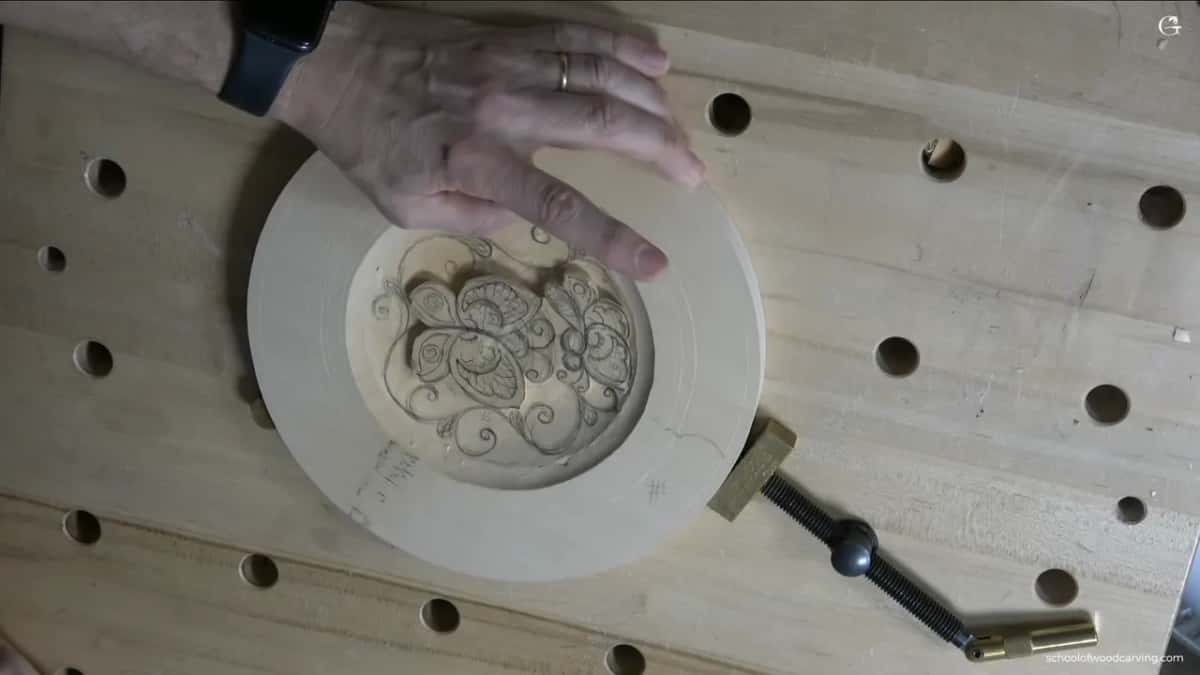
My own bench, and a dry blank held down hard while the drawing on it gets carved away.
Somebody told you to boil it. Maybe a video, maybe a friend at the club, maybe a comment under one of my own lessons. Now you are standing over a pot with basswood in your hand, wondering whether you are about to help this wood or wreck it. Fair question. I have carved for over forty years. The pot does something real, it also takes something away, and almost nobody tells you the second half.
Heat plus water is a chemistry lesson happening inside a cell wall you cannot see. Let's put real numbers on it.
- Water on its own barely softens wood, and heat is the half that does the work.
- Wood only swells and shrinks below about 30% moisture, so a soaked board starts moving the second it dries.
- Boiled stock squashes 25% to 30% along the grain and stretches barely 1% to 2%.
- Color change is the extractives coming to the surface, and I use that to make a food safe stain out of boiled walnut shells.
- A hot core kills beetles. Nothing keeps them out afterward.
What happens inside the wood when you drop it in boiling water?
Water walks into the cell walls and heat loosens the glue between them. A cell wall is stiff cellulose held in a matrix of lignin and hemicellulose, and the matrix is the part that moves.
Lignin behaves like a plastic. Warm it and it goes soft, cool it and it sets again. The USDA Forest Products Laboratory puts the glass transition of that matrix at around 170 C, which is 338 F, in the USDA chapter on plasticizing and bending wood. Your pot never gets near 170 C. Water is the trick. The handbook says that matrix temperature drops once you add moisture, which is why a wet stick softens at 100 C when a dry one would scorch first. Ten minutes with the chemistry of lignin is worth your time.
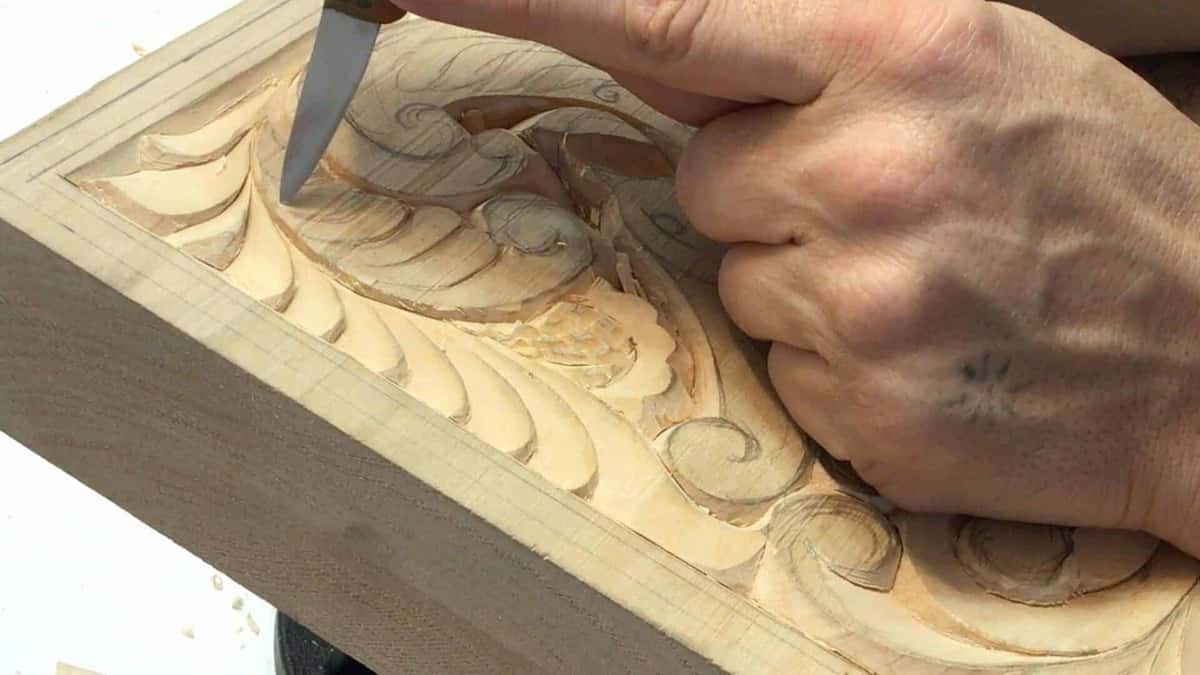
Pale dry stock, sliced across a border. A wet edge crushes here instead of parting.
I said it in plainer words during my April 2020 livestream on wood movement. Wood is just like a sponge. It takes water. If there is moisture in the air, it is going to get that water in, and once it takes the water in, it expands.
One number governs all of it. The moisture relations chapter of the Wood Handbook puts the fiber saturation point at an average of about 30% moisture, drifting a few points between species and even between two boards off one log. Above that line, spare water sits loose in the cavities and your board holds its size. Below it, water is bound into the wall, and every drop leaving takes a little wall with it. The Wood Database covers how wood holds and gives up water in easier language.

Two blocks, sawn square. Every point of moisture leaving them takes a little size with it.
Why does boiled wood bend and then hold the bend?
Wood that has been softened crushes on the inside of a curve far more than it stretches on the outside. Two figures decide everything here.
Wood steamed, microwaved or soaked in boiling water compresses 25% to 30% along the grain. The same stick stretches only 1% to 2% before it tears. Put those two numbers side by side and the whole craft of bending falls into place. You cannot pull the outer face of a curve. You squash the inner one. Every serious bending rig carries a metal strap across the convex face with blocks at each end, so the strap takes the pull.

Oak, with the layout lines still on it. Oak takes a bend where a softwood would tear right through.
Species decides more than heat here. Hardwoods bend better than softwoods, and the good ones get named: white oak, red oak, elm, hickory, ash, beech, birch, maple, walnut, sweetgum and mahogany. Most softwoods bend badly. There is a reason white oak sits at the top of that list, and it is also the wood that turns blue black wherever wet oak touches iron.
Starting moisture matters as much. Bending stock wants 12% to 20% moisture, and a hard bend over a form wants 15% to 20%.

Straight stock. A molding like this gets carved dry, start to finish.
How long do you boil it, and how hot does the water need to be?
Roughly 38 minutes for every inch of thickness at 20% to 25% moisture, and about 75 minutes an inch when the wood is drier. Those are the handbook's own recommended soak times.
Three methods all work: steam at atmospheric or low gauge pressure, a soak in boiling or nearly boiling water, and microwave heating of damp wood. High pressure steam makes wood plastic too, and then it bends worse. That runs against instinct.
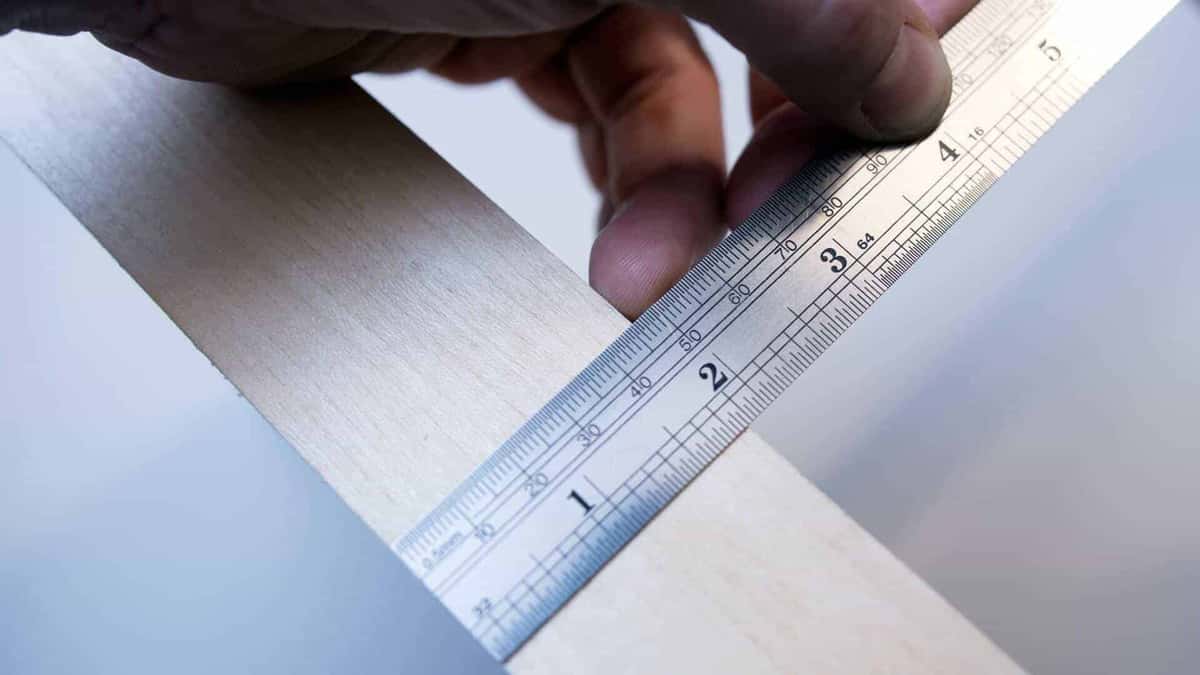
Soak time follows the real size of the stick, so the rule comes out before the pot does.
Step 1, measure the real thickness of the stick
Not the nominal size. The actual size, with calipers. A three quarter inch strip wants about 29 minutes at 20% moisture, and about 56 minutes if it came out of a heated shop at 8%. Guess this and you either undercook the stick or cook the strength out of it.
Step 2, pick straight grain and reject the rest
Stock selection is where that handbook turns blunt. Cross grain should slope no steeper than about 1 in 15. Decay, knots, shake, pith, surface checks and brittle wood all belong in the stove, not the bending form. Grain running out mid curve lifts no matter how long you boil, and my piece on reading grain direction before you carve shows how to see it coming.
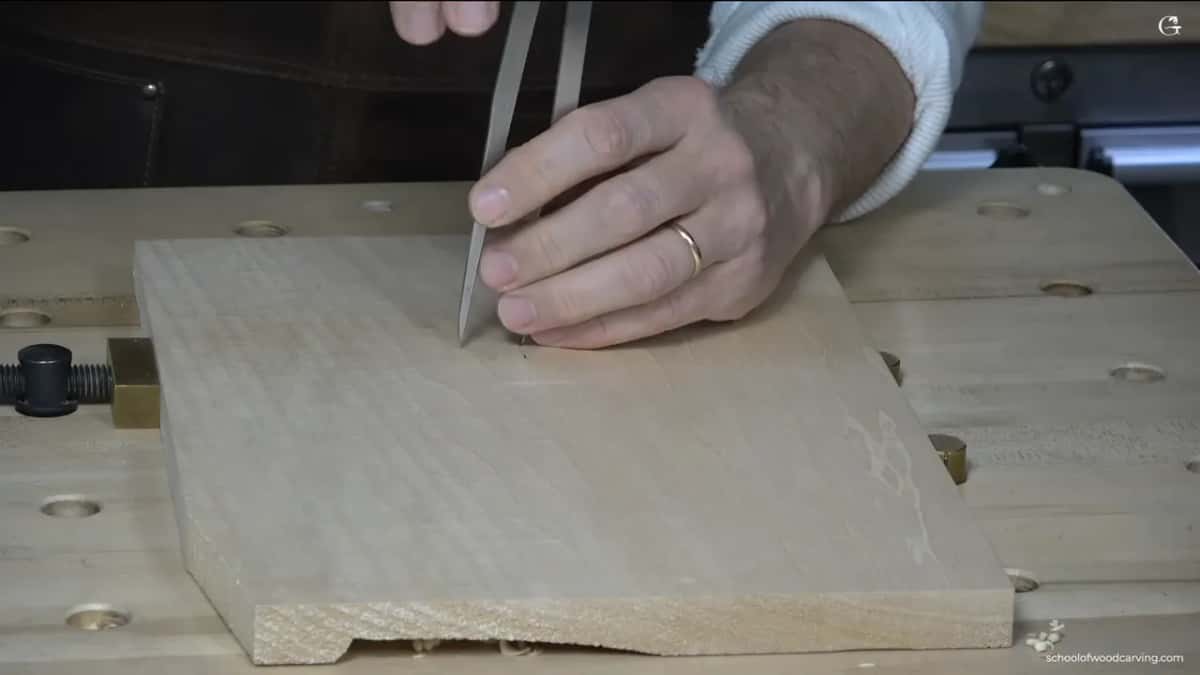
Stepping a circle onto a pale blank. Quiet grain like this is what bending stock looks like.
Step 3, keep it at a rolling boil the whole time
A pot that falls off the boil for ten minutes has not done 38 minutes of work. Damp stock needs heat without losing water, so keep the lid on and keep it topped up.
Step 4, move fast between pot and form
Your stick cools quicker than you think, so it goes out of the pot, onto the form, and under a tight strap without a pause. A curve needing more than about 3% difference between the outer and inner lengths needs end pressure, which means blocks or clamps working on that strap.
Step 5, hold the shape until it is cool and dry
People skip this step and then blame the wood. Cooling and drying both have to happen while the curve is still held. Release it early and it springs. Even done right the curve never fully settles. Rising moisture opens it, falling moisture tightens it, and repeated wet and dry cycles straighten it.
Bent stock needs restraint while it cools and dries, and the strap has to stay tight throughout.
Cold soak, hot soak, boiling or steam, what is the real difference?
Temperature decides whether lignin softens at all, and time decides whether you also start breaking it down. A cold soak swells wood and leaves it stiff.
| Water and heat | What it does inside the cell wall | Rough time | What it takes from the wood |
|---|---|---|---|
| A cold soak, days | Water fills the cells but lignin stays hard | Days on end | Grain lifts, and the piece swells badly |
| Hot tap water | Some softening, the outer face only, not the core | One hour | Color dulls on the outer face |
| Boiling or open steam | Lignin softens right through, so the whole stick bends | Under an hour | A little strength goes, and it darkens |
| Steam under pressure | Plastic enough, yes, but it bends less well after | Minutes, not hours | Brittle edges and torn fiber inside |
| Hours in the pot | Acid hydrolysis starts working on the hemicellulose itself | Hours, not minutes | Punky fiber that will not hold any fine detail |
Times assume atmospheric pressure. A pressure cooker is a different animal, and a worse one.
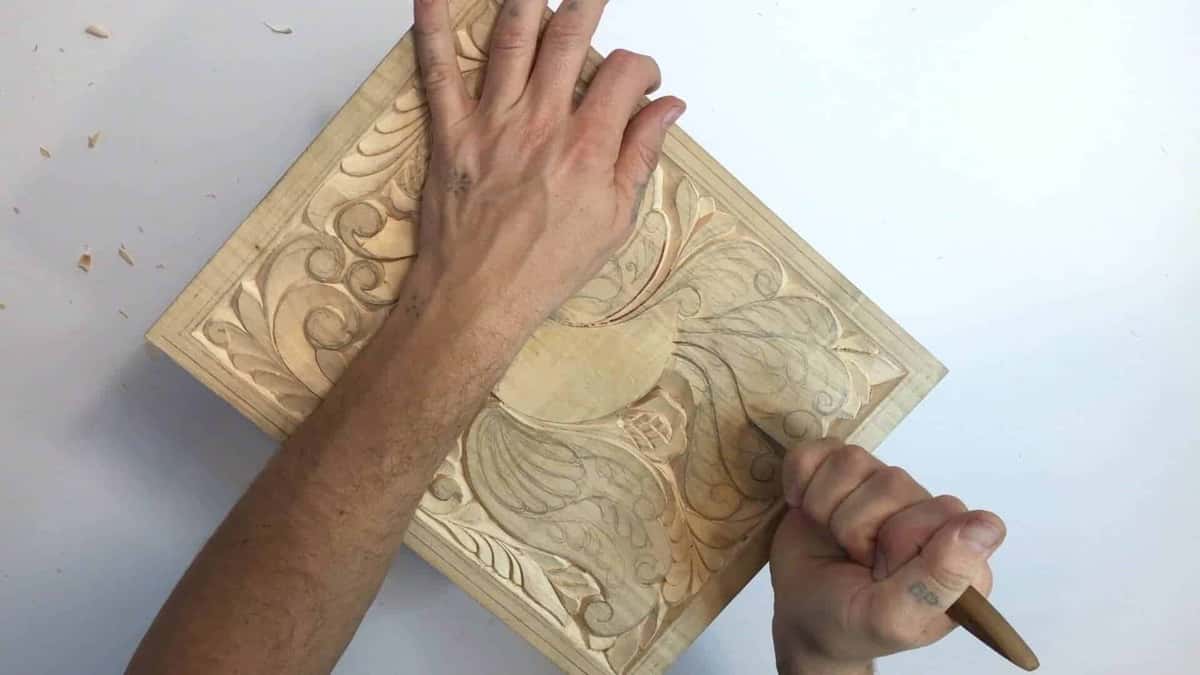
One hand flat and one hand driving, and wet stock under that grip crushes instead of parting.
That is a different question from how to make a hard block accept a gouge, and I have a separate piece on softening wood before carving. Whether to carve wet or dry at the bench is its own argument, settled in wet or dry wood at the moment of carving.
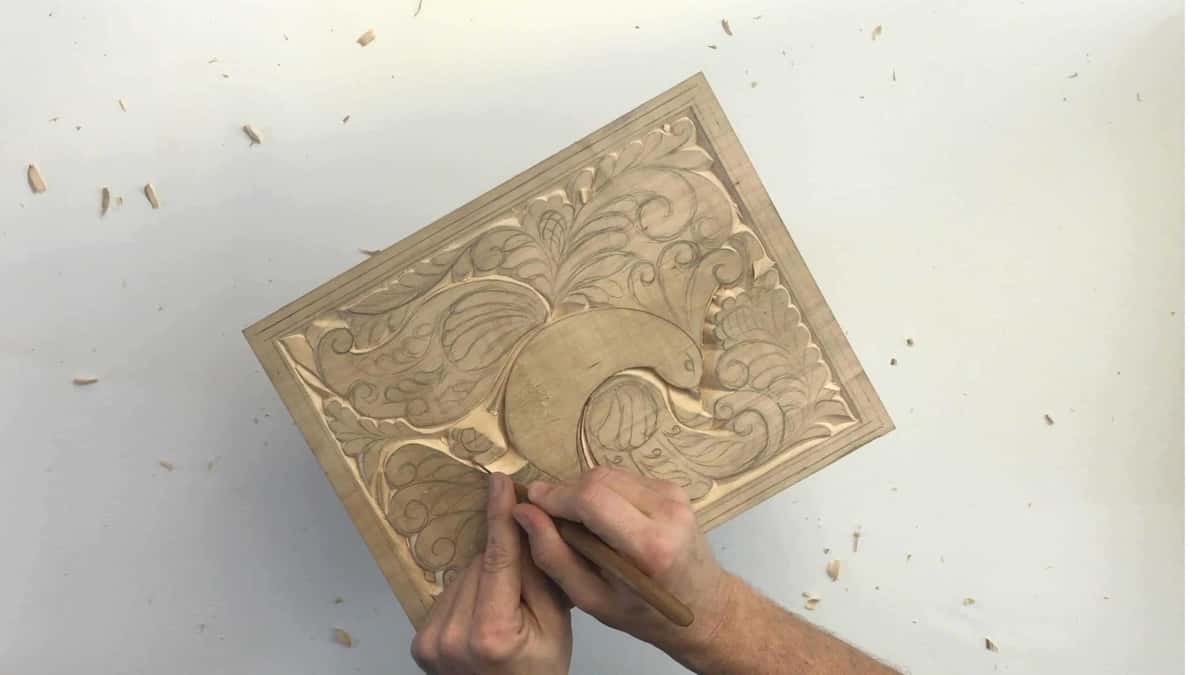
Chips leave a dry board whole. You lose that the moment the surface is wet.
Does boiling water darken wood?
Hot water dissolves the extractives in heartwood and carries them out to the face, where they dry down as a reddish brown film. That mechanism is described plainly in the finishing chapter on water soluble extractives.
I do not fight this. I use it.

A darkened old fragment beside a painted reference tile. Age and color both did that.
Workshop 17 of my beginner course, the Bird of Paradise kitchen cutting board, is the finishing lesson. No chemicals in it. I asked my wife, whenever she cooks, just put aside the onion husk. Husk went in a pan with a little baking soda, about one teaspoon is what I did, and some water, and I boiled that. After boiling about ten minutes the color started to develop, a yellowish brown. More boiling, more red. Four hours of boiled onion husk gave me stain number one.
Stain number two is my favorite and it has no onion in it at all. Walnut shells, water, a little baking soda, boiled about four hours. Really, really thick stain. Once dry it is the color of true walnut, and it is food safe, so the board goes straight back in the kitchen. I spilled some of mine across the bench that day. The stuff behaves like a dye, so more coats mean more color.
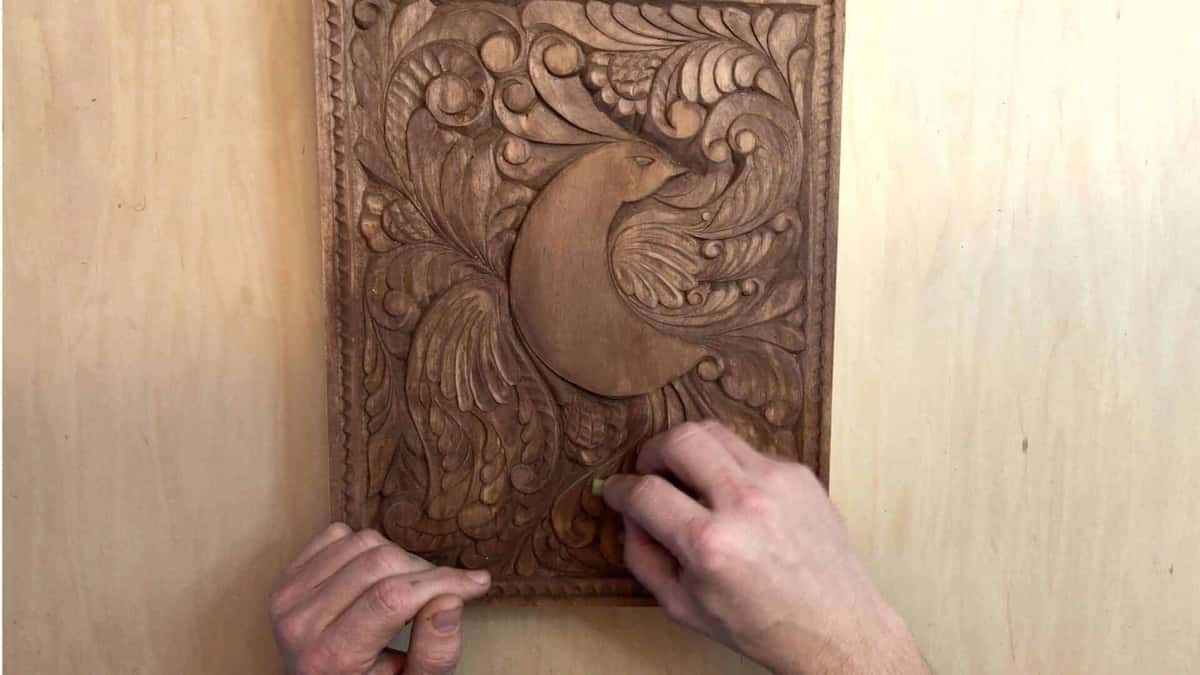
Four hours of boiled husks made that color.
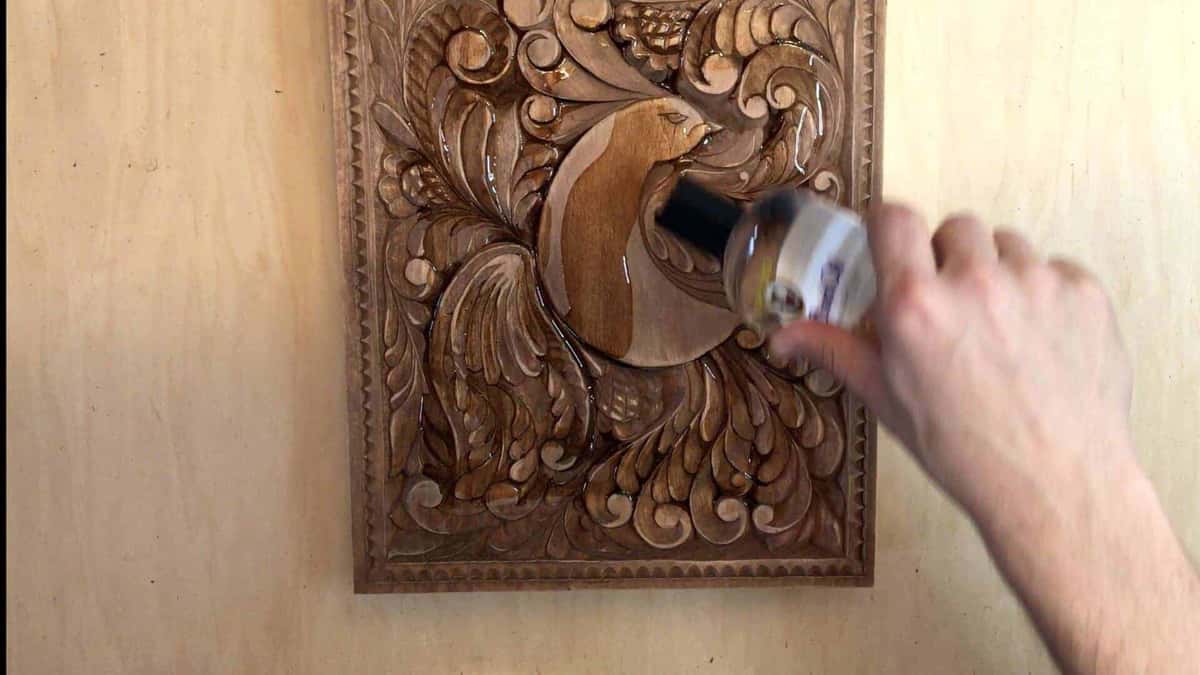
Color goes on wet and dark, then dries back, and each coat pulls it a shade deeper.
Medieval limewood looks brown for the same reason. Look at the work of Riemenschneider in Germany, Middle Ages, he used lime wood, the same wood exactly that we use today, and all his work has a brownish color. They had no chemicals like what we have right now. Boiled plant matter and boiled shells were the whole paint store.
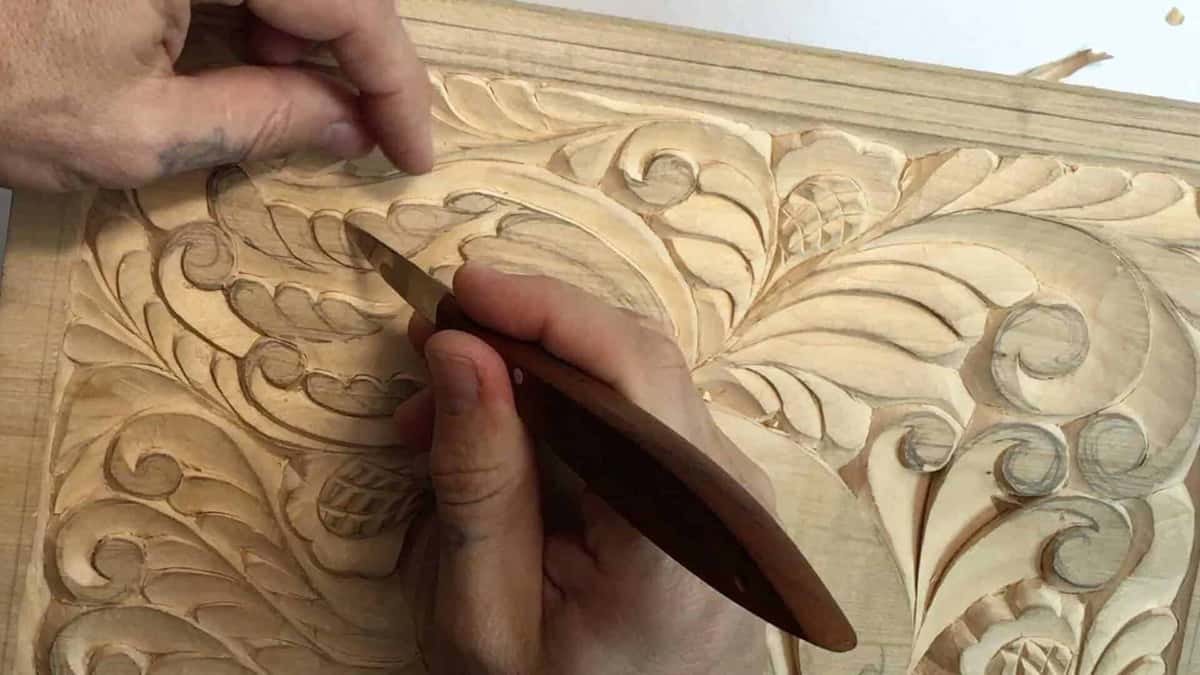
A long slice through pale stock. Color goes on darker than the raw face looks.
Hot water only colors a surface. It does not run deep. Carve into a boiled and dried board and the fresh face comes up pale again, which is a real nuisance if you soaked it hoping for even color. For color on carved work, oil before or after carving is the better argument to have.
Does boiling kill bugs and mold in wood?
Heat kills both, at a known temperature, held for a known time, measured at the core and never at the surface. The figure is 56 C, which is 133 F, held 30 continuous minutes right through the middle.
Shippers work to an international phytosanitary standard, and the biodeterioration chapter repeats it for lumber and timbers. Boiling water sits at 100 C, well past 56 C, so a genuine boil reaching the middle does the job. Watch that phrase about the middle. Time to core temperature swings with thickness, cross section and how wet the wood is. A thin strip gets there in a few minutes. A four inch block does not, and the chapter on heat sterilization of wood exists because of that gap.
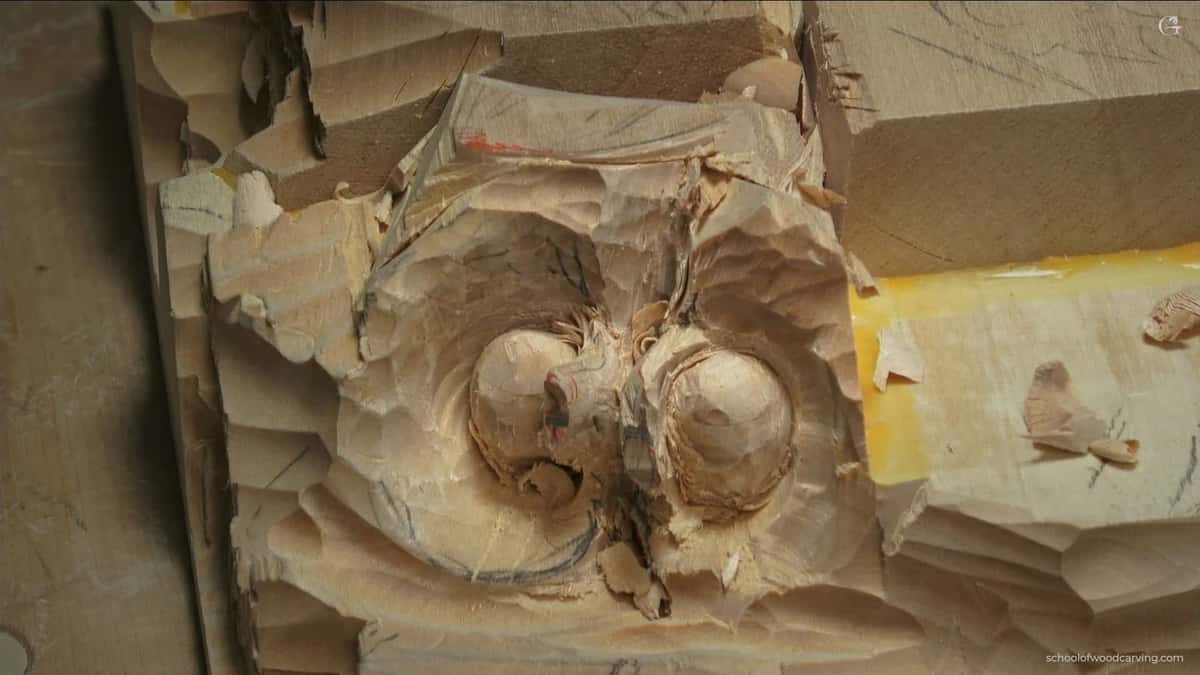
Damp or punky wood tears exactly like this, and no sharpening saves it.
Now the part that catches people out. Killing what is inside does not keep anything out. The University of California guide to wood boring beetles says it in one line: kiln drying lumber destroys beetle infestations, although it does not prevent reinfestation. Your pot gives the same deal. It sterilizes, leaves no residue, and the next beetle neither knows nor cares. The rule itself lives with the international phytosanitary standards.
Mold is a moisture argument. Serious decay only happens above fiber saturation, so above roughly 30% moisture. Air dried wood usually sits at 20% or under, which the handbook calls a reasonable margin of safety. Decay already in a board stops moving once it is dry. So a boil ending with a wet board in a warm shop has made things worse.
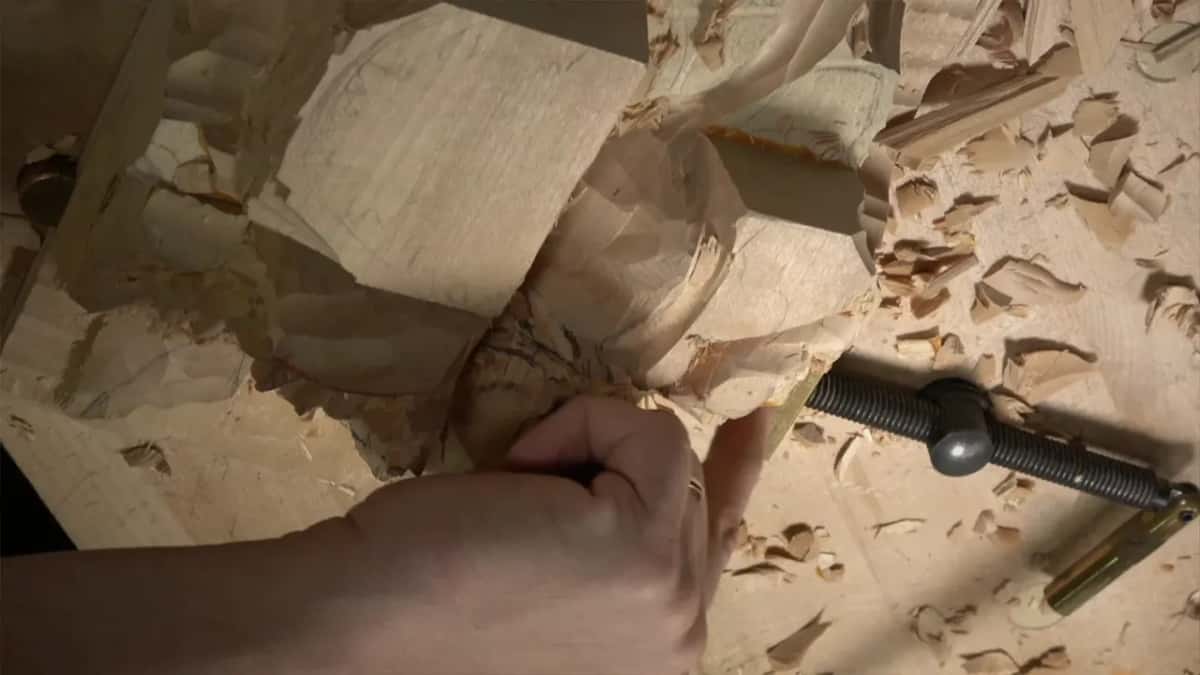
Chips heaped after heavy roughing. Dry wood breaks off in pieces like these.
My own rule on spalted wood, from the design course, puts it bluntly. If it is alive, if it is alive fungus, the movement is going to continue. That is why, when you like spalted wood and wood turning, you have to dry it really well before it is actually going to be rotten to death.
Where does a hot soak quietly ruin a piece?
Three places. Strength, surface, shape. Take strength first, because nobody measures it.
Heat has an irreversible effect on wood, separate from any softening. The handbook calls it degradation of the wood substance, with loss of weight and loss of strength, and points at acid hydrolysis of the hemicellulose. How much you lose rides on moisture, on temperature and on how long you hold it. Water hurts work to maximum load more than it hurts the modulus of rupture. The damage stacks, and six one month exposures do about what a single six month exposure does. A bent piece ends up weaker than a straight one too, though the handbook is honest that the loss rarely matters in service. The mechanical properties tables plot every bit of it.

Deep roses with the petal edges carved thin.
Surface next. A soaked face dries fuzzy, and lifted fiber has to be sliced off rather than sanded. Sharper edge, lower bevel than you would grind for a dry board. Sharpening for a damp surface is its own skill.

The edge does the work here, not the pressure, and a damp face will not forgive a dull one.
Shape is the expensive one. Any board that went to 30% moisture has to shed all of it again, and every point below fiber saturation costs it size. American basswood shrinks 6.6% radially, 9.3% tangentially and 15.8% by volume between green and bone dry, and basswood is the mildest wood on my bench. White oak does 5.6%, 10.5% and 16.3%. Checks and cups come out of exactly that movement, which is why I wrote up warping and cupping in carved work on its own. Thin work suffers worst, and that is the whole subject of stopping a thin carving from breaking or warping. A piece that keeps moving will not survive its first dry winter, and that is really the question behind how long a carving lasts.
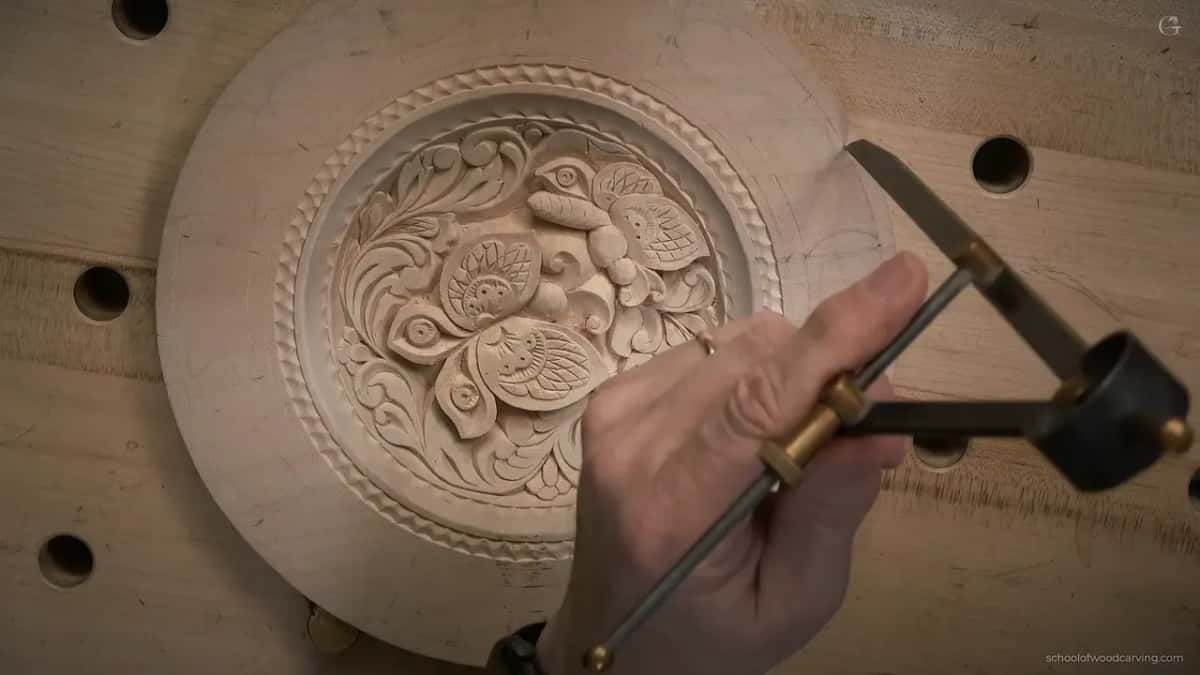
Six equal marks around a rim. A millimeter of movement shows in work like this.
Drying green stock is a separate craft with its own timetable, covered in drying green wood for carving at home and how long wood takes to dry. Background on the whole business sits in the overview of wood drying.
What I do at my own bench
Air dried was always my preferred method, and it still is. A blank gets years in my shop instead of an hour in hot water, and hot water would only put back the moisture those years took out.
Some boards have sat in my shop over ten years, and a few are twenty four, twenty five years old. French limewood, rift sawn, flames still showing. Kiln drying is the other road. They have a big, big, big stove, to be simple, and they fry it. They really fry those boards. It does exactly what the handbook warns about, heat plus moisture working on the wood substance.

Every step here was cut dry, and the pot stayed on the stove.
Boiling water earns its place in my shop for color. Glue is how I fight movement, and one thing is just when you are gluing the boards together, you are preventing that movement.
Plenty of people boil hard tropical stock, and there the species matters more than the method. Some of the hardest woods a beginner meets turned up in woods a beginner in Botswana can practice on, and no soak turns leadwood into basswood. Judging a board you already own sits in how to tell if wood is good for carving, getting a rough board to a usable blank is preparing raw wood for carving, and the kit you actually need is shorter than you think.
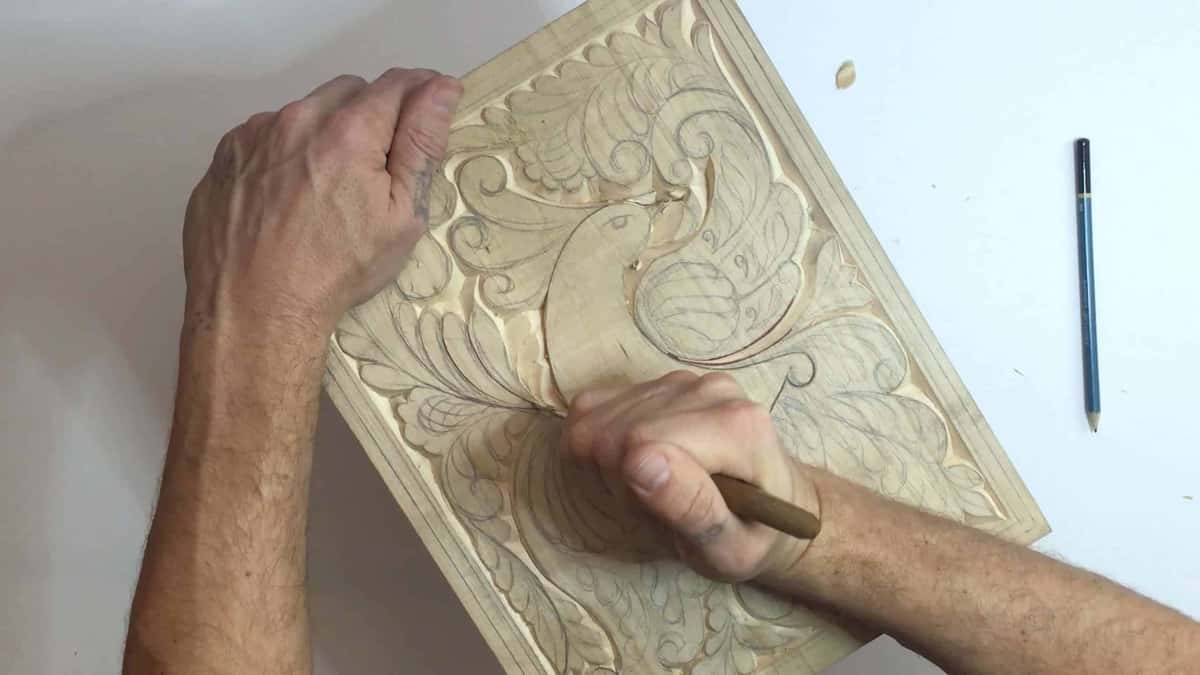
A pencil and a board, and no machine anywhere in the shot.
The finishing lesson with the onion husk and the walnut shells is workshop 17 of my beginner wood carving course. Stiffness figures behind all of this live in what the elastic modulus of wood means. If bent furniture is where you are heading, the history of bentwood furniture will eat an hour. So will Woodcarving Illustrated, and the whole USDA Wood Handbook costs nothing.
Frequently asked questions
Will boiling water make a hard block soft enough to carve?
At the surface, yes. All the way through, no, unless you boil for hours and accept punky fiber. A hot soak plasticizes wood for bending far better than it prepares a block for a gouge, and the core stays hard.
Can I pour boiling water on a finished carving to clean it?
Please do not. Water raises the grain, dissolves extractives that dry as a brown film, and drives the surface above fiber saturation. Your piece will move as it dries again, and fine detail fuzzes. Wipe it with a barely damp cloth instead.
How much does boiling weaken wood?
Enough to measure, rarely enough to break a carving. Permanent loss of weight and strength from heating in water is on record, with work to maximum load hit harder than bending strength. Hours cost more than minutes. Repeated soaks add up too.
Is a microwave better than a pot of boiling water?
For plasticizing, microwaving damp wood is listed as satisfactory and it needs much shorter times than a pot. Heat inside a microwave is uneven, so a thick block cooks in patches while its core stays cold. Keep it for small damp strips, never a dry block.
Can boiling stop a board from cracking later?
Usually the opposite. Boiling puts water back into cell walls, and every drop has to leave again. That second drying is where checks, cups and end splits come from, especially across wide or thin stock. Slow the drying down and clamp the piece flat.
Which woods take a steam or boil bend best?
White oak, red oak, elm, hickory, ash, beech, birch, maple, walnut, sweetgum and mahogany are the named ones. Most softwoods bend badly, with yew and yellow cedar the exceptions. Boat builders steam Douglas fir and redwood planking anyway.
Filed under
- basswood and boiling water effects
- best type of wood for carving
- best wood for carving after boiling
- boiling water and wood texture changes
- boiling water impact on wood strength
- boiling wood for carving projects
- carving blocks and boiling water
- color changes in boiled wood
- does boiling wood remove impurities
- effects of boiling water on wood
- flexibility of wood after boiling
- how boiling water changes wood
- how hot water affects wood carving
- results of boiling water on hardwood
- softening wood with hot water
- Understanding Wood for Carving
- wood boiling techniques for carving
- wood expansion with boiling water
- wood fibers and boiling water
- wood shrinkage from boiling
- wood transformation from boiling