
Alexander Grabovetskiy, woodcarver, School of Woodcarving · Published 2018
What is the difference between a long bend and a short bend spoon gouge?
Quick answer: A spoon gouge is a carving tool whose blade lifts away from the shank so the handle clears the wood. The bend can start close to the edge, halfway along, or a long way back. Short reaches into a tight pocket. Long sweeps a wide hollow. Medium covers most of what a relief panel asks for.
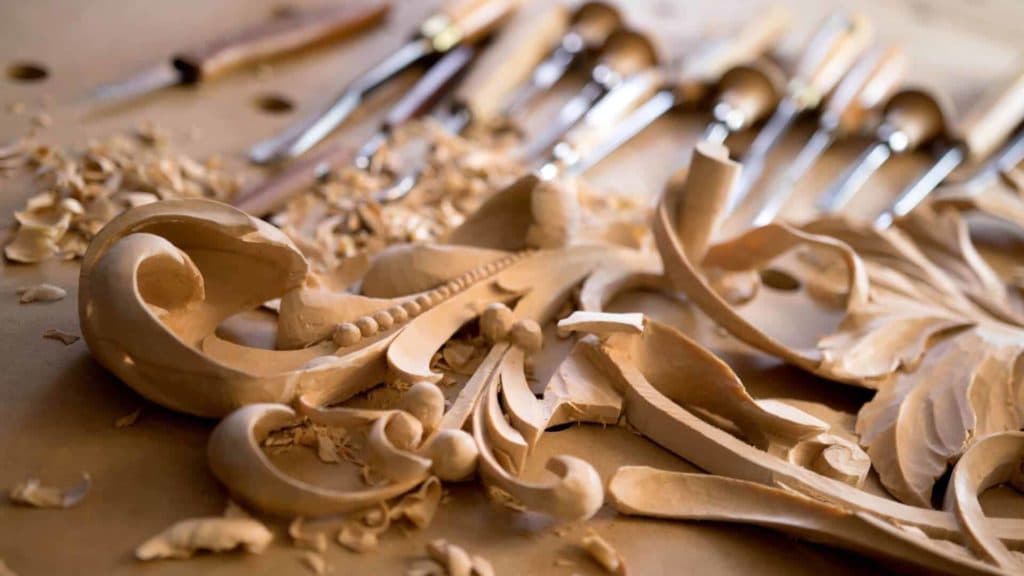
Hold three bent gouges up together and the difference shows at once. One lifts just behind the edge, one lifts near the middle, one lifts far back along the shank. That curve decides which hollow the tool can enter. On a pierced panel it also decides whether you reach the floor of an opening or stop short with the handle jammed against wood.
Have you ever pushed a straight gouge into a deep pocket and felt the handle touch the rim before the edge touched anything? Do your inside corners stay rough while every flat area comes up clean? The tool is not failing you. A straight blade cannot work underneath its own handle, and no amount of pushing changes that.
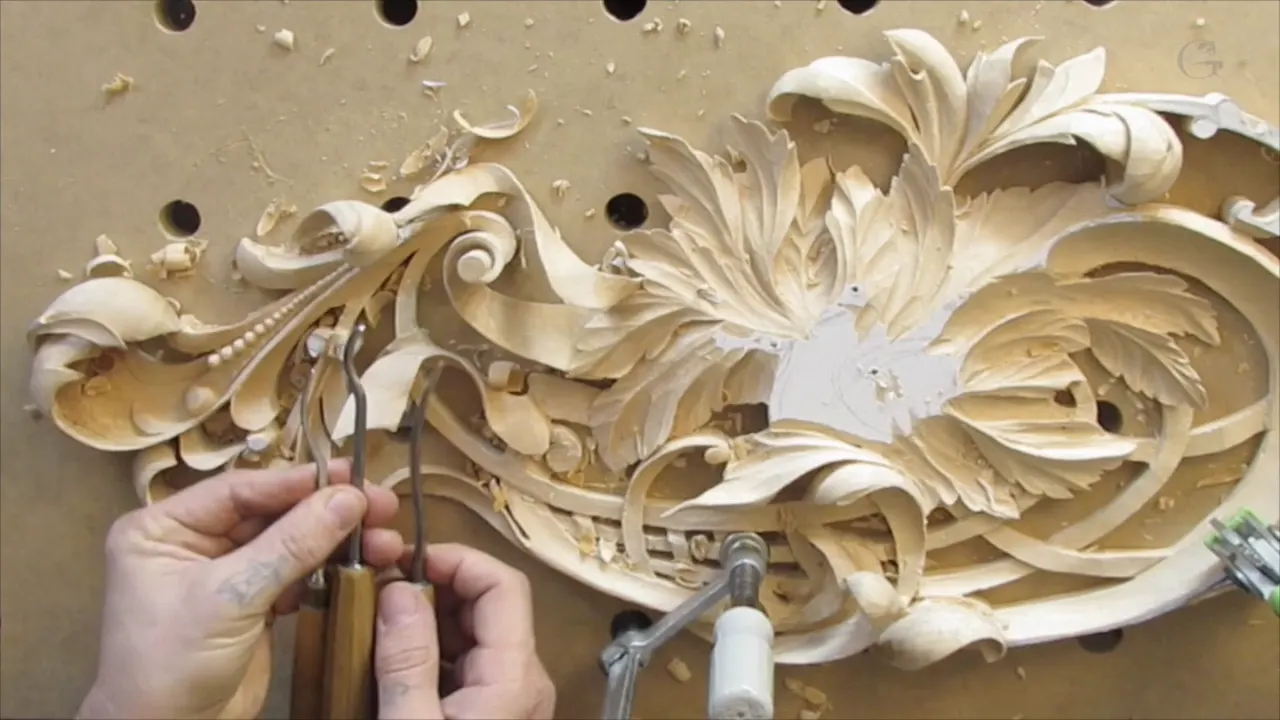
In workshop 20 of Carving Hashemi Flowers I stop in the middle of a job, lay three bent tools next to each other on the bench and show what the catalogue words actually mean. Then all three go back to work opening a hole clean through the panel.
What the curve actually buys you
- Room for your hand.
- A cut you can watch, not one hidden under your own knuckles as it happens.
- Reach into a recess a straight shank blocks.
- Control where it counts, down at the base of a pierced opening, where any slip shows from the front.
- Less levering, which is what snaps thin work.
Why does a carving gouge need a bend at all?
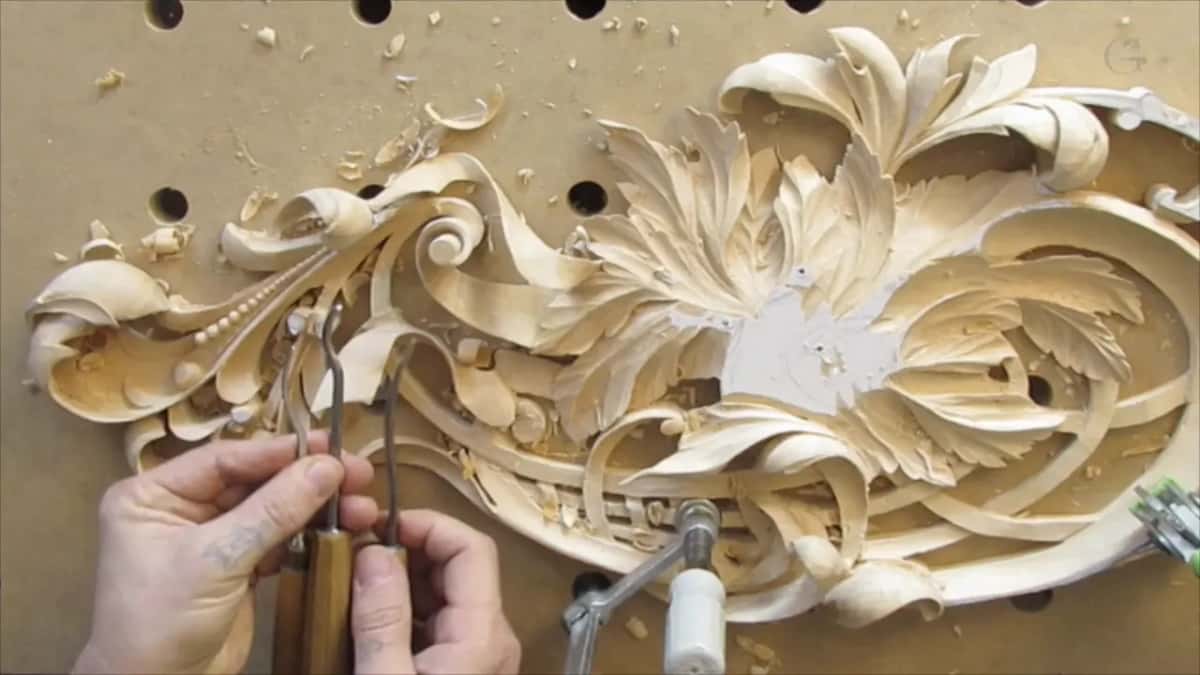
A bend exists for one reason, to get the handle out of the way of the wood you are trying to reach. Picture the panel in front of me. The leaf I want to clean sits down in a pocket walled on three sides, and the wall in front is exactly where a straight handle wants to be. Lift the blade and the handle rides clear while the edge lies flat on the floor.
Look at such a tool end on and it does resemble the bowl of a spoon raised off its stem, which is where the name came from. The picture matters less than the measurement, though. What you want to know is how far back the lift begins.
How far back does a long bend start?
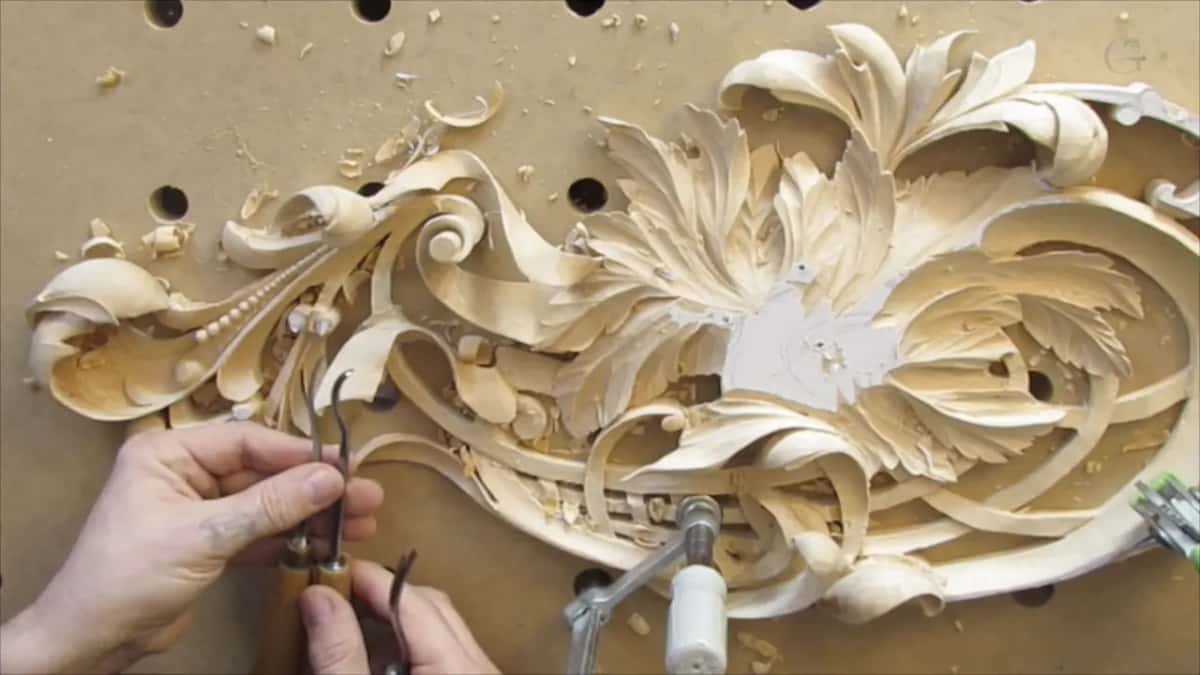
A long bend curves gradually, well down the shank, so the blade rises over a generous distance. Holding one to the camera I say it bends a really long way, which is the honest description. You get a shallow approach angle out of it. The edge enters almost parallel to the surface and sweeps a wide soft hollow without gouging a pit where it lands.
A short bend behaves the opposite way. Its curve begins almost at the bevel, so the tool turns up sharply, and mine starts somewhere right up near the edge. Such a blade drops into a pocket barely wider than itself and still cuts level down there. The sweep it can make is short.
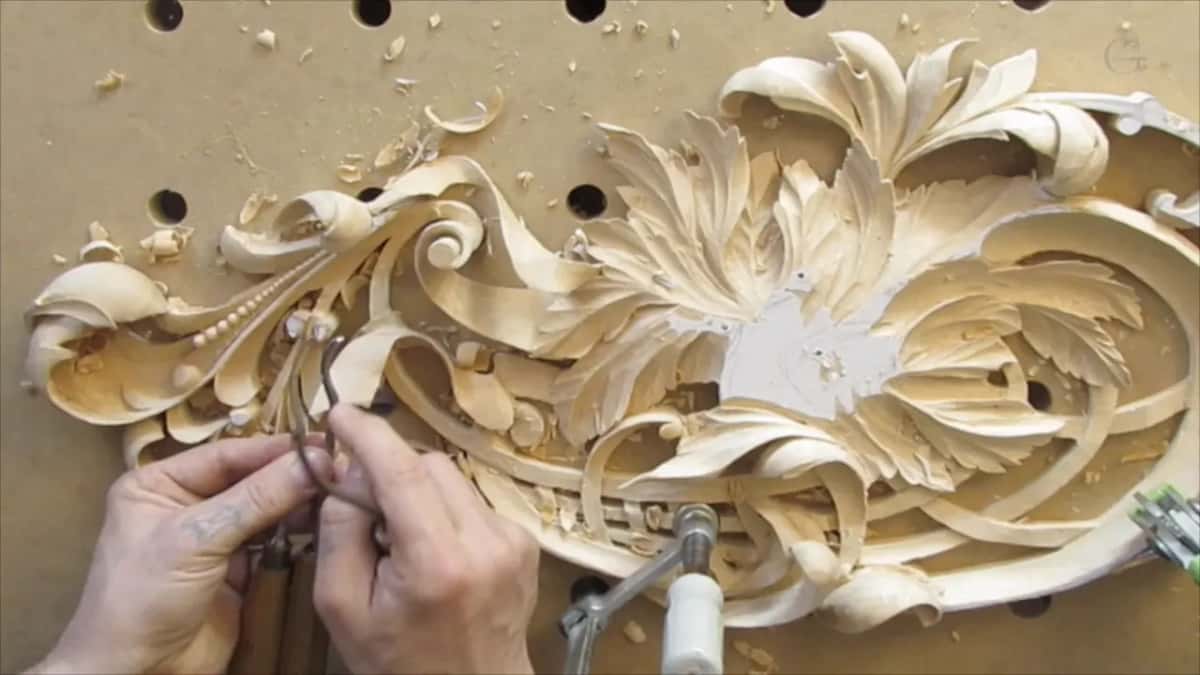
Medium sits between them and gets used most on a panel like this one. Both bent tools in workshop 20 are medium. First a number 8 around 3 mm wide, an eighth of an inch, then a number 6 at roughly 2.5 mm, 3/32 of an inch, once the first proves too wide for the space.
| Tool | Where the curve starts | Reach |
|---|---|---|
| Long bend | far back down the shank | wide hollows |
| Short bend | a whisker back from the bevel, almost nothing | tight inside corners, and down inside a pierced hole |
| Medium bend | halfway | most of a relief panel |
| Straight gouge | nowhere, the blade runs flat all the way | open ground, outside curves, anything your hand can sit above |
Which bend belongs in a pierced panel?
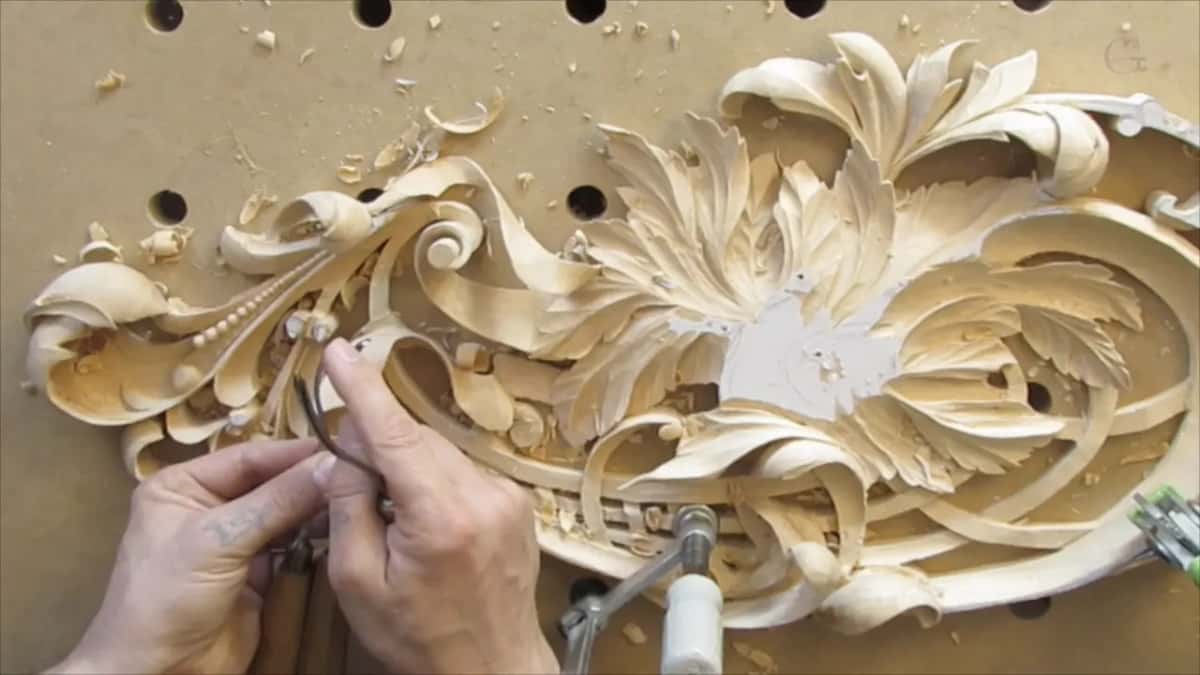
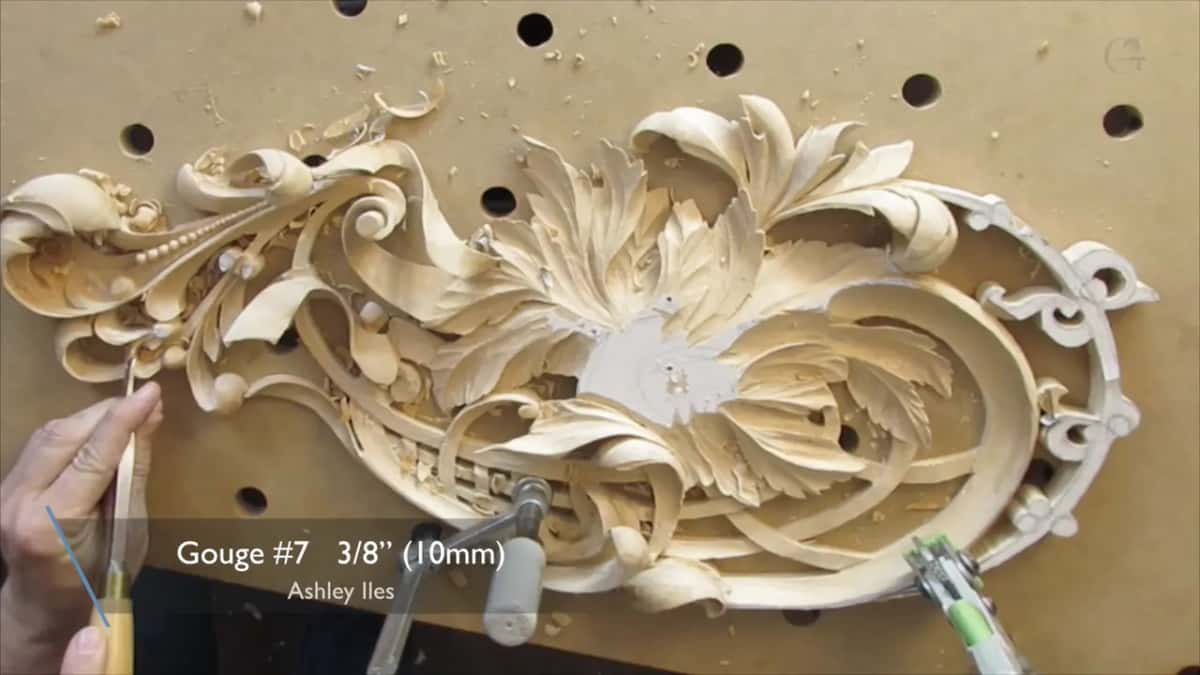
Short and medium do the work once the hole starts to open, while a straight tool does everything before that. The order here runs big straight tools first and the small bent ones last, never the reverse. The V tool opens the boundary, a number 7 at 10 mm (3/8 in) drops the wall vertically, and only then do the bent gouges go in to clean what is left down there.
Depth is the reason. Once a recess runs deeper than it is wide your knuckles meet the rim, and a tool that holds the handle high becomes the only way to keep cutting without levering. Levering breaks thin walls. On work this fragile one break can cost a week.
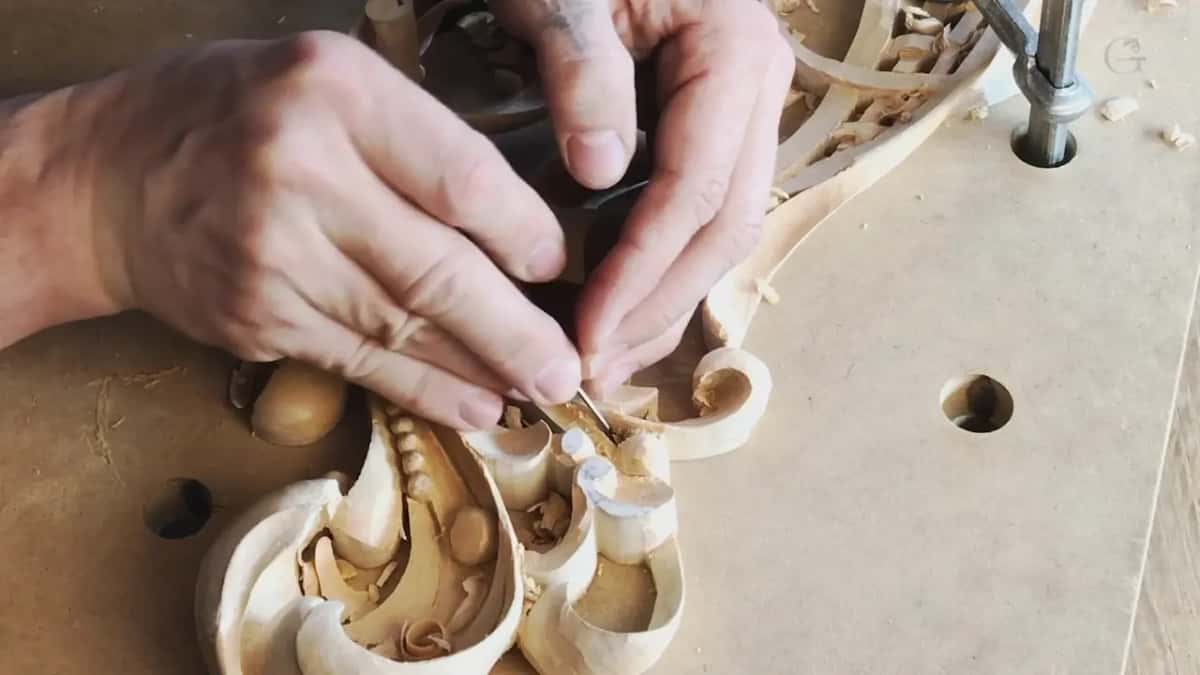
There was a moment here where I could have taken the whole panel back to the scroll saw and cut the waste out by machine. I said so on camera, then decided against it with no more reason than this: I did not think I needed it.
Naming things helps more than people expect. The little curl where a leaf begins gets called a volute start on my bench, and I say so in the workshop while cutting one. Architects call the grown up version a volute as well. Give a shape a name and your hand starts treating it as a shape instead of a patch of wood to remove.
Do you need all three bends?
Most carvers manage with one medium bend in a couple of widths. Buy a long bend on the day you start hollowing wide shallow dishes. A short bend earns its place the day a design asks you to work at the base of something narrow. The advice matches All about tools for Wood Carving, and it has not changed in forty years: buy for the job in front of you.
Mine holds a good deal more, naturally. Four decades of commissions leave you with tools bought for one panel and used twice since. A shelf is not a kit. Your kit is whatever you can keep genuinely sharp, and a bent tool takes longer there, because the stone cannot follow that curve from outside the way it follows a straight blade.
When sharpening bent tools is where you are stuck, the sharpening course covers the cradle that grips a curved shank and holds it true. Nothing else changes.
What matters more than the bend on a working panel?
Width beats curve nine times out of ten. Halfway through this section my medium bend number 8 stops fitting, and width turns out to be the answer, so the number 6 at 3/32 of an inch comes out and the work carries on. Then the corner tightens again and even that proves too wide.
Out comes a micro tool, a number 3 with a blade you could lose in a shirt pocket. Peter Benson designed those, Ashley Iles make them in England, and they exist for precisely this: a corner where a full sized handle is a liability. Other makers have their own answer to the same problem, and Pfeil in Switzerland grind some lovely small profiles too.
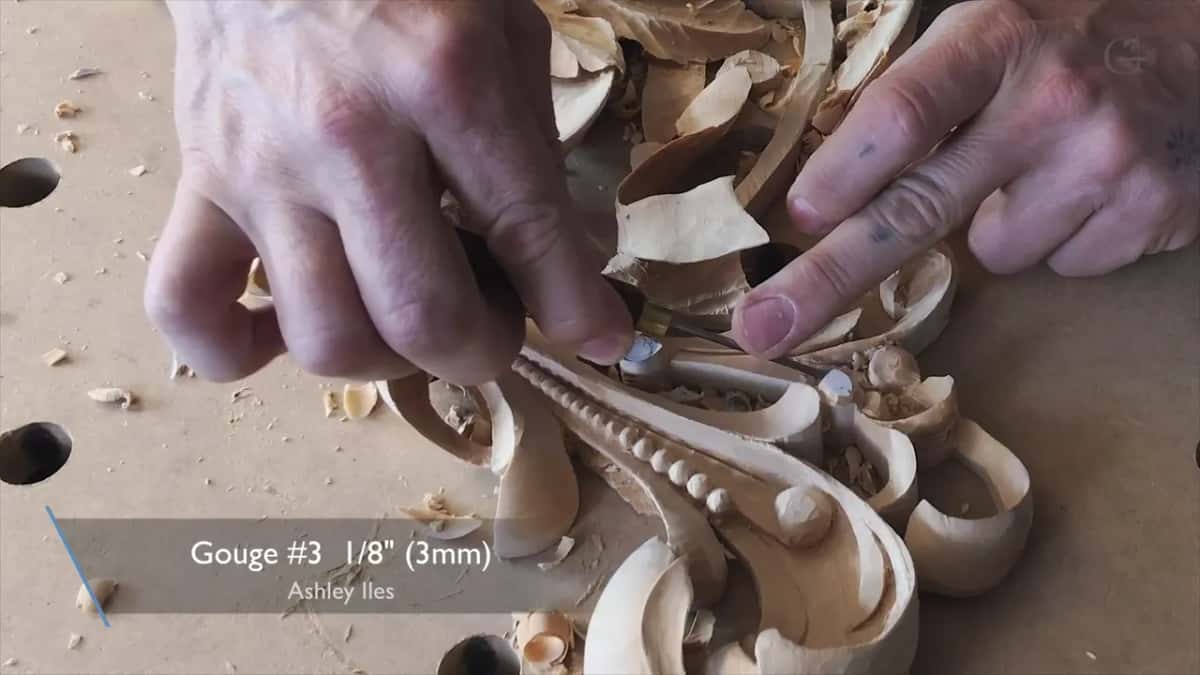
A second tool earns its keep beside them. A number 1 with a double bevel, 8 mm wide, shaves the last skin of waste where any curve would leave a dished mark behind. Even a chisel as plain as that has real work on a panel like this.
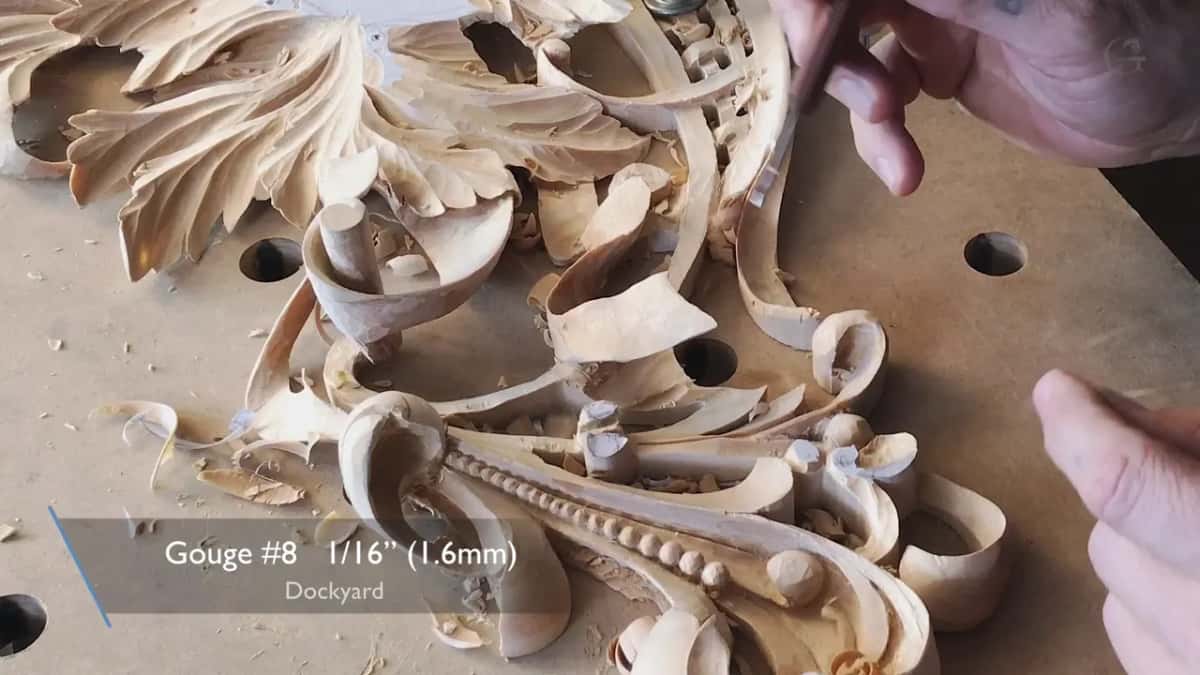
Depth control is its own discipline down there. Working with a gouge about 1.6 mm wide, a sixteenth of an inch, a number 8 from Dockyard, I keep repeating one warning to myself as much as to the camera: do not go below this level. A pierced panel has no spare thickness underneath. Punch through the bottom of a pocket and a hole appears somewhere the design never asked for one, and no filler on earth hides that from raking light.
How do you know a tool actually fits the curve?
Lay it into the line without pushing and watch the two corners. Full width contact means the sweep matches. Corners touching alone means the tool is too flat, and a middle that touches first means it is too round. I test exactly this on camera, take a number 8 around 8 mm (5/16 in), rest it against the edge, and say out loud that it does work before cutting anything.
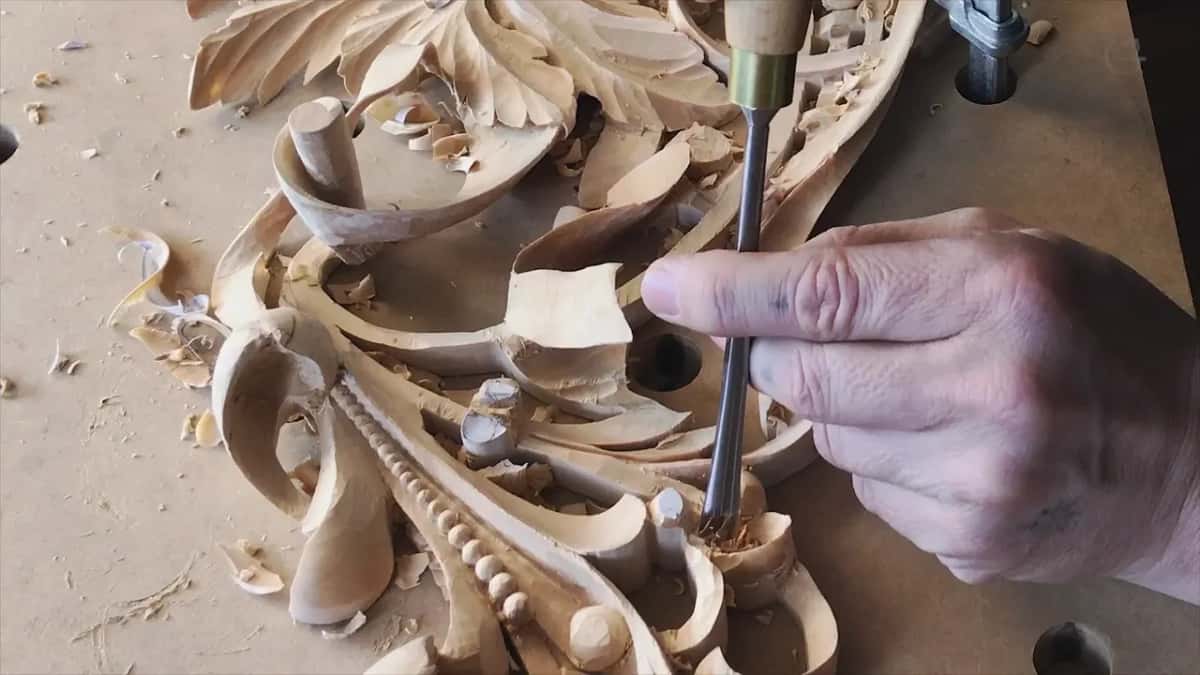
Matching the sweep is also how a line ends up flowing instead of kinking. Set the right gouge straight down, press once, and the leaf edge follows one arc rather than a string of short chords. Wrong sweep? Every joint is visible from across the room, and no amount of scraping hides it afterwards.
Ready to work at this level instead of reading about it? Every workshop sits inside tuition at the school, and this is one of forty nine in the course alone. Pick a starting point if you are new.
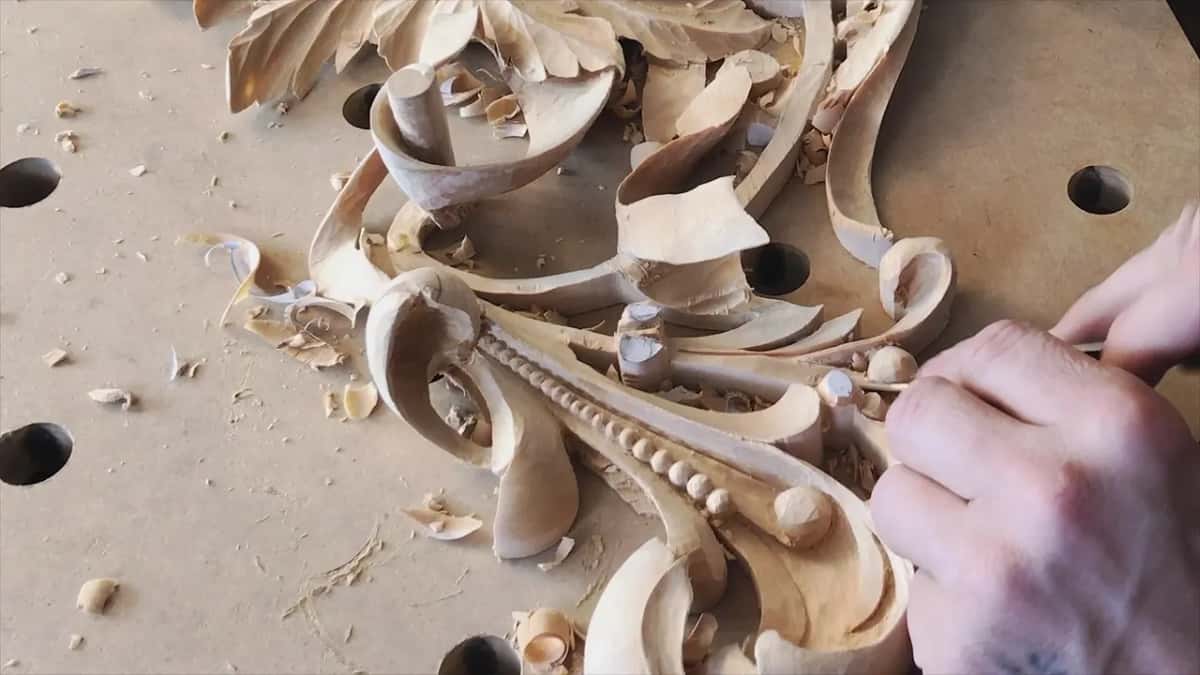
People ask what the bend costs you, and it is worth answering honestly. A bent blade is weaker than a straight one of the same width, because the metal has been worked into a curve and the section is thinner where it turns. Lean on the handle and you can spring it. Hand pressure suits these tools better than a mallet. Money is the other cost. A curved blade needs more grinding at the factory, and the price follows. Both costs are real, and both are worth paying the day a pocket beats your straight gouges.
Why not force it with a bigger tool?
Bigger is faster, and I say so plainly before warning against it. A one inch number 7 takes that blend in what I called one beautiful cut, where a small bent gouge wants many. I have worked that way many times. What goes missing is control, and near a pierced edge control is the entire job.
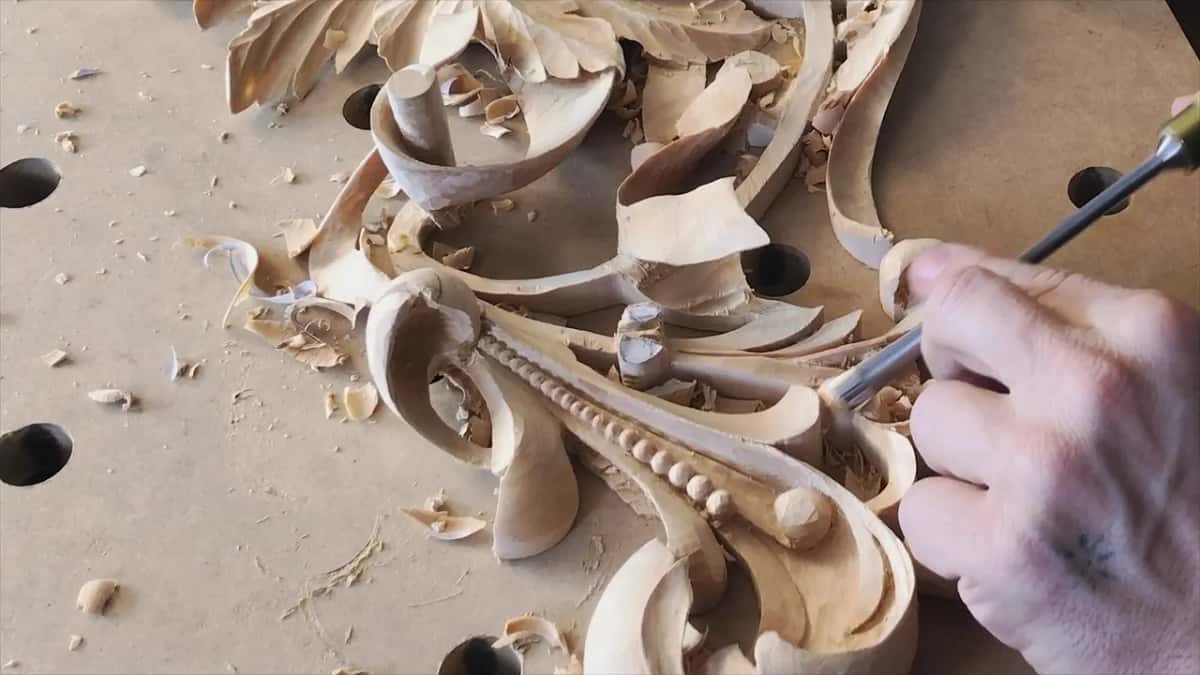
So: small cuts, no forcing. The minutes that costs are part of the price of the panel. Spending a few extra minutes beats forcing a cut and making a mistake nothing can undo. Wood does not grow back. Call it arithmetic instead of a slogan: one broken leaf on a pierced panel means recarving everything that touches it.
Waste walls get the same caution. To pierce right through, the V tool goes on its side and shaves the wall down, attacking from one face, then the panel rotates and I come at it from the other, using a small rotating movement, never a shove. Two cuts meeting in the middle give you a clean opening.
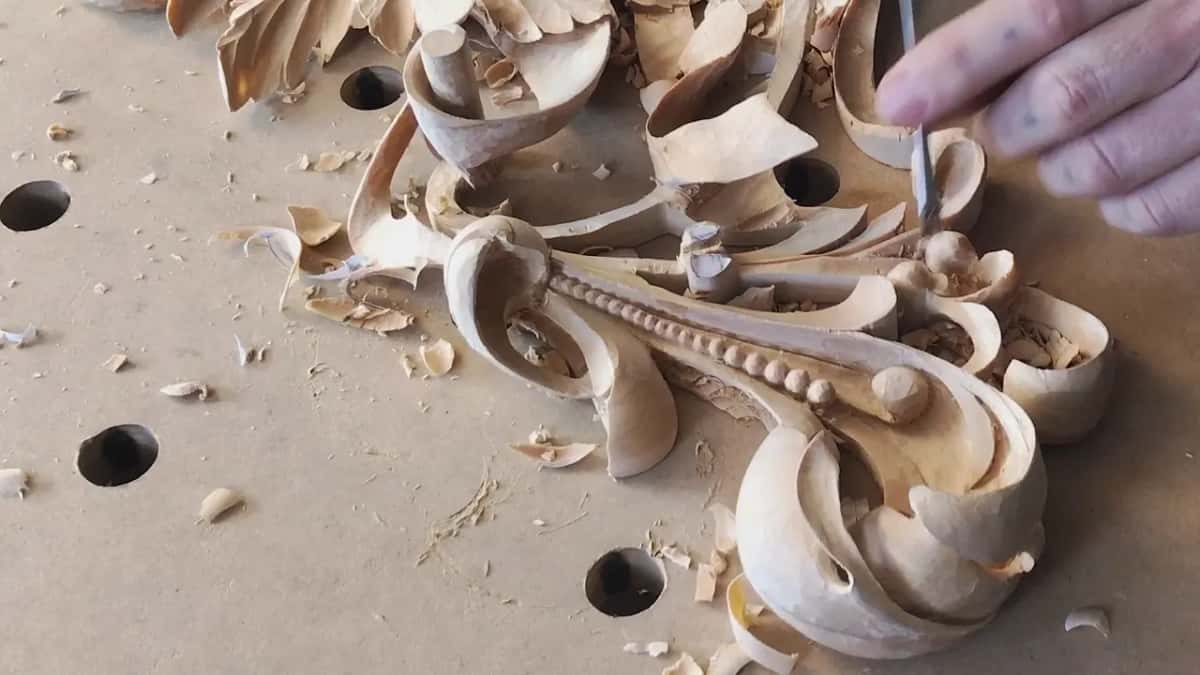
What does the finished opening look like?
Light comes through, which is the whole point of openwork. A leaf with air behind it reads as a leaf. The same leaf against solid ground reads as a picture of one, and a visitor standing in front of your panel will feel the difference without ever being able to name it. That gap between feeling and naming is most of what relief is for.
Getting there took a number 5 at 6 mm (a quarter inch), a number 9 spoon at 2 mm for the last shreds of waste, and a small number 3 at 3 mm to clean the walls of the hole. Undercutting then happens from behind, a job of its own that the course treats separately.
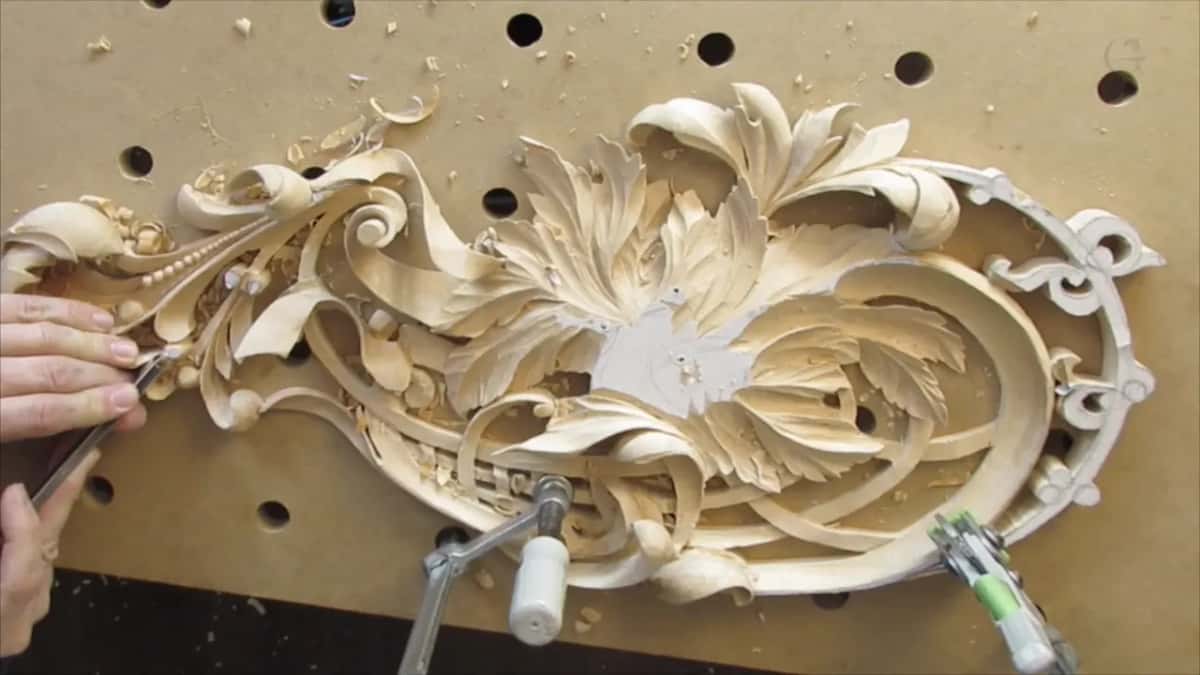
One decision in this workshop had nothing to do with tools. Two elements sat at identical heights and the panel looked flat, so I dropped one of them a little and said afterwards it was the right decision. Equal heights make carved foliage look printed.
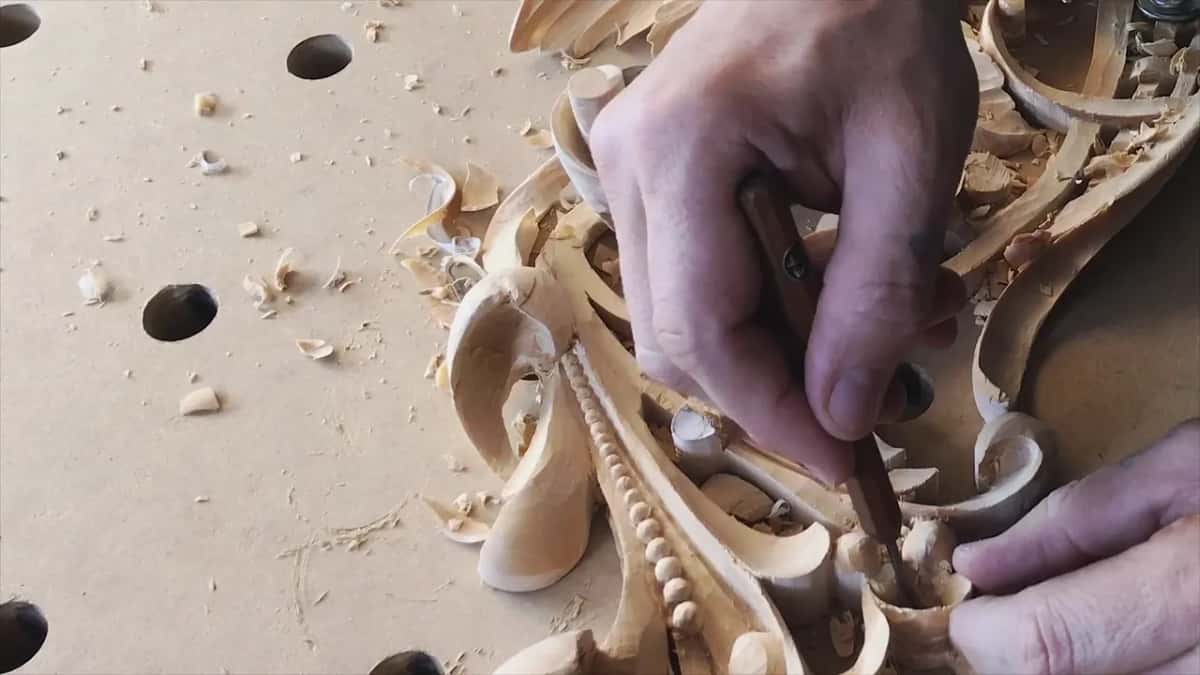
American basswood takes all of this without complaint, which is why the panel is basswood and not oak. A bent tool cutting across the grain inside a hollow asks a great deal of the fibres, and Tilia gives them up cleanly. Run the same sequence in a ring porous timber and your opening will tear at the walls.
Carvers before us solved it the same way. Work by Grinling Gibbons hangs in the sculpture collection at the V and A, and there are undercut hollows in it that no straight blade can enter. Whatever he reached them with had a bend. Go and look at the shadows under the flowers, then try to reproduce one at home with a straight number 5. Museums such as the Getty put catalogues online now. That was not true when I was twenty and hunting for photographs of carved shadows.
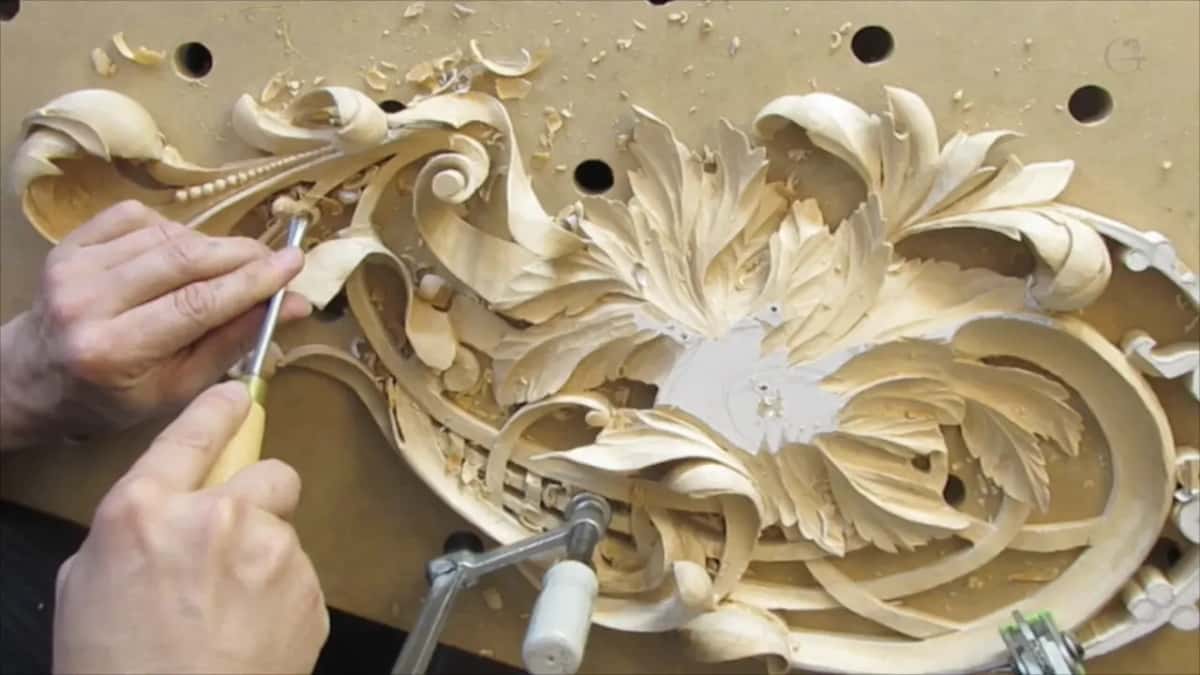
Three curves, three reaches, and whichever one is in your hand sets how deep the work can go. Borrow a long bend, a short bend and a medium, and hold them together once. You will never need the definitions again. The lessons map shows where this sits among the rest, and the Roman acanthus course is a gentler place to practise before a pierced panel.
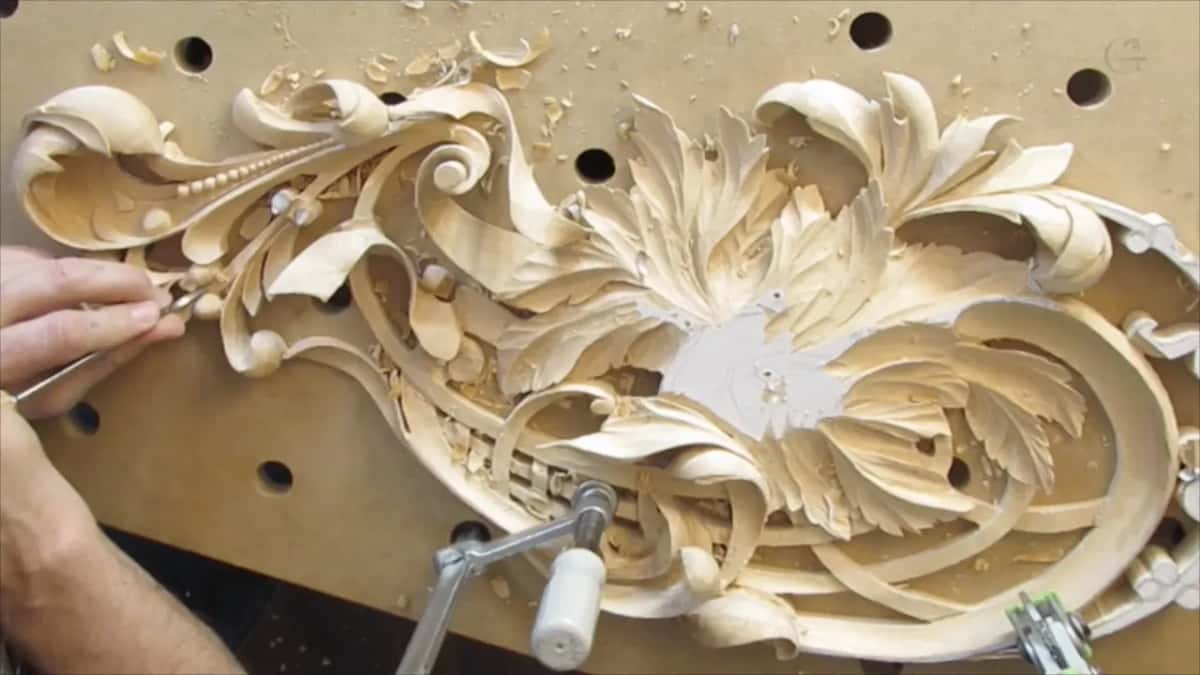
How it's done
- Open the line straight. Run the V tool round the boundary and drop the wall vertically with a straight number 7 before any bent tool appears.
- Go bent when knuckles hit. Switch to a medium bend the moment your hand meets the rim of the recess rather than the wood you want.
- Narrow, not curvier. When a medium bend stops fitting, reach for less width first. Curve is rarely the thing that is wrong.
- Match the sweep. Rest the edge in the line under no pressure. Contact across the full width means the tool fits; corners alone means too flat.
- Pierce from both faces. Lay the V tool on its side, shave from one face, turn the panel, meet your own cut coming the other way.
- Finish with the micro. Clean the walls of the opening using a number 3 micro tool or a plain number 1, where a curve would dish the surface.
Frequently asked questions
Is a spoon gouge the same thing as a bent gouge?
Carvers use both words for one family of tools, where the blade rises away from the line of the handle. Some catalogues reserve spoon for sharper curves and call gentler ones long bent. Read the picture, never the label.
Can you sharpen a bent gouge on a flat stone?
Not properly, since the curve lifts the edge off the surface and your fingers cannot hold it steady. A cradle jig gripping the shank solves the whole problem. Everything after that follows the ordinary routine for any gouge.
Which bend should a beginner buy first?
Medium, in one small width, and only after a design has genuinely defeated your straight tools. Buying a full set of curves before meeting the problem they solve leaves you with shelf decoration and a lighter wallet.
What to carve next