

Alexander Grabovetskiy, woodcarver, School of Woodcarving · Published 2017
What size should the holes in a carving bench be?
Quick answer: Clamp hole size is decided by whatever drops into it. The clamps I use from Festool need holes of 20 mm exactly, a little wider than the North American size, while Veritas dogs and the bench clamps from Lee Valley take 19 mm. Buy the clamps first, then drill to match them.
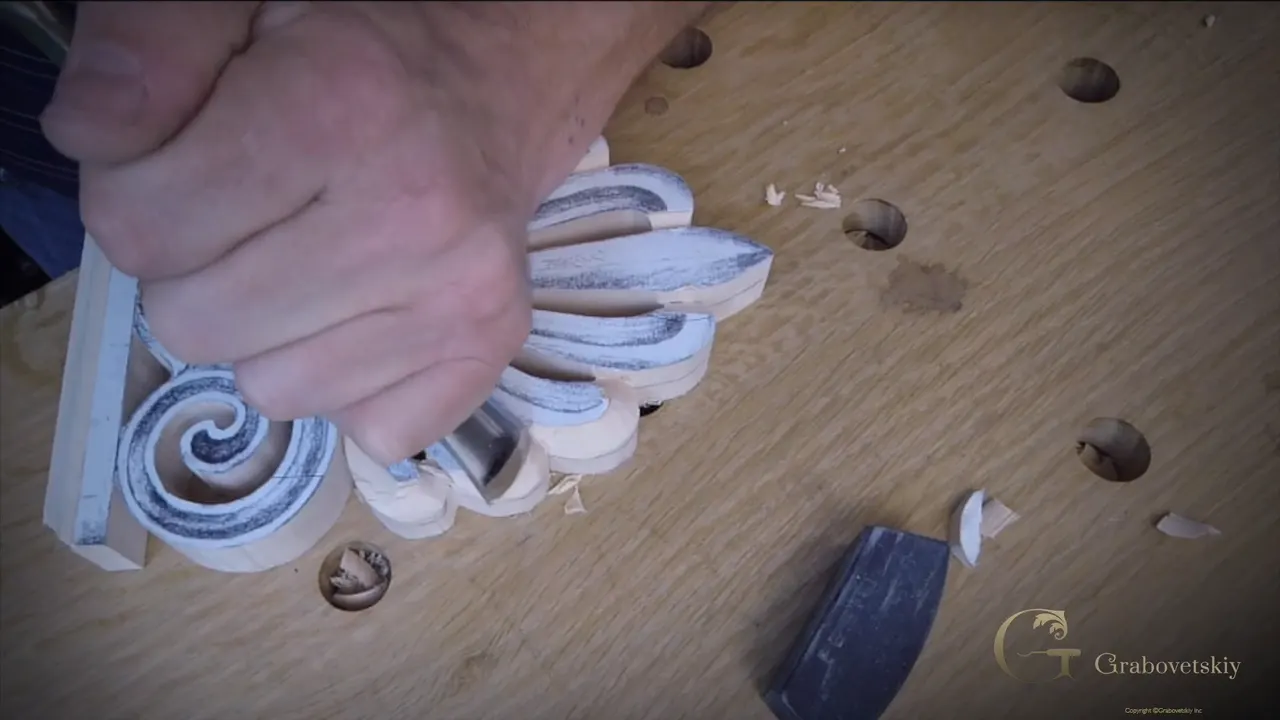
Bench dog hole size is set by the clamp or dog you will drop into the hole, so pick the hardware first and the drill bit second. My Festool clamps want 20 mm exactly, a hair over 3/4. The Veritas dogs and the bench clamps sold by Lee Valley want 19 mm, the North American 3/4 inch.
Does your carving slide when the gouge pushes on it? Do you want both hands on the tool, and nothing standing up in front of your eye? So the holes in your bench matter more than they look.
I run both sizes in my shop, on different benches and boards. You will see which hole each clamp or dog wants, how far apart I drilled mine, and how I clamp a carving so I can work all the way around it.
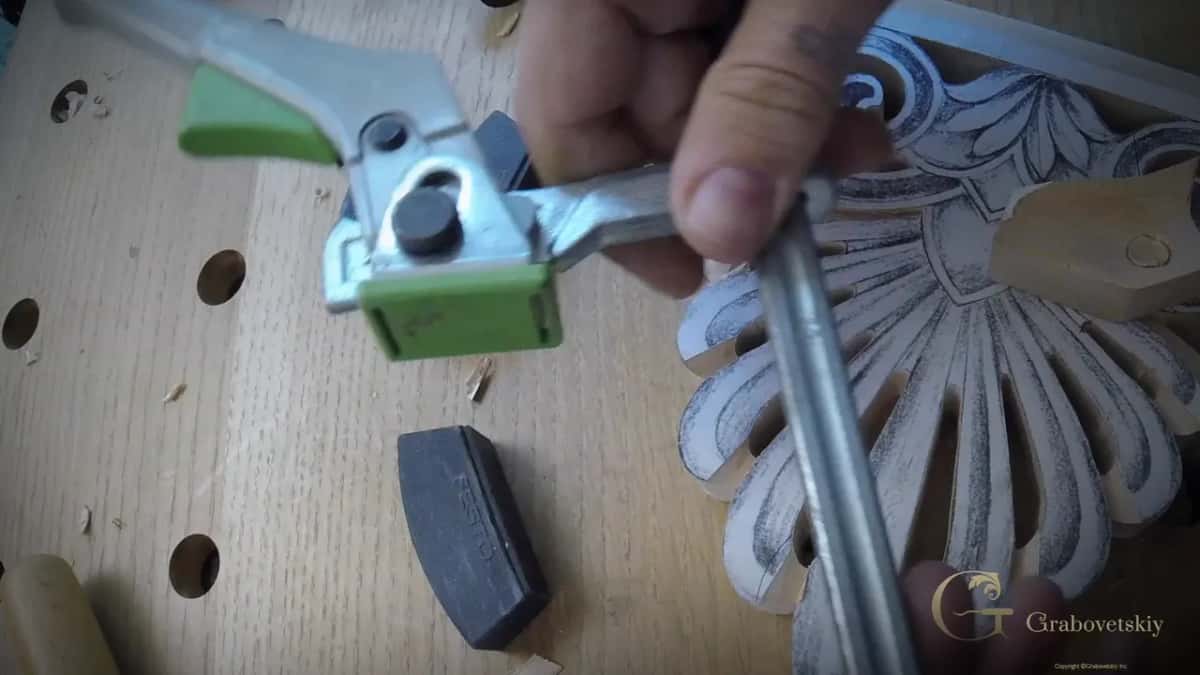
The short version, in six lines
- A Festool clamp needs a metric hole, 20 mm.
- Hardware from Veritas and Lee Valley is made for holes of 19 mm, and one of my benches is drilled to exactly that size.
- My boards have holes roughly 10 cm apart.
- Leather glued onto brass or bronze keeps bare metal off the edge of a piece.
- Dogs sit low.
- One clamp often holds, and on Hashemi 42 I added a second one anyway to reinforce it.
Which bench dog hole size goes with which clamp?
Each piece of hardware is made for one hole. Festool clamps drop into 20 mm, and in Europe you sometimes find a workbench with just that size, the standard for the Festool table. The North American size is 19 mm.
I put it this way while carving the Greek acroterion. Not necessarily Festool, any bench clamps will do. There are plenty of them. Veritas makes some for benches, and in Canada you can order them from Lee Valley. Those want holes of exactly three quarters, not metric. In my case it's 20 mm, just because of the Festool clamps.
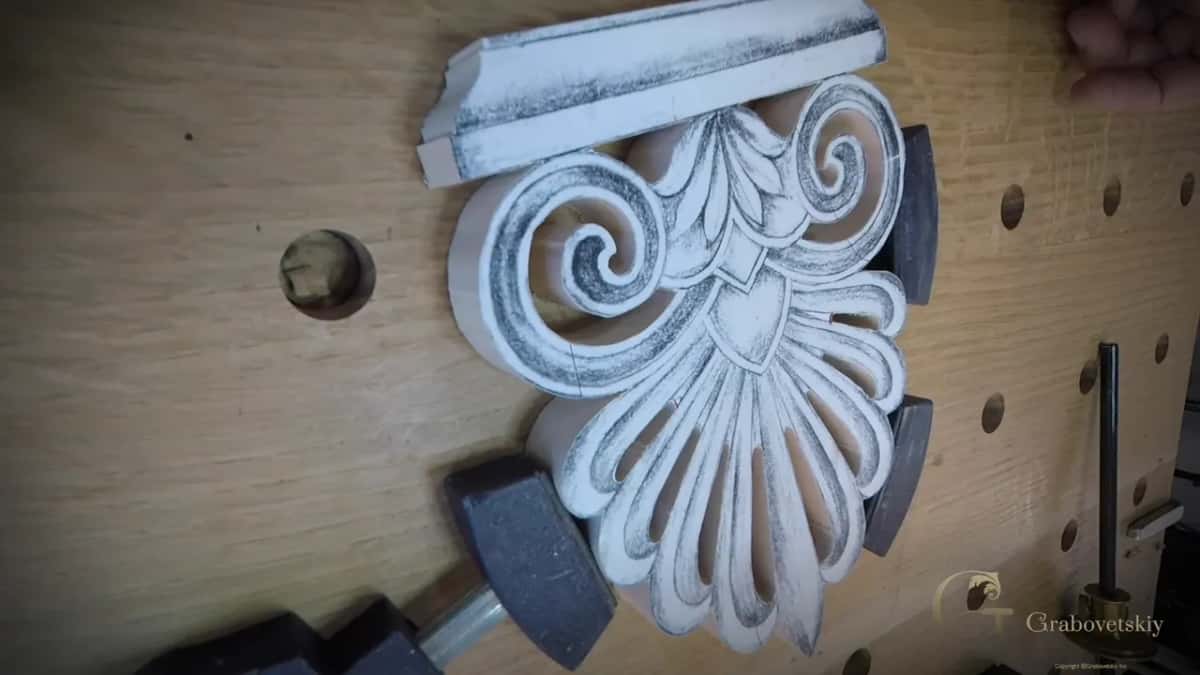
That bench is a small one. It's about 30 inches by 21, roughly 76 by 53 cm, and the top comes to about my elbow. In the first acroterion lesson I showed the holes I drilled in it for my Festool clamps, and I told you I love that system. I think it's probably a really unique clamp. It's easy to place in the hole, I can position it on my table, and it gets really tight. I can't even move it.
So why 20 and not 3/4? You could bore three-quarter holes instead, as I said in Hashemi Flowers lesson 15. I use other types of Festool clamps too, and they fit perfectly inside the metric ones.
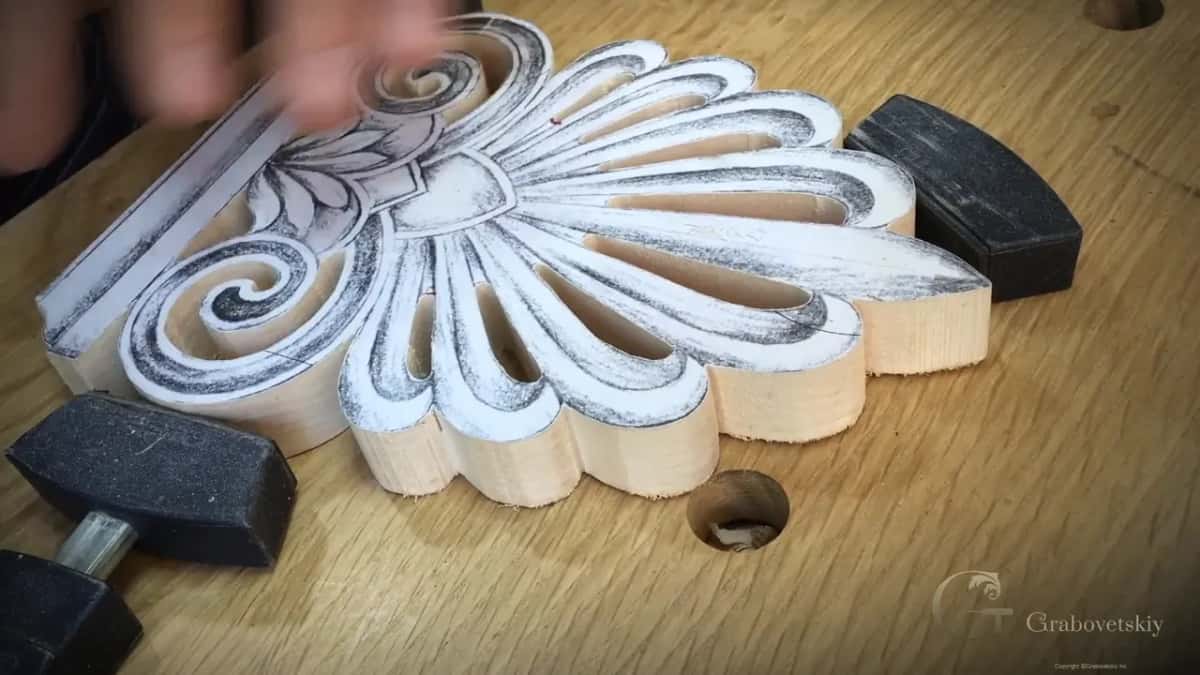
Does one millimeter between the sizes really matter?
Yes, and I warned about it on camera. An inch is 25.4 mm, so 3/4 inch comes to 19.05 mm, and the two standards sit about a millimeter apart. Carving the Venetian Flowers Rosette, some of you asked what I use for holding, so I showed my Veritas bench dogs. Bronze dogs. They go in 19 mm holes. So it's not 20, just make sure. A bench drilled to Festool's 20 mm won't work with those dogs.
The Festool side has its own rule. In the Lily Box lesson I clamped onto a board of MDF that was 19 mm thick, and still the holes in it were exactly 20 mm. Not 3/4. If you want the Festool clamps, I said, make sure your hole is exactly the same as the diameter of the clamp, which is 20 mm, if I'm not mistaken. And I don't think I am.
That board was 19 mm thick, while every hole in it measured 20 mm across.

Can one bench take both hole sizes?
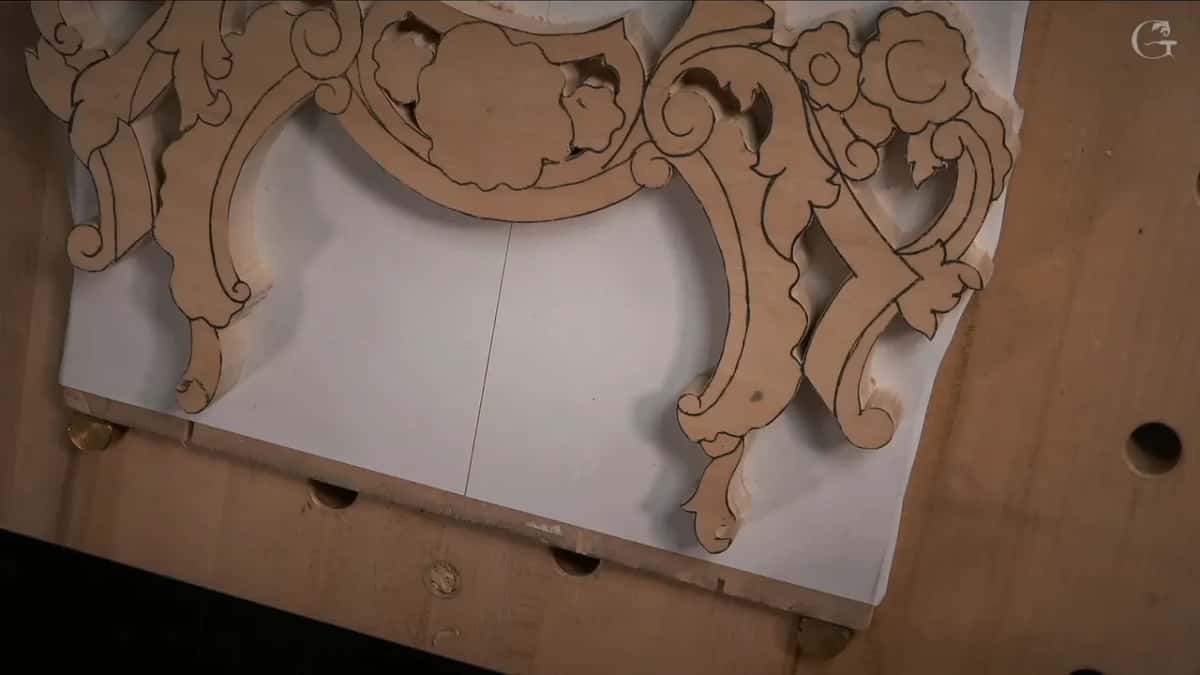
That's what I was thinking about out loud on the Floral and Molding panel. The holes in that bench are 19 mm, three quarters of an inch to be exact, and the Veritas solid brass pegs fit them. I could modify it, I said. Make extra holes right between the old ones and make those 20 mm, by router or by drill. That way the clamps by Festool would work on that bench as well as the normal North American pieces.
I thought about it, I said. Then the brass pegs went in, a couple of them on both ends and another one on the opposite side, and I said that is solid, really solid.
Do the holes have to be in the bench itself?
No. On some of the work I've done I used pretty much just an MDF board, drilled for the Festool clamps. That's also an option, I said, in the same talk about the brass pegs.
On the Lily Box that board even went into my vise. A really good, flexible, movable workbench, I called it. Yeah, it's not as stable and not as solid, but I could rotate it and attack from different positions, this way, that way, and I've done multiple pieces set up like that.
How far apart should bench holes be?
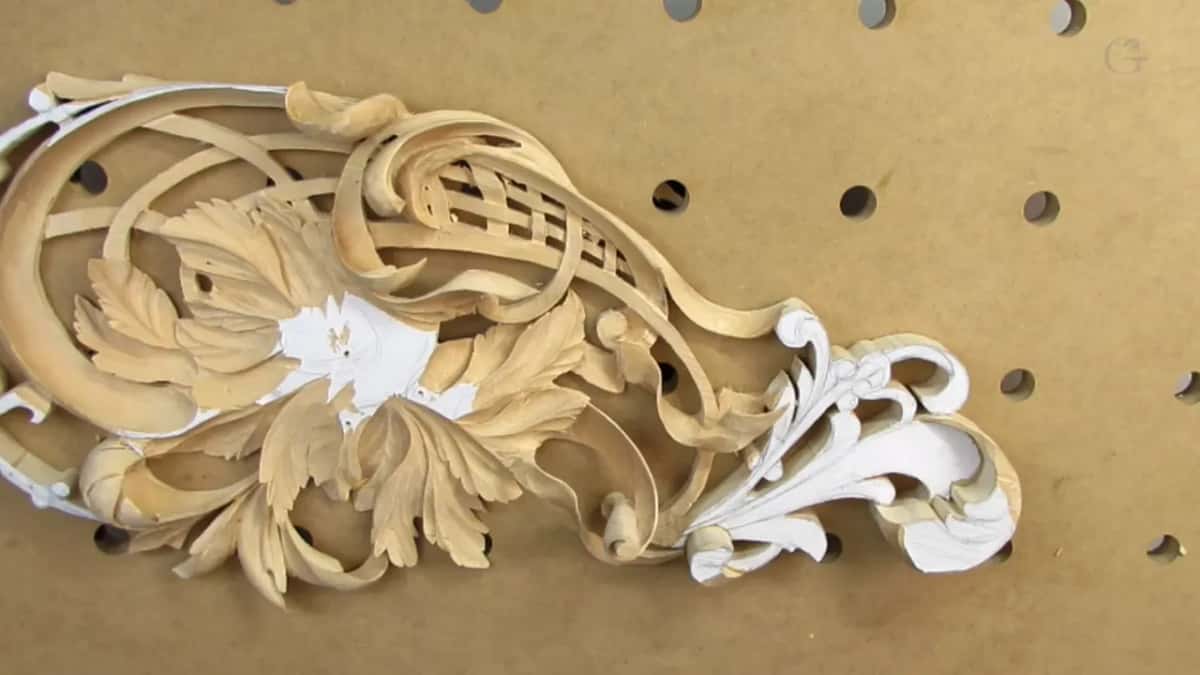
About four inches center to center, roughly 10 cm, is what I drilled. For the antique style rosette I took a piece of MDF, 20 mm or three-quarter thick, and bored holes of 20 mm into it, spaced equally.
A few years ago, I said there, I'd found the Festool tables really comfortable. I have a couple of them, the multifunctional tables, and I liked that idea of those holes. With those clamps you can put your piece down, work around it and rotate it easily. With that system you aren't limited in the shape you can hold, small pieces and big pieces, and it's still going to be really solid.
My rosette blocks themselves were 5 3/8 inch squares, about 137 mm, and I made 16 of them. I only needed 15. One extra, just in case.
What are the holes in a workbench for?
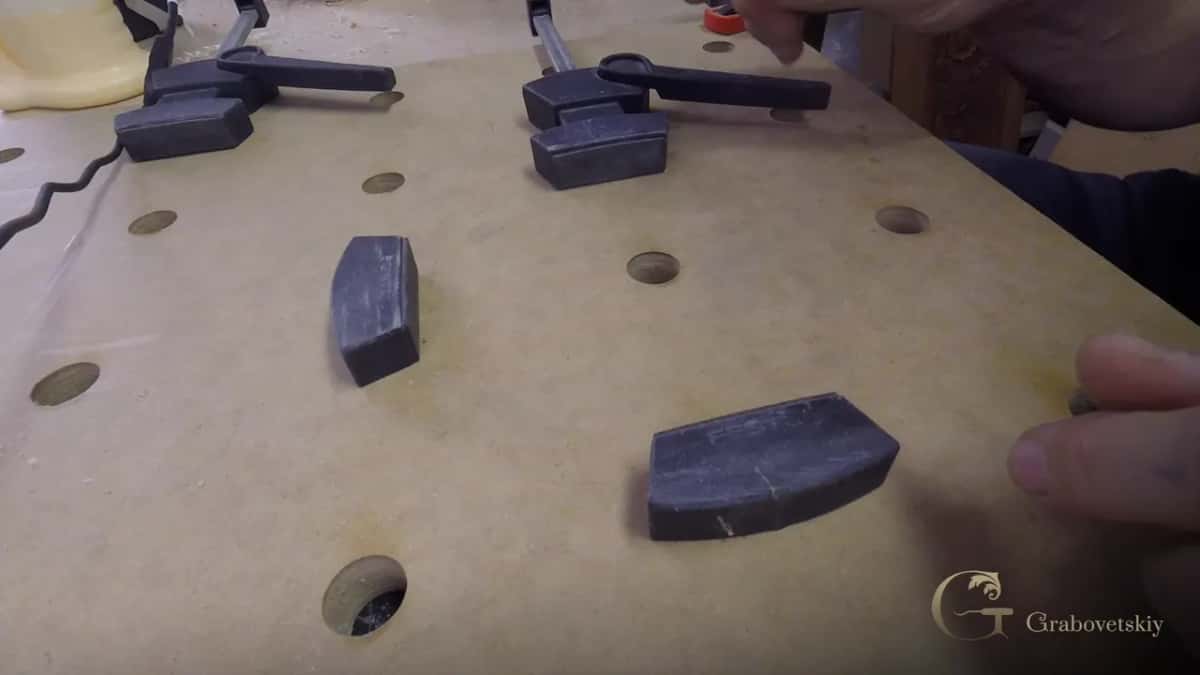
They let you lock the work down really quickly and then carve around it. That's the whole of this lesson in the Techniques course. It's 26 words long, and it's a clip from lesson 2 of the Greek Acroterion, the acroterion I carved in basswood for that course.
I had just picked up one of the number fives. The clamp went into a hole, and here is what I said while it locked. This is another Festool clamp I like. Really quickly, I can lock to my workbench and just work around whatever the areas I need to work.
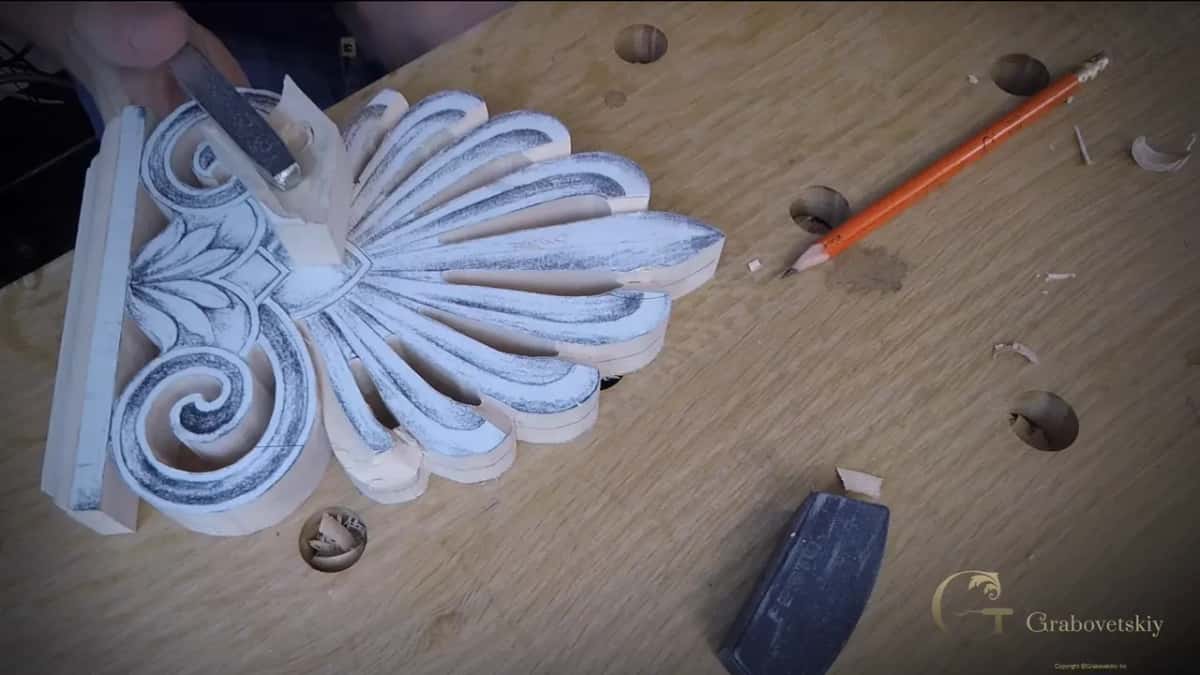
Then the number five went around that section with sweeping, rotating movements. I changed my direction. That's the boasting stage, or you could call it roughing, just establishing the main form, and I kept an eye on my line so I wasn't going deeper than it with my gouge.
Stop blocks use the same holes with nothing locked at all, and they get the next lesson.
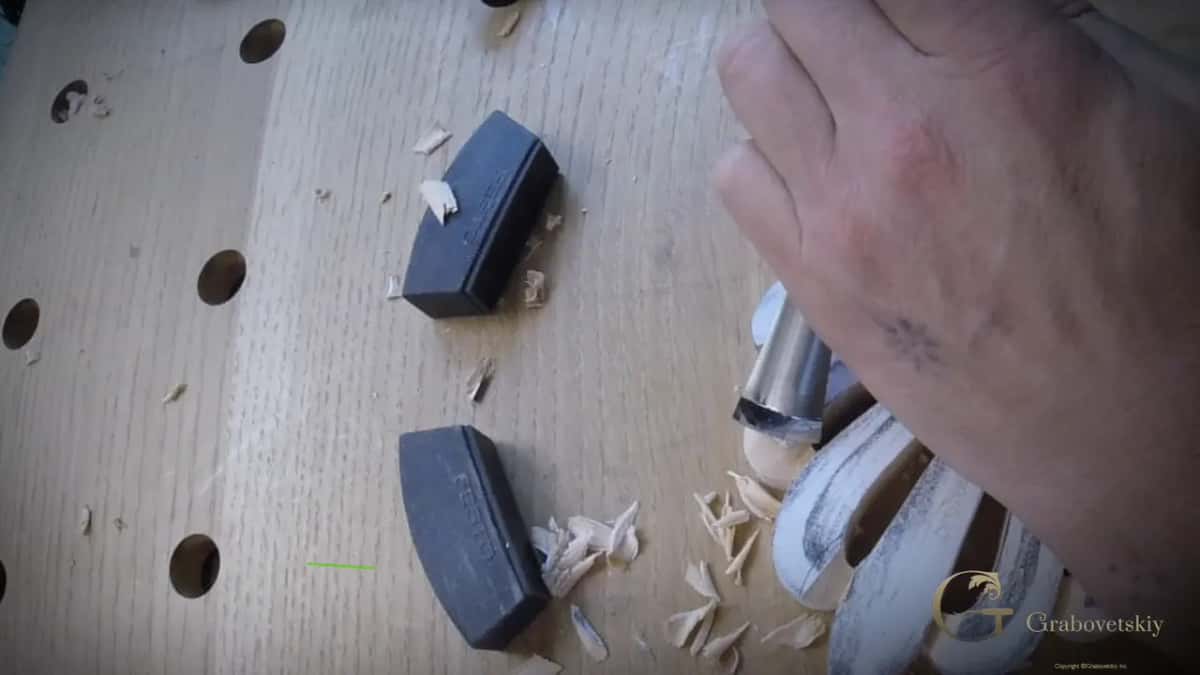
How do you hold wood while carving so you can work all around it?
Clamp it, and when the next area faces away, unclamp and clamp it again from another side. In that Hashemi lesson I clamped the piece right there and once more on the backside. I rotated it and clamped it the other way. I'd done it from up and down, I said, and I could also do it in the opposite direction.
With that side solid I could attack the area with no problem, and I was still able to rotate. I still wasn't quite happy with the location.
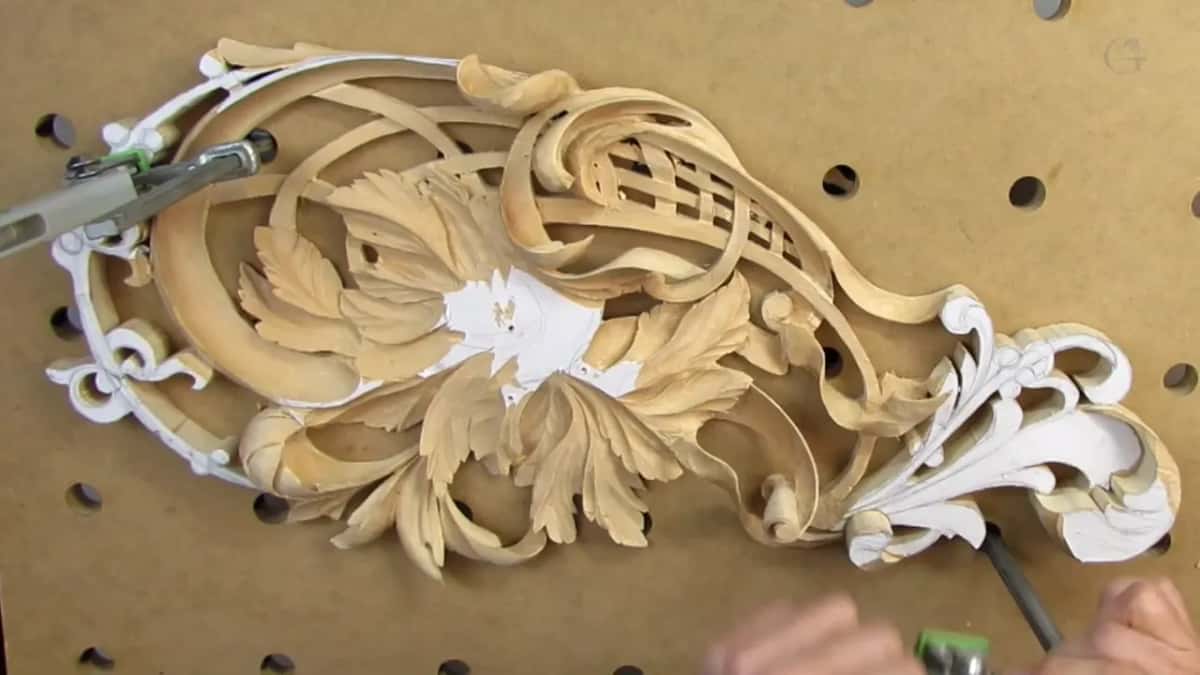
My Corinthian acanthus leaf was held the same way. I used to be in one position, and now I'd moved somewhat on an angle, because I needed to attack one spot and that gave me a really good angle. You can clamp it from any direction, I said, and it's still going to hold really tight.

What keeps a brass dog from marking the carving?
Leather. Those Veritas pegs on the Floral and Molding panel are solid brass, from a company in Canada. I took a piece of leather, any leather will work, in my case single shoulder leather, cut some pieces out and glued them to the brass. I don't want to mar it.
That time the pegs sat against the side of the plywood, so no big deal. But sometimes the dog has to touch your piece directly, and solid brass is going to damage it.
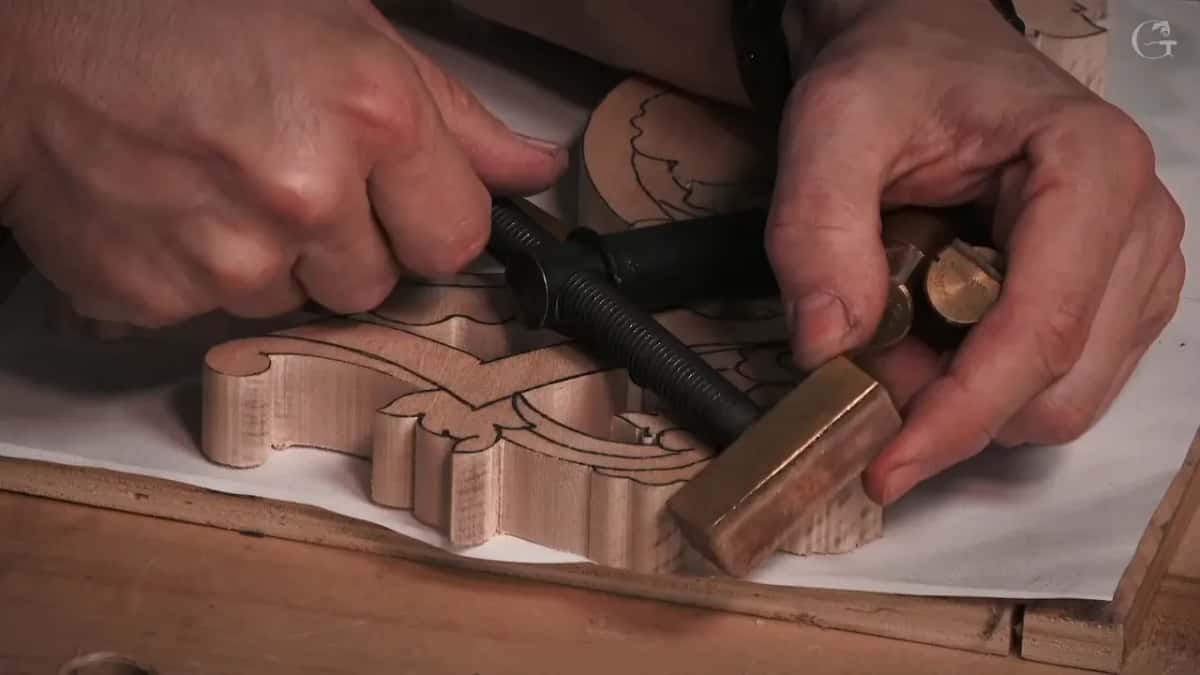
My bronze dogs on the Venetian rosette got leather too. I didn't want just the rubber they came with, or plain brass, because it's going to mar the edge of my pieces. So normal leather went on pretty much all of my accessories, wherever they touch the wood. Even then I don't use a lot of pressure, because the edge can still get damaged right through the leather.
How high should a bench dog stand?
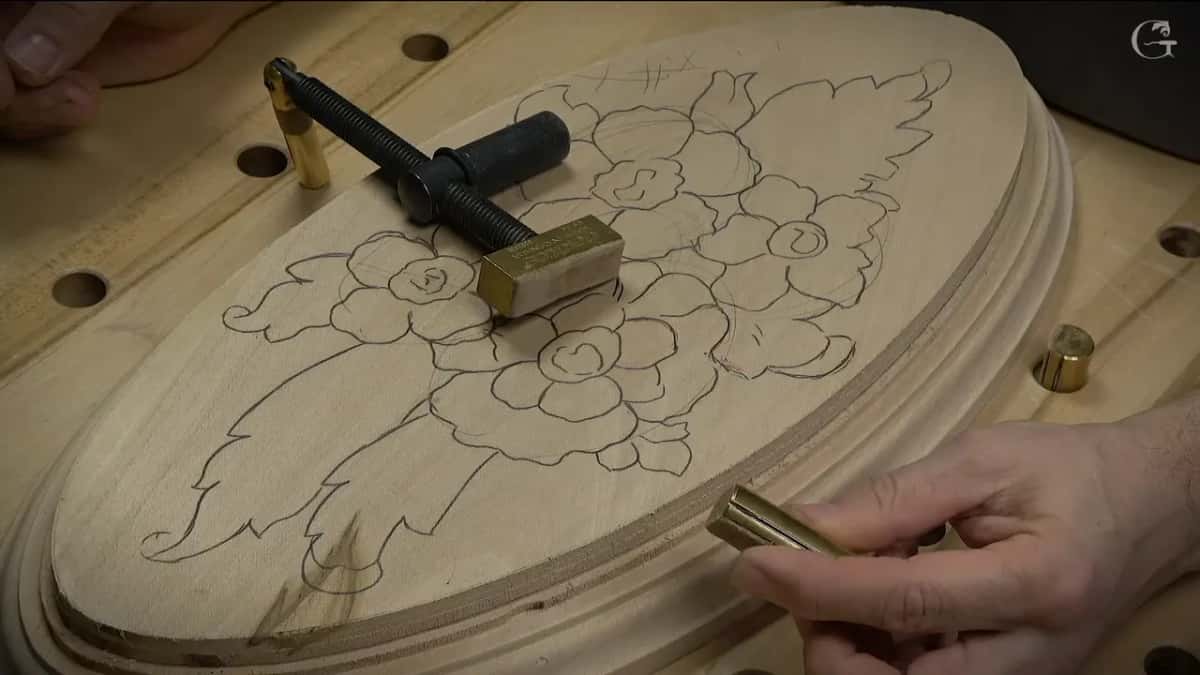
Lower than the top of your board. During the Tray of Blessing I set the tray between two dogs and kept them under the height of the MDF. You don't have to raise them up. Stand them higher and they're in your eyes, they disrupt your eye, and you can hit them. There's no reason to do that.
Later in that lesson I told you one more time. When you're using those dogs, don't raise them up too high.
Once, in the Venice Room, I had a bench dog in there, and I nearly forgot about it. Got to be really careful, I said, and then found I was okay, and I could go pretty much really close to it.
What keeps the gouge from running into the clamp?
Where you put the clamp. Before the first knife lines on my furniture panel, I made sure the panel wasn't moving on me and fastened it with a couple of Festool clamps in the area where they weren't going to be in my way, while it still stayed stable.
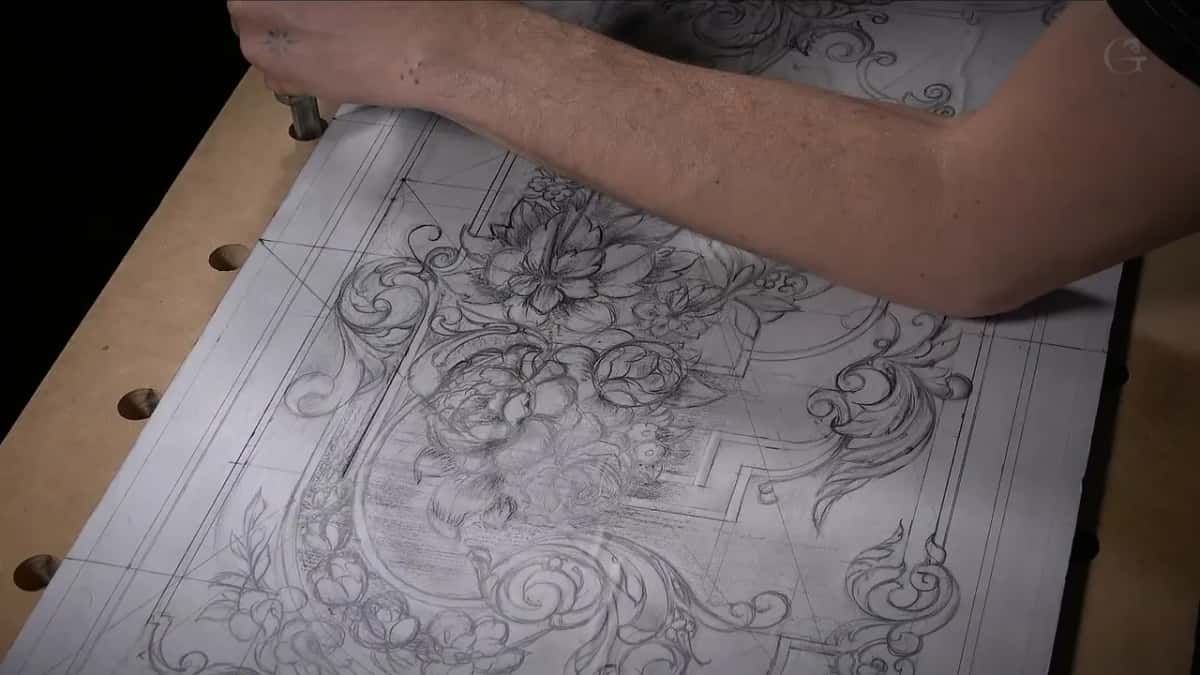
About my Lily Box clamps I said the same thing. They hold really well, they're not in my way, and that's stable enough. A second one went on anyway, because why not. It's not going to fly anywhere.
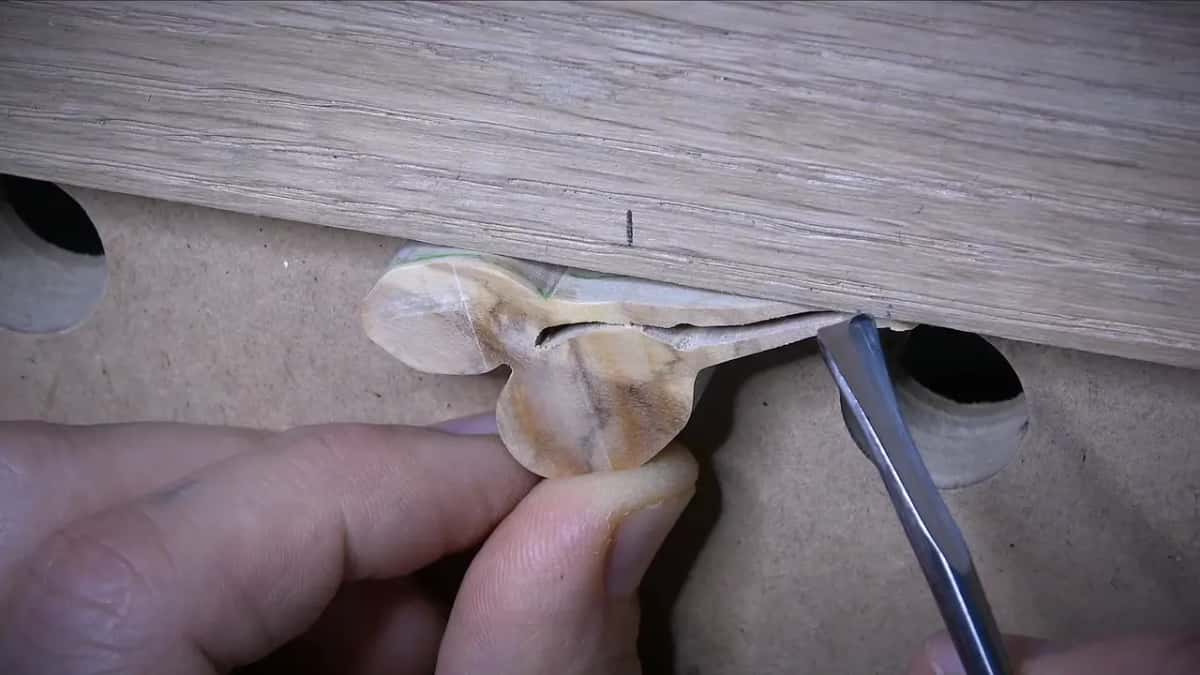
Sometimes I'd rather not push against a clamp at all. When I carved the olives on the Lily Box I had kept no leg on two of the pieces, so they needed support behind them, something to bump against. I'd used a Festool clamp before, but sometimes I really don't like the idea of digging into the clamp. If my tool goes farther than the piece, I'll dig into a block. Mine was white oak, but it can be any block of wood.
Some wood carvers prefer to make a notch in that block and set the piece inside it, so it stays put and can't move right or left.
How much can one bench clamp hold?
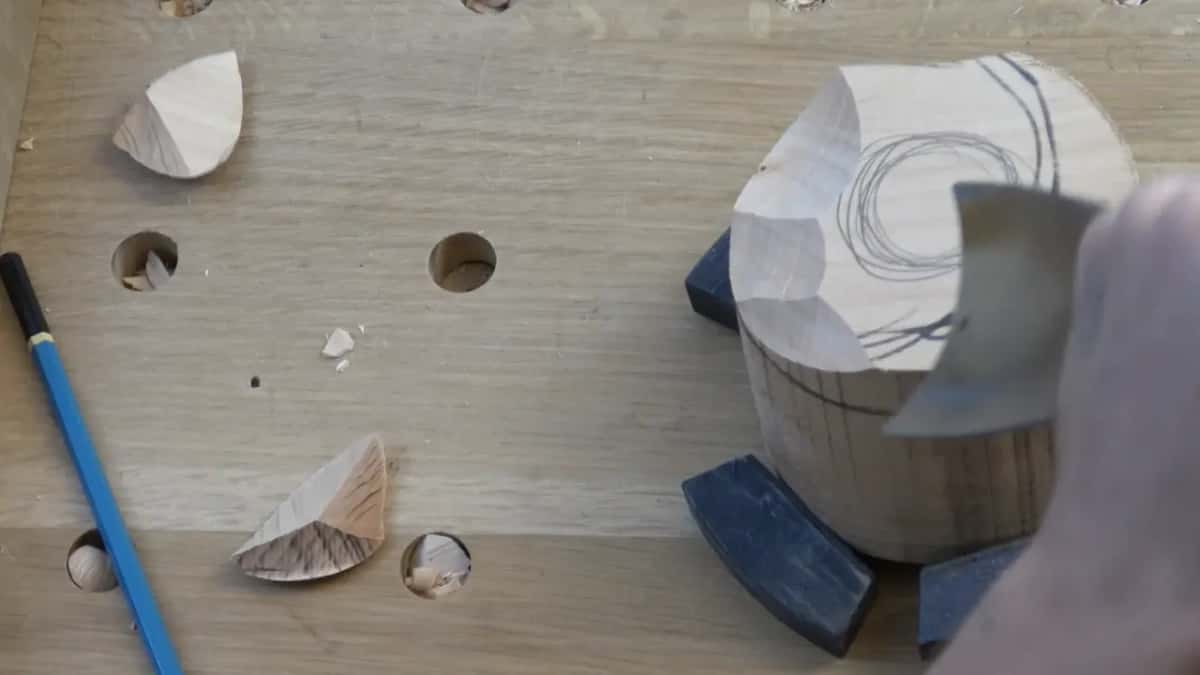
Enough for a whole block. In Hashemi Flowers lesson 42 a knife could have taken the chunks off sideways, but that was going to take too long. So the piece went on my workbench under Festool clamps. I could use just one, pretty much, and that's solid. I reinforced it with two anyway. You can clamp any type of shape, and it's really solid, so you can't really move it.
Next I took about a three inch gouge, 76 mm, marked my center and started working my way out. I knew the recess had to be about an inch deep, 25 mm, and I began a little less, seven eighths, 22 mm, so I could fit it more perfectly later.
Do you need Festool clamps at all?
No, and I've said so in more than one course. Not all clamps will fit a 20 mm hole, but some of the other brands do make clamps like that. Lesson 77 of the Venice Room had me clamp one piece so I could attack one side. Any clamp will work, I said. Doesn't really matter what kind. Just whatever I found, and a Festool clamp was what I had close by.
Have no bench clamps of any kind? Then clamp the piece to the end of your workbench with a normal C clamp, whatever you have available, and work that way, as I said on Hashemi 42.
Which hole fits each clamp and dog?
| Hardware | Hole | Course |
|---|---|---|
| Festool quick-release clamps | Exactly 20 mm, a hair over 3/4 | Hashemi Flowers |
| Normal Festool clamps | The same metric hole, drilled to size | Hashemi Flowers |
| Veritas brass pegs | 19 mm, three quarters to be exact | Floral panel |
| Veritas bronze dogs | Only 19 mm, never a Festool hole | Venetian rosette |
| Lee Valley clamps | Three quarters exactly, and not metric | Greek acroterion |
| A C clamp | No hole needed, just the bench end | Hashemi 42 |
Where these clamps go to work
Every bench and board above turns up in the lessons I named. The Techniques course gathers short answers like this one. If you want to stand at the bench with me while the clamps go on and come off, that's what the school is for, and the full courses carry the carving itself.
How it's done
- Choose the clamps before the drill bit. Metric clamps from Festool take 20 mm, while the dogs and pegs from Veritas take 19 mm.
- Drill a grid into MDF or the bench. On my rosette board the holes run about 4 inches apart between centers, in MDF about three quarters thick. Keep every hole the exact size of the hardware it serves.
- Face metal dogs with leather. Glue a scrap of leather onto brass or bronze wherever it will touch the carving.
- Keep dogs below the work surface. Sink them under the top of the board so they stay out of your sight line and out of reach of the gouge.
- Clamp where the tool will not travel. Lock the piece with one clamp, add a second to reinforce it, and put both well clear of the area you are about to carve.
- Re-clamp instead of reaching. When the next area faces away, release, turn the piece, and lock it again from another direction.
Frequently asked questions
Will a Veritas bench dog fit a Festool 20 mm hole?
Veritas makes its bronze dogs for a hole of 19 mm, which is 3/4. When students asked about my holding on the Venetian rosette, I told them those dogs are not going to work in a Festool hole of 20 mm. Just make sure of the hole first.
Can an MDF board hold bench clamps?
Mine does. On the Lily Box I fastened the piece to a board of MDF, drilled to take the Festool clamps, and put two of them on it. Both held really well, stayed clear of my tools, and the board could still go into my vise.
Is a C clamp good enough for carving?
On Hashemi Flowers I said that without bench clamps you could fasten the piece to the end of your workbench with a normal C clamp, whatever you have around, and carve that way. Over in the Venice Room lessons I added that any clamp will work, whatever kind.
What to carve next