
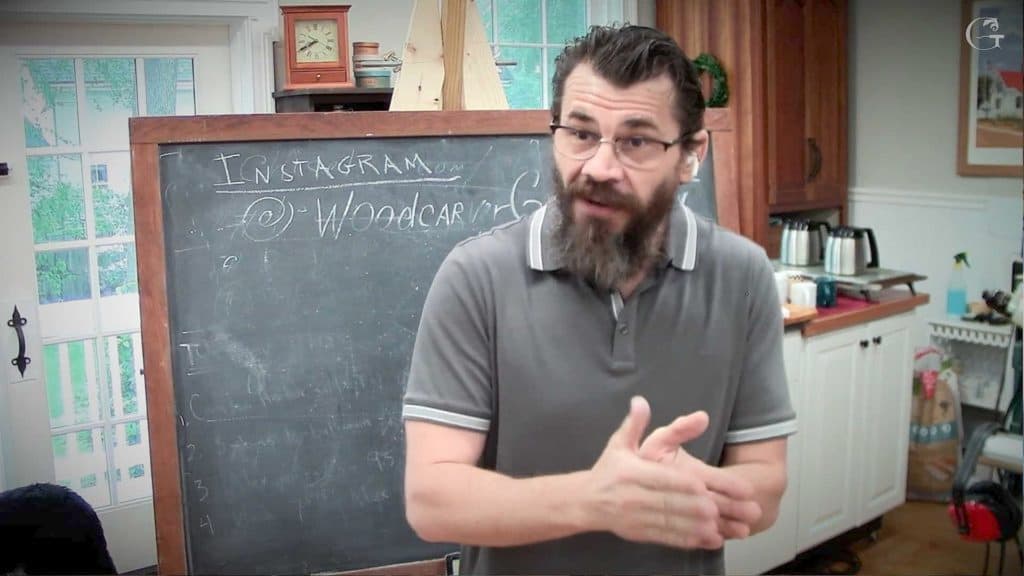
Alexander Grabovetskiy, woodcarver, School of Woodcarving · Published 2021
How long does it take to become a master wood carver?
Quick answer: Mastery in wood carving is a matter of years, not a time clock. Books point to about 10,000 hours. Some carvers get there sooner and some need twice as long, but what really grows is your eye for depth, and it grows only while you carve.
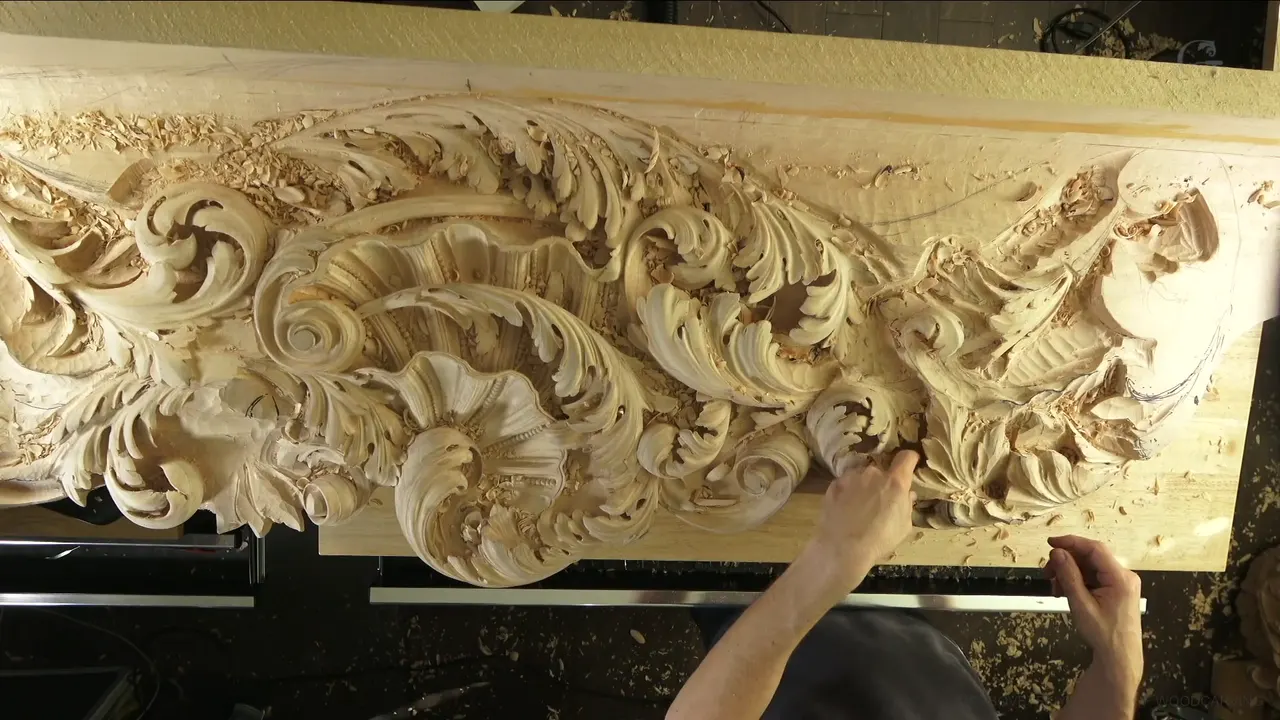
Mastery is years of digging, not hours counted on a clock. Some people get there quicker and some take twice as long. What decides it is how much time your hands and your eyes spend inside the wood, because the eye for depth only grows while you carve.
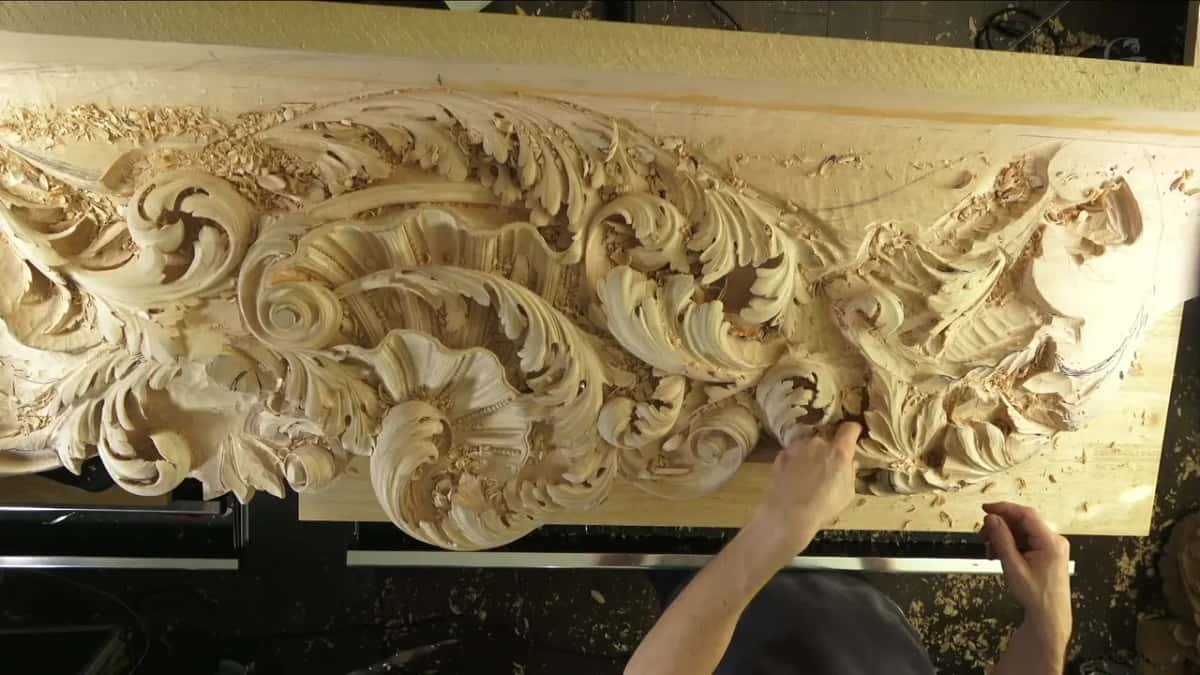
Have you watched somebody set a gouge at the right depth without measuring and wondered how? Would you like to see depth like that one day? This lesson opens in a class, with me telling someone, you're right. There is such a thing as developing the ability to see depth, to see how deep you go. And you can build it.
Seven things I tell people who ask how long
- No clock decides when you are a master.
- Books put the number near ten thousand hours, and some people need double.
- Seeing depth is learned, the same way your hand once learned to write between two lines.
- The basics can be learned in a month or two. Design is what makes a master.
- Old guild apprentices, I said on a stream, watched in the shop about seven years.
- Deeper you go, deeper you see.
- Like the gym, it takes years, and a couple of months shows nothing in the mirror.
Can anyone reach mastery in wood carving?
Everybody can be a master if you understand the process. There are many books about mastery, and it is not just a title. Well, right now it is a title, a royal title in the woodworking world. But the thing behind the title is something you develop.
Even the ability to see in 3D can be developed. And there is only one way to develop it, which is how long you spend doing what you do. The same holds far beyond carving. It works that way for anything.
On a live stream in April 2020 I told how some people in my school have carved for over thirty years, over forty, over fifty. They are older than me. When they send me a picture of their work, I have to humble myself.
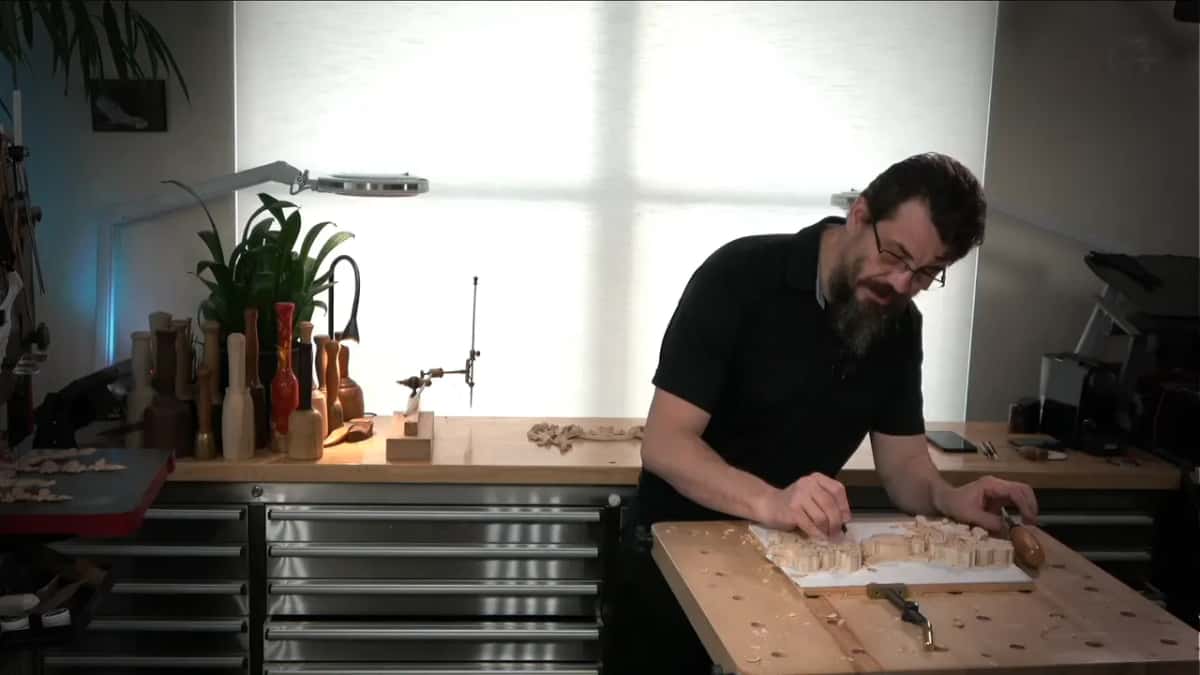
Will a two week class make you a master?
On another stream that month I talked about some of the emails I get. There is a title, master wood carver, and you have to actually earn it. People had found out I would teach in person that year, at the Marc Adams school in Franklin, Indiana, in Maine, and in Tampa. They would love to become one, they wrote. Should they take the two week course, or will one week do?
Yeah, right. All it takes is the 37 minutes of a live stream. Taking a gouge, the carver's shovel as we call it, and digging inside the wood is easy to teach. That part is not a problem at all.
Carving adds a lot more than digging. It is the ability to think in the three dimensional world, to see what two dimensional people don't see. And don't get me wrong, every human being can develop that ability, because we all have the same brains. I believe we were created by the same God.
Later in that stream somebody asked if the basics can be learned in one or two months. Yes, absolutely, I said, even in one week, pretty much.
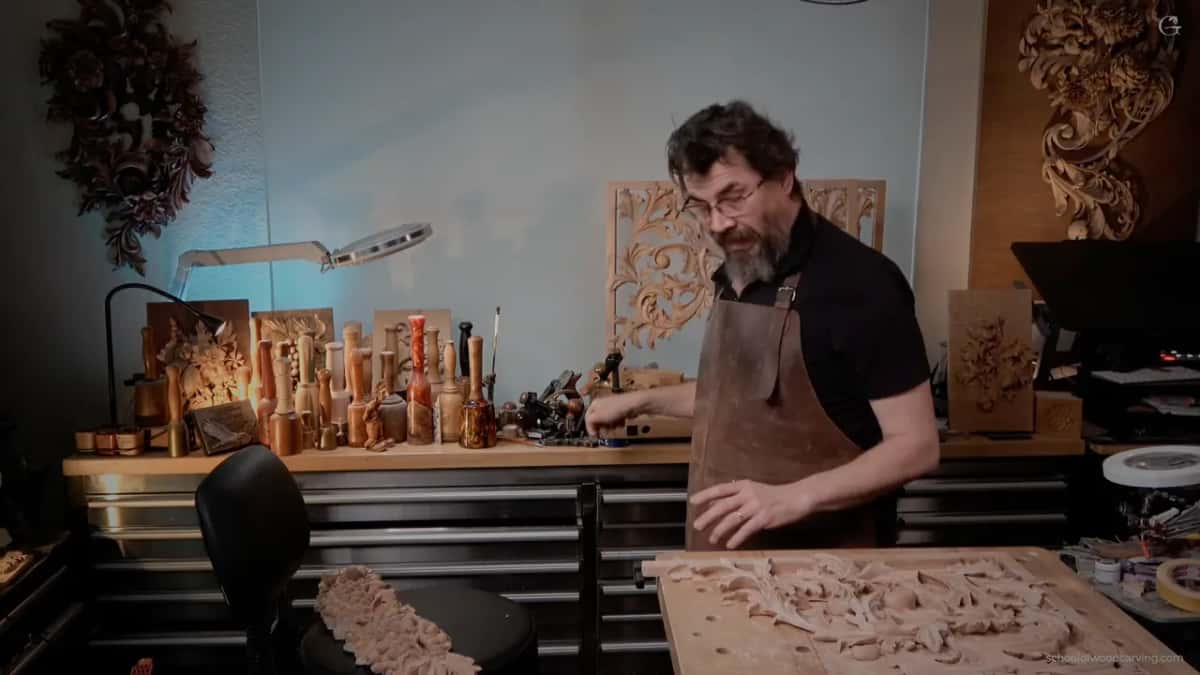
What does the 10,000 hour number really mean?
It is a lot of practice, spread over a lot of years. Malcolm Gladwell wrote about it in Outliers. There was another book before his saying the same. And Robert Greene talks about it too, in his book Mastery, where he turns the hours into years.
Robert Greene, Mastery:
it generally adds up to seven to ten years of sustained, solid practice
Don't read that like a time card. Mastery is not somebody going to work and punching in every day, eight hours today and ten tomorrow, and then boom. Oh, I've got 9,999 hours, one more and I am a master. No, not like that.
Some people get there a lot quicker. Others need 20,000 hours. The people who calculate these numbers assume you spend multiple hours every single day. But the point stands. The more time you invest, the more you work on it, the closer you come.
How did the old apprenticeship work?
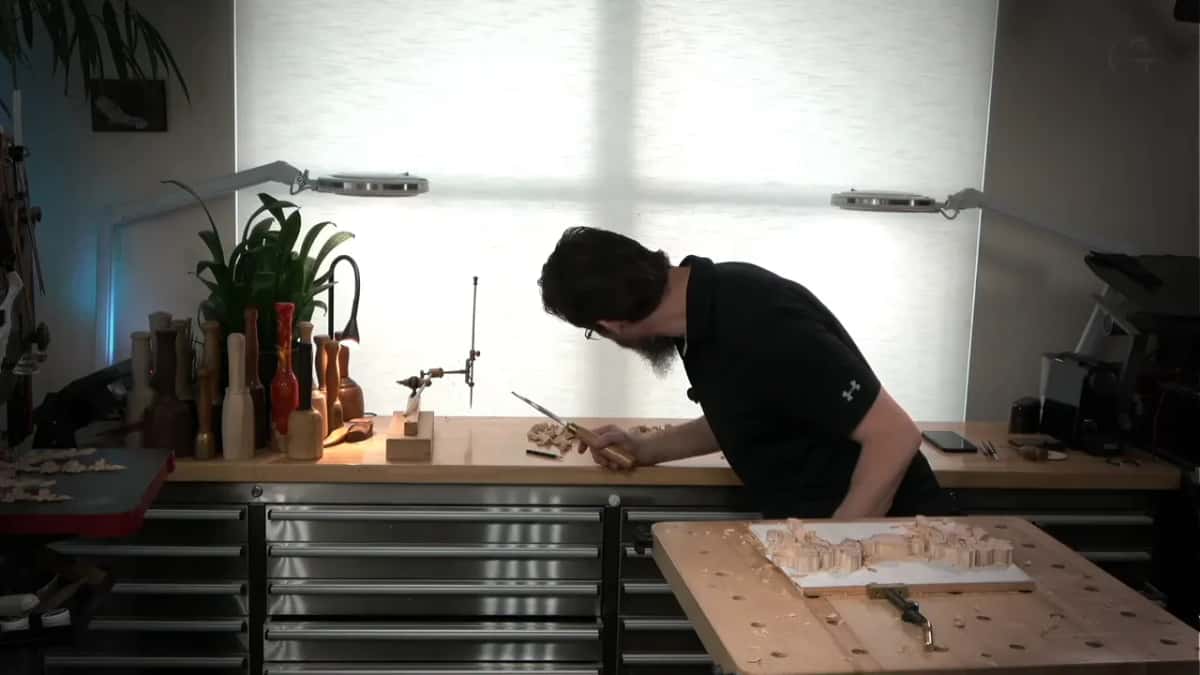
Slowly, and inside the shop. During a questions and answers stream that April I told how it went in the old guilds. Woodcarvers got together, one main guy and a lot of apprentices working for seven years before they actually started carving.
An apprenticeship was not lectures. Those people were inside the shop daily, watching the process and getting the way the masters did the work. The masters gave the skill away to the younger generation just by showing what they did.
In the furniture panel workshops I told a joke about it, a reality joke, about a guy who wanted to learn wood carving the old way, as the apprentice of a master. An apprenticeship is not like signing up for a one week workshop at some woodworking school. It takes years.
He watched over his master's shoulder every day for seven years. Then another master called the first one stupid and said it had to be short strokes. Seven more years. A third wanted medium to long ones, and seven more years passed, and of course he did not become younger. One look at the face of master number four, and he walked away to learn by himself.
The point of the story, I said, is that there are no perfect masters. You have to learn from all of them and still develop your own approach.
Where did my own teacher start me?
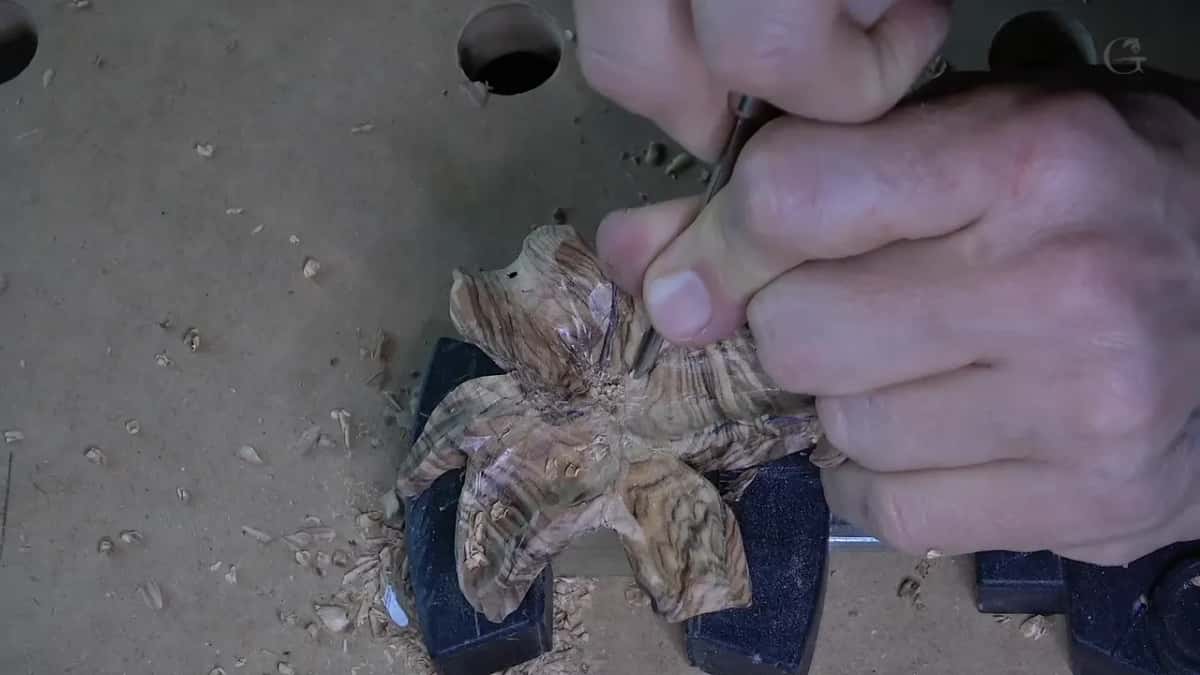
With design. At sixteen I became the only apprentice of a fine art master in Russia. I was born in the European part of Russia, and he taught me on a personal level. That master and apprentice way, watching over the shoulder, is what I try to keep in my school. I talked about it in the antique rosette course.
My teacher was really big on design. All the mathematics, golden ratio and Fibonacci numbers, all the movements and armature, law of space, law of rhythm. Some of it, like baroque and sinister diagonals, I didn't know for a long time, until I was an apprentice myself. He taught me to think like a tool.
When I teach design in person, it takes the whole week just to explain the process of development. The design course holds that part, and the full story of my early years is in let me introduce myself.
Why does seeing depth take years?
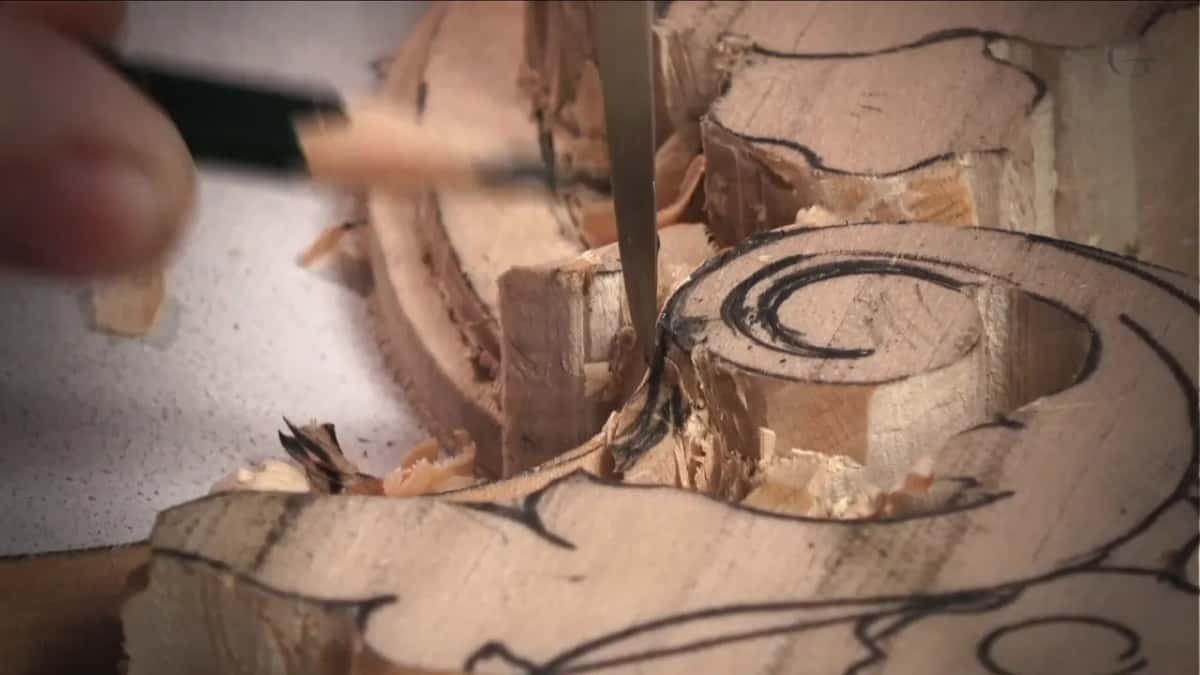
The eye grows with the hours, the way your handwriting did. Think back to school, when they taught you cursive writing. There was an upper line and a lower line on the page, and your whole job was not to cross those borders.
Later on you didn't need the lines anymore, because you felt them naturally. You developed it. Carving works the same way. Work longer in the three dimensional world and your brain reads the depth by itself. At first you need the numbers. Later the depth is just there.
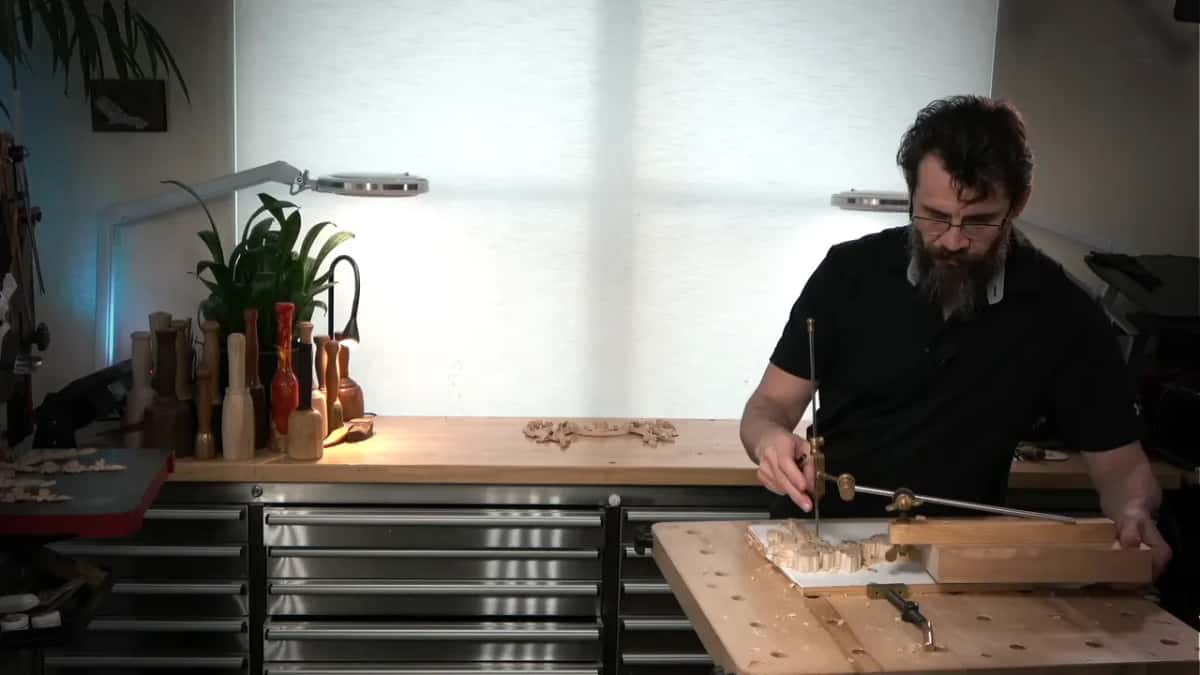
How do I know a carving should be a quarter inch deep?
I see it first. Then I say the number. In my online school I tell you how deep you are supposed to dig. Let's say six millimeters, which is a quarter inch.
Online I have to give both metric and imperial, because I have students from all over the world. One year my site almost crashed because 5,000 people logged in and watched almost the same video. I had to move it to an absolutely separate server. It could not stay on a shared one.
But when I say a quarter inch, it doesn't mean I planned that number ahead of time. I see the depth before I say it, and then I tell you it is going to be about a quarter inch, six millimeters. That developed.
Is carving like going to the gym?
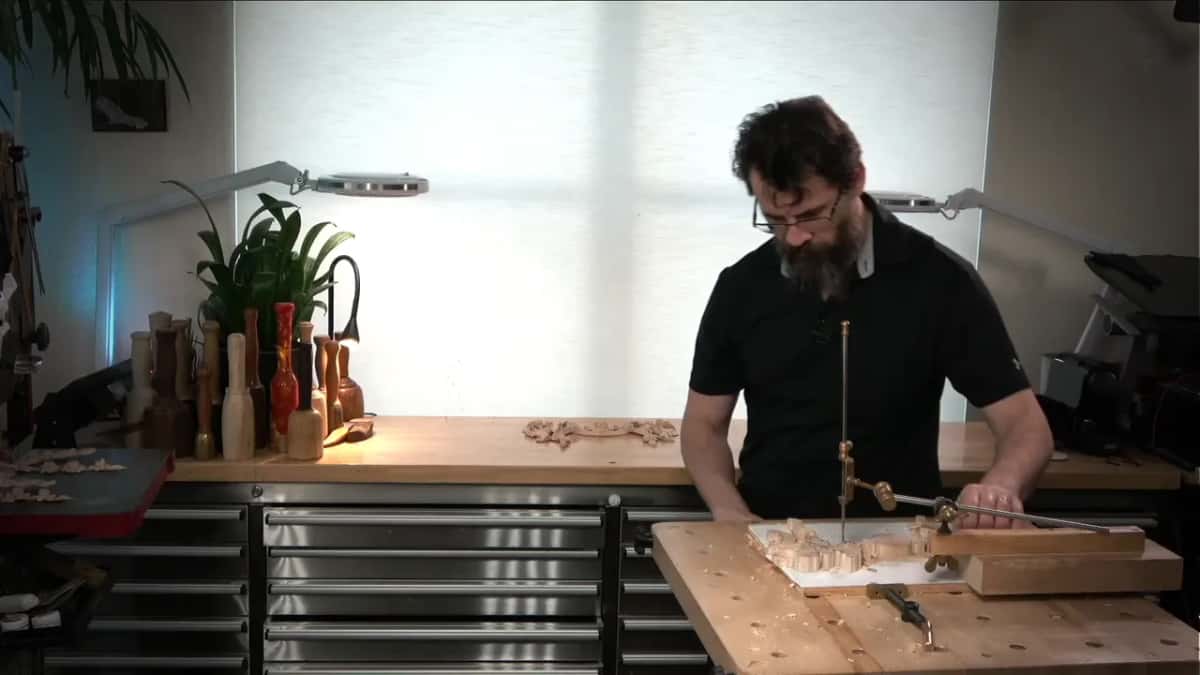
Yes. When you carve you are getting new brain cells, which is what I told that class the day before. Carving is just like going to the gym. Work out and you transform.
Not like the young guys I watch all the time at the gym. They grab a dumbbell, express themselves a little, walk over to the mirror, and there is nothing. They came once a week for a couple of months and thought something would show. For some people it takes years, especially without the steroids. You know what I'm talking about.
A man interested in my school once wrote to me. What level will I reach in one month? In two? And in a year? Impossible to tell, I said at the start of the first cuts course. It all depends on you and only you. I pay monthly fees at my gym too, and asking what one month brings would not be wise if I'm not exercising.
My students in Florida, mostly in their fifties and sixties, know they have to stir the brain up, as I said in the questions and answers lesson. Everything has to be worked on.
Do masters still make mistakes?
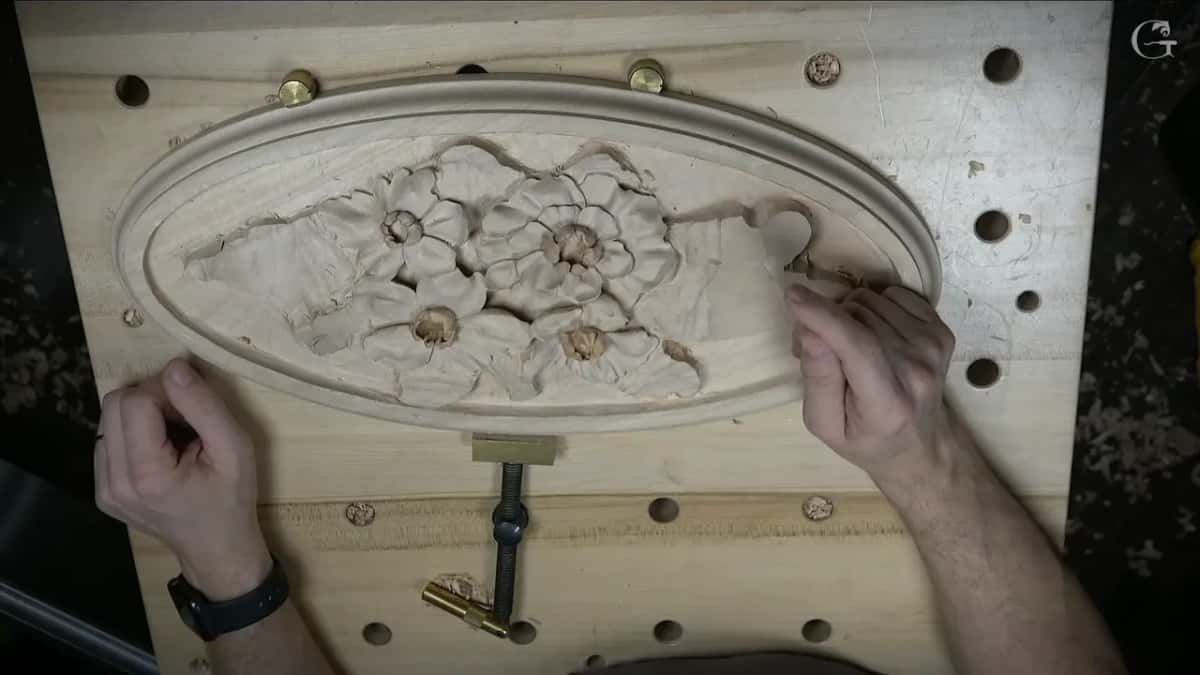
Yes. In 2020 I put it this way on a live stream. I'm not cutting anything from my videos at the school, so if I make a mistake, you see me making it, and you know how I'm fixing it and why. I call it a virtual apprenticeship, the old European way.
In one of the Hashemi flowers workshops I attacked a spot from a wrong position. Not a good mistake, I said, but still fixable. I had enough meat to take everything deeper, or I could follow the nature of what just happened and make another subdivision, a micro detail. On the final piece nobody will know. How many mistakes do I make? I don't know. I didn't count. I know I should do less.

Does deeper work teach you more?
More you carve, more you see, and deeper you go, deeper you see. In that class I almost called one project with flowers the Venetian one, then corrected myself. I asked the class if they knew how deep it was, and then told them. About eight inches. Eight inches deep to dig in, and the more you dig, the more you develop.
In Venice room workshop 54 I kept the excavations about the same depth across the panel, some spots about 50 millimeters, two inches, and some about one inch, 25 millimeters. Leave two areas shallow, and the whole thing would not look developed in its overall depth.
What should all those hours go into?
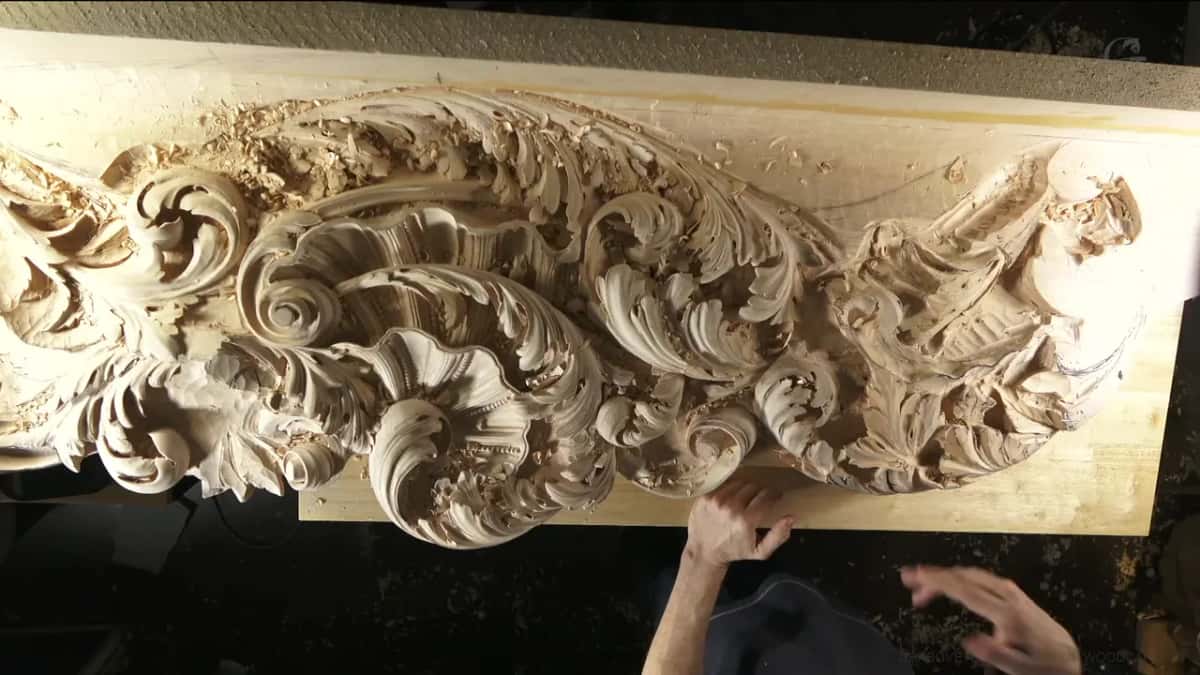
Design, and the history behind it. Anybody can poke a chisel in the side of the wood, and learn that in a couple of weeks. But you can't become a master until you learn how to design for wood carving, and to design it, you have to learn how it was done before you. That is the big history of wood carving, as I said while carving Hashemi flowers 8.
The Bible has a word on this too. The most famous carver in it, Bezalel, built the tabernacle, and it is written that God filled him with the spirit of wisdom, knowledge and understanding. Believe me, there are a lot of secrets in this craft.
What do writing and carving have in common?
| Writing at school | Carving at the bench |
|---|---|
| An upper line and a lower line on every page | A depth I give you, six millimeters or a quarter inch |
| Stay between the borders | Dig to that depth and stop there |
| Years later the lines are gone and your hand still knows | You see the depth before you say the number |
| You practiced every school day | You carve every day, a few hours if you can |
| Nobody learns it in a week | Years, and for some people twice that many |
A few years ago I heard somebody ask what the richest place on planet Earth is. A lot of people think it is a country. The USA, some say, or Israel. That is wrong. The richest place on the planet is a cemetery, because so many talented people lie there who never used the talent God gave them, and all those riches are buried right there with them.
I understand that not every one of you wants to be a master. But who knows? Maybe there is a talent in you that you never knew about. Plenty of artistic people on this planet never exercise theirs.
I don't want you to be one of those at the end of your life. Start from the very first steps, with the basic tools. Stick with it long enough and you can go all the way to the top.
If you want the depths given to you lesson by lesson, come inside the school. The other short lessons in this series live in the techniques course.
How it's done
- Start with the basic tools. Begin from the really beginner steps and follow them one at a time. Stick long enough and you can go all the way to the top.
- Carve to the depth you are given. Work to the number in the lesson, six millimeters or a quarter inch, until your brain starts reading depth on its own.
- Put in hours every day. The people who calculate mastery assume multiple hours of work daily.
- Study the old work. To design for wood carving, you must know how it was done before you.
- Learn from more than one master. There are no perfect masters. Take something from each and still develop your own approach.
- Give it years. Results depend on how you work toward your goal. Don't be like a child at the gym mirror, checking the biceps after one day.
Frequently asked questions
Is ten thousand hours the magic number?
A rough guide, nothing more. Some carvers get there a lot quicker and some need 20,000 hours, and whoever calculates it assumes several hours of work every single day. Nobody should count those hours like a time card, eight today, ten tomorrow, then boom.
Can an older beginner still get good?
Most of my in person students in Florida are in their fifties and sixties, with some in their thirties and forties. Every human being can learn to see in 3D, because we all have the same brains. A few members of my school have carved for over fifty years.
How long did old apprenticeships last?
In the old guilds, as I told it on a live stream, apprentices worked about seven years before they actually started carving. They learned in the shop daily, watching the masters, not from lectures. Greene counts more than 10,000 hours of hands-on work in those years.
What to carve next