

Alexander Grabovetskiy, woodcarver, School of Woodcarving · Published 2020
Where do you buy basswood for wood carving?
Quick answer: Buying basswood for wood carving is cheapest at a hardwood lumberyard that sells to furniture makers, though such a yard wants a minimum order. For small pieces I sent people to woodcraft.com or an Amazon seller, both costlier. A pro desk at Home Depot, Lowe's or Menards could usually order it from a vendor.
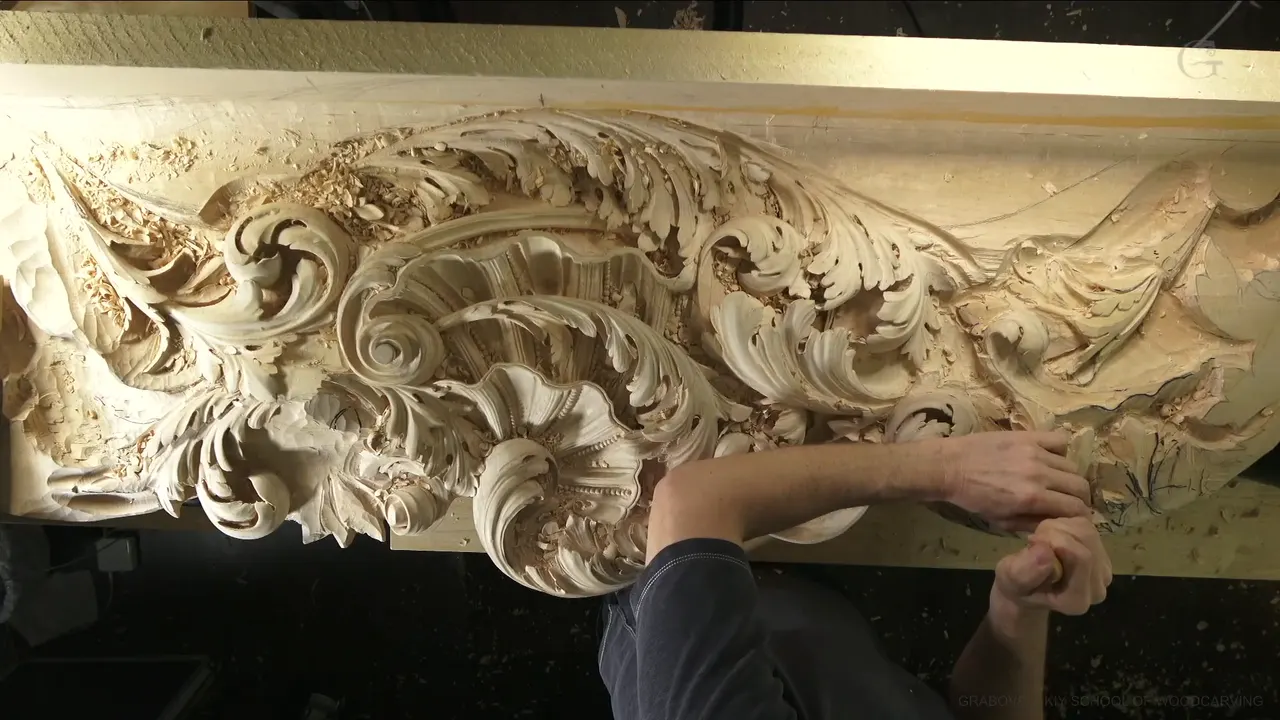
Basswood for carving is cheapest at a hardwood lumberyard that sells to furniture makers, and that is where mine came from, by the truckload. For small pieces I pointed people to Woodcraft or a seller on Amazon, and the pro desk of a big home center was another way. Small pieces cost more, and I explained why.
Did somebody tell you to carve basswood, and then you couldn't find any near you? Have you looked at what one small block costs online? A guy on Instagram asked me if I knew any good supplier of basswood blanks. Yes, absolutely I do, I said, and it all depends where you're located. Here is that whole answer, what I said about buying wood on my live streams, and six more questions from the same lesson.
Where to look for basswood
Woodcraft was expensive, and shipping to the store and from it was the reason.
On Amazon, find the person or company behind a listing and ask them for a direct price.
The pro desk at a big store could usually find a vendor.
A hardwood yard for furniture makers was much cheaper, with a minimum order.
I let my boards sit in the shop for years.
Thin four quarter boards glue up into a thick block.
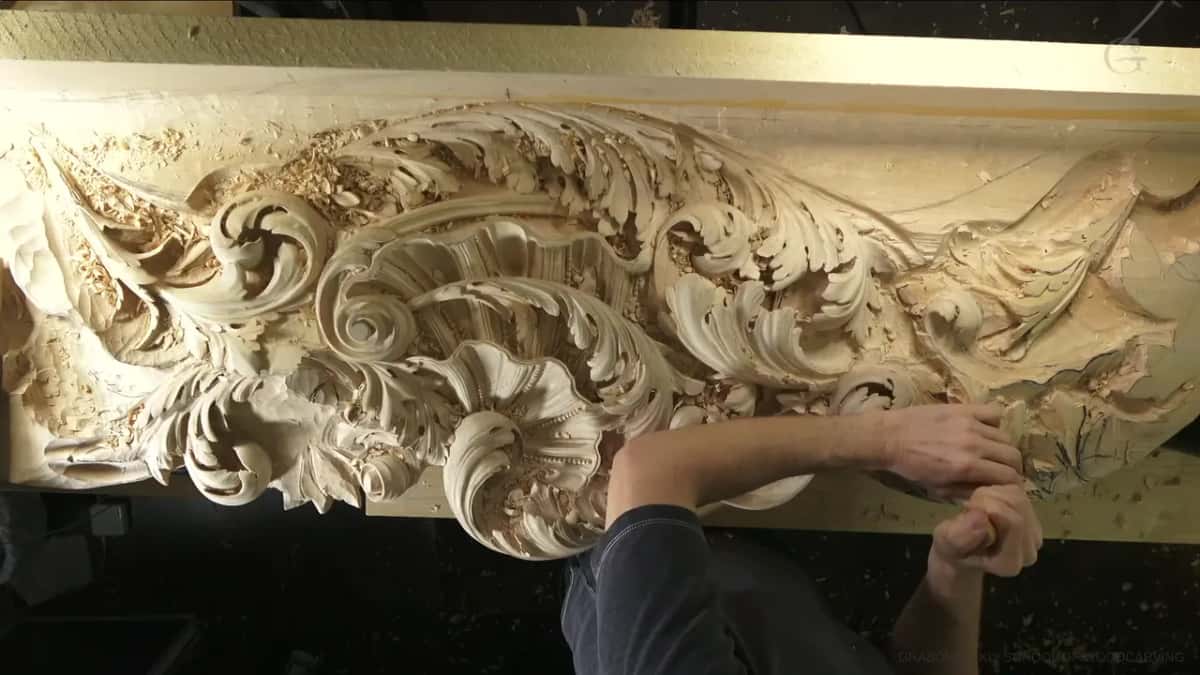
Where can you buy basswood online?
Woodcraft and Amazon were the online places I named, and neither was cheap. I'm in the United States, I said, and there were a few different places I could buy there. One of them, of course, was woodcraft.com. You could always order from them, but it was expensive.
And there was a reason they charged so much. They didn't really make much money on basswood, I said, and it was all the expense of shipping it, to them and from them.
The other place was amazon.com, where some suppliers sold basswood, and that wasn't cheap either. But there was a trick. Or not a trick, an idea.
If you see someone selling basswood planks on Amazon, find out who the guy is, or what company is selling. Contact them directly. You don't have to buy through Amazon. Ask if they'll sell to you directly, with some discount. Most of the time they're just people, business people, and like everybody else in business, they're really open to it. Really open.
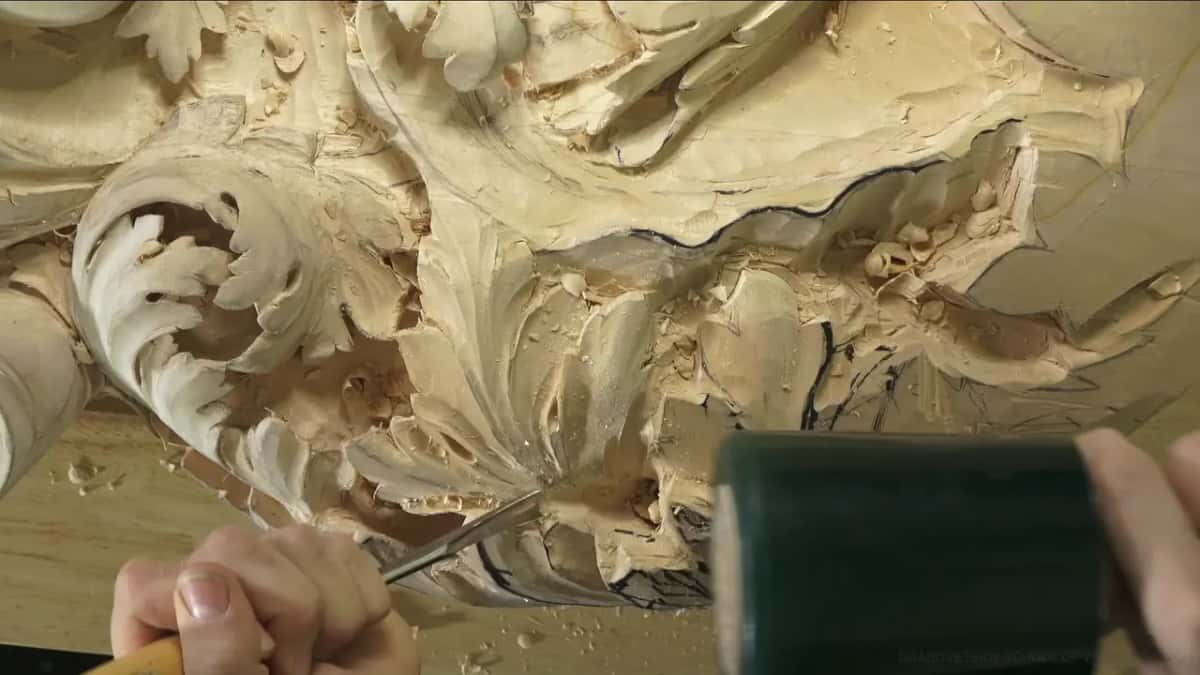
On a live stream in April 2020 I talked about small pieces too, and said people in my school were buying their blanks on amazon.com. The smaller the piece you buy, the more expensive it gets, and yes, you spend less money, but it's more expensive.
Can Home Depot or Lowe's get basswood?
Usually they can, through the pro desk. In the United States or Canada, I said, go to the pro desk where all the contractors shop at The Home Depot, Lowe's or Menards, and ask if they'll be able to get basswood. They usually are.
They could search for vendors, I explained, and find someone able to sell it to them, and then sell it to you, since those vendors usually don't sell directly to customers.
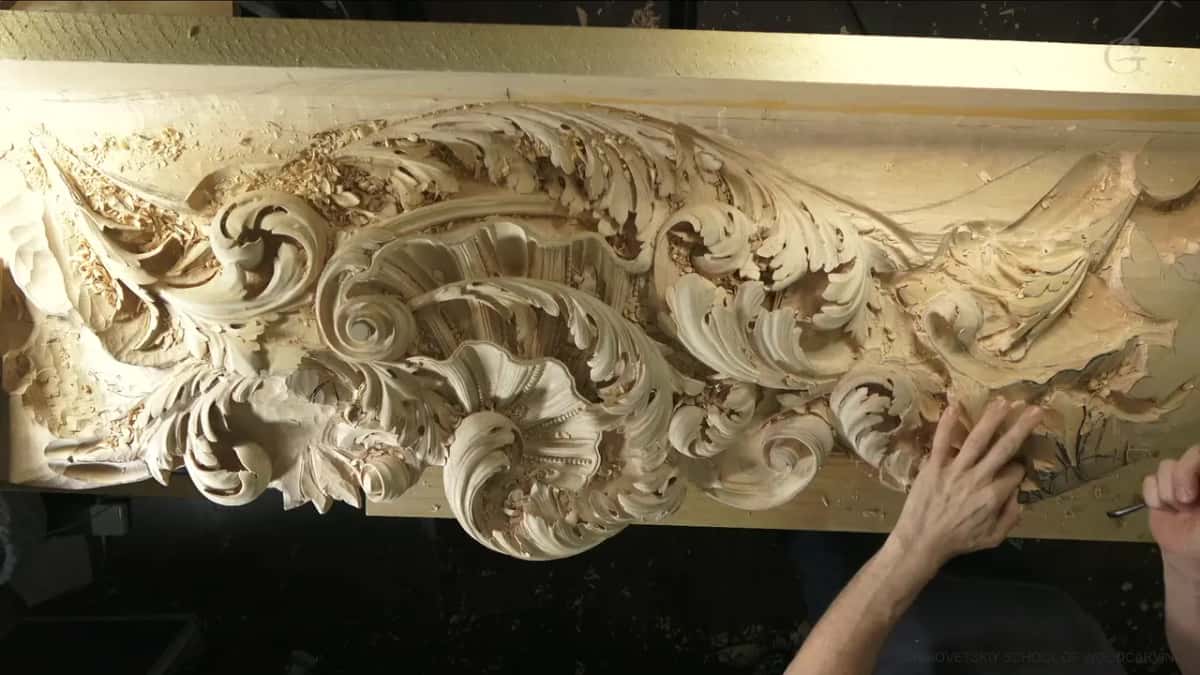
Which lumberyard carries basswood for carving?
The kind furniture makers buy from, and I don't mean those big stores here. Go to a construction lumberyard and you usually won't find it, because basswood is a unique wood, and they don't usually sell basswood to construction companies.
So Google "hardwood lumberyard," because those usually specialize in hardwoods. Ask if they have basswood. If they don't, but they sell to furniture makers or cabinet makers, they're usually able to get it. And that's much cheaper than woodcraft.com or Amazon.
The yard I used was not open to the public, I said on that April stream. You had to be in business to buy from them. If you're just the public, you can buy online, no problem.
Is there a minimum order for basswood?
Usually, yes. A yard like that can't sell you just one board, I said. They usually require a minimum. My minimum used to be $300, and by the time I recorded that answer it had gone up to $500.
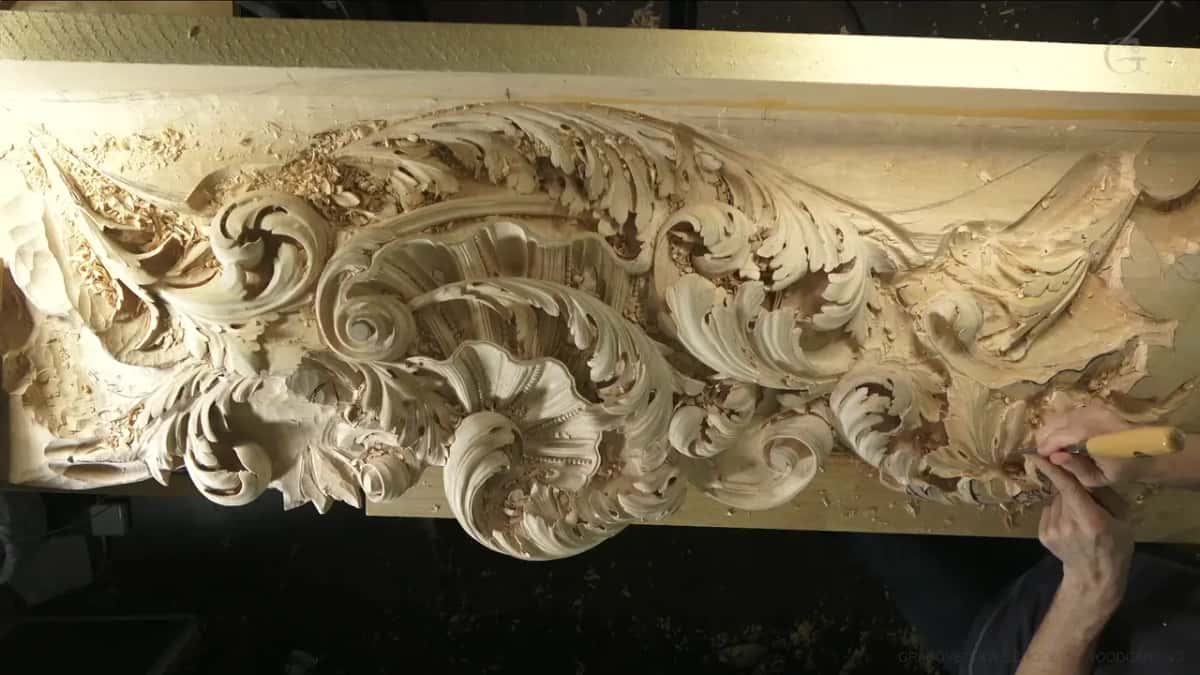
I usually bought lots of material, because I was working on projects like the big acanthus panel you see on my bench in that video. I spent thousands in one batch. That way I didn't have to pay for the shipping. They sent the semi truck to my shop, and the shipping was already covered in the price.
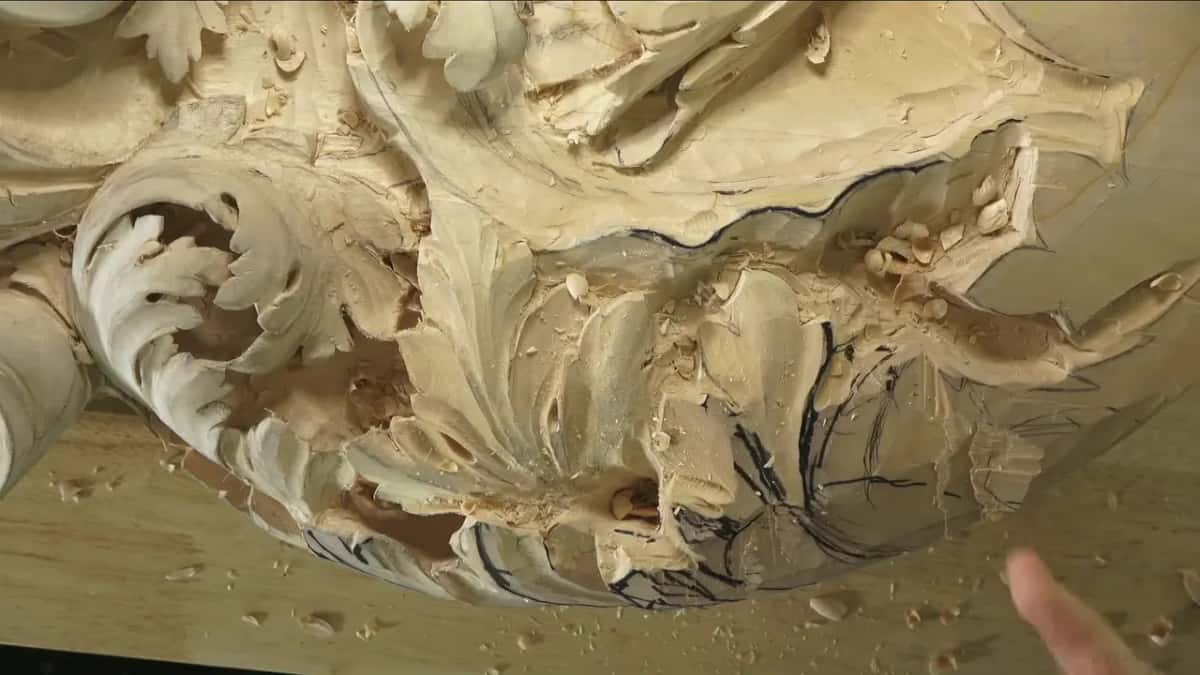
On the April 2020 streams I named the yard I bought from as a hardwood lumberyard in Orlando. I placed special orders with them, and they got the basswood for me. Where I live, in Florida, you really couldn't find any basswood, I said, and I'm really picky about it.
Then a warning. They weren't going to ship it, I said, or deliver that minimum order, unless you lived in Florida with a commercial shop big enough for a semi truck to come. So check where the furniture makers shop near you, and get with them.
Where I pointed people | What I said about it | Best for |
|---|---|---|
Woodcraft, online or local | Expensive, because of shipping to them and from them | Small pieces |
An Amazon seller | Not cheap, so ask for a direct discount | A few planks |
The pro desk | The store searches vendors who rarely sell direct | Near a big store |
Hardwood lumberyard | Much cheaper, with a minimum order | Big projects |
Does it matter where the basswood grew?
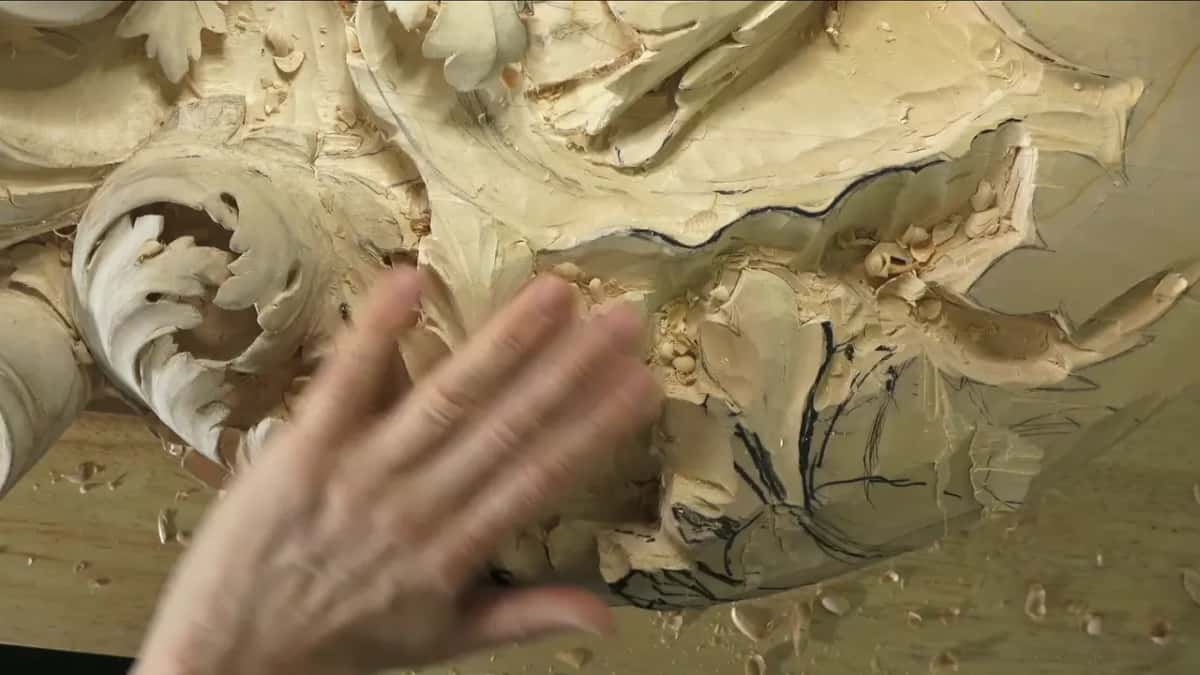
It did to me. On my April 2020 stream about wood movement I said I used the same supplier and the same batch, and different companies harvest American basswood in different parts of the United States.
The Canadian side I liked more, I said, because there's a lot more forest and a lot less pollution there, and that's really good lumber. Between east and west, I really liked South Carolina, and Wisconsin basswood too. It's beautiful.
Out west there were big lumberyards too, in Washington State. But it rains there almost all the time, I said, and the roots pull coloration out of the earth, so you see gray lines inside that basswood. When I chose my basswood, I used South Carolina and North Carolina wood, because I almost never saw those gray streaks in it. For stain grade or paint grade work, that doesn't really matter.
Why do I let basswood sit for years?
Kiln dried wood moved a lot more for me, and kiln drying is what manufacturers and lumberyards normally use, I said. They have a big, big stove, to be simple, and they really fry those boards, so they can dry it quickly and sell it.
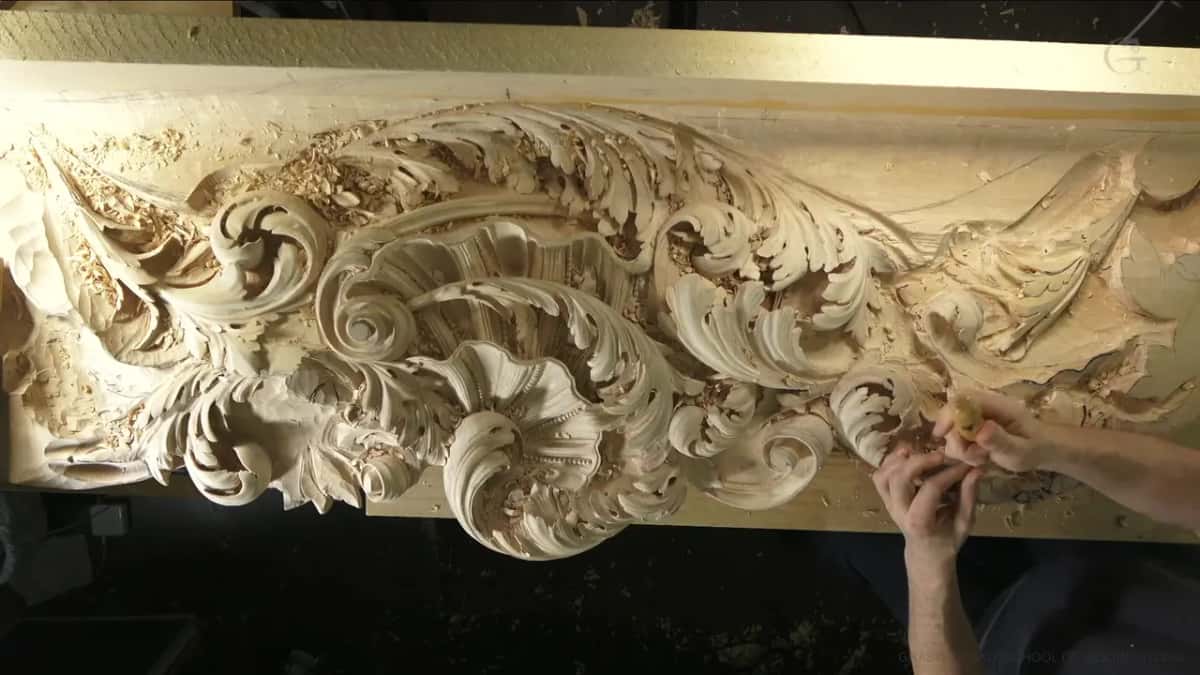
Air drying was always my preferred method. It just takes time. So I got my basswood years ahead of a project, put it in my shop and didn't touch it. Some boards I kept over 10 years, and some 20, 24, 25 years. When it's air dried, you eliminate that movement.
Do you need thick basswood boards?
Not always. You don't really have to buy thick stuff, I said on that wood movement stream. You could get just four quarter material, which is three quarter of an inch (about 19 mm), even on Amazon, and laminate it together. And here you go, you've got a thicker board.
My hazelnut relief went up the same way. Three blocks were glued on, and I said we had eight quarters and four quarters, about 50 mm and 25 mm, around 75 mm altogether, because I was planning a full 3D piece.
The grape onlay needs eight quarter material, which is about two inches. Mine was about one and seven eighths, about five centimeters, 4.76 to be exact, but it doesn't have to be exact. For the Venetian flowers rosette I used eight quarter stock too, about an inch and seven eighths (48 mm).
What if the basswood you bought online carves badly?
My Roman acanthus course has an email about this. The person bought basswood online, and the piece he got was just not good. My teacher said there is no such thing as not good wood. The knives are not sharp, or the gouges.
But I totally get what he means. Sometimes the same piece of wood carves normally one day, the second day it just becomes mushy, and the third day it feels like it's not even basswood anymore. Wood is alive, I said. It sucks the water in, swells and shrinks, and with more water in the fibers it's softer, more mushy.
Basswood, limewood, linden wood, lipa, it's the same pretty much wood, I said on another April stream. The first cuts course adds that in England it's called lime timber, and some cultures just call it a tea tree, because you can brew tea from the linden flowers. It's beautiful tea.
Which is better, a straight gouge or a fishtail?
For deep excavation, the fishtail. I showed it with two number 9s, both about a quarter inch. Both say six millimeters, supposedly, and one is still a little wider.
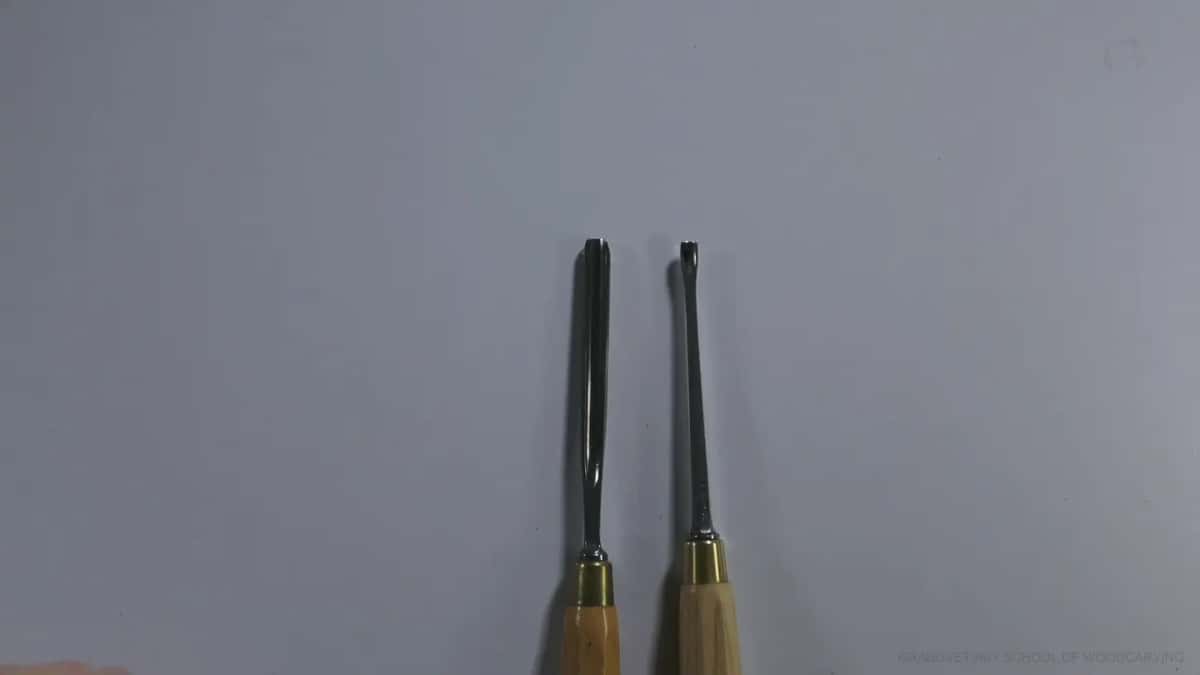
The straight one has a long groove on the inside, and I can use it pretty much all my life, until that groove ends. The fishtail has only a tail, like a fish, and the rest of it is just the stem. There's a third type too, the longy. Also a number 9, 14 mm, half an inch, and it just tapers. A fishtail number 7 of 14 mm and a longy number 7 of 14 mm are exactly the same tool, sweep wise.
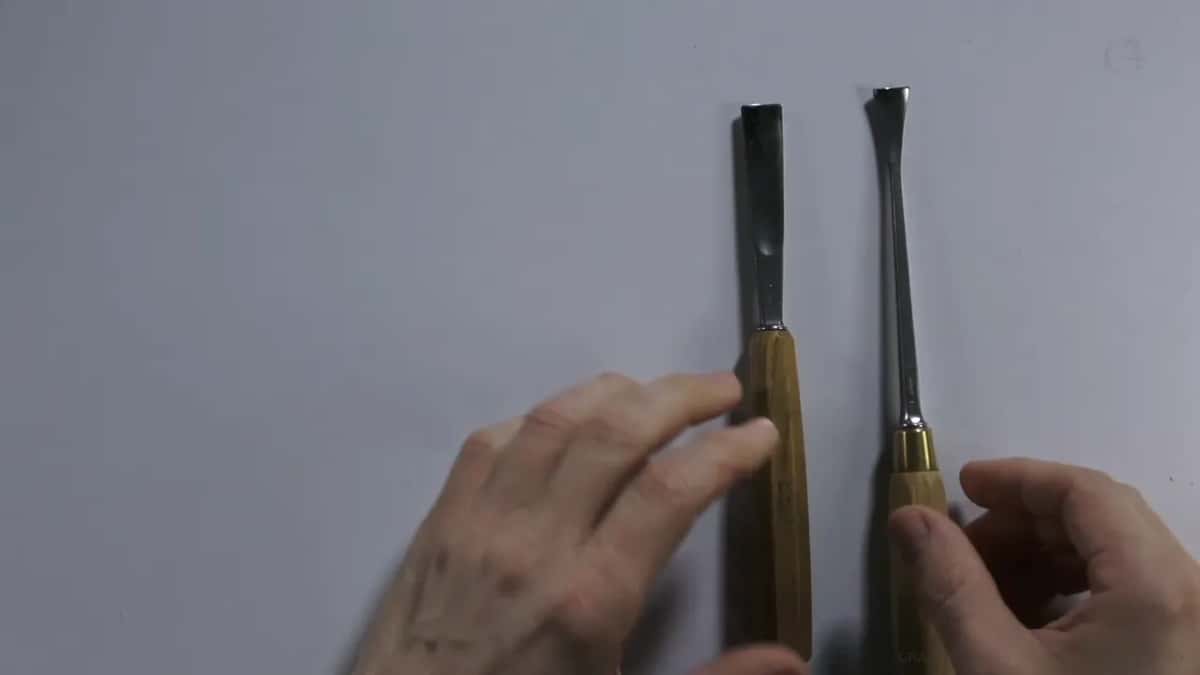
The difference shows right on the carving. Say I need to get through a hole and carve there. With a fishtail I go in, rotate, and carve right on the inside. A straight tool or a longy gets into the hole the same way, but I can't rotate it, so I can't carve all around.
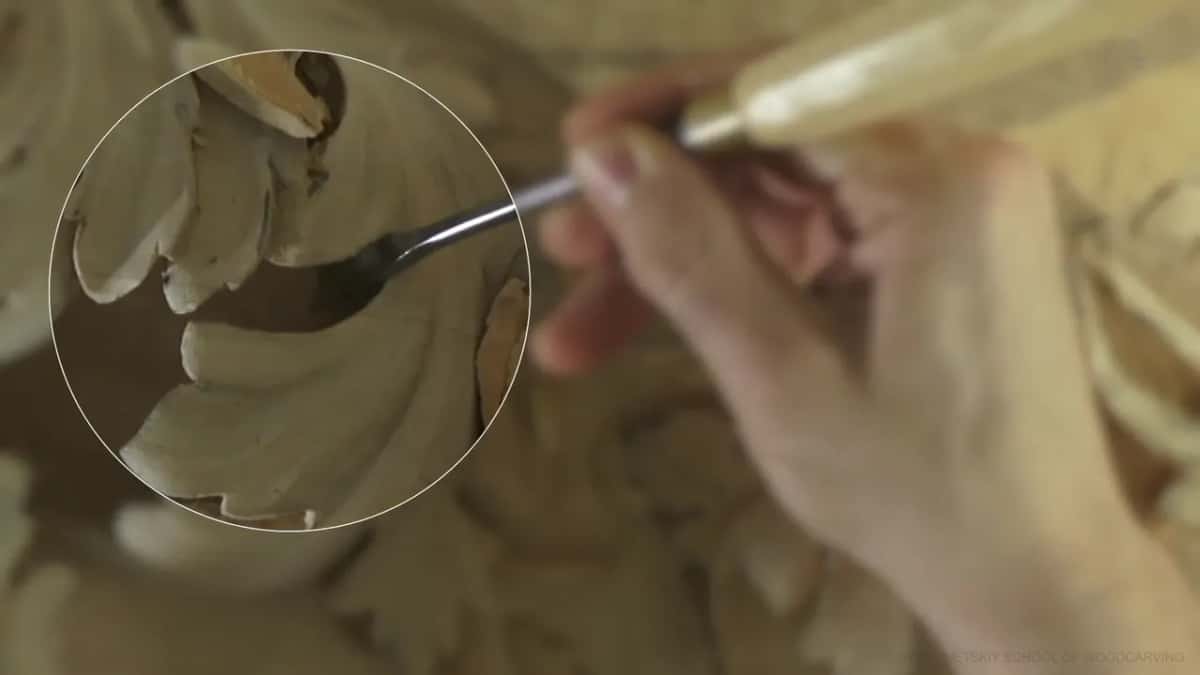
That's how I do my deep excavations, with a fishtail. The second advantage is that I can use just the corner, and get into tiny spots where a straight tool won't go. Number 9 is the one I like to use most, and with it I get inside the smallest areas.
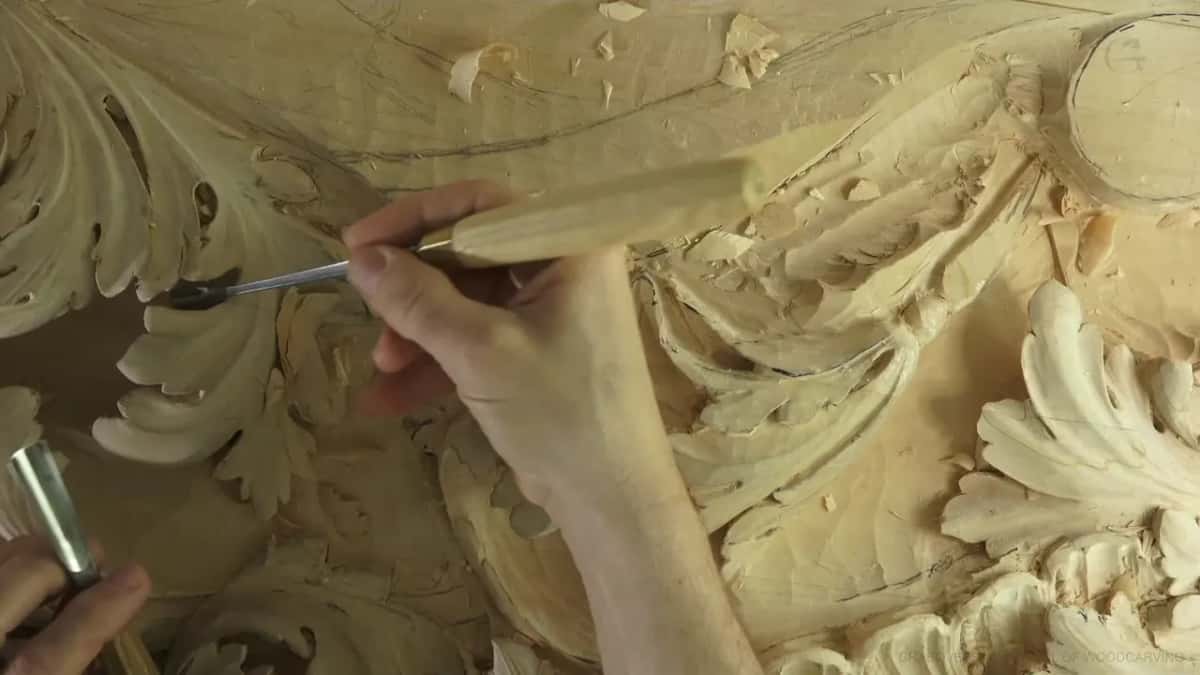
What a fishtail gouge is for across a whole design has its own page, in my Hashemi flowers course.
Is wood carving just digging in wood?
It adds a lot more than digging inside the wood. Wood carving is the ability to think in a three dimensional world, to see what two dimensional people don't see.
Don't get me wrong. Every human being is able to develop that, because we have the same brains. I believe we were created by the same God, and the human brain can do far more than we use. Most people simply don't need those parts.
When I teach in person, in Florida for example, most of my students are over 50, in their 50s and 60s. Some are in their 30s and 40s, and once in a while somebody is 18. People in the second part of life know they have to stir up the brain, because they don't want to lose their memories.
Carving develops new brain cells, I said, because you train your brain to work in 3D. It beats depression too, and it keeps you busy and thinking. In my opinion it beats all the TV shows. How much of the news channel can you watch, worrying about what's going on? Let's concentrate on the beautiful things.
How do you fix a carving you broke?
With glue. If I chip a part I didn't want to lose, I use a small bottle of glue, and I glue it back if it needs to go back. It has happened to me, absolutely. Absolutely. I broke some stuff.
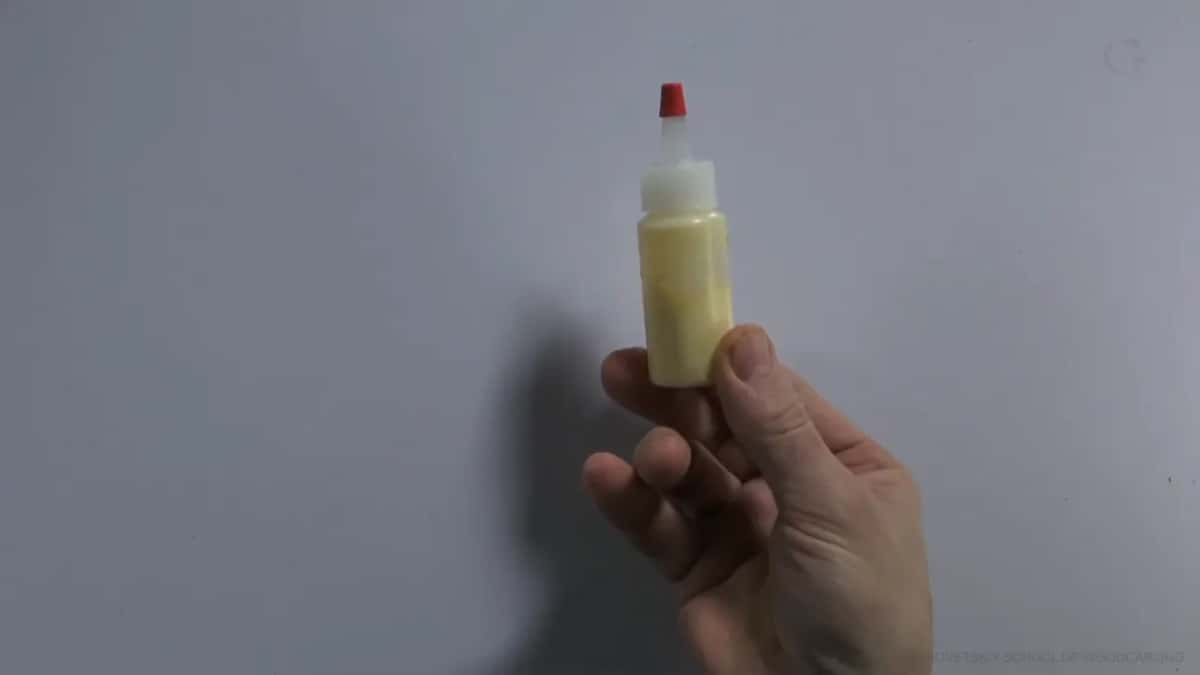
Do you protect a carving from the oil on your hands?
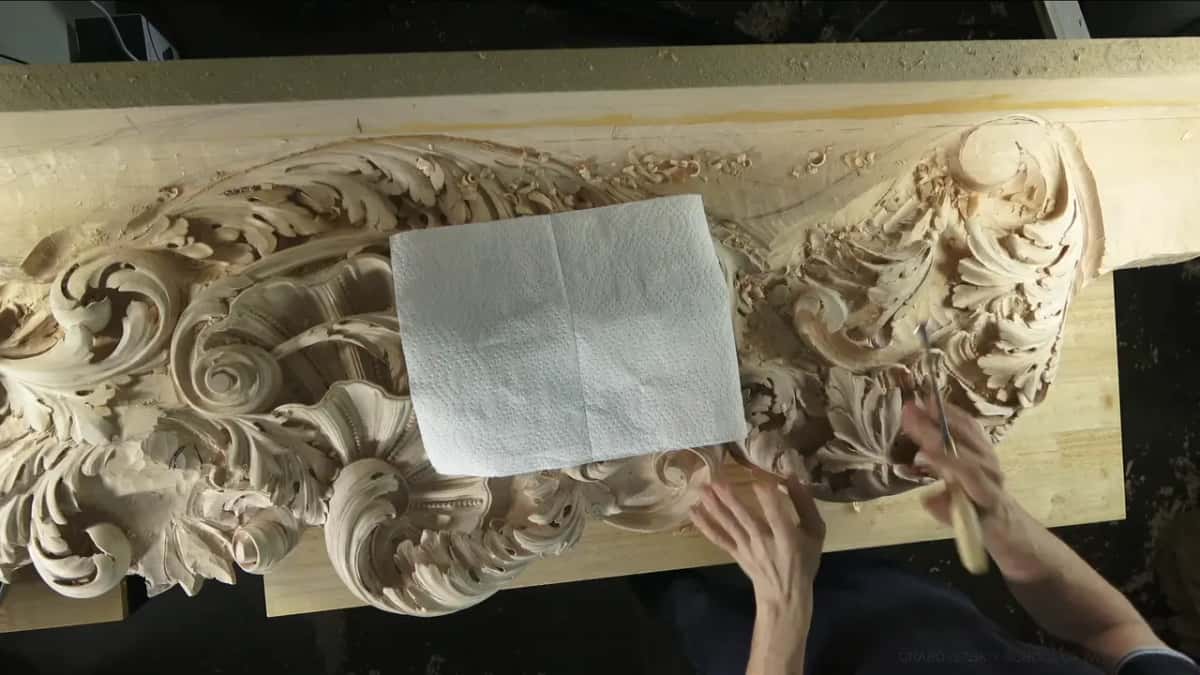
It depends on the project, and on how I'm going to finish it. If the piece will be painted, or if I'm planning to stain, I don't do anything, although it's a good idea to protect it anyway. From dust, no, because I'm using just hand tools and there's no dust in my shop.
From the hands, it's a good idea. When you finish one section of a carving, lay a cloth or a paper towel right there and just continue to work. Painter's gloves, the white ones, are another way, and sometimes I carve in them. The problem with gloves is that I can't grab my handle, so most of the time I don't.

Body oil is not the biggest problem, either. When you touch the wood, even with absolutely clean hands, a reaction happens inside it, oxidation, and it becomes darker. One piece I showed has never had any finish on it at all, and yes, I had to protect that one. Absolutely.
Is it better to be original or to copy others?
It all depends what you mean. Sometimes I don't quite understand what it means to be original. You're still original even if you copy someone else's work, because you're still you. You can't replicate your tool marks.
Personally, I don't copy anybody else's work. On my school site, though, that's exactly what people do. They copy my work, and a certification program shows me whether a person is able.
I encourage you to start with copying. You'll understand much better what they did, the wisdom and the logic behind why they did it and the way they did it. Then you can start developing your own. Nothing wrong with that. When that day comes, there's a course on the principles of design.
What bevel should a gouge have for carving oak?
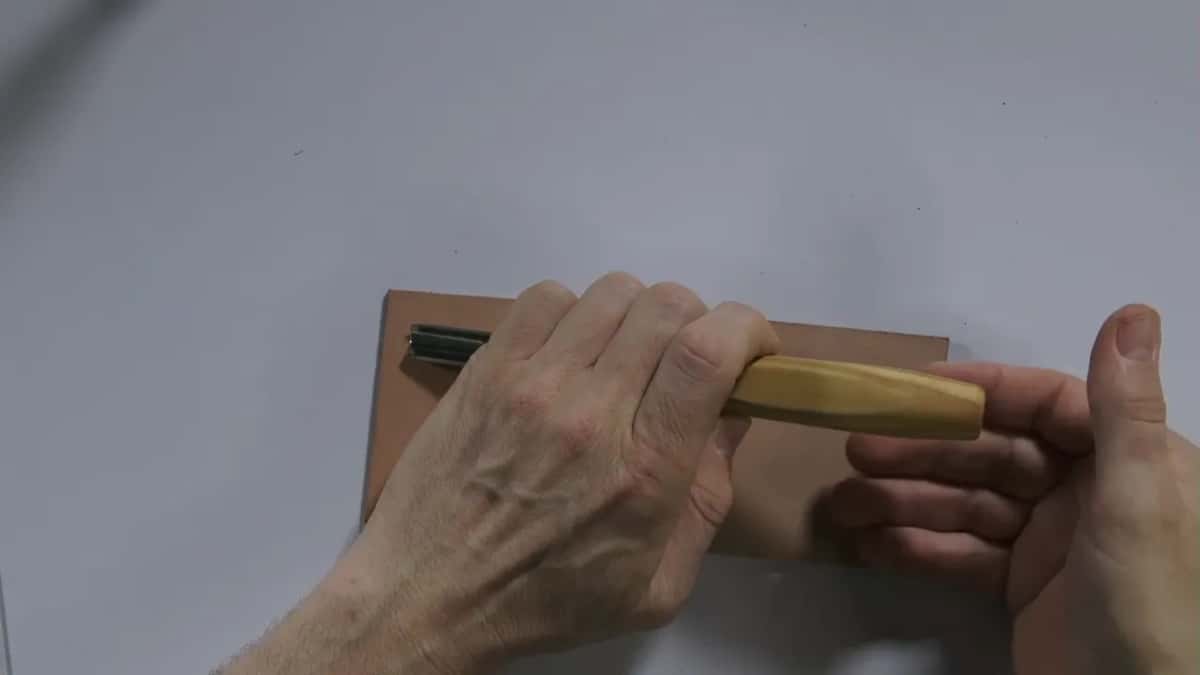
Stefan asked me that one, and I said I'm not measuring the angle, I'm just eyeballing, and oak is a harder wood, so to carve oak you most likely have to use a mallet. What I keep on my gouges for hardwood is in the tools course lesson on the bevel for carving hardwood.
All seven answers are in this lesson of the techniques course, and the courses and streams I quoted are inside the school. Got a question about wood of your own? Ask me.
How it's done
- Google a hardwood yard. Search for "hardwood lumberyard" near you, and ask about basswood. Yards selling to furniture or cabinet makers can usually get it.
- Expect a minimum. They cannot sell you just one board, so plan on a minimum order.
- Try the contractors' counter. At a big home center, go to the pro desk and ask whether one of their vendors can supply basswood.
- Write to the seller. Found planks on Amazon? Find out who is selling them, contact that person or company, and ask for a direct price with some discount.
- Glue up thin stock. Buy four quarter boards and laminate them together when you need a thicker block.
Frequently asked questions
Why was basswood from Woodcraft so expensive?
Shipping, the way I explained it. The store paid to bring basswood in and paid again to send it out, and that sat in the price. They didn't really make much money on basswood itself, I said.
Can Home Depot get basswood for you?
Often, through the pro desk where contractors shop. I told people in the United States or Canada to ask there, because the store could look for a vendor and buy from one who usually doesn't sell to customers directly. I named Lowe's and Menards for the same desk.
What does eight quarter basswood mean?
Eight quarter material is about two inches, the way I put it in the grape onlay course. Mine came out about one and seven eighths, close to five centimeters. Four quarter, I said on a stream, is three quarter of an inch, and you can glue those up.
What to carve next