

Alexander Grabovetskiy, woodcarver, School of Woodcarving · Published 2017
How do you hold a wood carving with stop blocks instead of clamps?
Quick answer: Stop block holding is a way to keep wood still with no clamp locked on it. A pair of stops goes into the bench holes wherever the piece sits, the work rests against them, and my free hand steadies it while the tool pulls into them. On small, flat pieces I've called it excellent.
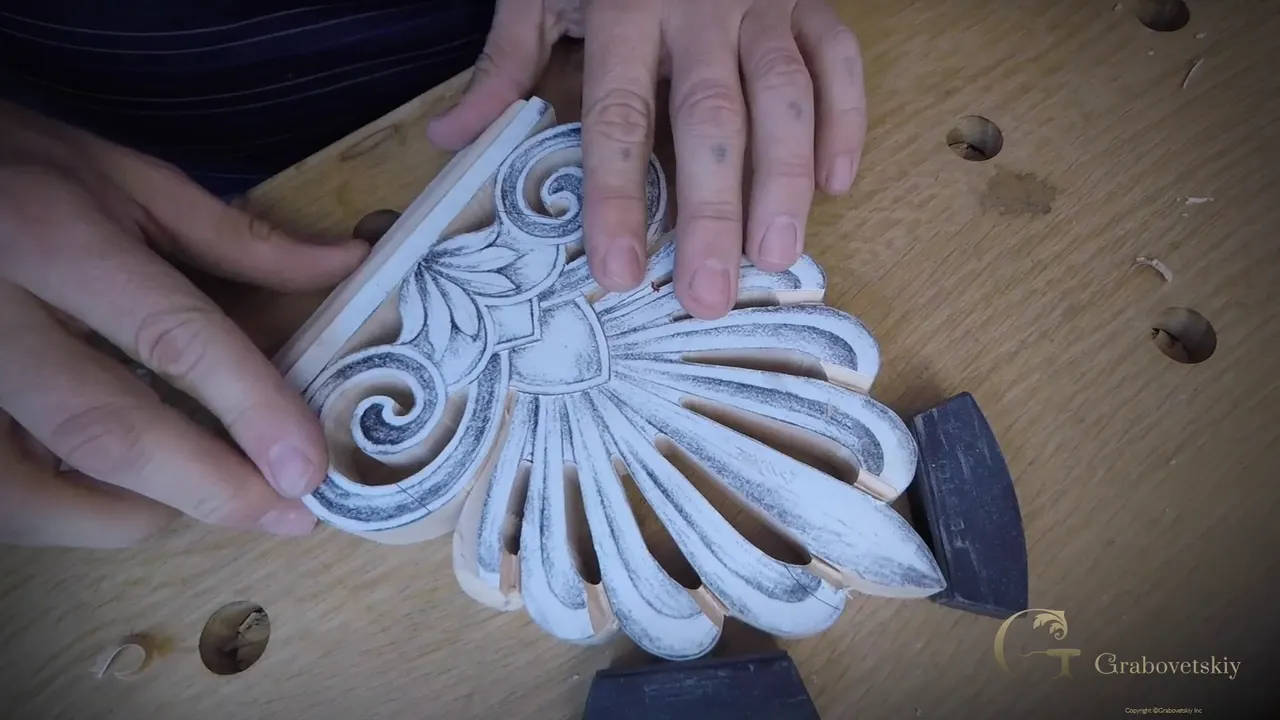
Holding a carving with stop blocks is setting a couple of stops in the holes of your bench, right where the piece sits, and carving it with nothing locked down. The wood rests against them while your other hand keeps it steady. It's one way to secure wood for carving, and for small, flat pieces I've called it excellent.
Has a small block ever crept away from your gouge? Would you like to turn it to a new angle without opening a clamp every time? Then two stops in the bench may be all the holding it needs.
Everything below was filmed at my own bench, in several of my courses, and I name each lesson so you can go and watch the stops do their work.
Stop blocks on my bench, in six lines
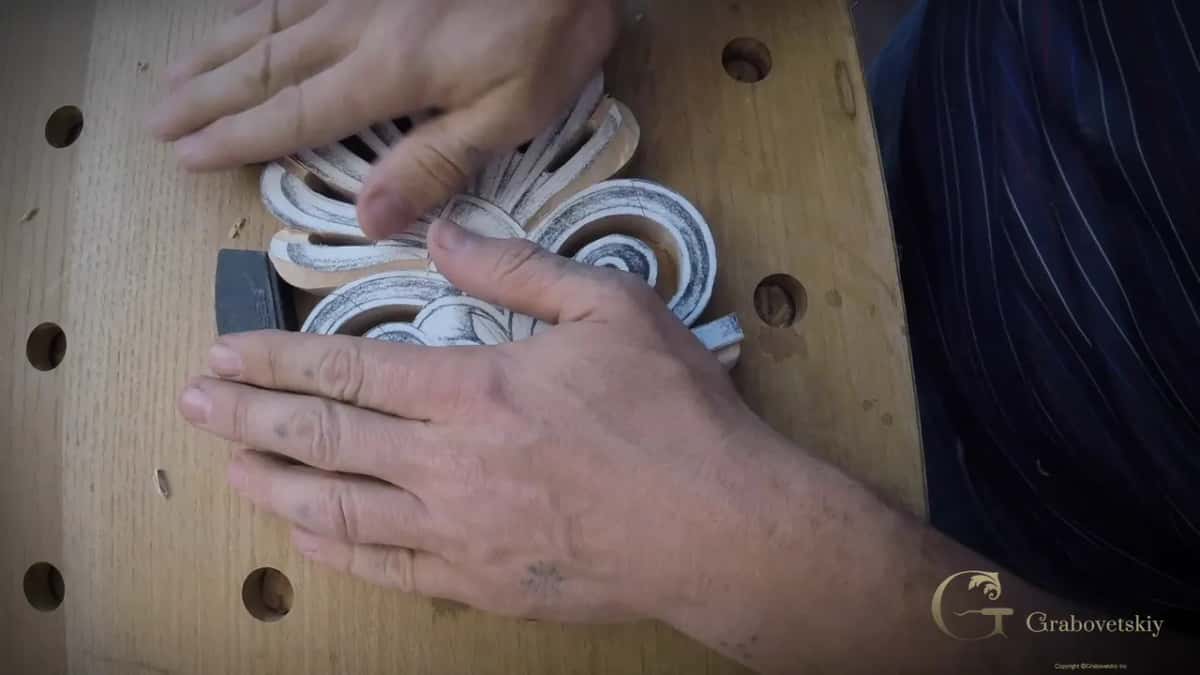
- A piece of the Festool system dropped into a hole works as a stop, and I don't even lock it.
- Wherever the work happens to sit, that's where the stops go.
- For the butterfly plate the dogs went on my side, and I pulled toward me.
- One hand holds the wood.
- Keep the gouge clear of bronze stoppers, and fasten the work really solidly when a whole chunk has to come off.
- A wiggle means another clamp goes on.
What is a stop block on a carving bench?
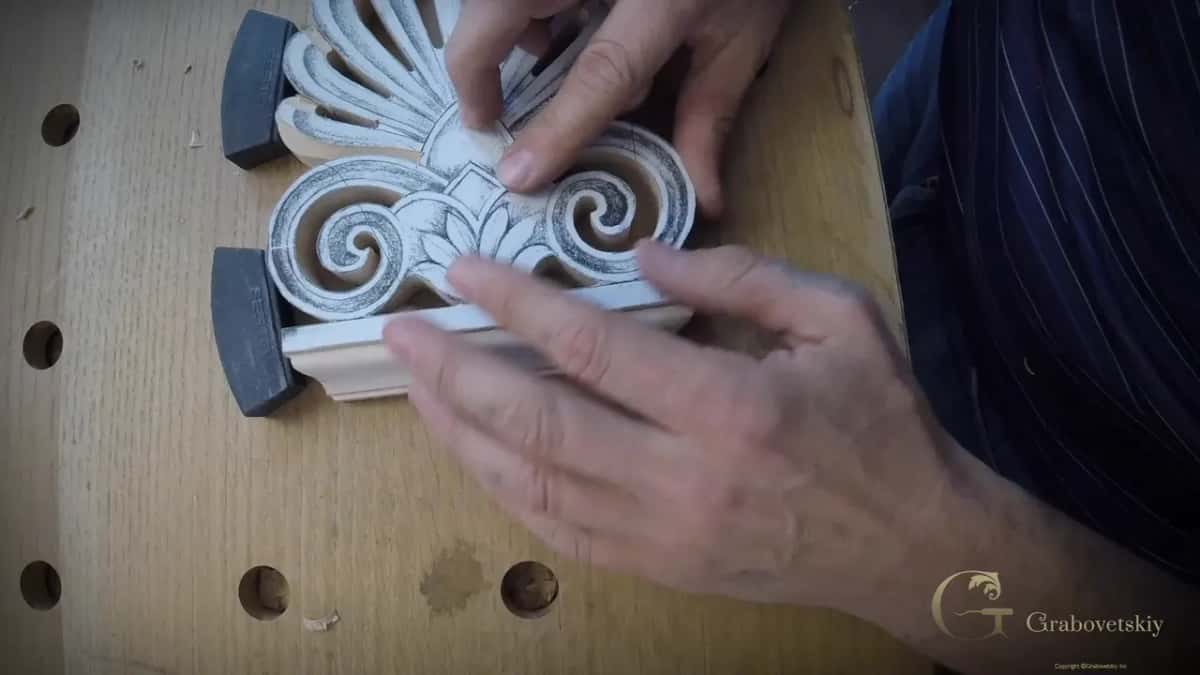
In my shop a stop block is a piece of my Festool clamping system, dropped into a hole and left loose. It's the same system I use to lock things down. I showed both jobs in lesson 2 of my Greek acroterion, the acroterion I carved for that course.
That system also works as just stop blocks, I said there. I place one in a hole. Whatever position my piece is in, I can set a stop right there without even locking it in place, and it takes the shape really easily. And I can work at whatever angle I need to.
That moment is the whole Festool Stop Blocks lesson in my Techniques course, and it runs under a minute. Here is what came right after it.
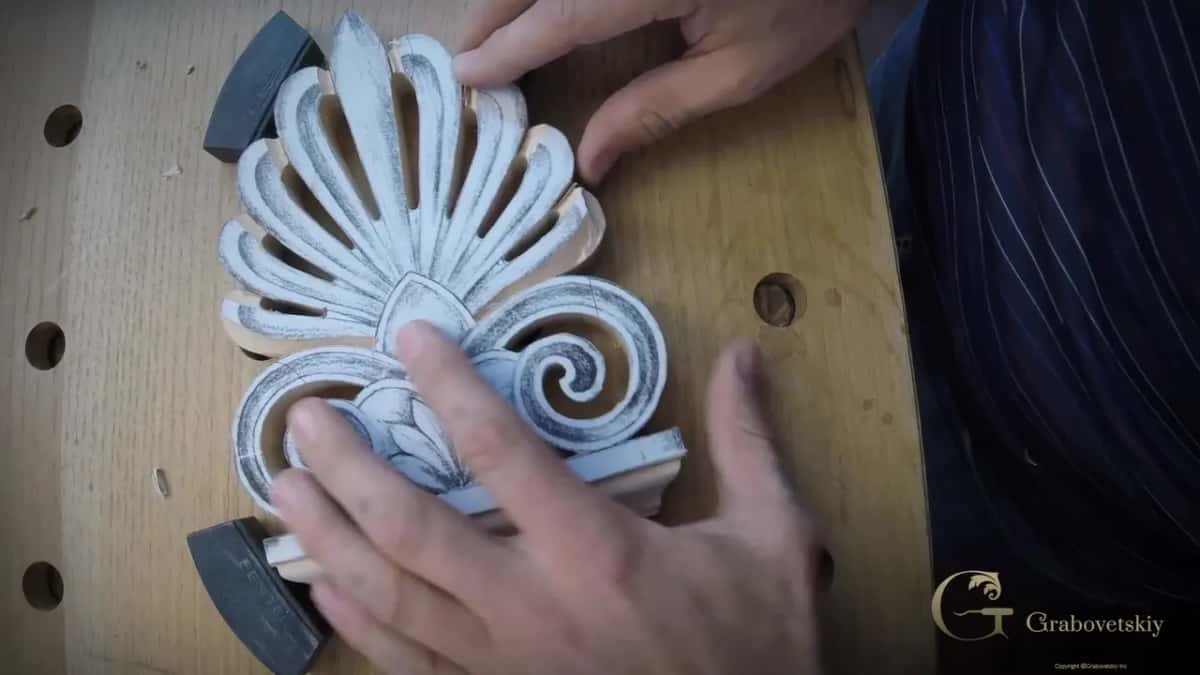
With the piece sitting against the stops I took a flat chisel, a number one with a single bevel, and cleaned that section. I didn't go deeper than about 3/16 of an inch from the top, roughly 5 mm. Then I rotated the piece and did exactly the same on the other side, with the stops still doing the holding on a bench drilled full of round holes, the kind you see on a woodworking bench.
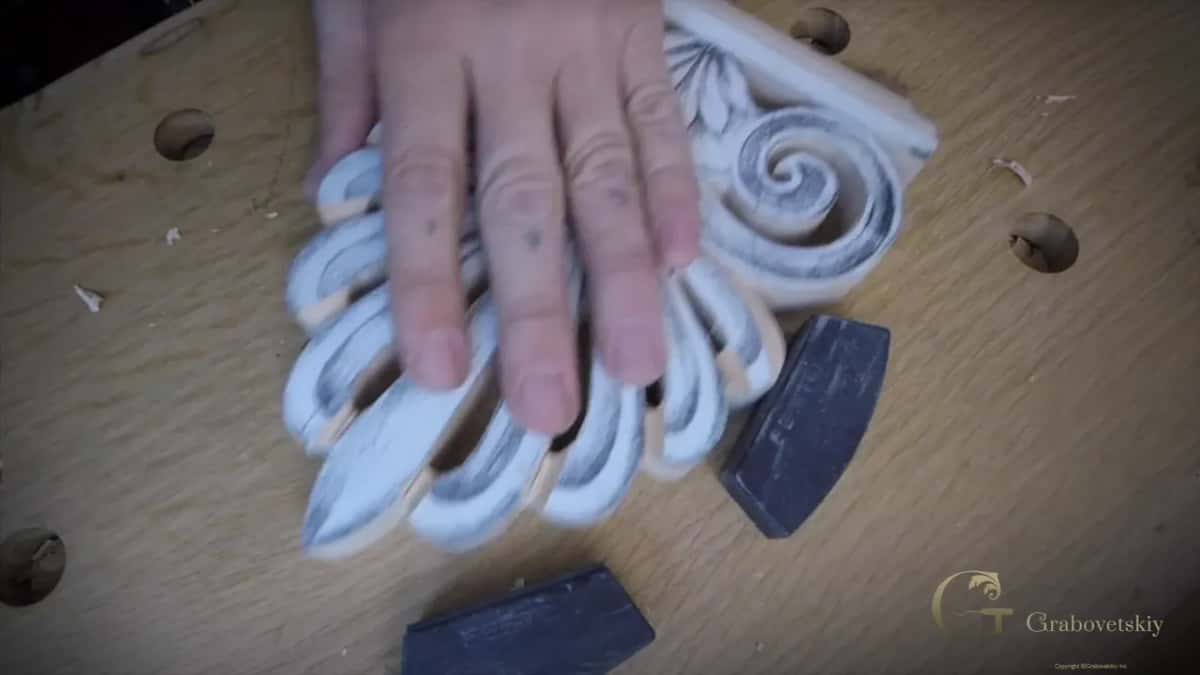
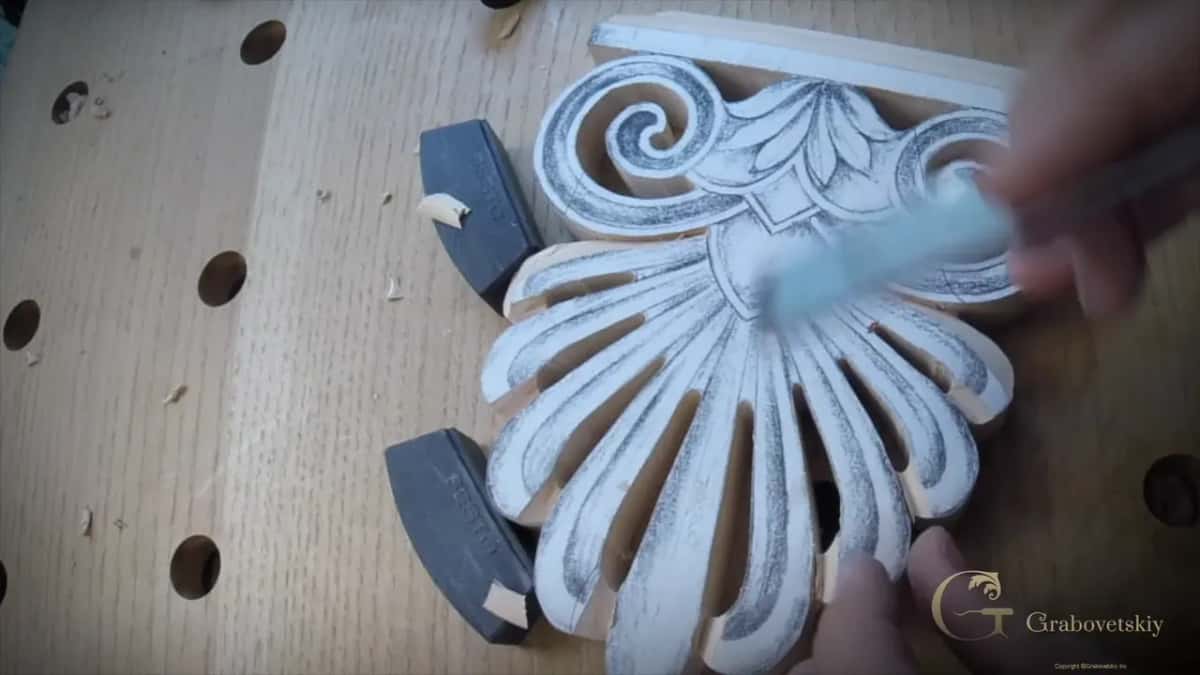
How do you secure wood for carving when nothing is locked?
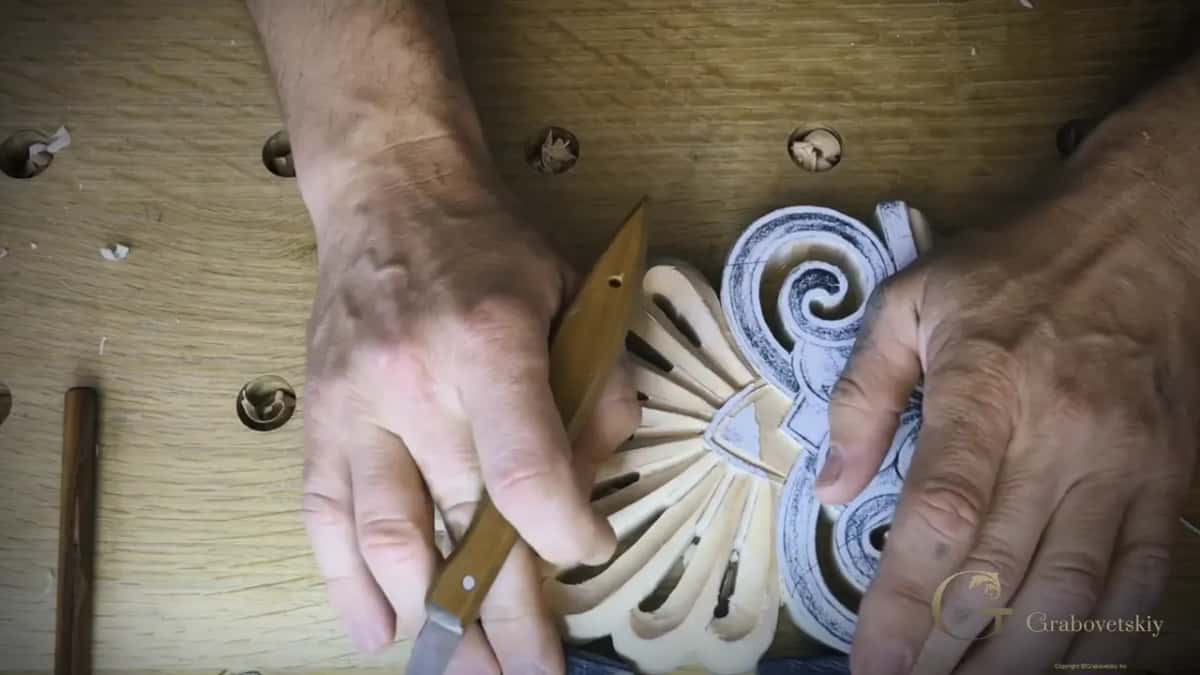
That acroterion piece got two stops to butt against, and I kept a hand on it. Lesson 4 of the same course had me making tiny slices with a knife, just opening a little channel. I held the knife the way you hold a pen when you write by hand, and one finger pushed the blade. Careful. One slice at a time.
The piece had no clamps on it, nothing at all. It sat butted against those two block stops, and with my other hand I controlled it on the table and held it there. For small pieces like that, I said, it's excellent for flat work.
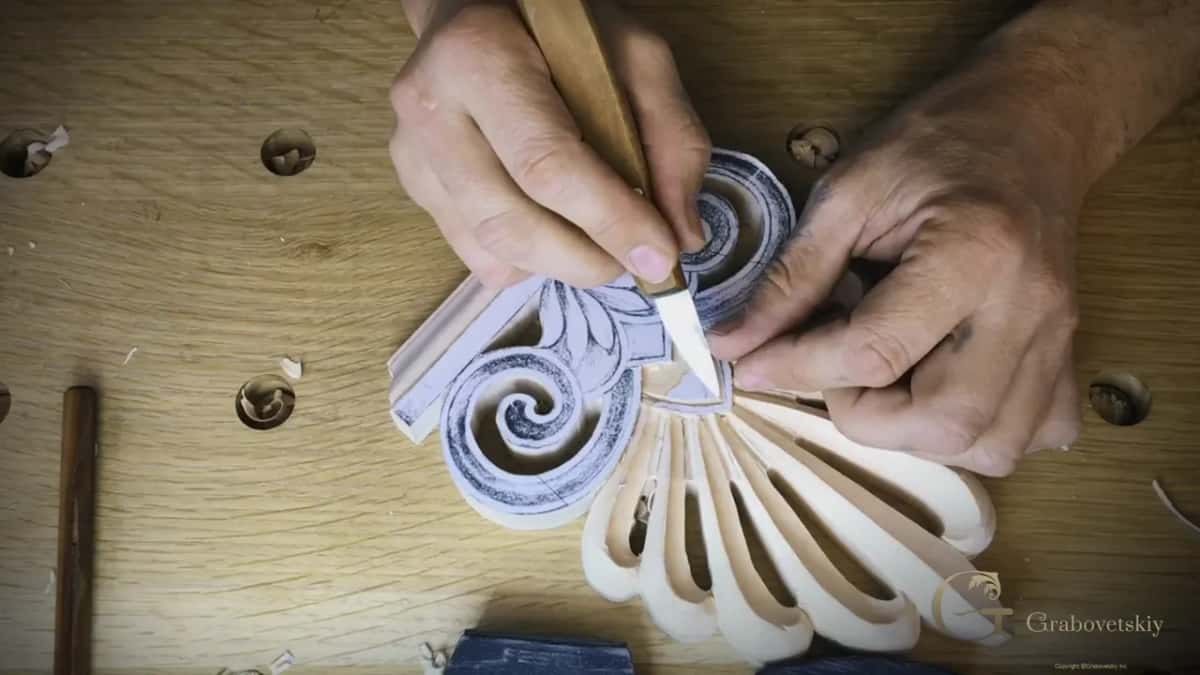
Which way should the tool pull against a stop?
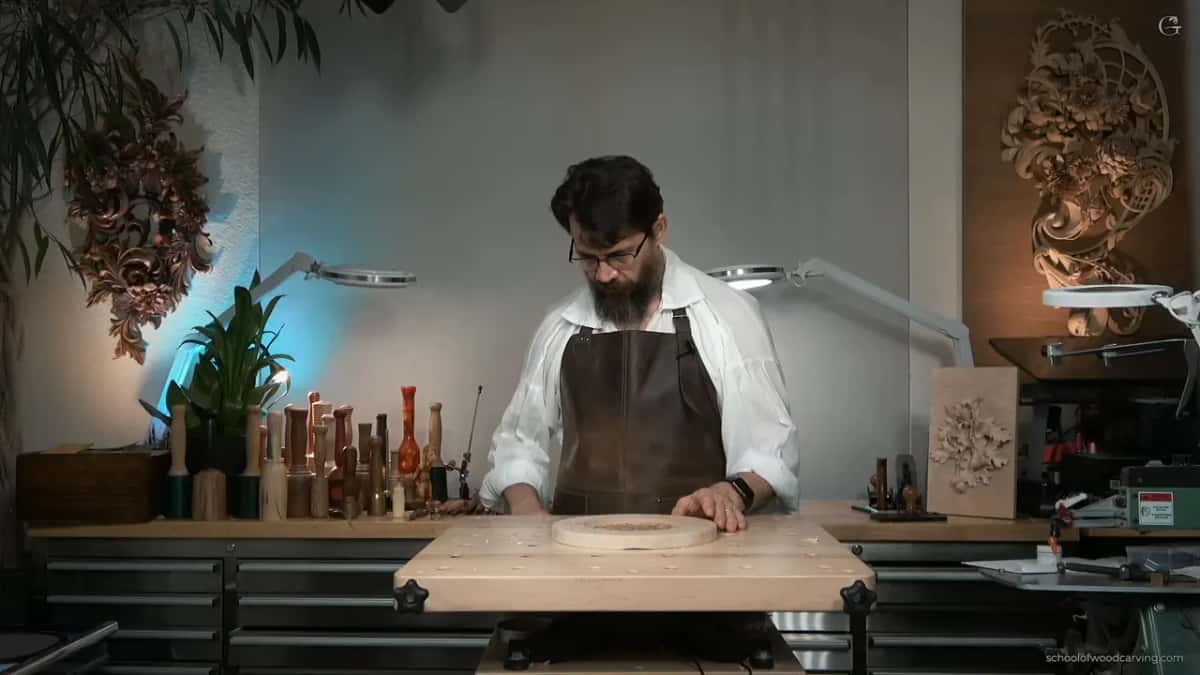
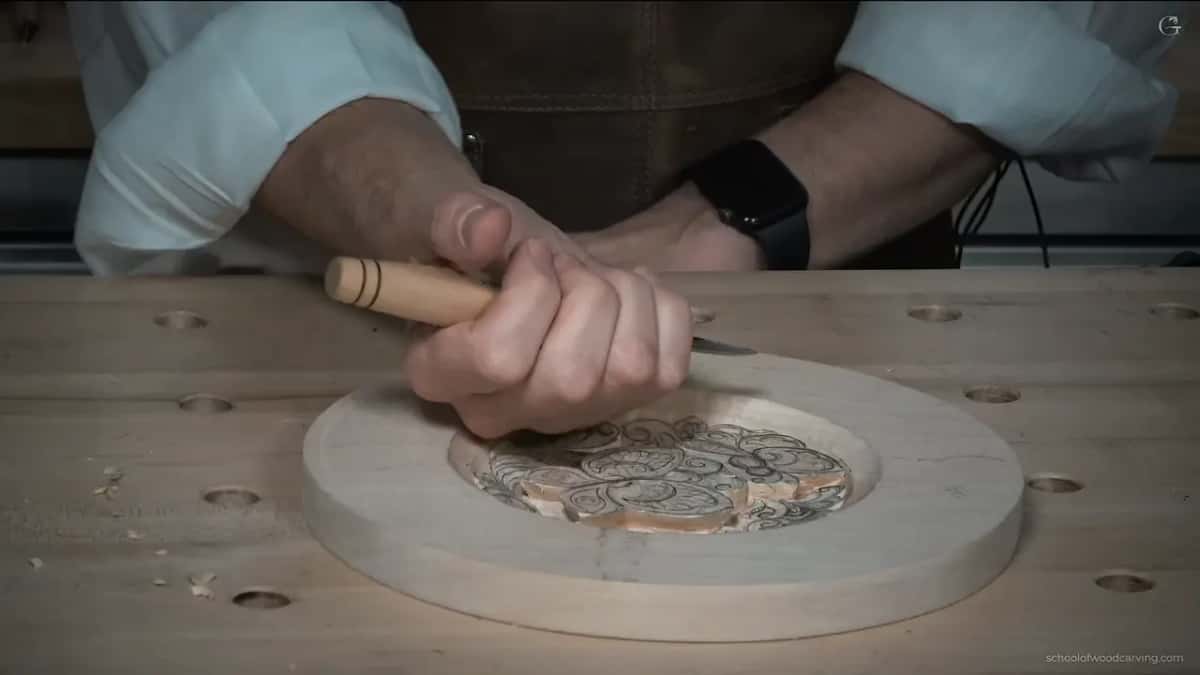
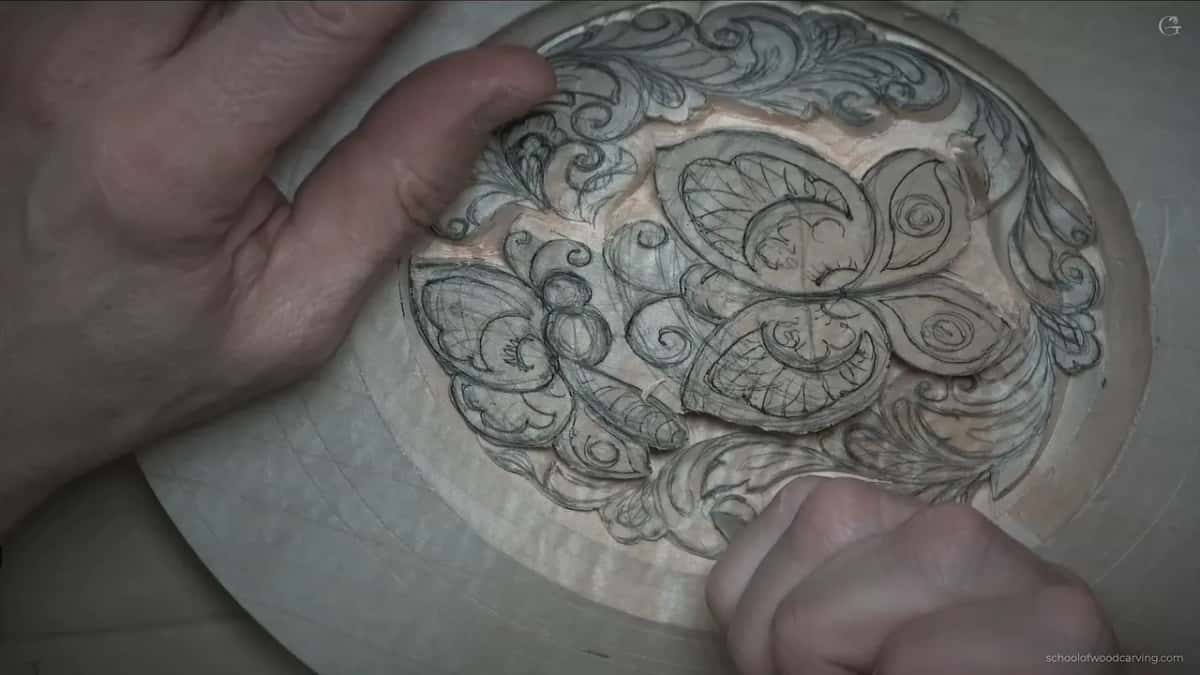
Toward the stop, the way I did it on my plate with butterflies. I moved two bench dogs closer to me, and I said that makes it really easy. The logic is that I'm pulling everything toward myself. Because those two dogs are there, the plate won't go any farther than that, and I can rotate it and attack from whatever angle I like.
Obviously I have to hold it with my other hand. But that gives me more flexibility, and the pass that followed couldn't have come out much nicer.
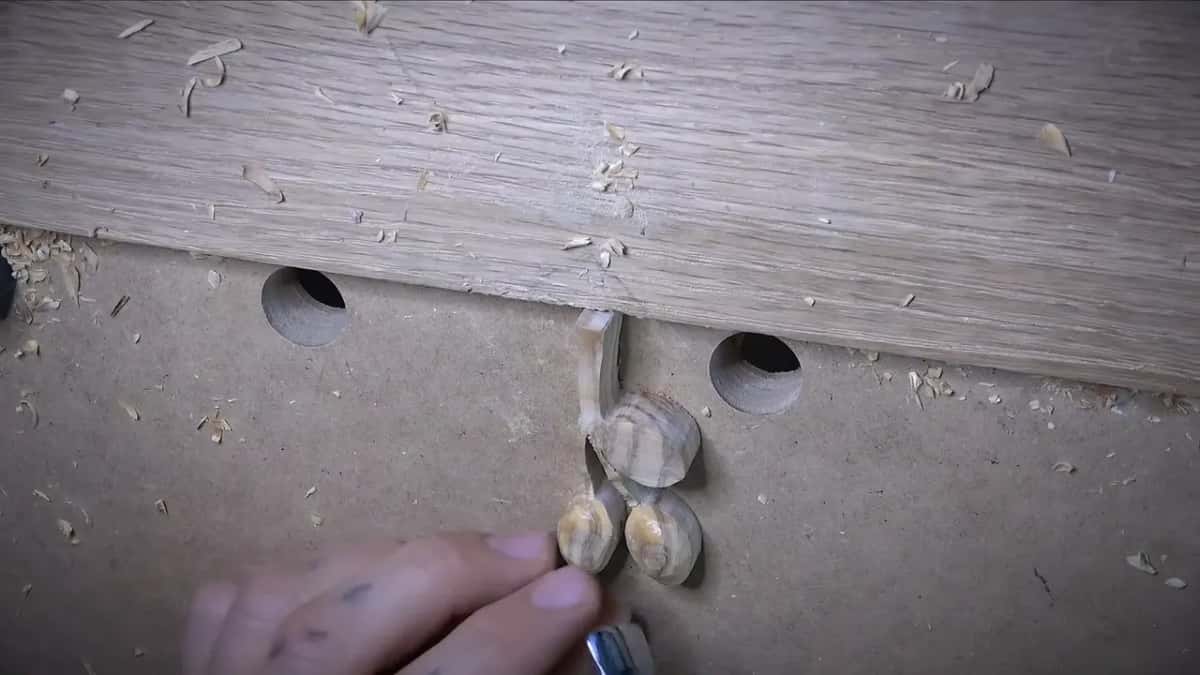
Push the other way and small parts suffer. Carving the olives for my Lily Box, I had a leg left on one piece, so I could bump it against a piece of wood. But when I worked on one side I was pushing the olive away. That's not really good, I said, because you can break it easily, and I said I had to control every pass and make them slower.
Later on that piece I found a more comfortable spot, where I could bump easily against the wood. I took a knife again there, because I didn't feel comfortable with the gouge in that spot. A bigger tool creates a lot more pressure, I said, and a smaller one is much better when you're working on those details.
When is a stop block enough, and when do you lock the piece?
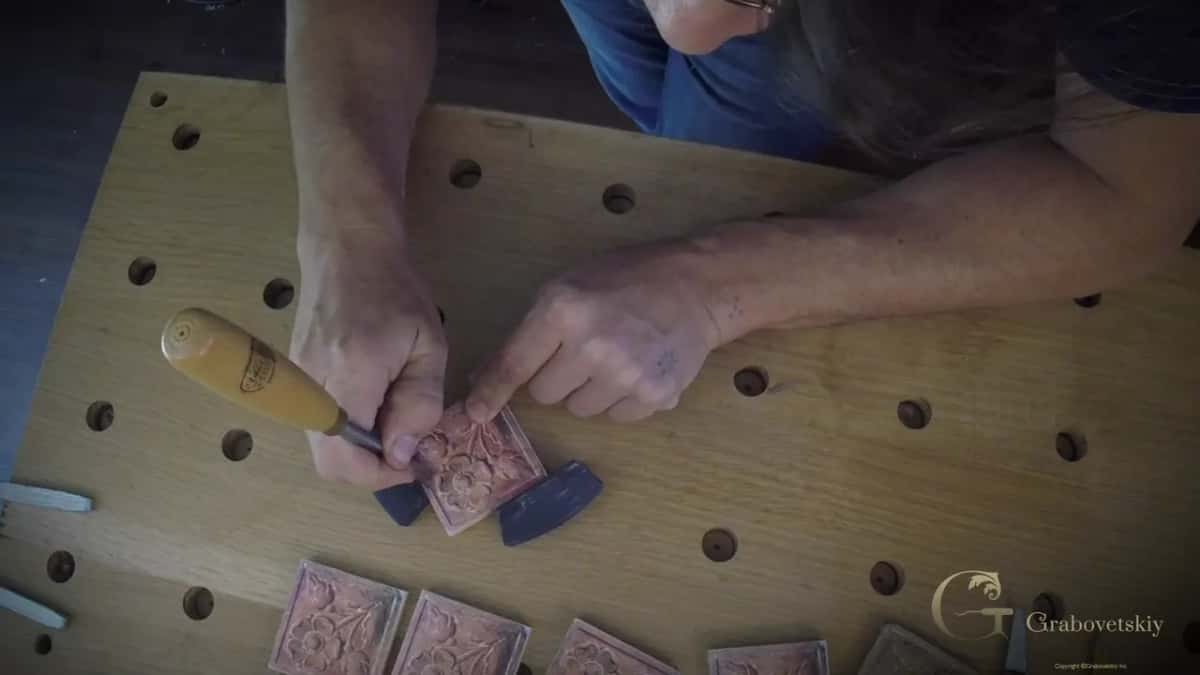
On a tiny piece the stops were enough for me. My flower rosette began as a small block, and there aren't many ways to hold something that small. So I used my Festool stop blocks again, in the 20 mm holes (a hair over 3/4 in) I drilled in my workbench. It was easy to work around, and I could rotate it.
Of course I could have locked it in place. I really didn't need to, I said, because it was a really small, tiny carving. The first tool was a number 6 fishtail about half an inch wide (13 mm), on the flower itself, the biggest element of that rosette.
Taking off a whole chunk is a different job. Carving my hazelnuts I was going to attack the block from the side, and I said it has to be fastened really solidly. You either clamp it to the bench and attack it, or you do what I did, with screw clamps from Veritas, from Canada, and a couple of bronze stoppers on that side. That gave me a really, really solid stop.
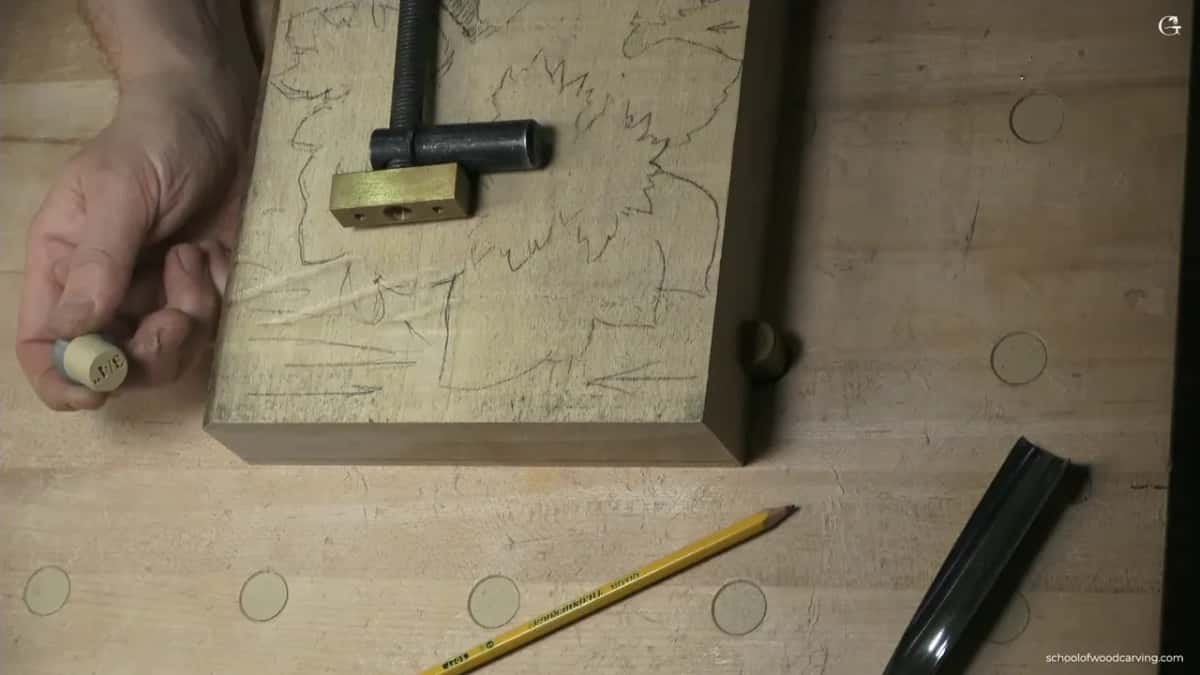
Working the grape onlay, I found spots that served me like legs, so I could clamp it really tight. Maybe one clamp would have been enough. But I don't like that wiggle, so another one went on right there.
Weight holds a piece too, for a while. Look at workshop 3 of the Venice Room, where I told everyone I hadn't clamped anything at all. The piece stayed on my cookies. They're rubber, and rubber keeps a heavy piece from slipping. Later it would get lighter, I said, and then I'd fasten it from the backside.
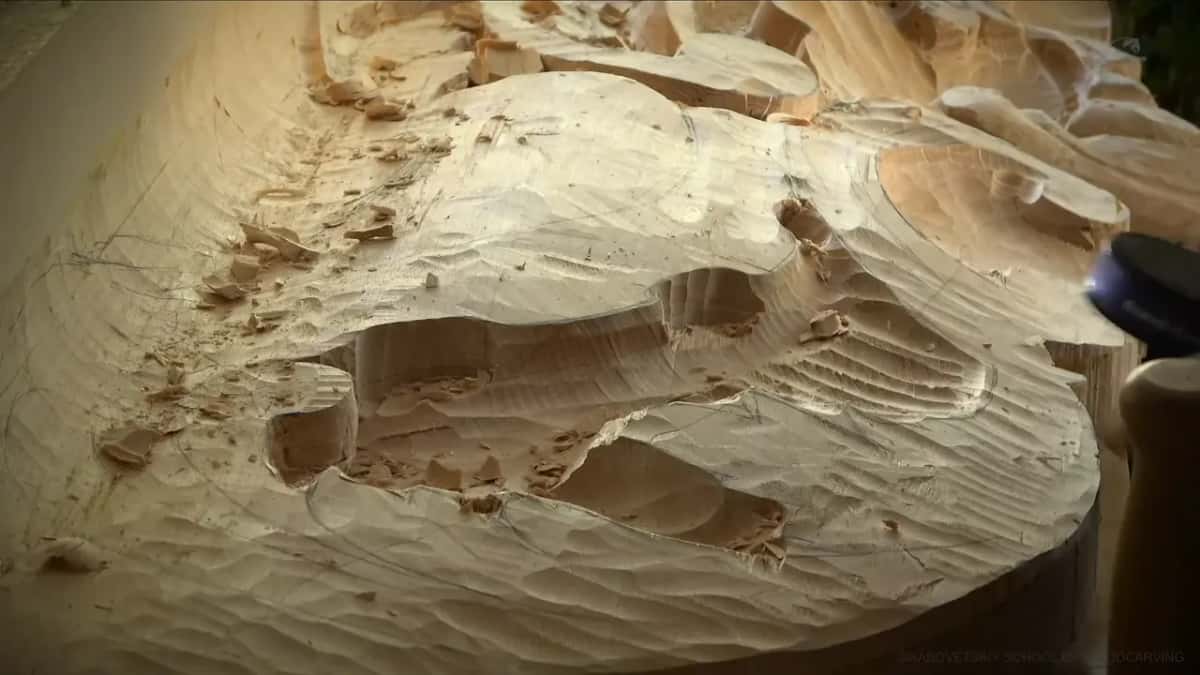
Back in the acroterion lesson, a few minutes after the stops, a Festool clamp locked the piece to the bench and a number five went to work. The holes those clamps need are in the Festool Clamps lesson.
What should the gouge never hit?
The bronze. Before the hazelnut waste started coming off, I told everyone that when you take out the material, you shouldn't hit the bronze.
I gave myself room on the drawing too. I stayed about 3/16 of an inch, about 5 mm, back from my final outline while the whole chunk came off. Touching that line wouldn't have been critical, I said. I still wanted the room.
I've seen a lot of guys take a mallet to that job and just hit, knocking all the material off. That's okay, but the bevel is still a wedge, and you're creating a lot of stress inside the wood. I found it's better to take it off by hand, and I didn't go deeper than about 1/8 of an inch, about 3 mm.
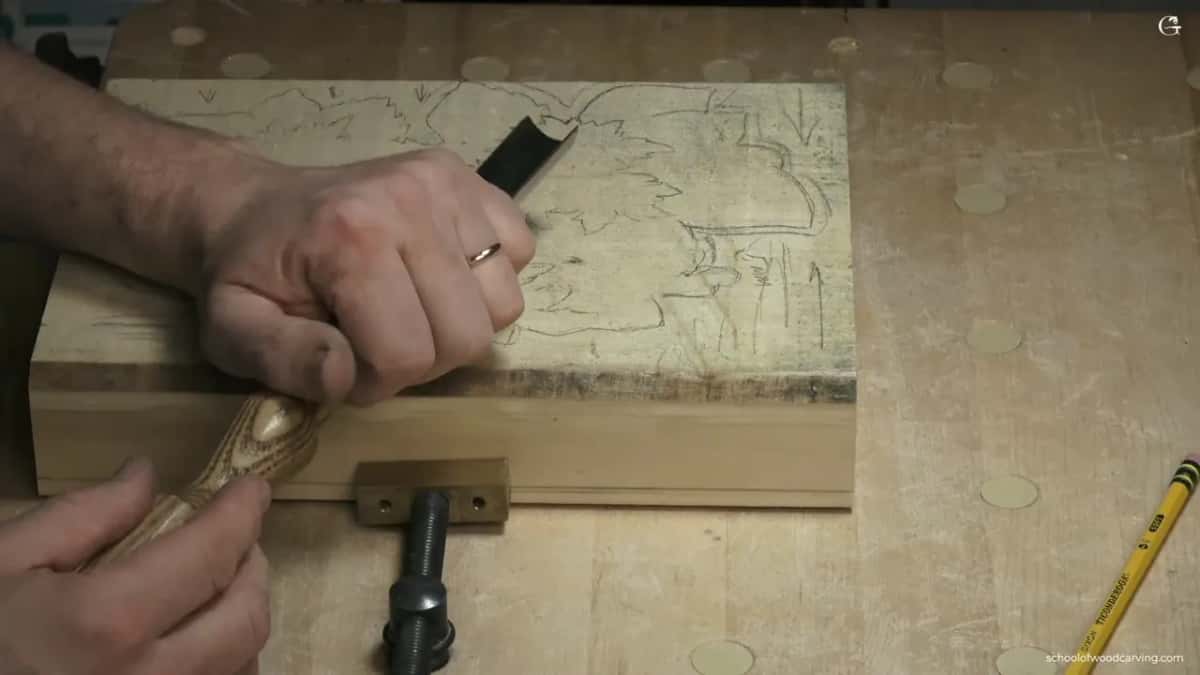
What do you push against when there is no stop?
In workshop 66 of the Venice Room the thing I pushed against was the carving itself. I was deep in a hollow with a spoon veiner, maybe 7 mm (about 1/4 in). I had a leverage point on a big chunk that wasn't carved yet, so I was pretty much safe to crank against it.
But it's always better to protect that spot with another piece of wood, if you have one, so you don't damage it. Even something like a cookie, if you can crank against it. That day, in my spot, a cookie wasn't going to work. Or else, I said, use your finger as the leverage point, because you really don't want to push too hard on an edge, least of all one where the detail is done.
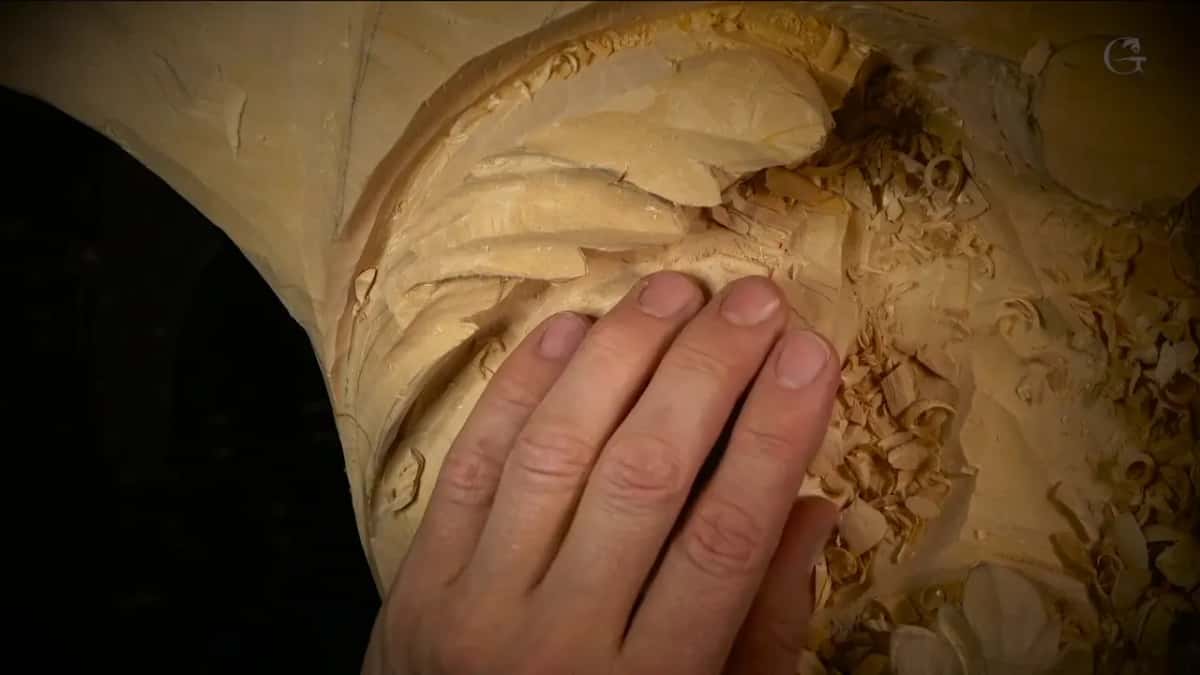
And sometimes it's the bench. Back in workshop 58 the carving sat a little away from me, so I had to lean against my bench, and when I pushed, it squeaked. I apologized to everyone watching. Some of them hadn't even noticed until I said it.
Do stop blocks have to be Festool?
Mine are, and they weren't even made for carving. During lesson 3 of the acroterion I said those clamps were designed for woodworking, to clamp on a multifunction table, the MFT/3 if I have the name right. Whoever designed them, I said, are really smart people. Still, they weren't the first. Adjustable clamping against stop blocks was used long before, and different brands have been doing it for a long time.
Later in the hazelnut course I fastened the piece with Veritas hardware, and I told everyone they don't have to buy Veritas. You can get something like it on a Chinese site like Temu, and it's still legit. I just like Veritas, personally. What I like about that particular bench is that I can mount a piece in any position. Once it was solid I started with a big number 7, about an inch and a quarter (32 mm), flute up. One clamp on the grape onlay came from a cheap Chinese tool site, and I said you can get by with stuff like that.
Go back far enough and nobody owned a Festool clamp. Lesson 5 of the acroterion is where I called that not critical. You could use just old bench blocks.
Is a stop block cheating on a classical carving?
If the 17th century carvers had owned a system like that, I said, they definitely would have used it. That was in lesson 3. I was making a concave shape inside the acroterion with a small Dockyard gouge, trying two of them because their profiles differ, and one was a little too big. A moment later I said it again. I love that Festool system, because you can take any shape, hold it against it, and work pretty much any shape of a wood carving. Somebody would say it's not authentic, not the way people did it in the last century or the 17th century. Of course not.
Glue is the same debate. Should you still use hide glue for your furniture, or a yellow or white glue like Titebond, which is much stronger? I like Titebond 2 particularly, and I have absolutely no doubt they'd have used it in the 17th or 18th century too.
In lesson 1 I set a shoulder plane against my wall and started removing wood slightly. Somebody would call that cheating, I said, but I don't think so. It's still a hand plane, still hand tools, and they found Roman hand planes.
Some old tricks even come with extra wood. The leg I left on my Lily Box olives is an authentic technique of the 17th and 18th century carvers. Ask me how I know, and I'll tell you the truth. I read it in the books. Nobody really asked them, of course, but research was done, and I trust the people who wrote those books.
What keeps chips out of the bench holes?
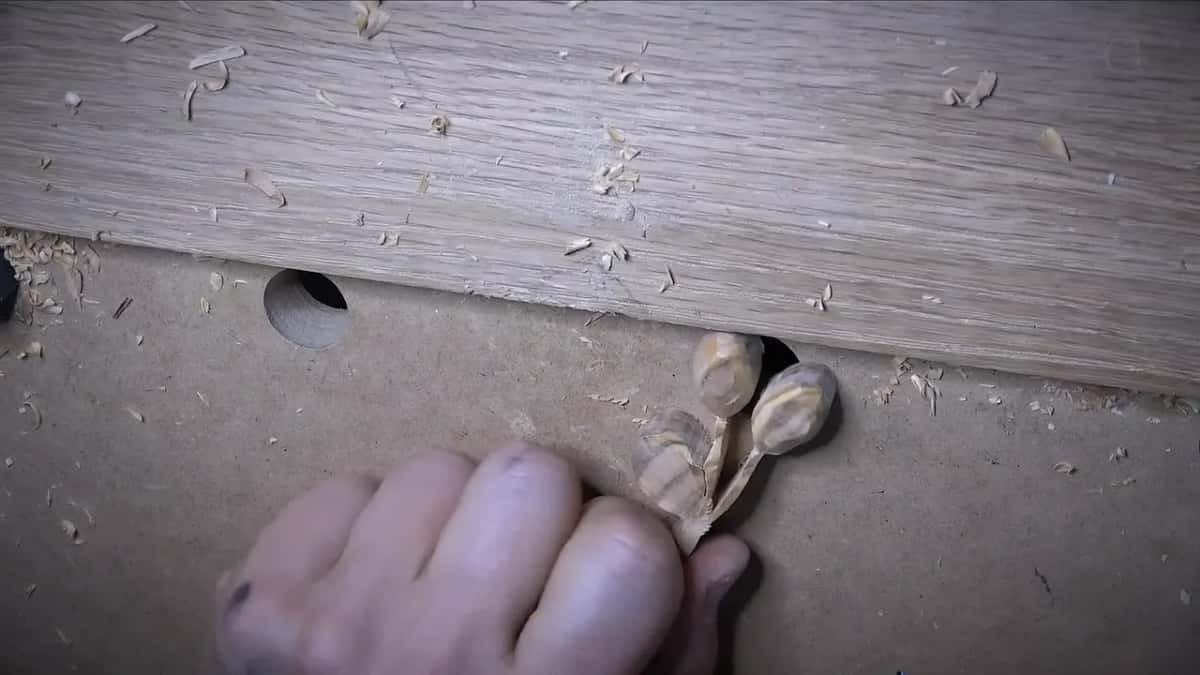
Plugs with a magnet in them. You can see on the grape onlay that I plugged the empty holes. They're 3D printed, with a small magnet inside and probably just a metal washer, so they pop in and out. At some point it just bugs you how many chips go into those holes, and I keep a few of them around.
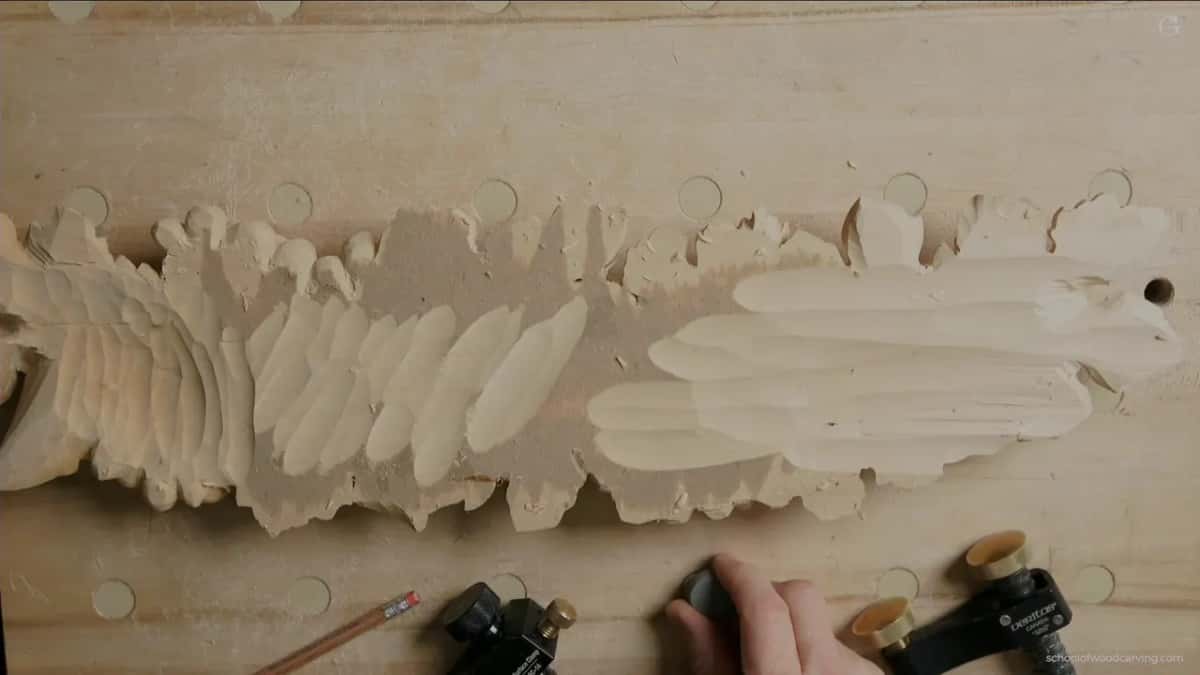
The bronze stoppers on the hazelnut job go into 3/4 inch holes, about 19 mm. Inside of that there's a magnet, and I can pull it, so I'm not clogging my workbench.
Which stop held which piece
| Piece | Holding | Where |
|---|---|---|
| Small acroterion palmette | Festool clamps dropped in, used as stops | Acroterion 2 |
| Tiny flower rosette | Stop blocks in the bench, never locked | Rosette 1 |
| Flat acroterion piece | Butted against two block stops, hand holding | Acroterion 4 |
| Carved butterfly plate | Two dogs near me, pulled toward myself | Butterflies 6 |
| Hazelnut carving block | Veritas screw clamps, a couple bronze stoppers | Hazelnuts 1 |
| Lily Box olive | Leg bumped against wood, held by fingers | Lesson 13 |
| Heavy Venice piece | Rubber cookies under it, no clamp yet | Workshop 3 |
Where to watch the stops at work
Every piece on this page is in a full course, filmed at my bench with the stops in plain view. Want to see two of them hold that palmette while the flat chisel cleans it? Lesson 2 of the acroterion has it, and if you'd like to stand next to me for all of it, that's what Access to the school is for.
How it's done
- Drop the stops where the piece sits. I set a stop in whichever hole met the acroterion piece, and didn't even lock it.
- Set them on the side you pull toward. For the butterfly plate both dogs went near me, and the knife pulled my way, into them.
- Steady it with your free hand. The work stayed under my spare hand, on the plate and on the small flat acroterion piece alike.
- Keep the tool off the metal. Before the hazelnut waste came off I told everyone to keep the tool off the bronze stoppers.
- Add a clamp at the first wiggle. A single clamp might have done for the grape onlay, but I didn't like the wiggle, and a second clamp went on.
Frequently asked questions
Can a bench stop replace a vise for small carvings?
For small, flat work it can. On my acroterion a little piece had no clamp at all, only a pair of block stops to rest against, and a hand kept it under control on the table. I called that excellent for flat work. When a whole chunk had to come off my hazelnuts, I fastened the piece really solidly instead.
Do you have to lock a stop block in place?
Mine stay loose. On the Greek acroterion I put the Festool stops wherever the piece happened to be, without even locking them, and they took the shape really easily. On a tiny rosette I could have locked them, and I said I really didn't need to.
Why put the bench dogs on your side of the work?
My knife pulled everything toward me. On my butterfly plate I set two dogs on my side of the work, so the plate couldn't travel past them. I could rotate it and come in from any angle, holding it with my free hand.
What to carve next