

Alexander Grabovetskiy, woodcarver, School of Woodcarving · Published 2021
Can you reshape a V tool to reach into an undercut?
Quick answer: A reshaped V tool is one with a bevel ground on its wings, so the blade end slants back and the bottom point leads. The V channel can then reach under the overhang without damaging it. Against a square wall, the straight tool works with no change at all.
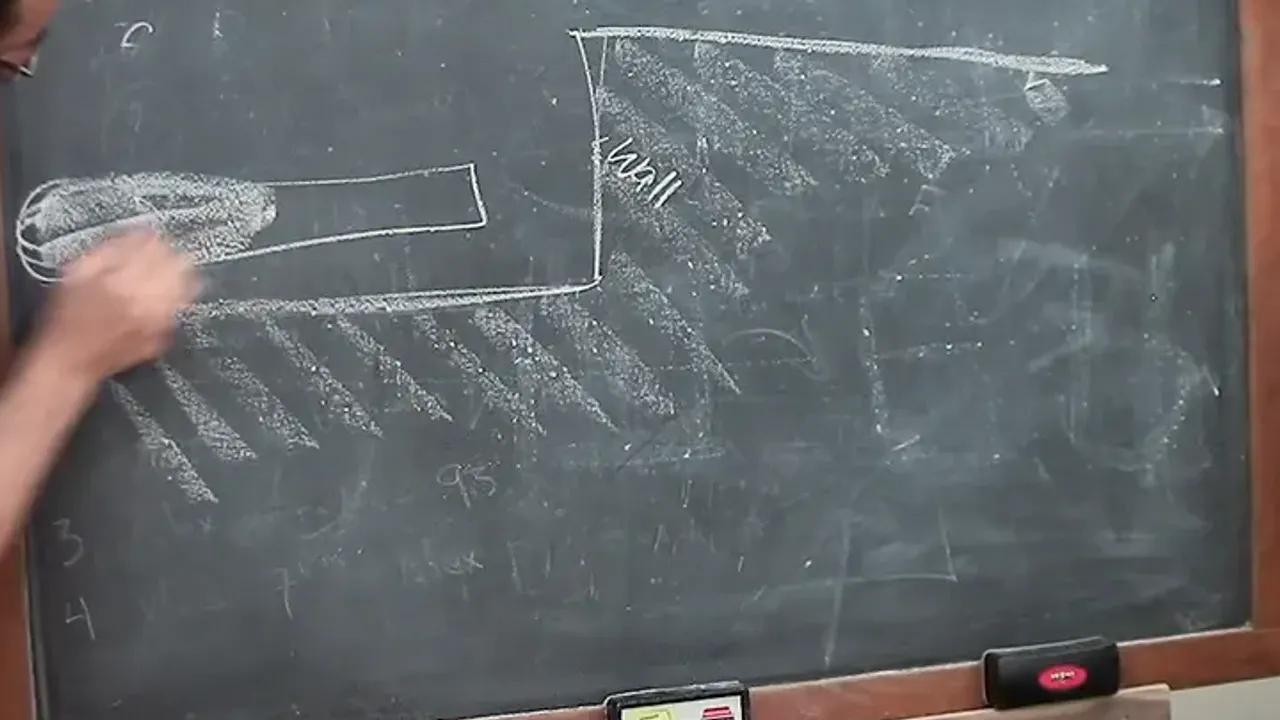
Reshaping a V tool means putting a bevel on its wings, so the channel can run right into an undercut without hurting the wall above it. A straight wood carving V tool reaches a square wall just fine. Once that wall leans in beneath the design, the straight one can't take the channel down into the corner, and on the board I said the only way to get it there is to reshape the tool.
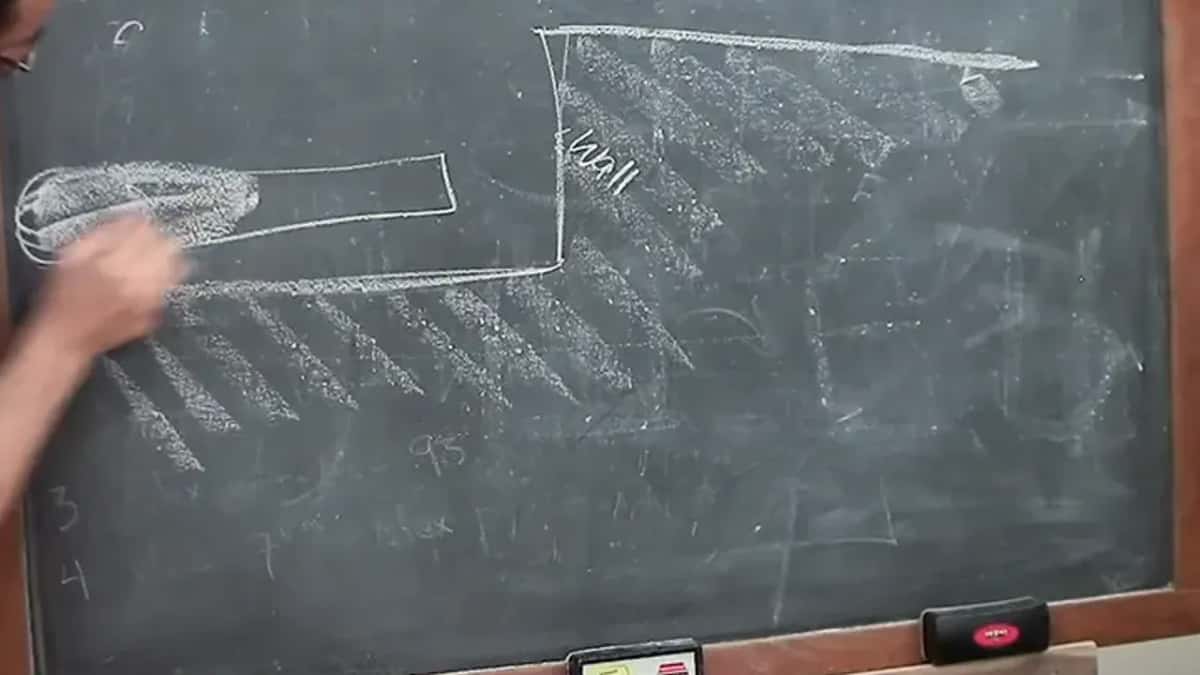
Have you ever carved a nice deep undercut and then wanted a clean V channel down in its corner? Did the tool scrape the edge you had just made? Then the tool has to change shape. This lesson is about three minutes of chalk, with one student asking a question, so after the board I add what I said about the same problem on real leaves in other courses.
What decides the shape of the V
- Flat on the background, a straight V meets a square wall and hits nothing.
- An undercut wall needs a bevel on the wings before the channel can go in.
- A second shape, slanted the other way, lets a groove end at a sloping wall you want to keep.
- Most of my work uses a straight one or the one with the wing reshaped.
- A 1 mm V tool cleans up under a lobe.
- When the lobe across from you must stay clean, I reach for a back bent.
Why does a straight V tool reach a square wall?
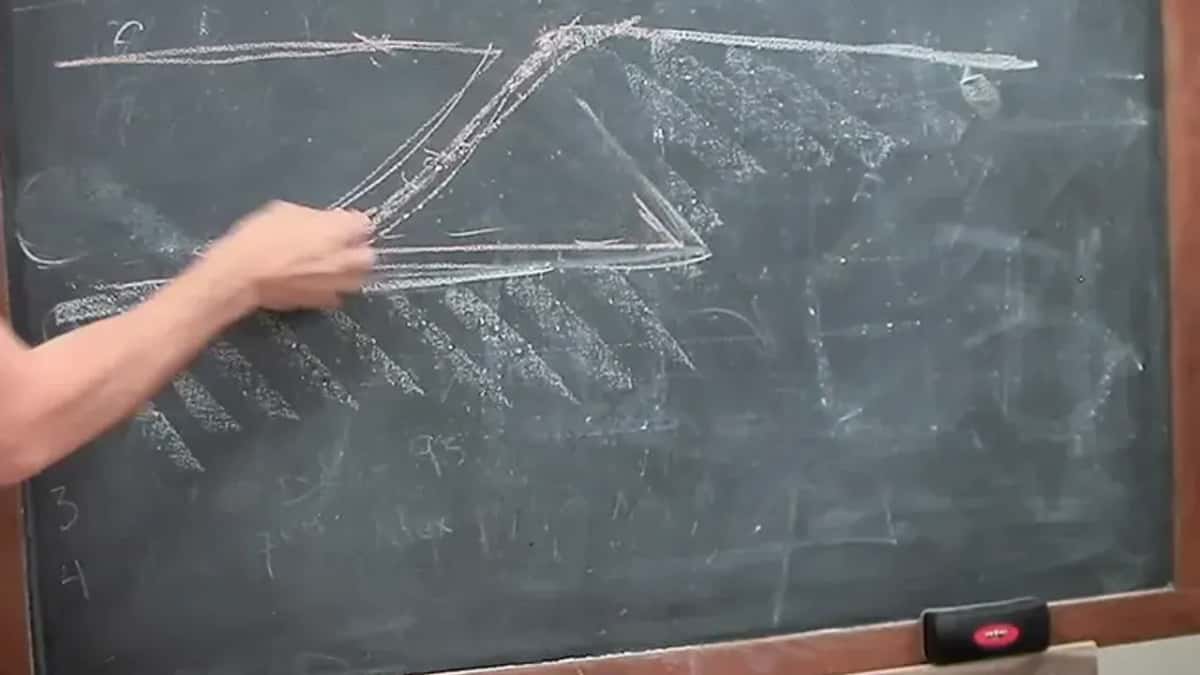
A square wall leaves nothing hanging over the blade. On the chalkboard I drew a block of wood seen from the side. Up top is your design. You lower everything around it, that becomes your background, and the part standing between those two we call the wall. You're looking at the side, I said, so that is your canvas. It is more like a relief carving idea on a bigger scale. Next I drew a V tool lying on the background, handle at the left and the end of the blade square, 90 degrees, so it gets to the wall and hits nothing at all, because that wall is straight.
What changes once the wall is undercut?
The corner goes in under the design. Say you undercut that wall, and you still have to get the V channel into the very bottom of it. The only way you can do it, I said, is to reshape your V tool. Same blade. Its end on the board now slants back instead of square, so the bottom point goes in first and the wings trail behind it.
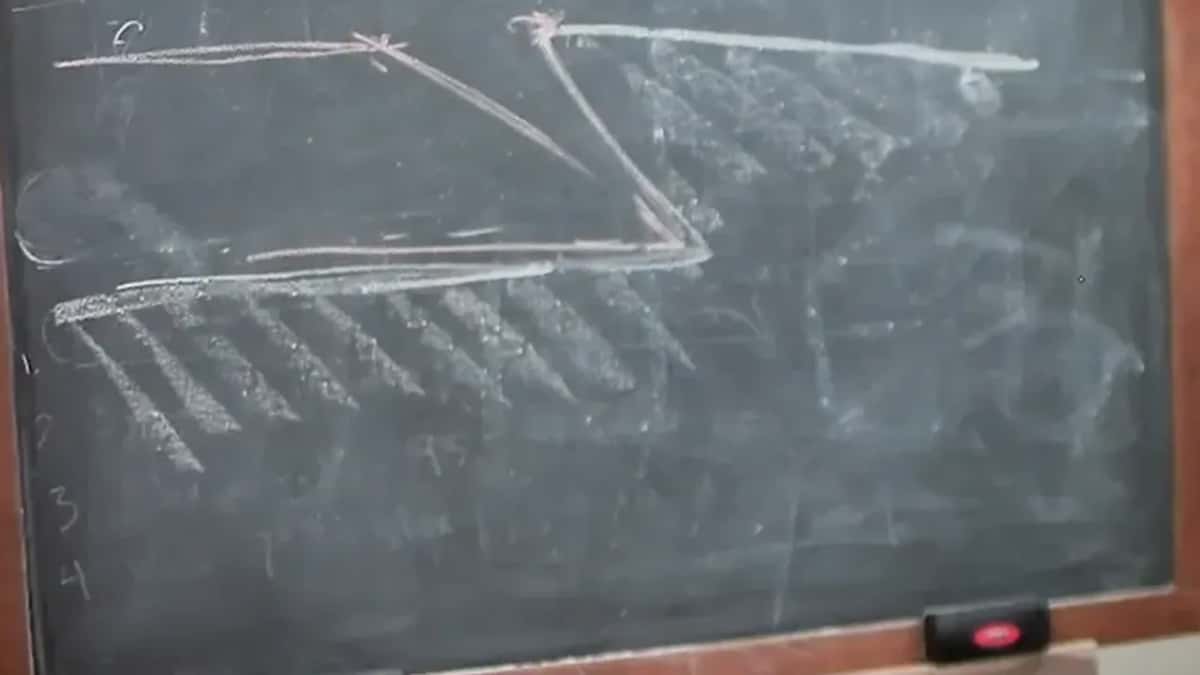
Over in the V tool problem lesson I show those two sides and call them the wings of the tool. Here a student asked if that meant shaping back the wings. Yes. Just to take out the wings, I create the bevel on them, and that way I am not damaging the undercut or any other part of my carving. I own one ground like that drawing. My Instagram name sat across the top of that board, written in big chalk letters.
Is there a second way to grind the wings?
There is, for a wall that is not undercut at all. Think of a wall carved flowing, sloping out instead of in, a wall you don't want to damage, while your channel still has to go and end up right there at its foot. For that case I drew the end slanting the other way, with the top of the blade reaching ahead of the bottom point.
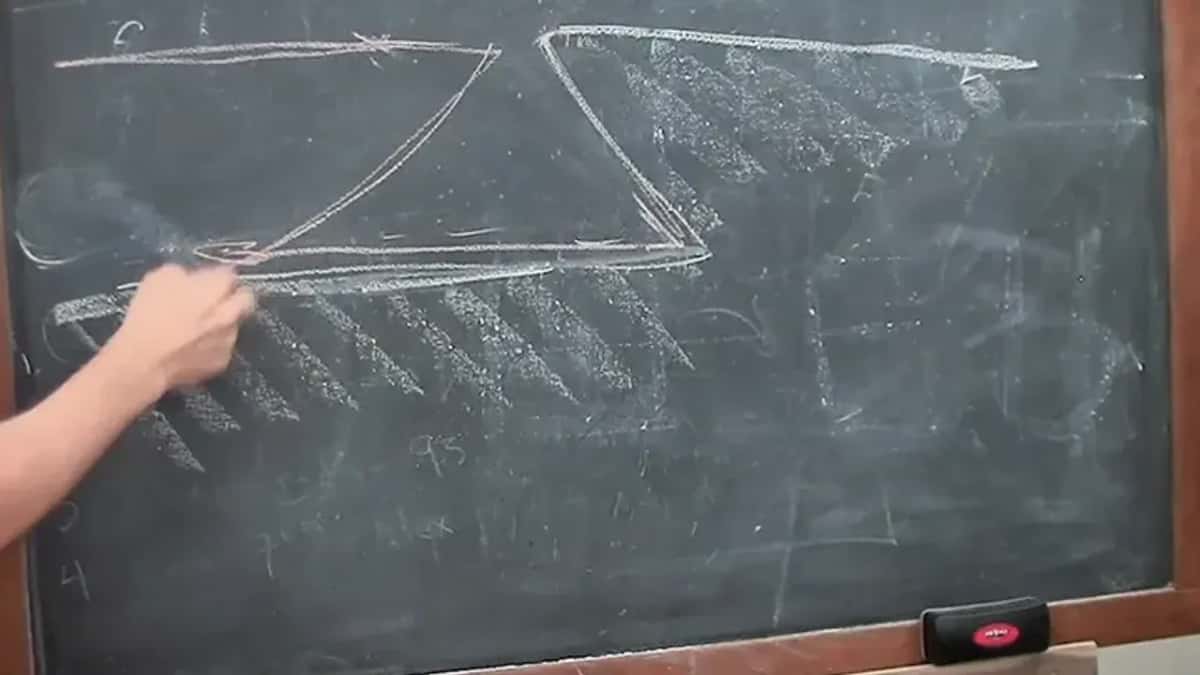
Mostly you don't use that one. There are cases, though. And on the other hand, you can always do it with the straight one if the wall lets you.
Which V tools stay on my bench?
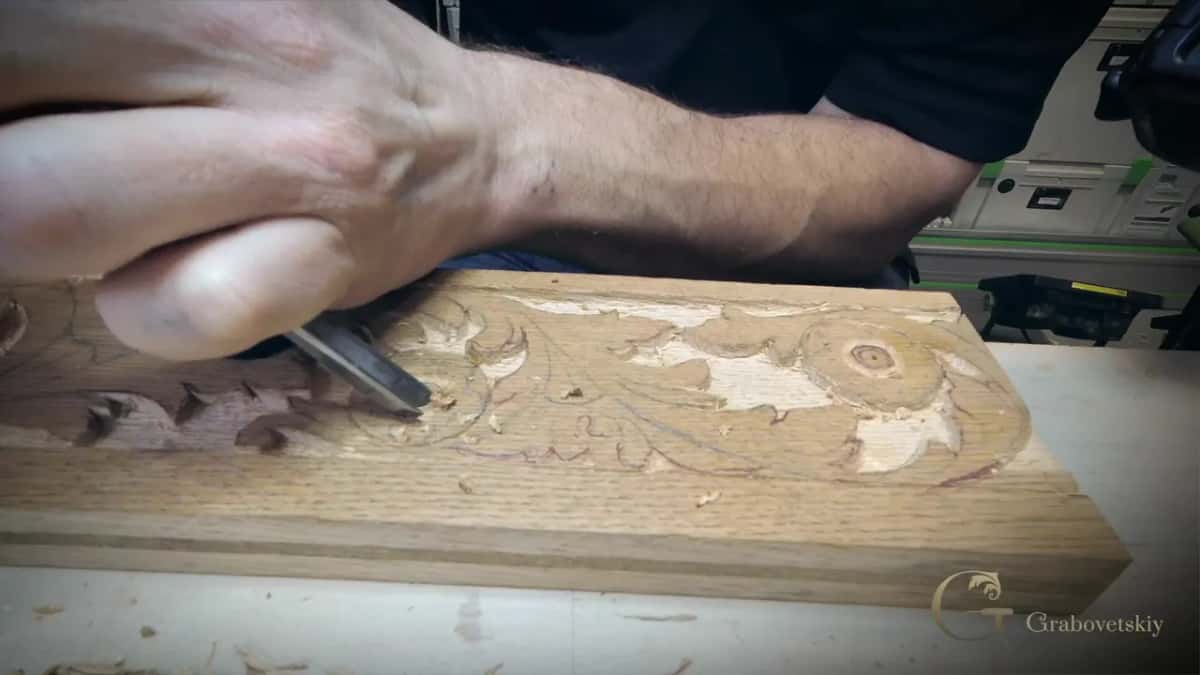
Two kinds cover most of what I use, a straight one and a second with the wing taken in that direction. I said so as the lesson ended. In the Hashemi flowers course a plain V did two jobs at once. My small number 16, one eighth of an inch, which is 3 mm, started a separation. Not every leaf has to have that division. In some spots it's not going to hurt. And while I had that V tool in my hands, I could always undercut with it too. Later, with a number 5, I was working against the grain and some spots were trying to split. That's okay.
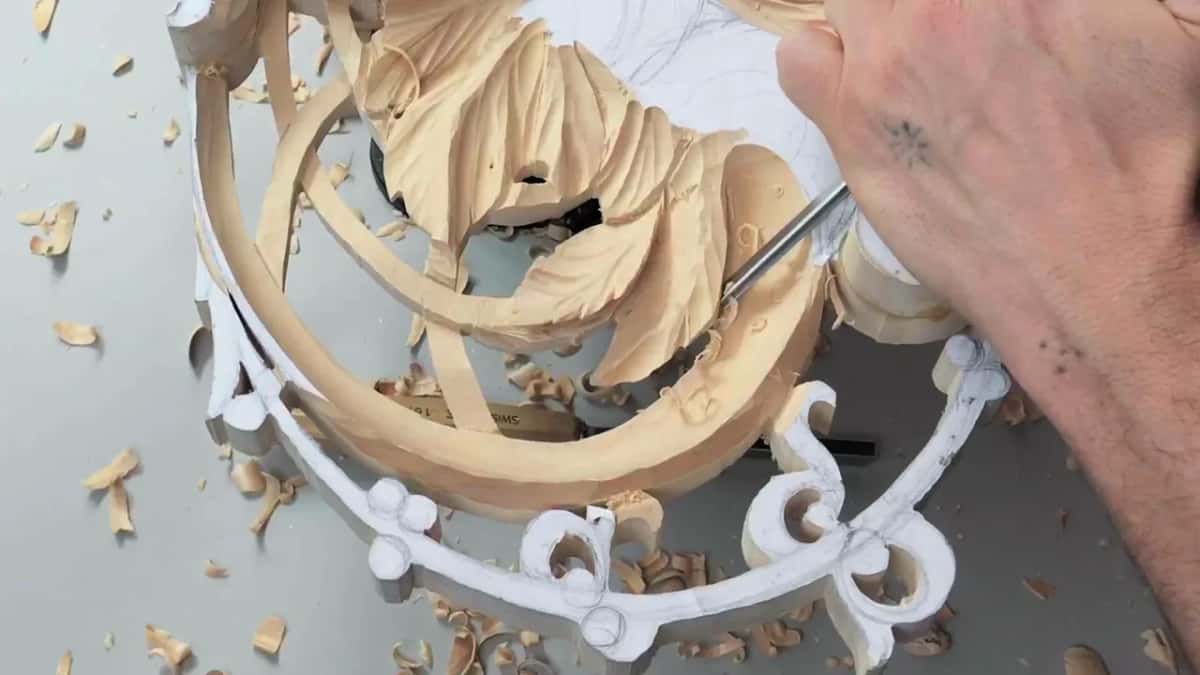
On a dining table apron I picked a V tool over a gouge because the wood was really dry and the fibers were crunchy. Then I got the palm V tool, since I get a little more control with the palm one. You're not supposed to hit that one with a mallet. I was barely touching it, and the mallet still gives me much more control.
Fine adjustments got a tiny V by Ashley Iles, the Peter Benson details tool, and it fits in my hand. Reviewing a beginner set from Schaaf, I said I would trade its 60 degree V for a 45 or even a 35, because I use a 35 degree V tool a lot for undercutting. I would add a number 11 too, maybe one millimeter, just to get underneath.
What does a small wood carving V tool do under an undercut?
It cleans out what the bigger tools leave. In the Corinthian acanthus course I undercut a lobe and then took my number 16 V tool by Pfeil, only one millimeter wide, about 1/32 inch. Really handy for work like that. Every bit of junk underneath came out. Well, I shouldn't call it junk, because it is still wood, still live wood, and I love live wood. Later, with my small V tool again, I hoped the camera could catch how beautiful a shadow line it makes.
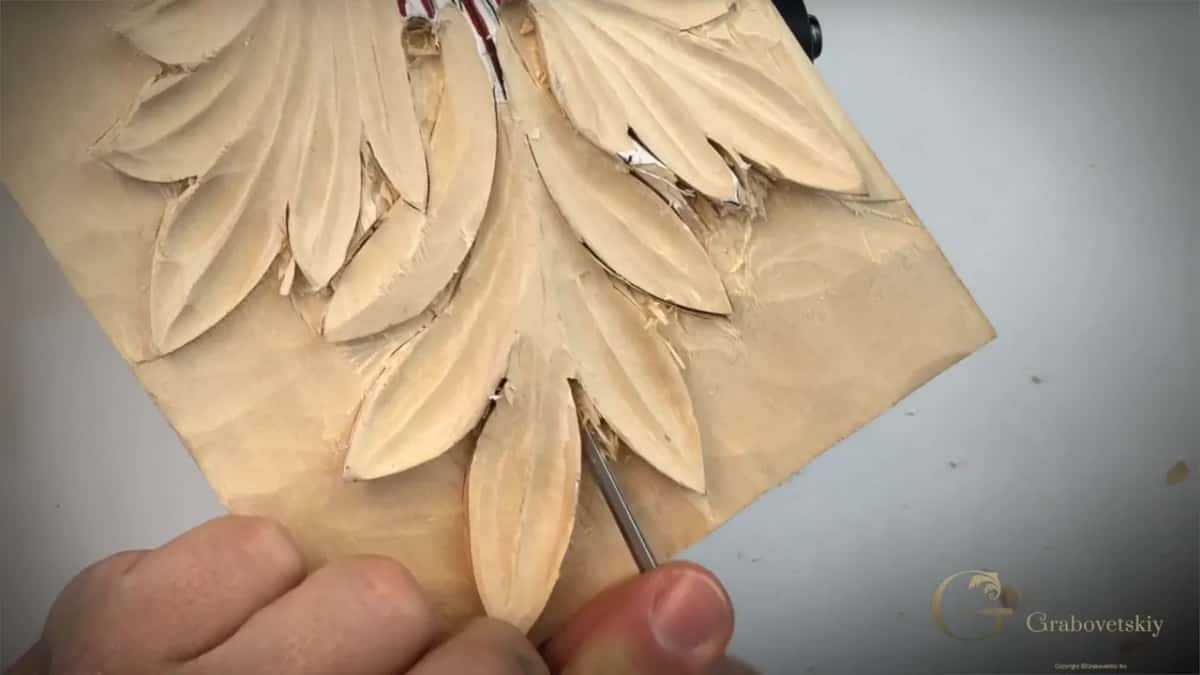
The Greek acanthus leaf went down in sizes. A number 15 at 3 mm (1/8 inch) started removing what was left, and I said to be really careful. Then a little smaller one, the number 16 at 1 mm, and with that one I can get as deep as I want and take out whatever is still sitting there. Inside the leaf, for the undercut, I said we could take the same approach and first just use a V tool, since it is much quicker that way, as long as you watch the grain.
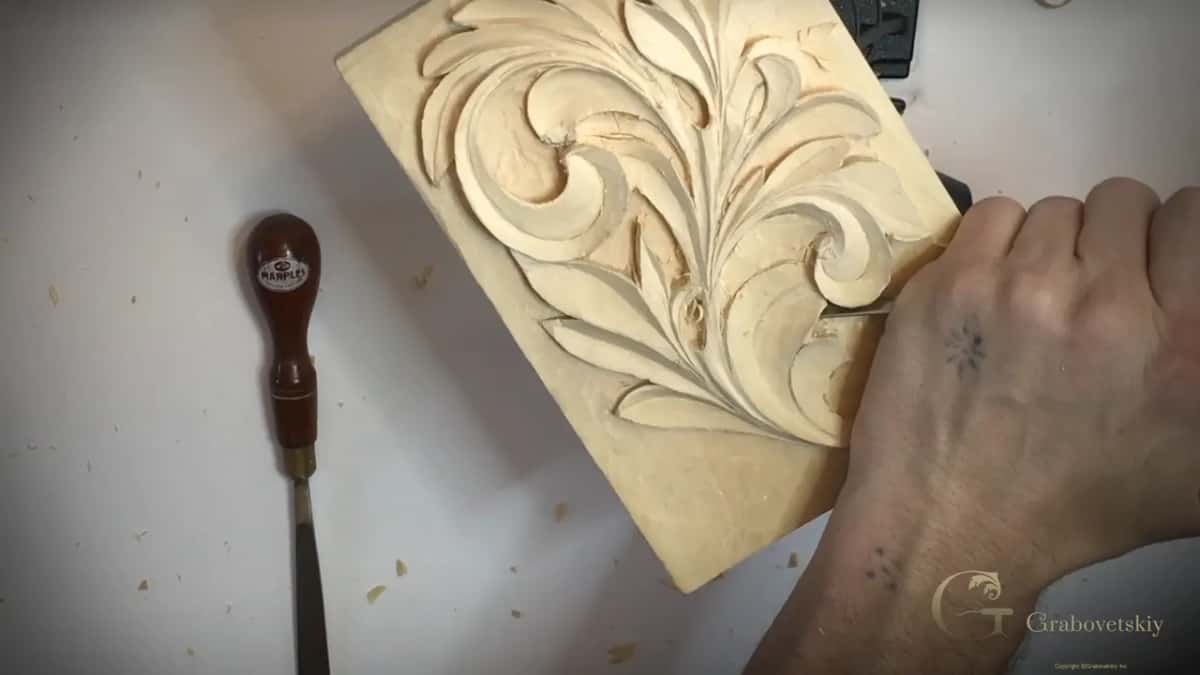
A knife can open the way first. On the Corinthian leaf my first pass was with a knife, and then the tiny one-millimeter V removed that piece from inside while I worked my way in from that side.
Can a bent V tool get further inside?
It did the cleaning on the Greek leaf. Number 12A, a short bent V tool, started removing whatever we didn't need. The main idea is not to rush, because it's easy to make a mistake there. A straight number 5 of about 3/8 inch (about 10 mm) came next and worked around the area little by little. Later the same 12A went back in to make cleaning passes and take out all the junk left inside. I could even make that section go right through, pierced, and nothing holds me from it.
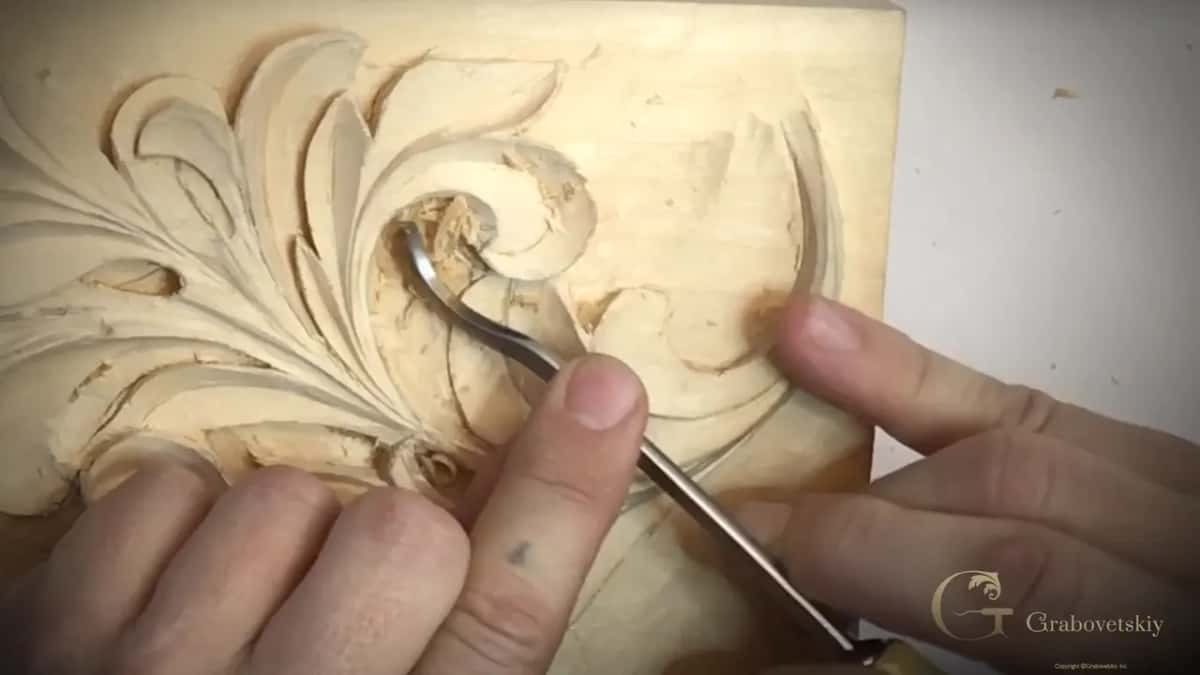
One hollow in the Hashemi flowers had to go deep enough to pierce right through, for a really beautiful shadow. A spoon V tool, number 12 at 3/32 inch (about 2.4 mm), excavated it one more time. That edge was not my final edge yet, so I didn't worry about it.
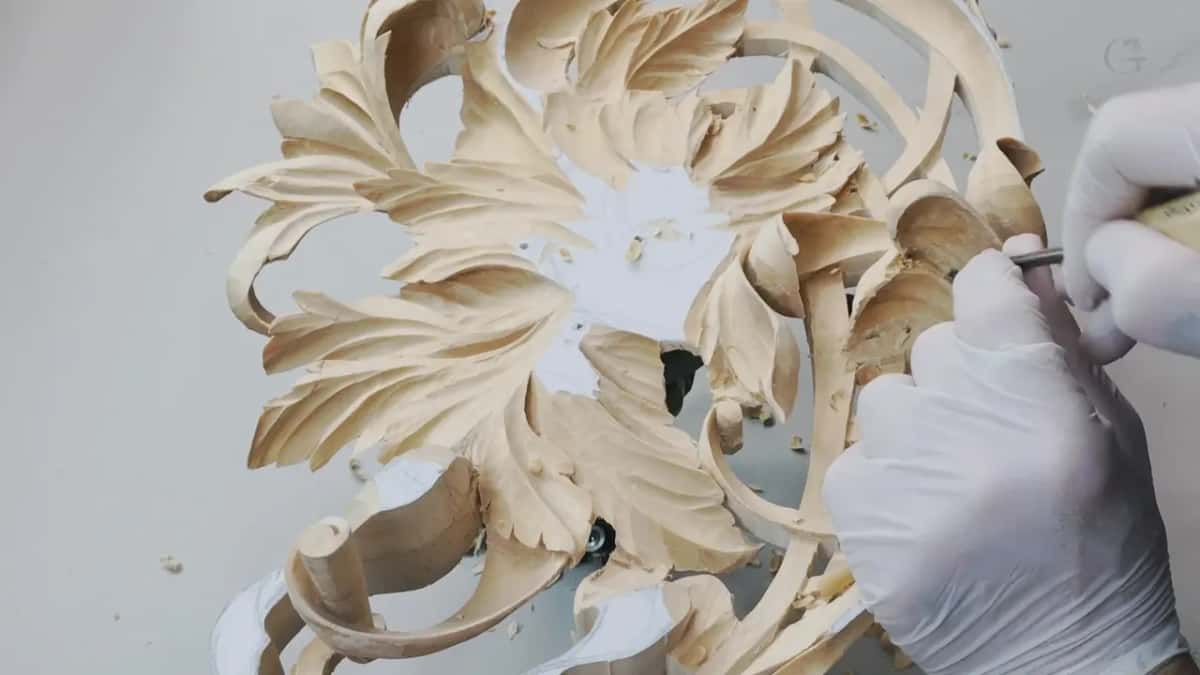
Over on the grape onlay I talked about a spoon version of the V tool, number 12 at 3 mm, and said it is really good sometimes just to get in. For that spot, though, a small number 11 made more sense to me.
When does a back bend take over?
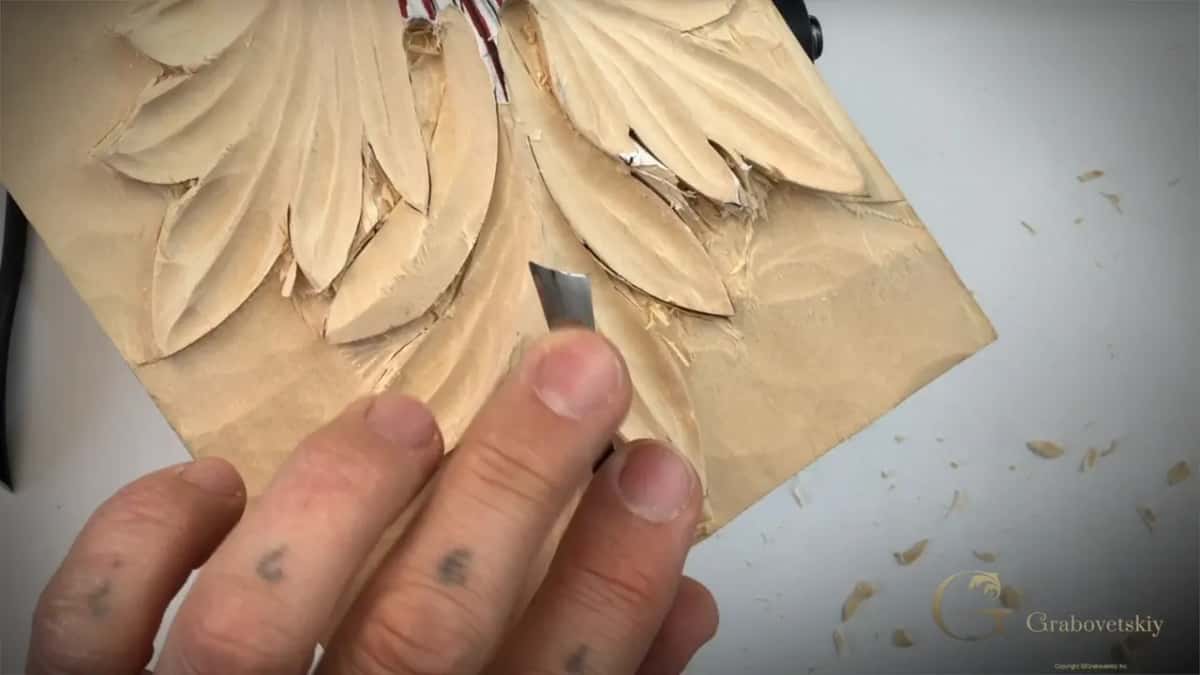
On my Corinthian leaf it took over where the lobe across the gap had to stay untouched. I started the Corinthian leaf with a straight gouge, then showed a much better way if you have one, the back bend. Mine was a Pfeil, number 25/13. It is a lot easier to use for undercutting, and the idea is the same, you are still slicing. For cleaning, I said, a really small V tool could take the chunks out. And you can see the shadow line already.
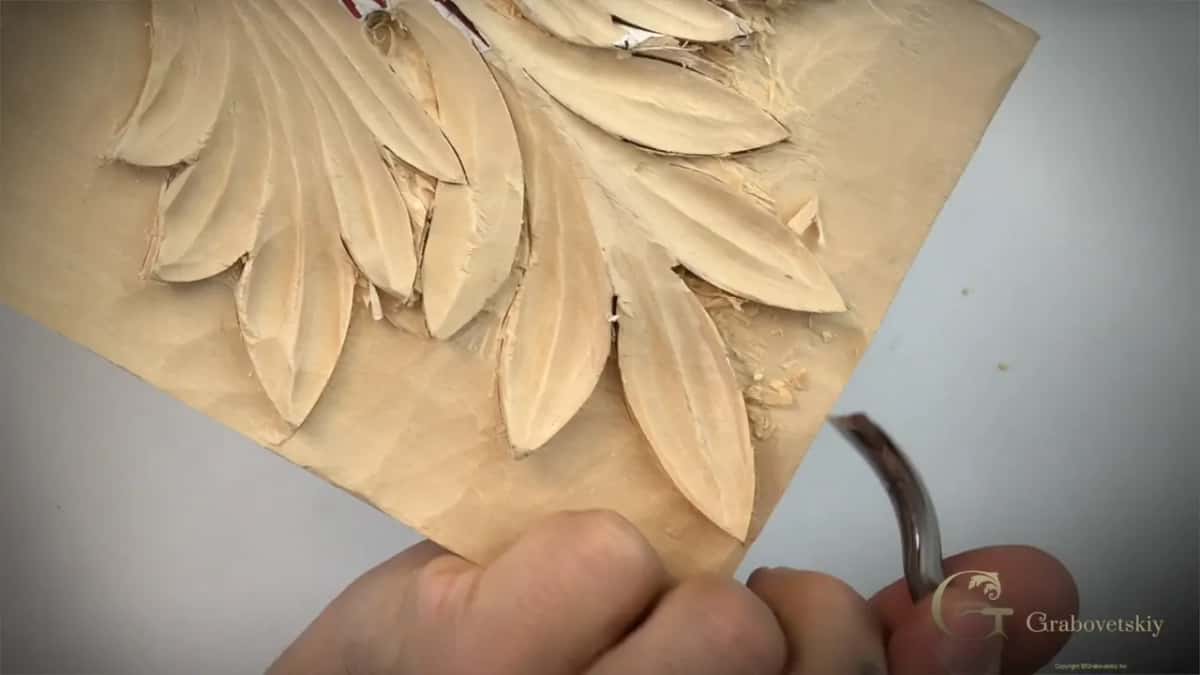
With a back bent, this side is safe. I can undercut like that without touching the opposite lobe, and that's why I like the back bends a lot.
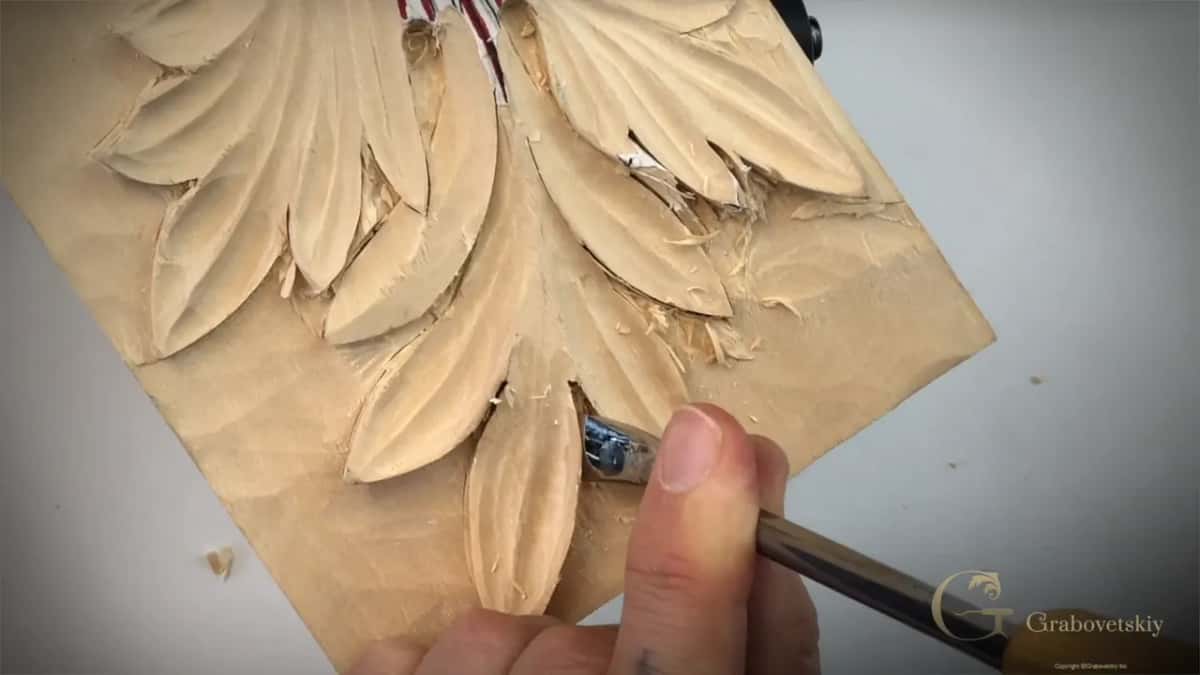
Back on the Greek leaf, a 25/13 back bend came out too, about half an inch, and I used just the right corner of the tool. I stayed about a sixteenth of an inch (1.6 mm) from the rib. It was a rough pass, and it is safer to stay a little higher, so I could bring it up later on. Hashemi had a spot like that too, where I said a back bend would work, and I left my final undercut for later.
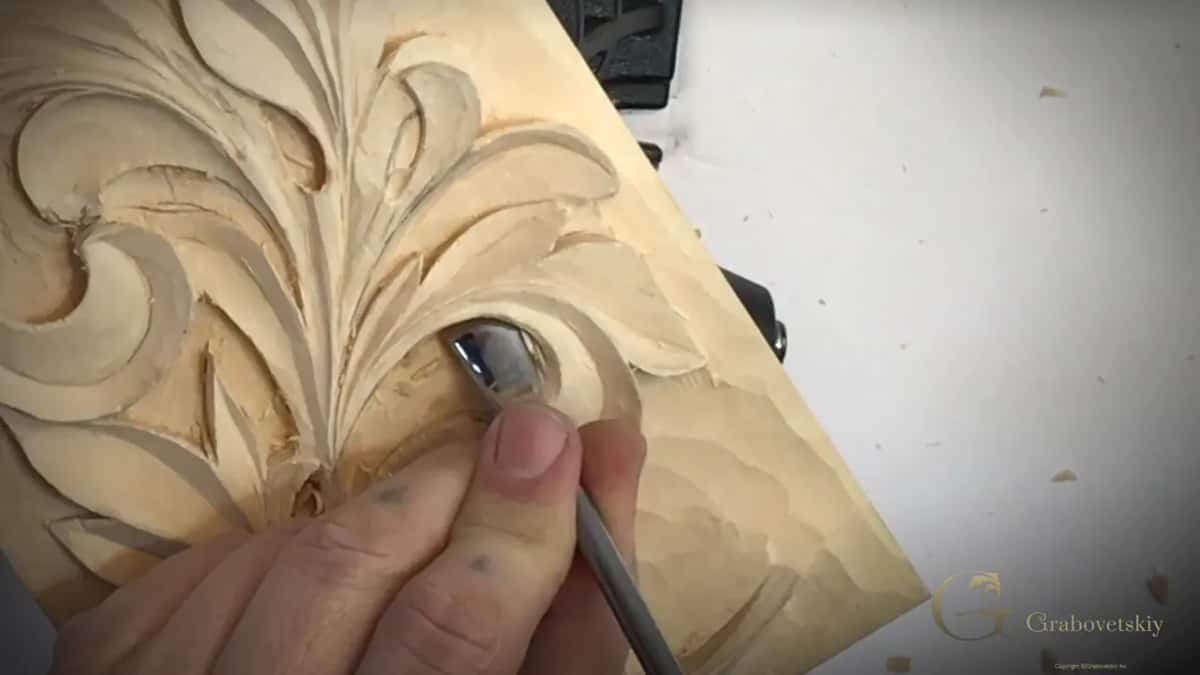
Where two lobes meet, pretty much only a knife gets in. That was the other method I showed for undercutting, a chip carving knife, which I use a lot. I angle it, go inside, lay it over and remove the piece.
| Tool | Job | Lesson |
|---|---|---|
| Straight V tool | Lies flat and reaches a square wall | Chalkboard lesson |
| Wings beveled back | Takes the channel down under the overhang | Same board |
| Tiny number 16 | Cleans the junk left beneath the lobe | Corinthian acanthus |
| Short bent 12A | Gets inside for the last cleaning passes | Greek acanthus |
| Back bent gouge | Leaves the lobe across the gap untouched | Corinthian leaf |
| Number 17 tool | Rounds the bottom, leaves no sharp line | Roman acanthus |
What if you don't want a sharp line at the bottom?
Then the V shape itself is in the way, since a true V leaves a sharp point down inside. Deep undercutting, extreme undercutting, is what I really like on all of my carvings, I said on the Roman acanthus, and my number 16 could have done it. Instead I took number 17, which is like a V tool with a bigger gouge part right on the bottom. I placed it on one of its chisel sides, the flat side, and made my pass. With a V tool that bottom point looks kind of sharp.
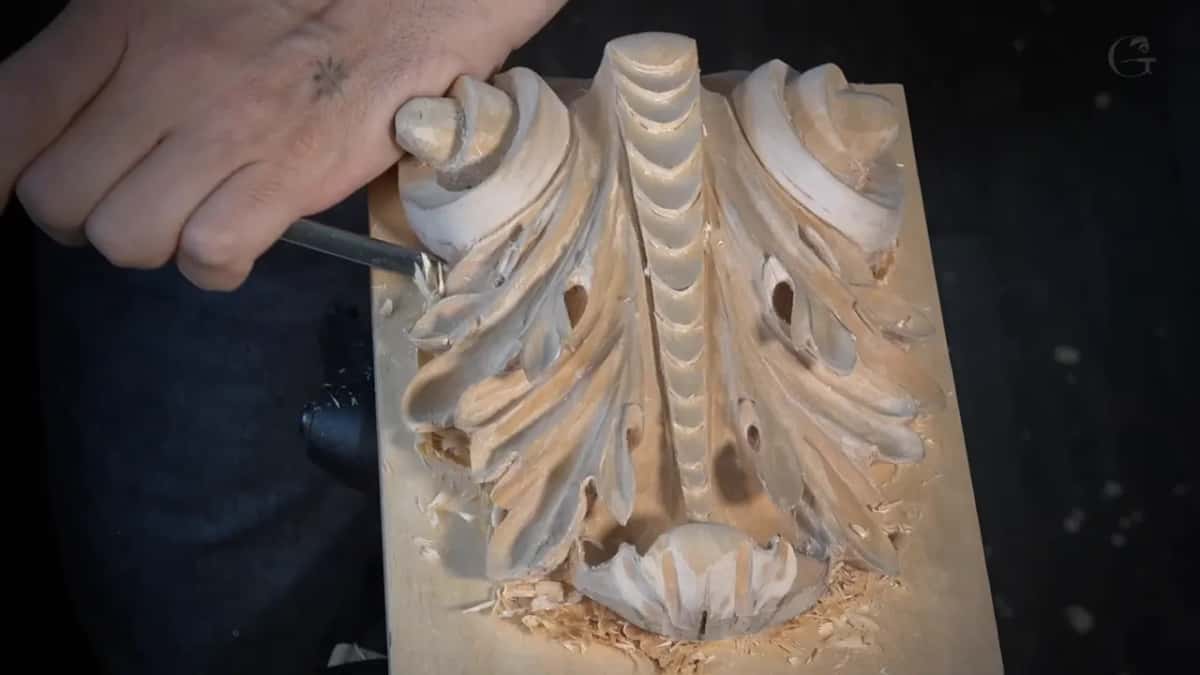
With the 17 it comes out a little round on the inside, a softer look. Well, I use both, and I shouldn't say this one is better than number 16. Number 16 is also my favorite. I would still call the 17 a V tool, or a parting tool, even though it has a different name.
A rosette in the Venetian flowers course is where I brought out the 6 mm one. It looks almost like a V tool, but it's not. The bottom is wider, with about 1/16 inch (1.6 mm) of roundness, and the wings still go out to the sides the way a V tool's do. I could have used a 1 or 2 millimeter veiner and then worked both ways, but with this tool I can do it without switching tools. I can use a side of the tool and blend it. If you want to undercut and still don't want to see the sharp line, you can use that. The smaller one is 3 mm, one eighth of an inch.
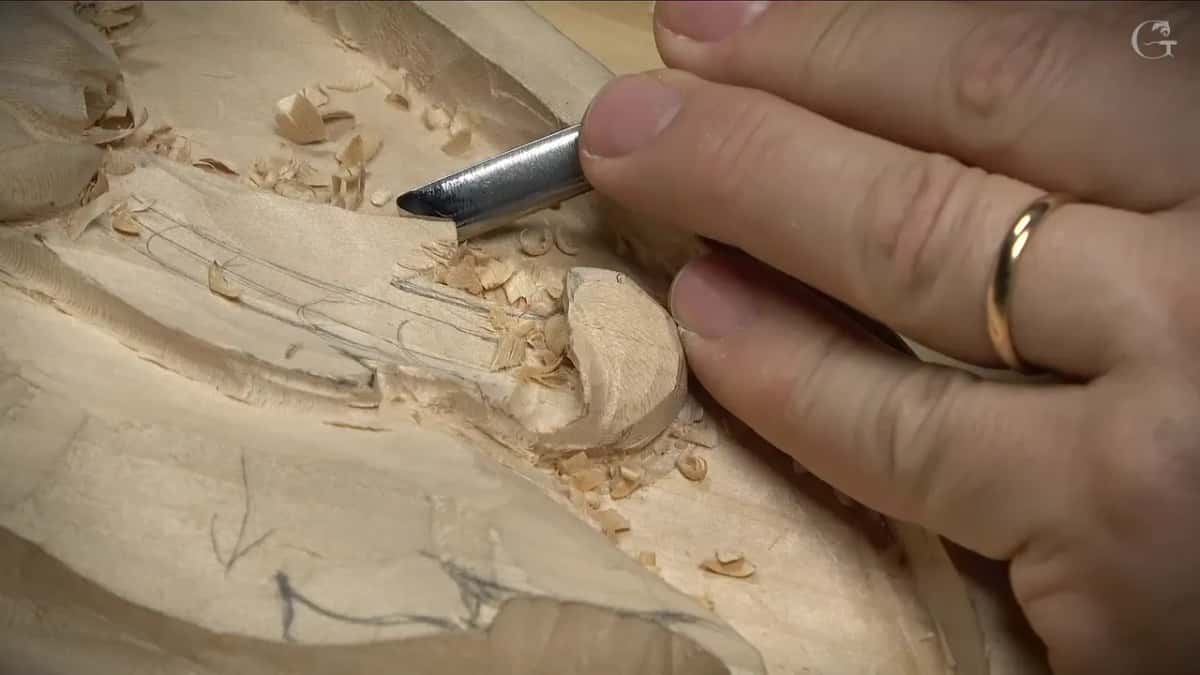
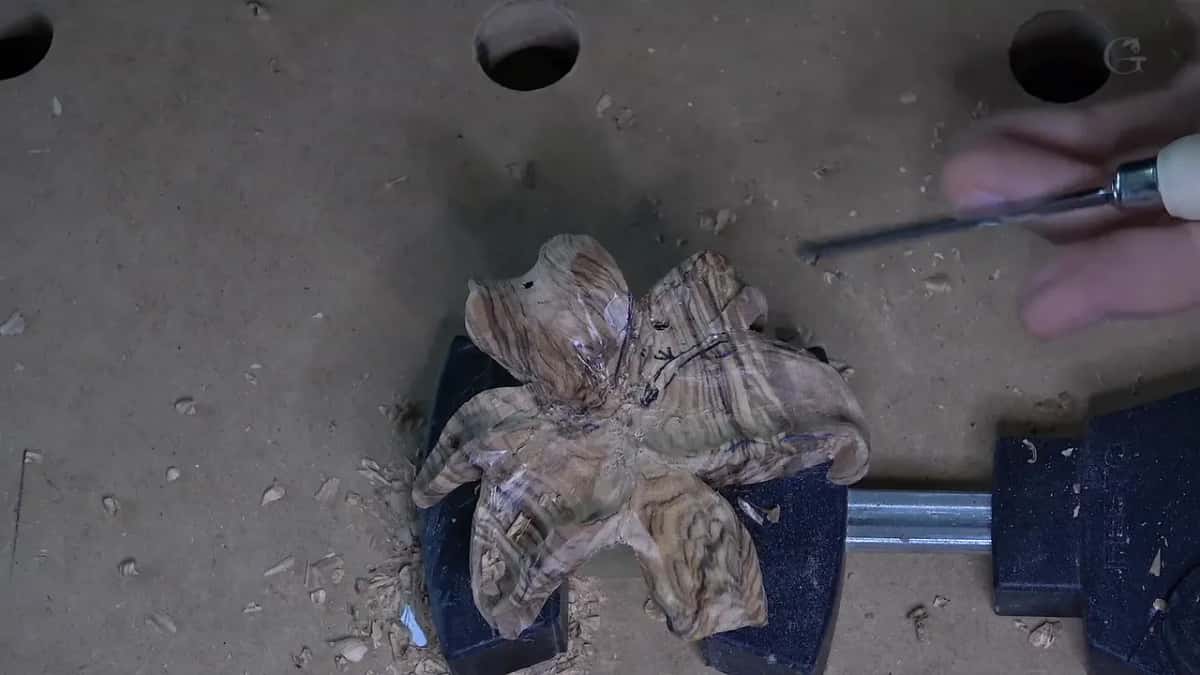
The lily box was a project where I really didn't want a V tool, if possible. A tool like that is much easier to break in areas like those, with that wood. And a V tool makes a sharp V on the inside, where I wanted to see more of a U. So I used number 11s at 2 mm (about 1/16 inch). To me it sometimes gives a much cleaner look when you look inside those grooves, just in my opinion. Nothing wrong with a V tool there, and I use one all the time.
Can you reshape other tools the same way?
You can. Skewed gouges came out on the Corinthian leaf too, a right one and a left one, slightly bent, by Henry Taylor, and they come in really handy in work like that. Those are hard to find on the market. You can easily make one yourself. Buy just a normal number 3 or number 5, and reshape it.
I even have a number 7 skewed, resharpened at a really low angle, and with it I can get really deep and remove a lot of material. You'd be surprised how much more you use those tools than you thought at the beginning. The V tool itself has its own lesson in the sharpening course, and the big tools versus small lesson sits right beside this one in Woodcarving Techniques, Tips, and Tricks.
Is there a ragged corner down in an undercut on your bench right now? If you want to watch these tools work on real leaves, that is what we do inside the school.
How it's done
- Use the straight V at a square wall. Lay the plain straight V on the lowered background. Against a straight wall it gets right up to the wall without hitting anything.
- Bevel the wings for an undercut. When the wall runs in under the design, reshape the V tool and put a bevel on its wings. The channel can then reach into the undercut, and nothing above it gets damaged.
- Clean underneath with the smallest V. Take the tiniest V you own, mine is 1 mm (1/32 in), and remove what is left under the lobe. Be really careful, and don't rush.
- Switch to a back bent near a second lobe. Slice under one lobe with the back bend, the same slicing idea as with a straight gouge, and its shape keeps the opposite side safe while you work.
- Pick a round bottom to hide the line. Undercut with a number 17 to keep a sharp line from showing down inside. It has a rounded foot between its wings.
Frequently asked questions
What are the wings of a V tool?
Wings are the two flat sides of a V tool, rising from the rounded bottom like the arms of a letter V. Their end is square on the straight tool I drew. Once I put a bevel on them, they lean back and leave the overhang of an undercut alone.
Do you need a reshaped V tool for every relief?
Most of my work takes a straight V or the reshaped one, and I said so on the board. Ground wings wait for the day a channel has to run under a leaning wall. A second shape, slanted forward, comes out only in a few cases.
How small can a V tool get for cleaning an undercut?
One millimeter, in my case, a number 16 from Pfeil, about 1/32 inch across. On my Greek acanthus leaf it let me go as deep as I wanted under the lobe. A 3 mm number 15 went in before it.
What to carve next