
Alexander Grabovetskiy, woodcarver, School of Woodcarving · Published 2021
How do you get a client to approve a wood carving design?
Quick answer: Client approval of a wood carving design is a back and forth that starts with the drawing and runs until you both agree. On this job my 3D model came first. When more details and a bigger design were wanted, I sketched the new parts over it. I also charge for drawing time.
Getting a client to approve a carving design is a back and forth that starts with the drawing and keeps going until the two of you agree. On a custom wood carving commission that drawing can change again and again. Some clients dance with you for a long time.
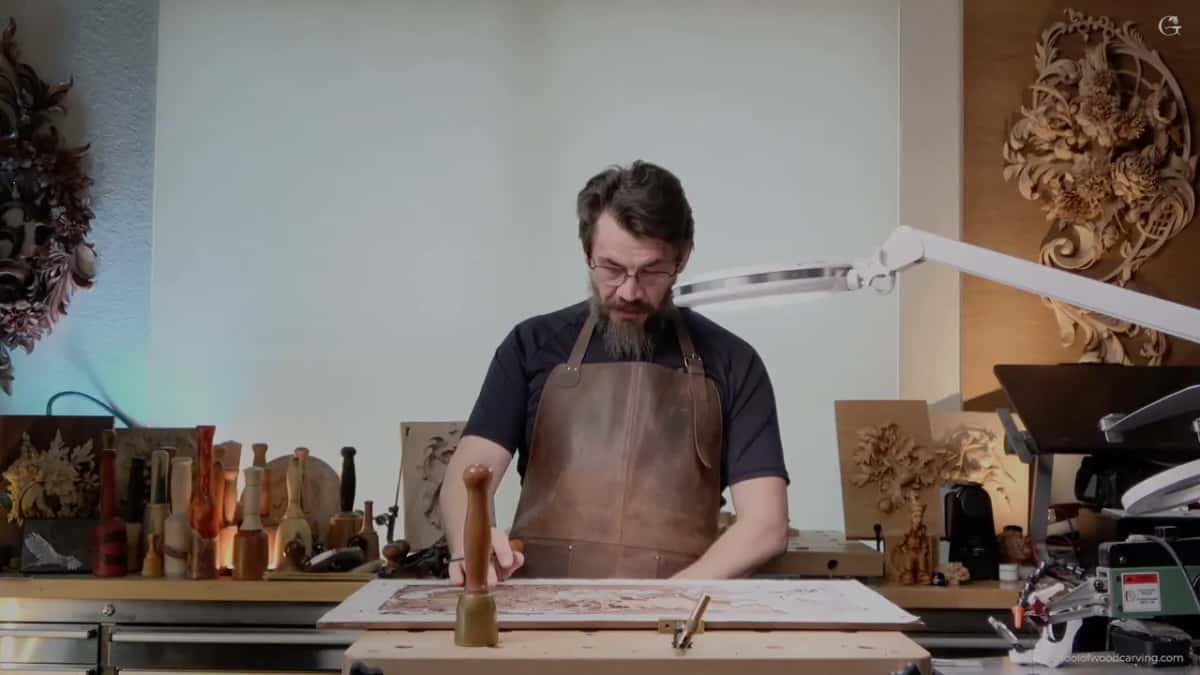
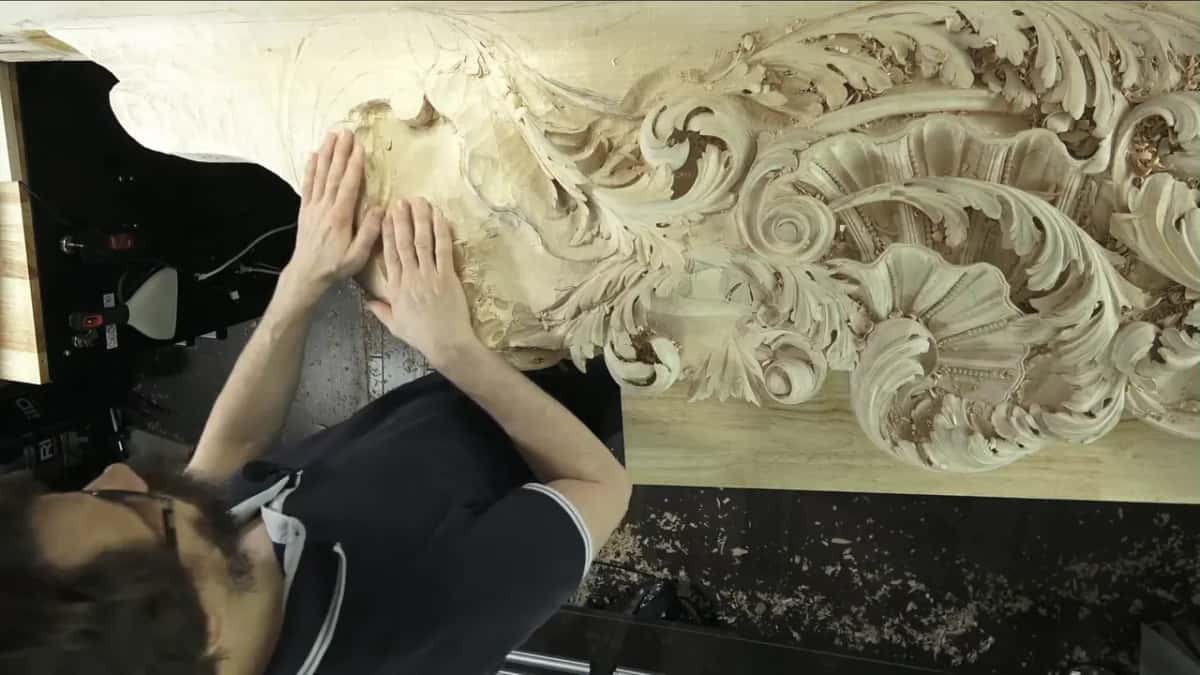
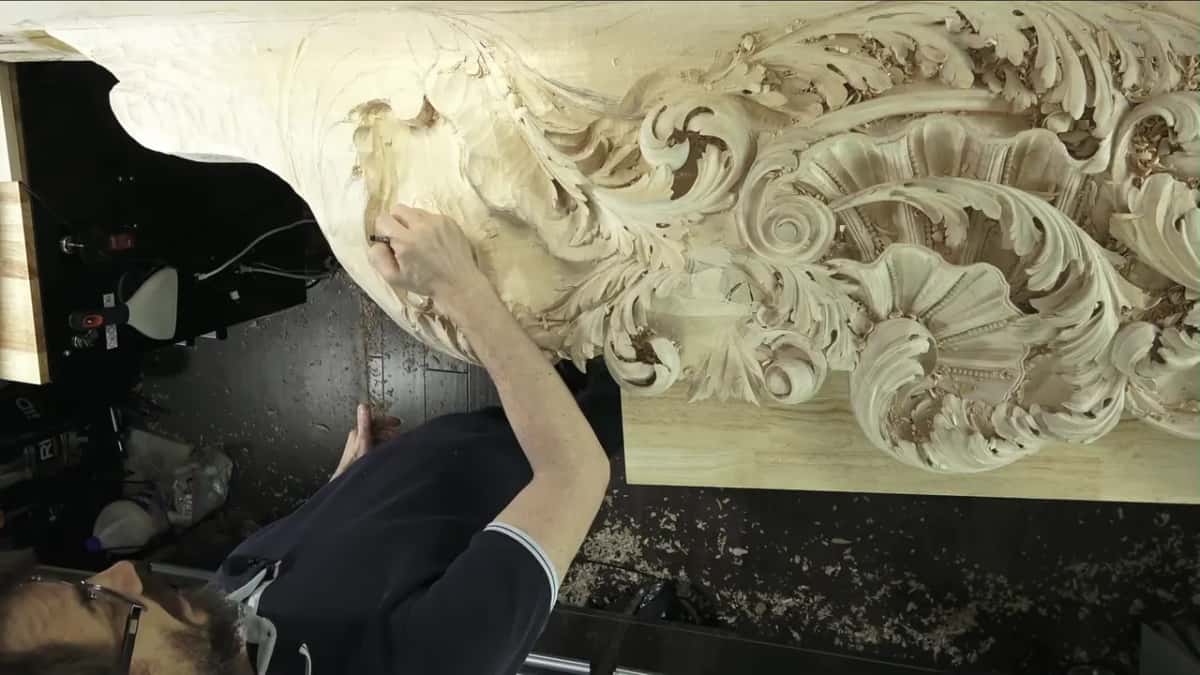
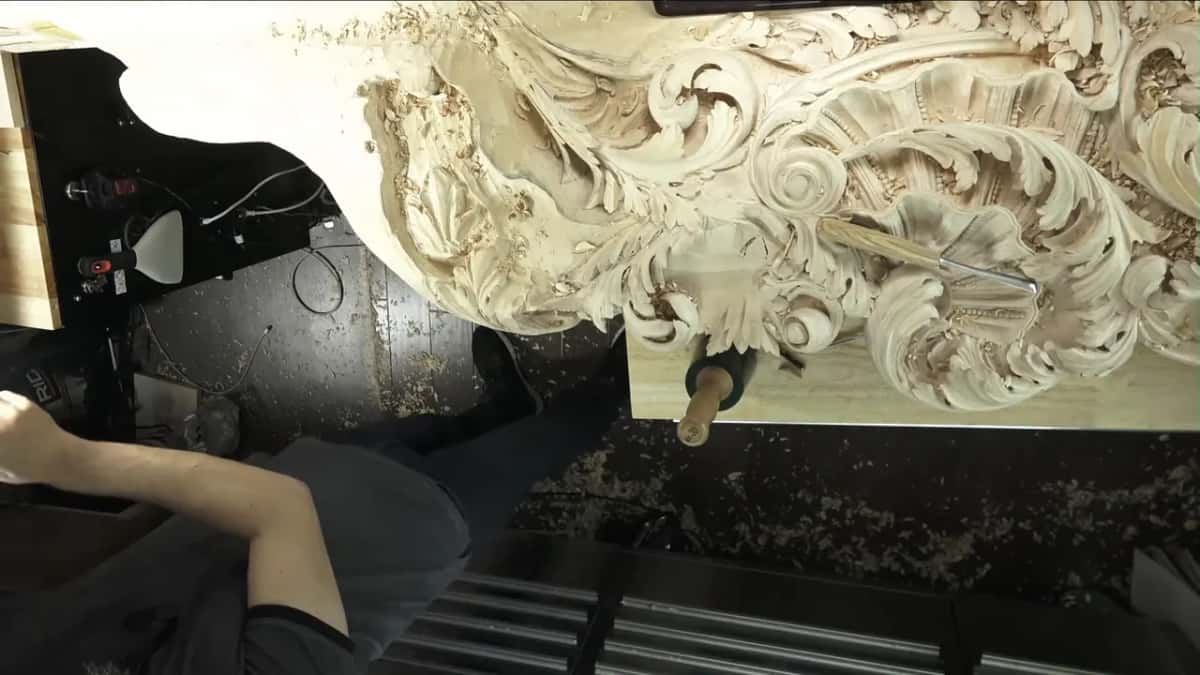
My bench in this video holds one board from a job like that. It sits there about 24 by about 60 inches (61 by 152 cm) and about an inch and a half (38 mm) thick, and it carries only one part of a carved detail about 10 feet (3 m) long. The design was a 3D model first. Then the client wanted more.
Ever finished a drawing and then wanted to change one leaf? Or shown it to someone who saw something else in it? Then you already know the part of a commission that happens before the first chip comes off.
Below is how this job started and why I sketched the new parts on top of the model. Further down you'll find the money side and the room side, all in my words from this video and from other courses and livestreams.
What a client signs off on before I carve
My drawing hours go into the estimate, and I charge for them.
A 3D model came first here.
New details went on top of that model as quick sketches, instead of building the model again.
Paper is flat, and some clients can't read it.
High-end architects like to make changes, and that's normal.
A price I gave stays the price, because underestimating is my problem, not the client's.
The room and its light shape the design.
Where did this commission start?
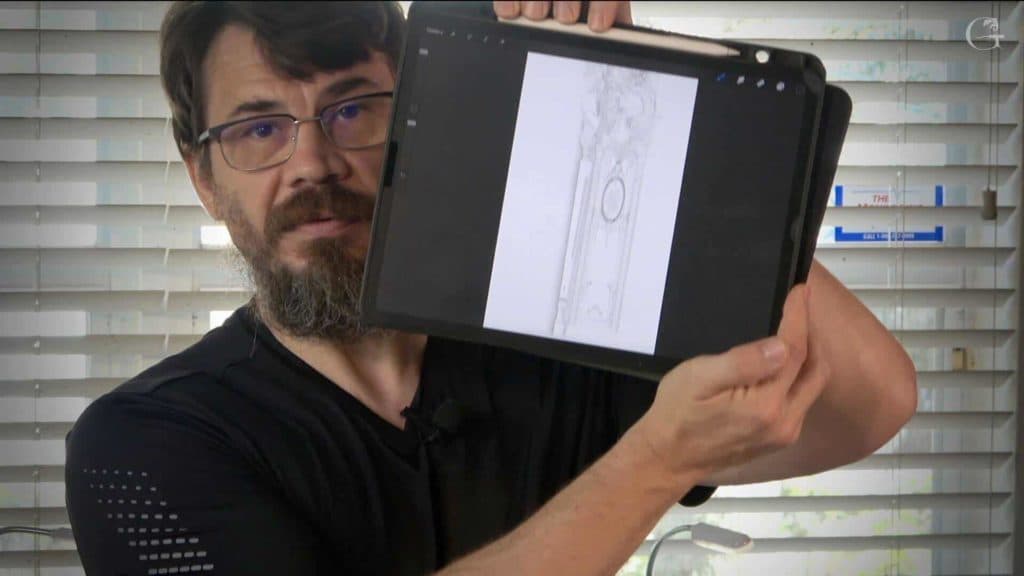
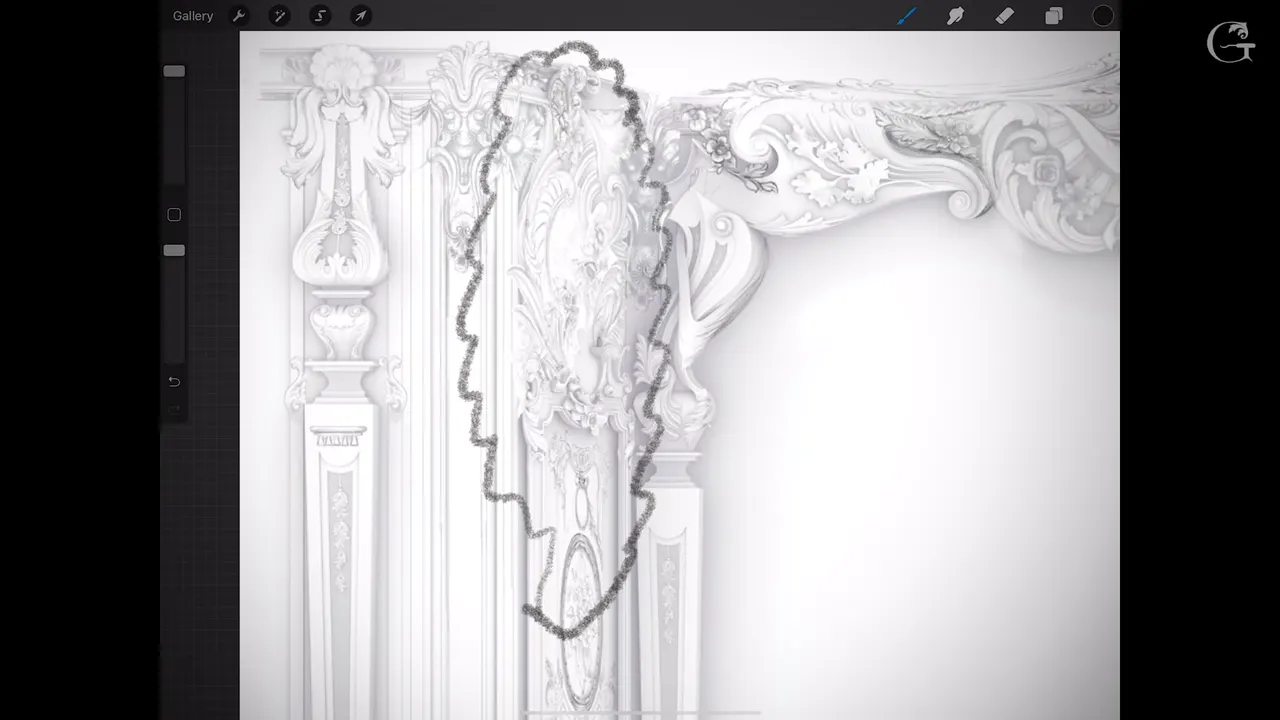
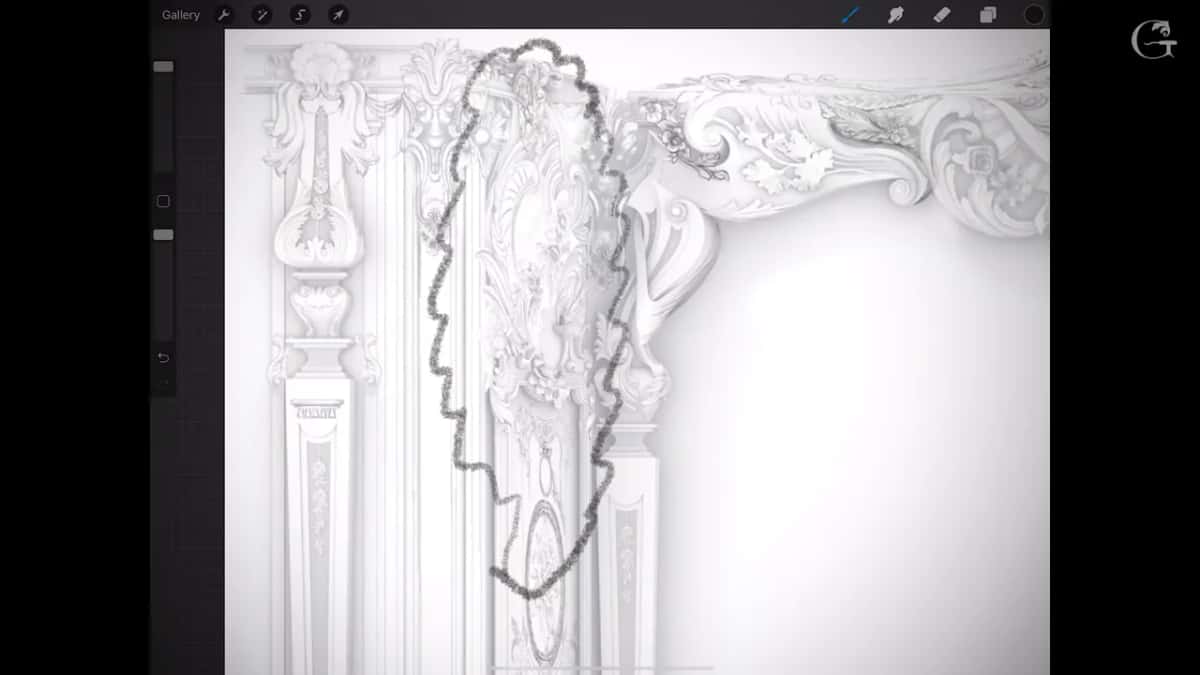
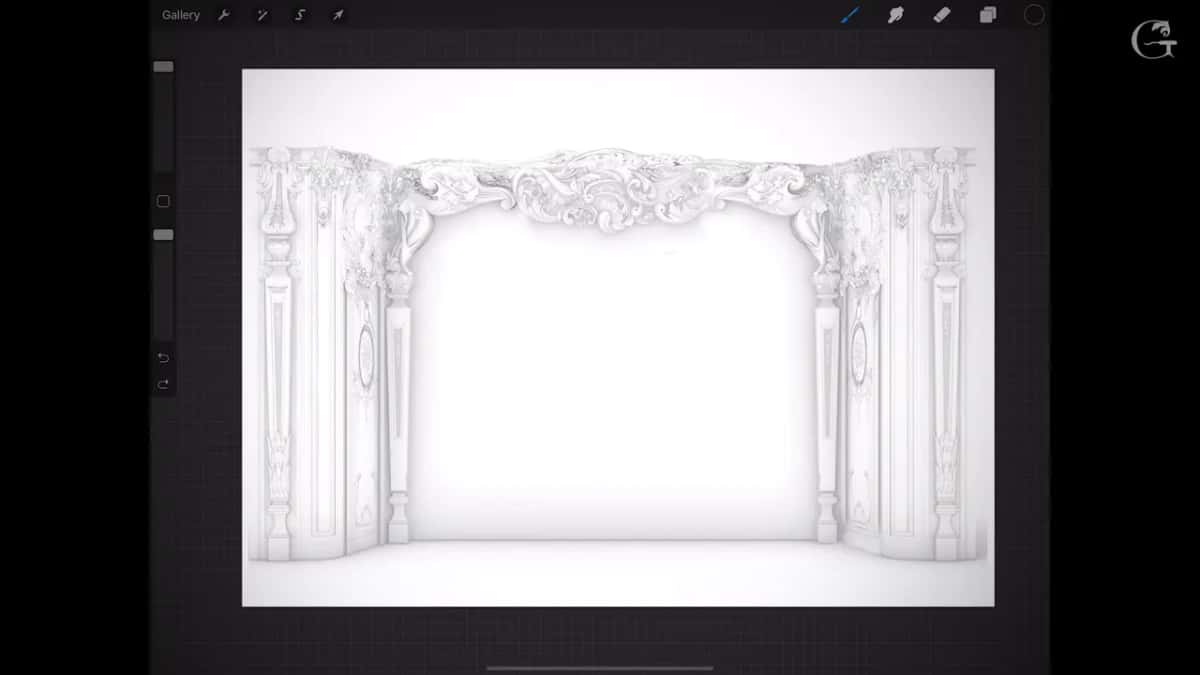
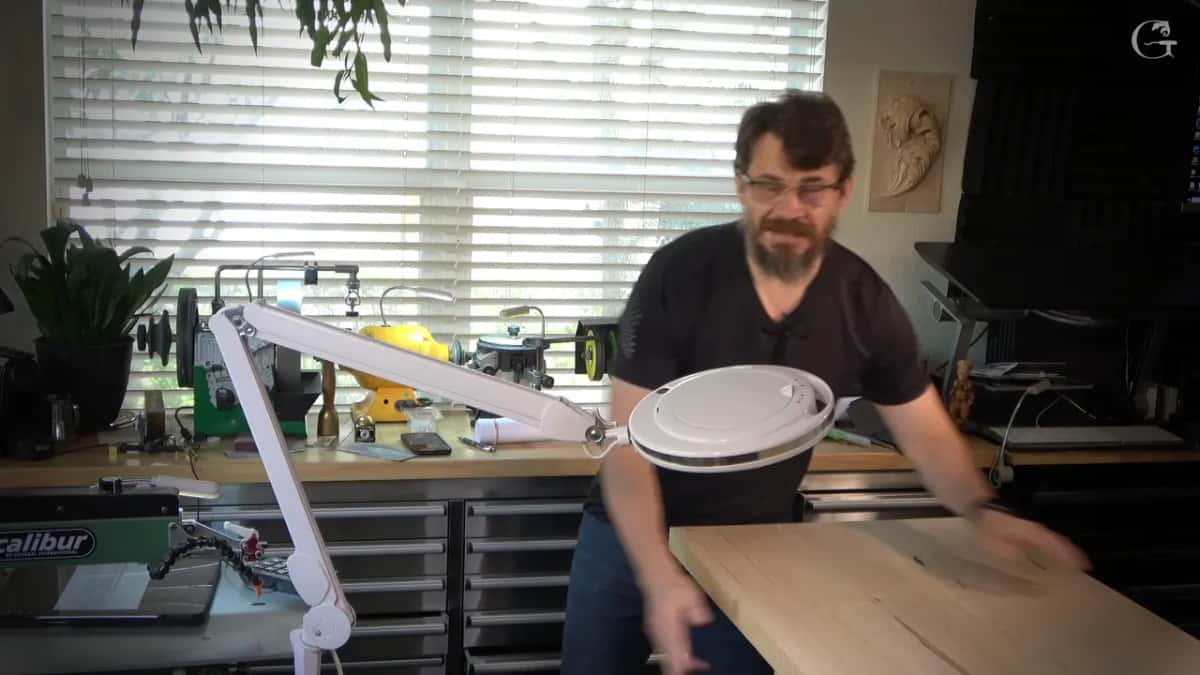
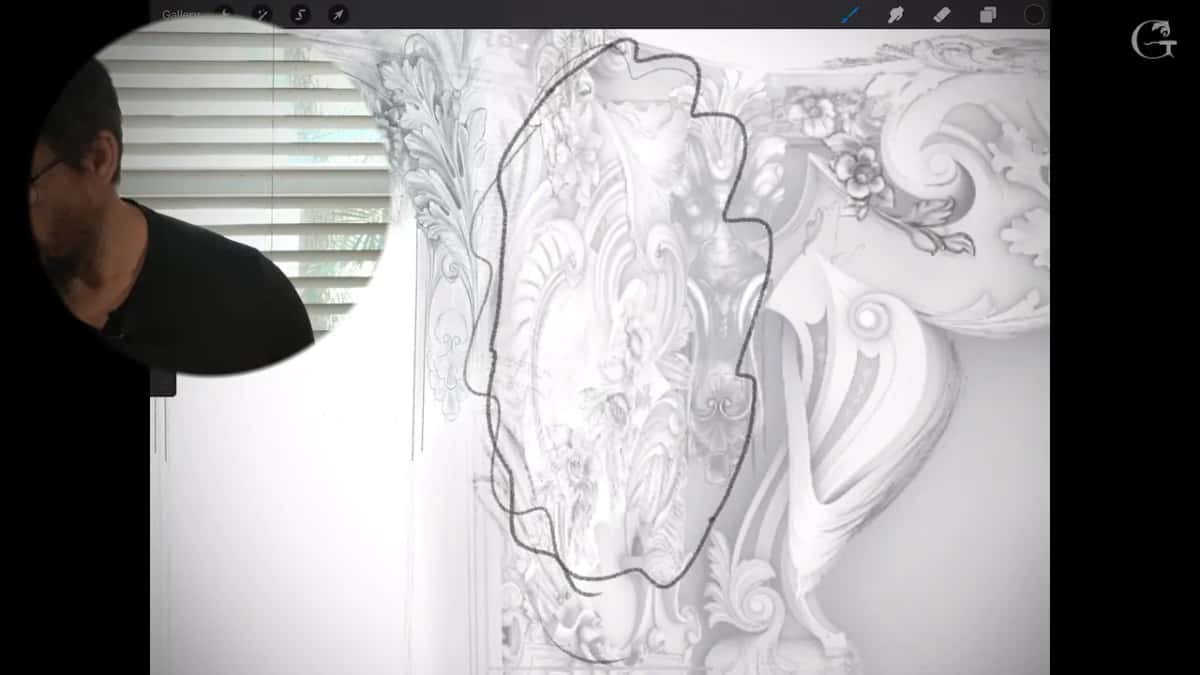
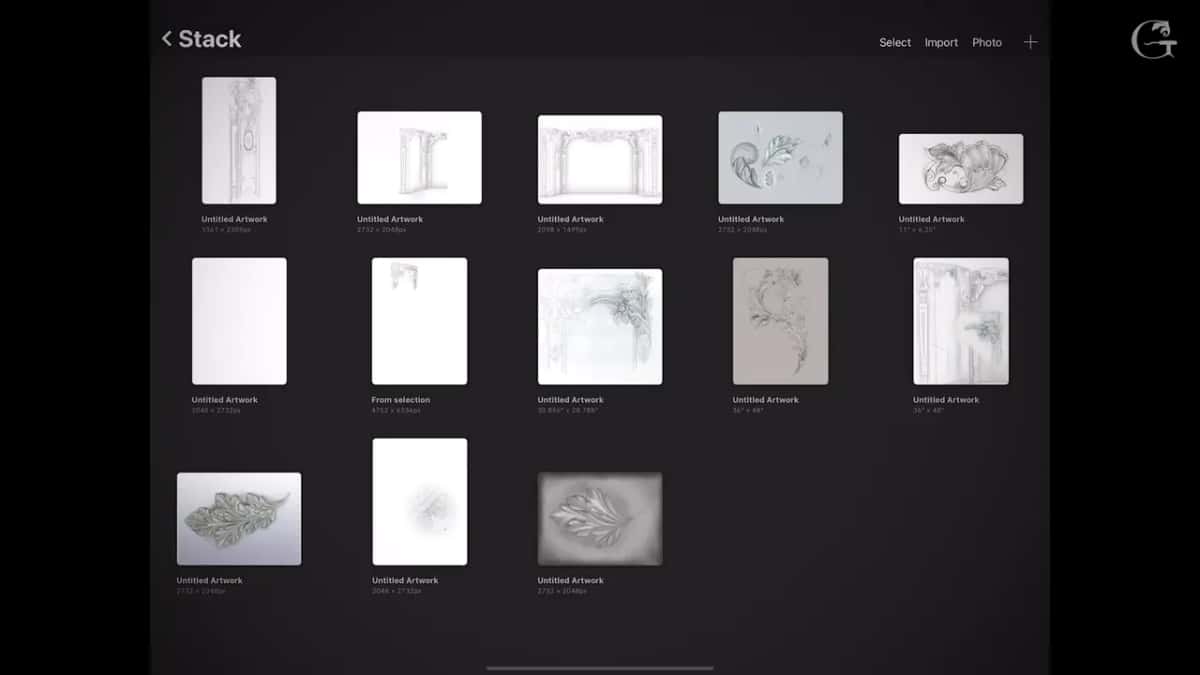
With a 3D model. I opened this video ready for the next step, with the board on the bench, but I had to explain first what I was working on. I pulled up the drawing so you would understand much better where this board goes, and marked its area for you in another color.
The whole detail runs about 10 feet. I divided it into multiple parts, and this board carries one of them, with another part to add later on.
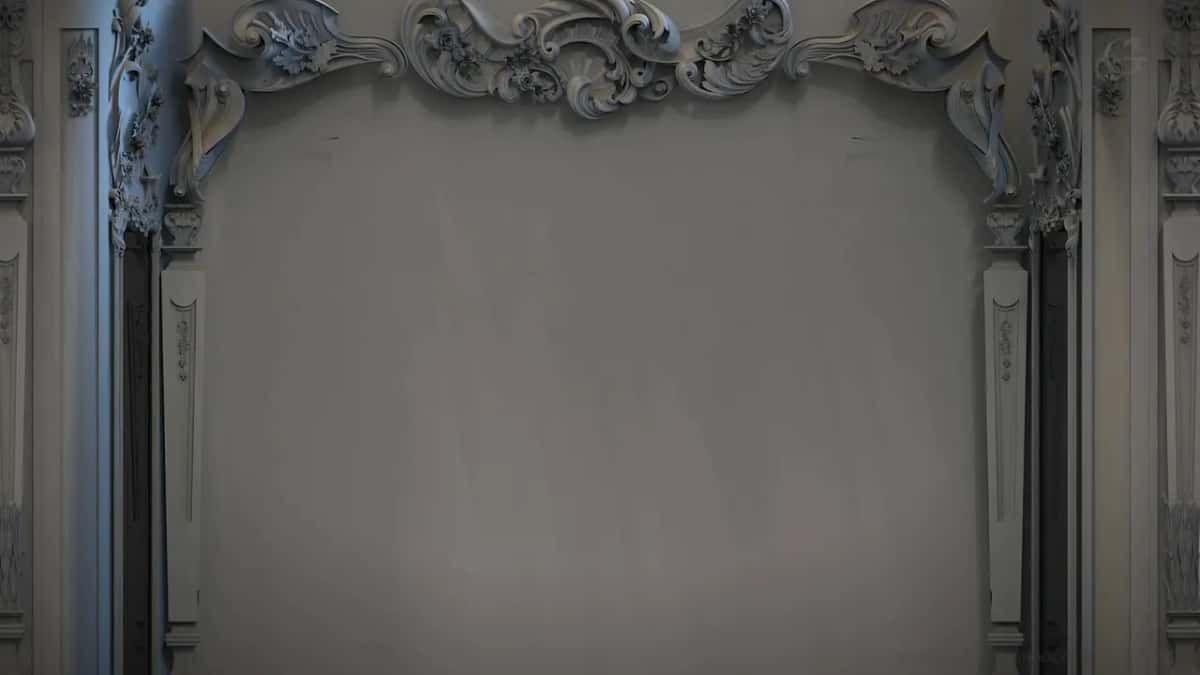
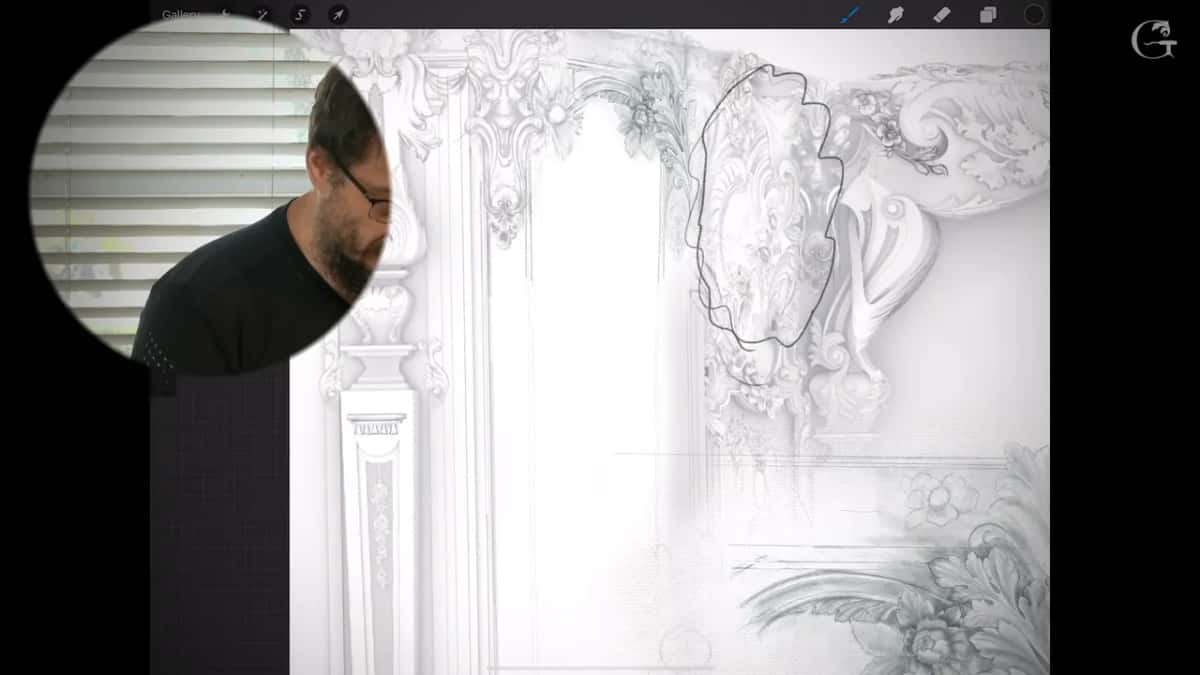
What you see on the screen is the original, and it is not just a drawing. It's an actual 3D model I created. In the beginning it did not have certain parts, so I had to add some stuff.
This same video is also workshop 104 of my Venice Room course. Back in workshop 1, I told how that project started. Local tradesmen were just normal people. They worked every day and didn't go too far. Think about the 15th century in Italy, where a normal tradesman stayed right in his place. Again, this project is big. That client asked specifically for research, to match the design and the details of what they did in Venice in the mid 15th century.
I had to research, design, draw and model, even a 3D model on my computer, until we agreed that yes, it looks authentic. A lot of people had a say. We're talking about high ranking designers and architects, and they checked and rechecked everything so it would be really accurate.
Why did I sketch the new parts over the model?
Lately I am using technology. Building the 3D model again takes so long. The client wanted to add some details and actually expand the design, and I did not want to create the whole model a second time. I thought, why don't I just pull out my iPad and draw some details?
The part I had to add is the section going on this board. I drew the extra details on the iPad. If I don't like something, I just click undo and redo, and the change takes a second.
I called it a really interesting trick for any part, and especially for the big ones, because sometimes it's challenging just to transfer the big idea right onto the board.
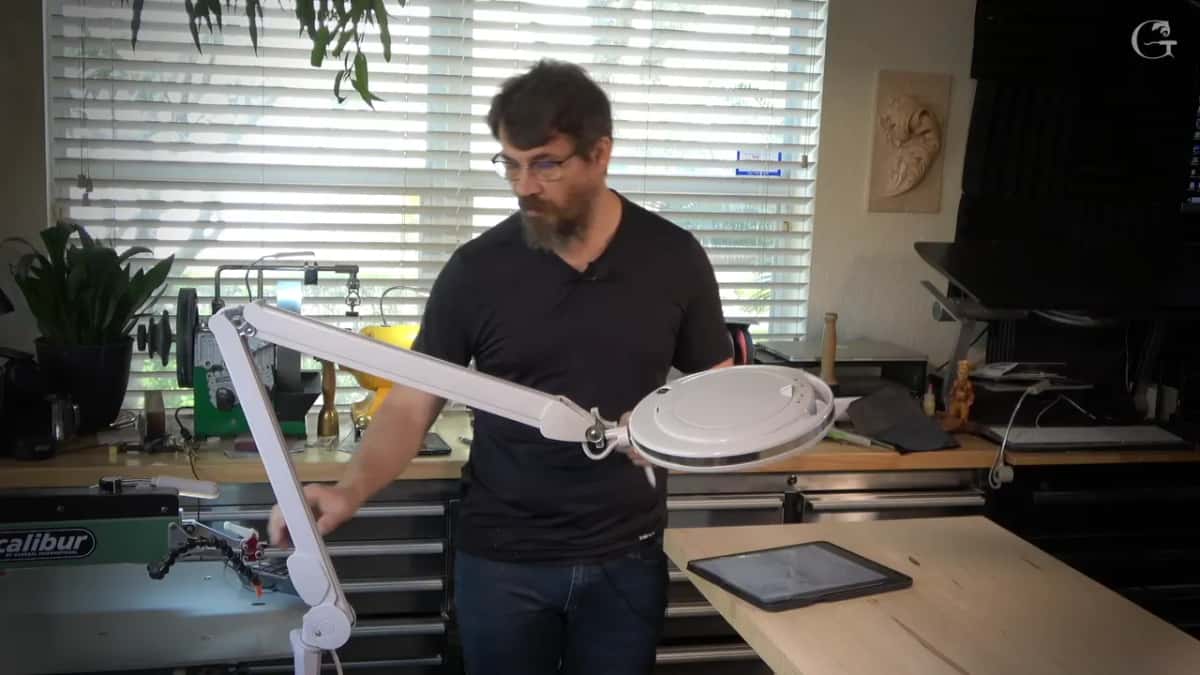
You can do the same on a computer or on any other technology. Some of you, not all of you, probably have iPads, and an Android pad is going to work also. I don't want to mumble, and I want you to really understand the process here. Without technology there is no other choice but paper. With it, every change gets a lot easier, and the drawing goes to the board easily too, since I just print it on paper and transfer it. How I set that up and print it full size is on the lesson page for this video.
Can a client read a flat drawing?
Not every client can. On an April 2020 livestream about clay modeling I put it this way. When I present the idea to my client, not everyone gets it on paper, because paper is just 2D.
For me it's sometimes a lot quicker to model than to draw the piece from multiple angles. I've done those drawings too. They just take so long.
For a lion I carved, I had to model it before I touched my gouge, and the customer was a reason too. I modeled it in real life size, took pictures of the front and the sides, printed them full size, and had that pattern for myself.
The flat sheet can fool me as well. In lesson 32 of my furniture panel course I said it's always like that in wood carving. You work from the overall shape, then you start digging the details, and shaping the wood is the most important step, because that's where you get the feel.
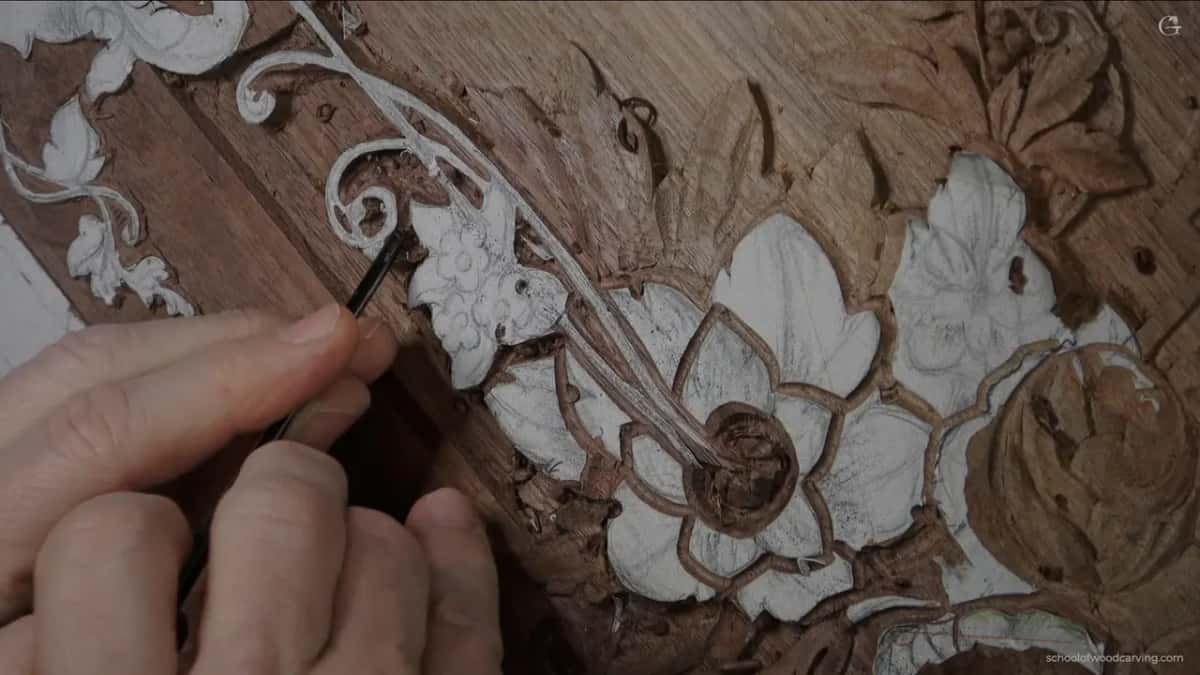
On a piece of paper, or even drawn on the board, you really don't see how it'll look in real life, even if you are good in 3D space. Once you carve it, you sometimes want changes, because it looks different from what you expected. That panel was fine. I wasn't working for a client there.
With a client in the picture, it can create a problem, because the client imagines something, you submit whatever paperwork, and then you see it won't work in real life. Sometimes it's not easy to convince the client that the change will look better.
Here is what I have put in front of clients, and what I said about each one. Every row comes from a lesson or a stream, so you can find it and hear me say it.
| Shown | Comment | Source |
|---|---|---|
| My 3D model of the design | My original, and making it twice takes so long | Minute three of this video |
| Sketches over that model | Details the client wanted added, each one changed in a second | Here, near minute four |
| A drawing on paper | Not everyone gets it, since paper is flat | Clay modeling stream, 2020 |
| A model instead of drawings | Sometimes a lot quicker than drawing many angles | Same stream |
| Drawings, then a computer model | We kept at it until we agreed it looked authentic | Venice Room, workshop 1 |
| Paperwork for a client's idea | The client imagines it, and then it may not work | Furniture Panel 32 |
How many rounds of changes should you expect?
It depends on the client. I said that on another April 2020 stream, the one about money, because some clients just dance so much and so long.
This lesson says the same about my own work. I'm working with high-end architects, and sometimes those high-end architects just like to do changes. And that is normal.
Say you've got a huge project, 36 by 120 inches, which is 3 by 10 feet (91 by 305 cm). You really don't want to pencil that on a piece of paper, because it changes. On paper every round takes so much time, and it's just a waste of time, where on the screen it's undo and redo.
The story of a ten foot headboard I redrew by hand is on the lesson page for this video, and I call that stretch the dancing stage.
Do I charge for drawings on a custom wood carving commission?
I do, for the time I spend on the drawing. During that same stream I said I needed to speed up on the piece I was carving, because the day before I didn't do much, since I had to spend time drawing for a client.
Someone in the chat wrote that a client had asked him for a carving commission, and that maybe he should stop carving for free. You should, I told him. You probably should.
I didn't charge for drawing at the beginning. I thought it should be part of the carving project. Then I found out that clients differ, and some of them keep asking for changes for a very long time.
Later a client of mine, a really high-end woodworker who had some of my carvings, told me about charging for the drawing, for the time. When I found out how much was charged, I thought, well, I should probably just draw, and that's it. But it's not what I love to do.
I love drawing, don't get me wrong. I draw all the time on the phone, and I have a big Wacom Cintiq 24. I enjoy carving a lot more.
So when you estimate a carving, you really have to count how much time you spend drawing and designing. Architectural drawing takes time. I charge for the drawing process.
Can the price change after the client says yes?
Not from my side. After you give a price, you cannot change it, as I said on the shadows livestream that April. I also sent people back to the stream from the day before for how I estimate.
Back when I did custom cabinetry, I used finishers. They would give me a price, and I presented it to my client. Later on they came back, said they had underestimated, and asked for more money. I don't like that. If I underestimate, that's my problem and not the client's, because I want to be fair to my clients.
That is also why I don't charge by the hour. By the time, I could take as much time as I like and then say, hey, it took too much, and charge. That's not fair for the client, and I don't think it's fair for you either, because you can also lose. You can underestimate your time. Someone asked on that stream whether I charge by the time or by the piece, and my one-word answer was by art. Sometimes one inch (2.5 cm) takes you a whole day. Another day you carve a foot (30 cm). When you polish, you can't move fast, and the client can get frustrated with a bill by the hour. So I estimate by piece.
Why does the room change the design?
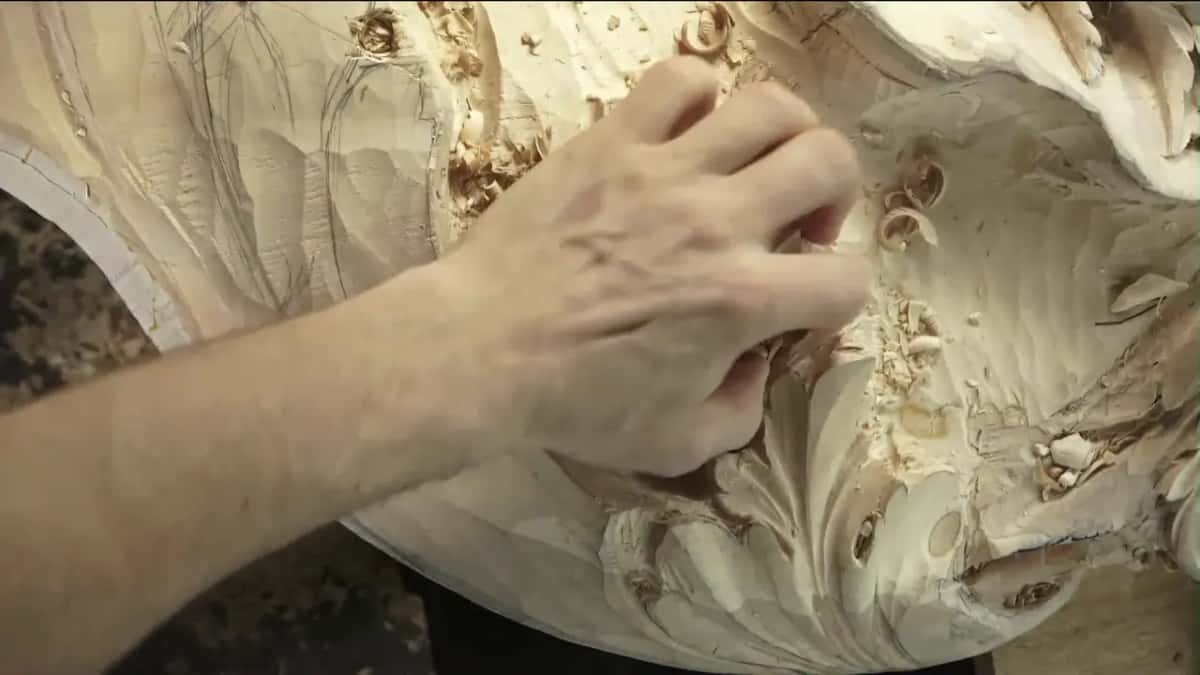
The light in that room decides what kind of shadow the carving gets. During a livestream about creating shadows, I carved a piece that was going into one of the rooms, with the light coming mostly from one side. You could already see how deep it was casting the shadow. There are five levels of shadows, and I didn't want to make it overcomplicated there.
Designing for a client, I have to be mindful about the shadows and the place my project will go, even while I design the movements. That's why I keep two lights instead of one. By moving a light I can recreate the shadow it will cast in real life, and see much better how the piece will look. The shadow works like a framing.
Someone asked me on that stream whether I go to the place where a carving will hang. Yeah, absolutely, I said. Well, it all depends on the client. The design laws behind those movements and shadows have a course of their own, Principles of Design in Wood Carving.
Some finished rooms stay private
Not all clients really want to show what they're getting. At the start of the Venice Room I said I had not shown my production work before, and that was a reason.
In workshop 59 I said the same, and that there was a lot of stuff ahead of me in that project, a great one for you to watch. I have certain customers whose homes I'm not able to show, and that piece was going overseas. I said I would go there and watch the installation, but I didn't think I'd get a picture unless they let me. Back in workshop 1 I said I would show you just parts at first, and maybe, once the room was shipped and installed, a picture of the whole thing. I still have some restrictions, of course, and I won't show you the whole picture once it's installed.
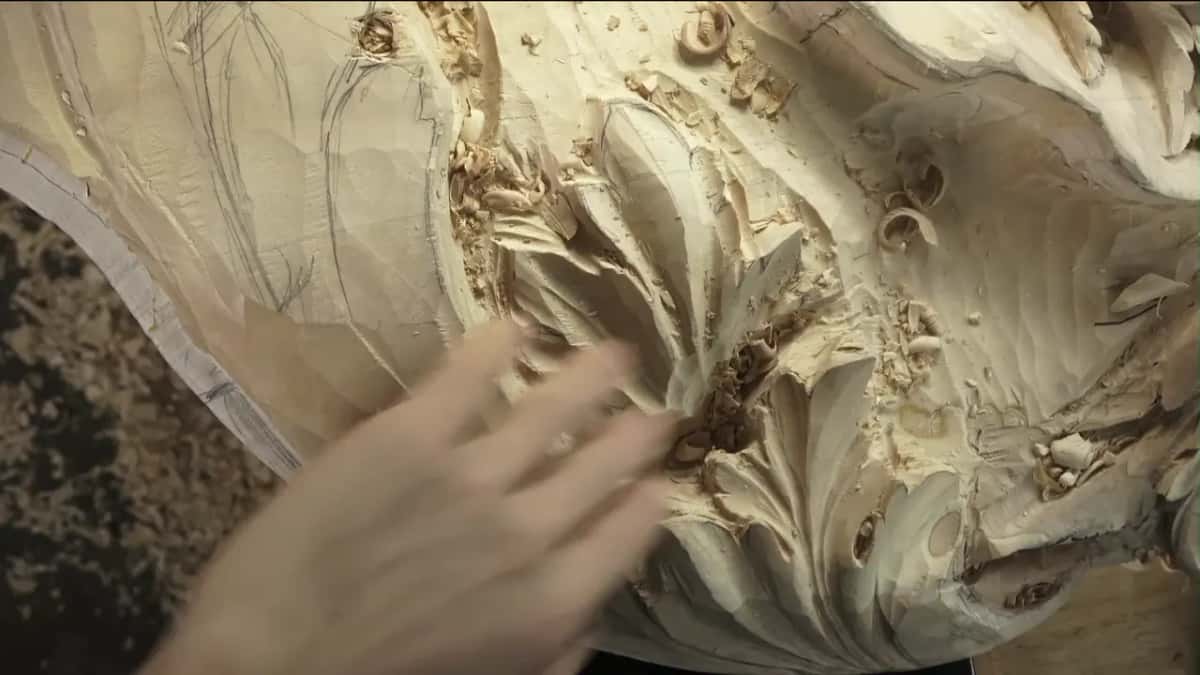
Every workshop and stream I quoted here is inside the school, along with the rest of my techniques course. My board is still on the bench. Its part of the drawing is marked in another color.
How it's done
- Draw first. Every job of mine opens with a drawing, on paper or on a screen, and it goes between the client and me until we agree.
- Count the drawing hours. My estimate includes the time spent drawing and designing, and I charge for it.
- Give the client a form they can read. Not everyone reads a flat drawing. This design started as a computer model before any sketch went on it.
- Sketch the additions. More details and a bigger design were wanted, so I drew the additions right on the model rather than build it again.
- Check the light. While I design, I keep in mind where the piece will hang and which side the light comes from. Moving my two lights shows me the shadow.
Frequently asked questions
Do you charge for drawings on a carving commission?
I do. Drawing time goes into my estimate now, though at the beginning I left it out, thinking it belonged inside the carving project. Some clients changed my mind, because a few of them want changes for so long. Architectural drawings take time too.
Should a carver visit the room where a carving will hang?
My answer on the shadows stream was yeah, absolutely, though whether I go is up to the client. The place matters, because the light there casts the shadows I design for. At my bench two lamps let me recreate that light.
Why do architects keep changing a carving design?
High-end architects sometimes just like to do changes, and for my kind of work that is normal. On paper each change eats so much time. On the iPad I just click to undo it, and on this board I added the new parts with a few quick sketches.
What to carve next