
Alexander Grabovetskiy, woodcarver, School of Woodcarving · Published 2021
How long does it take to become a master wood carver?
Quick answer: Mastery in wood carving is a matter of years, not a time clock. Books point to about 10,000 hours. Some carvers get there sooner and some need twice as long, but what really grows is your eye for depth, and it grows only while you carve.
You turn into a master carver over years of digging, not by counting hours on a clock. Some people get there quicker and some take twice as long. What decides it is how much time your hands and your eyes spend inside the wood, because the eye for depth only grows while you carve.
Have you watched somebody set a gouge at exactly the right depth without measuring anything and wondered how? Do you worry that you started too late, or that you were not born with some gift? This lesson starts with me answering a student in class. You're right, I said. There is such a thing as developing the ability to see depth, to see how deep you go. And you can build it.
Key takeaways
- No clock decides when you are a master.
- Books put the number near ten thousand hours, and some people need double.
- Seeing depth is learned, the same way your hand once learned to write between two lines.
- I give every depth in millimeters and in inches, because my students live all over the world.
- Digging can be learned in a couple of weeks. Design is what makes a master.
- More you carve, more you see.
- Like the gym, it takes years, and nobody gets there in a couple of months.
Can anyone reach mastery?
Everybody can be a master if you understand the process. There are many books about mastery, and it is not just a title. Well, right now it is a title, a royal title in the woodworking world. But the thing behind the title is something you develop.
Even the ability to see in 3D can be developed. And there is only one way to develop it, which is how long you spend doing what you do. The same holds far beyond carving. It works that way for anything.
If you are at the very start, the beginner course is built for exactly that stretch. Beginners there work with one knife before a roll of gouges, because a blade teaches your hand to read grain and depth first, and why one knife comes first explains that order.
Will a two week course make you a master carver?
People write me emails when they find out I am teaching in person, at the Marc Adams school in Indianapolis, in Maine, in Tampa. They would love to be master carvers, they say. Should they take the two week course, or will one week do?
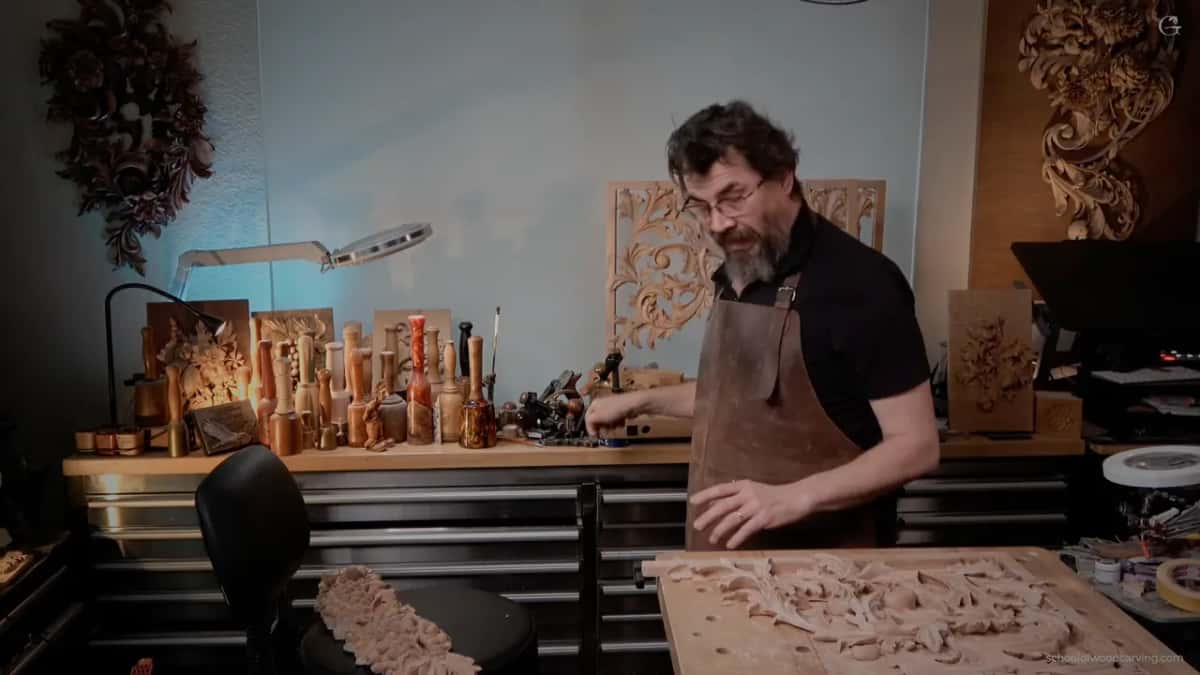
Yeah, right. I could teach it in the 37 minutes of a live stream. Taking a gouge, the carver's shovel as we call it, and digging inside the wood is easy to teach. That part is not a problem at all.
Carving adds a lot more than digging, because it is the ability to think in the three dimensional world, to see what two dimensional people don't see. And don't get me wrong, every human being can develop that ability, because we all have the same brains. I believe we were created by the same God. The title of master is something you earn, and nobody earns it in a week.
What does the 10,000 hour number really mean?
It means roughly this much practice, spread over a lot of years. Malcolm Gladwell writes about it in Outliers. There was another book before his saying the same, and there are more, even in English. And Robert Greene talks about it too, in his book on mastery, where he turns the hours into years.
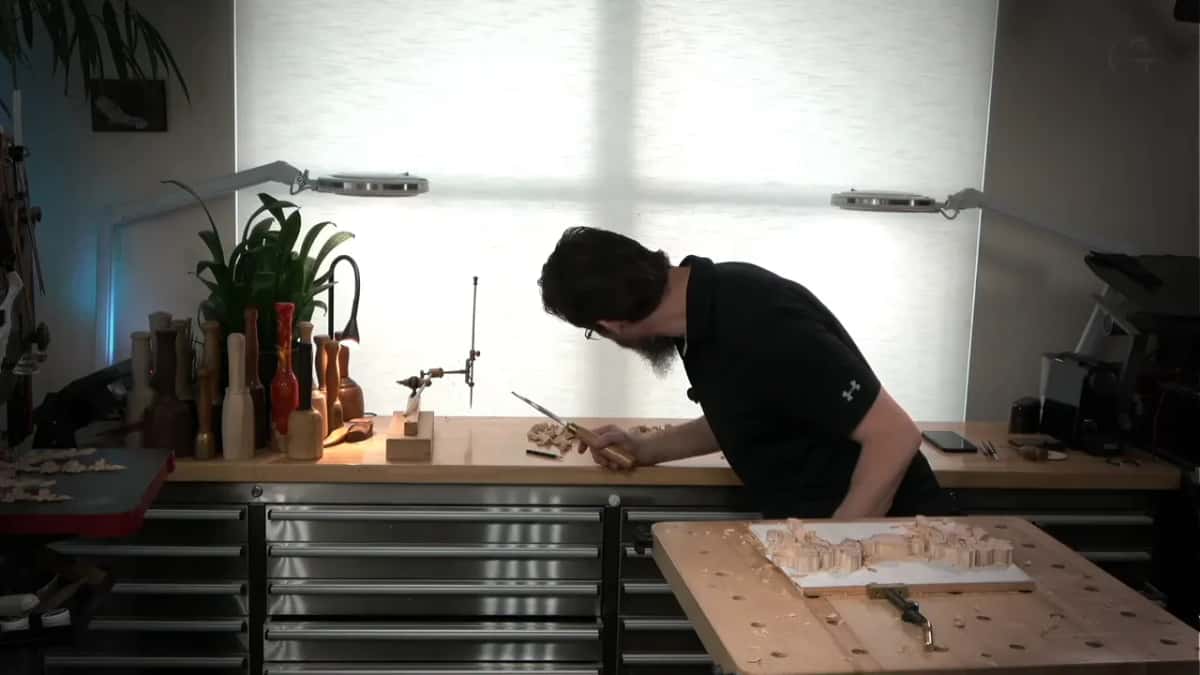
Robert Greene, Mastery:
it generally adds up to seven to ten years of sustained, solid practice
Don't read that like a time card. Mastery is not somebody going to work and punching in every day, eight hours today and ten tomorrow, and then boom. Oh, I've got 9,999 hours, one more and I am a master. No, not like that.
Some people get there a lot quicker. Others need 20,000 hours. The people who calculate these numbers assume you spend multiple hours every single day. But the point underneath holds for everyone. The more time you invest, the more you work on it, the closer you come.
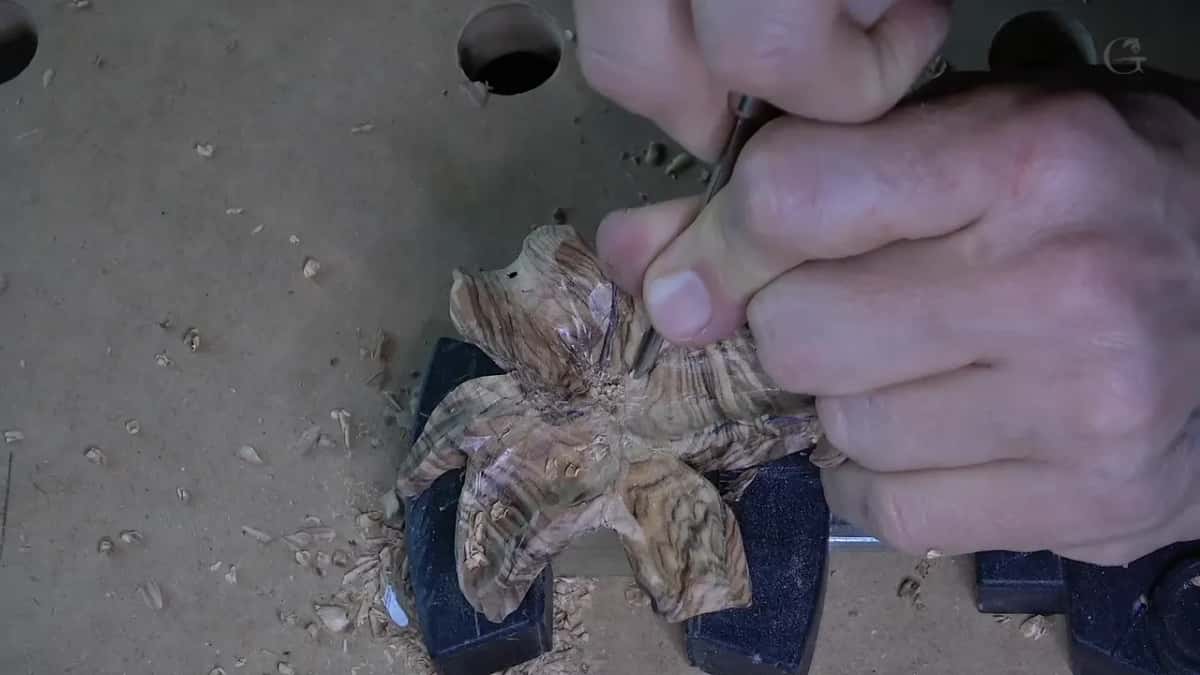
Greene has a few more lines worth knowing, and they fit a carver. Apprentices in the old craft shops, he points out, ended up working directly on their materials for more than 10,000 of those hours over the years of their training. He writes that even Mozart did not write an original, substantial piece until well after ten years of composing. I listen to Mozart at the bench, and Vivaldi and Bach, so that one stays with me. And he says two or three hours of intense focus beat eight hours of scattered attention, which is the time card problem all over again. Greene also says there are no shortcuts past the apprenticeship years.
Why is seeing depth the real skill?
Seeing depth is what separates scratching wood from carving it. Think back to school, when they taught you cursive writing, a long time ago for some of us, I know. There was an upper line and a lower line on the page, and your whole job was not to cross those borders.
Later on you didn't need the lines anymore. You felt them naturally, because your hand had developed.
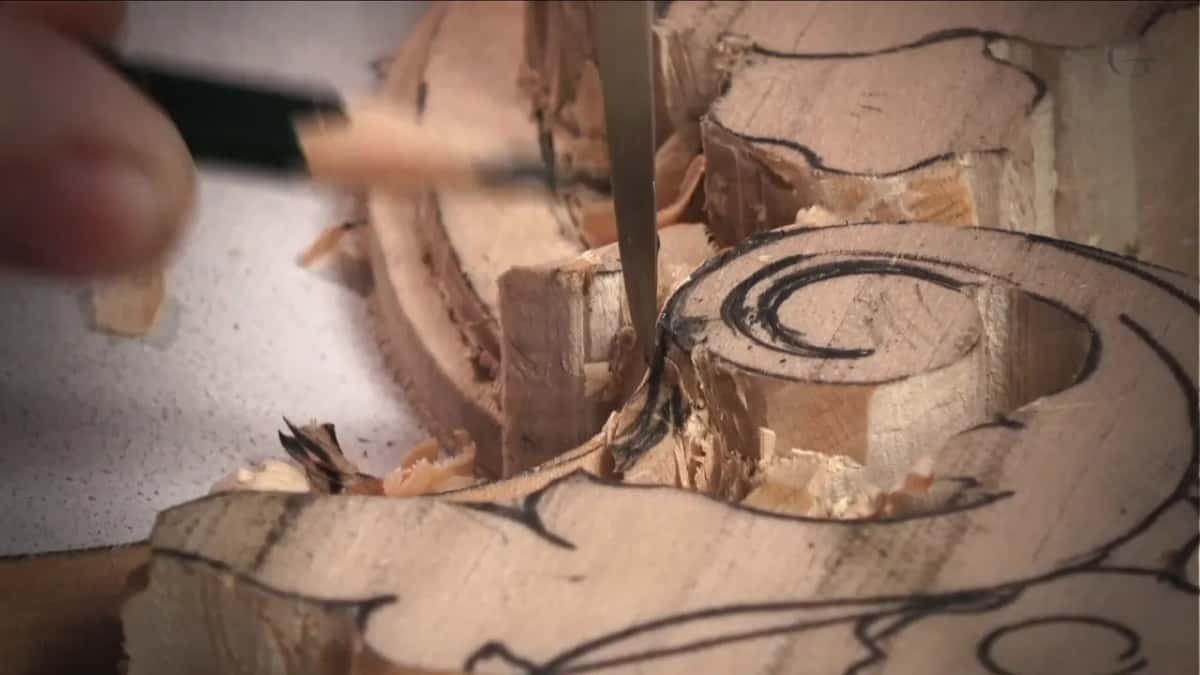
Carving works the same way. The longer you work in the three dimensional world, the more your brain learns to read depth by itself. At first you need the numbers and the exact depth in relief carving. Later you look at a panel and know how deep to carve it before a tool touches the wood. The same eye is what makes low relief look three dimensional.
How do I know a cut should be a quarter inch deep?
I see it first. Then I say the number. In my online school I tell you how deep you are supposed to dig. Let's say six millimeters, which is a quarter inch.
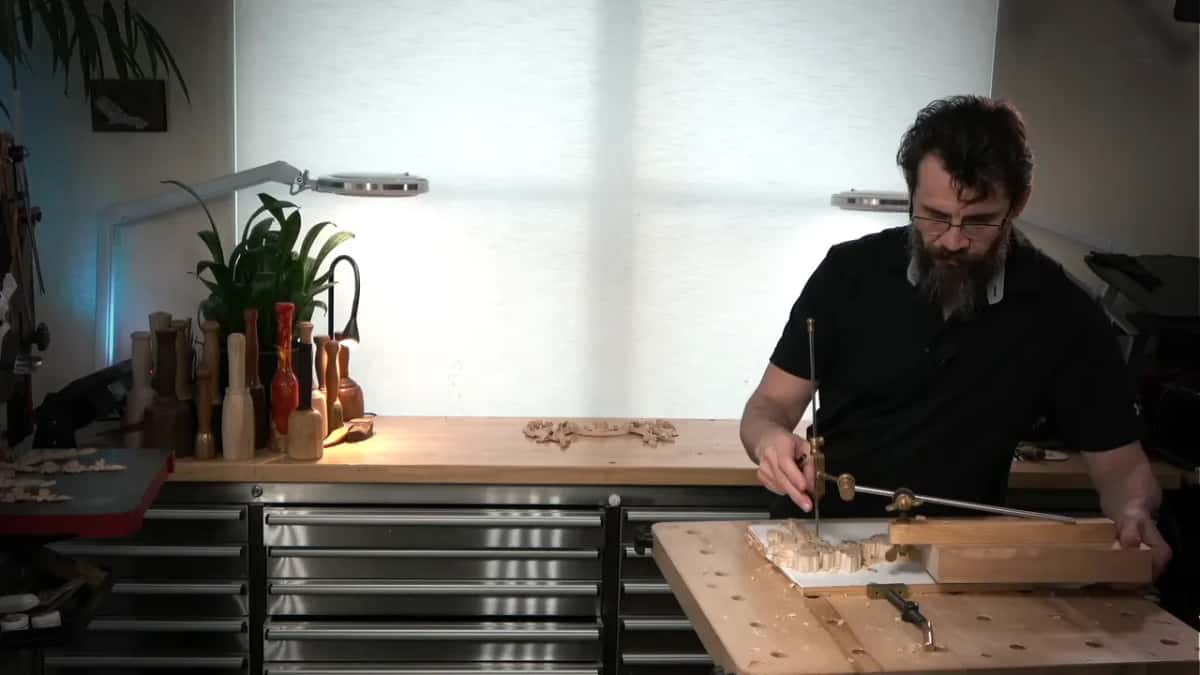
Online I have to give both metric and imperial, because I have students from all over the world. I don't even know how many countries anymore. One year my site almost crashed because 5,000 people logged in and watched almost the same video. I had to move the whole school to its own separate server. It could not stay on a shared one.
But when I say a quarter inch, it doesn't mean I planned that number ahead of time. I see the depth before I say it, and then I tell you it is going to be about a quarter inch, six millimeters. That eye developed, and nobody handed it to me. It grew the way your handwriting did in school, until you no longer needed the lines.
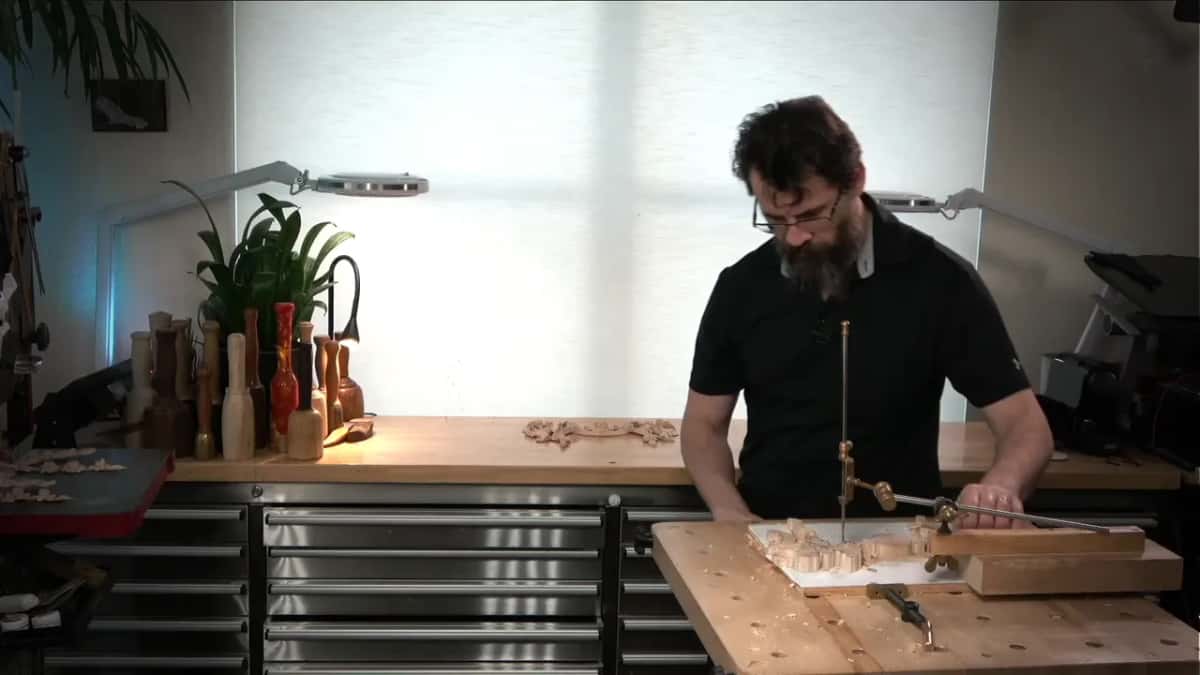
Does carving really change your brain?
In my view, yes, because when you carve you are getting new brain cells, which is what I told that class the day before. Carving is just like going to the gym. Work out and you transform.
Not like the young guys I watch all the time at the gym. They come in, grab a dumbbell, express themselves a little, walk over to the mirror, and there is nothing. They came once a week for a couple of months and expected something to show. For some people it takes years, especially without the steroids. You know what I'm talking about.
When I teach in person in Florida, most of my students are over fifty, in their fifties and sixties, with a few in their thirties and forties and sometimes an eighteen year old. The older ones know they are in the second part of life. They want to stir the brain up, because they don't want to lose their memories, and training your brain to work in 3D is exactly what carving does. I believe it beats depression too.
I still train every day, weights and cardio and walking, because I don't just carve wood. I carve my body too. Everything has to be worked on, and the more you work, the more of a master you become.
How deep does the work get?
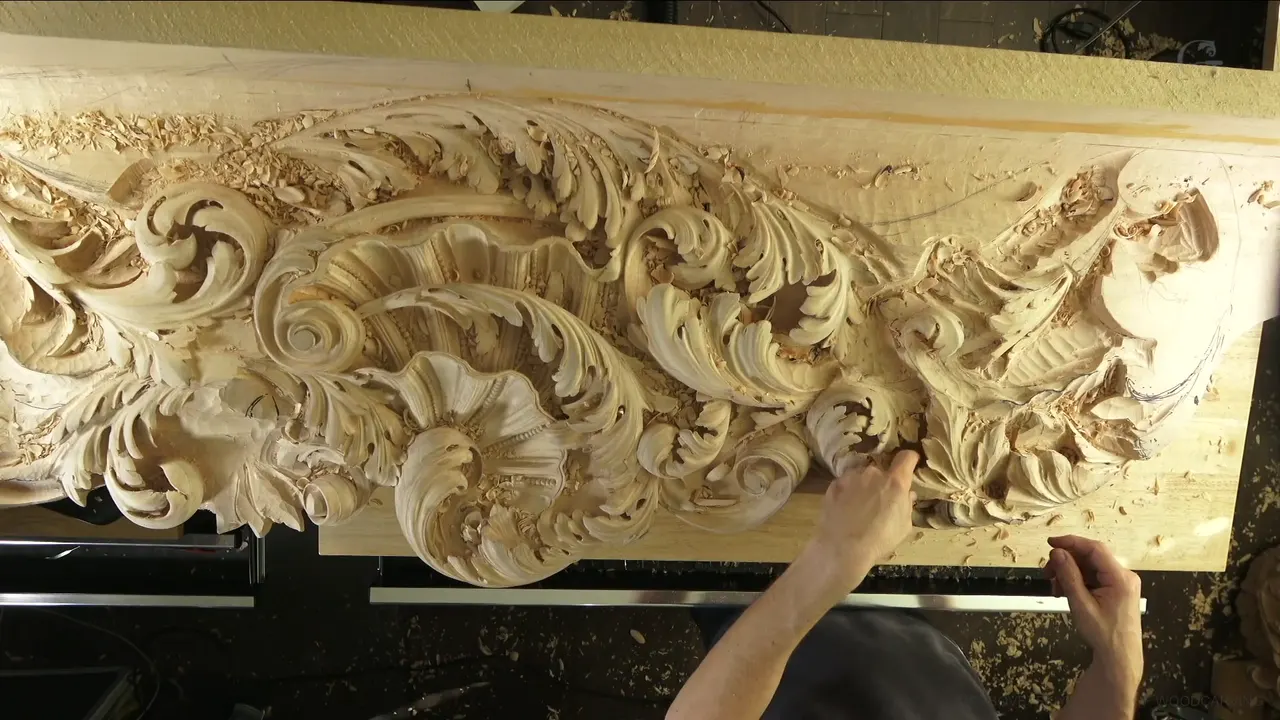
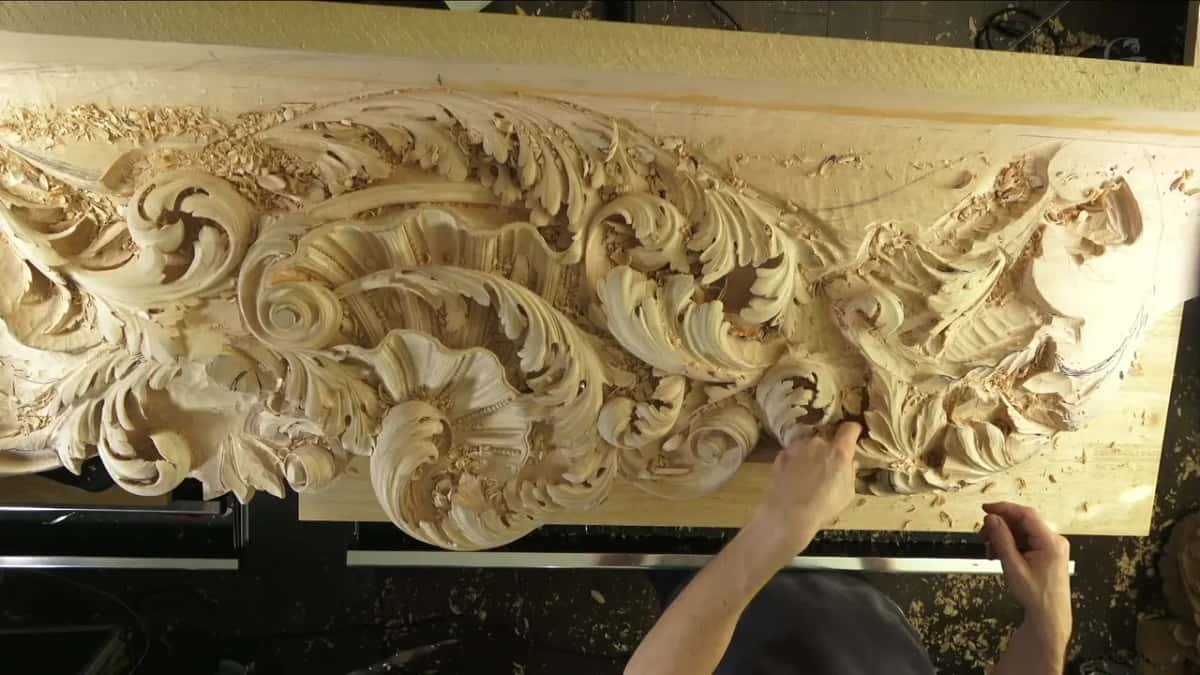
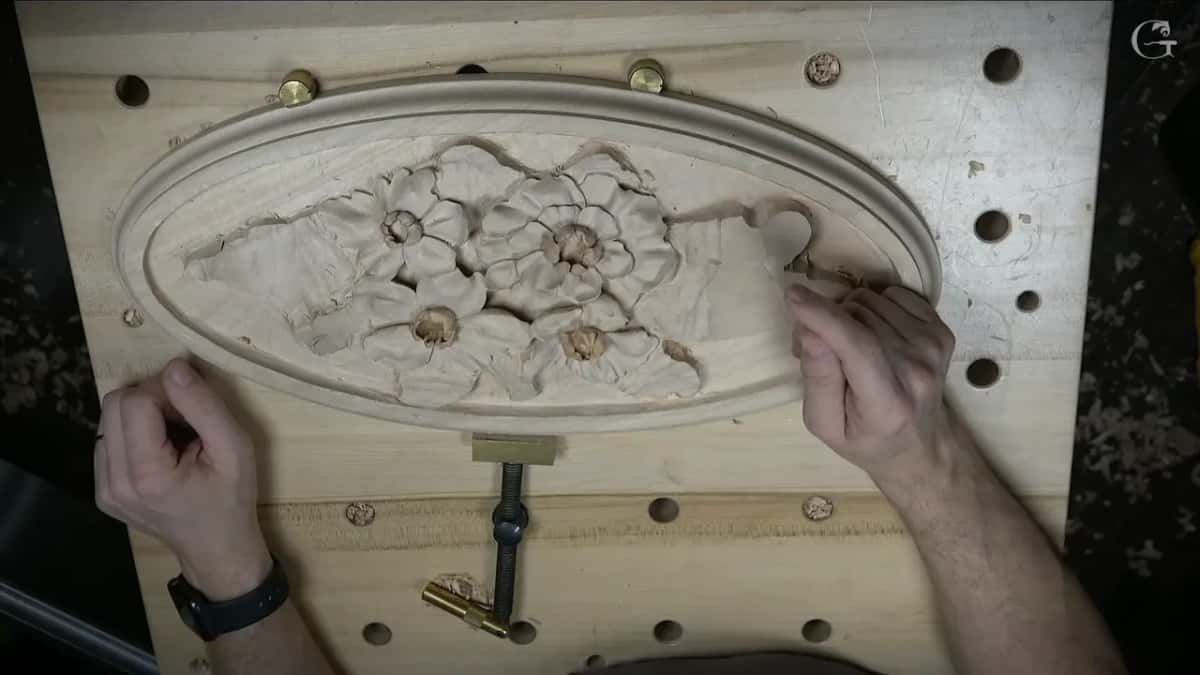
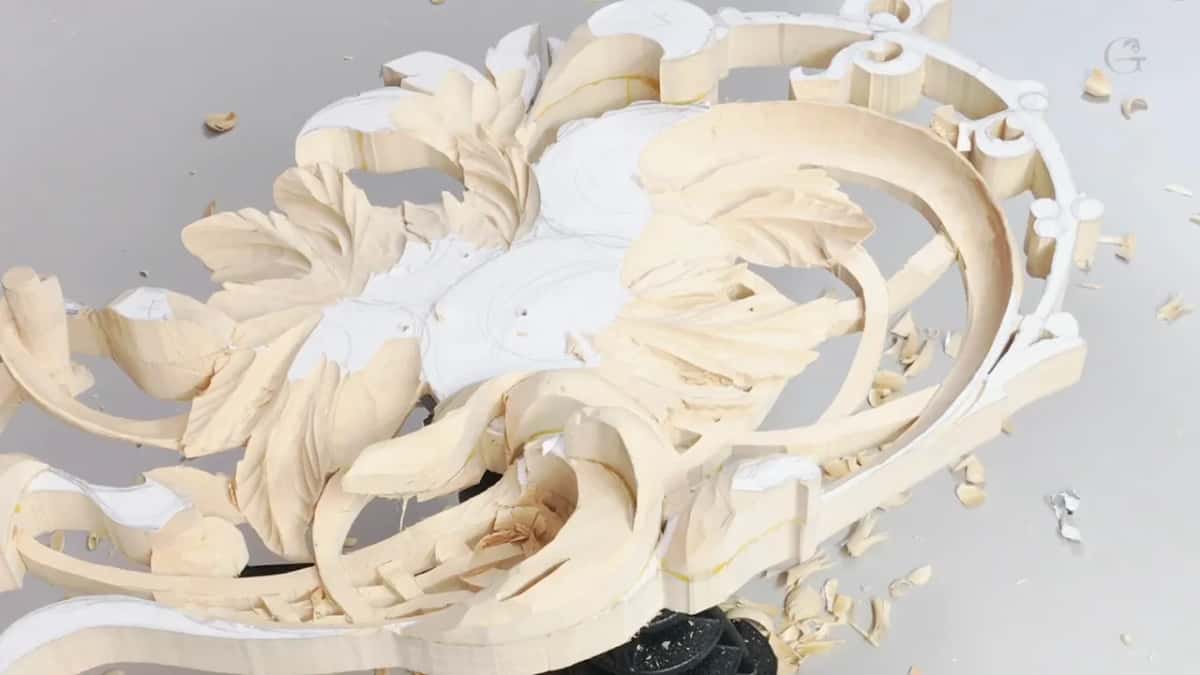
More you carve, more you see, and deeper you go, deeper you see. In class I almost called it the Venetian one, then corrected myself. That piece in the picture below, with the flowers, do you know how deep it is? About eight inches. Eight inches of wood to dig through, and the more you dig, the more you develop.

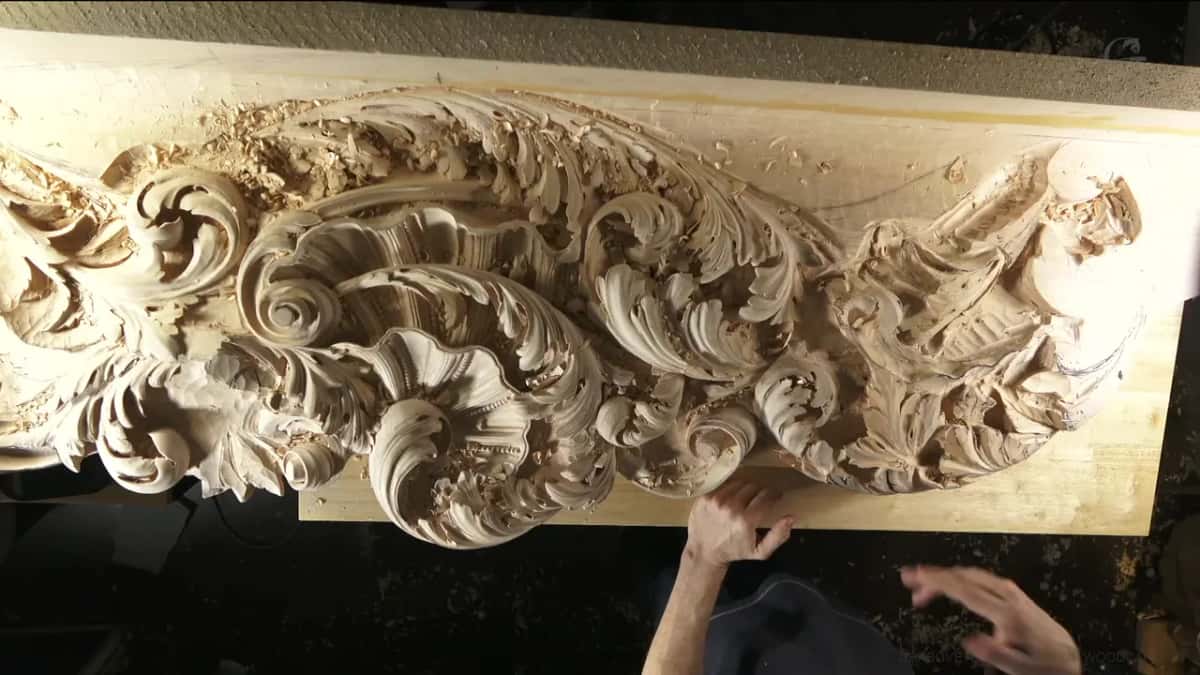
Most panels are not that deep. On the Venice room panels the excavations run from about an inch, 25 millimeters, to about two inches, 50 millimeters, in the deepest spots, and I try to keep them all about the same depth so the relief looks right overall. You can watch that come out of the board in the Venice room workshops.
What should all those hours go into?
Design, and the history behind it. Anybody can poke a chisel into the side of the wood, and anybody can learn that in a couple of weeks. The challenge is that nobody reaches mastery until they learn how to design for carving.
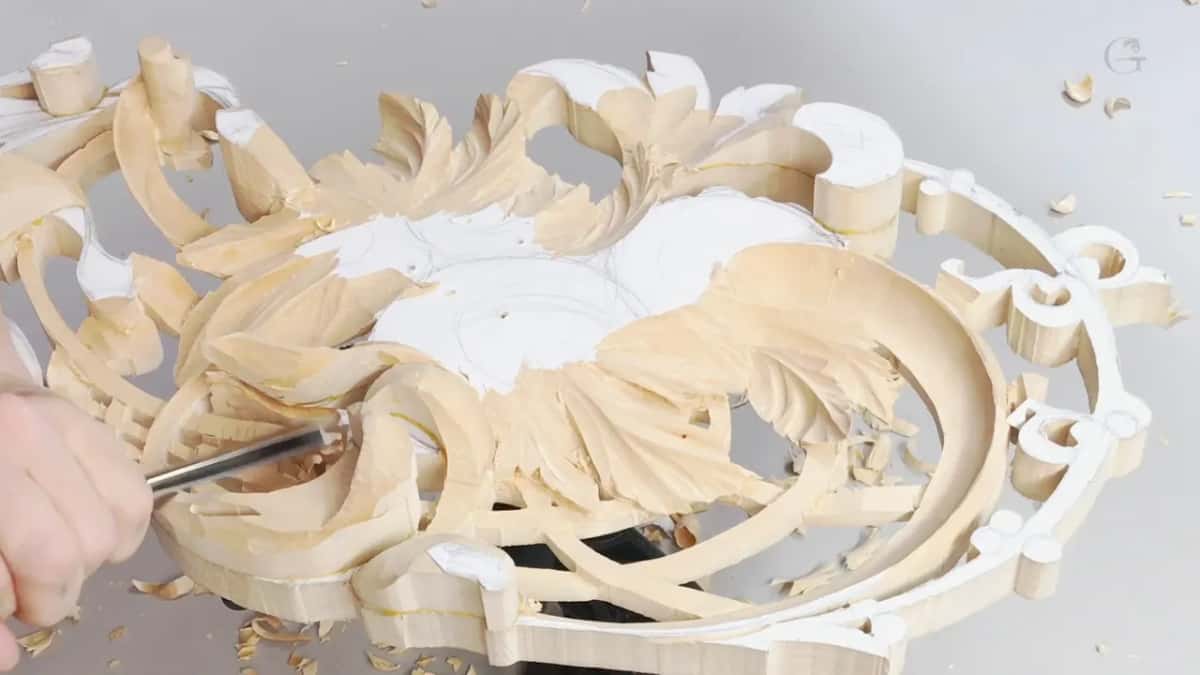
And to design, you have to learn how it was done before you. That is the big history of wood carving, and I said exactly that while carving Hashemi flowers 8.
The Bible has a word on this too. The most famous carver in it, Bezalel, built the tabernacle, and it is written that God filled him with the spirit of wisdom, knowledge and understanding. Wood carvers really are wise people, people who understand and have knowledge. Believe me, there are a lot of secrets, and a lot of knowledge you have to gather before you get really good results.
How long did it take me?
My whole life so far. My grandfather gave me my first chisel when I was six. I took it to a brick to carve a face and ruined the tool completely, but the passion was born right there.
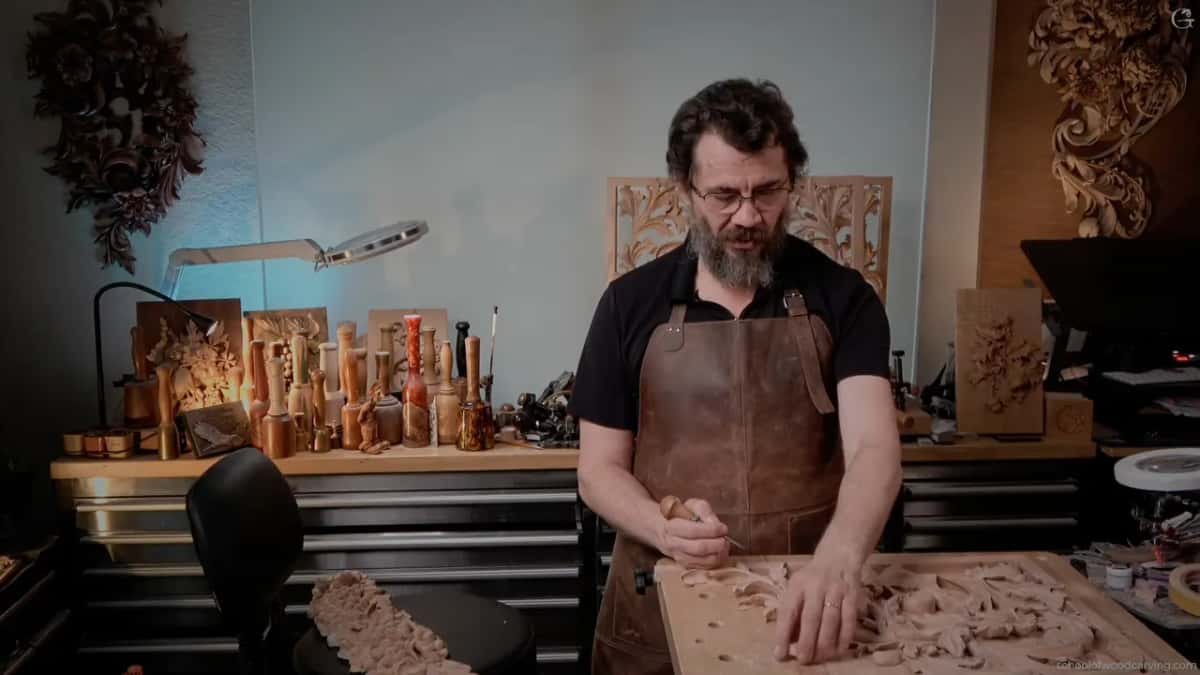
At sixteen I became the only apprentice of a fine art master in Russia, a traditional European apprenticeship. He taught me that design is not drawing on paper. Design is the laws of space, rhythm and repetition, and understanding the tools. He taught me to think like a tool. Those laws are in the law of space in carving design.
Later, in prison, I carved furniture with a 10 mm knife I made by hand and a tiny gouge made from a nail. They paid me one boiled potato a day. One potato. In America I had a framing carpenter job by Monday with zero English, and years later I sold my Felder machines to carve full time. The long version is in let me introduce myself.
So when somebody asks how long it takes, I tell them honestly. Over forty years for me, and I am still learning to see.
What do writing and carving have in common?
| Learning to write at school | Learning to carve |
|---|---|
| An upper line and a lower line on every page | A depth I give you, six millimeters or a quarter inch |
| Stay between the borders | Dig to that depth and stop there |
| Years later the lines are gone and your hand still knows | You see the depth before you ever measure it |
| You practiced every school day | You carve every day, a few hours if you can |
| Nobody learns it in a week | Years, and for some of my students twice that many |
A few years ago I heard somebody ask what the richest place on planet Earth is. A lot of people think it is a country. The USA, some say, or Israel. That is wrong. The richest place on the planet is a cemetery, because so many talented people lie there who never used the talent God gave them, and all those riches are buried right there with them.
I understand that not every one of you wants to be a master. But who knows? Maybe there is a talent in you that you never knew about. Plenty of artistic people on this planet never exercise theirs.
I don't want you to be one of those at the end of your life. Start from the very first steps, with the basic tools. Stick with it long enough and you can go all the way to the top.
If you want somebody to give you those depths and watch you grow into them, that is what we do inside the school. The other short lessons in this series live in the techniques course, and there is more of my bench on YouTube.
How many hours did you carve last week? Whatever the number was, add one more tonight.
How it's done
- Carve to the depth you are given. Work to the number in the lesson until your hand knows it.
- Look before you cut. Try to judge how deep the panel should go before you measure.
- Put in the hours daily. The people who calculate mastery assume several hours of carving every day.
- Learn design and its history. Study the old work that came before you, beyond just learning to dig.
- Go deeper over time. Take on deeper work as you grow, because more digging trains more seeing.
- Give it years. Treat it like the gym, where the young guys who show up once a week never see a change in the mirror.
Frequently asked questions
Is ten thousand hours the magic number?
A rough guide, nothing more. Some carvers get there faster and others take double the time, and nobody should count the hours like a time card.
Can an older beginner still get good?
Most of my students in Florida are in their fifties and sixties. Every human being can learn to see in 3D, because we all have the same brains.
Why do you give depths in both inches and millimeters?
My students live in more countries than I can count, so every depth goes out in both systems, like six millimeters and a quarter inch.
Do you need talent to carve well?
What to carve next