
Alexander Grabovetskiy, woodcarver, School of Woodcarving · Published 2023
How do you keep a carving bench from moving?
Quick answer: A carving bench that stays put is, in my shop, a narrow home-built base with cast iron inside it. Barbell plates of 45 pounds and a couple of 75 pound dumbbells sit between its plywood panels, and on top is a carver's top that rotates and flips, so I turn the work and the bench stays where it is.
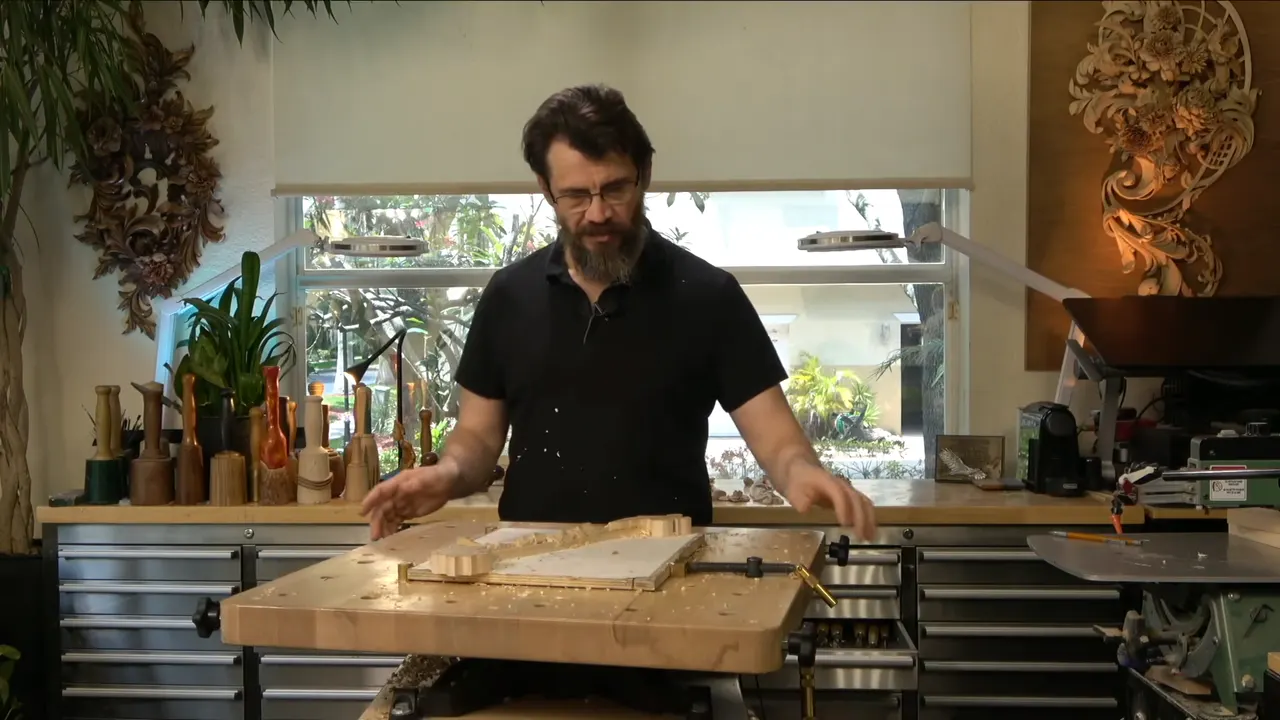
Keeping a wood carving bench from moving is, in my shop, a matter of weight down low and a top that turns while the bench stays where it is. I built the base under my carver's top myself, and between its plywood panels sit barbell plates and a couple of heavy dumbbells. I'd guess the whole thing at over 200 pounds, maybe about 300 (about 90 to 136 kg), though I don't really know.
Do you want the wood to stay where you put it? Would you rather turn the piece than walk around the whole thing? Then the bench has to be heavy, and the top has to do the turning. Students of my school had watched my workbench change in some of the courses, and they asked what I use now and what I think of it. I showed my own answer on a short live stream that is part of this January 2023 lesson, because what I use as a workbench now is one of the common questions I get. I said what I love about it and the one thing I don't.
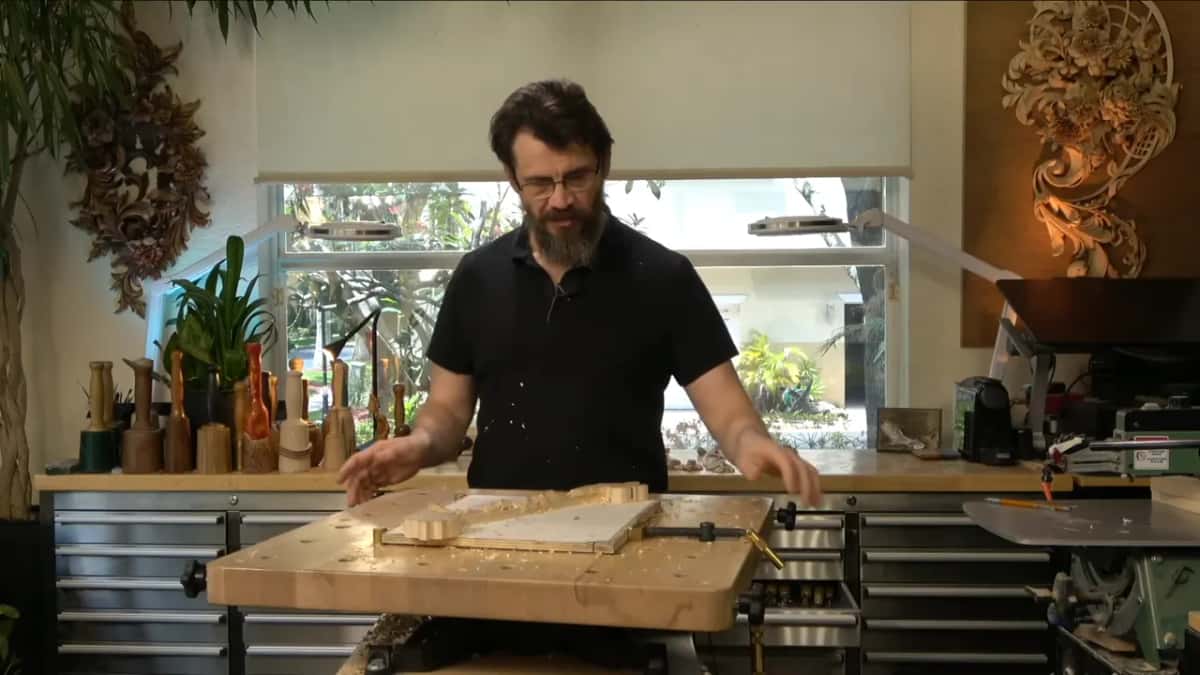
My wood carving bench in six lines
The weight sits low, inside the base, between plywood panels.
I chose cast iron over sand, since the same weight takes less room and makes less mess.
Wheels come off for carving.
A handle turns the top any direction, and a second one flips it for side work.
I bought the top and built the base myself.
A dining table with plywood and clamps still works if that is all you have.
Why do I keep turning the work?
A bigger piece has to be attacked from all different directions. A dining table or a normal woodworker's bench leaves you two choices. You walk around. That's what happens in most cases. Or you unclamp it, turn it, and attack again from the right angle.
And you turn it a lot. To carve with the grain you constantly have to rotate the piece, and I said on the stream that this is really important on a carving project.
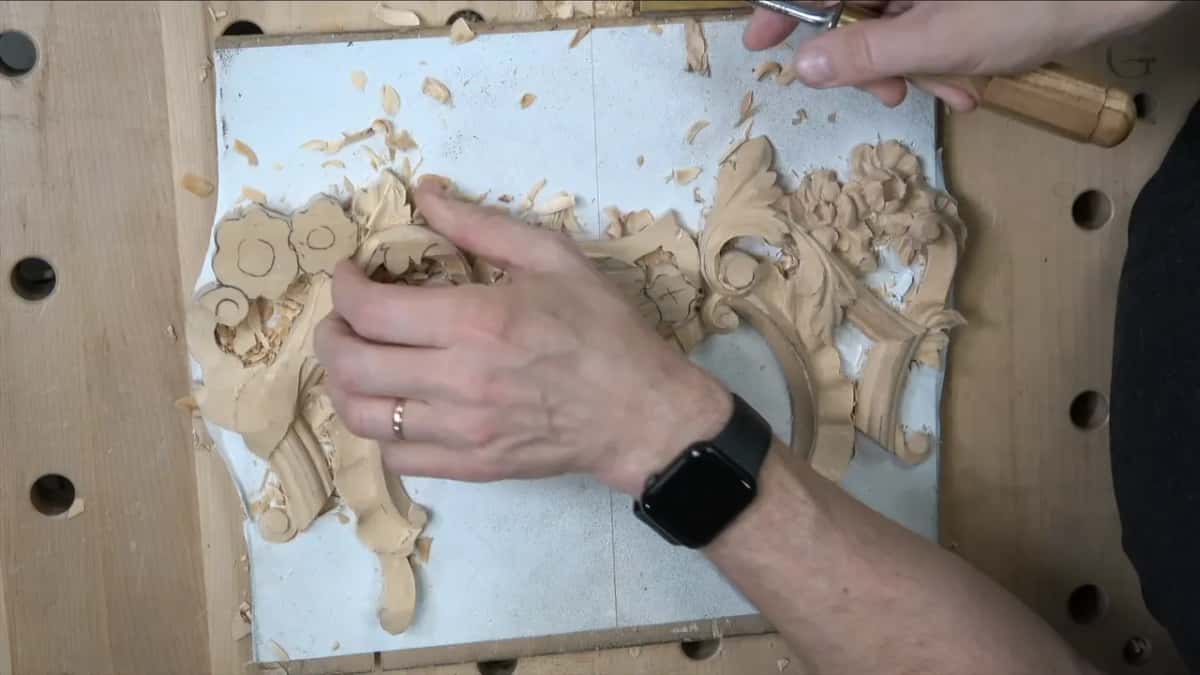
Sometimes turning is not enough. You have to work right from the side, and on a woodworker's bench you really have to kneel down and work your way in.
What did my benches look like before this one?
My bench changed over the years, and I can't say one was better than another. In the Roman Acanthus course my vise was connected to just a small portable bench, and it definitely created some movement. Some of you asked if I could get rid of the shaking. Probably yes, I said, with a really solid, unshakable workbench. But for me it was not the problem at all, and I liked my portable bench. The vise on it was a very tough one, and I could rotate it and take it out really quickly. When I started this school, I promised to teach you the way I do it, and most of my carvings back then were done just like that, sometimes with the bench shaking.
In Designing Furniture Panel 1 I screwed my vise plate onto an MDF board. Then the board went into the vise, and I could rotate it, raise it, face it toward myself, and work from opposite directions.
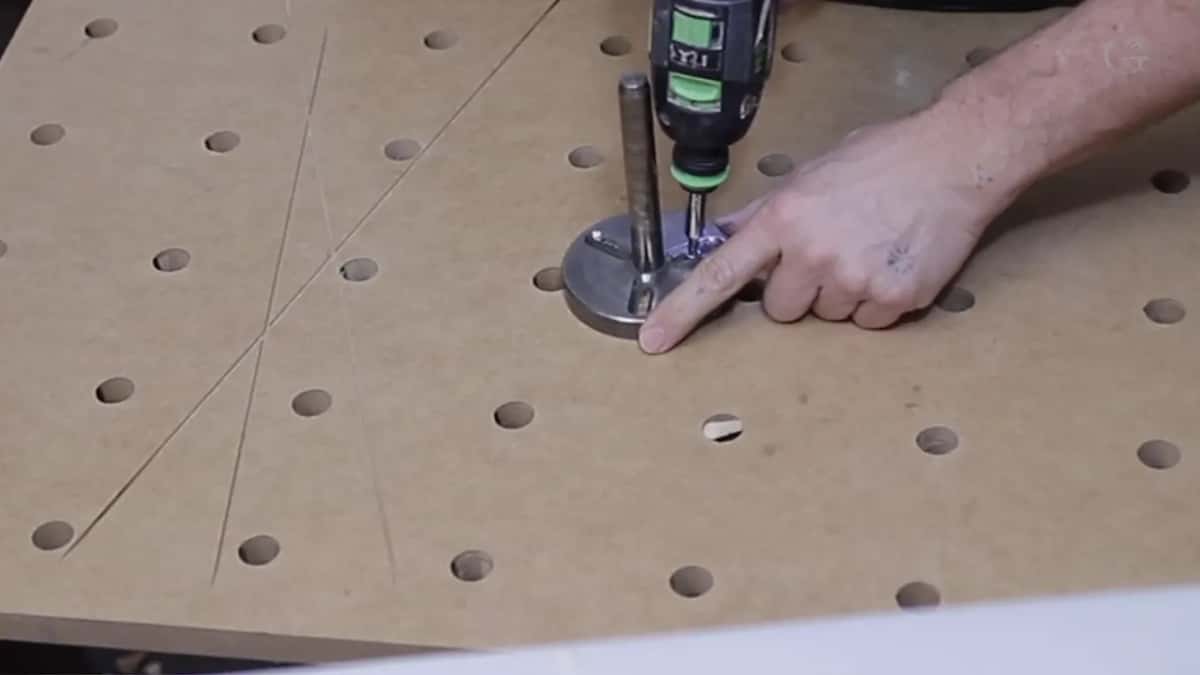
On the Lily Box it was the same kind of thing, a piece of MDF with the plate from my Veritas vise on the back. It's not really a workbench, I told you. I called it a really good, flexible, movable workbench. Not as stable and not as solid, but I could always rotate. On Lily Box 4 I said the wobbling didn't distract me, and that with that system I had done some really unique and nice work. It was my personal preference, I said, and up to you.
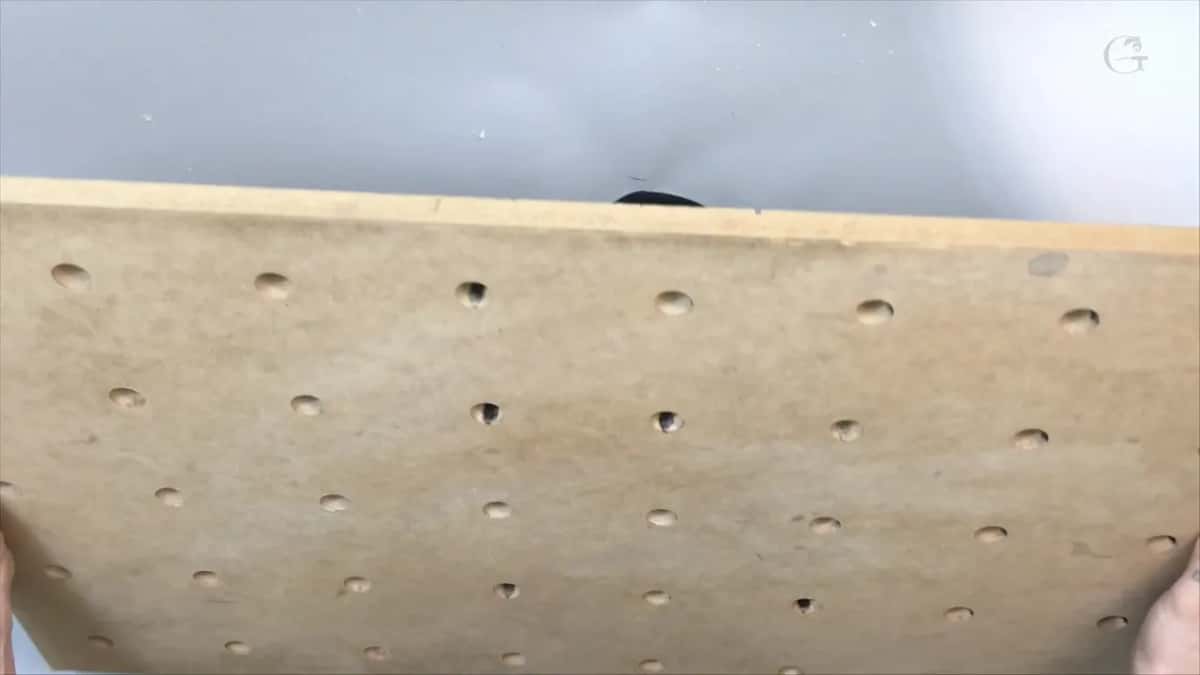
A real bench top had its own worry. On Carving Hashemi Flowers 27 I hadn't drilled its holes all the way through, because the top was only two inches (5 cm) thick and had a lot of holes, and I didn't want to make it weaker. Maybe I was just being overprotective, I said.
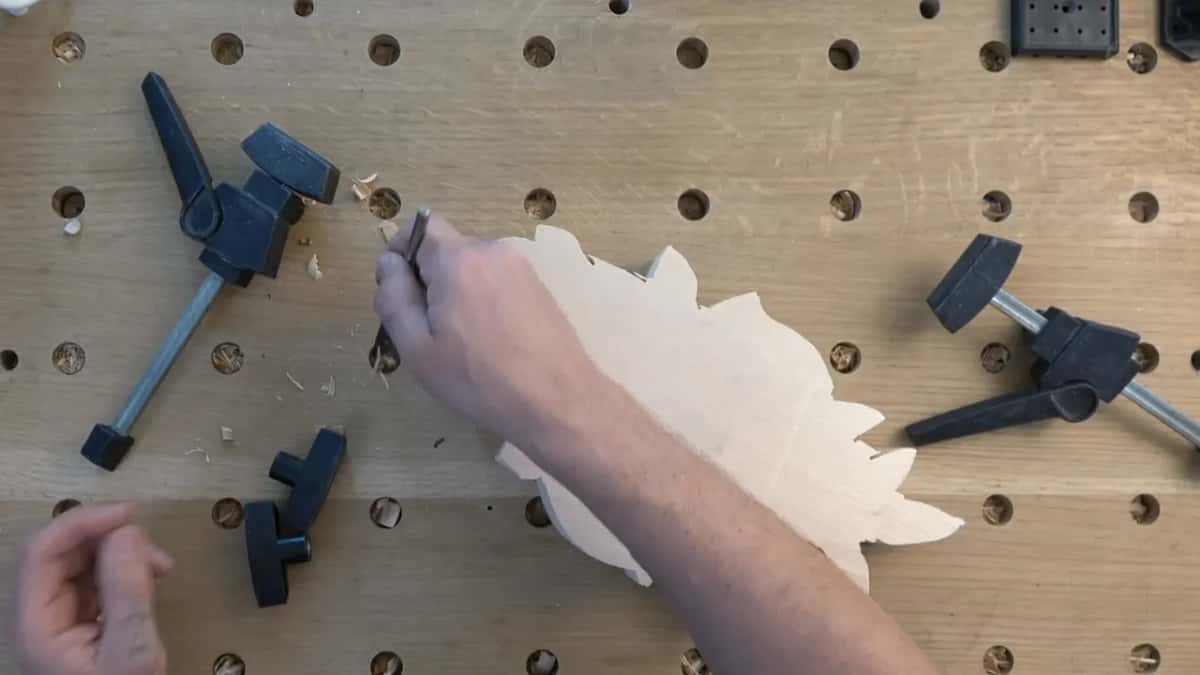
You heard my bench squeak in lesson 4 of the Venice Room. In that case it was just a tool chest on wheels, because I really had to be mobile. Lesson 84 brought up the Veritas carver's bench as another way to hold a piece. It was out of stock everywhere, it was one more thing for a room that used to be a shop and was now just a studio, and I was limited with my space. I needed to be mindful of what went into my shop. That's why I didn't have it.
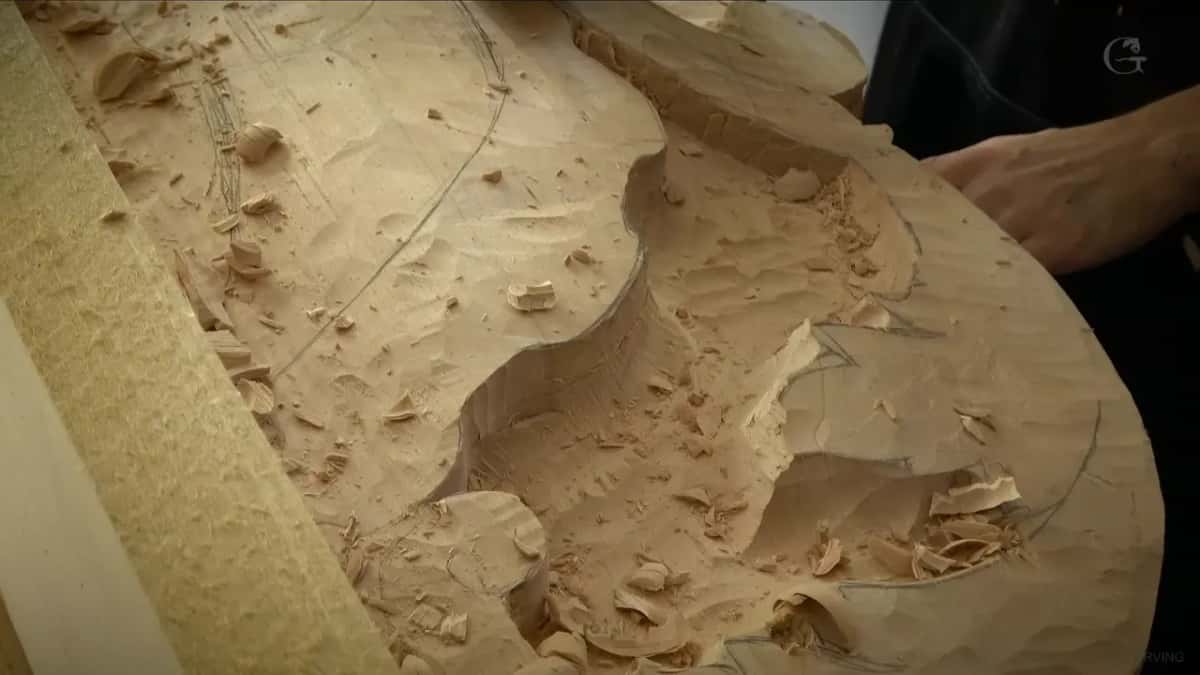
And in lesson 129 I stopped to say it looked like my workbench was moving, and said I needed to make it tighter.
Setup I used | What it really was, in plain words | Weak spot | What I said about it then |
|---|---|---|---|
Portable bench, vise | My vise connected to a small bench | Some shaking. | Fine for me, not a problem |
MDF on vise | An MDF board with the plate underneath | Less solid. | Flexible, movable, and I could rotate |
Tool chest, wheels | A rolling tool chest served as bench | Some squeaking. | I really had to be mobile |
Dining table, plywood | Plywood clamped on top, the piece fastened | Needs clamps. | Big projects, even a whole room |
Veritas top, weighted | Turning top over a base of weights | Shiny finish. | Worth every penny, for my work |
How heavy is my bench now?
Lately I really love my setup, I told you on the stream, meaning the one I have right now.
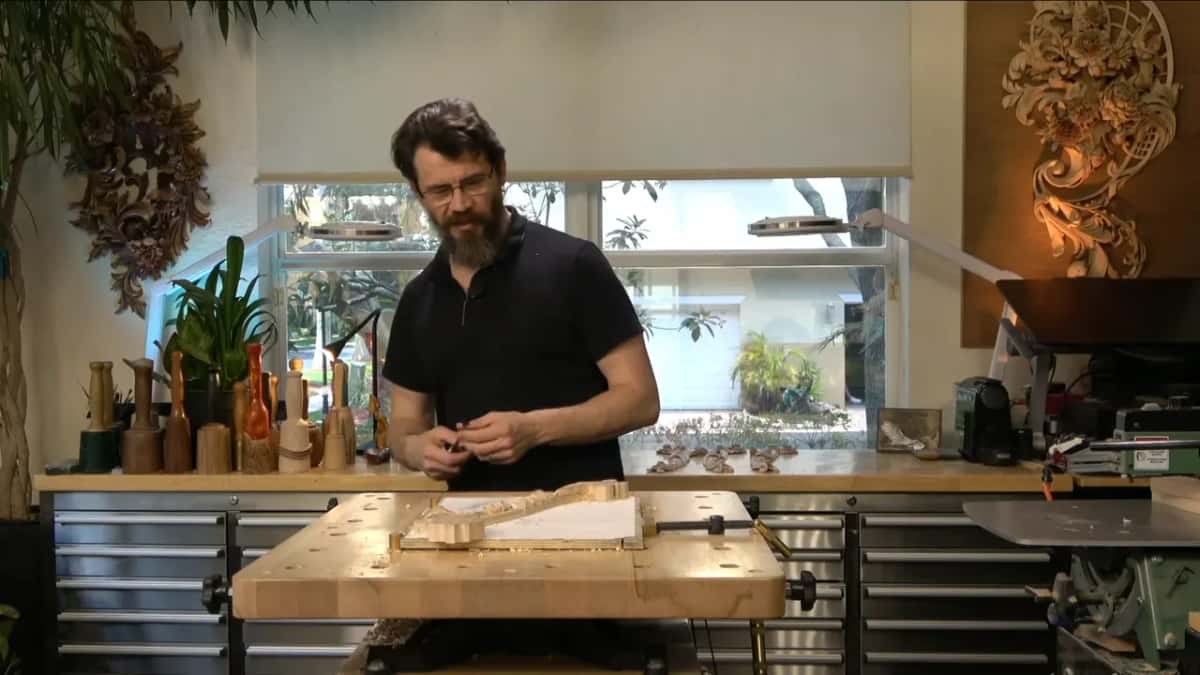
The top isn't big. It's about 24 by 24 inches (61 by 61 cm), two feet by two feet, and the top and its mechanism are made by Veritas. The base you have to build yourself, and I did. Rather than move my cameras on the stream, I showed you on my iPad how it goes together.
Mine isn't as wide as the stand they make. It's about 17 inches (43 cm), pretty much right underneath the top. Four posts of solid wood go all the way down, and it is super, super heavy. I can move my microphone. I can't move my bench.
What goes inside the base to give it weight?
Plywood panels go all around the base. Inside, between those panels, I put athletic weights from barbells, the big discs, the really heavy 45 pound (20 kg) plates. They fit exactly between the panels. I used discs from my own barbell and added a couple of really heavy 75 pound (34 kg) dumbbells to make more weight.
Sand would work. On another bench I did, with sandbags. But when you weigh them together, cast iron is heavier, so it takes a lot less space. And a lot less mess, too, if I ever need to rebuild this thing.
Build your own base, I said that day, and get your athletic weights and your dumbbells.
Can a bench this heavy still roll?
Mine does, on bench wheels you can buy in pretty much any woodworking store. The good ones I got are from Rockler. Remove them and they are out of your way. When it's time to move it, you put them back and roll it.
I had wheels before, too. In the Venice Room I said you can put wheels on a normal bench, and I had them, but they usually still weren't convenient for me. On this one they come off.
How does a turning top keep you in one spot?
Number one for me is the handle on the side. It turns the top really easily, any direction I want, so I can attack from any side with no problema, as I said that day. Number two is a second handle. That one flips the top, and it still rotates, so side work needs no kneeling down. Pretty much any angle is open to you, and it holds really stable.
On Lily Box 4 I said much the same about the MDF board. I could stay in one spot and not walk around my piece, because I was just rotating my table.
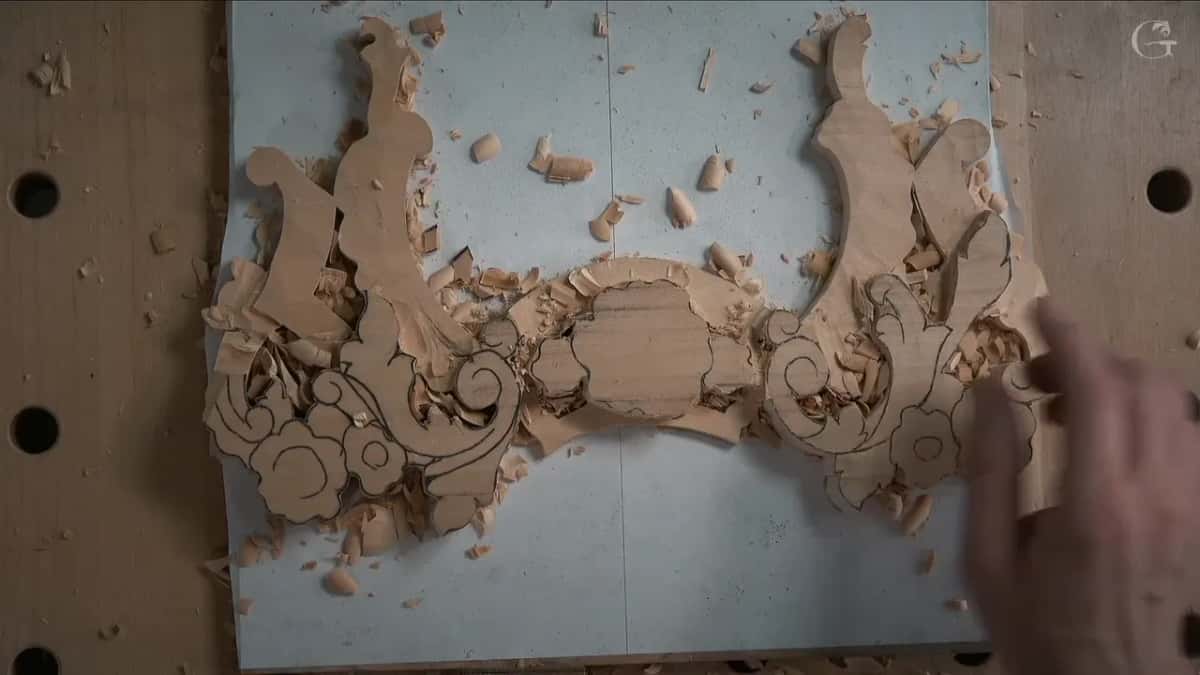
My other courses show it too. "Let me rotate my table," I said on Carving Floral and Molding for the Panel 2, and moved over to work from that side. On Acanthus over Moldings 5 I rotated the table over toward myself to attack an acanthus movement from the right position. And on Carving Furniture Panel 33 I said the beautiful thing about this bench is that I can rotate in each direction and just attack from the other side.
The Venice Room has it too. In lesson 135 I said let me rotate my table again, I'm going to attack it from this side. Lesson 136 had me rotating it to create a couple of concaves and convexes.
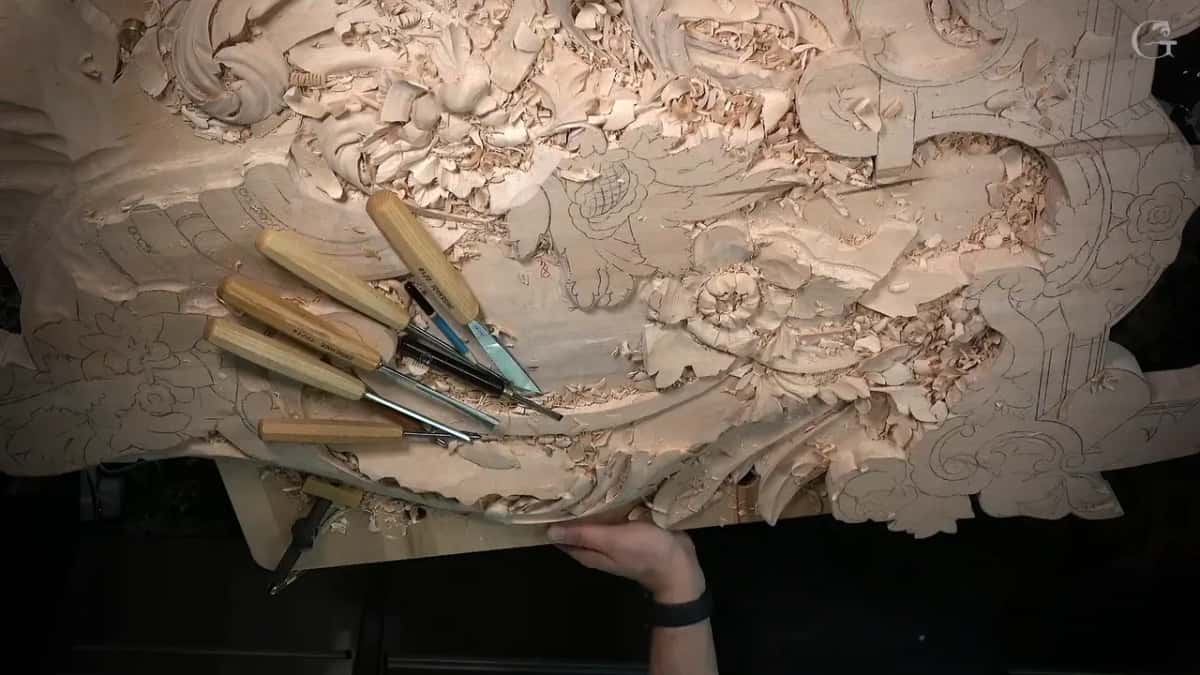
I don't always turn it. On lesson 10 of that floral course I didn't want to, because turning meant redoing my cameras. My tool was sharp, and with a sharp tool, I said, sometimes you can break the rule.
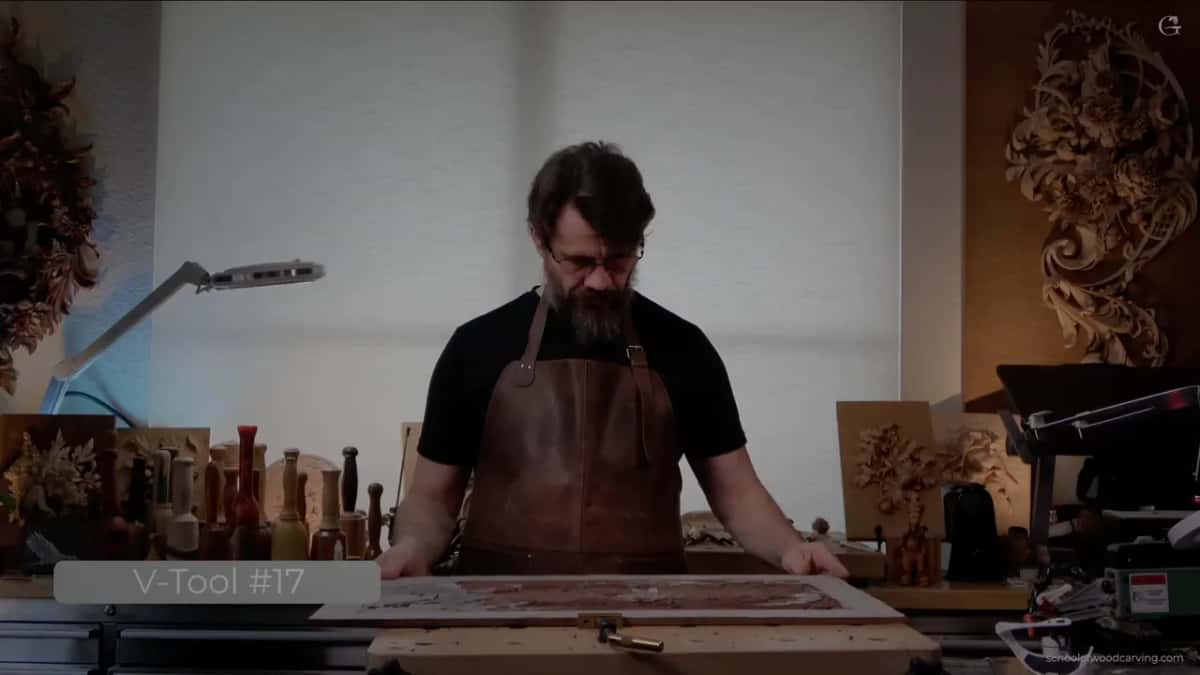
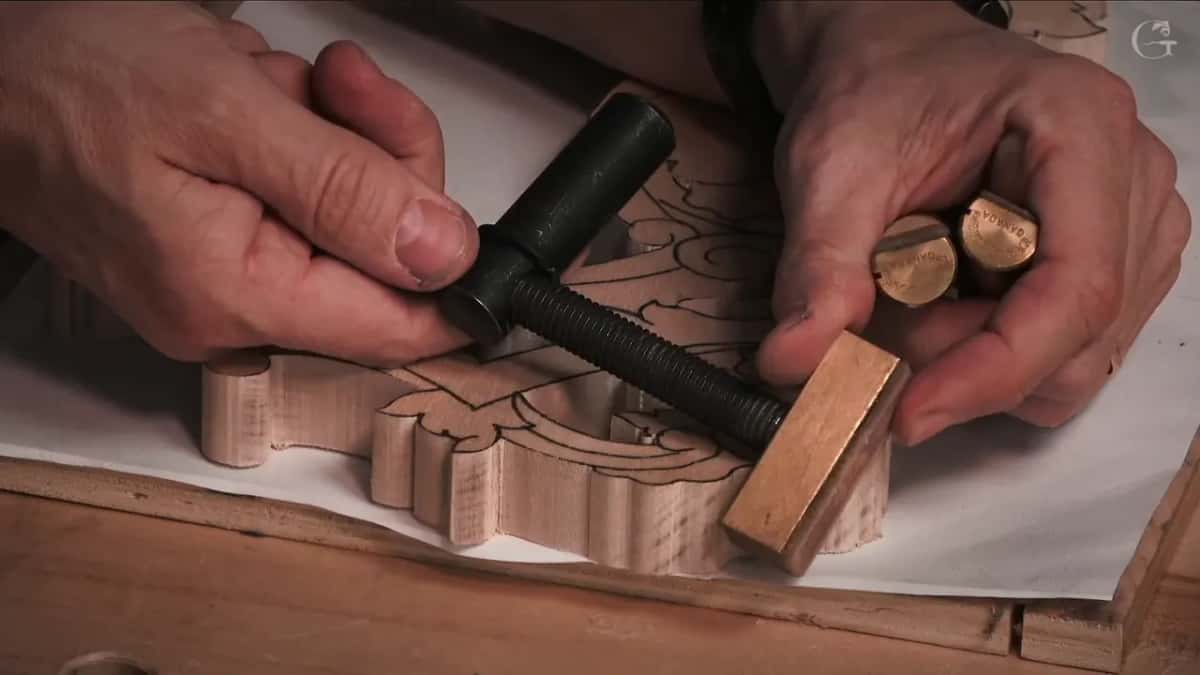
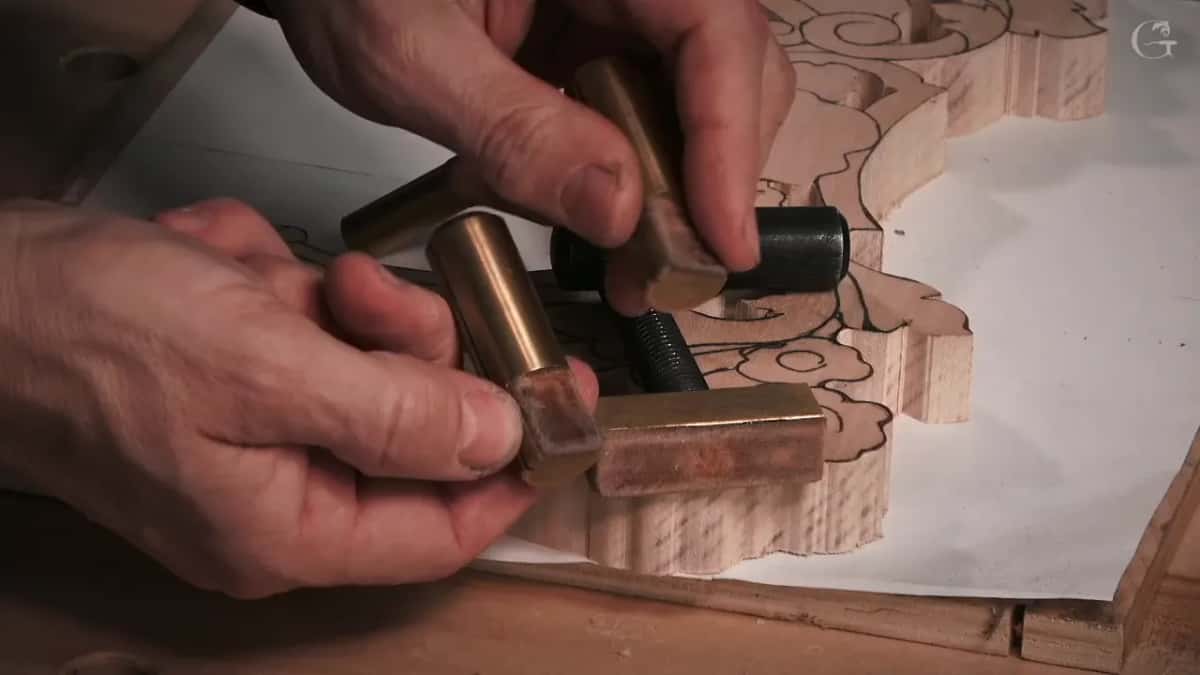
The work itself I hold with solid brass pegs from Veritas, a company from Canada, as I said in Carving Floral and Molding 1. Then leather went onto the brass. Any leather will work, and mine was single shoulder.
Why build the base instead of buying the maker's stand?
They don't sell the whole bench. You buy the top, and you make the base. They do make a cast iron stand, and you can probably find one, but I don't like the overall shape. It's just too dangerous, because you can't walk around it.
When I made that stream I wasn't even sure they still sold the top. You can probably find a used one if you check once in a while.
You could even glue up a top yourself, I said, and buy it just for the mechanism. The wood on top and the base I can always replace. The cast iron mechanism is going to last me forever.
Height is the other reason to build it yourself, since I go by my elbow and we are all different, seven feet tall or only five, and the May 2020 stream covers the rest of that.
What would I change about this bench?
For me it's the best bench for a carver, as of now, and I said the same for anyone carving professionally.
Only one thing on it bothers me. They put a shiny finish on the top. On a workbench, that shows you every damage mark, and you are going to damage it. Everything else on it I love.
Then there's the base. Some of you will think plywood panels are an abomination. Showing off isn't what I want. I would like a really beautiful bench with inlays, and I do like how mine looks, but what I do on the bench matters more to me than how it looks.
And the top is expensive, really expensive. For you it may be too much. For me it's worth every penny, because I carve for a living and I teach for a living. I'm not sponsored by Veritas or Lee Valley. And I make not one cent from it.
I use a lot of their things, the hand planes and a router plane among them. I like Lie-Nielsen planes too. Lie-Nielsen is more classical, and Veritas is more modern, I'd say.
Do you need a bench like this to start?
Not really. Well, you do, but not really. You can get by.
Carving is different from general woodworking here, and a lot of it you can do just on a dining table.
I have done big projects there, even a whole room. Put a piece of plywood on the table, clamp it, fasten your work to it, and that's still going to be enough. I have a really nice wife. She saw a lot of that.
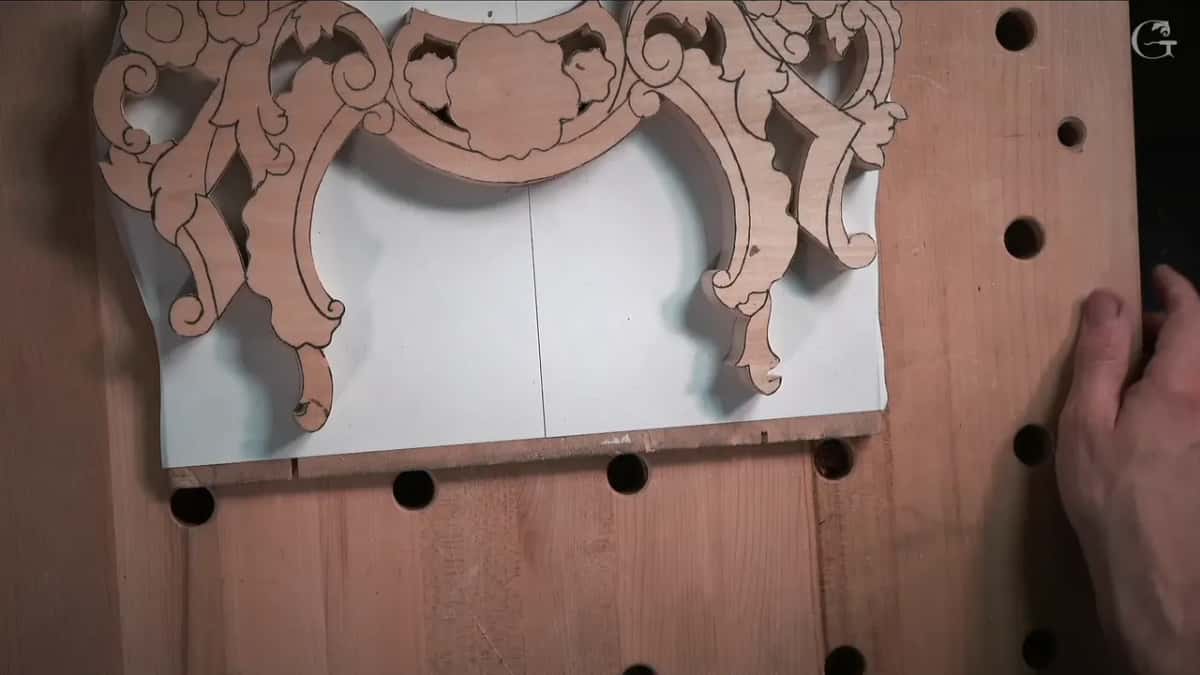
And when you want a surface that turns, you don't have to buy that type of vise. Different vises and different carver's devices will do, I said in that furniture panel lesson. Get the idea. Then pick the surface you want to work on, and screw the plate to it.
An apartment works too, or a condo. Carving doesn't make much noise, unless you bang with a mallet all day long. I said the same on the Lily Box, that you could use just a dining table. Start there. If the day comes when you want more, weight down low and a turning top are what I chose.
This lesson holds the whole bench stream, with two more from that time. Tuition opens it, along with every other lesson in the school, and the Livestream events course has the rest of my streams. That day I signed off telling you to go hug someone and say I love you.
How it's done
- Buy the top for its mechanism. The part worth paying for is the mechanism, cast iron, that turns and flips the top. The wood part you could glue up yourself.
- Build a narrow base on four posts. Mine is about 17 inches (43 cm) wide, close to right under the top, on four solid wood posts.
- Close it in with plywood. Plain plywood panels go all around, and between them is where the weight goes in. Some carvers will call that ugly.
- Load it with iron weights. Big 45 pound (20 kg) barbell plates fit exactly between my panels, and a couple of 75 pound (34 kg) dumbbells went in as well. Sand works too, but it needs more room for the same weight.
- Add wheels that come off. Bench wheels, mine from Rockler, let it roll. Take them off and they are not in the way while you carve.
Frequently asked questions
Is sand or cast iron better for weighing down a bench?
Cast iron won, for me. Weighed together, cast iron is heavier for its size, so the same weight takes a lot less space, and if you ever rebuild, a lot less mess. Sand still works, and I filled sandbags for another bench before this one.
How do you move a carving bench that weighs a few hundred pounds?
On wheels you can take off. Mine are bench wheels from Rockler, the kind most woodworking stores carry. Off, they don't get in the way, and when it needs to go somewhere else, they go back on and it rolls.
What does a carver's top do that a woodworker's bench cannot?
Turning and flipping. With a woodworker's bench you walk around, or unclamp the piece and turn it, and for side work you kneel. On my top one handle rotates it, and a second handle flips it while it still rotates.
What to carve next