
Alexander Grabovetskiy, woodcarver, School of Woodcarving · Published 2021
How can you tell a well made carving gouge?
Quick answer: A well made carving gouge is one that passes the checks I made by hand on a live stream in August 2021. Its ferrule will not pull off, the steel sits true in the handle, it carries plenty of metal and length, and the handle fits the finger. Plenty of tools hold an edge, I said, cheap ones too.
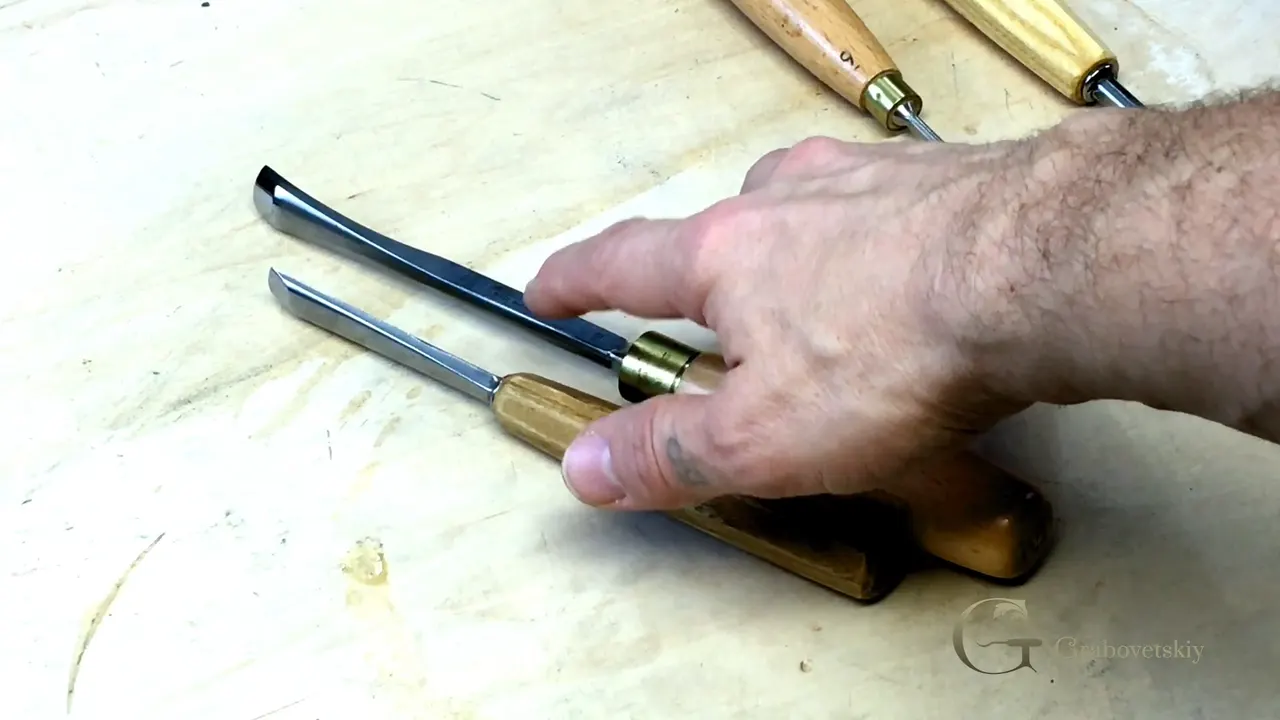
A gouge that is well made shows it in the ring at the front of its handle and in how the steel sits inside that handle. Metal, length and grip counted too, the day I checked my tools one against another on a live stream in August 2021.
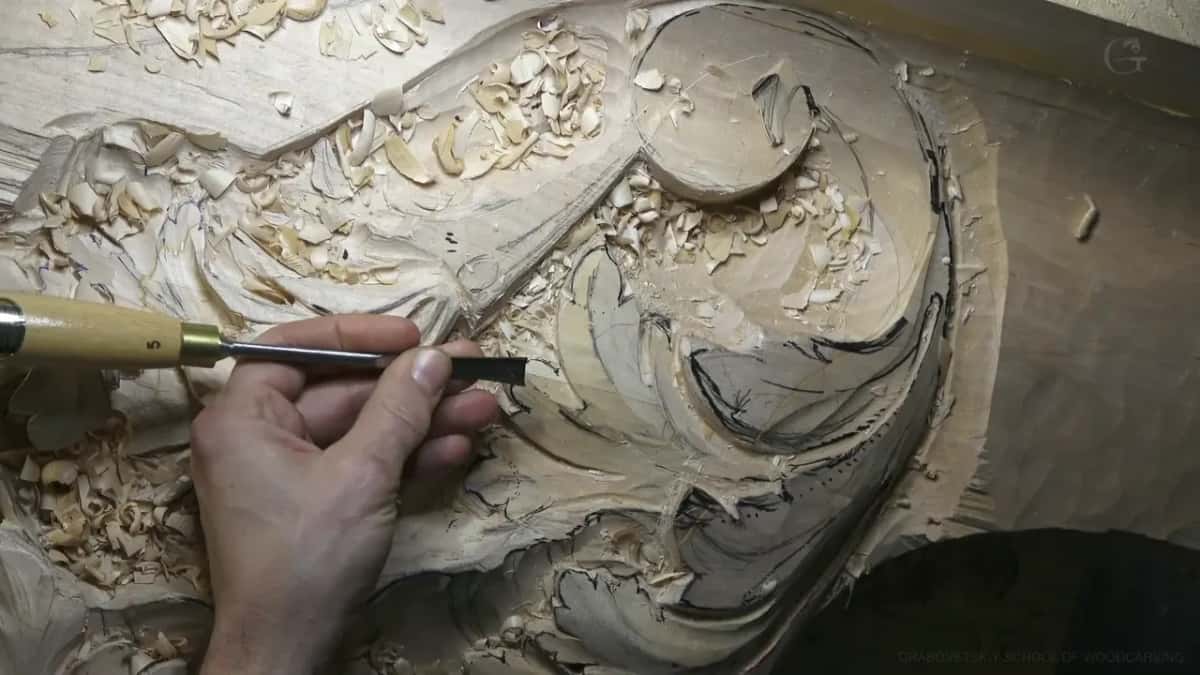
I carve pretty much every day, and for me good wood and quality wood carving tools are equally important. That day I held tools up to the camera and carved a little between the questions people typed in, and while they connected I said to listen to that beautiful, beautiful sound of sharp tools. Holding an edge, I said early on, is only one part of what I mean by quality. Every picture on this page comes from my other wood carving lessons, where the same kind of tool is in my hands.
What I checked, one tool against another
- Ferrule or no ferrule. Without one, the handle can work loose.
- Whether that ring moves. On one English tool I showed a gap, and the ring moved.
- A thick brass ferrule made on a lathe, held from inside by the steel, would not come out at all.
- How the steel sits in the handle. On some newer Swiss tools you can sometimes see it drift.
- How much metal you get. A slim Swiss number 5 beside English steel showed it at once.
- Length and grip. A handmade number 3 ran about an inch and a half (38 mm) longer, on a walnut handle with a hollow for the finger.
What does quality mean in a carving tool?
An edge that lasts is part of it, but a lot of tools hold the edge and work really well, and you can carve any project with them. What counts as quality depends on what you compare it to. I had just been teaching in Maine, in the Camden area. I made that point with food. A burger you make at home is better than the one you grab on the road, because you know exactly what goes into it. Sometimes you want a really good restaurant, I said, and there you see the big difference, though of course the prices are a huge difference too.
Tools are exactly the same, I said. And since I carve every day, how a tool looks matters to me too, next to how it holds the edge. Working with the handmade ones I showed that day was just such a joy.
Why does the ferrule matter so much?
I know tools. I've got many brands, maybe not every brand on planet Earth, but I know almost all of the makers of carving tools.
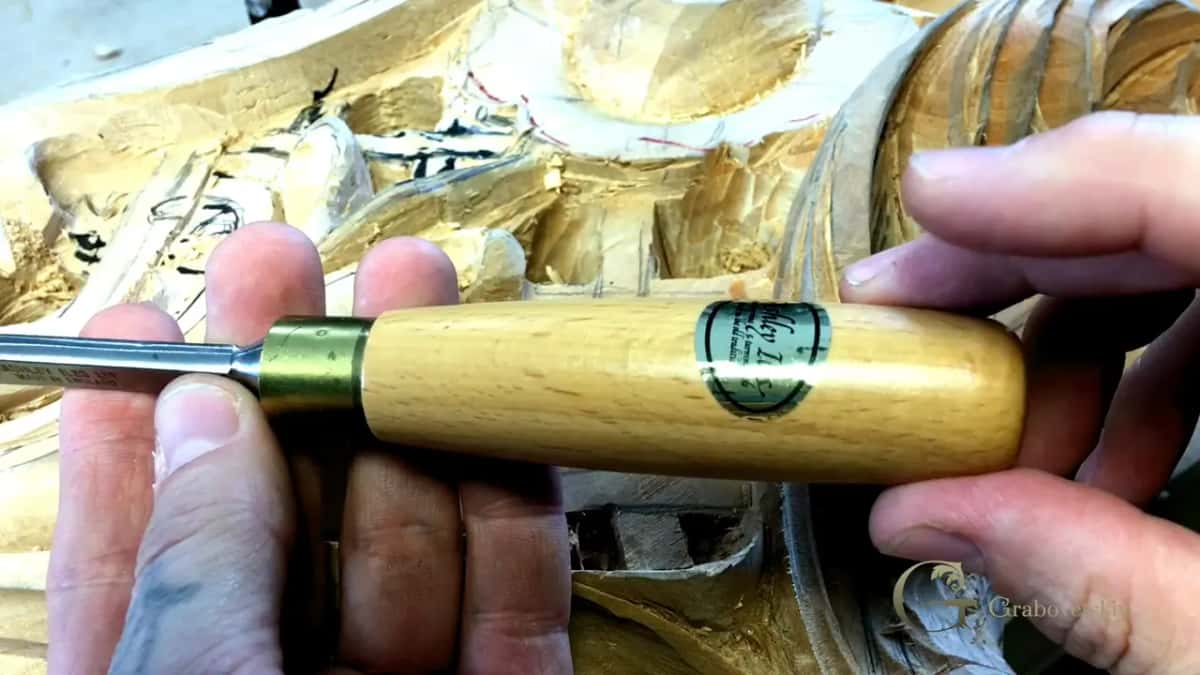
Without a ferrule, I said, a handle can become loose really quickly. I set my everyday Pfeil, the Swiss one, beside an Ashley Iles, an English tool, and asked you to look at each handle where it meets the blade. One has the ring and one doesn't. The one with the ring was holding much better, with good machining around it.
A ferrule is that metal ring. It sits where the steel enters.
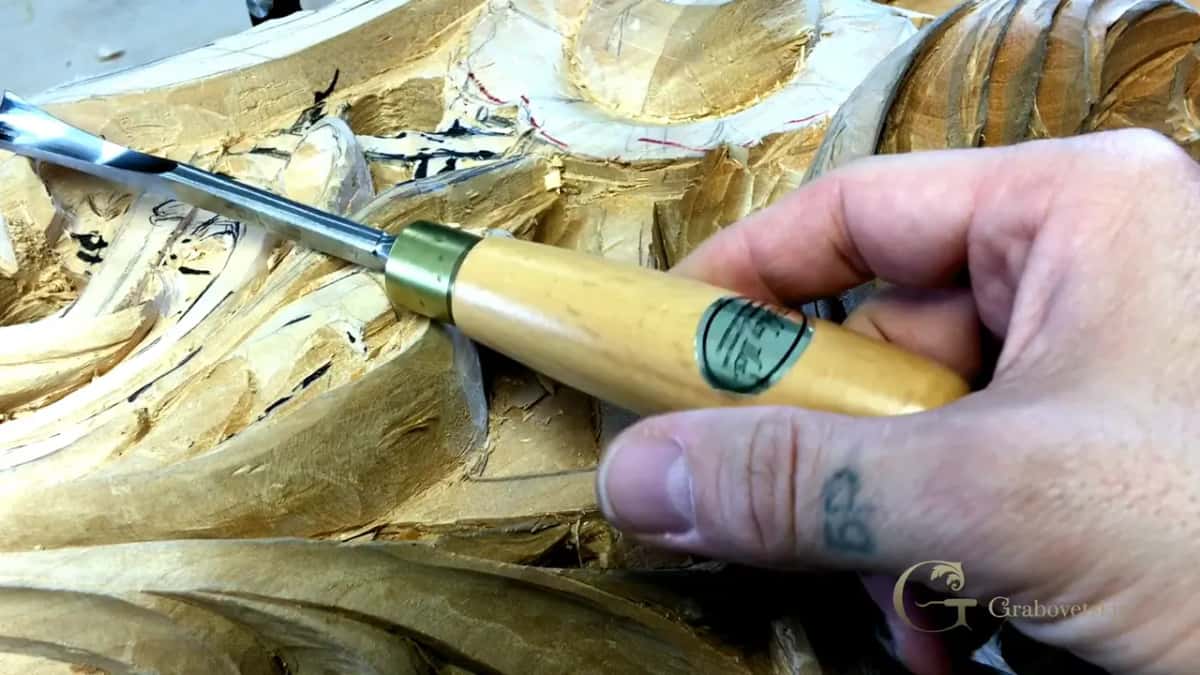
Then I went and got a French tool, an Auriou. It looks almost the same as the Swiss one. Look at it and it has the ring and a beefier construction. Its handle is just nicer in how it's built, in my opinion. I'm pretty sure I mispronounce a lot of names, I said, that French one included. So the two looked almost alike and were not built alike.
Which makers I bought first, and in what order, is a separate question with its own lesson, Tools Selection for Wood Carving.
What happens when you pull on the ring?
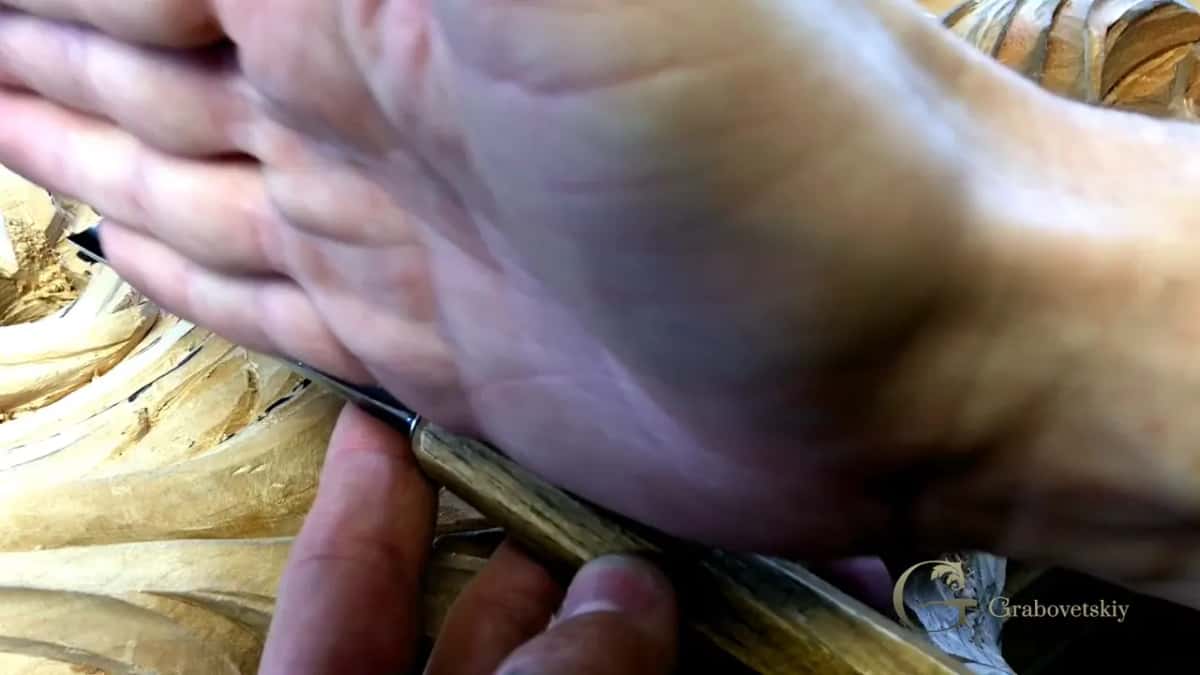
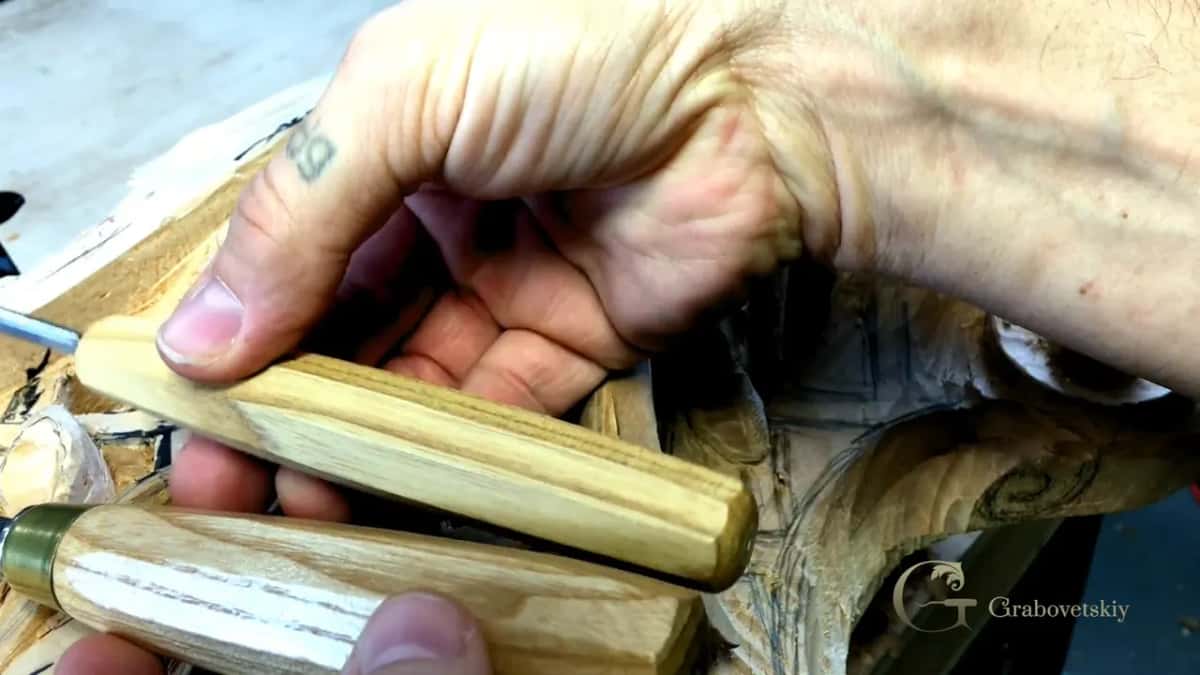
On the English tool it moved.
I showed the gap right there at the ring, and said I could probably pull that ferrule out. The ring itself is just 1 mm (0.04 in) thick. I didn't know what to compare it to at first, and then I said it's just pipe, plumbing pipe, brass and not copper, like the piping you can find at Home Depot.
It works, it's okay, and it still holds, although I'm not too happy that it is coming out.
| Tool | Check | Seen |
|---|---|---|
| Swiss everyday gouge | No ring on this handle, so it may work loose fast, I said | In use every day anyway |
| English Ashley Iles | A brass ring just 1 mm thick, with a gap, and it moved | Still holds, I was not happy |
| French Auriou gouge | Looks almost like the Swiss one, but carries a ring and a beefier build | Nicer handle, in my opinion |
| Slim Swiss 5 | Set beside English steel it is a tiny tool with far less metal in it | English tools use more metal |
| Handmade number 3, 6 mm | Thick brass from a metal lathe, held from inside, impossible to pull out | About 1 1/2 in longer |
Which ring would not move?
Thick, solid brass, turned on a metal lathe.
That ring was on the handmade gouge. I wasn't sure you'd be able to catch it on the stream, and I said this one is impossible to pull. See how thick it is? It is solid brass, not a piece of pipe, and it was made on a metal lathe.
Then take a look at how the metal part goes in. The steel holds that ferrule right inside, so it's impossible to take the ring out. The machining is absolutely gorgeous. That is what I call quality.
Those were my latest toys, I said, maybe the most beautiful tools I ever touched. It's like comparing driving a Ford Escort to, I don't know, not a Rolls-Royce, but a Tesla. Not price wise, of course. I meant the quality of how it's built.
The only other brand where I saw machining like that was the tools I showed you a year before, a really good brand too. You won't find these on the big tool websites, I said, and a small company makes them by hand.
How can you see the steel sitting in the handle?
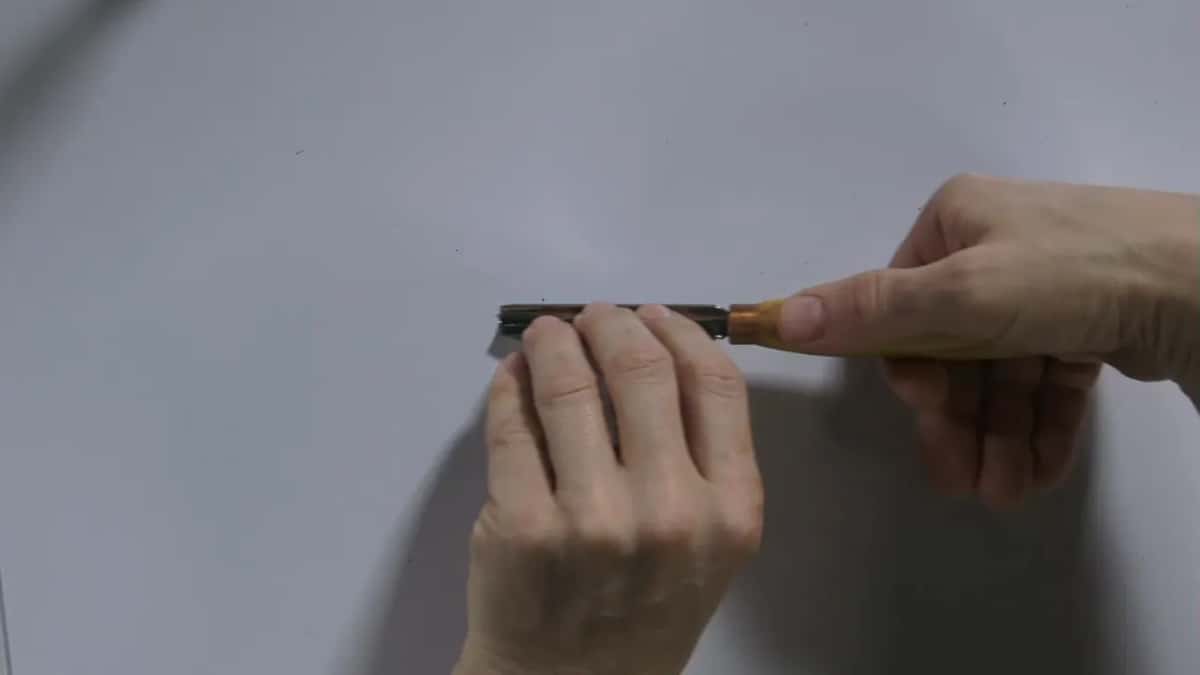
Look where the steel goes into the wood.
Looking at the Swiss tools as they come now, I said you can sometimes detect it. The steel just drifts away in how it's inserted inside the handle. Don't get me wrong, they are absolutely beautiful tools and they work well. You can buy them in almost every country, I said, Ukraine, Russia, the European countries, Australia, even Africa. But still, it works, and I use them all the time, and there's a bunch of them right behind me in the shop.
The part of the steel that runs back into the handle is called the tang. Its steel, on the handmade gouge, is seated so that it holds the brass ring from inside.
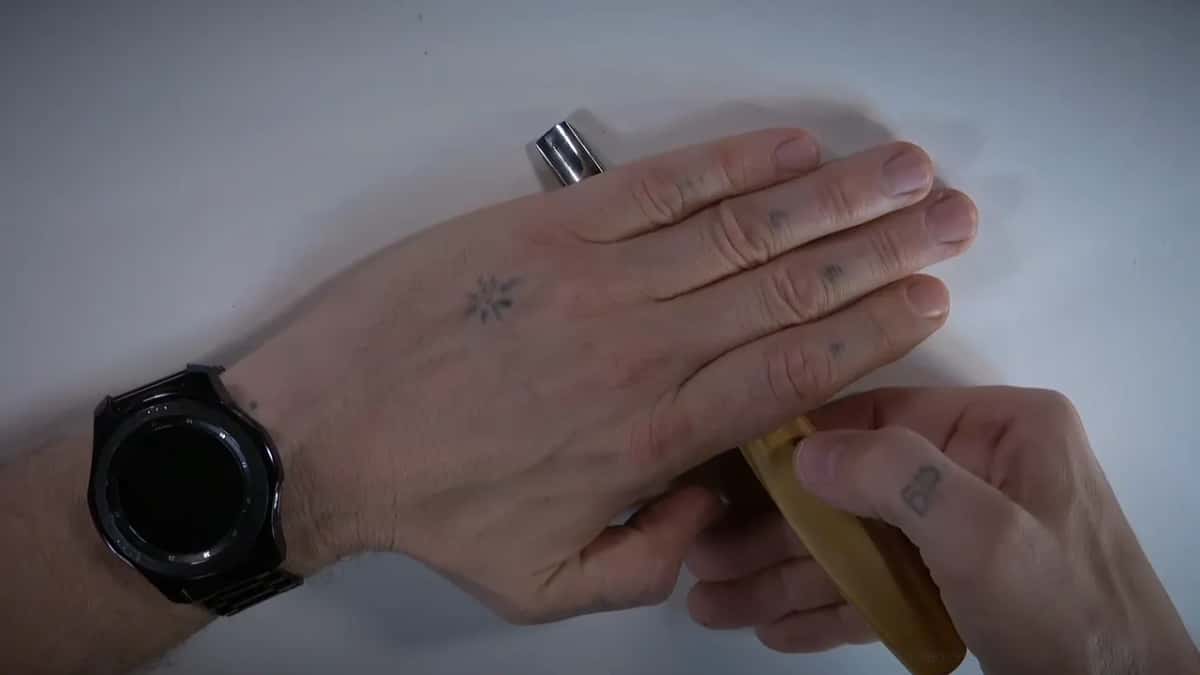
How did more metal show side by side?
A slim tool next to a beefy one, and you can see it right away.
I took a Swiss number 5. Number 3 or number 5, it doesn't matter, I said. Next to the English tools it's a tiny tool, and you can see how much more metal they're using in English made tools. I called the Ashley Iles beefier and more stable, and the French one beefier in its construction too.
How thick steel behaves deep in the wood is a different question, and workshop 4 of the Venice Room takes it on.
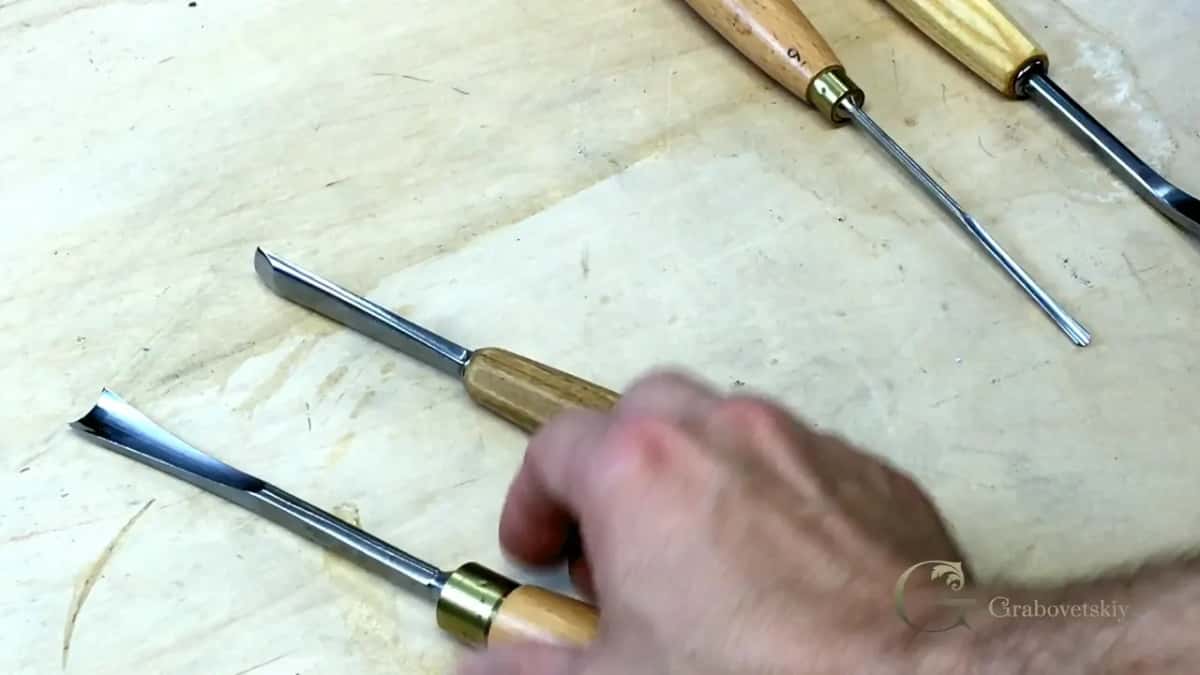
Does the length of a gouge tell you anything?
Length was the first thing I named.
My handmade one was a simple number 3, six millimeters (1/4 in) wide. I like everything about this tool, I said, absolutely everything, and the length is number one. And I'd compare it for you, I said, so you'd see exactly what I mean. Next to a full size Swiss tool it didn't even fit my screen, so I changed the view and then put the two handles line to line.
I asked if you could see how big the difference is. It came to about an inch and a half (38 mm) of extra length. Full size and European size are two different lengths, and workshop 122 of the Venice Room sorts them out.
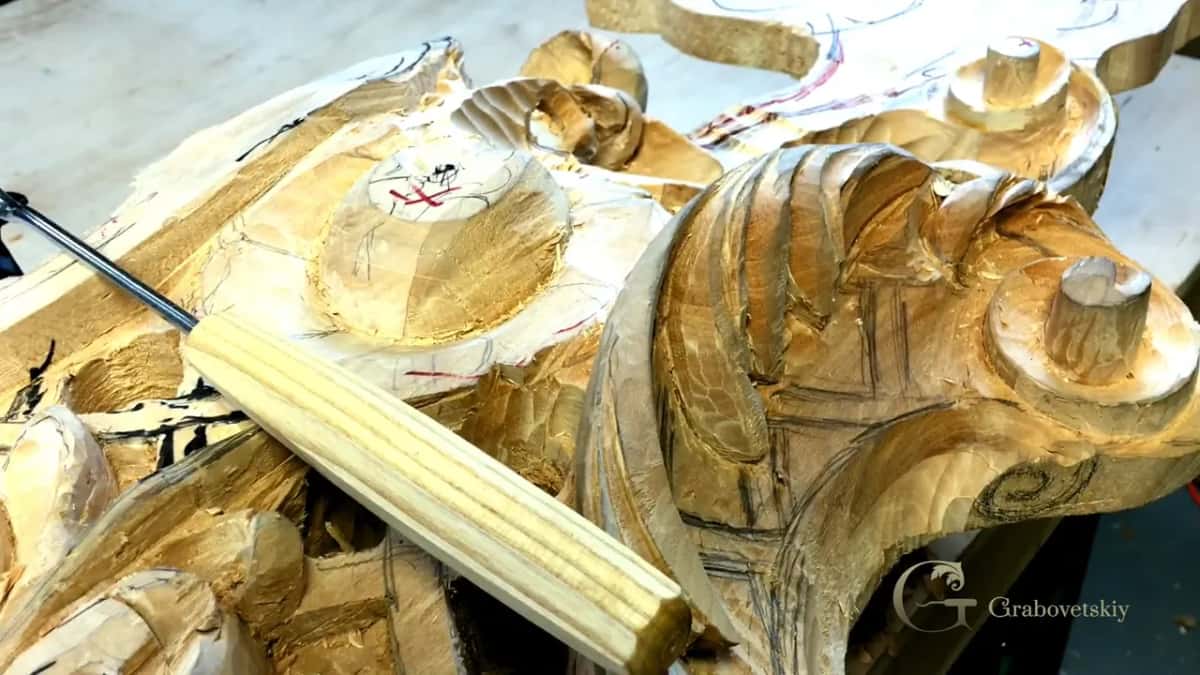
How do quality wood carving tools feel in the hand?
One handle that day I called absolutely one of the best handles.
It was a beautiful, beautiful walnut. The construction of the handle is old English, traditional, combined with the European handle. So it keeps the octagonal shape for people who love the octagonal, just because they're afraid a tool will roll off the workbench.
And it has what the original London Pattern tools had in the 18th and 19th century. A cavity, right where you put your hand. It's so comfortable for your finger.
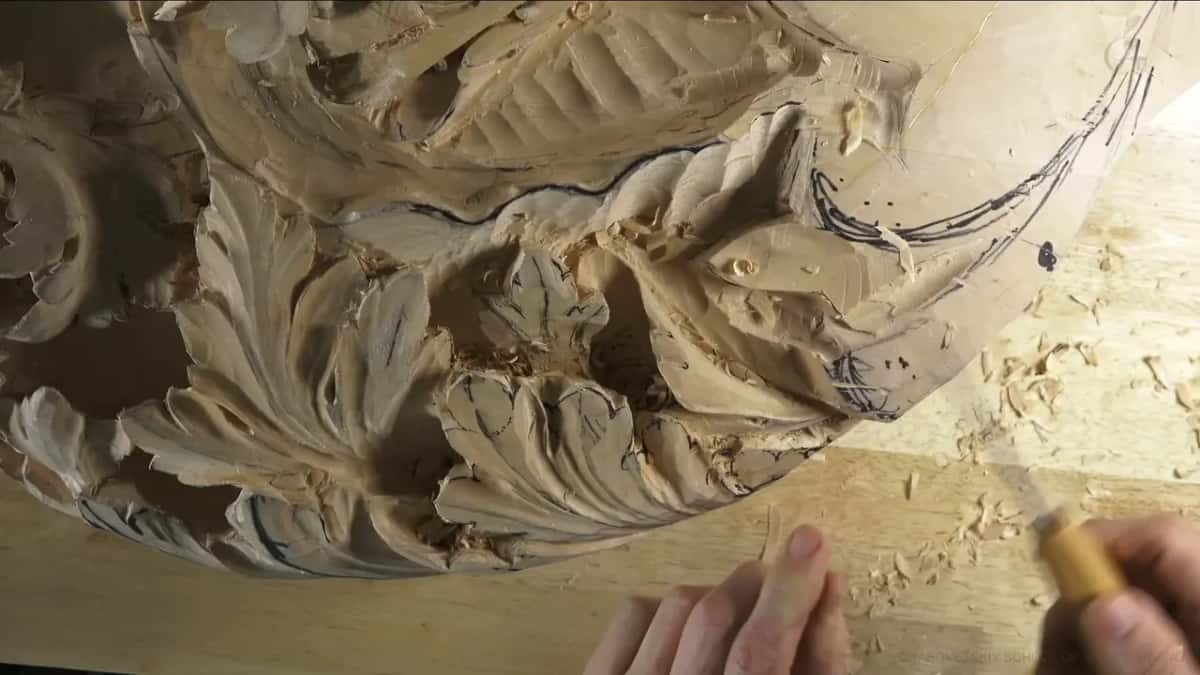
Does a new gouge come with the right bevel?
Most of the time it doesn't.
When I buy a tool, step number one, I go to my machines and change the bevel, because I don't want to hurt my shoulders and my elbows. Usually the bevel on a new tool is really high, and you have to regrind it and spend some time. That's okay. I do it, and the sharpening course shows how.
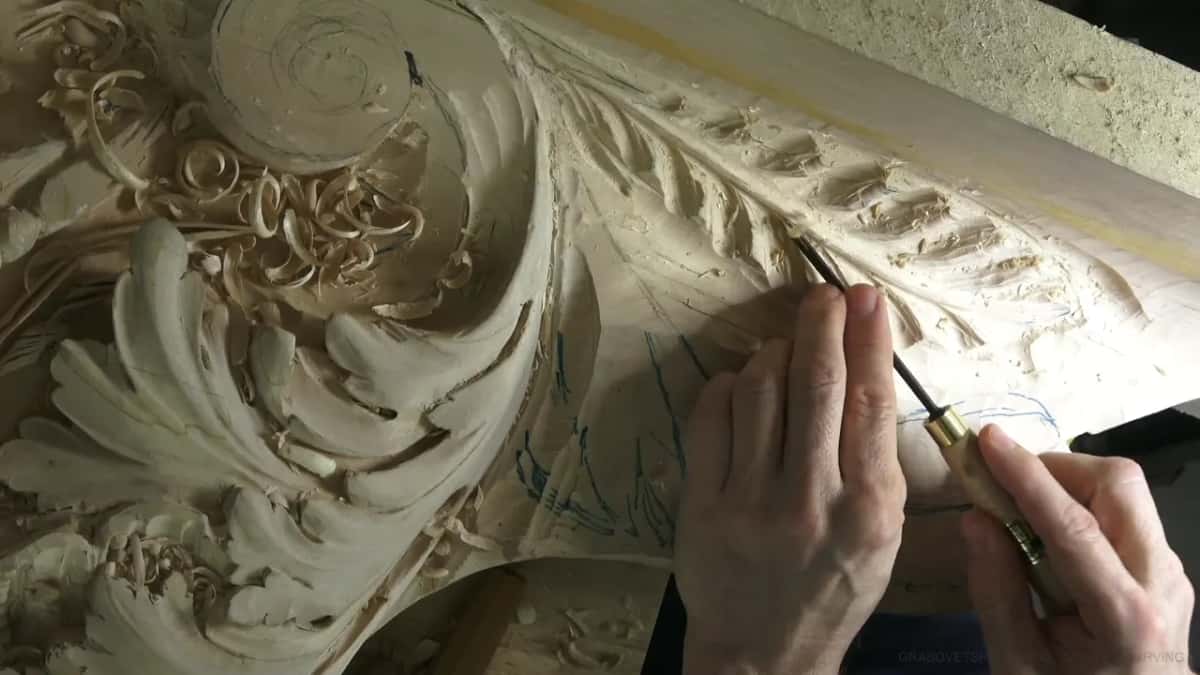
The handmade gouge was only the second brand I have ever seen arrive with the right bevel from the manufacturer, right on the money. About 3/8 of an inch, about 10 millimeters, the bevel I'm after. I was really excited about those ones. It just goes inside the wood like butter, I said, and then I let you watch how it carves.
A viewer asked whether bevels are standard, and I said there's no standard, since most makers grind a little higher for a tool that may meet basswood or oak, hands or a mallet, which my sharpening class in Maine goes through.
What about the cheap ones?
Cheap tools made in China hold the edge too.
I showed you a brand new one.
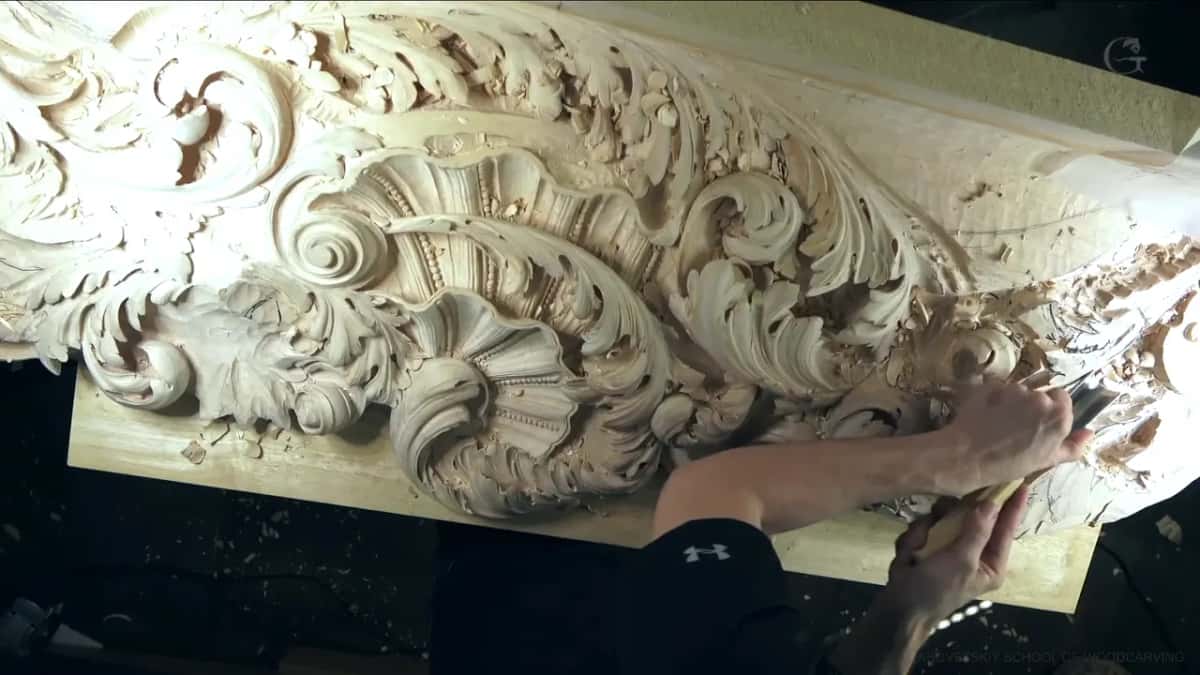
I said they're good for the beginner, and that I don't use those tools every day. You could call them quality, but next to the handmade ones they're absolutely not comparable, in the finish and in how they are made. The lessons in All about tools for Wood Carving put a couple of cheaper sets to work on real wood.
Why did I say no to one tool maker?
The invoice that came did not match the price we had agreed on.
Let me tell you a story. A viewer asked about my own line of tools. I was talking with different companies, and asking myself if it was worth it, or if it would just give me more stuff to do and keep me busy again. It doesn't take wisdom to be busy. If I invest my time and my money, I want some return.
One of the companies had already made some tools for me, a whole first batch. I'm a businessman, and I like everything straight and predictable. The price was set, and then the invoice came and it was not the same as what we agreed. So I had a doubt, and I said no. When I have a doubt about anything, it's a big indicator for me.
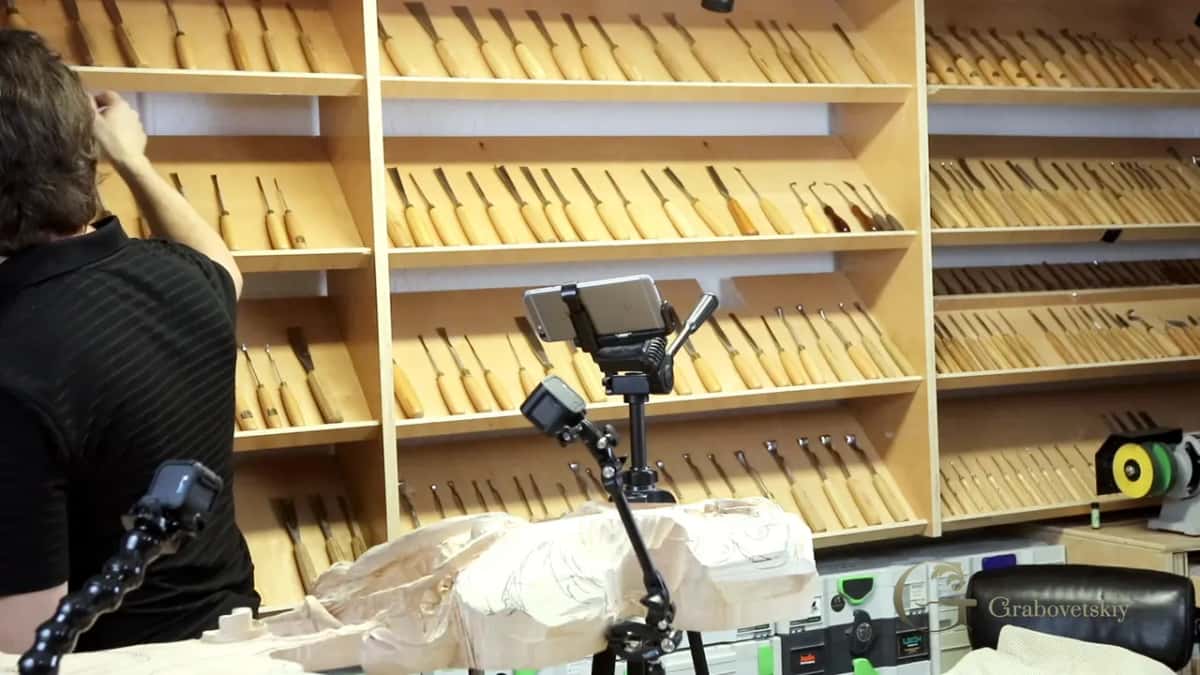
Later a person in the chat wrote back, and I said that's exactly what I do. If there are doubts, I'd rather just not do it. I'm not selling the handmade tools, and I'm not getting money for them, as I said on air. They're made in the country I was born in, Russia, and I said I'm not biased, I'm really proud of the quality those people do, though not everything I saw from Russia is good.
Someone asked if that maker does a number 11, which is my favorite tool. Behind me was a project where number 11s did most of the carving, and I said I'd have to ask them. How the Swiss and English number 11 differ has a page of its own.
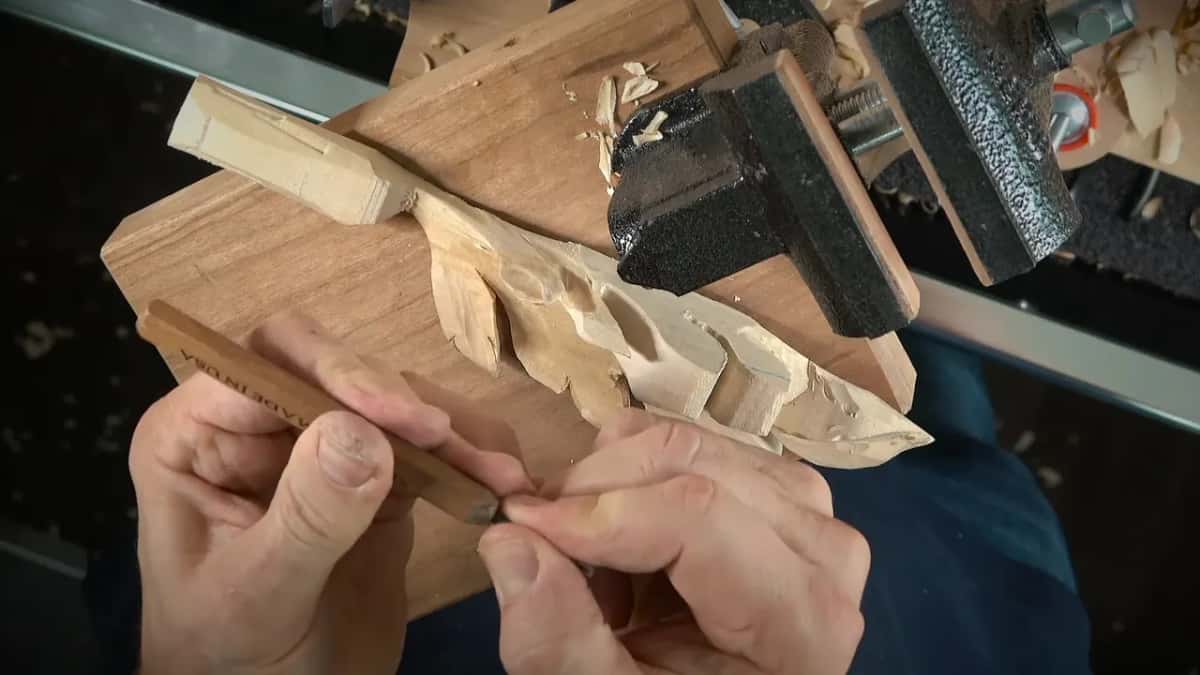
Near the end I said I had a lot of work waiting. On my table was a piece I call Angel, an ascending angel, that goes on top of a column in the room I'm working on, and I showed it to you on my iPad.
Then someone in the chat said I should set up a tool company based in America. I like the idea, I said, but it's not that easy, and I checked what tool makers in the United States charge. I'm not looking for another cheap tool maker. I'm looking for the high end, because if my name is going to be on it, I want to vouch for it.
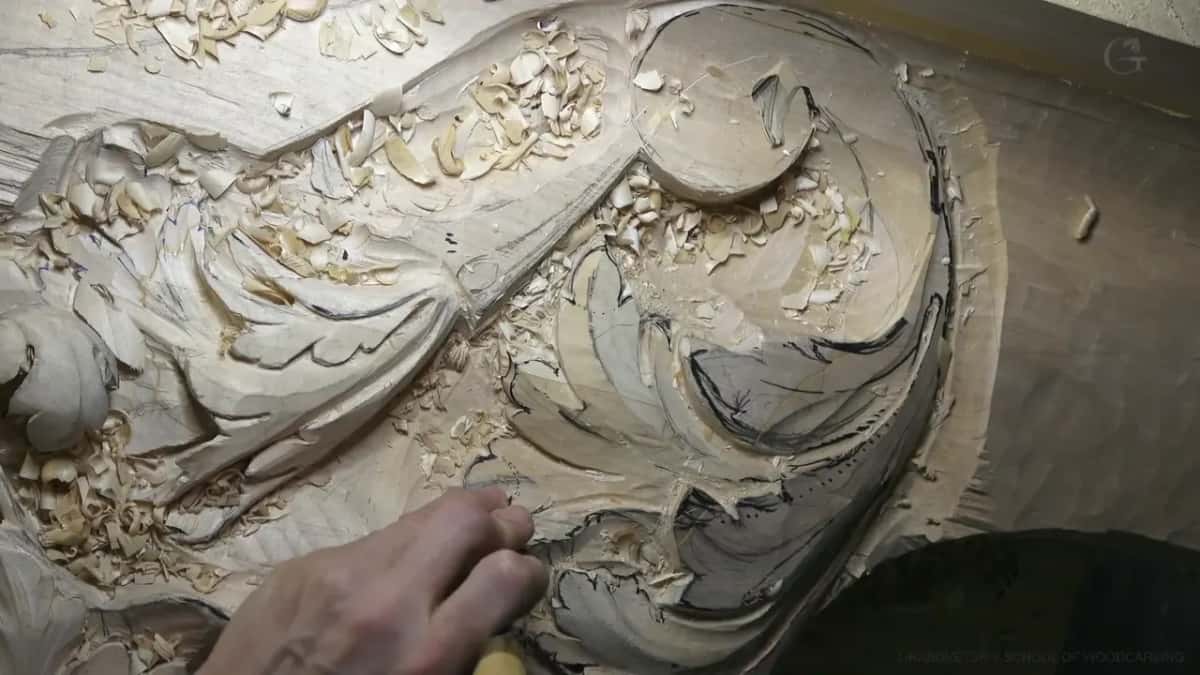
This stream sits in the livestream events course, beside others like April 2020. Every lesson there is open with Access, and the lessons map shows where the tool lessons sit.
Got two gouges on your bench? Lay them handle to handle, the way I did, and look at the ring.
How it's done
- Lay two tools handle to handle. Put them side by side, line to line, the way I set the handmade one beside a full size Swiss gouge. Any difference in length shows at once.
- Find the ring. Check each handle for a ferrule. On camera, one of mine had none at all.
- Try to move it. Hold the handle and pull on the ring. The English tool had a gap, and the ring moved.
- Watch the steel enter the handle. Look at the metal going in. On newer Swiss ones it can drift, and on the handmade one the steel itself holds the brass from inside.
- Compare the metal. Set a slim number 5 beside a heavier English tool, as I did, and see how much steel each one carries.
- Close your hand on the handle. Feel for the finger hollow the old London Pattern handles had, and the flats that stop a tool rolling.
- Read the bevel, then carve. Mine I want at about 10 mm, 3/8 in. Most new tools arrive higher, and I regrind those at my machines first. Then carve a little and see how it carves.
Frequently asked questions
What is the ferrule on a carving gouge?
A ferrule is the metal ring around the neck of the handle, at the spot the blade enters. On that stream my everyday Swiss tool had none, an English one had a thin brass ring I could move, and the handmade gouge carried a solid ring from a lathe.
Why does a carving tool handle come loose?
On camera I set a tool with no ring beside one with a ring and said the first can loosen really fast. Even a ring can work free, though, and the English gouge had a gap where I said I could probably pull it out.
What is a London pattern handle?
Original London Pattern tools, from the 18th and 19th century, had a cavity right where your finger rests. My handmade walnut handle kept that hollow and added the eight flat sides people like, because they worry a round tool will roll off the workbench.
What to carve next