
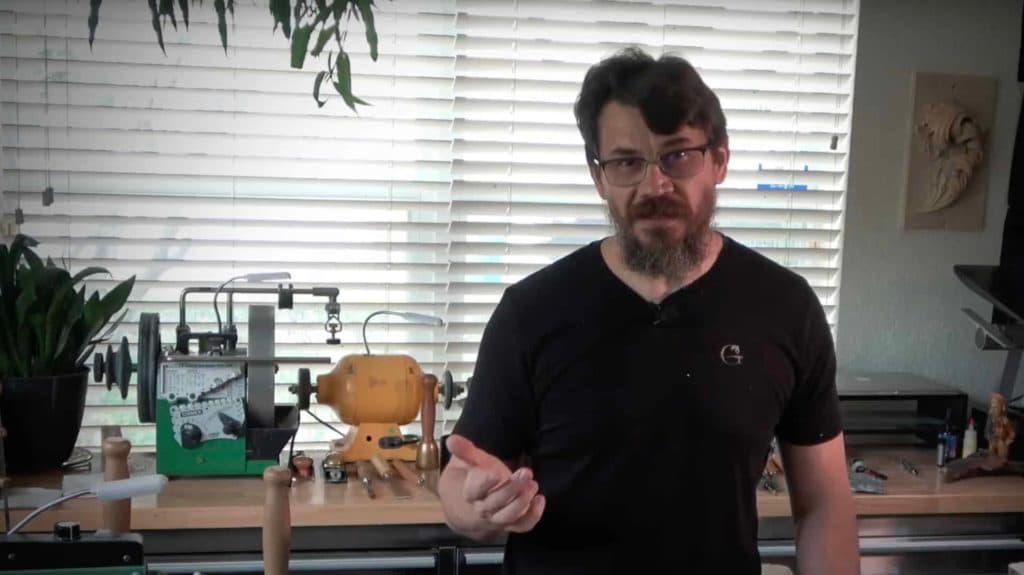
Alexander Grabovetskiy, woodcarver, School of Woodcarving · Published 2021
Which carving tool brand is best for which job?
Quick answer: Choosing a maker for each tool is a question of the job, not the name on the handle. On my April 2021 livestream I said one number can come in a different shape from another maker, and I take Pfeil for number 11 veiners, very thin steel for a flatter gouge that slices, and Ashley Iles for thick steel.
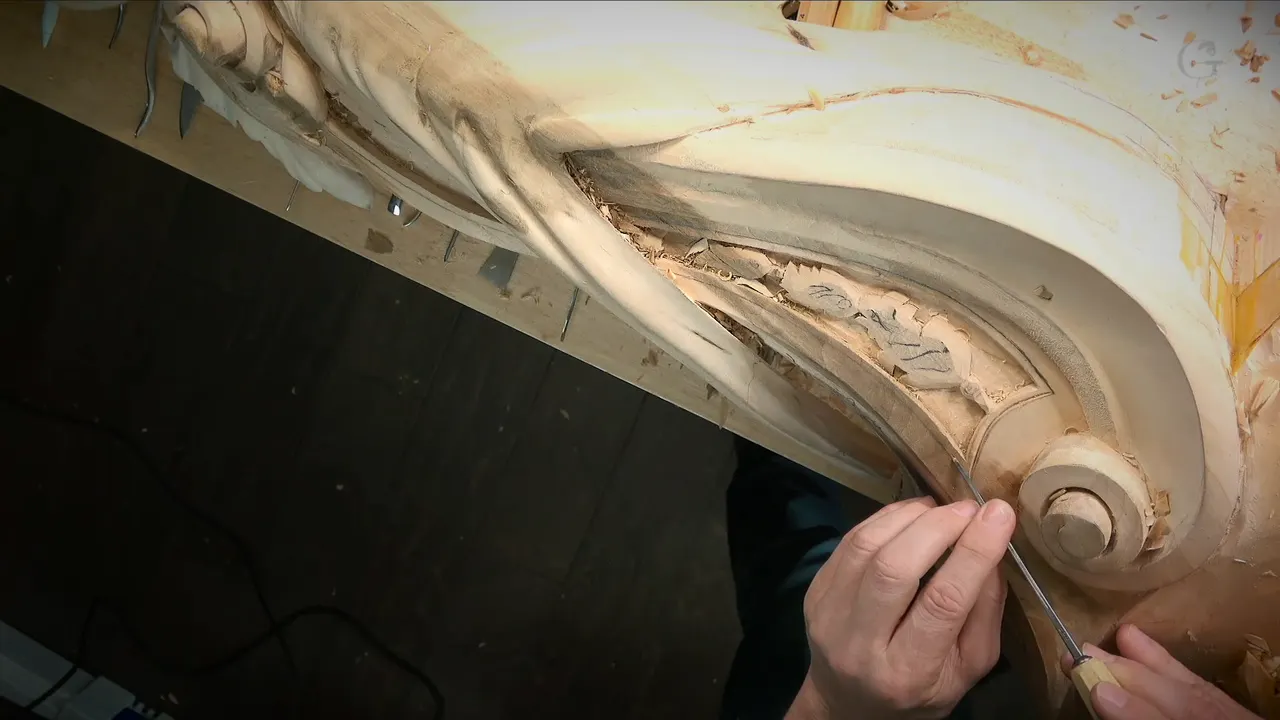
Picking a carving tool brand is picking the job first. That was my answer on a livestream on April 27, 2021, with part of my Venetian project on the bench and a 3 mm (1/8 in) number 11 veiner in my hand. A question had carried over from earlier that day, when my first try at streaming ran into technical trouble: which wood carving tool brands do I really like to use? My answer started short. It all depends.
Maybe you own a starter set and keep seeing the same few names on handles, and you can't tell why a carver would mix them. I'll give you that afternoon's answers, maker by maker, in my own words. One maker for the veiner, another for a flatter gouge that has to slice, an English tool I like for its thick steel, and long bents from a fourth. After them comes the sharpening, which barely changes whatever name is stamped on the handle, plus one skew I own and leave alone.
What I said about tool makers that afternoon
- The job decides the maker, because different brands make tools in different quality and different shapes.
- Two makers can put the same number on a tool, and one version can still do that job much better.
- Pfeil makes the 11s I like.
- The flatter gouge I slice with has really thin steel, from a maker I named only as Henry.
- Ashley Iles tools are thick, and I like them for that.
- Every gouge I own gets sharpened about the same way, whatever its shape or sweep.
Does the brand of a carving gouge matter?
Through the job, yes, and I put it plainly on camera: "It's not about the brand." What it's about is the type of job you do. Different brands produce different quality of tools, and different shapes as well.
Once the stream came back on, that was the very first question I picked up. A little later I said I'd carve a little bit and say a little more about the tools, and from there most of my answers came with a tool in my hand.
Then came the point about numbers. It could be the same number on two handles, I said, and the particular brand's version is going to work much better in that application. I didn't say which brand or which number for that one, so I won't pick one for myself now.
I also mentioned I'd already spent a whole livestream on that decision before this one. If the number 11 is the tool you're stuck on, the longer answer lives in another stream, the one behind why I reach for Pfeil more often than Ashley Iles.
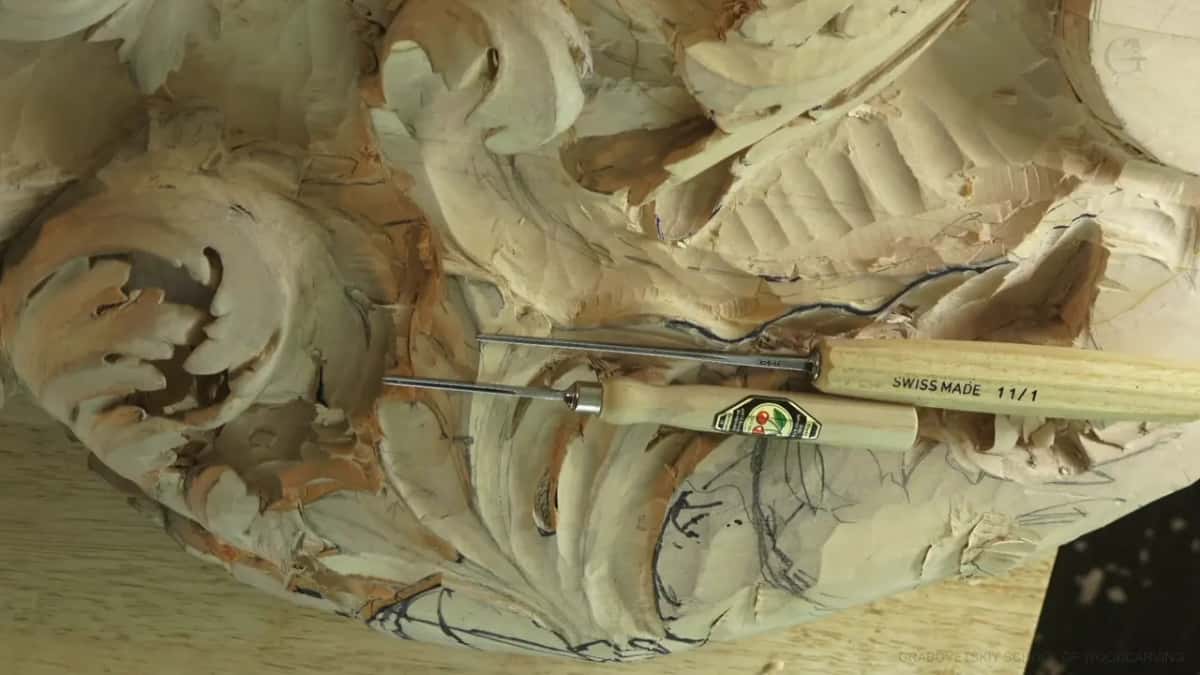
Why take a Pfeil number 11 for veiner work?
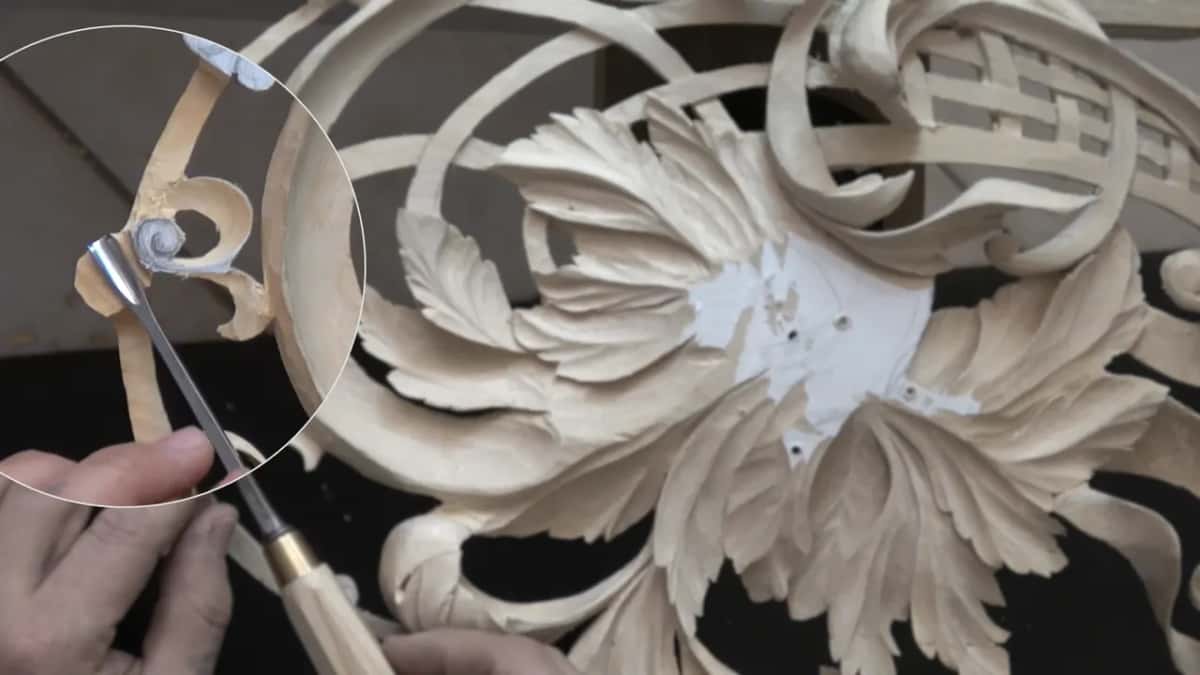
Pfeil does an excellent job on number 11s, in my opinion, and they do them in a way I really like. The one in my hand on the Venetian piece that day was a 3 mm, and I picked up a bigger one so you could see the profile, a U. Holding it, I called it what it is to me, a veiner, and said that for this one I like Pfeil.
For the 11, that was all. Short and plain.
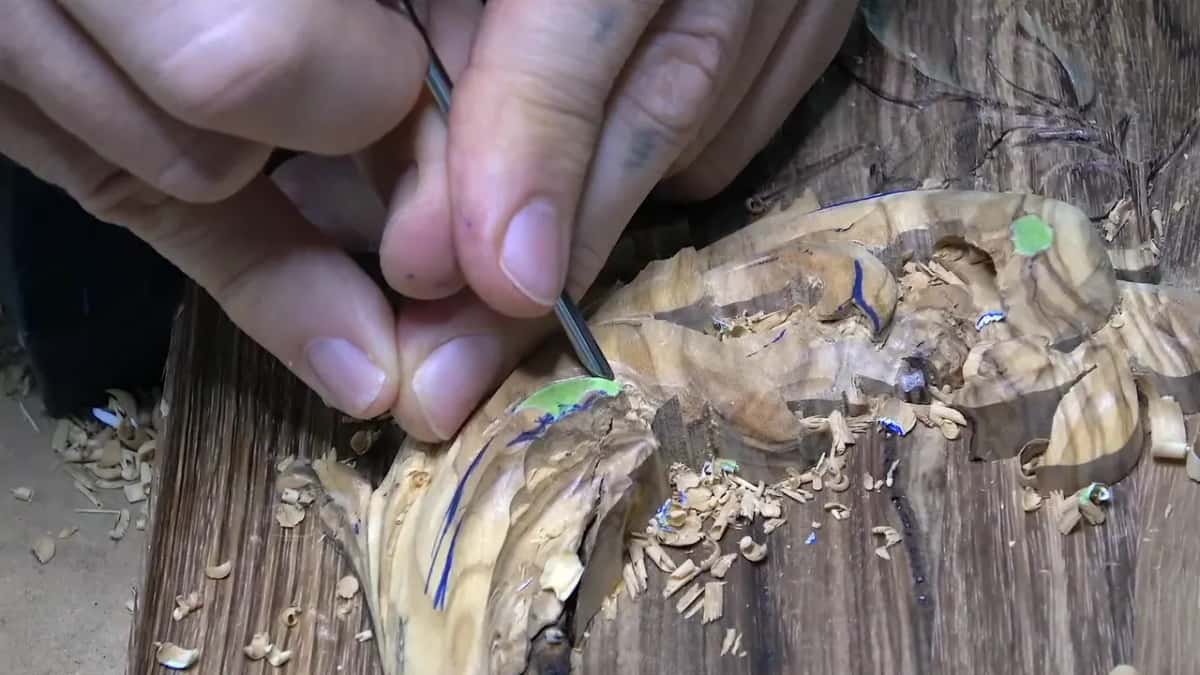
What does thin steel do on a flatter gouge?
For a more flat gouge, the maker I named was just Henry. I really, really love them, I said there. Even if the tools don't look too appealing, the steel they use is excellent. What I like about it is really thin steel, and with it I can slice through the wood without any problem.
On the stream it was only Henry. In lesson 23 of Carving Hashemi Flowers I gave the whole name, Henry Taylor, and said I really like their tools too. There's a separate page on Henry Taylor carving tools as well. That one tool had some kind of sticker going on, by the way, and I said so out loud before I carried on.
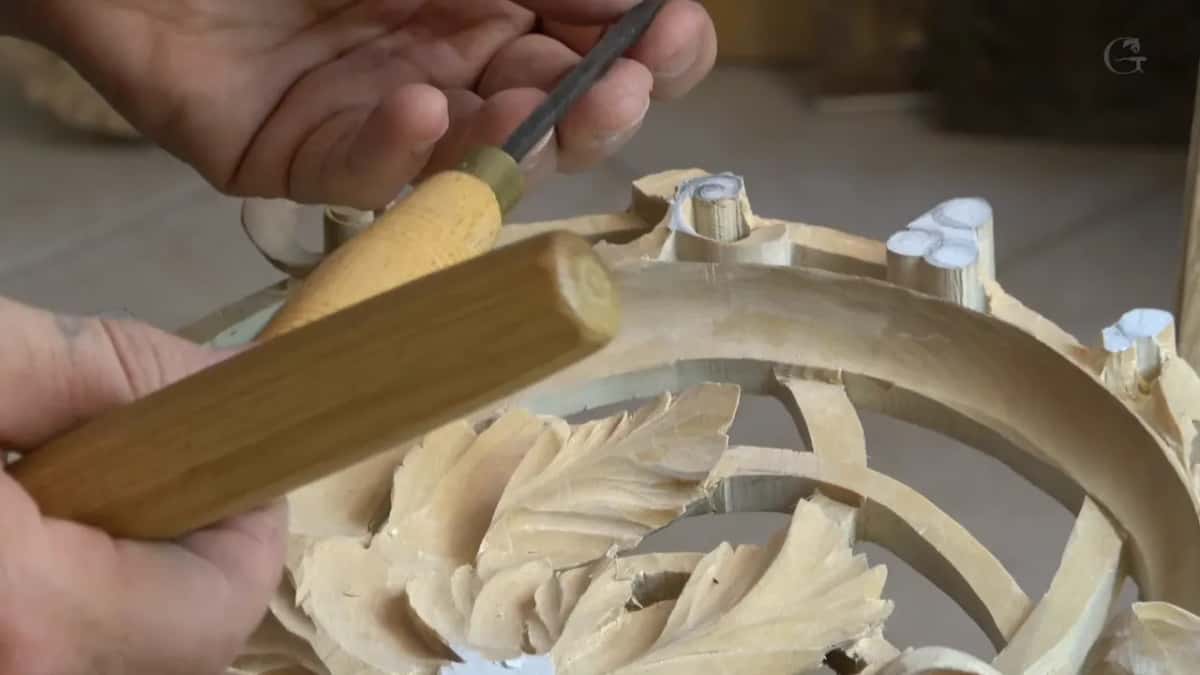
My favorite of the flatter tools so far is a little thicker than that one. I held it up and wouldn't say who made it. The reason I gave was short: it's not available on the market. So the name stayed with me.
Where do Ashley Iles tools earn their place?
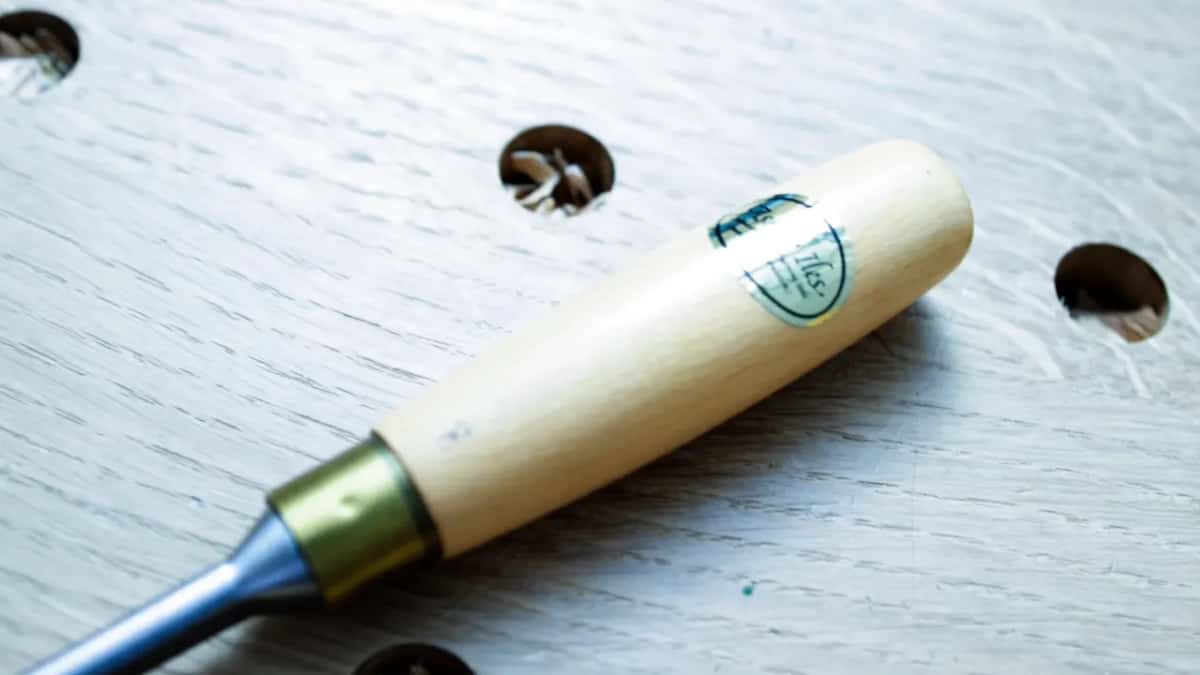
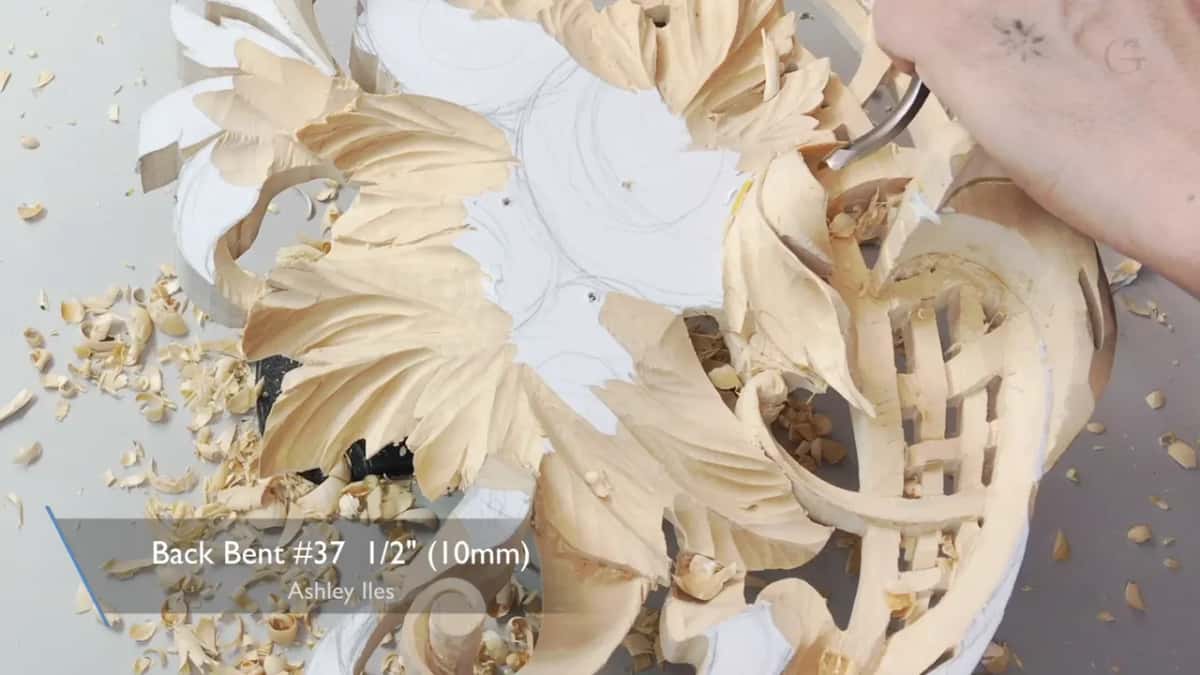
My go-to brand, I said on the stream, would be Ashley Iles, and then I held a few of them up to the camera. I really love those tools. They're English made, and they're not looking too appealing either, but they're really, really nice, and you can see how thick they are. That's why I like them.
Put those two lines next to each other and they can sound like a quarrel. Very thin steel on the flatter gouge, so it slices. Thick steel on the English tools, and I like them for it. Both came out of my mouth within about a minute, about different tools, and I didn't try to make one rule out of them. I left the subject of tool steel there that afternoon.
If you're still choosing a first set, my tools selection lesson is the place to start.
How do Two Cherries long bents fit in?
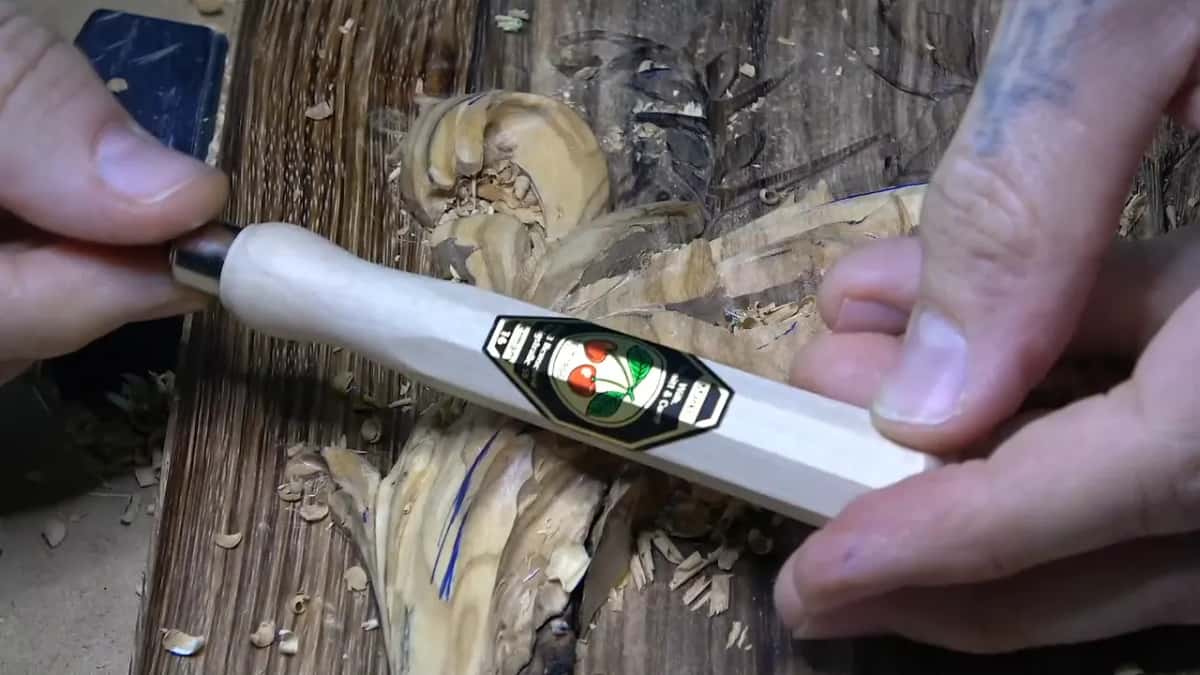
There are more brands than those, of course, and I said so before I moved on. Two Cherries is one of them. Some of their tools are really excellent, and for example I like the long bent Two Cherries tools. They're really good ones. I didn't say more about them than that, and the stream went back to carving and questions.
A Two Cherries at one millimeter (0.04 in) was among the tools I held up in the micro tools sharpening lesson.
Which wood carving tool brands go with which job?
Here's that afternoon on one table, maker first, then the job, then roughly my words.
| Maker | Job | Words |
|---|---|---|
| Pfeil, for veiners | A number 11, a U shape, 3 mm on the Venetian piece that day | I like how they do them |
| Henry, on flatter gouges | Thin steel, for slicing on the flatter gouges | The steel is excellent |
| My unnamed favorite | A flatter tool, a little thicker, not on the market | The name stays with me |
| Ashley Iles, English made | Thick tools that don't look appealing but are really nice | My go-to brand |
| Two Cherries long bents | One of more brands, with some tools really excellent | Really good ones |
| The Pfeil skew | Sharpened on a second edge, so my pushing finger is at risk | I own it, unused |
Read it as a list of jobs. Every row came out of the same half hour of wood carving and talk.
Do different makers need different sharpening?
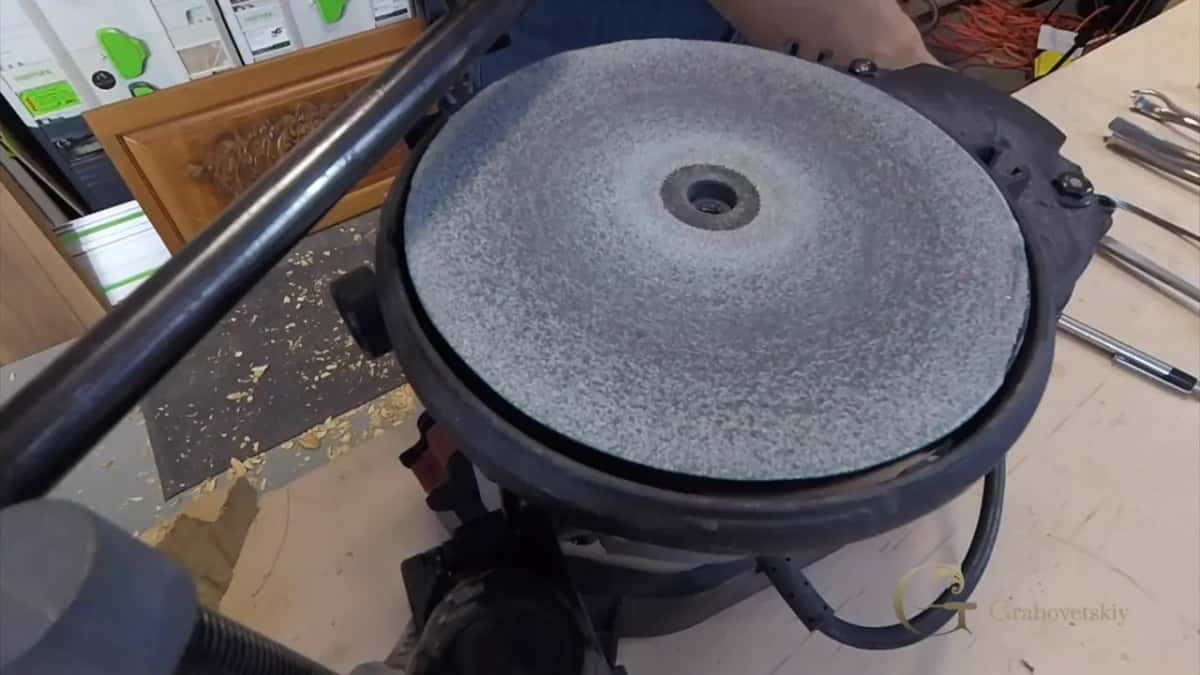
Mine all get one treatment, more or less. A viewer asked how I'd sharpen a firmer gouge, and I had to admit I wasn't sure what was meant by that. Then I said what holds for my whole bench: I sharpen all my gouges pretty much the same way, and it doesn't matter what shape or what sweep. My preferred way is a machine, because I really don't have time, and my go-to machine is a Work Sharp. I love to use that one.
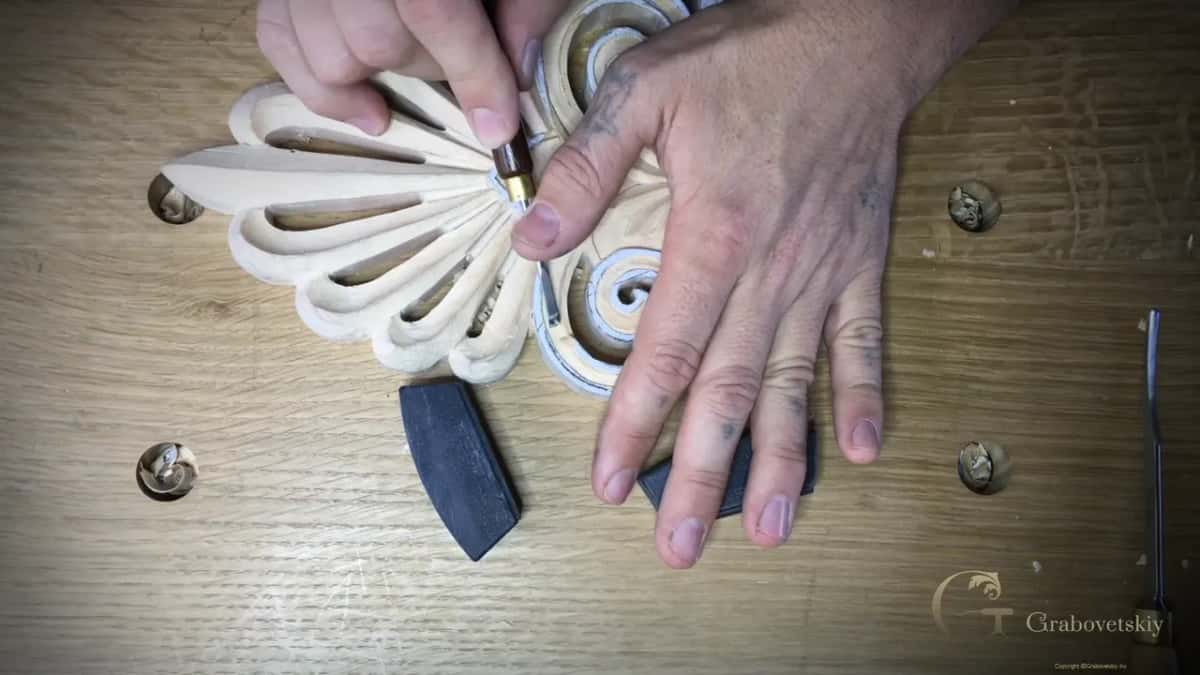
The viewer came back with a clearer picture, a curved gouge with an inside bevel. I had a really extreme example on hand, a number 9 with a big bevel on the inside, and I showed it. The outside I approach the same way as any other gouge. I take it to the machine, use my jigs and set whatever shape I need. Inside, I use slip stones. I think that's probably the easiest way.
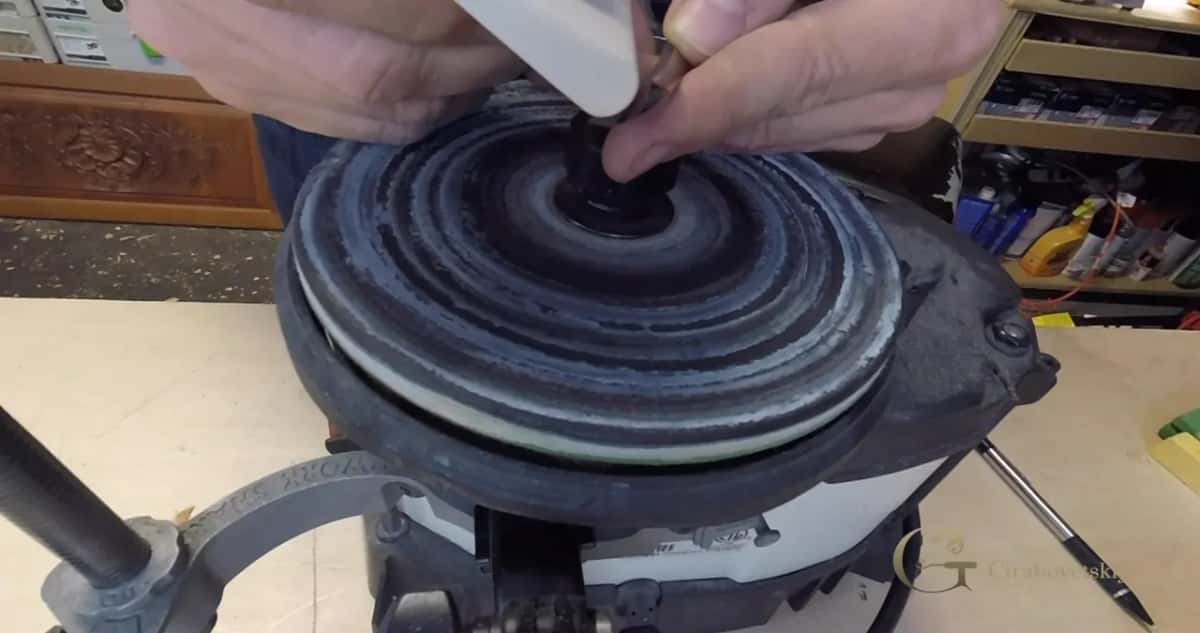
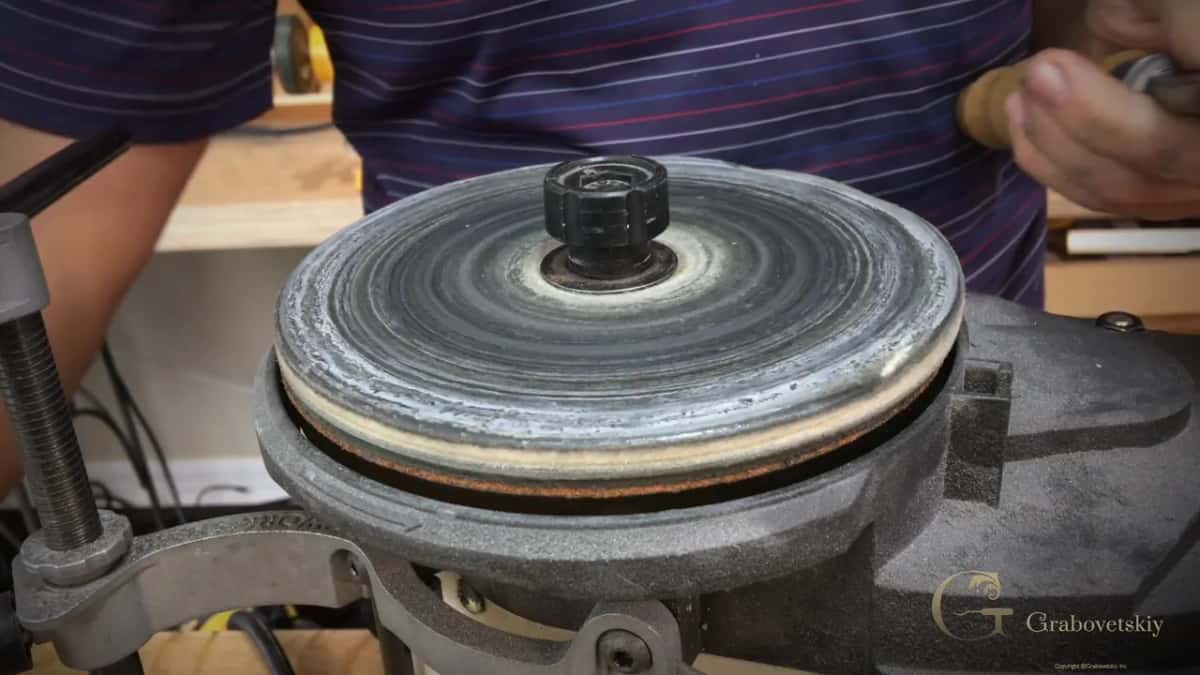
There are a couple of machines for the inside too. One is a buffing wheel attachment on one side of a Tormek. The other is a leather buffing wheel on the cheapest machine you can buy, and with that buffing wheel I can take the inside pretty much to perfection. My school site has multiple videos on that approach, for back bents, straight gouges, all types, and they sit in the Carving Tool Sharpening course.
In the straight gouge sharpening lesson I held up one slip stone and said it does such a good job for me.
Can you make the tool when nobody sells it?
Making one is possible, and I explained how. Someone in the chat said everyone should get a certain skew, and that he uses his almost every day. I agreed it's among the best tools, a multi-tool in one, and you can do a lot of work with it. There was a problem, though. You really can't find them on the market. They had all sold out, and the one place in the United States that sold them was out too.
Then I gave the option. Get a normal skew and reshape it into whatever shape you want, then sharpen it, and it becomes your own version of that tool. It looks like a skew. It's a multi-use tool, and I use mine all the time, on pretty much any concave and convex problems.
Is a skew sharpened on both edges a good idea?
For the way I carve, I'd say no. Another viewer warned the chat to be careful with the Pfeil version, because it's sharpened on more than one edge, and I said that was absolutely one of the greatest points. Pfeil calls theirs by a different name. Of the two I dug out to show you, one looks especially similar, but they are different tools, because that other edge is sharpened as well.
I understand the idea. You can pull the tool toward yourself and get really nice details, and maybe there's a place for that. But I'm carving every day, and I have a habit of pushing the tool with my finger, using that finger as leverage. With an edge on that side, I can cut myself. So I own them, and I don't use them. It's still usable, and it'll work. My word for it was that it's not the best.
What was on the bench while I talked?
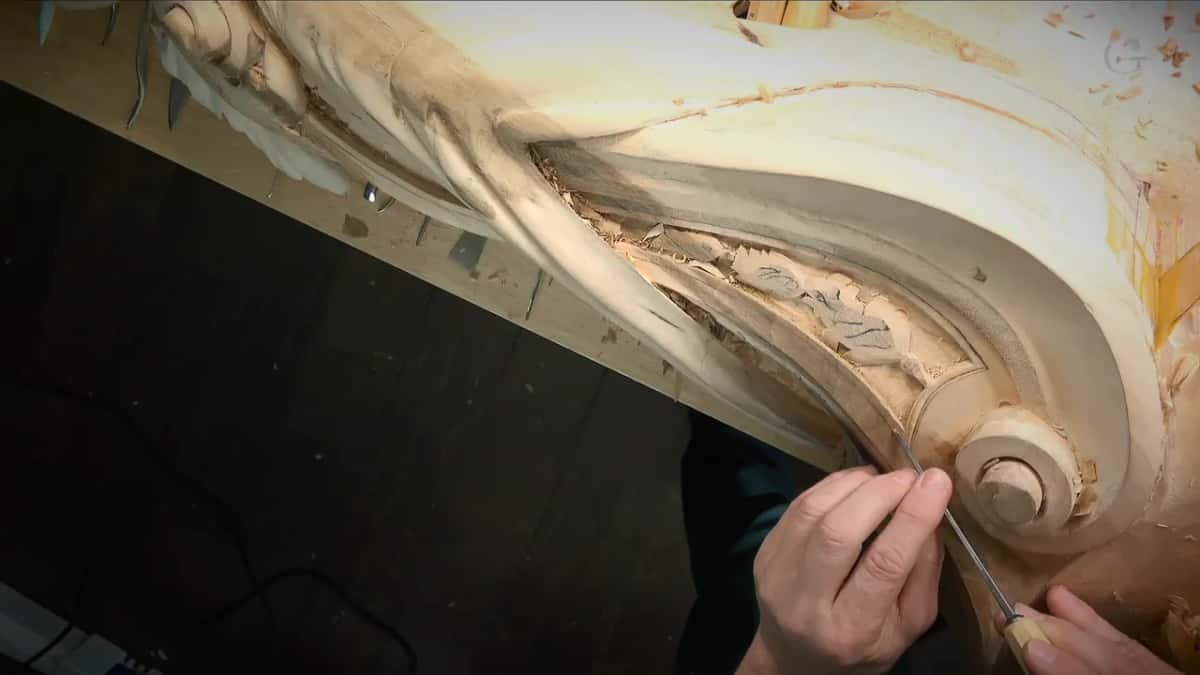
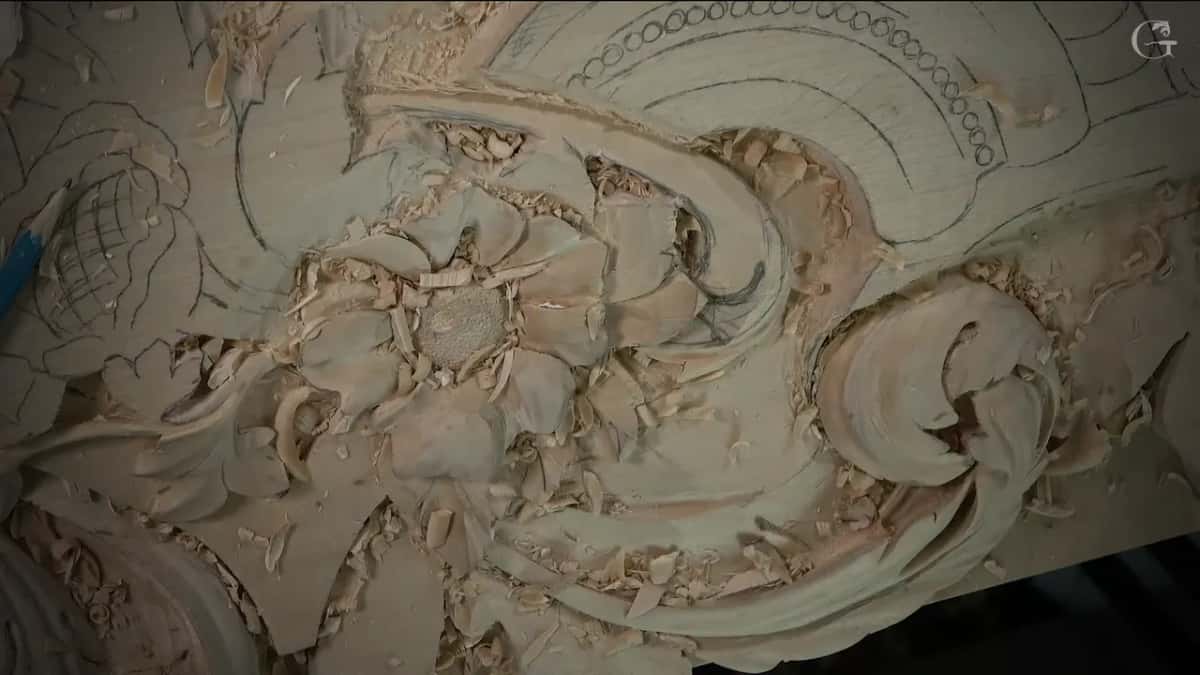
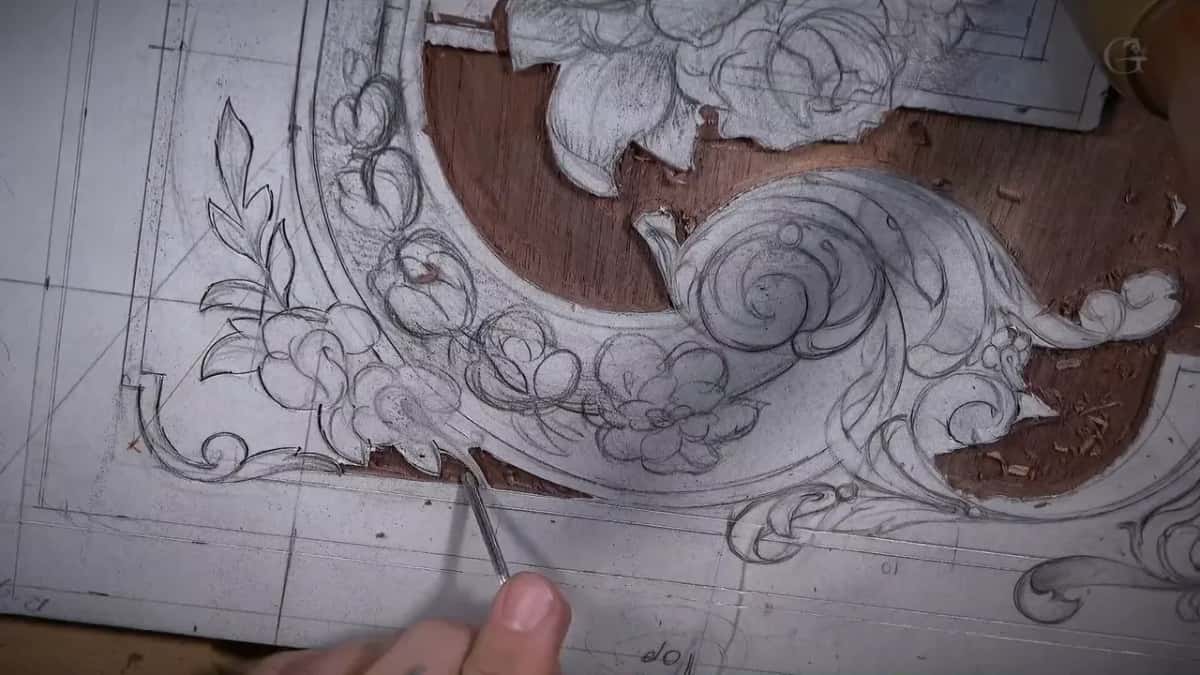
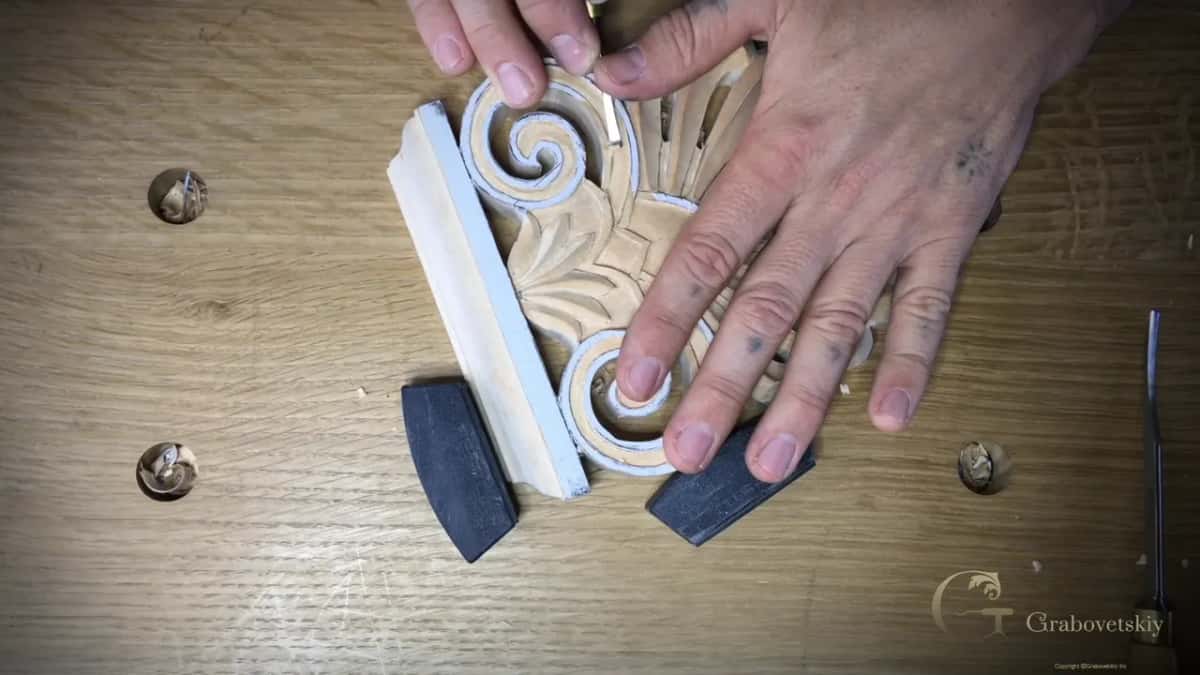
Part of the Venetian project, which I was still working on, and I said the whole thing would go online in my school, every stage of it, flowers included. Some areas already had really deep undercuts. I asked the chat whether they liked it, and for a few thumbs up if they did. Venetian carving fills the Venice Room course too.
Near the end, a bit of the carving broke off. I hadn't been careful enough with my hand while I was showing the chat a mallet a few minutes earlier. I'd take it out, I said, not a big deal, and kept going.
The mallet was one of two gifts I'd brought back from the Marc Adams School, where I'd just taught a one-week class. Both are beautiful, and one has some brass in it. I'm not going to use the first one. It's for my collection, because I do collect mallets, especially ones made by famous woodturners. I have a lathe too, and I could make a mallet for myself. These two were a special gift from special people.
Most of the people in that class had never carved before, and they all finished, or almost finished, I should say. Some had carved for years, and some had never touched a tool before we started. That's what you can do in just a one-week class, even if you never carved, and it surprised me too. In the photo I showed, whoever took it left a few people out on the left side. That spring I was set to teach in Maine in June and back at Marc Adams in July.
Not every question that day was about makers. Someone in the chat asked where to research the old style of curly carving done with one knife. My answer was that I don't think you can research it as such. You'd probably search for old European carvings from the 8th or 9th century, and you'll find some. Get the idea behind the curliness itself, and pretty much any design gets much easier to carve. You can probably even design one yourself.
One last thing from the chat. Another viewer wrote that he learns by watching my hands and asked for more close-ups. Inside the school there's a bunch of them, really close, and one member, there almost from the beginning, told me he sometimes watches the same videos again and again just to see how I move my hands, without even listening to my accent. The day before, I had counted 2,554 videos posted, with more filmed and not yet edited, and by the end of that year it could be like 3,000, and I asked members not to skip any, because you miss a lot of tricks that way. Look around from the start page, or open the Livestream events course and the April 2020 livestream next to this one.
How it's done
- Start from the job. Ask what the work needs before you ask whose name is on the handle.
- Take the number 11 you like. For mine I go to Pfeil, a 3 mm one on that Venetian piece.
- Slice with thin steel. On a flatter gouge, I go for steel that's really thin.
- Shape the outside on a machine. Set the tool in a jig and grind whatever shape you need on the outside bevel.
- Hone the inside by hand. Slip stones do this part, worked inside the sweep.
- Or use a buffing wheel inside. Leather on mine. With it the inside gets close to perfect, whatever brand the tool is.
Frequently asked questions
What are the best wood carving tools for professionals?
On my own bench the answer is a list of jobs, not one name. During the April 2021 stream I said Pfeil does excellent number 11s, a flatter gouge with thin steel is the one I slice with, and the Ashley Iles ones are thick, which is why I like them.
Do all makers shape the same gouge number alike?
Two makers can stamp one number on two tools and still give them different shapes. I said on camera the brand matters because of the job, and one maker's version can suit that job far better than another's does.
Why keep a carving tool you won't name?
Mine is a flatter gouge, a little thicker than the thin steel one, and I called it my favorite so far. I kept the maker to myself on camera, and the reason I gave was that you can't find it on the market.
What to carve next