
Alexander Grabovetskiy, woodcarver, School of Woodcarving · Published 2022
Do you need to know wood carving to make a violin?
Quick answer: Violin carving is part of the job, by the answer luthier Trevor Davis gave me on my March 2022 live stream. I asked whether an instrument maker really has to learn carving, and he said absolutely, naming top, edge work and curves. His edge was knife work, then a curved sole plane and gouges.
Wood carving is part of making a violin, by the answer a luthier gave me on air. In March 2022 Trevor Davis joined my Friday live stream from his shop in Austin, and I asked him the plain question. To be a musical instrument maker, do you really have to learn wood carving? "Absolutely," Trevor said. The top, all of the edge work, all the curves. Later in that hour he picked up a knife and showed me what he meant, and that bit of luthier carving is what this page is about.
Someone in the chat that day was surprised that a knife carves a bass. Below you get what Trevor told me, what he did with each tool, and the two moments I had something to say about his hands.
Five things from Trevor's bench
- His answer was absolutely, for top, edge work and curves alike.
- Most of the edge is knife work.
- His blade starts near 45 and rides its bevel.
- A number 3 or 5 gouge can do the recurve too, though half a millimeter too deep shows as a dimple under varnish.
- Leaves led him to my school.
Why did I ask a luthier about wood carving?
People had written to me that wood carving is not woodworking. A day or two before Trevor came on, I posted about it on Instagram and Facebook, and I got a lot of comments. My answer was simple. I work with wood. What you see in my hands is a piece of wood. When I say woodworking, I include everything connected to wood: furniture making, carving, and instrument making too, guitars and violins.
That week my Friday guest was a man who builds instruments. Trevor sat in one of my in-person classes in Texas. That class was sold out, two people got sick with covid, and he jumped into an open spot. What happened with his drawing that week I already told in my post on finding a carving class near you. If you build furniture, the other side of the question sits in wood carving for furniture makers. Halfway through the interview I asked him the question myself.
What did Trevor carve on his decorated instrument?
A face, first. He got on a kick, Trevor said, to make a decorated instrument, a traditional thing he had always wanted to do, and he carved the head as a face. He didn't want that face to grow out of nothing. So he went looking for leaves, did some research, and found how much history sits behind the acanthus and the classical forms. That search is how he learned about me and my school.
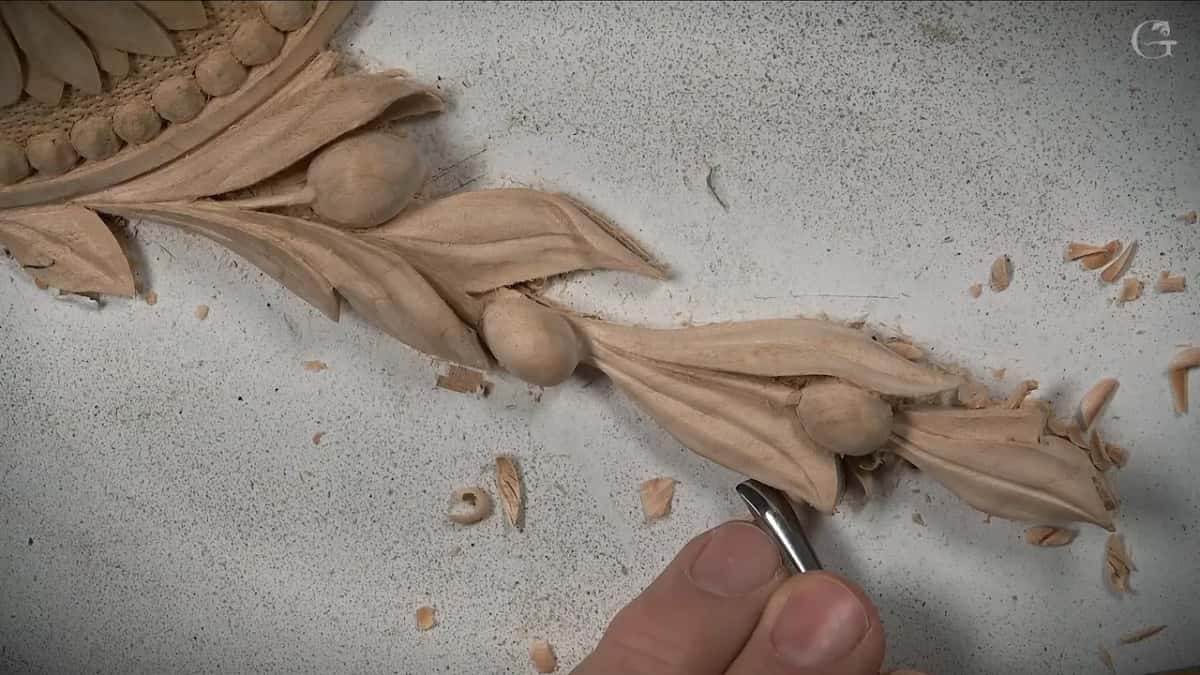
His leaves are flush mounted and set into the sides. He put acanthus in every corner and up on the button, and when he got to the scroll he gave it leaves to match the head. It also has a double purfling inlay.
After he showed us the head and the carving on the back, I gave him my read. It looked like he followed the Greek style, with the V cut on the inside of the leaf, except the upper one, which looked more like a Roman leaf to me. Why a Greek leaf carries that V, I went through in lesson 7 of the Greek acanthus course, and the Roman kind has a course of its own.
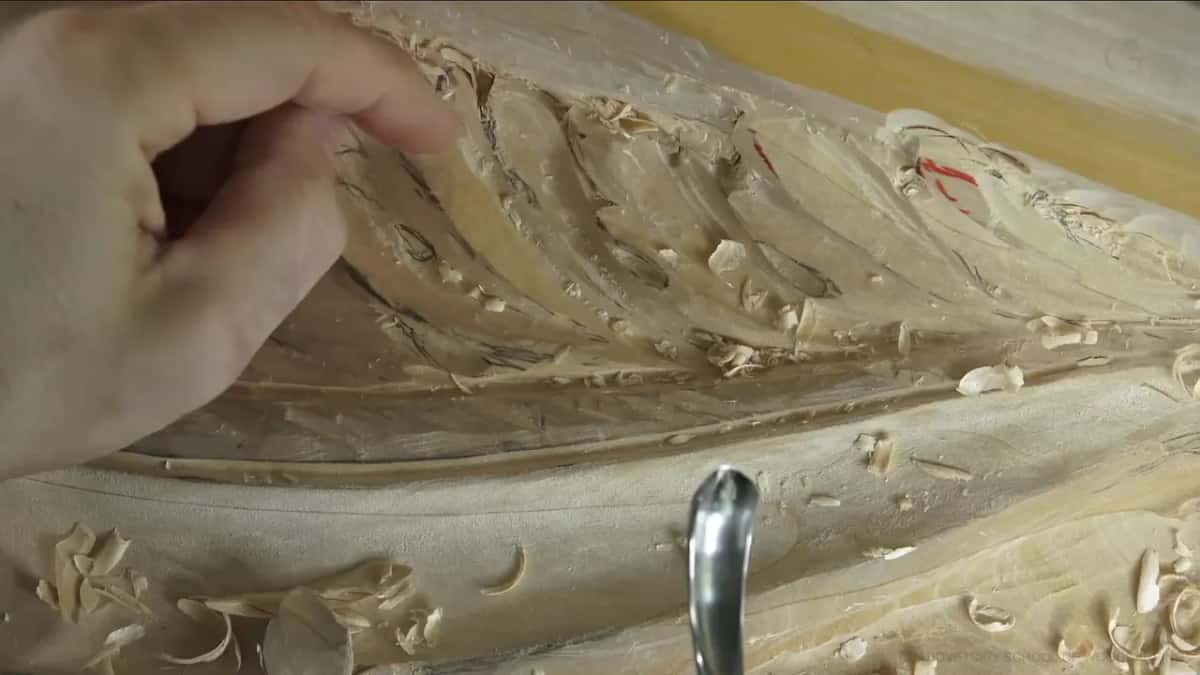
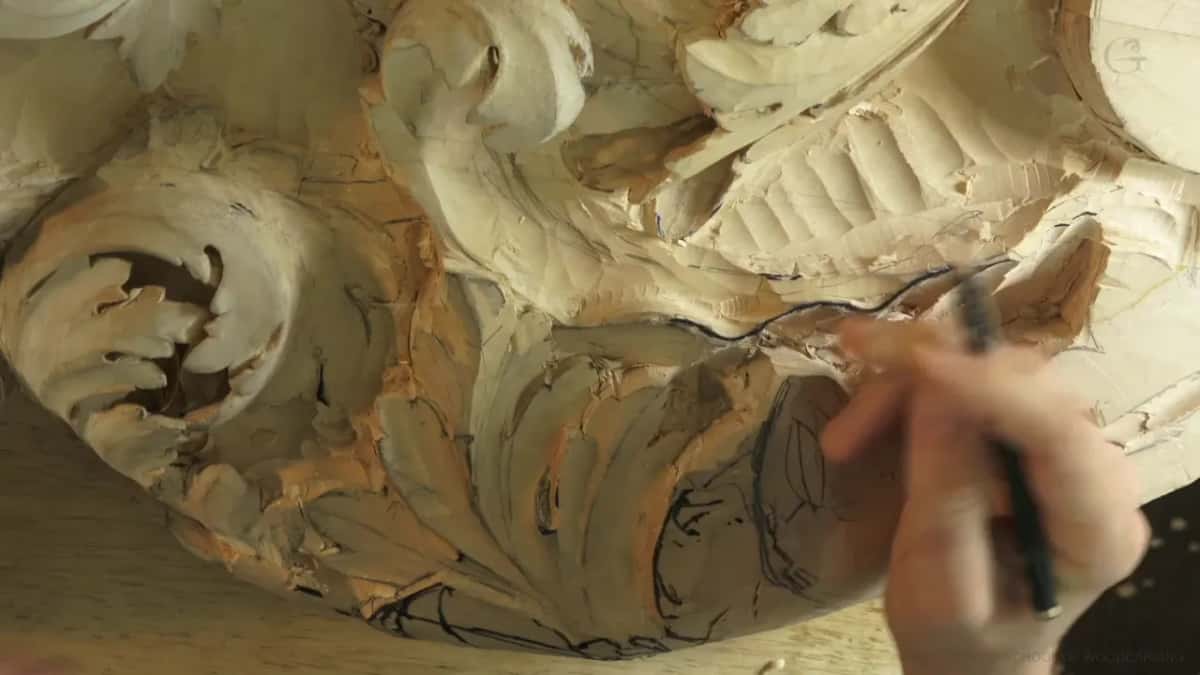
Trevor was honest about his own work. The acanthus on the scroll, he said, is nowhere near as nice as the acanthus on the body. A decorated piece takes him about two or three times as long, so he can't do it all the time. He enjoyed it anyway, and he said taking my carving class really helped a lot.
Does violin carving start before the knife?
For Trevor it starts with the wood, and he said he is all about wood quality. Every summer he goes out and harvests his own with friends. He showed us one half of a top, split by hand, with no runout and a little bit of bear claw in it.
For anyone at home who did not follow, I spelled it out. He did not resaw that board on a band saw. He split it by hand.
Some of his stock is old. He showed a piece of about 100 years from an old collection, meant for the next bass he makes, and another of about 50. Trevor also once made three basses out of the same wood, on three different models, with all the tops from one tree, to see how a very similar arch would change things. A top starts thick. You get a perfect center joint, then you butterfly the two pieces. Trevor joints that edge with a number 8 jointer from Lie-Nielsen, and he glues it with hide glue.
My question was whether he really thinks hide glue is stronger than Titebond. Titebond is great stuff, Trevor said. He loves it and uses it for some things, and it is much more forgiving. In instrument making, though, it's typically hide glue. On smaller instruments he sometimes skips the clamps and does a friction joint: he pours the glue on, slip fits the pieces, and lets the suction hold them. On basses he always uses clamps. In a couple of hours, he said, it's rock solid.
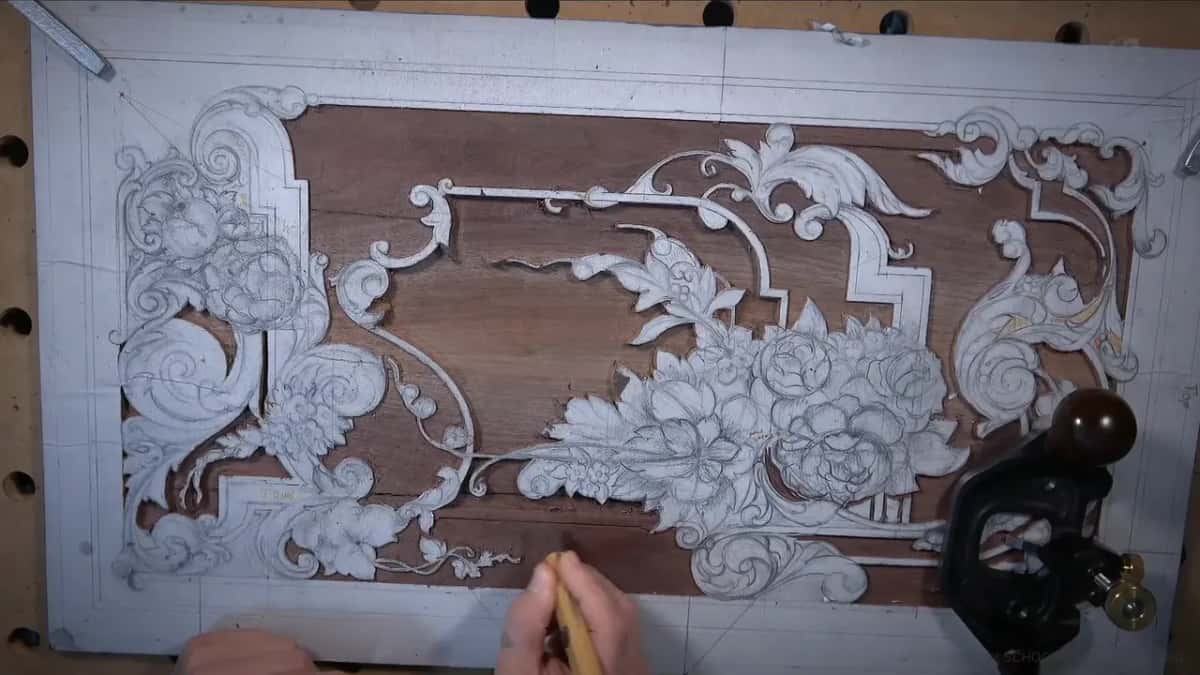
How does a luthier carve the edge with a knife?
Trevor carves it after the box is closed and the arching is done, and almost all of it with the blade. The edge gets a little recurve that goes out and then a bead around it, and he said that detail is stylistically important to different makers and to the whole look. You can't use routers on it. He guessed a luthier uses a knife for 95 percent of everything, then said maybe that's an exaggeration, but it's a super important tool.
Before the first stroke he talks about grain. Keep in mind which direction the grain is going, he said. Basic stuff, he said, but until it becomes second nature it's something to think of constantly.
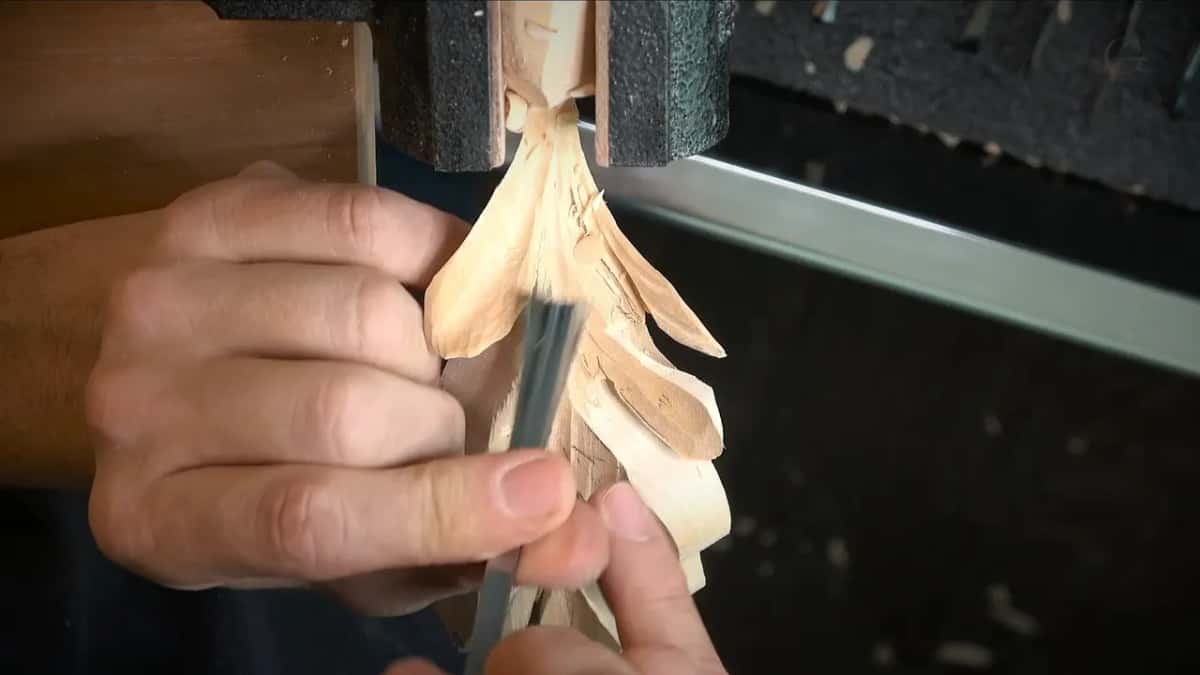
What he loves to do is start with a nice 45 degrees. He always stops a little short to give himself room, then feathers in. He rides the bevel every time, with about three points of contact, which is how he was taught to do this knife work.
The corner comes last. He likes it a little sharp, with a little tension in it, so the purfling shoots up just a bit. He pictures the two lines rotating out, and the outside edge swinging back in a little. That purfling is inlaid about 2 mm (5/64 in) deep, and its job, traditionally, is to stop cracks from running, he said.
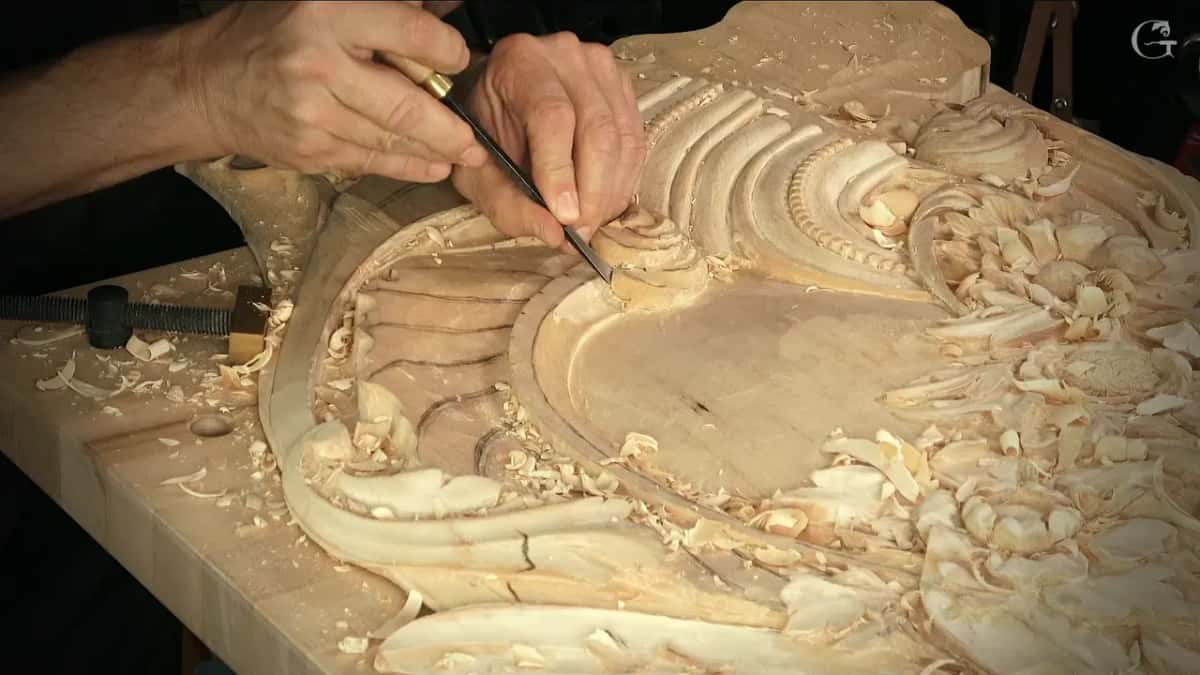
What did I say about the way Trevor holds the knife?
On air I told people the way he held that knife was absolutely wrong. Then I reminded Trevor what I had said in the school, where he tried to hold all the chisels and gouges like that, and I said this is just a different technique.
He took it well. A week of holding the gouge that way did a number on him, Trevor said, so he had to start using it the right way. But this is a slice, he said. He's slicing. Good, I told him, at least you're slicing. A slicing cut has its own short lesson in my techniques course, to see the motion.
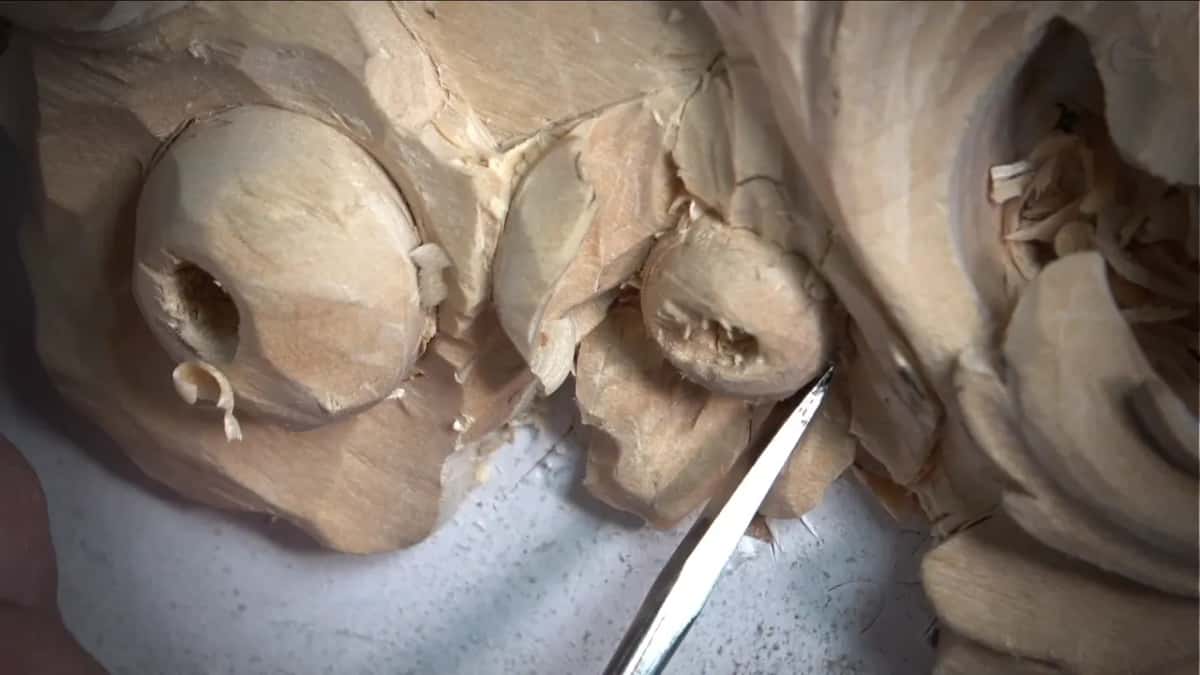
Later, when he picked up a number 3, he said he'd hold the handle, and admitted he likes to choke up on things. It's not good, he said, because he's just muscling through it. Whether a knife can stand in for a gouge in relief work is another question, and I answered it in workshop 72 of the Venice Room.
Can you carve the recurve with a gouge instead?
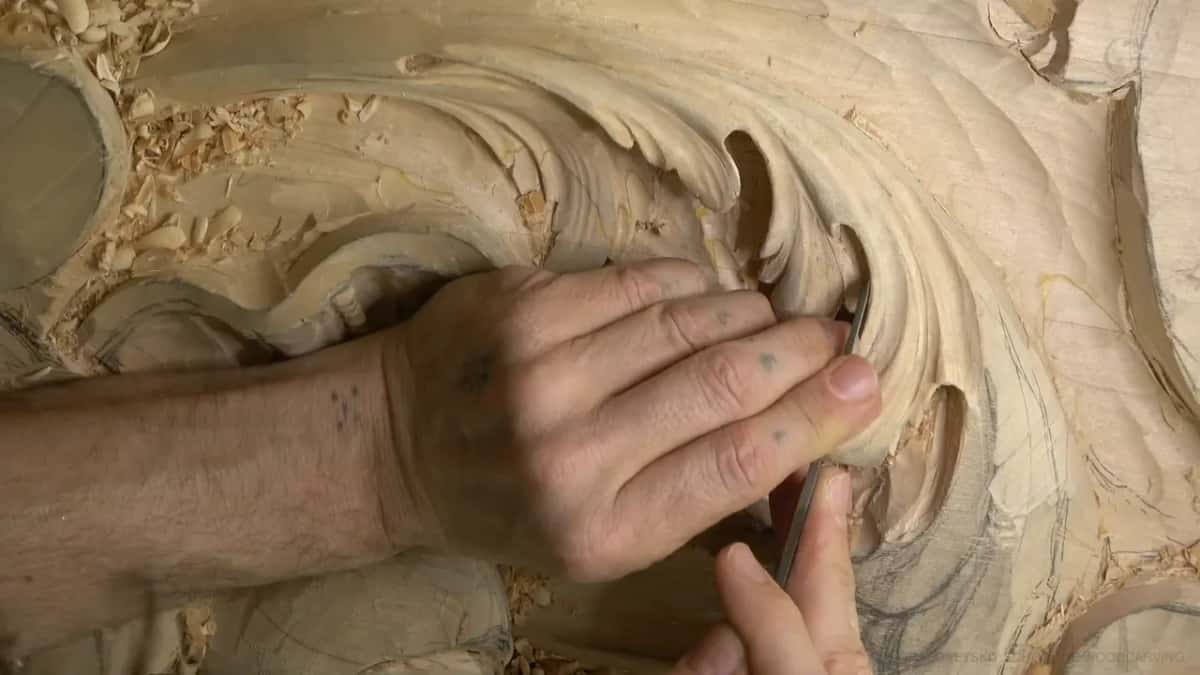
Trevor has done it with a number 3 or 5 gouge. I asked him straight out whether a gouge would work there or not, and he said it can be done. The risk is depth. All it takes is one spot where you go half a millimeter too deep, and when the varnish goes on, the light reflecting off it shows a dimple. Your eye is drawn to that edge, he said, because that's where it breaks, and things there should be really smooth.
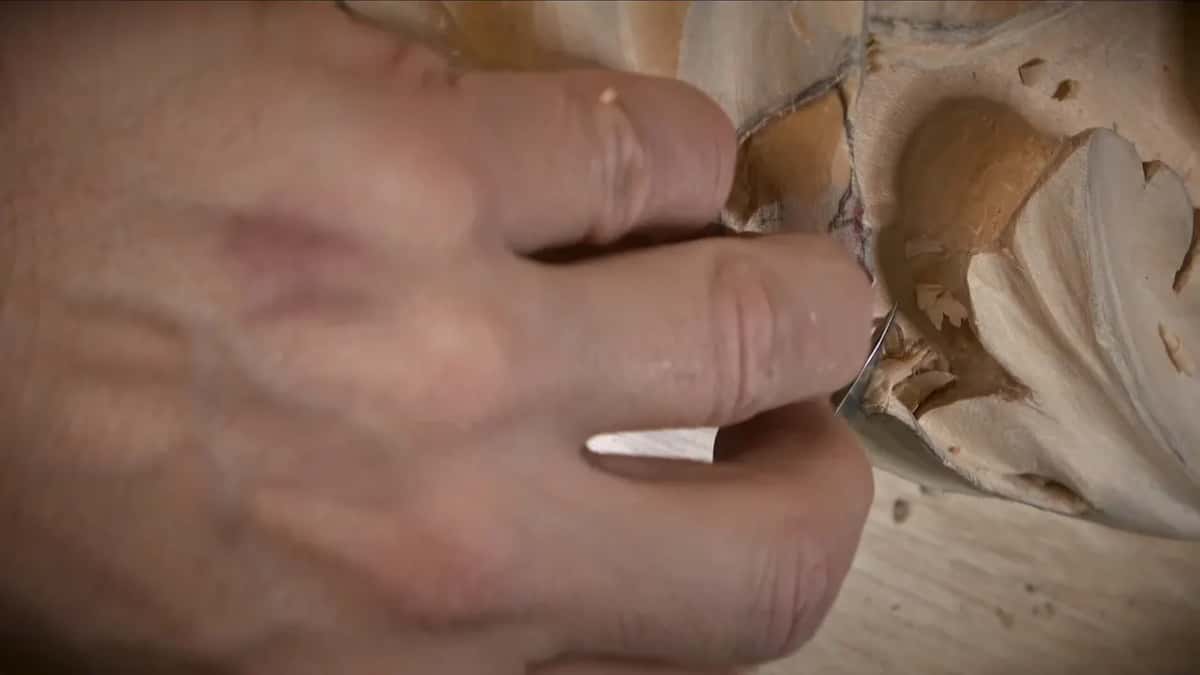
He starts the recurve using a little curved sole, and with that tool, he said, he doesn't have to think as much. He works it in a bit more in the lower bout and out a bit more in the C bouts, playing with the tension of the whole shape. Everything on an instrument is circles, he said, so you sneak in small details to make it look interesting.
Gouges still come in. He popped number 7 gouges into the recurve to set its deepest part, and since he was on video, he went a little deeper than he might have, just to show us. A deep recurve adds drama to the corner shape. Trevor called that his personal feelings about it, then said it's been working: the instruments look nice and the judges like it. After the 7s he took a number 3 to it.
What Trevor used at each stage
| When | The tool he named | What he told me about it, more or less |
|---|---|---|
| Gluing a top | Hide glue | Typical in instrument making, he said, more than Titebond |
| Arching the plates | A scrub plane, then a squirrel tail | Power carving helps now |
| Edge and bead, with the arching done | Knife work | Start near 45, stop a little short, feather in, ride the bevel |
| Edge after the knife | Jeweler's files | He sands here, and in few other places |
| Setting the recurve | A little plane that is curved underneath | Less to think about, he said |
| The deepest spot | Number sevens, then a number 3 | A deep recurve adds drama to the corner shape, he said |
Which planes and scrapers did Trevor reach for?
For the arching of the top he starts with a scrub plane, then goes to a curved sole, a squirrel tail. For people who don't know, I pointed out on air that the sole of that plane has a radius. He uses spokeshaves too, and some little planes for the recurve step. The final surface gets scraped with little scrapers. Knowing which tool really works best for the job, he said, takes years.
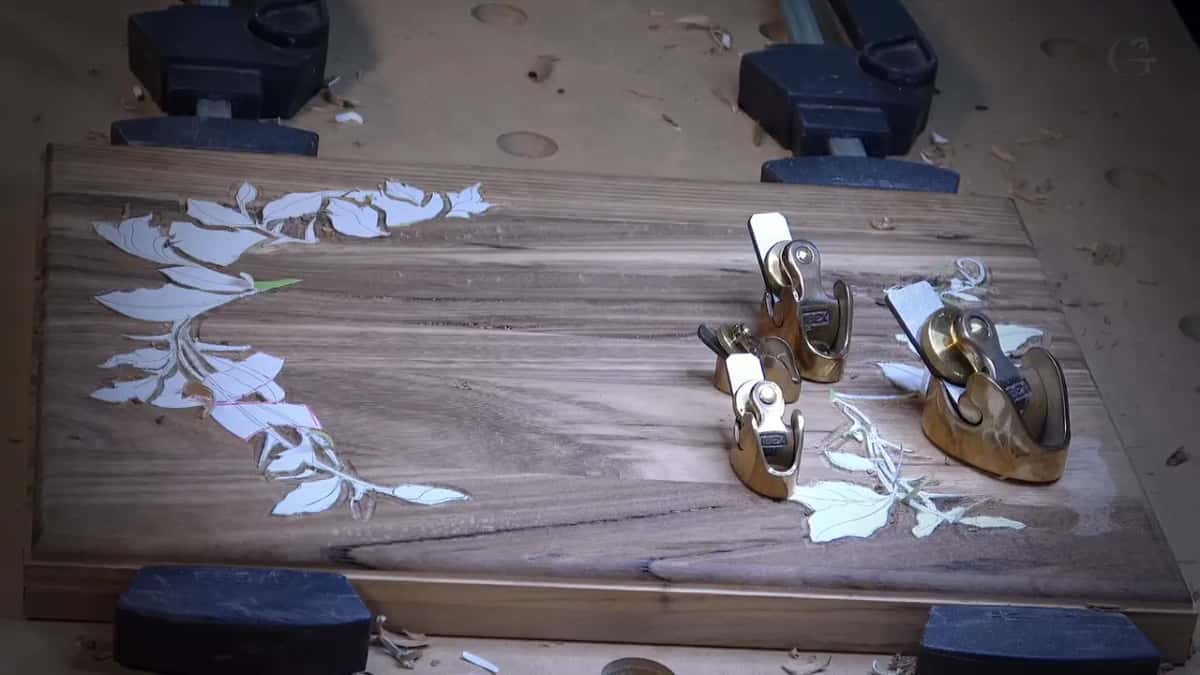
He also does some power carving for the arch, and it throws chips everywhere. He used to do it all with hand tools and gouges, back when his first bass took him about two years. A bass takes him about three months now.
Around the edge he uses jeweler's files, and he said they leave a really nice finish. I had asked him which rasps he uses, and the files were his answer. The edge is one of the few parts of the instrument he sands, just because people touch it constantly, and it has to be sealed very well.
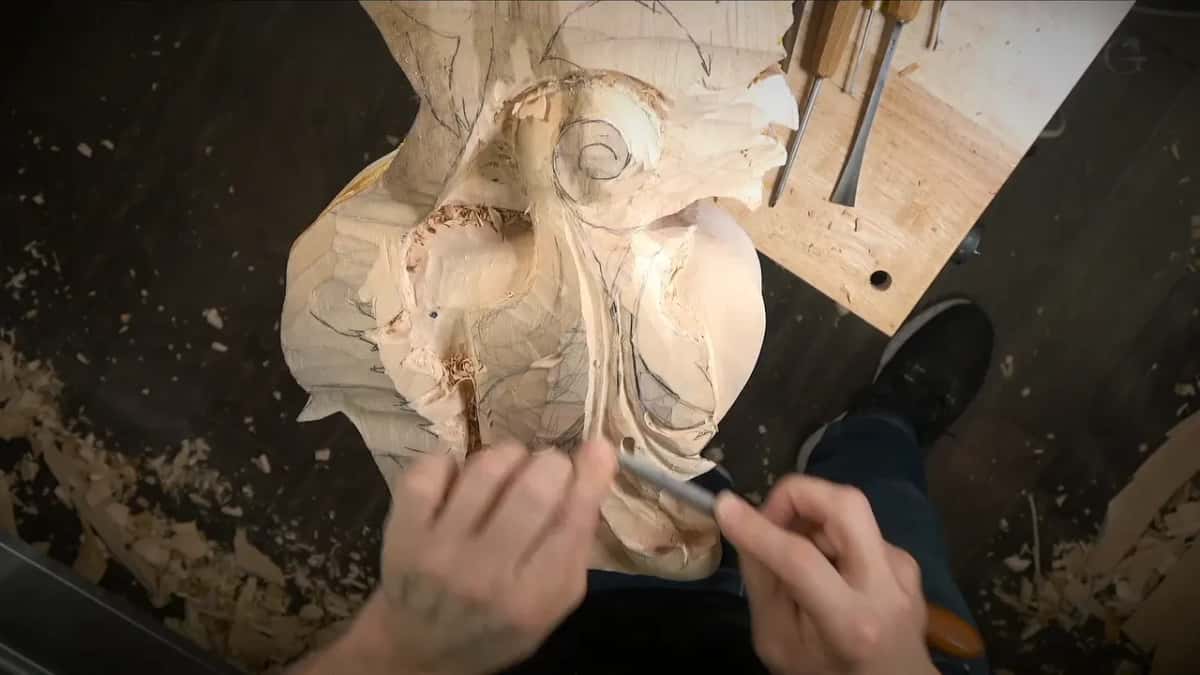
I keep a few little planes myself. In lesson 2 of the Lily Box I held up my tiny instrument maker's planes and said they can get a surface completely smooth.
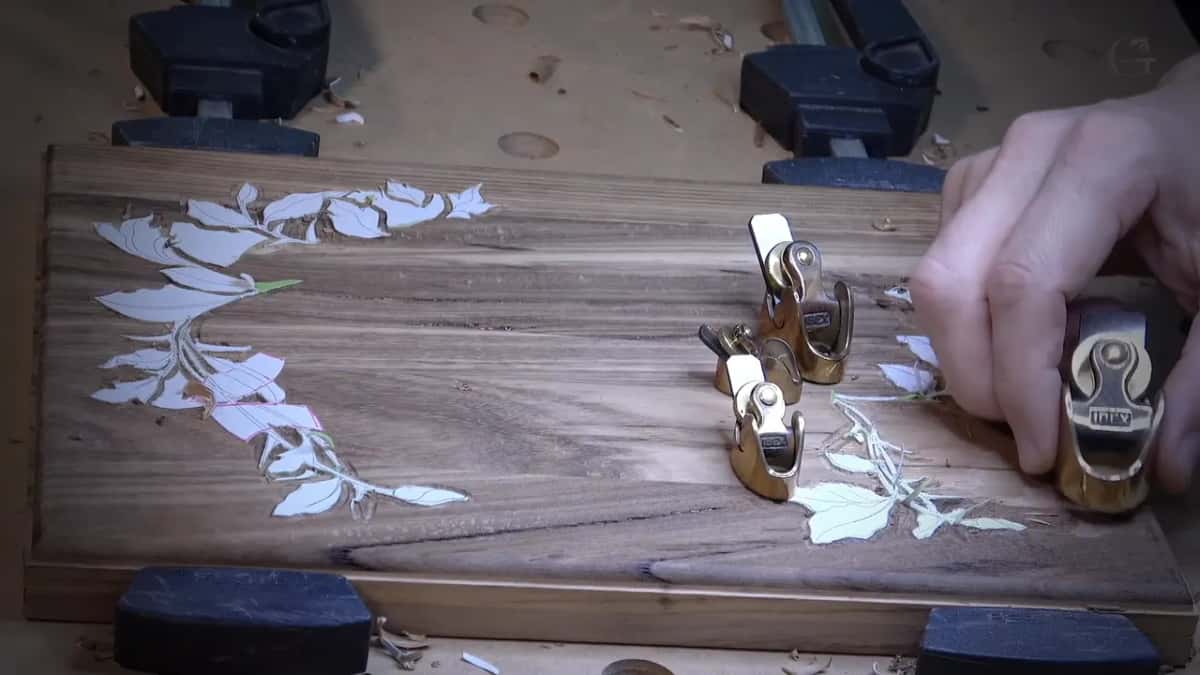
Scrapers have a lesson in my tools course. To judge a gouge before you trust it, I checked mine side by side on another live stream.
What does a luthier's shop look like?
Trevor gave us a little tour on camera: the sharpening station, a band saw, a jointer and planer combo, the wood piles in the back, and a bike in the corner. And I said it again for the people watching. The best people in the woodworking world work out of small shops, right out of the garage.
Trevor started smaller than that. He began his first bass in a one-bedroom apartment in New York City, he said, just a workbench and him sleeping on the floor, and finished it after he moved out to LA.
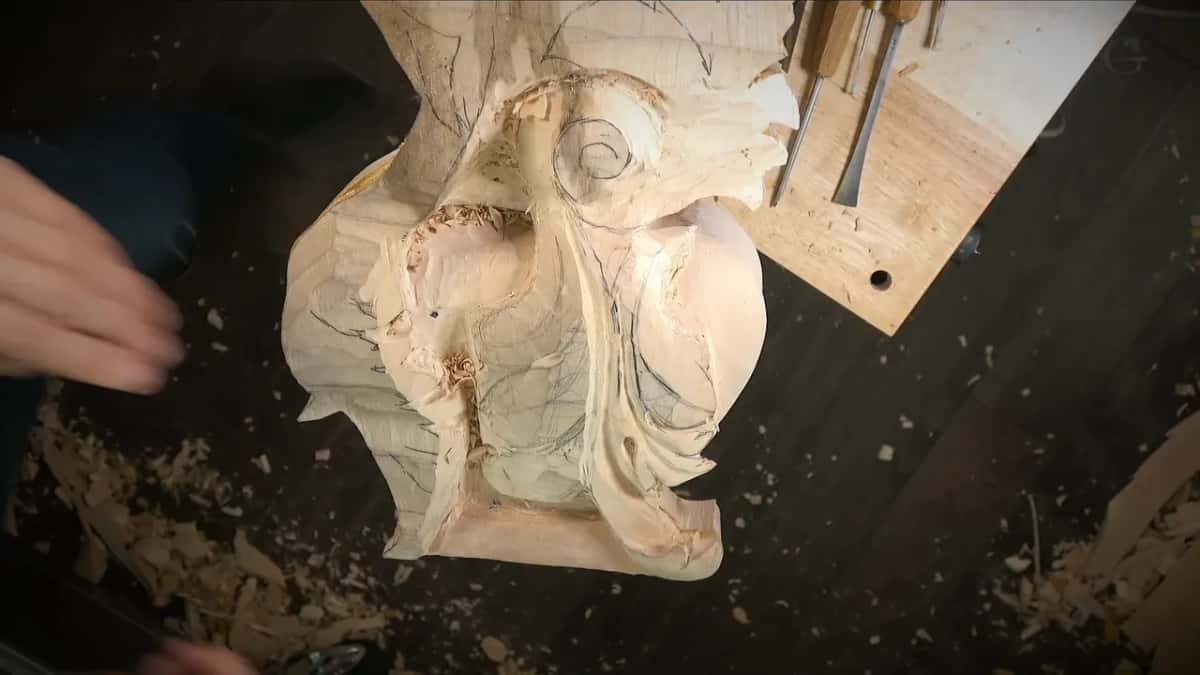
Someone in the chat asked about his clamps, so he turned the camera. Bar clamps, restoration clamps, tons and tons of clamps. It's all about your clamps, he said. Never enough, right? Actually, Trevor said, he had talked with his wife about this, and he thinks he might be at the point where he has enough of many things.
He had a couple of violins just about ready to go, and even on camera the finish looked excellent. Trevor makes all his varnish by hand, he told me, oil varnish from traditional recipes: colophony cooked down with linseed oil, thinned with turpentine, with some pigments added. The whole idea is a lot of color and a lot of depth in a thin amount.
Trevor owns tons and tons of clamps, and he still came to a carving class for his leaves. If you want yours right, my lessons start here, and the first cuts course puts a knife in your hand before anything else. The whole conversation with Trevor is in the livestream events course, with my other live streams.
How it's done
- Close the box first. Trevor does the edge work after the box is closed and the first arching is done.
- Read the grain. Keep in mind which way the grain runs. He calls it basic, something to think of constantly until it becomes second nature.
- Start the knife at 45 degrees. Begin with a nice 45 degrees, stop a little short to give yourself room, then feather in.
- Ride the bevel. Keep about three points of contact, the way Trevor was taught to do this knife work, and slice.
- Leave the corner for last. Keep it a little sharp. Build in some tension, and picture the two lines rotating out.
- Go over the edge with jeweler's files. Files leave a really nice finish on the edge, one of the few places on the instrument Trevor sands, because people touch it constantly.
- Set the recurve. A small plane with a curved sole follows the center line, a bit further in at the lower bout and further out at the C bouts. Trevor says that tool lets him think less than a gouge does.
- Deepen it with number 7 gouges. The 7s set the deepest part of the recurve, then a number 3 follows.
Frequently asked questions
Where did Trevor Davis train as a luthier?
At the Violin Making School of America in Salt Lake City, about 12 years before our talk, by his account. He found my school later, looking for leaves to put on a decorated instrument, and said the class he took with me was a real help.
What wood did Trevor say goes into violins?
Maple, in his telling. The nice European maple ends up going to violins, Trevor said, and they don't leave any good pieces over for basses; when they do, he has bought them. So he uses a lot of domestic wood, like the American tiger maple on the sides of one instrument he showed.
Can a router do the edge work on a violin?
Trevor said you can't use routers or anything like that on the edge. It is knife work, then jeweler's files, and the recurve gets a small plane and gouges. He guessed a luthier's knife does 95 percent of everything, then called that maybe an exaggeration.
What to carve next