
Alexander Grabovetskiy, woodcarver, School of Woodcarving · Published 2023
Will a wood carving turn gray outside, and can you stop it?
Quick answer: Graying is what sunlight does to a carving left in the open, and I told a viewer it comes pretty soon. Ultraviolet light breaks down lignin, the part that bonds wood cells. Shade was what I gave for the color, and cedar or cypress, the two I used outdoors, for the wood.
A wood carving left in the sun turns gray, and it happens pretty soon. I said that on a live stream in September 2023. On how to stop wood from turning gray, my answer for the color was shade. The rest of what I said was about rot, because a soft carving outside has water to deal with too.
A few emails had come to me, and one of them asked how I would finish a carving if it was going to be placed outside. On my bench was basswood, American basswood to be exact. It was a panel of flowers and foliage in the style of Grinling Gibbons, let's say 90 percent his style, with some changes of mine and other styles mixed in. I don't think basswood is a good choice for the outside, and I said so. Then I told the truth. I really don't know the answer, because I don't carve too much for the outside. I carve for the inside of houses.
So this page is what I do know, and where I said it. Some of it is from that stream. The rest comes from other lessons, where soft wood, water and finish came up on a different piece, and each of those is linked. I'll give you the two woods I used outside, two things I'd soak into basswood, and one I have doubts about.
Have you seen a park bench go silver gray? Ever seen an old fence do the same? Then you've already watched the sun work on wood, and a carving left outside goes through it too.
The short version of my answer
Sun on a carving turns it gray pretty soon, so I'd put it in shade.
Cedar and cypress are what I used outside, and cedar holds up against rot better.
Basswood is soft, the water gets really deep, and it rots, though some people put it outside and had no problem.
One way to protect basswood is a liquid lacquer diluted really thin, put on many times.
Another is a product sold for rotten outdoor wood, with a lacquer over it that holds up outside.
Shellac I'm not sure about. If you try it, thin it right down with spirit first.
Why does wood turn gray outside?
Wood turns gray outside because sunlight breaks down the lignin at the surface, the part of wood that bonds the cells together. That science is not mine. It's in chapter 16 of the Wood Handbook from the U.S. Forest Service.
Lignin makes up about 20 to 30 percent of wood. Under ultraviolet light, surface lignin starts to break down within a few hours, long before you can see a change. What's left are fibers of cellulose sitting loose on the surface, and more weather slowly takes them off. Its numbers put the loss at about 6 mm, a quarter inch, in a century. Low density softwoods lose it faster and most hardwoods slower. Late in the process the surface can take on a bright, silvery gray sheen.
My own answer on the stream was shorter. If the sun is going to hit the carving, it's going to become gray pretty soon. So to protect it, if you've got some kind of shade, you can place it right there.
The handbook has one more line that fits. UV stabilizers in finishes do not prevent color change. Everything I named for basswood on that stream was about rot and soft fibers. For the color, I named only shade.
Mildew is another source of gray, the handbook says, either an early graying or a dark, blotchy gray to black. Wood changes color indoors as well. Ordinary window glass blocks most UV, so there it's visible light doing the work.
Is gray the same thing as patina?
Gray is real patina, by the way I described it in another course. On the lily box, lesson 13, I wanted the lid to look aged, like it had been around a long time. Patina, I said there, is a natural oxidation that happens over time when wood is exposed to the sunlight and maybe just to the oxygen. Real patina is when you see more gray colors.
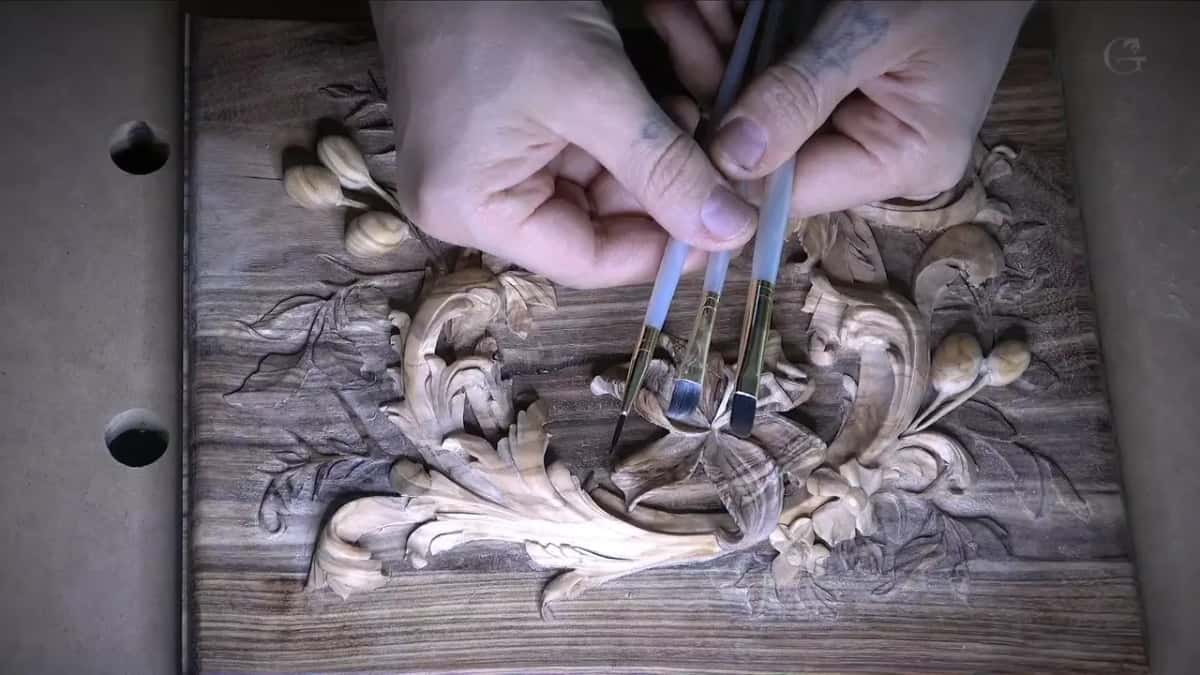
That gray was not what I was after on the box. So I made a kind of patina that isn't the real one, with a normal artist brush, some color, and wiping the upper part. Outdoors nobody has to make it, because the sun brings the real one on its own.
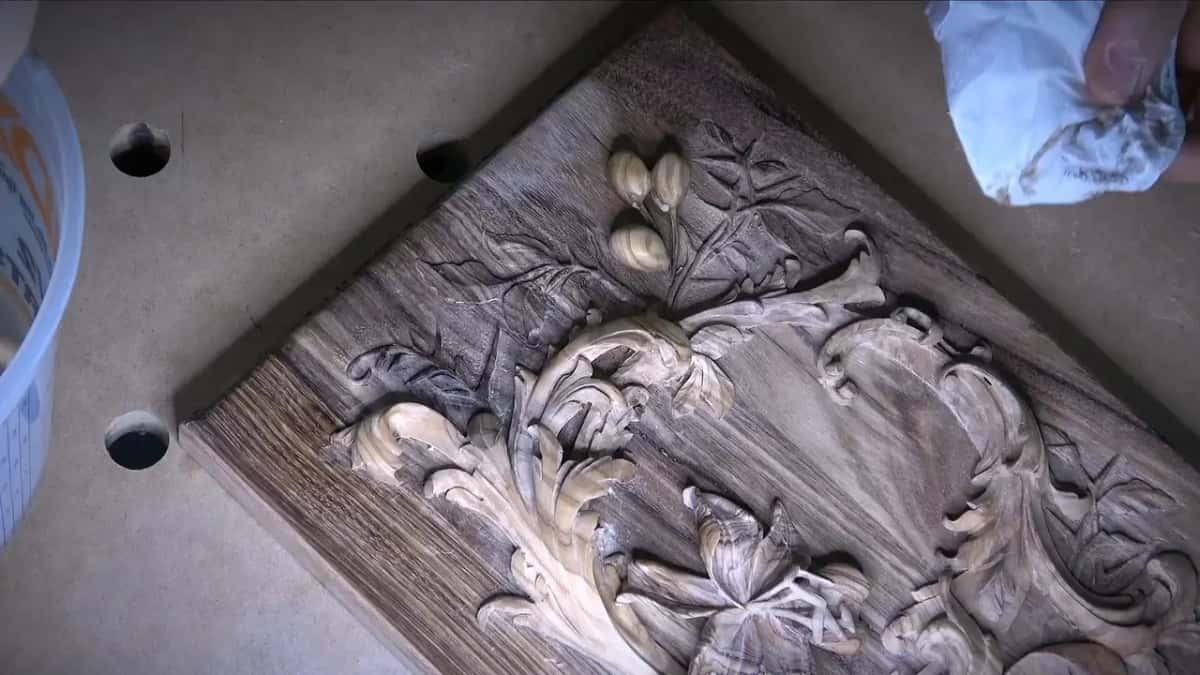
What does weather take off a carving first?
Color goes first, along with slight checking. Chapter 16 also says wood outside first shows a color change and a little checking. As weathering goes on, checks open on the faces, cracks show up near the ends of boards, and the fibers slowly erode from the surface.
Now think about the thinnest part of a carving. Back in the tray class, I talked about oak leaves I had carved, some of them only a 16th of an inch, 1.6 mm, and you can easily break one. I brushed penetrating epoxy on those and put lacquer over it, and that whole method has its own epoxy lesson in my Techniques course. A quarter inch a century sounds slow. A leaf that thin is a quarter of a quarter inch.
What happens to basswood when water gets in?
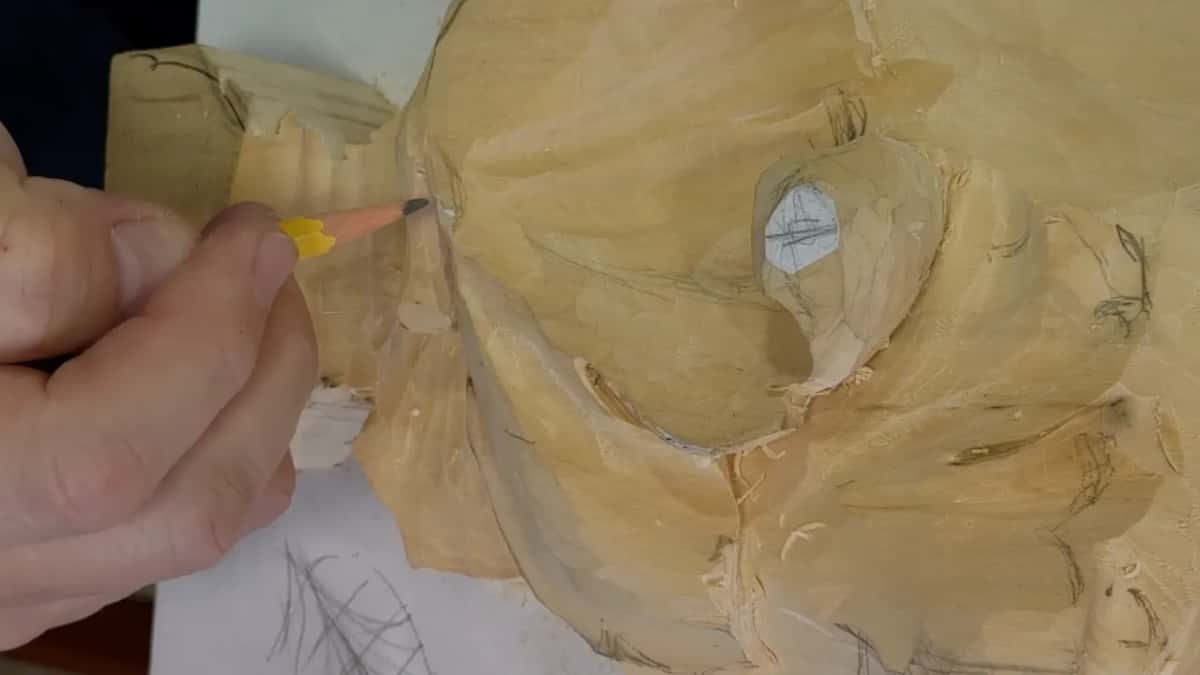
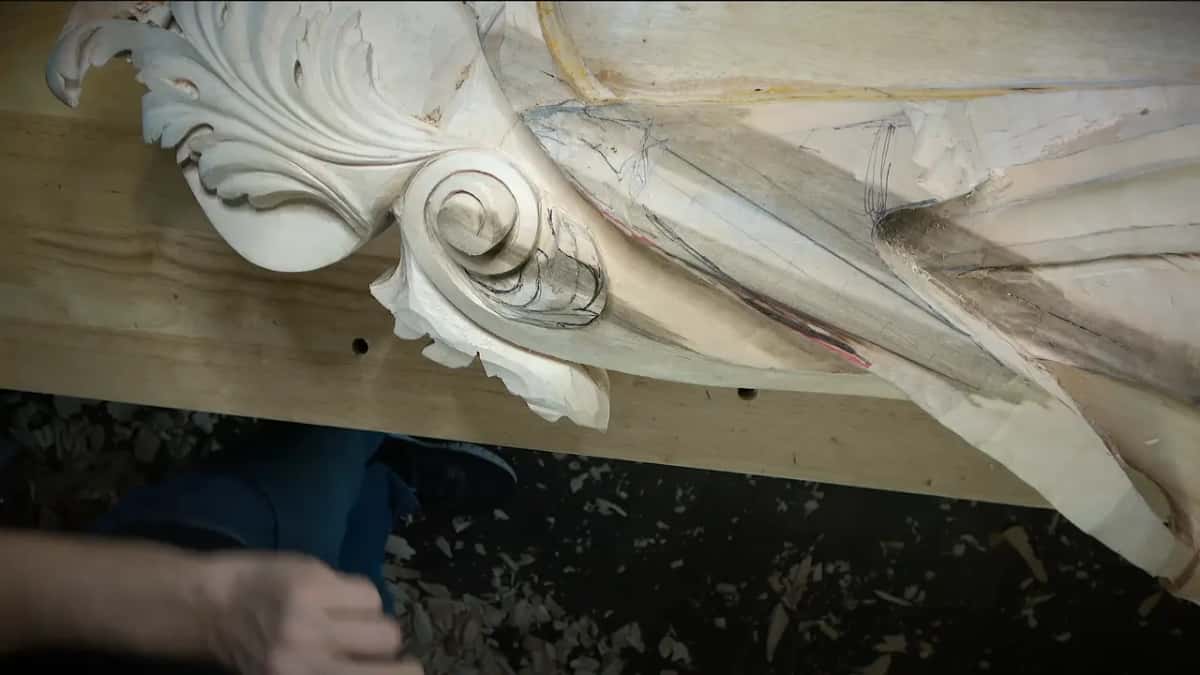
Water gets really deep into basswood and it rots, which is why I don't think it's a good choice outside. It's soft. I know some people carved basswood or limewood, placed it outside, and had no problem with it. Personally, I didn't. Outside, I used cedar and I used cypress.
Water also leaves its own color in basswood, and I've carved through it on camera more than once. On an October 2020 live stream I had a dark spot on limewood to deal with. Whenever I see dark wood like that, it's a water mark. It's damaged wood, already at the point where it started to rot, and a lot softer, so you have to be careful what tools you're using.
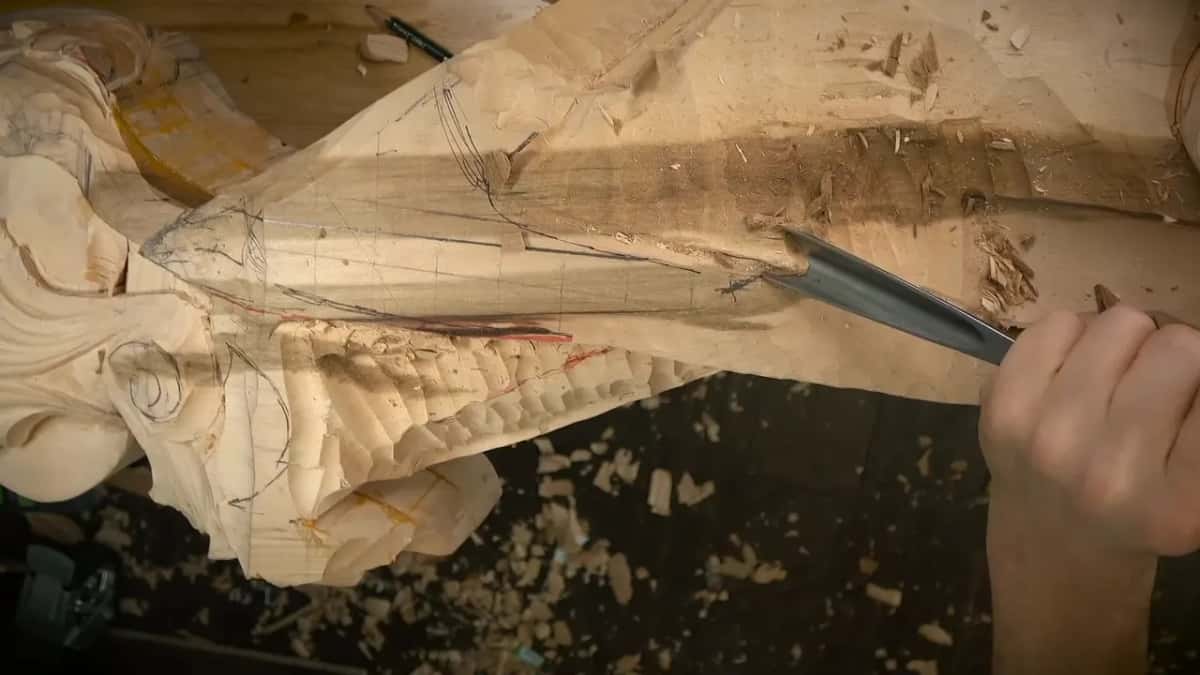
In Venice Room workshop 89 the color was green. Green there means water damage, that's already starting to rot, and even with sharp tools it's sometimes challenging, because the area is mushy. Soft is only part of it, I said in that lesson. The structure of the fibers is different too.
Workshop 86 had a darker spot like it, a little mushy, and there I said your tools must be really sharp. So the sun makes basswood gray, and water makes it dark or green, and soft.
Which woods did I use for outdoor carving?
Cedar and cypress are the two I named for outdoor work. Cypress is good for the outside, I said, and cedar is good outside because it's not going to rot as much. Those are the woods I personally used outside.
Cedar I talked about more. On an April 2020 live stream someone in the chat was carving Alaskan yellow cedar and asked what I thought of it. Yellow cedar is great, I said. Cedar wood is great. I just don't like the grain of it, because it distracts the eye, and you can't do really tiny details because of the grain. For huge details, it's one of the woods used in history.
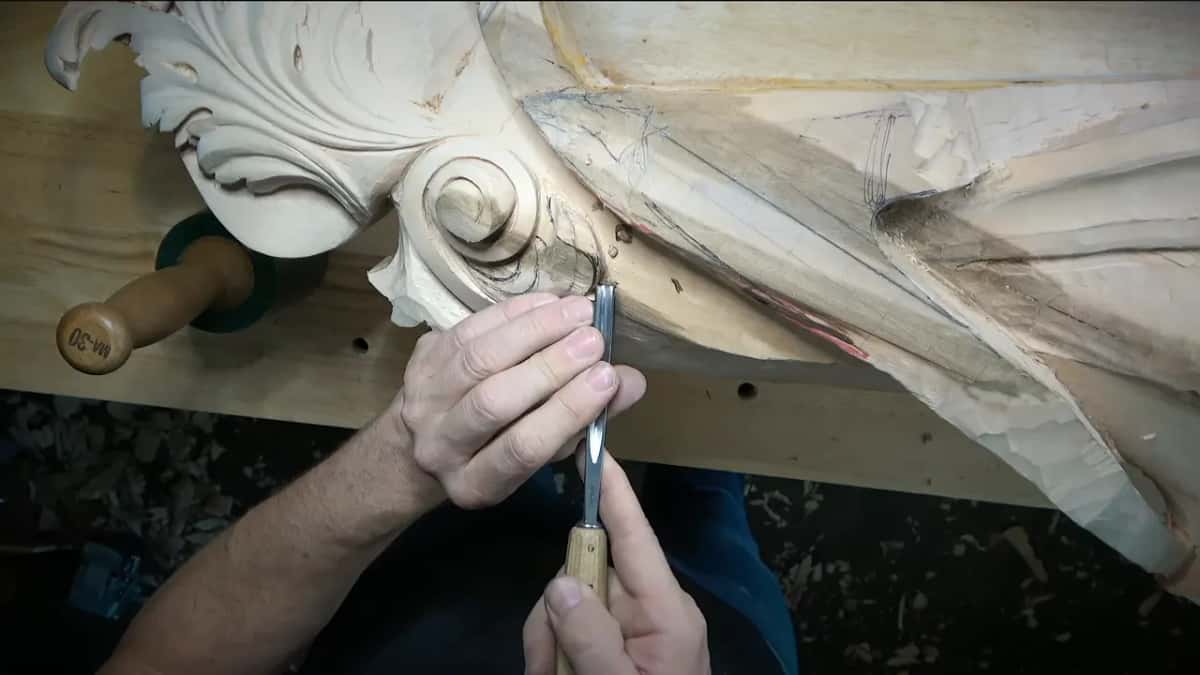
Then I went back a long way. When Solomon built the temple, everything inside was done in cedar before they covered it in gold. The cedar there came from Lebanon, a different cedar, the cedar of Lebanon. So outside you get a trade with cedar. It holds up better than basswood, but its grain gets in the way of tiny work. About cypress, I said only that it's good for the outside and that I used it.
How do you soak lacquer into basswood?
Dilute a liquid lacquer really thin and put on as many coats as you wish. I called that solution number one on the stream. Basswood has open pores and it's kind of soft, so you can penetrate it, and nowadays it's actually easy to protect, if you still want basswood outside.
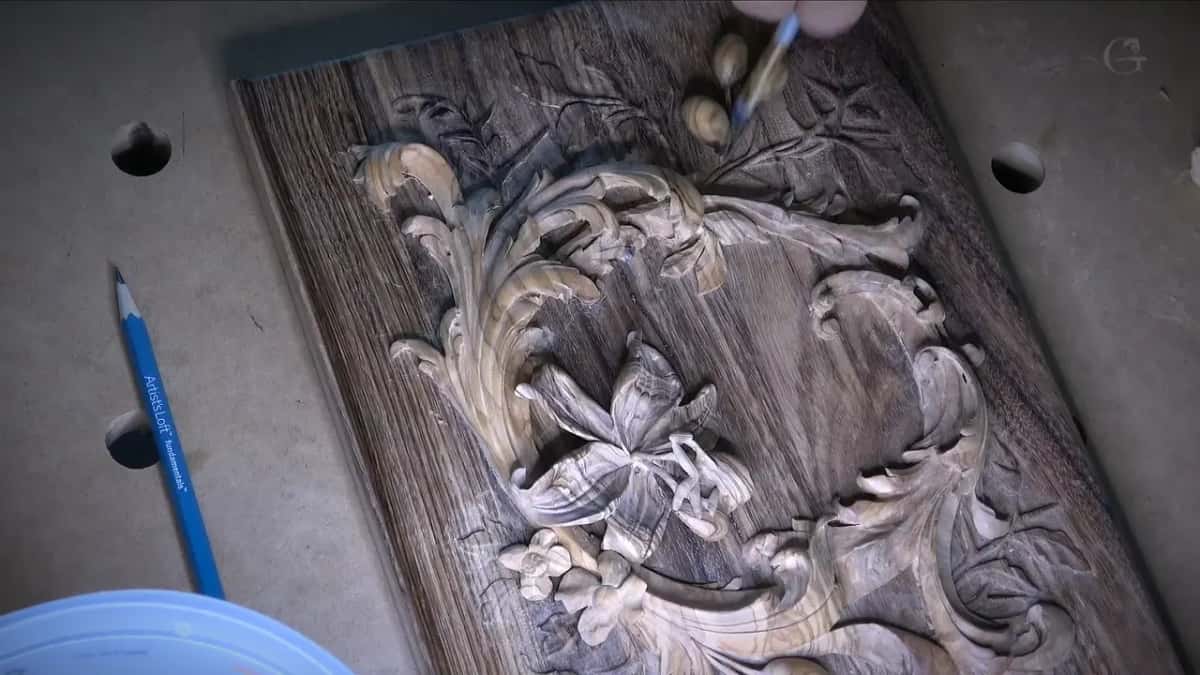
I meant normal lacquer, the liquid form you can just get. One project of mine wasn't for the outside at all. It was for inside, but I really wanted to stabilize it, and I penetrated it with, I don't know, maybe 17 coats. It just soaks right in. The idea is to get as much as possible inside of those fibers and stabilize them.
That can sound like the opposite of something else I said. In the epoxy video I said you could put lacquer on, but it won't penetrate deep enough to stabilize those fibers. Both lines are mine, said about different work. The epoxy line was about thin oak leaves. The stream line was about basswood and lacquer diluted really thin, coat after coat.
What about a product made for rotten wood?
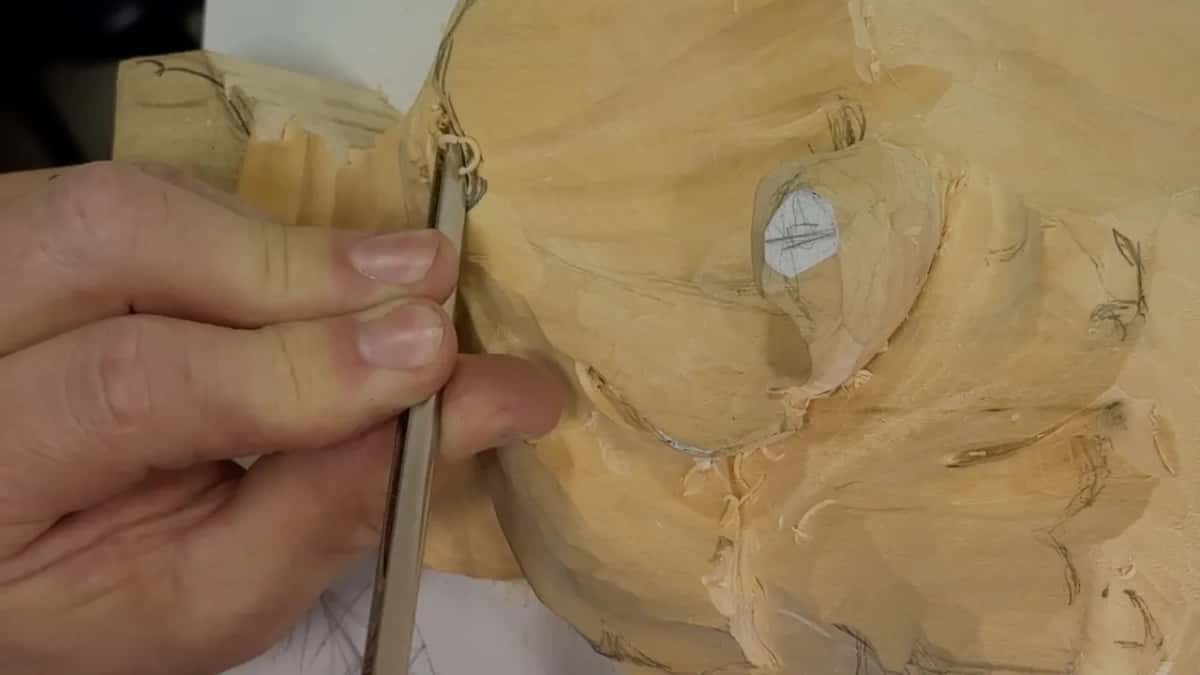
Chemicals designed for rotten outdoor wood are solution number two. You can get some that are produced just for that, to preserve the wood outside. You penetrate the whole carving with that solution, then cover it with a lacquer that's sufficient for the outside. Not all lacquers are going to work, by the way, but some of them will.
I had talked about this kind of product before. The tray lesson is where I said that if you plan to stain, there is a rot protection solution, sold for rotten outside wood, to stabilize that rot. Because the wood is soft, you can use it right there, and it becomes more solid. It doesn't change the look and it doesn't darken it. When it dries, it just looks natural.
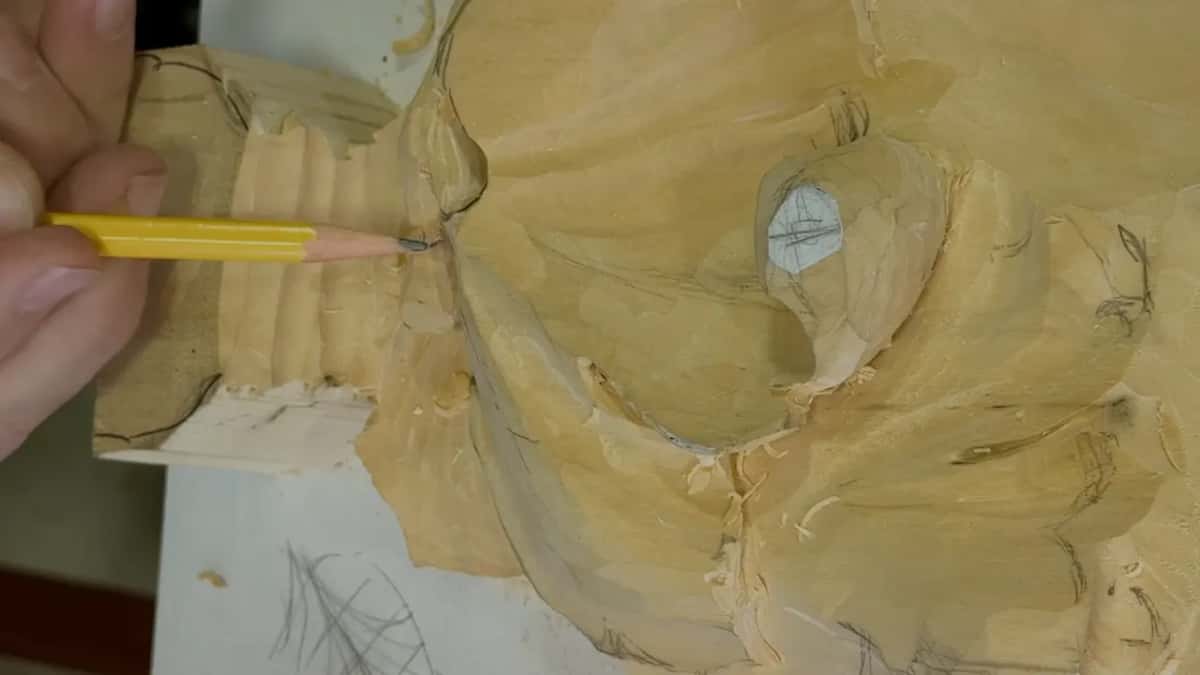
In April 2022 I used a wood hardener on a stream, made, you'd be surprised, for rotten wood, for the outside pretty much. It penetrates really deep inside and dries really quickly. I put it on twice, sometimes three times, and you can still stain the wood after it. That one is in the back cutting lesson.
Wood or product | What I said about it, in my words | Where said |
|---|---|---|
Cedar for outside | Good outside, and it rots less than basswood | Two streams |
Cypress for outside | Good wood outdoors, where I used it too | This stream |
Thinned liquid lacquer | Thinned way down, then put on many coats | Same stream |
Rotten wood product | Penetrate it all, then a lacquer for outside | Stream, tray |
Shellac with spirit | Not sure it works outside, you can try | Stream, lily |
Titebond III glue | Made for outside, but takes long to dry | Stream, class |
Would shellac hold up outside?
I'm not sure, and I said so. Whether shellac is a good choice outside, or how it will act there, I can't say. You can try. If you do, I would still dilute it with spirit as much as possible and do the same thing, penetrate the whole carving.
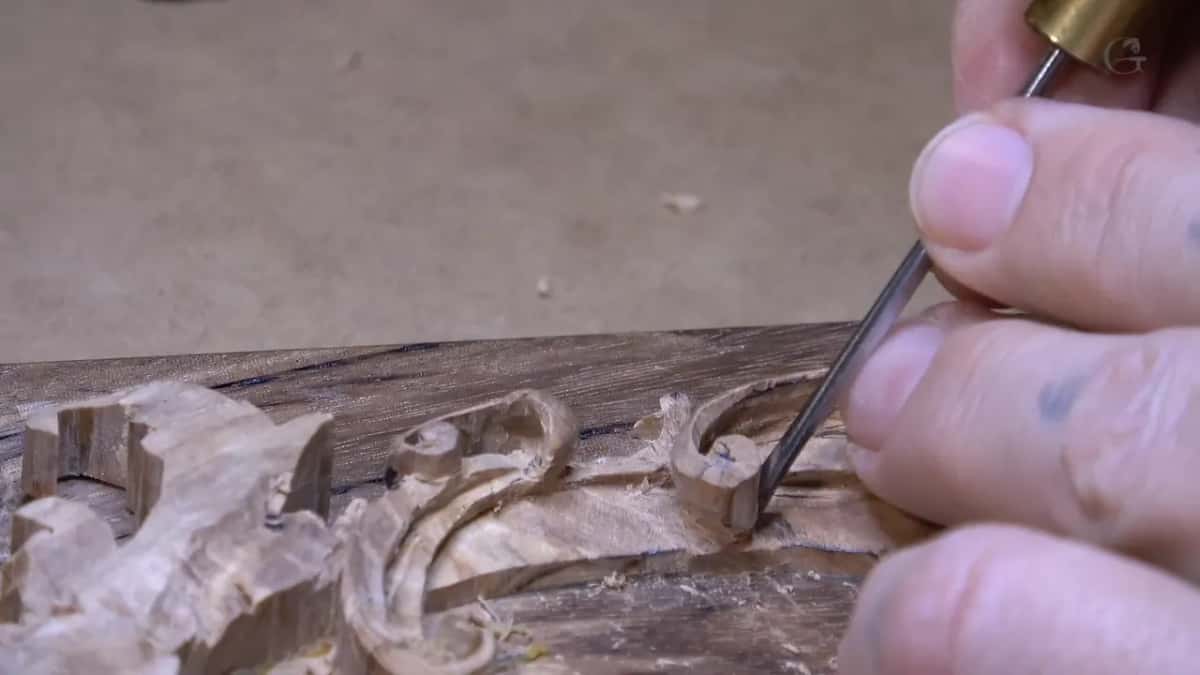
Diluted shellac came up for a different job, too. On the lily box, lesson 6, I said you can undercut as extremely as you want, and that you can thin shellac with spirit as far as it goes and penetrate it multiple times. That way it binds all those fibers on the inside, and it holds really long.
For a natural color with no shellac and no stain, I gave a second way in the same lesson. Dilute a carpenter's yellow glue, Titebond in my case, with water, as thin as you can, and soak that area with it. Thin indoor work was the job there. For outdoor work on the stream, I named lacquer, the rot product and shellac.
Which glue holds a carving together outside?
For a project going outside, I use Titebond III. Back in April 2020 I said on a stream I don't use much III unless the project is going outside, and if it's going to be hit with the weather I use it, because it's made for the outside. Inside the house I don't like it. When it dries, it leaves a brown marking.
During the Byzantine acanthus class I glued a second layer on and gave one more reason. For the outside it's good, but it just takes too long to dry. With Titebond original or II, in half an hour you already can carve.
Where should an outdoor carving sit?
In shade, if you have some. Keep it out of the sun's way, because the sun turns it gray. That was the last piece of advice I gave that viewer.
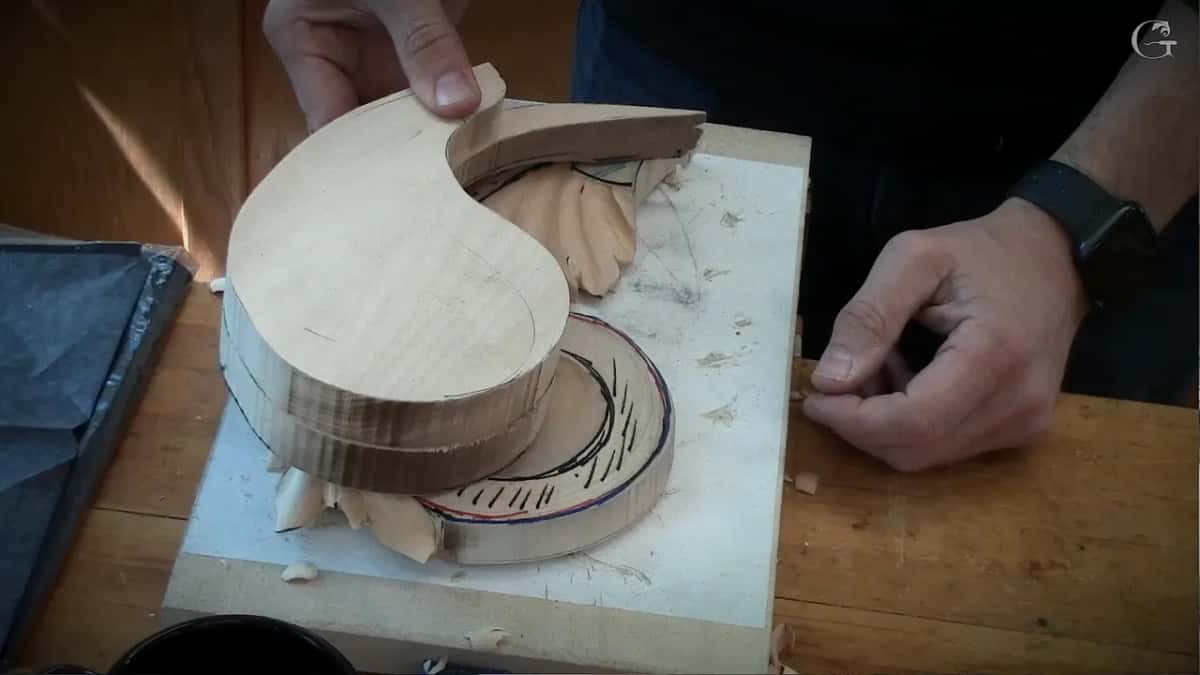
Very little of my own work goes outside. I carve for the inside of houses, and I said as much. The panel on my bench that day was still looking rough, a tulip and a couple of flowers, carved for my school.
Want to see a soft board turn into flowers and foliage? Would you like to watch me brush and spray a finish onto a real carving? Every stream of this course is in Livestream events, and the lily box, the tray and the Venice Room sit with it on the tuition page.
How it's done
- Pick cedar or cypress. Both are woods I personally used outside, and cedar resists rot better than basswood.
- Thin the lacquer and soak it in. If basswood has to go out, thin a liquid lacquer way down and put on coat after coat, so it gets into the open pores.
- Or use a rotten wood product first. Soak the whole carving with a solution meant for rotten wood outside. Then a lacquer that's sufficient for the outside goes over it, since not all lacquers work.
- Glue with Titebond III. Weather will hit it, and III is made for that.
- Give it shade. Sun on the carving brings the gray, so place it where some kind of shade falls.
Frequently asked questions
Does a finish keep wood from going gray?
According to the Wood Handbook from the U.S. Forest Service, UV stabilizers in finishes do not prevent color change. Everything I named for a basswood carving outside dealt with rot and soft fibers. Shade, somewhere the sun won't reach, was my whole answer for color.
Is cedar a good wood to carve?
Cedar wood is great, I said on a 2020 stream, and yellow cedar too. I don't like its grain, because the grain distracts the eye and won't let you do really tiny details. Outside, cedar beats basswood, since it rots less.
Why is there a dark spot in my basswood?
A dark spot in limewood is a water mark, and the wood there is damaged. On one stream I said it's already at the point where it started to rot, and a lot softer. Green means water damage as well, so carve there only with really sharp tools.
What to carve next