
Alexander Grabovetskiy, woodcarver, School of Woodcarving · Published 2022
Will the thin undercut parts of a wood carving crack?
Quick answer: A thin undercut is a spot you might expect to crack first, and on my own high relief it hasn't. Taken paper thin, the part just wiggles. Carved out, it holds just short bits of straw, and pieces of mine 20 and 25 years old still show no movement.
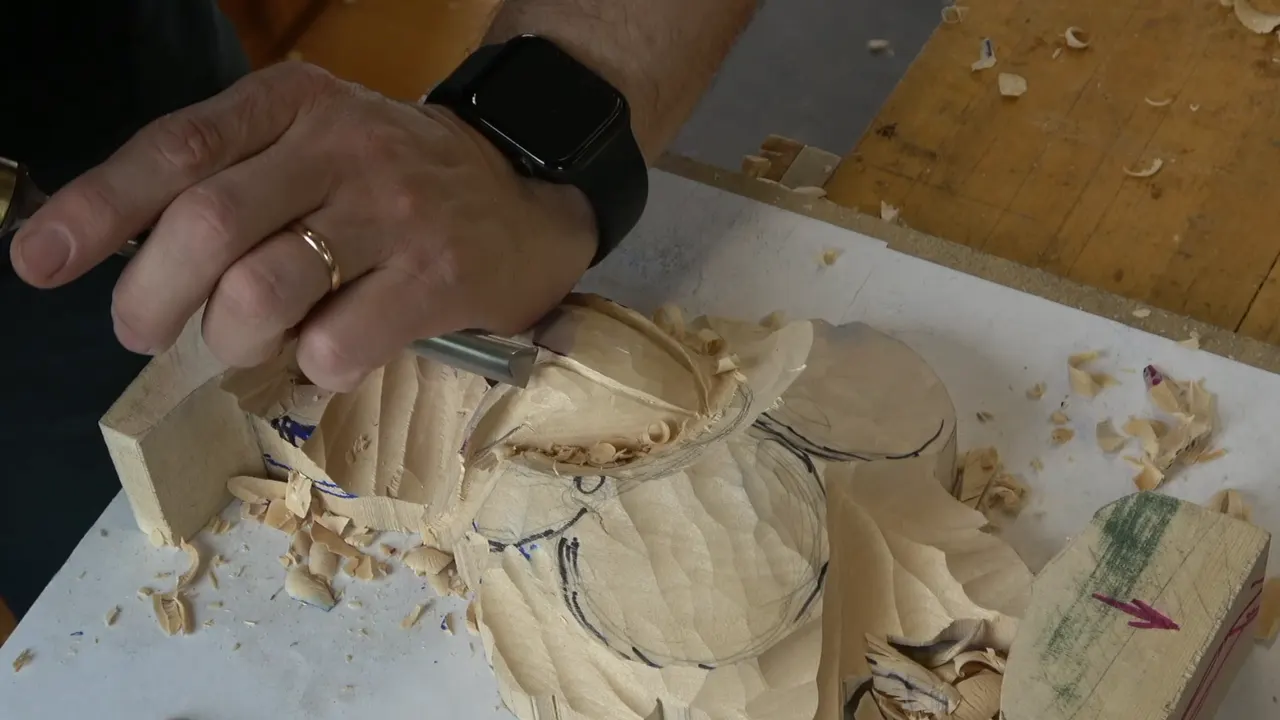
A thin undercut part is not where wood carving cracking has shown up on my own pieces. I said so on the November 2022 livestream. My high relief has a lot of airborne parts and no cracks. Take one of those parts down paper thin and you can see it just wiggling.
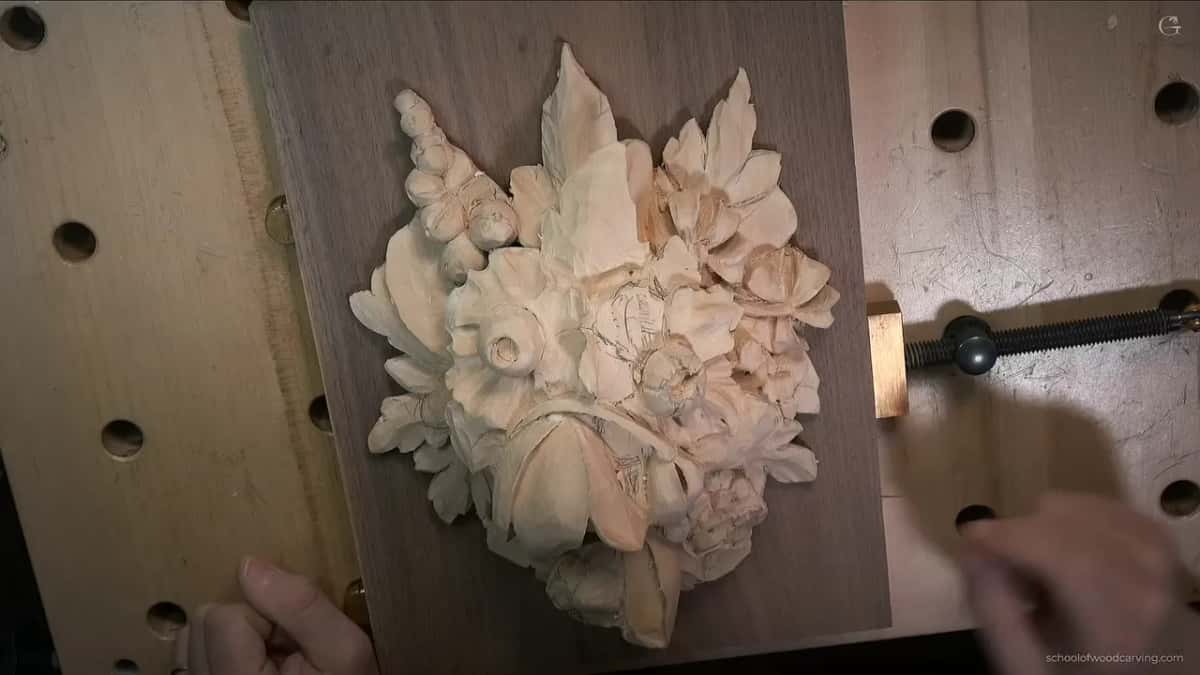
Wood movement is the common problem in woodworking, and everybody has a challenge with it. That was the whole subject of the stream. Do you love a leaf that stands up off its background with air under it? Would you hate to see it split next winter? Then look at what I saw on my own carvings, and at what that one answer leaves out.
Five lines from that answer
Undercut paper thin, an airborne part just wiggles.
Carved out like that, it keeps no long straw running through it, only short bits.
Solid boards move more.
Pieces of mine at 20 and 25 years still don't move.
This one stream says nothing about breaking a thin piece by accident, so I leave that out here.
What happens to a paper thin undercut?
It wiggles.
I excavate the openings on high relief, and then I go in underneath the airborne parts. Airborne is my word for a part that stands up in the air off the background, with the wood under it carved away. Thin it down far enough and you watch it move.
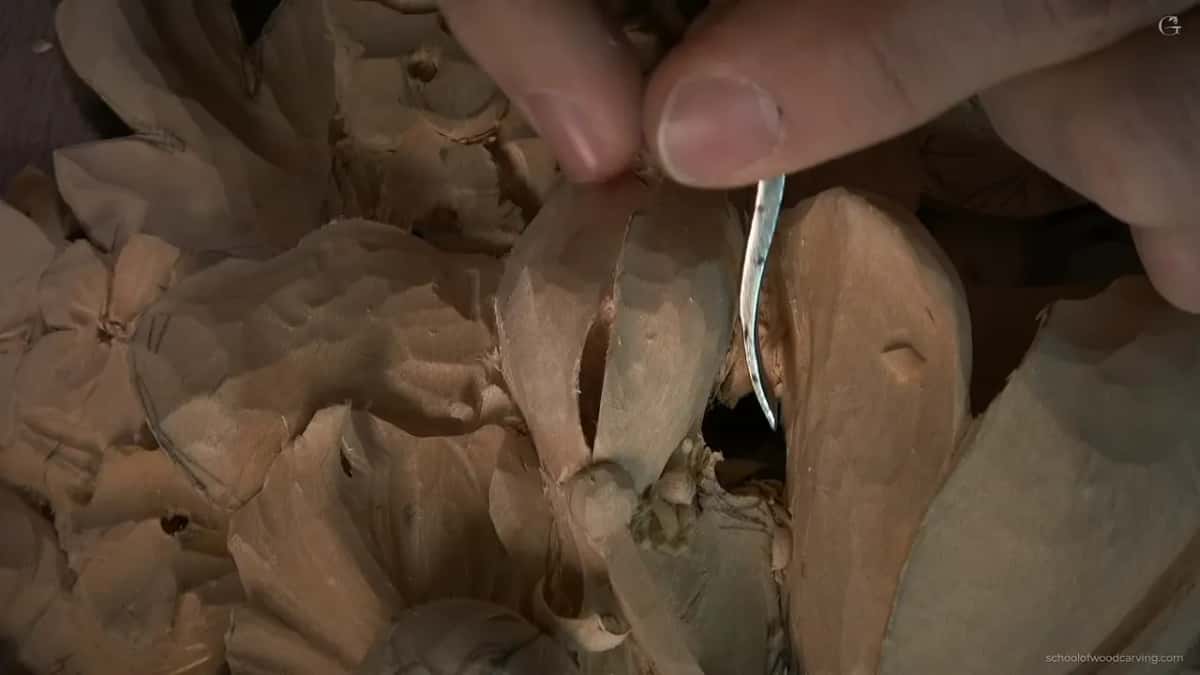
So what is left inside a part like that? You moved those fibers out. No continuous pipe goes through anymore, and there are no more straws, only short parts of them still in there. I call the fibers of a board straws, and the picture behind that word is on the December 2022 livestream.
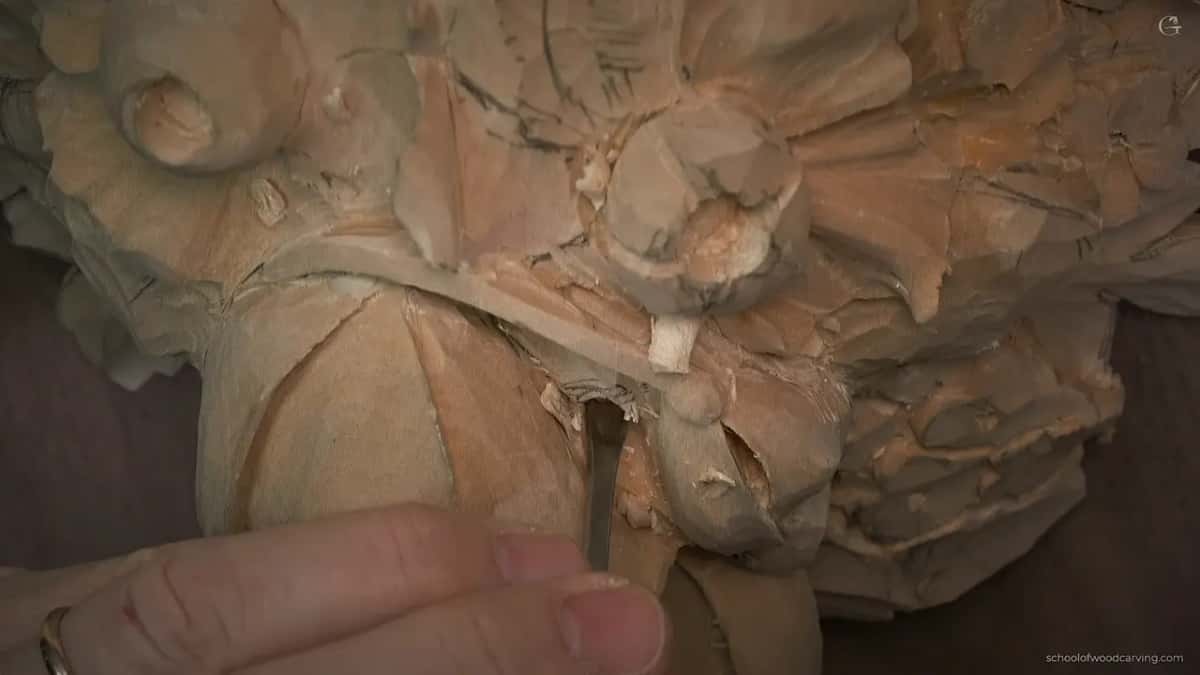
Hollowing out the back of a carving is a different job, worked from behind, and it has its own page, Carving Grape Onlay 12.
Why does a solid board move more than high relief?
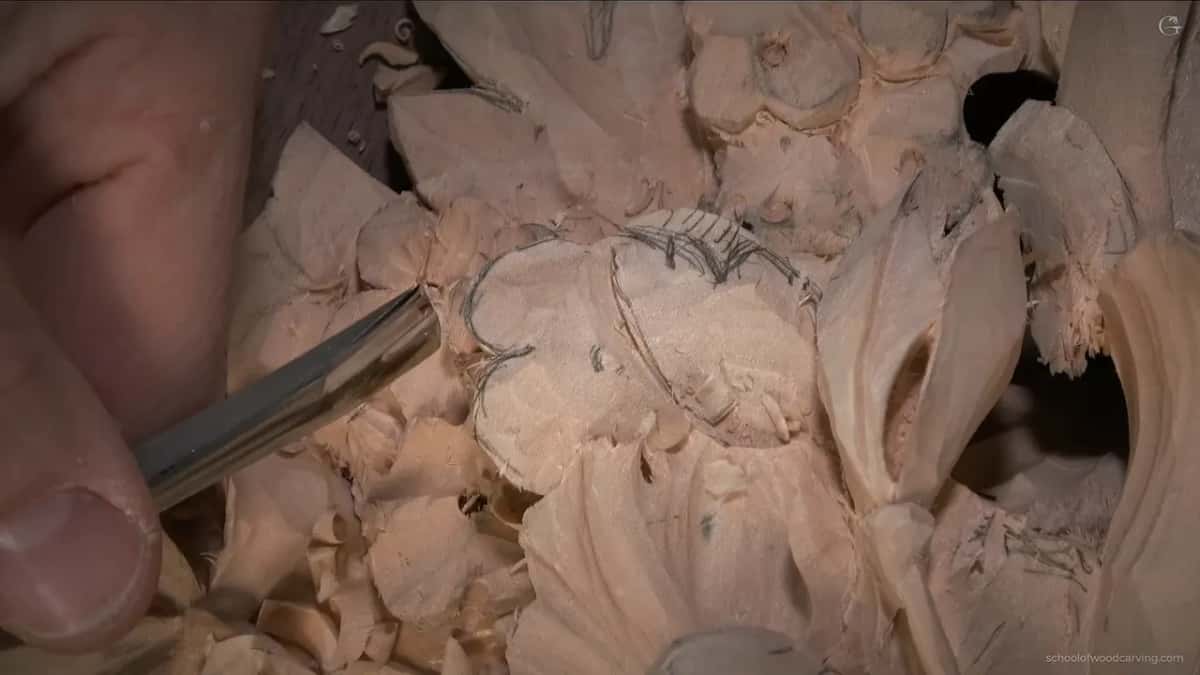
On a solid board those fibers work together. A board like that can go wider or narrower with the air, and it can cup and warp and twist on top of that. Wood takes water from the air and gives it back, and the science word for that is hygroscopy. Once a lot of the wood is gone, as it is in high relief wood carving, I said on the stream that the movement is going to be minimum. The room I carve in is just my studio, by the way. The machines live in another place. My article on how long wood takes to dry for carving has the number I keep the air at in there.
Do my old pieces show any wood carving cracking?
The ones I showed on the stream don't, and I showed one piece after another. Absolutely zero on one of them, and the next one was even older.
And I have pieces 20 years old, 25 years old, and they still don't have any movement. That is what I have seen on my own work.
Here is that answer laid out, piece by piece.
Part of wood | What I saw or said about it, live | Where said |
|---|---|---|
A solid board | Fibers work together, and the board moves more | Minute twelve |
The thinnest undercut | Thin enough that you watch it just wiggling | At 11:05 |
Airborne high relief | No continuous pipe, only short parts of straws | Same answer |
My older pieces | Twenty and twenty five years, still no movement | Last minutes |
The visible grain | Straws wandering on the surface, which we like | Minute eight |
Where does the visible grain come from?
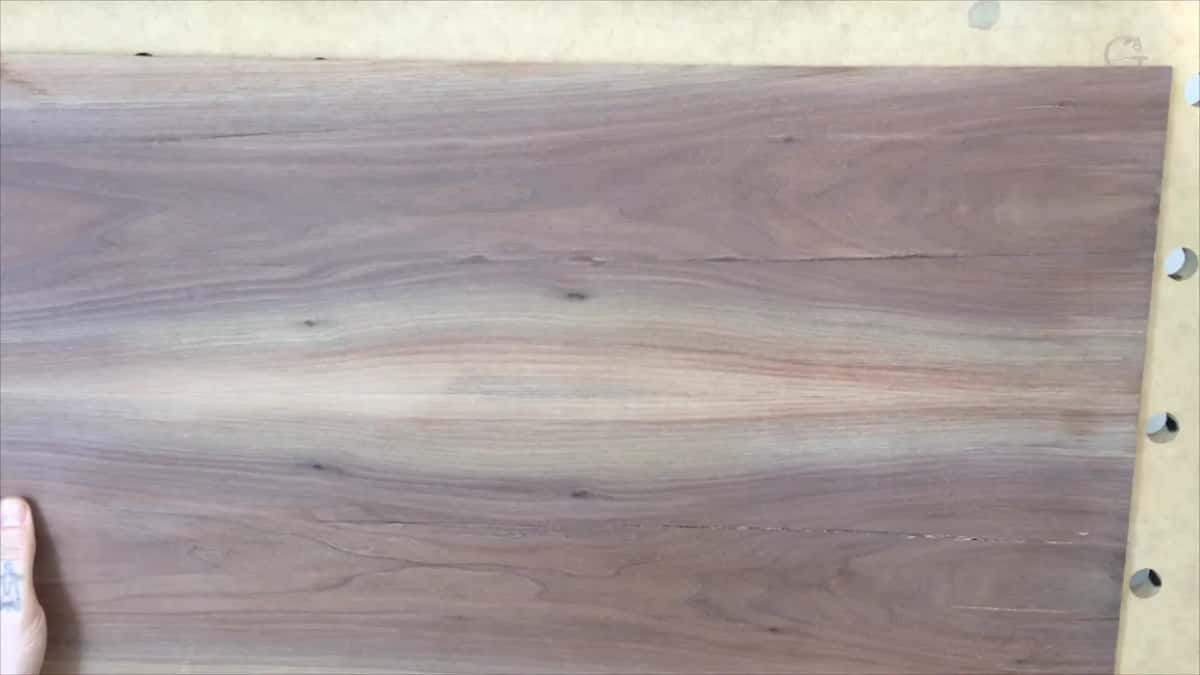
From straws that don't run straight. Inside a board a straw has all kinds of movement right on the surface, and that movement is the grain on the face of the board. Which is what we like, actually. The wood science words for it are in the wood grain entry.
What this one answer does not cover
This stream was about wood movement. It says nothing about snapping a thin part with the tool while you carve it, or about which way the grain runs through a leaf. How fast a thin part dries is not in it either. For drying, read about wood drying and the Wood Handbook from the U.S. Forest Service.
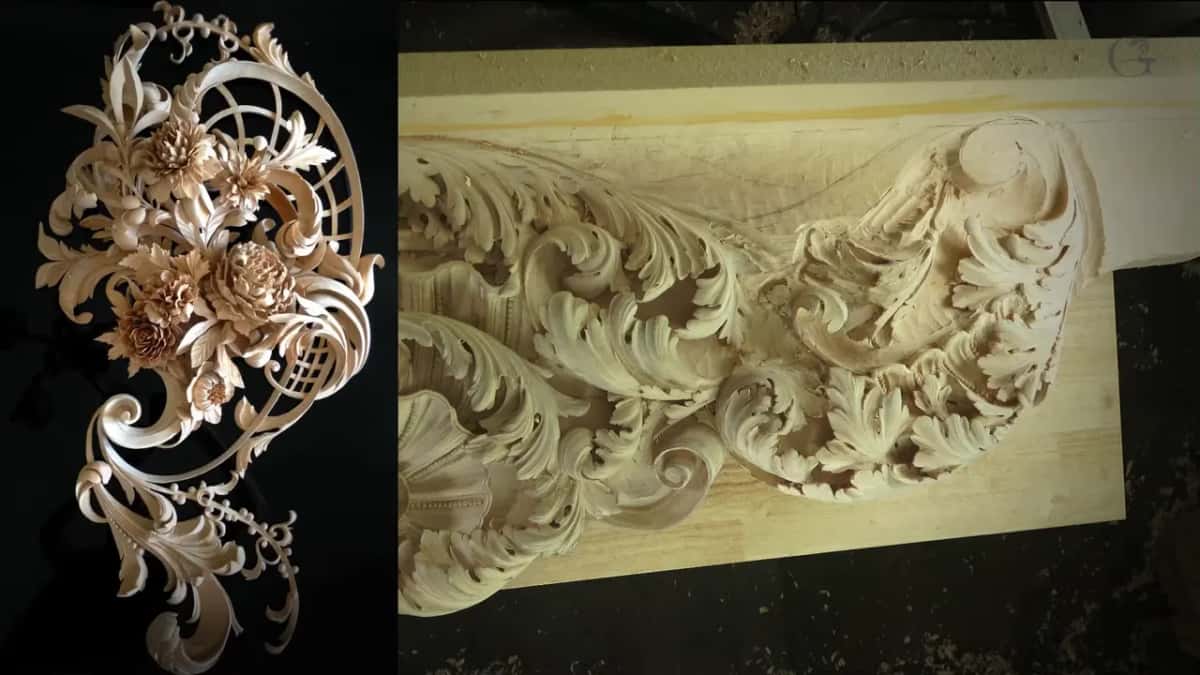
Want to watch a leaf go that thin and stand up in the air? Every stream of this course is on the Livestream events page, and the Grinling Gibbons class in Maine goes deep under the flowers. The full lessons open from the tuition page.
How it's done
- Excavate the openings. Dig out the openings between the parts first. High relief with many airborne parts means plenty of excavation.
- Undercut the airborne parts. Go in under each part that will stand in the air. On some of my pieces those parts end up paper thin.
- Carve a lot of material away. Take out plenty of wood. Once that much is gone, the movement left over stays small.
Frequently asked questions
How long do wood sculptures last?
I can only speak for my own carvings. Some of my pieces are 20 years old, some 25, and they still don't have any movement. About carvings in general, that stream gives no answer, so I won't guess at a number.
What does airborne mean in wood carving?
In my carving talk, airborne means the wood underneath a part is gone, so it stands up off the background. I have a lot of them on high relief, with plenty of excavation going on around them. A paper thin one wiggles.
Why does wood grain look wavy?
Inside a board the straws don't go all the way straight. They wander, with all kinds of movement right on the surface, and that wandering shows up as grain on the face. I told the stream that's what we like, the movement of the grain.
What to carve next