

Alexander Grabovetskiy, woodcarver, School of Woodcarving · Published 2020
How do you keep your back from hurting when you carve wood?
Quick answer: Keeping your back from hurting while you carve is, on my own bench, mostly about not bending down to the piece. Big work gets done standing, the piece goes up on rolling drawers and a block, and every hour I walk off for a while. I told a live stream exactly that, and I made clear I'm no physician.
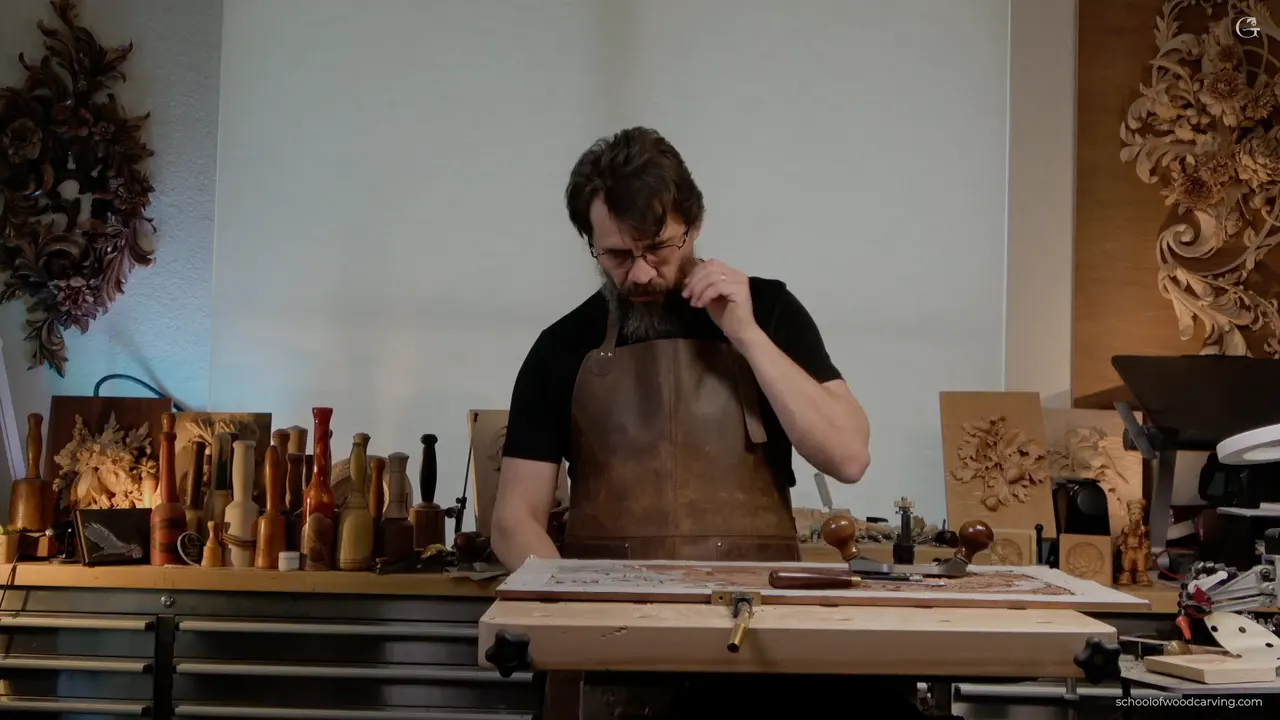
Wood carving ergonomics, on my bench, is mostly one rule: quit bending over the work. I stand for the big pieces, I bring the piece up to me, and I leave the bench once an hour. That was the subject of the first video in this lesson, a live stream about back pain, the lower back to be exact. Early on I told everyone watching that I'm not a doctor.
Have you ever stood up from a carving and felt your back before your legs? Did it stay with you into the night? I told the people watching that day I know for a fact they go through the same thing I do.
What you get here is my own experience, with the numbers I gave, and with no promise that your pain goes away. I made no such promise on the stream either. At least it helped me, I said, and that is all I can honestly tell you.
The stream got off to a bad start, with my sound gone for the first minutes while I kept apologizing. On camera that day was a carving ten feet (3 m) long, so long it nearly reached the window of my shop. The pictures on this page come from my other lessons on Vimeo, Venice Room 4, 31, 67, 76 and 81, my Lily box lesson and Furniture Panel 38, where you can watch me standing, carving and setting up the holding.
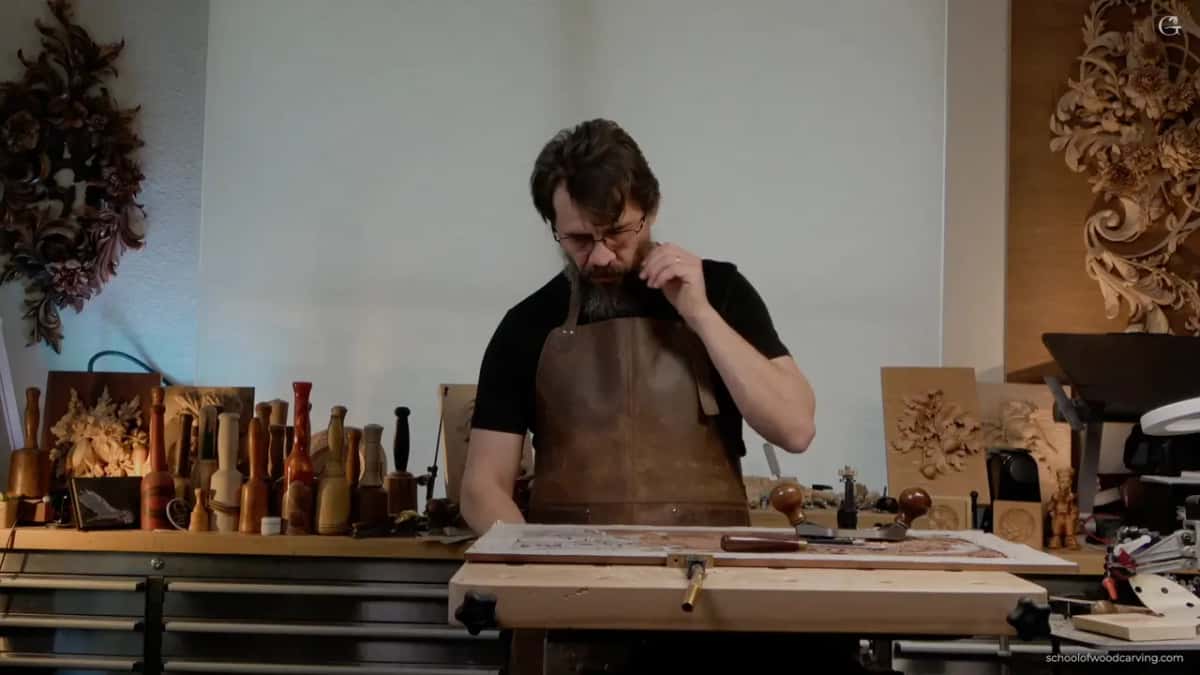
Six changes in my wood carving ergonomics
Standing is for the big pieces, the chair for micro detail.
Rolling drawers lift my work, and a block of about 4 inches adds more.
Some schools put a raised bench on the regular one.
My watch sends me away every hour.
Every break means some twenty squats.
In the gym I work the muscles around my spine, carefully, since deadlifts have hurt me too.
How did my back get this bad?
Farm work came first. As a boy in the Soviet Union, school ended on May 31 and started again on September 1, three full months, and on June 1 I would jump on a bus out to my grandfather and grandmother in the countryside. Hills, forests, a river. I helped my grandfather with whatever farmers do, hay included.
My brother, my cousins and I would compete over who could take the heaviest load. By fourteen I had hurt my back, and it has come back on me again and again ever since.
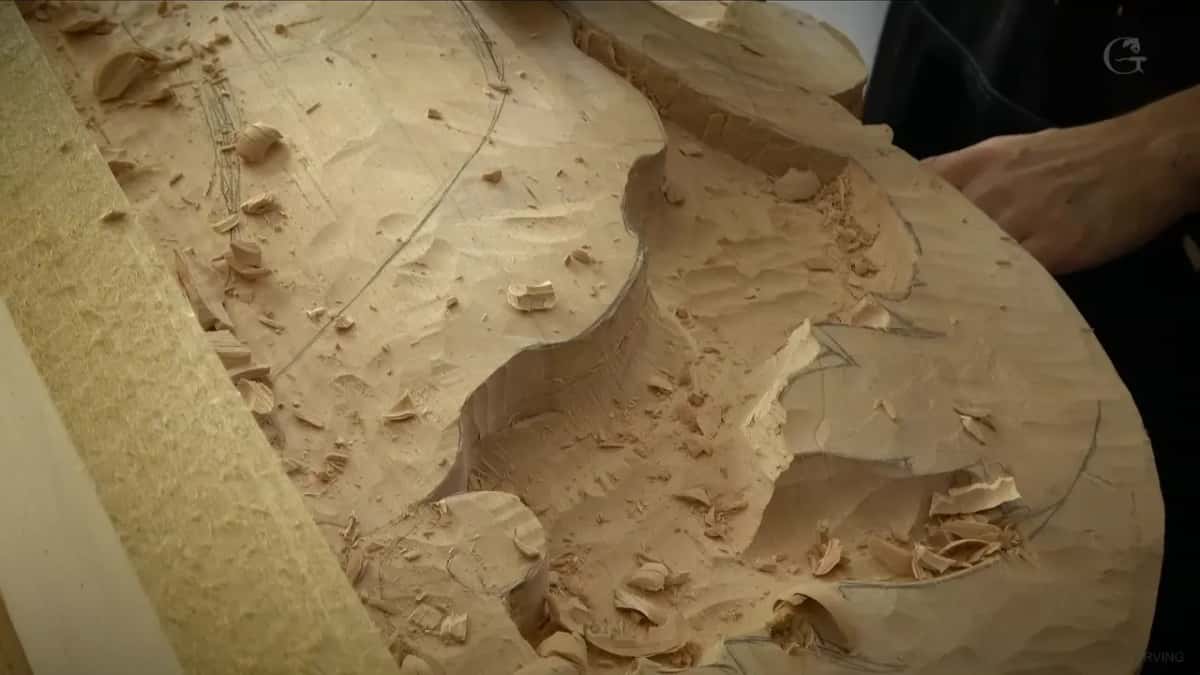
Then came years of cabinetry and furniture. I installed big cabinets myself, true custom work from 3/4 inch (20 mm) plywood, not simple stuff. A lot of my back pain had to do with that job, with the way I worked, and I told the stream the same applies to carving: the way you carve matters.
Let me tell you a story. A few years before that stream I was getting up around 3:45 in the morning to read, pray and drink my coffee on the sofa. One morning I had a little back pain, nothing unusual for me. Then I tried to get up.
I couldn't even scream. I blacked out completely and fell, and when our Persian cat woke me, my watch said forty minutes had gone by. I woke my wife, we rushed to the emergency room, and the checks tied it to the lower part of my back.
Why does carving hurt your back more than other woodwork?
Carving keeps you bent in one spot. Someone installing kitchens takes a break before lunch, then lunch, then one after, and hardly needs more, because he is always moving around. When I built cabinets and furniture I took no breaks at all, for that same reason.
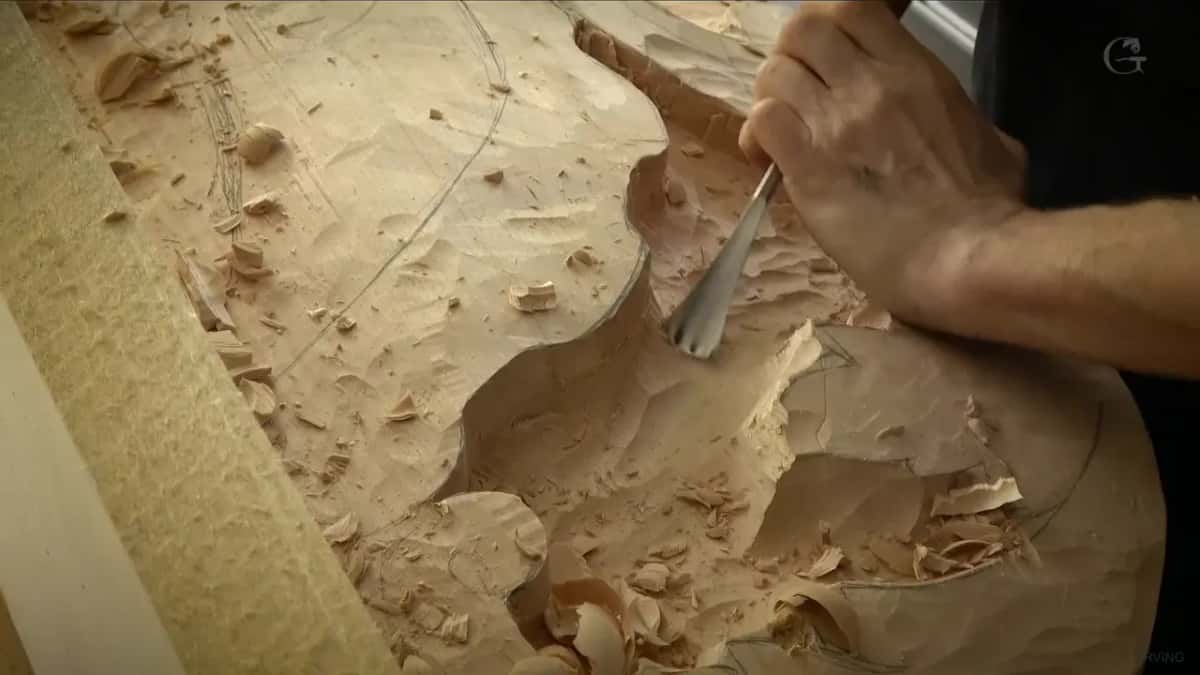
At the carving bench you bend down and carve, and if you carve all day long, I told the stream, that is not fun. Your hands do the work, mostly the palms, while the rest of you stays still. By the end of a day spent bowed over the wood like that, a lot of stress has landed on your back.
Is it better to sit or stand when you carve?
Standing, for my back, and I have done a lot of work both ways. Sitting gave me much more pain in the lower back. It feels like a rest, but it isn't, because you keep bowing down over the piece and stressing your back the whole time.
For a long time now I don't sit and carve. I mean the huge pieces when I say that. On micro detail, without a lot of big movements, a chair is probably fine, and I said so. Sitting also slowed me down, and slow is no bueno for me.
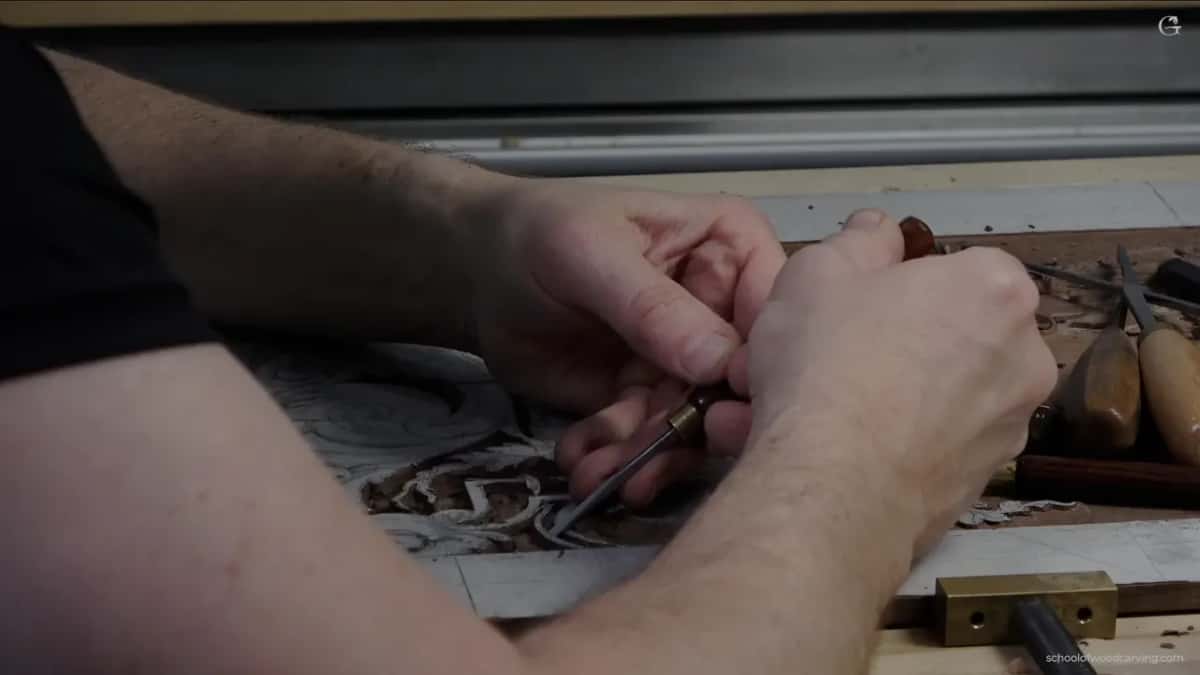
A viewer told me that day he has to sit until he can raise his bench. He is six foot four, a lot taller than me, and I'm five ten, maybe five eleven. Remember him.
What is the right wood carving bench height?
Woodworkers go by a rule for their bench. Stand beside it with your arm hanging down, and your knuckles should touch the top. That makes sense for them, I said, because working a plane you use your whole body, and the whole body moves.
Carving is different, and bending over all day is not comfortable. For carving I go by the elbow instead of the knuckles, with the work about where my relaxed elbow sits.
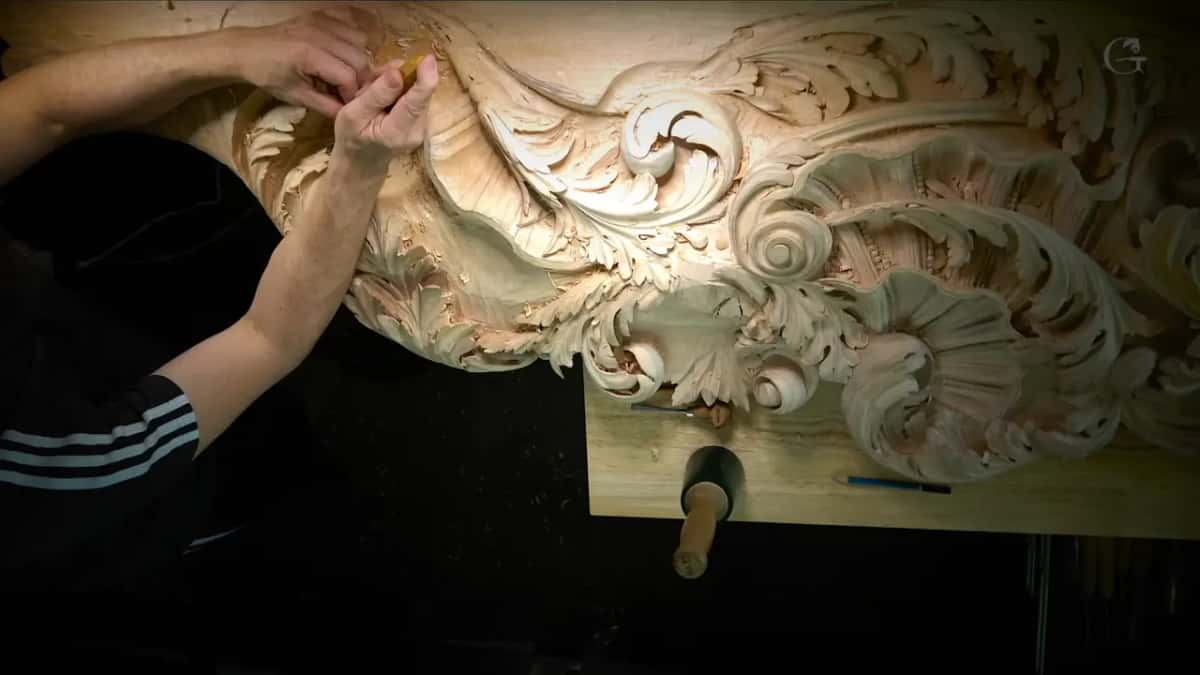
Some people in the chat said 42 inches (107 cm). Not necessarily, I told them. My tall viewer told us 42 inches would do nothing for him, and in his case I figured about 48 inches (122 cm), like half of the wall. It's up to you, of course, whether you want to save your back.
Some big pieces can't be carved lying flat at all. Those I rotate and work around.
The setups I talked about that day, and where each one belongs:
| Setup | Said | Use |
|---|---|---|
| Woodworker's bench | Knuckles touch the top, right for a plane and the whole body | cabinet and furniture making |
| Rolling drawers | Taller on their own wheels, with every tool in reach | my own shop |
| Block underneath | Roughly four inches of wood set under the piece | when a piece needs height |
| Bench on bench | Three or four boards, nothing special, set on the regular bench | carving classes at schools |
| Narrow bench | Only 16 inches (41 cm) across and 8 feet (2.4 m) long, with drawers | my sharpening station |
| Plate board | A 2 inch (5 cm) plate on plywood with a small clamp, so the work turns | micro detail work |
How do you raise the work without an expensive bench?
I bought rolling tool drawers. My gouges used to hang on a wall, around half a thousand of them, and now they sit organized in the drawers, where I know exactly what to grab. The other advantage is height. On their wheels the drawers already stand taller on their own, and when a piece needs more, I set it on a block of wood about four inches (10 cm) high.
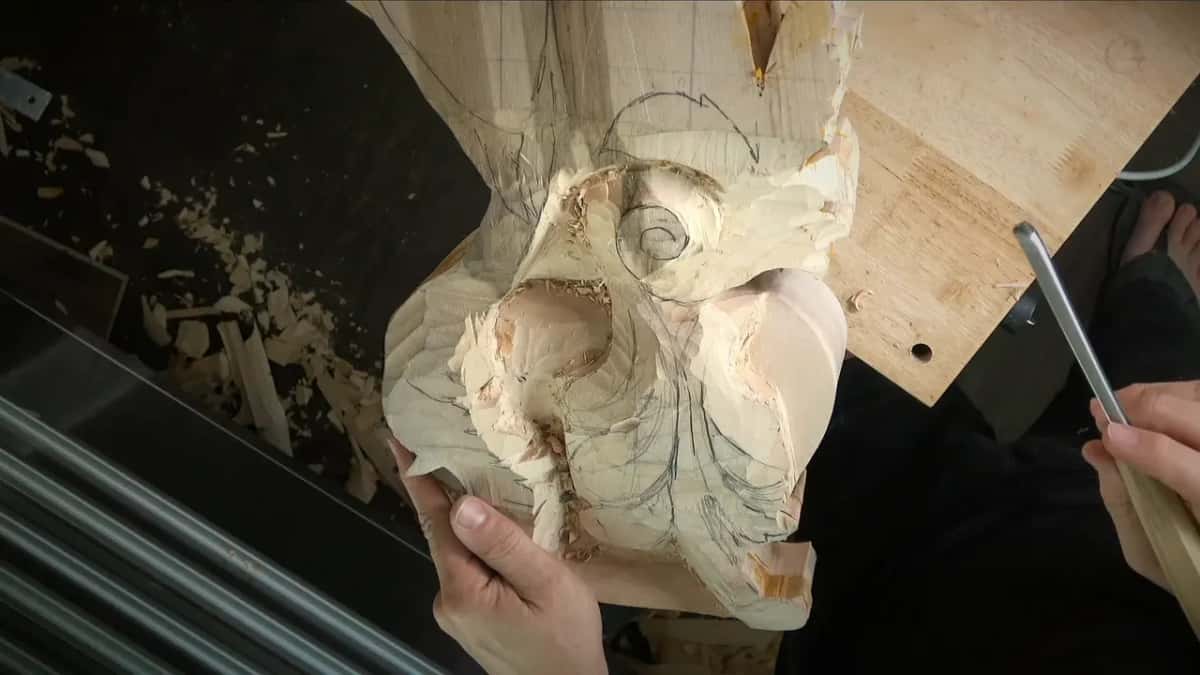
I did not want to spend much on a workbench. The goal was cheap but still stable, and I have tried several systems. What I liked most was simplicity, plus the freedom to move around.
One of my benches is narrow, only 16 inches (41 cm), and 8 feet (2.4 m) long, with lots of drawers. That one is my station for sharpening, the work I teach in my sharpening course, and I love that it takes so little space. A couple of others are a little wider, because for those I need more stability, with no rocking.
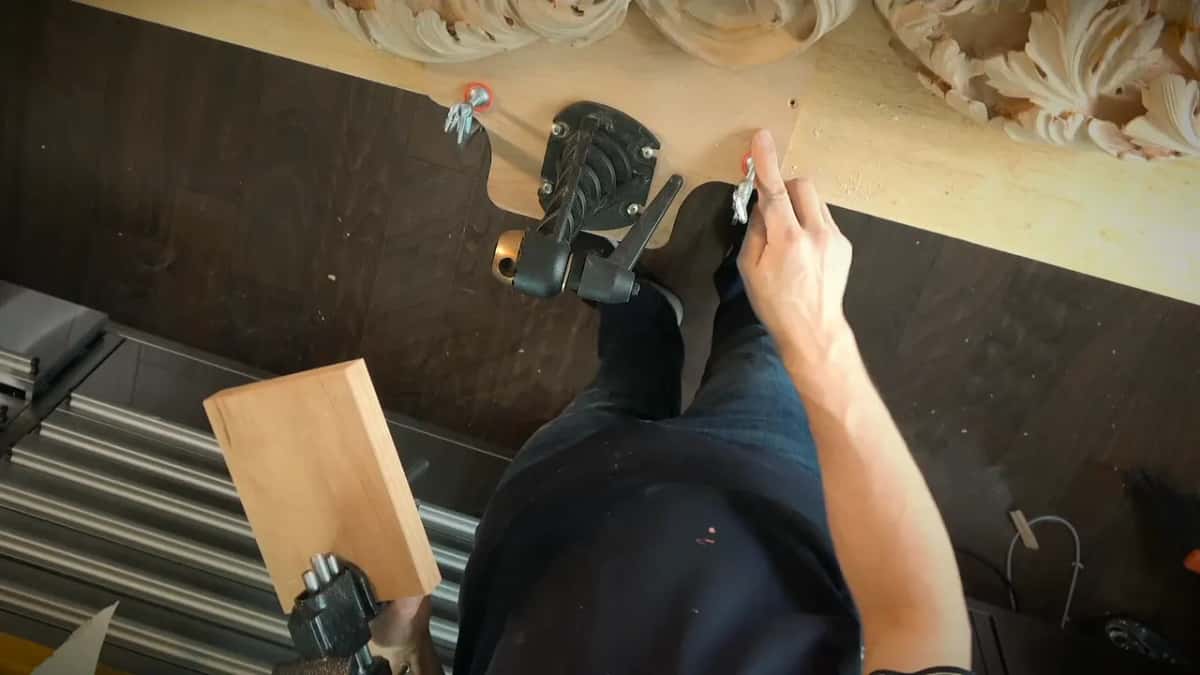
Electric drafting tables, the kind that go up and down, came up too, from someone in the chat. I had looked at those, and some carvers use them all the time. They are not cheap, though.
Schools where I teach did something for carving classes. They set a raised bench, a small extension, right on top of the normal one. Nothing special, three or four boards.
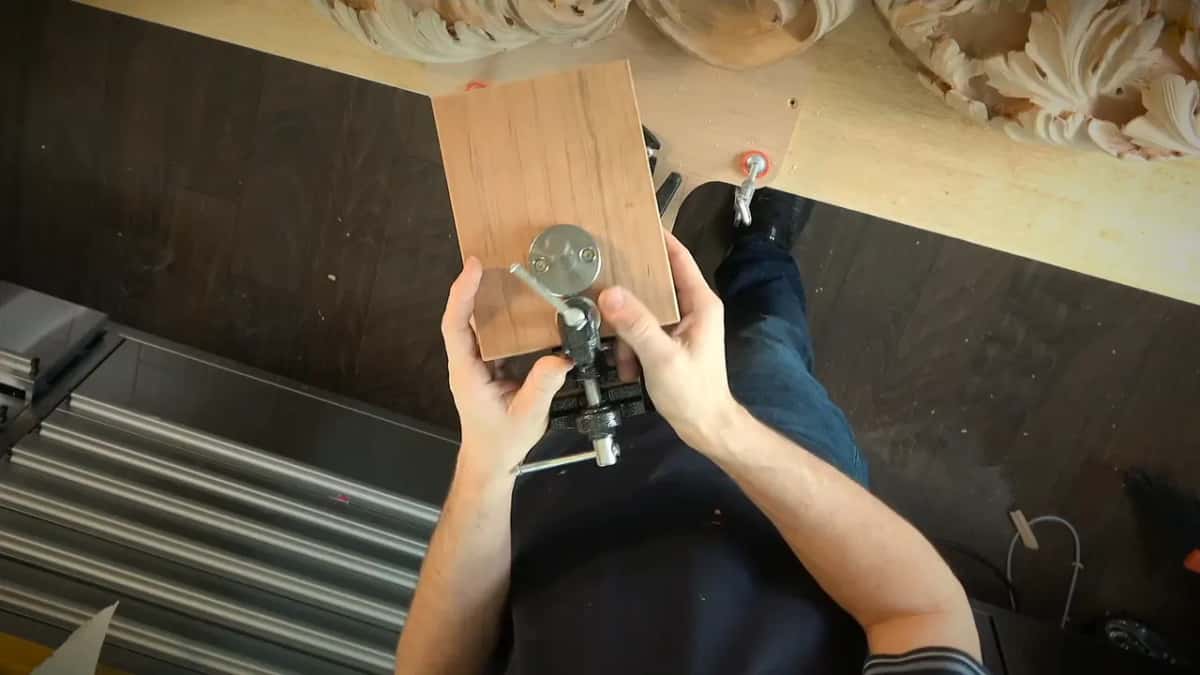
My other answer is a pair of carver's vises, one on the side of the bench holding a board and the second riding on that board, the setup I show in Hashemi Flowers 21.
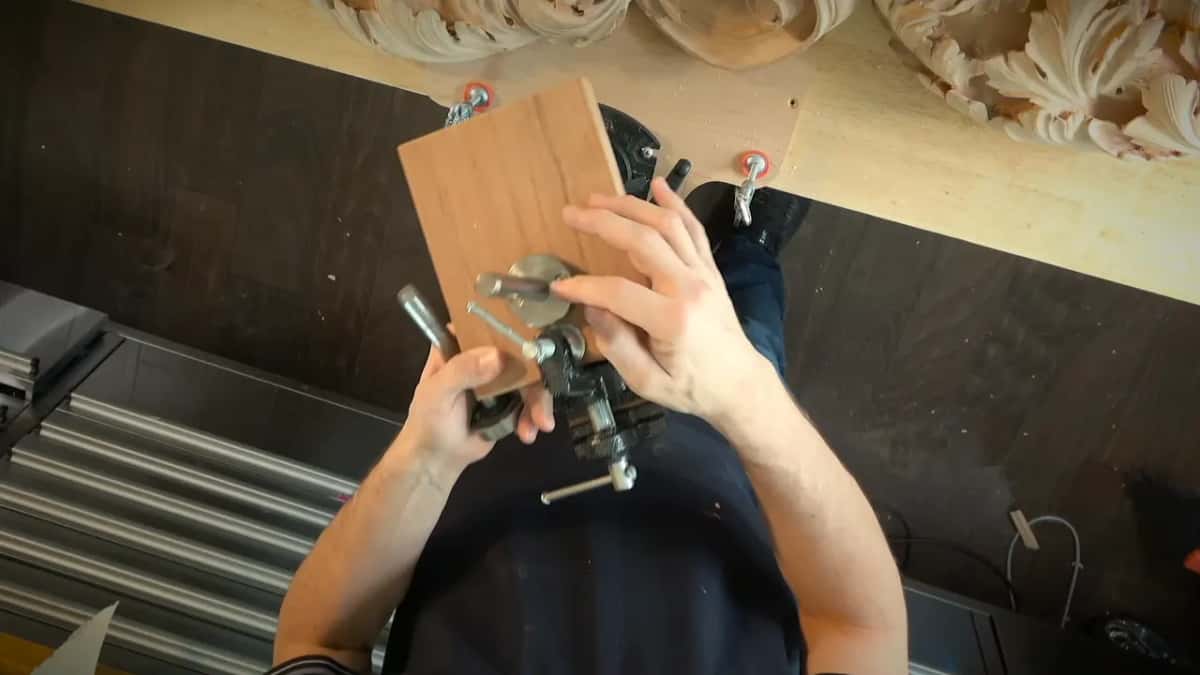
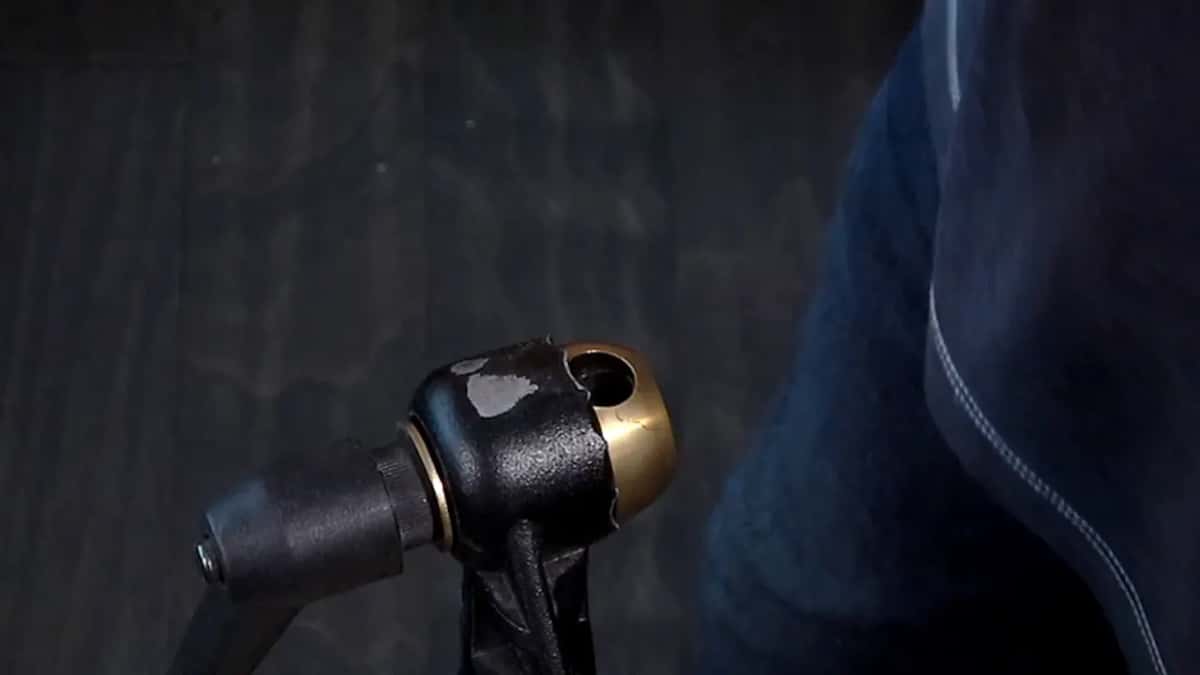
About the vise itself, I'm not trying to sell you anything. Veritas is what I use, and that doesn't mean it is the best. Almost any other carver's vise should work the same way. What I steer people away from is the kind you crank with a ball inside, because it does not hold a really heavy piece. Mine drops its plate into notches and locks down, and that is why it stays stable. Once in a while I replace the rubber ring inside it.
How often should you take a break from carving?
Every hour, for me, and I have to push myself to do it. My watch has a reminder that goes off each hour, and I call it the time to pray and praise the Lord. I walk away for a few moments, praising, and then I go back to the bench.
I know other carvers who say at least every two hours. Their advice is to take the break and walk away, and so is mine.
A break for me is more than a stretch. I squat, about twenty times, and I keep doing it all through the day. Carving all day long you are not moving and not using your muscles, and we are made to use our muscles, I said.
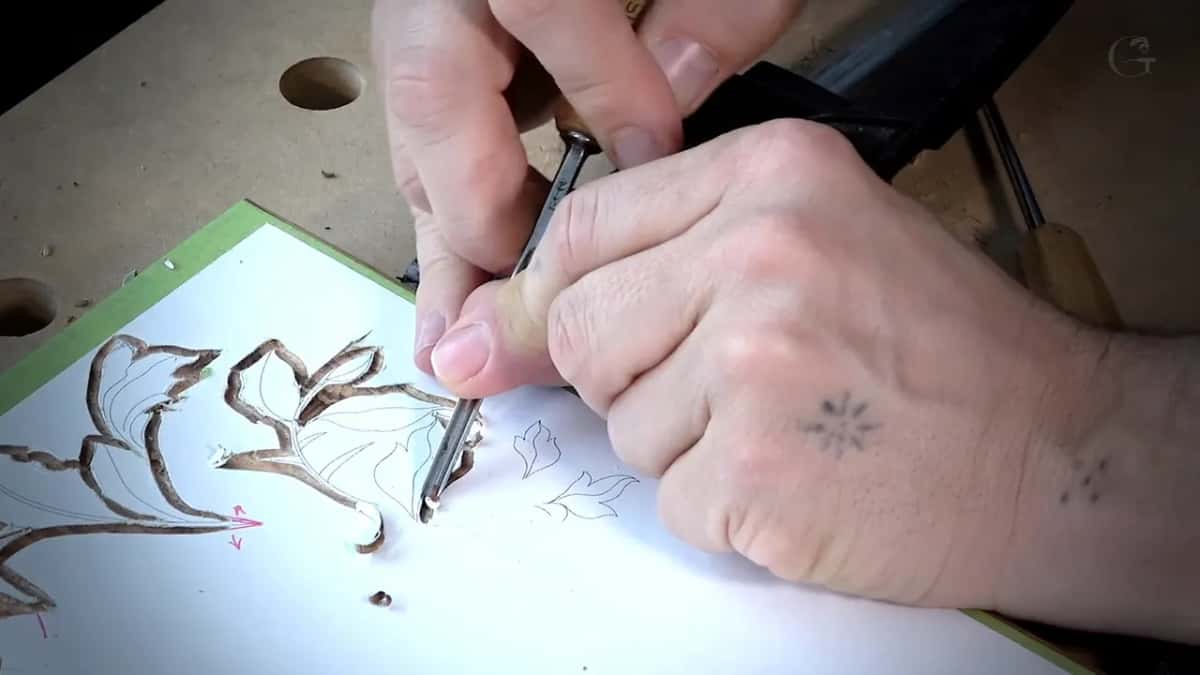
Someone in the chat added a good one: stretch in the opposite position from the one you hold while carving, fingers, wrists, shoulders and back. Absolutely, I said, a really good point. Just don't try to pop the bones in your fingers.
What do you do for your back away from the bench?
Most mornings I go to the gym, as I have since I came to the United States. After the hospital it made all the sense in the world to me. The doctors told me they could not fix it, and that the one thing I could do was build the muscles around the spine to support it.
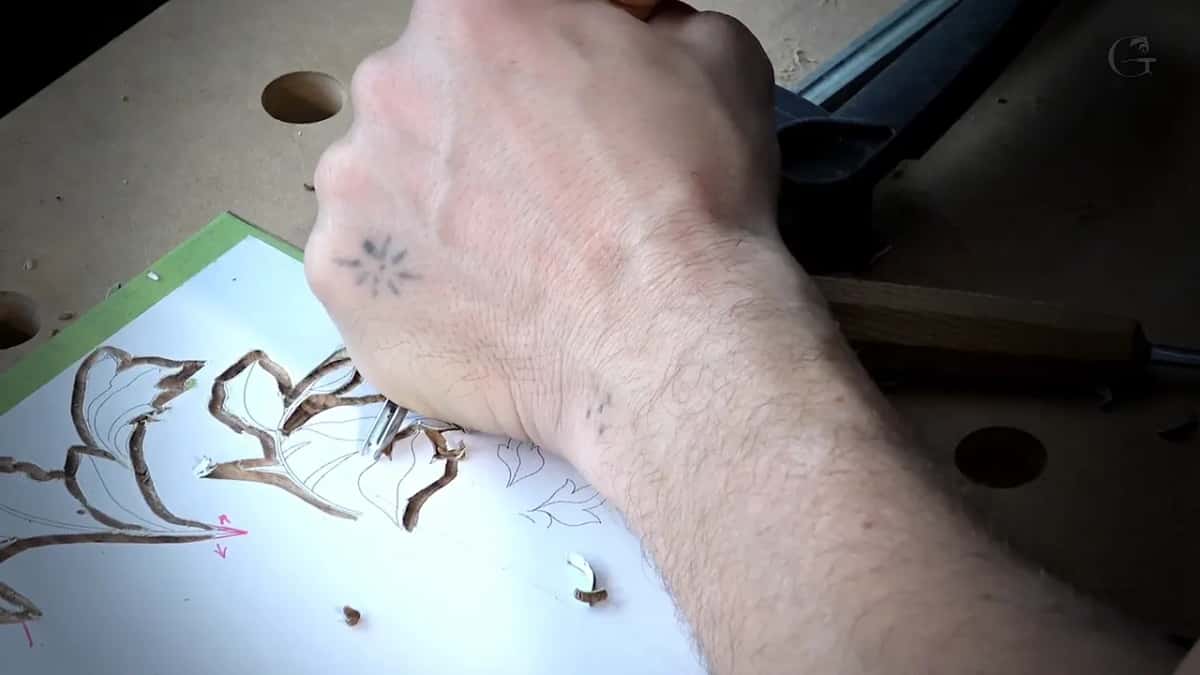
Two exercises are my main ones, every week. The first is the squat with a barbell, and some gyms have a Smith machine, which is a little bit safer. The second is the deadlift, a barbell lifted off the floor really slowly, and it goes straight at the muscles of the lower back.
Be really careful with that one. I hurt myself in the gym doing deadlifts. It happens especially when you keep pushing the weight up and up, your hands and the rest of you getting stronger while the back stays what it is. I'm not advising you, and I'm not a doctor. I said on the stream that I think it's a good idea, and I left it there.
What happens when the piece forces an awkward position?
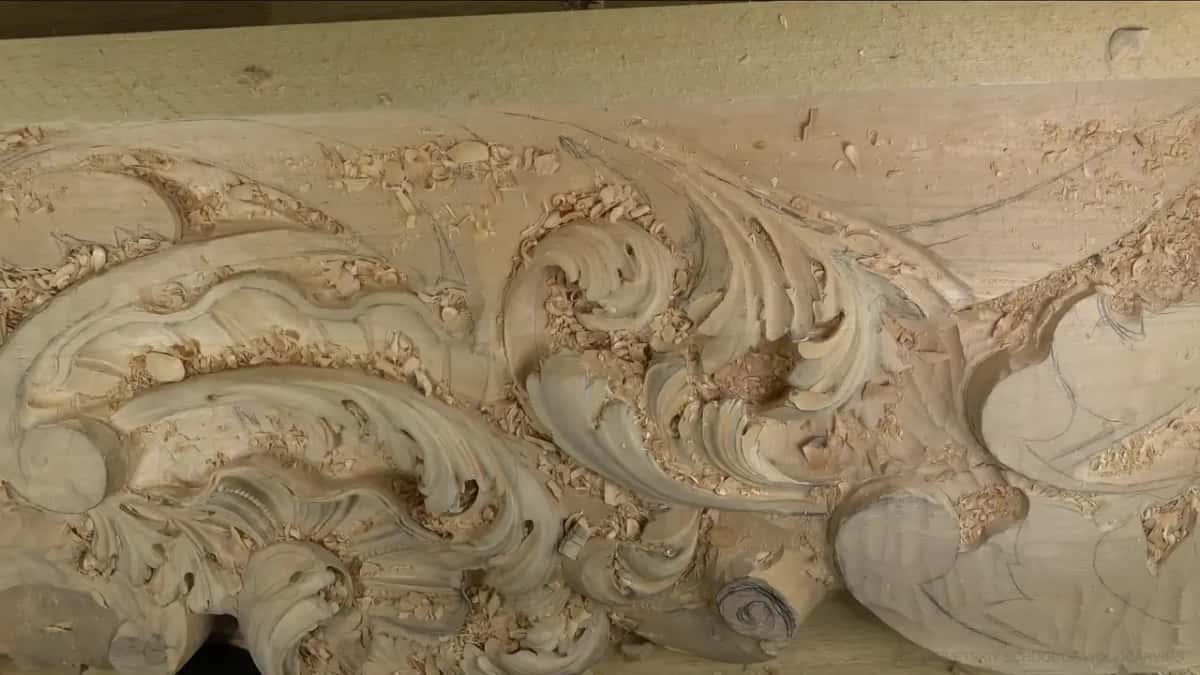
Small chips, little by little. On another stream in this lesson I was carving a big piece where it slopes upward, with my bench on one side and the main body of the carving on the other, so I could only work a bit at a time. There was no place even to rest my hand at the top.
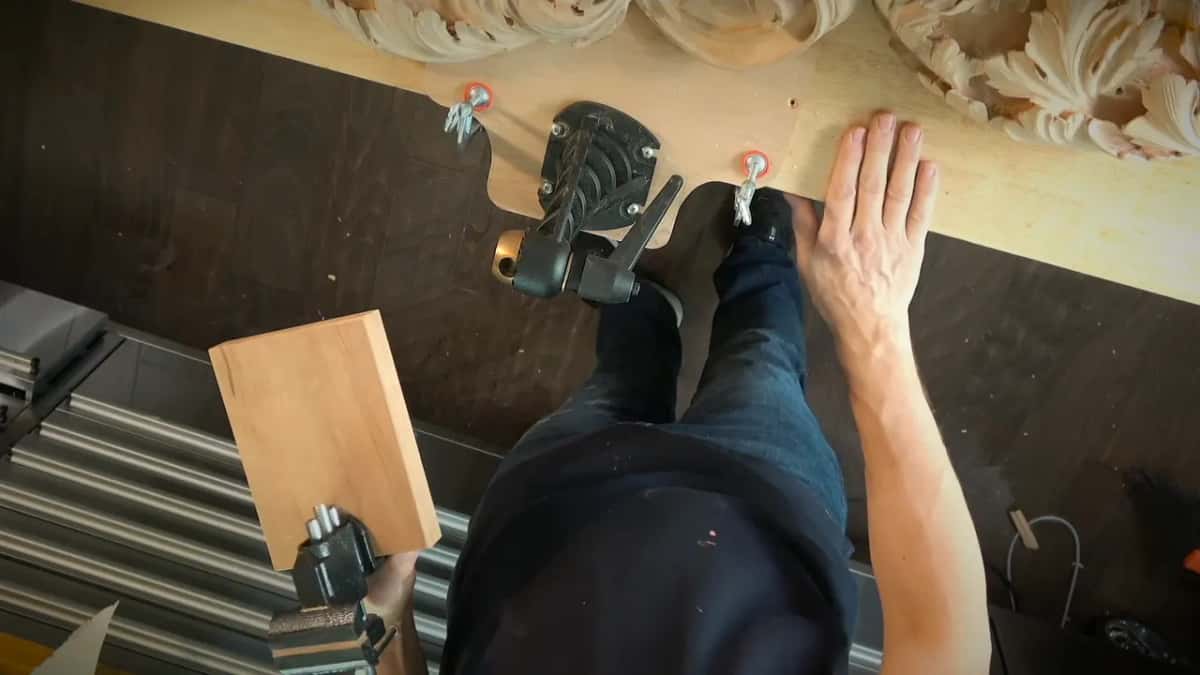
Sometimes my hands look awkward on camera, I said, and that doesn't mean I don't know how to carve. Almost every carving has a challenging area like that. In one spot a straight tool was almost impossible to use, so I took a back bent gouge instead. On the stream about rasps, that day's piece was raised up as well, and the part I worked on rises gradually toward the ceiling.
Why do my hands look so clean?
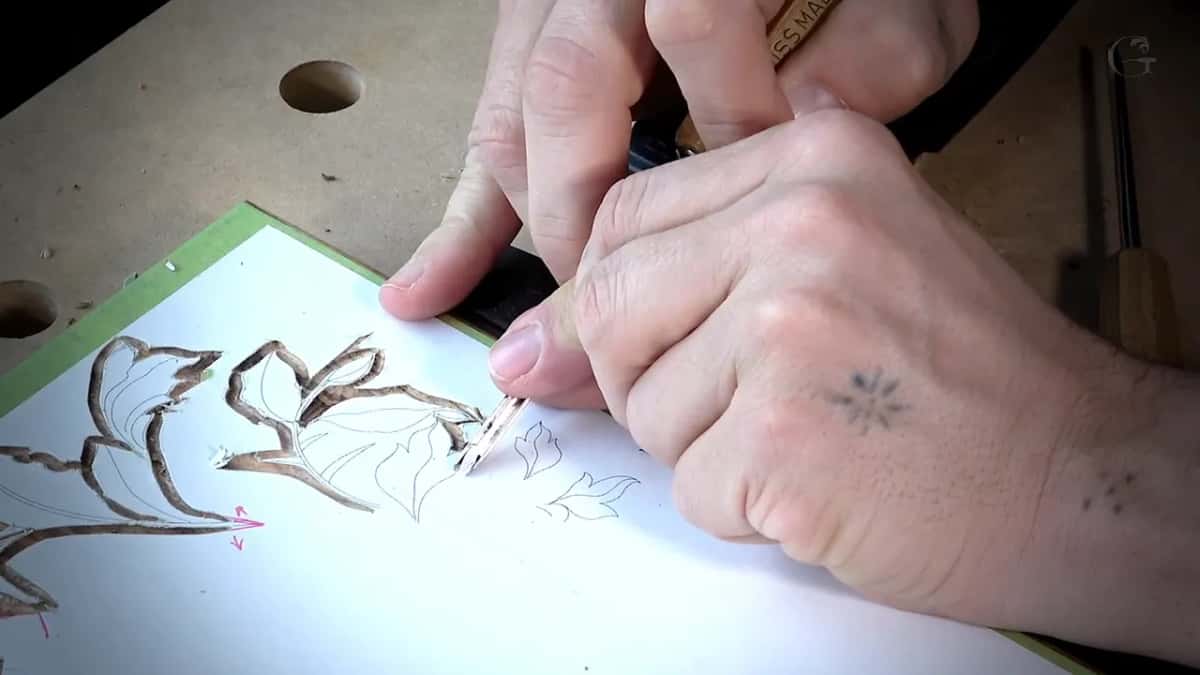
Clean, almost no scars, except one. Near the end of that stream a viewer asked about my hands, so I showed the scar that runs along one finger and around to the back. I was carving a flower with petals almost paper thin, and with petals like that there's never a stopping point. Nearly done, my gouge slipped through the finger and cut to the bone.
I play guitar, and for a while I couldn't. Today I play and carve with no problem. How the finger healed is a longer story about my children and prayer, and on that stream I called it the first physical miracle of my life.
What the rest of this lesson covers
This lesson holds seven streams in all. After the back pain come questions and answers, tool size charts, sandpaper, the Tormek and sharpening micro tools, rifflers and rasps, and more questions from the chat. Getting tired at the bench has other causes too, and my first hazelnut lesson deals with how the waste comes off. Another stream, Livestream April 2020, has me carving letters with a knife.
Every stream sits behind the tuition page, and the full list lives on the Livestream events page. Come stand at the bench with me.
How it's done
- Try standing for big pieces. Standing worked better for my back on large work. Sitting I keep for the micro detail, where your body hardly moves at all.
- Lift the work up to you. Raise the piece instead of bending to it. A wood block on top of a rolling base does it for me.
- Use a small bench on a big one. A regular bench can carry a raised one. A few boards make it, the way schools set up my carving classes.
- Set an hourly reminder. Let a watch call you away. Mine goes off every hour, and other carvers say every two at least.
- Walk away and move. Leave the bench on each break. I do my squats then, and a viewer added stretching the opposite way from how you carve.
- Pick a vise that locks. For heavy work, avoid the type with a ball inside that you crank. Mine locks its plate into notches.
Frequently asked questions
Does sitting down to carve help a sore back?
Sitting made mine worse on big pieces, even though it felt like resting. Bowing over the wood the whole time puts the stress right on the back. A chair is probably fine for micro detail, where you are not making a lot of movements.
How tall should a carving bench be for a tall person?
One viewer stood six foot four, and for him 42 inches would do nothing, he said. For his height I figured roughly 48 inches (122 cm), about half of a wall. Forty two inches is not necessarily the answer, I told the chat.
Do you need an expensive bench to carve standing up?
Mine was cheap on purpose, but stable. Drawers on wheels already stand tall, and a chunk of wood under the piece lifts it further when needed. Electric drafting tables also go up and down, and some carvers use them all the time, though they cost more.
What to carve next