

Alexander Grabovetskiy, woodcarver, School of Woodcarving · Published 2020
How do you carve letters in wood with a knife?
Quick answer: Knife lettering is two passes for every stroke. The blade starts straight down, turns to one side for a pass along the pencil line, and the board then rotates so the second side can reach the first at a middle point where both meet.
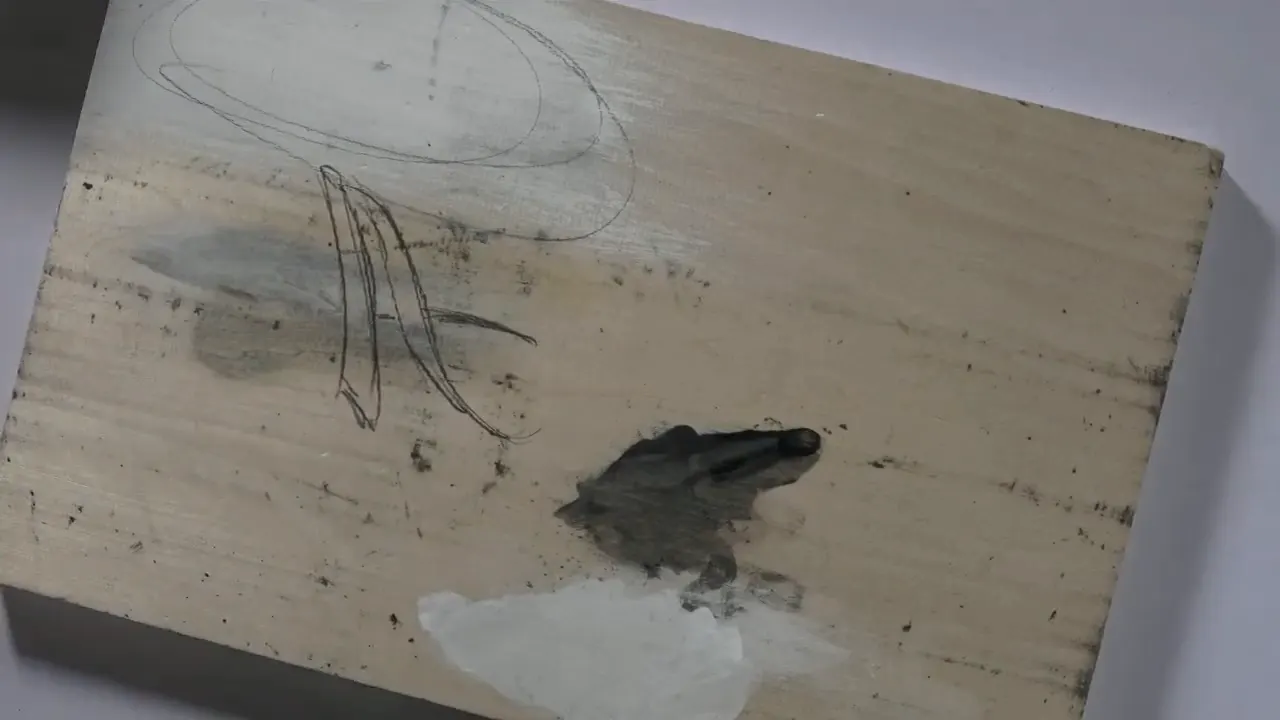
A letter carved with one knife is two passes for every stroke. The blade goes in at 90 degrees, then tips to one side for the first pass right on the line. The board turns next, and the second side comes down to meet it in the middle.
A name over a mantel or a word on a sign looks like a job for a shop full of tools. It is one knife. I showed it on a livestream in April 2020, on a dirty practice board, with a letter A drawn in pencil, and here is that letter pass by pass.
What it takes to carve letters in wood by hand
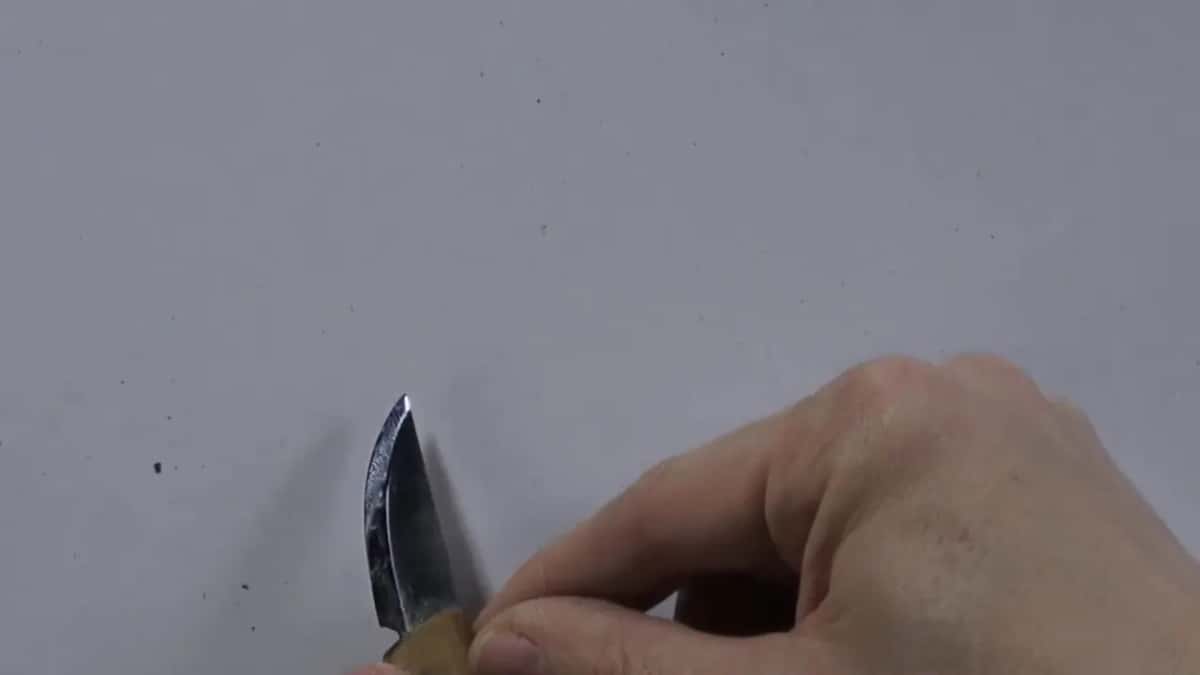
One knife carved the whole letter, a number 12 by Pfeil.
Every stroke starts straight down, then the blade leans to one side on the pencil line.
I rotate the board to bring down the second side.
Both sides of a stroke come down to a middle point and meet there, and the bevel holds one position the whole stroke.
Cleaning comes after, and a clean stroke holds a shadow right away.
Knife work like this also carved children's names for a family's mantel, three first and more later.
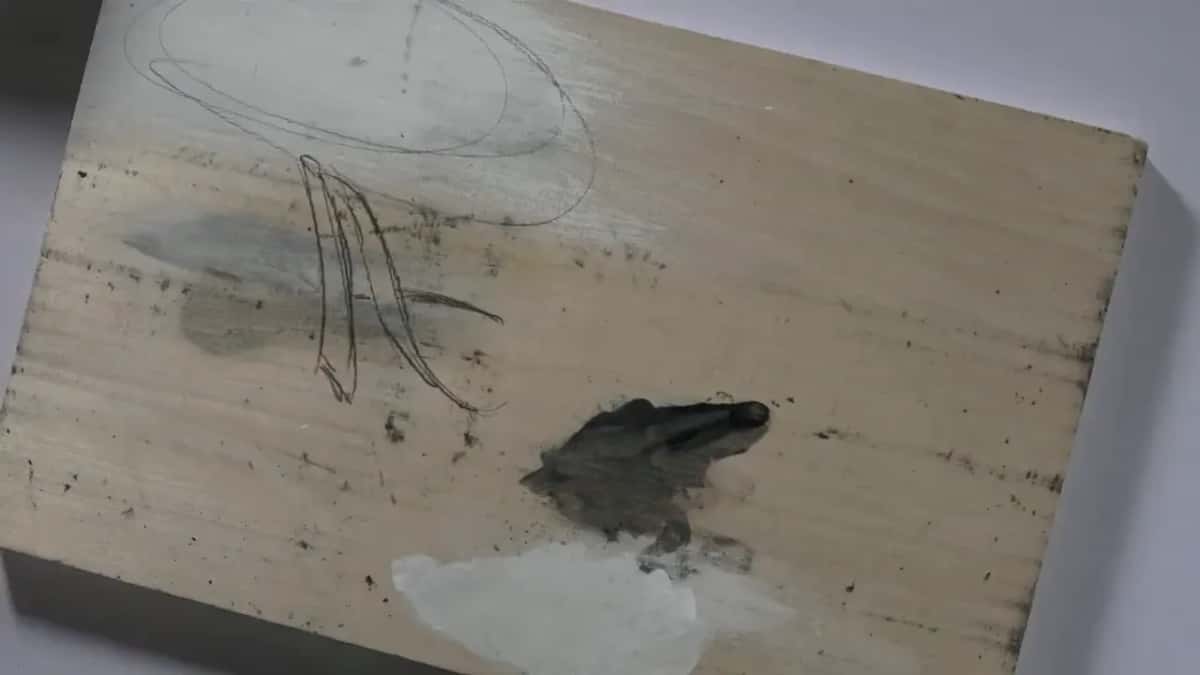
Which knife carved the letter A?
A number 12 by Pfeil, the Swiss maker, my favorite knife. I have two of them. One blade is long and one is short, because I broke the short one and just kept using it, and I grab that shorter one a lot more often than the long one.
That whole stream started from an email. Someone who watched me online asked me to share my approach to carving knives, and I have a lot of them. A carving knife is one of my most favorite tools, to be honest with you. There are maybe 30 different shapes of carving knives, knives for chip carving, knives for knife-and-a-stick work. I don't like to do chip carving, and I have done some caricature carving, but I use the knife in traditional wood carving.
In prison in the Soviet Union I made my own knife, with a blade no more than about 10, maybe 12 millimeters, less than half an inch. I don't make knives anymore. I carve for a living, and if I make my tools, I either spend my time making tools or I carve.
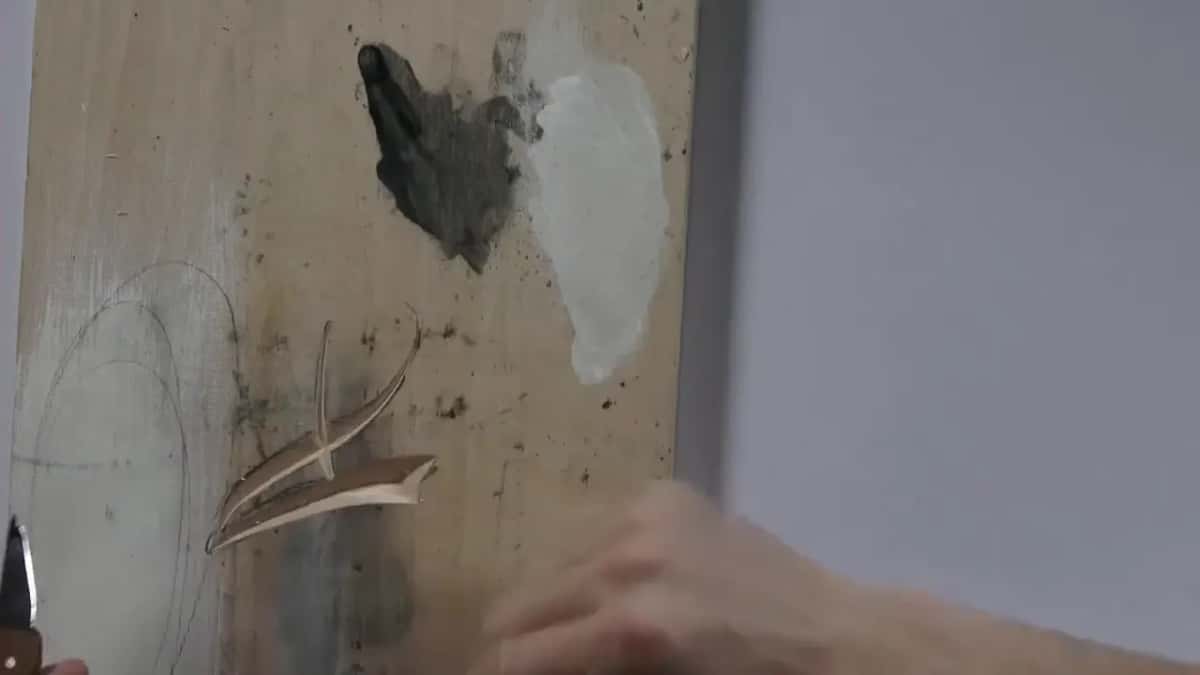
My board was dirty. I had been trying finishes on it, and what you see in the pictures is chalk paint, with some test patches still on top. I drew the letter on it in pencil, two lines for each stroke. So that is a letter, just a sign, and I asked the people watching whether it even looked like a letter A to them.
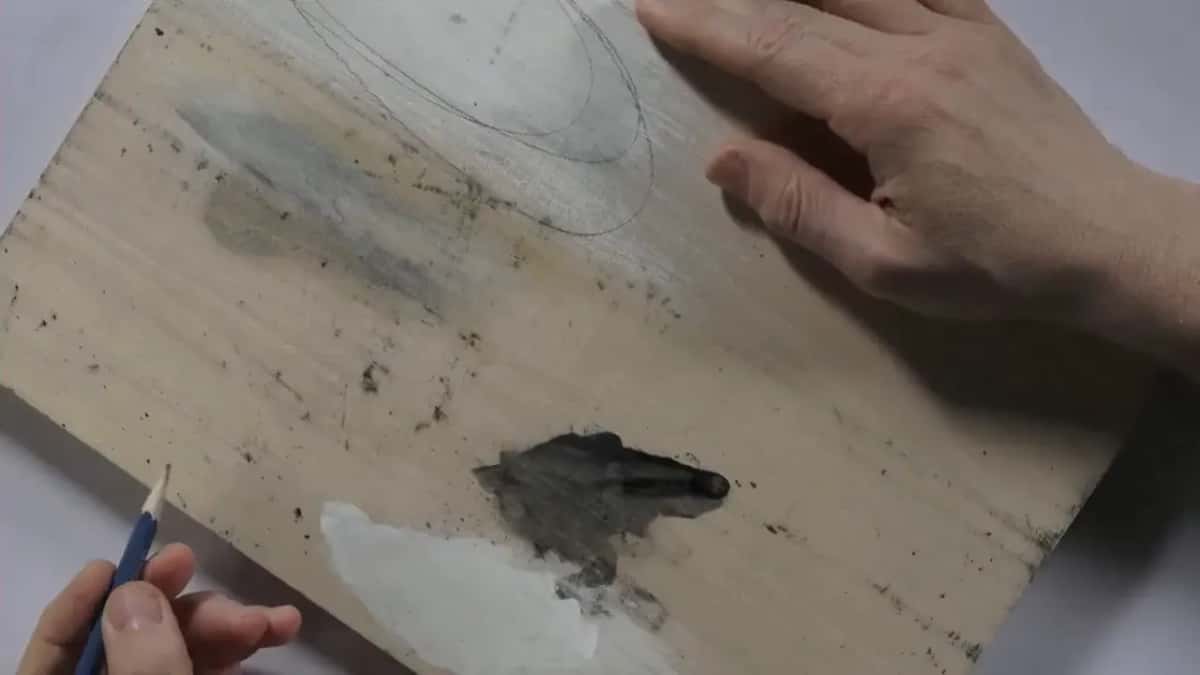
One more thing before the knife touches it. Never place your hand at the front of your knife. You can slip and cut yourself really, really badly, and I said exactly that while I was on the first stroke.
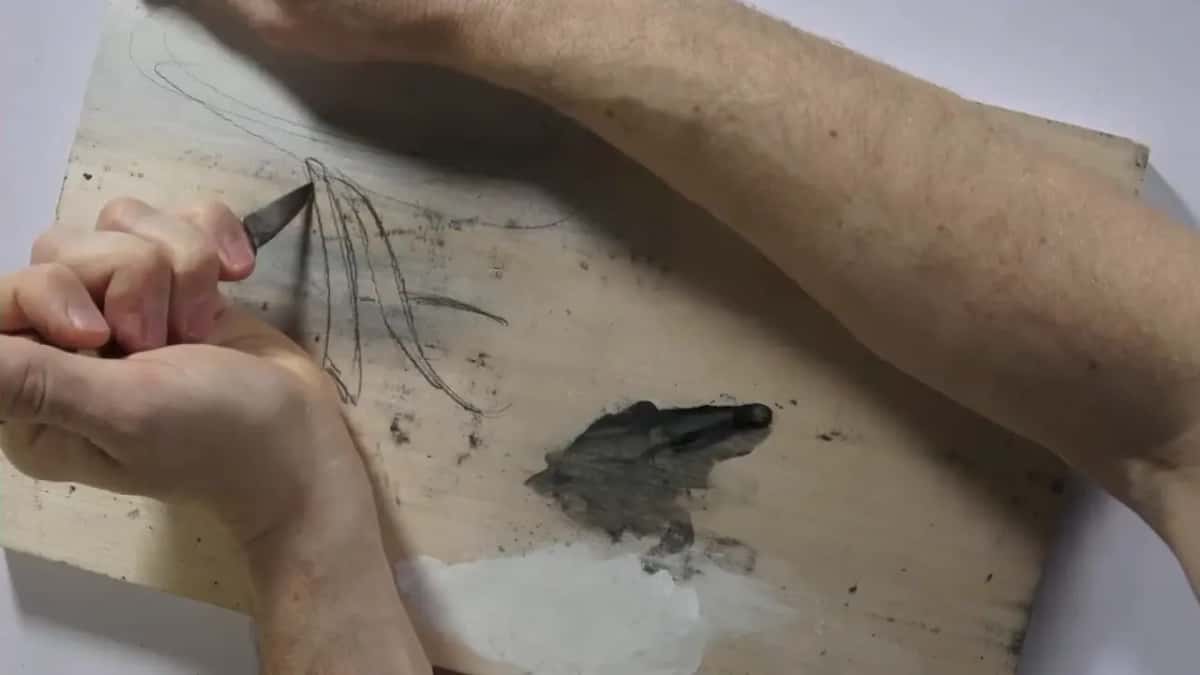
How does each stroke of the letter get carved?
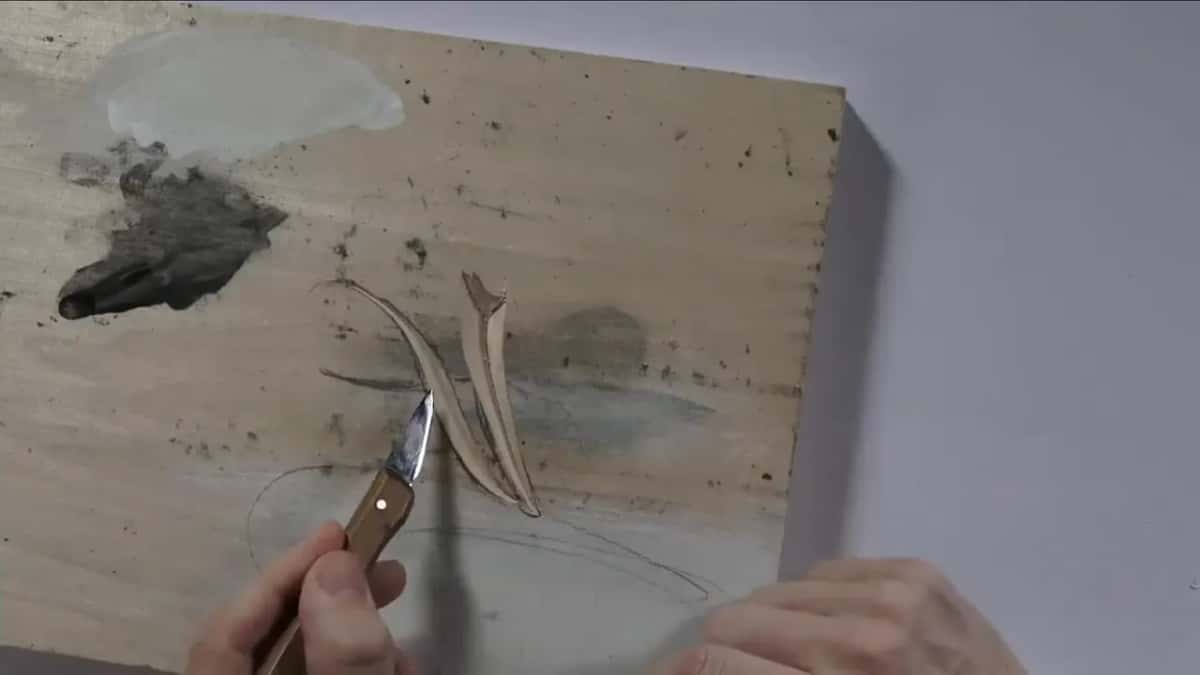
It takes a couple of passes per stroke. You place the knife like 90 degrees on the line, straight down. Then you turn it to one of the sides and make the first pass right on the line. That first pass is where the bevel starts.
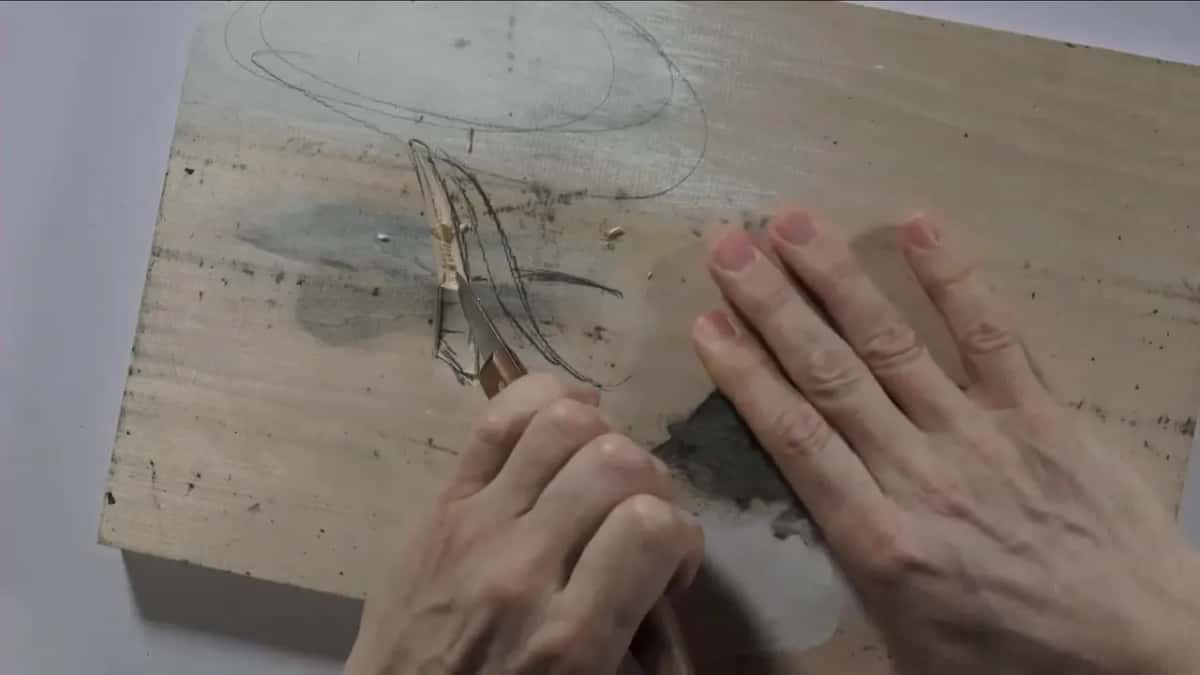
Next I rotate my piece. The other side comes down the same way, toward a middle point where the two sides have to meet. Keep the bevel at the same position the whole way down the stroke. I apologized that you might not see it, and I was not even sure whether my camera had turned.
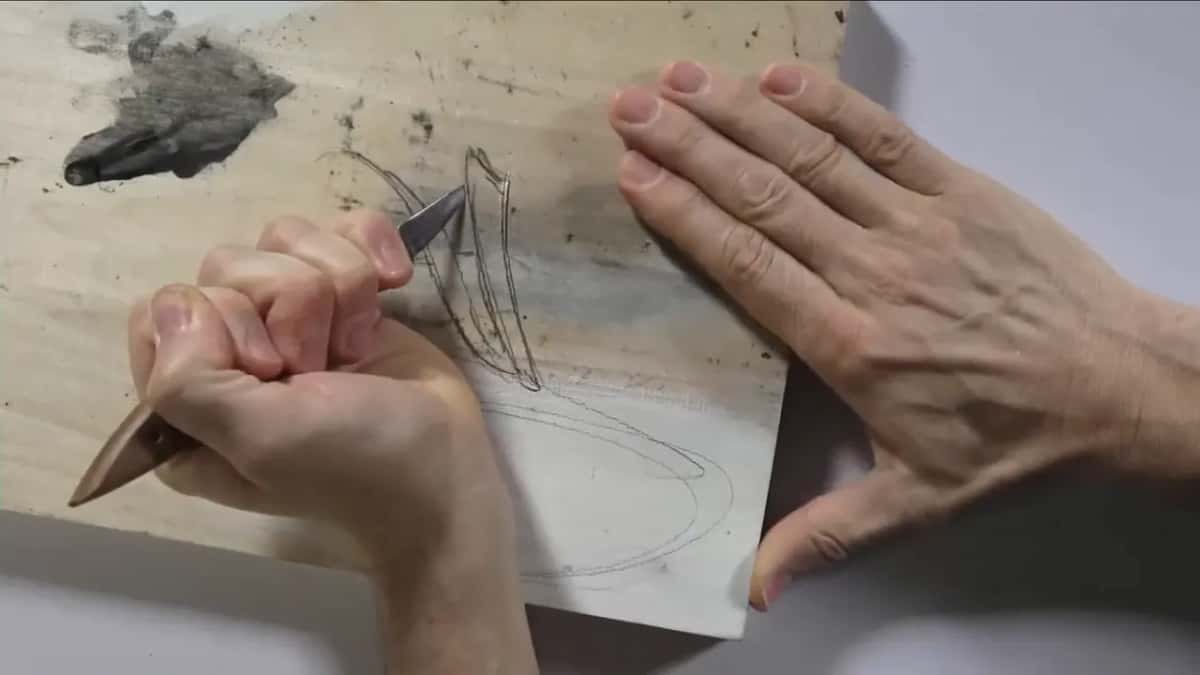
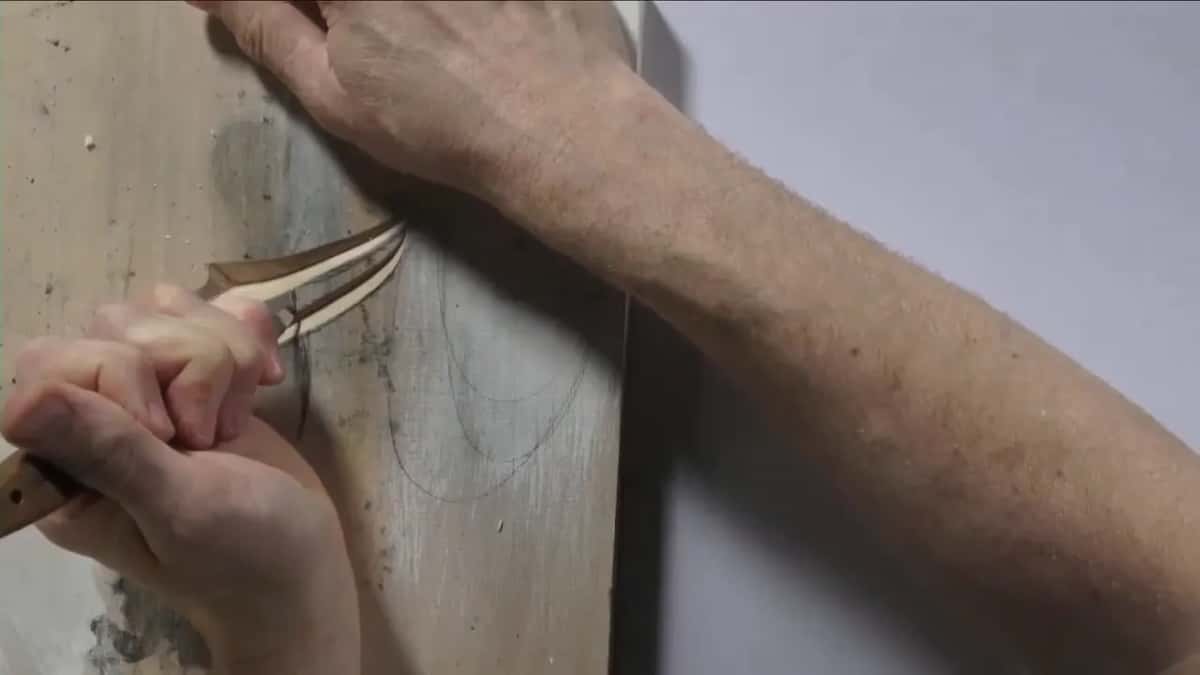
Look at my hand in these pictures. I am working with the muscles of my hand, and the other hand lies flat on the board, off to one side, away from the blade.
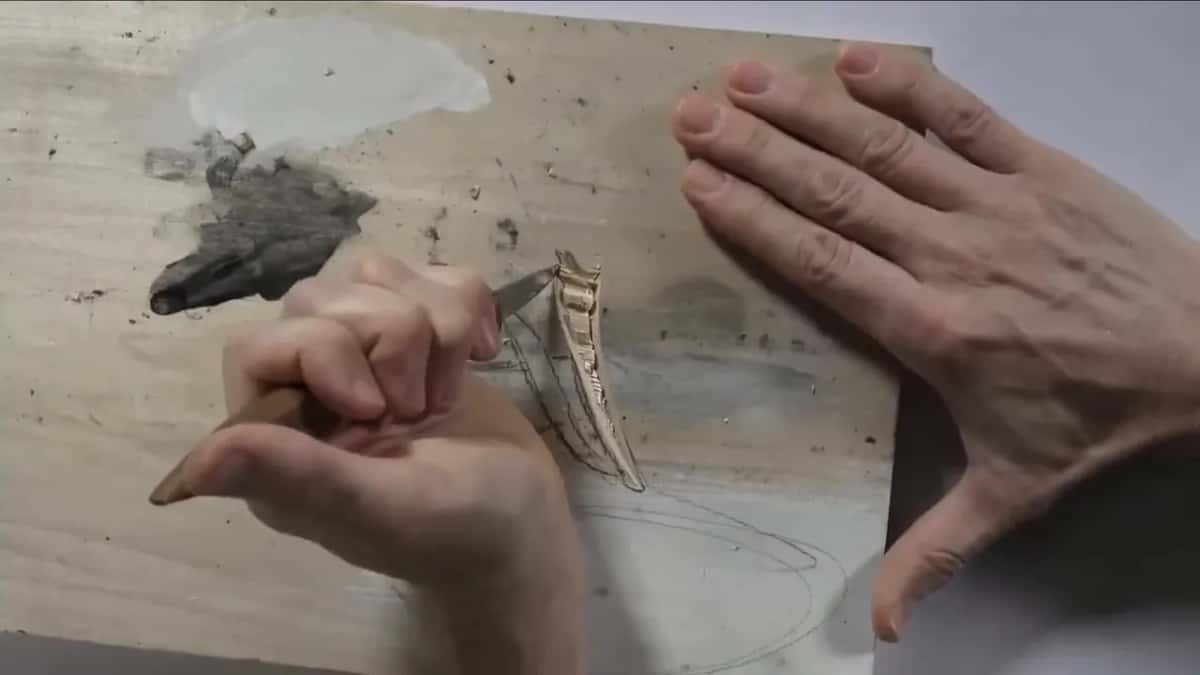
As the two sides close in, I go carefully, carefully, approaching the meeting point. If a stroke is deep, like the one I was on, I said I can relieve it with one more pass and get much deeper. Again I rotated the board, and from there it was all about cleaning.
Here is the same letter as a table, one pass to a row. There is no size and no font in it. I gave none on the stream.
Pass and order | What the number 12 does on this pass | What my eyes stay on |
|---|---|---|
The opening pass | Goes in straight down first, then tips aside | Staying on the pencil line |
Rotating the board | Brings the other side down toward the middle | The bevel at one position |
Close to meeting | Slows down and creeps toward the meeting point | Where the two sides meet |
A deep stroke | Can take one more pass to relieve it | The muscles of my hand |
Cleaning the stroke | Runs over both walls until they look clean | The shadow inside the stroke |
Where does the shadow in a carved letter come from?
When the first stroke was clean, I pushed the middle line a little so you could see it on camera, and the stroke threw a shadow right away. Beautiful. Somebody on Facebook posted a long comment right then, in a language I could not read, and I kept going. In another stream from this same lesson I said wood carving is pretty much all about the shadow and light.
The second part of the letter went the same way. Go all the way, and do not force it. The knife gives a really clean, beautiful finish, and you can take a stroke to perfection from the very first pass. The last stroke turned it into a letter A in a script, though I said myself that it was not really English. At the end I brought it closer to the camera so you could see how nice it looks.
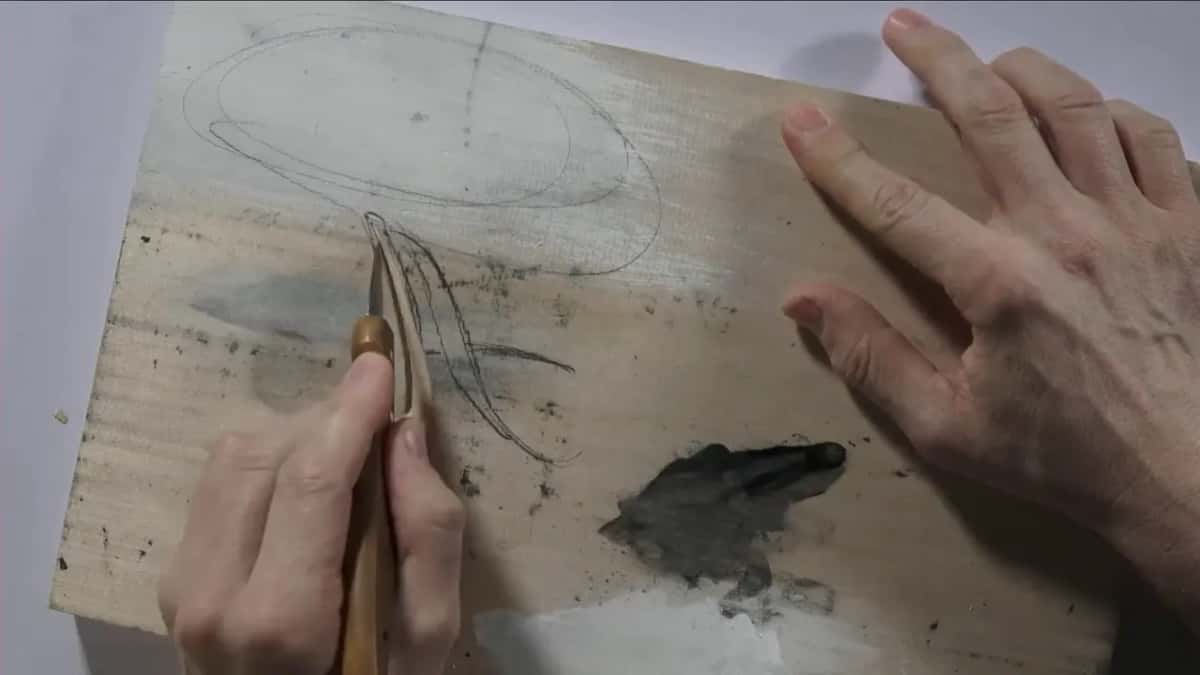
Those walls and those bevels come out really clean. That letter took only the one knife. Halfway through I asked the people watching whether it was even interesting for them, and to give me a thumbs up so I would know.
Signs came up more than once on that stream. I talked about a sign for beginners in old English handwriting, calligraphic English style, and how beautiful that would look. I almost let it slip as a secret, then said it was not a secret.
Is a carved letter the same as chip carving?
It is not, but it is almost like chip carving. That is how I put it on the stream, the blade still in the stroke.
If you want the three basic knife angles on their own, the course First Cuts for Beginners starts with them. A whole kitchen board done by knife alone shows them across a full pattern, and how to hold the knife for chip carving is its own page.
A letter asks for something else. Each stroke follows the line of the letter. Both sides come down to one middle point and meet there, while the bevel stays where it started. You rotate the piece, and you slow down at the meeting point.
Some of you in the UK know this already. Carve with a knife over there and some people will say you are not even a wood carver, because there they carve with gouges, veiners and V tools, which they call parting tools. In the UK people commonly call all of them carving chisels. But chisels are chisels, veiners are veiners, gouges are gouges, and I still don't get it. My teacher started me on a knife, and I use one in traditional wood carving to this day.
What can you carve with letters and one knife?
Names, mostly, and signs. One family asked me to carve the names of their children for the mantel, using one knife. They had three children when we started, so I carved the names of the three first ones. Then they got more, and I had to carve more. By the time I told that story on the stream, they had five. A beautiful thing.
Signs for a house came up too, for inside and outside, and a welcome sign. You can do any Bible verse or anything with that. Stuff for your house you can do with just one knife, and still some people are afraid to start carving because they don't have a space.
For one knife and letters like these, all you need is the table, even a kitchen table.
Have you got a pencil? A board? A knife you can keep sharp? Then you have everything my letter A needed. The kitchen cutting board course is a beginner project built around one knife.
What else did the knife do on that stream?
Before the letter, I had the knife on the big Venetian panel from the Venice Room. In place of a relief cut with a gouge or a veiner, it gave me the wall I was after, 90 degrees down, and later it took off tool marks too. Relief work by knife has its own page, from workshop 72 of the Venice Room.
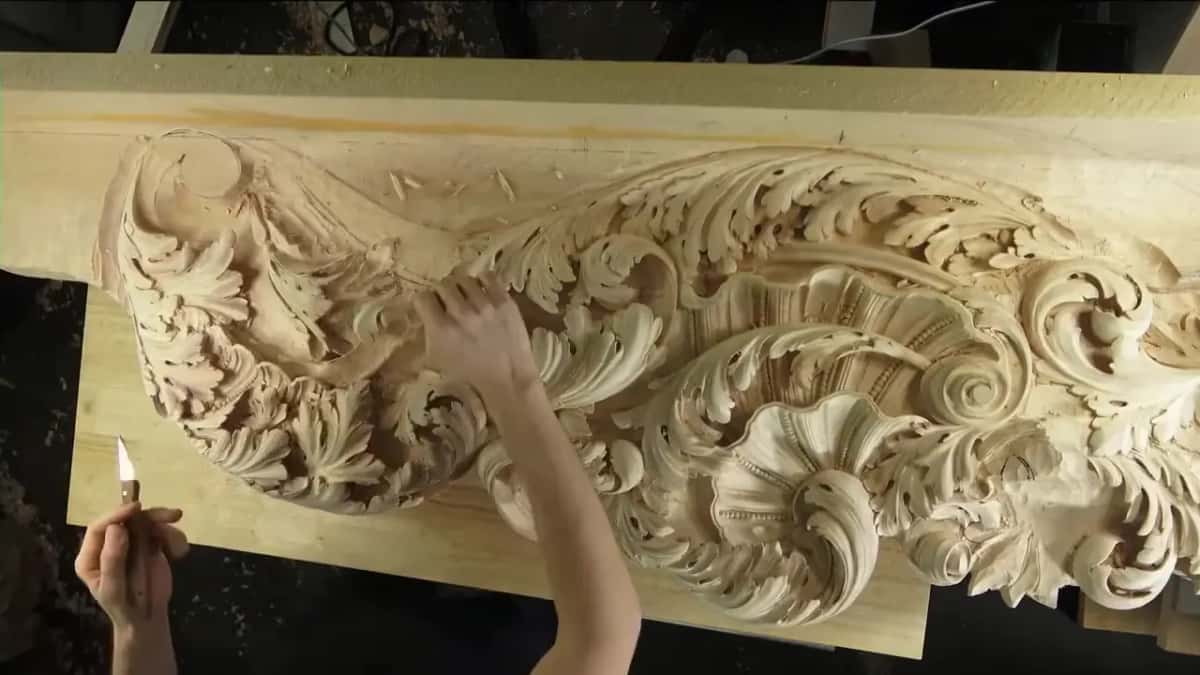
On one S curve the knife came in underneath and went out to the edge, and it left a really sharp, crisp edge with the depth still kept. Where the knife had to go against the grain, I was not just pushing. I was slicing, like slicing a piece of bread, and I took those chips off with the knife alone.
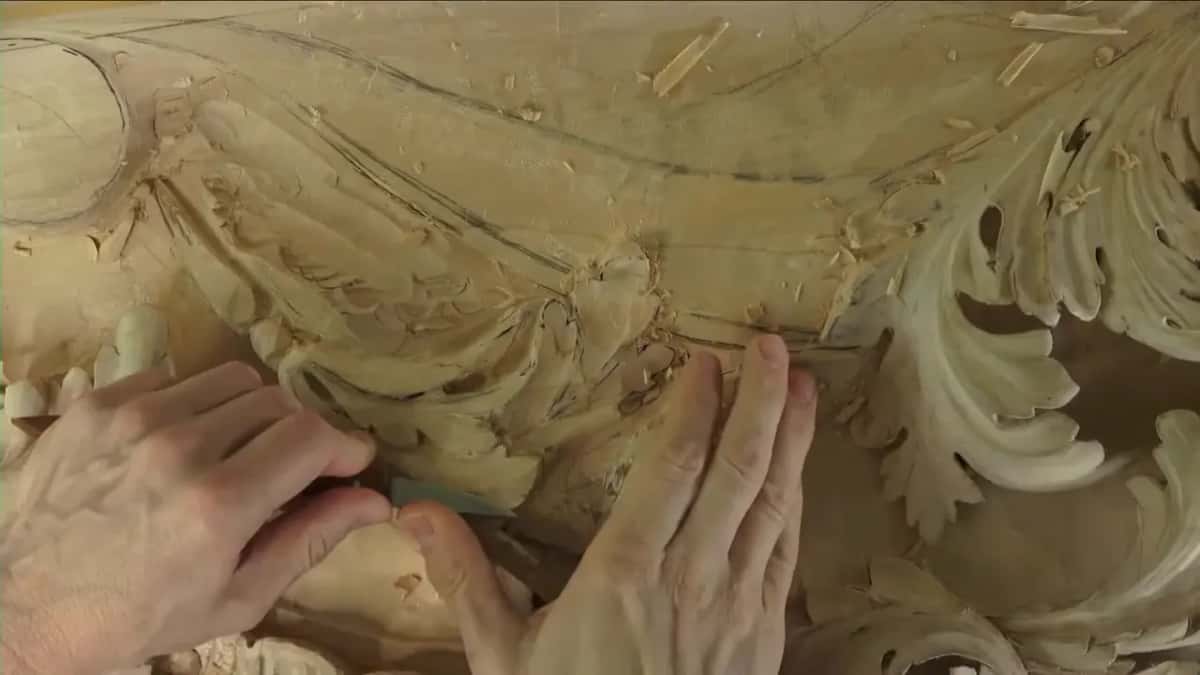
On that piece I did not want to see a really sharp transition on the inside, because the original work in Venice looks more like a gouge, a smooth transition. I still showed the knife there, because you can do a lot with just the knife.
I wanted that panel authentic to the Venetian work of the 15th and 16th centuries, and in Italy they did not use knives too much. If you are carving for yourself, use whatever tools you wish, knives, V tools, gouges. In combination, that is a good idea. A knife did the biggest part of the Greek acroterion I teach, for example.
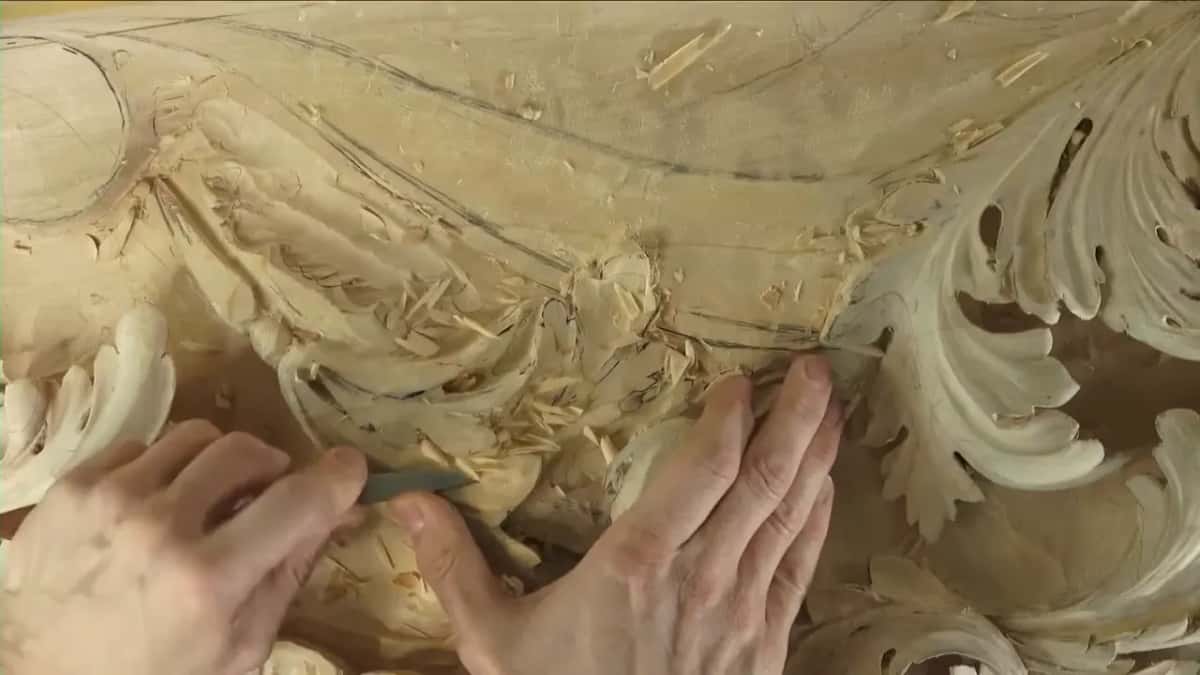
Even on a sculpture, in full three dimensions, you are still able to use a knife. Late in the stream I made a convex by knife on that panel, the way I would make it with a gouge, and then exaggerated it closer to the end. A concave had been the easy part. So complicated shapes are possible this way, to a degree, of course. There are still some limitations, and the knife has to be really, really sharp.
How sharp does a lettering knife have to be?
Really, really sharp. By hand I use a stone, 1,000 grit on one side and 400 on the other, and it is always on a pull. You create an arc and you feel the bevel, and I count ten strokes. Why I count, I began to explain on that stream and never finished the thought. I flip it to the left side of the stone and do the same ten, and I can hold it with even two fingers and find that bevel. My teacher taught me that way.
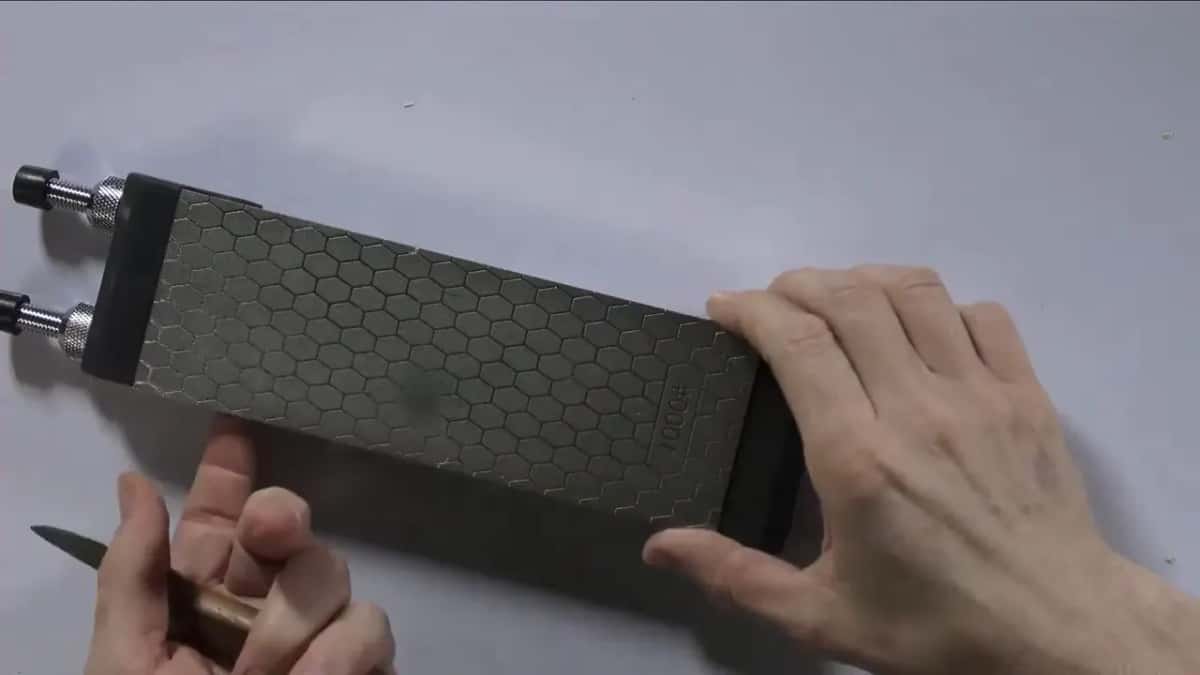
Sharp now, but not enough. After that you need to strop, and you do not have to buy an expensive stropper. A normal piece of leather with green paste does it. No stone? Use sandpaper, which you can find cheaply in almost every country. I showed 1,500 grit, then 3,000, counting, on the pull, then the opposite direction.
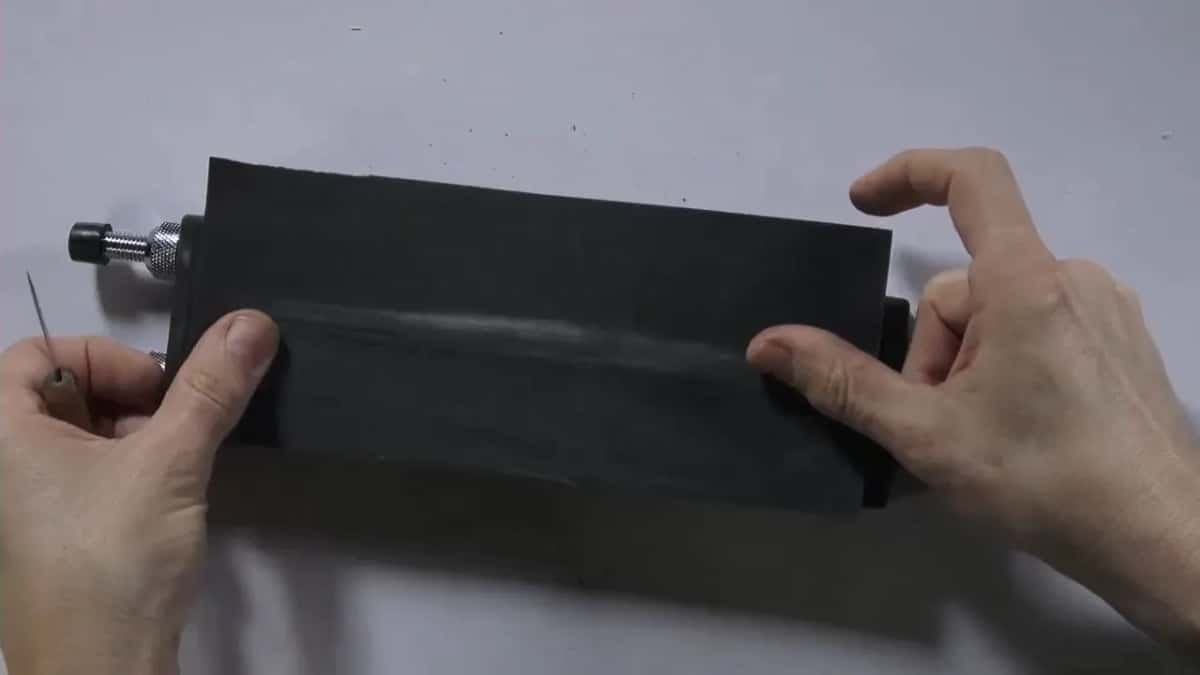
I also take away the bevel a knife comes with from the factory and round it. I dig sometimes really, really deep, and that bevel spreads the fibers apart. Stropping in the middle of a job is its own lesson in workshop 5 of the cutting board course, and the gouges have the sharpening course. Sharpening is easy when you know what you do, and it is one of the three main things to learn. A lot of people carve for a month, the tool becomes dull, they get frustrated, and they blame the wood.
What did my teacher hand me before the knife?
A pencil and a piece of paper. When I was an apprentice, my teacher gave me those first. He was a master carver, and he told me you have to design for a knife. The knife was my second tool, and he had me practice complicated forms with it before I used gouges. My beginner course puts one knife first, too.
The letter A came out of the chat. I offered to show a couple of practice strokes for beginners, people asked for them, and the lettering is what they got. Knife is art, I told them, and imagination is the only limit. The other answers from those April streams live on the Livestream events course page, and the start page shows where to begin.
How it's done
- Pencil the letter in. Mark each stroke with a pair of pencil lines on the board.
- Set the knife straight down. Place the number 12 at 90 degrees on the pencil line of the stroke.
- Tip the blade for the first pass. Turn the knife to the side and make the first pass on the line. This starts the bevel. Keep your other hand out from in front of the blade.
- Rotate the board. Turn the piece and bring the second side down toward the middle point, holding the bevel where it was.
- Approach the meeting point slowly. Go carefully as the two sides meet.
- Clean the stroke. Rotate again and clean both walls, then carve the next stroke the same way, without forcing it.
Frequently asked questions
What knife do you need to carve a letter?
For that letter during the livestream I used a number 12 from Pfeil, the knife I call my favorite. I own two, one long blade and one short one I broke and kept, and the short one gets picked up far more often.
Do you draw the letter on the wood first?
Mine was drawn in pencil, a double line per stroke, on a dirty practice board. In my apprenticeship the first tool was a pencil and paper, given by my teacher, and his words were that you have to design for a knife.
Can one knife carve names for a mantel?
One family had me carve the names of their children for a mantel with a single knife. Three names went on first, and more came as the family grew, until there were five children.
What to carve next