
Alexander Grabovetskiy, woodcarver, School of Woodcarving · Published 2022
How do you get rust out of the inside of a carving gouge?
Quick answer: Cleaning rust from inside a carving gouge is, on my old William Butcher, a gel brushed into the hollow, a wait of about a quarter hour, and a Scotch-Brite scrub instead of sandpaper. This one was a severe case and took three coats. Vinegar works too, overnight, but it eats the iron as well as the rust.
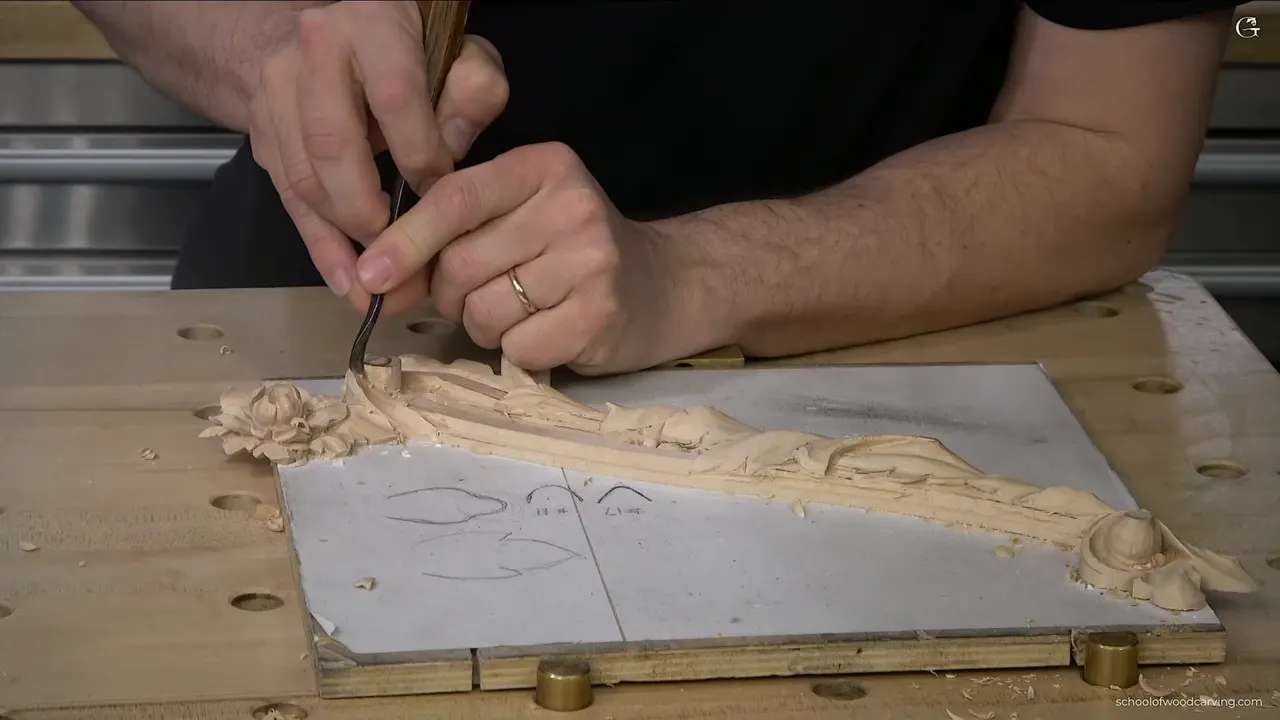
Getting rust out of the inside of a carving gouge is a job I did live, in this January 2022 lesson, with a rust gel, a small brush and a kitchen scrubber. The tool was a really old William Butcher gouge, about 6 mm (1/4 in). Outside, it was good. Inside the curve it was rusty, the way a lot of old tools come to you. If you want to remove rust from chisels and carving gouges without hurting the steel, I'll tell you what went on it, how long it sat, and how many times I had to go back.
Did you pick up an old gouge that sat in somebody's garage? Does the outside look fine while the hollow is brown? Then you have the tool a viewer emailed me about, and his question became the whole stream.
One rusty gouge, the short version
Vinegar overnight is the old way, and it eats some iron along with the rust.
My way is a rust gel, brushed inside the hollow and left a quarter of an hour a coat.
This gouge was what I called a severe case, and it took three coats.
Scotch-Brite did the scrubbing, and the maker's mark came through.
Gloves on before the gel.
Afterward a wipe of oil protects the steel, and I said any type of oil will still work on it.
Why is an old gouge rusty inside when the outside looks good?
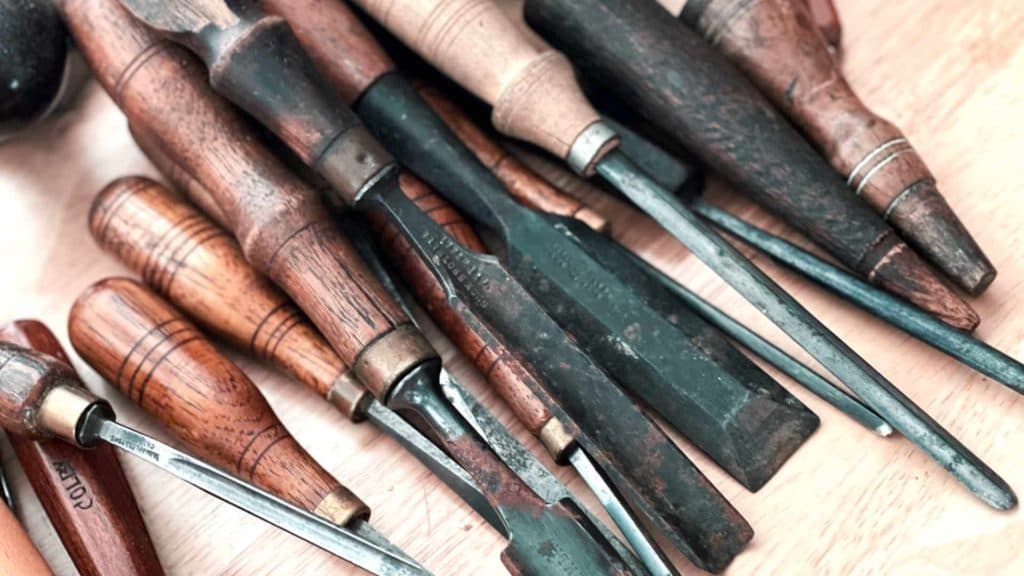
Old tools often come from people who never learned how to look after them. A lot of the time an antique gouge is rusty because it sat like junk in a garage somewhere, until somebody decided to sell it. That was the email, more or less. Hunting for those old tools is still a good idea, I said.
Mine had been through all of that. The outside was really good, and the inside of the curve was rusty. The viewer had asked about small tools, the ones he needs for undercutting an acanthus he carves in maple, and the problem there is the same. Rust sits inside the gouge, and the question was how to take care of it without destroying the tool.
Rust has been a problem forever. Iron is iron. If it's exposed to water or oxygen, it rusts.
Size makes no difference to it. A quarter inch gouge like mine, or a tool of half a millimeter, still collects rust along the side of the curve.
Some of my old steel holds up better. My Addis tools are usually less rusty, and I'm not sure why. An older Addis and Sons gouge I showed that day was in really good condition, and I didn't have to do a lot of cleanup on it. In Tools Selection for Wood Carving I talked about two brands that sat side by side on one shelf, where one of them got rust quicker than the other.
In the stream before this one I showed a Marples and Sons gouge, the name barely readable, that I had cleaned, and another tool I got the day before, all rusty, where you could barely see who made it. Where that line of English tool makers comes from is a story I told in Acanthus over Moldings 9.
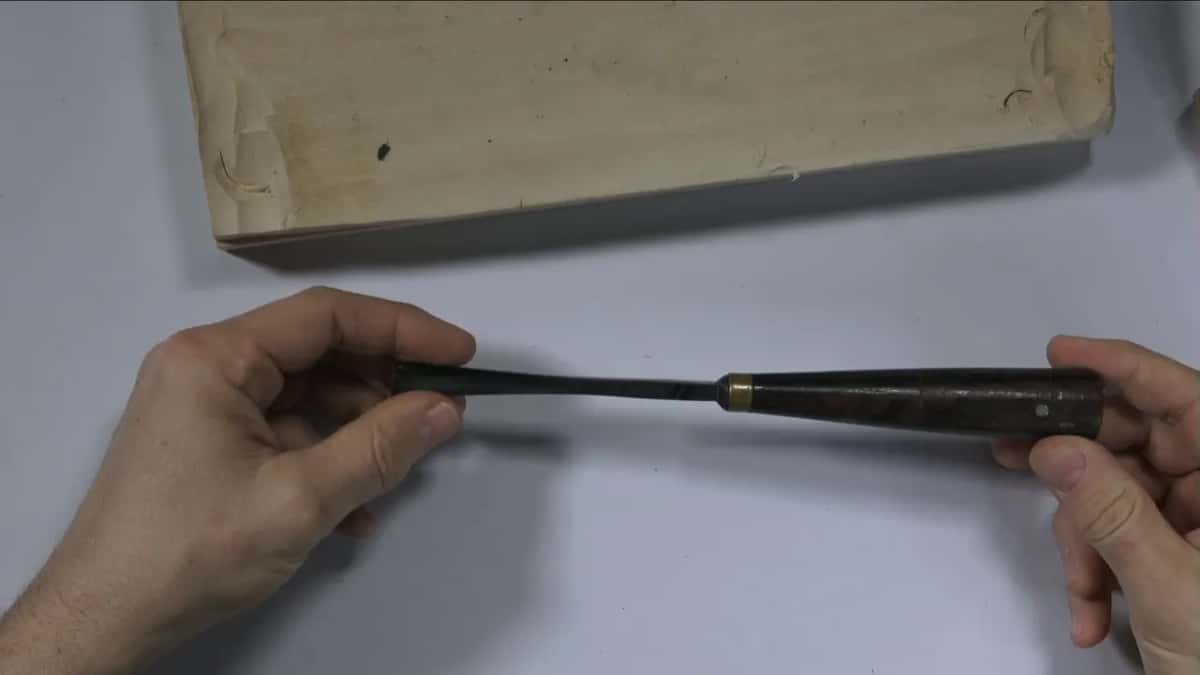
Will vinegar take rust off chisels and gouges?
Vinegar will take care of it, though it's not my preferred way. He also wanted to know how people cleaned their tools back then, without all the chemicals we have nowadays, and what they used was just vinegar.
In my case it was apple cider vinegar, a natural one. Look at how dark the liquid in my cup had gone. That dark color is the iron itself, because vinegar dissolves the rust and it dissolves the iron as well.
So be careful with time. Leave a new gouge or chisel in there too long, and you'll eat a lot of material out of it.
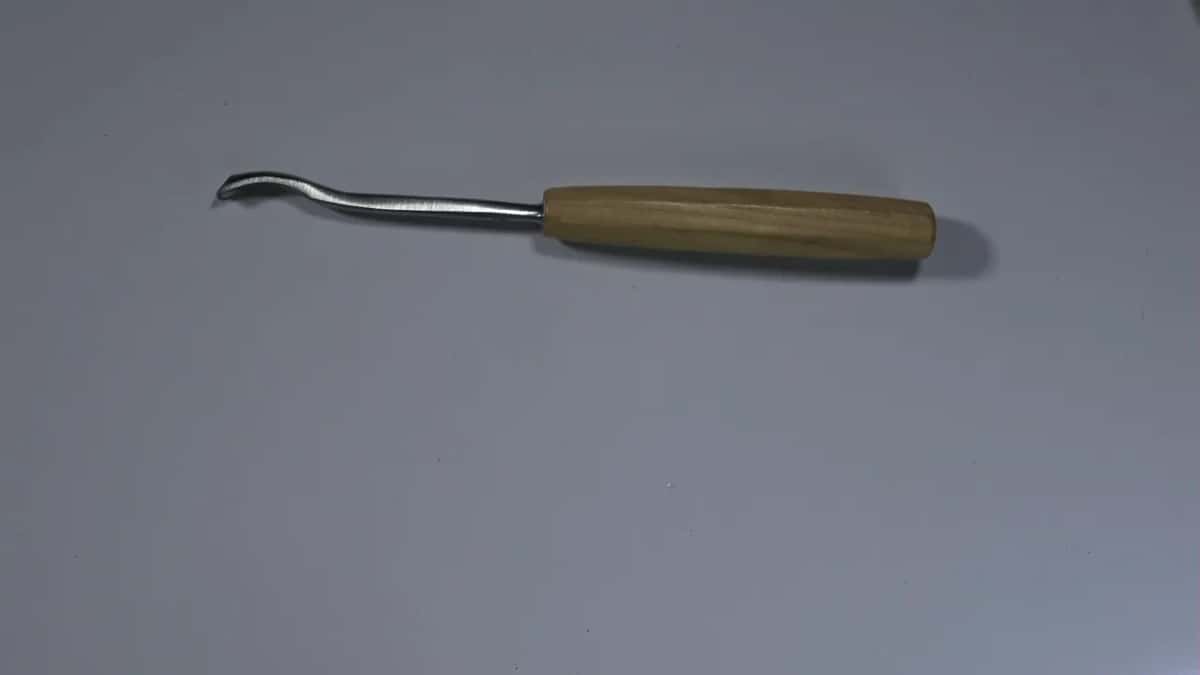
The method itself is easy. Get a plastic bottle, a water bottle is fine, put the vinegar in it, and it will last you a long time. Put the tool inside overnight. In the morning most of the rust will most likely be gone, and all you have to do is clean up. It works on any profile, small or big.
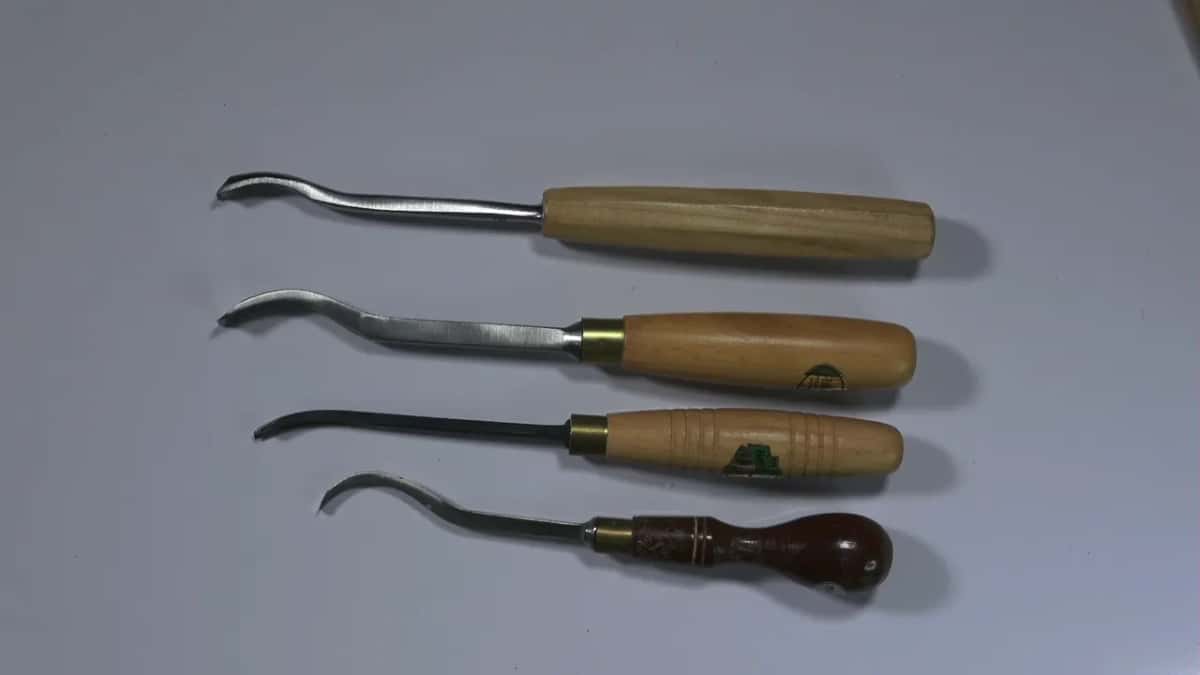
How do you remove rust from carving gouges with a gel?
A rust gel brushed straight into the curve is my way, and the first coat on this gouge sat 15 minutes by the clock. I warned everybody before I started. It's not the cheapest way. In my opinion it's the best way, and I base that probably only on time, since vinegar wants a whole night.
What I use is a rust dissolver, and it's a jelly. The tool doesn't go into any bath. You just brush it on and wait, about 15 minutes, 20 maybe, depending on how badly your tool is rusted.
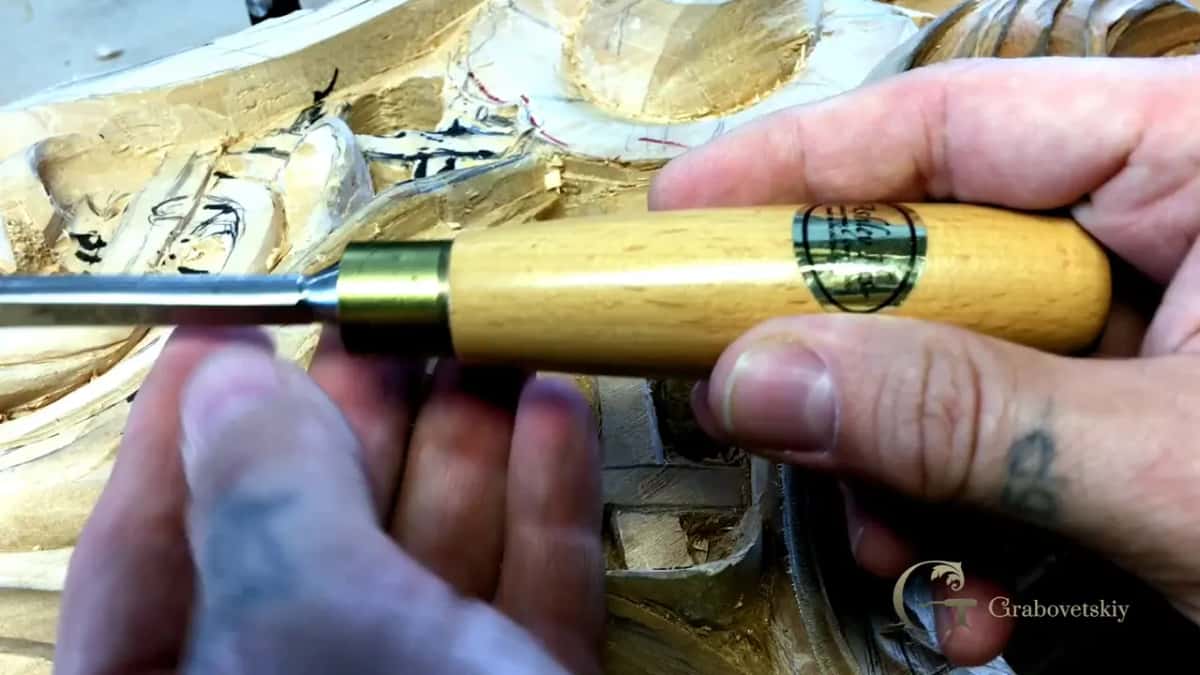
I used an artist's brush, because sometimes you really have to get inside. With a brush like that you can reach into even a really small, tiny groove. Cheap ones are fine.
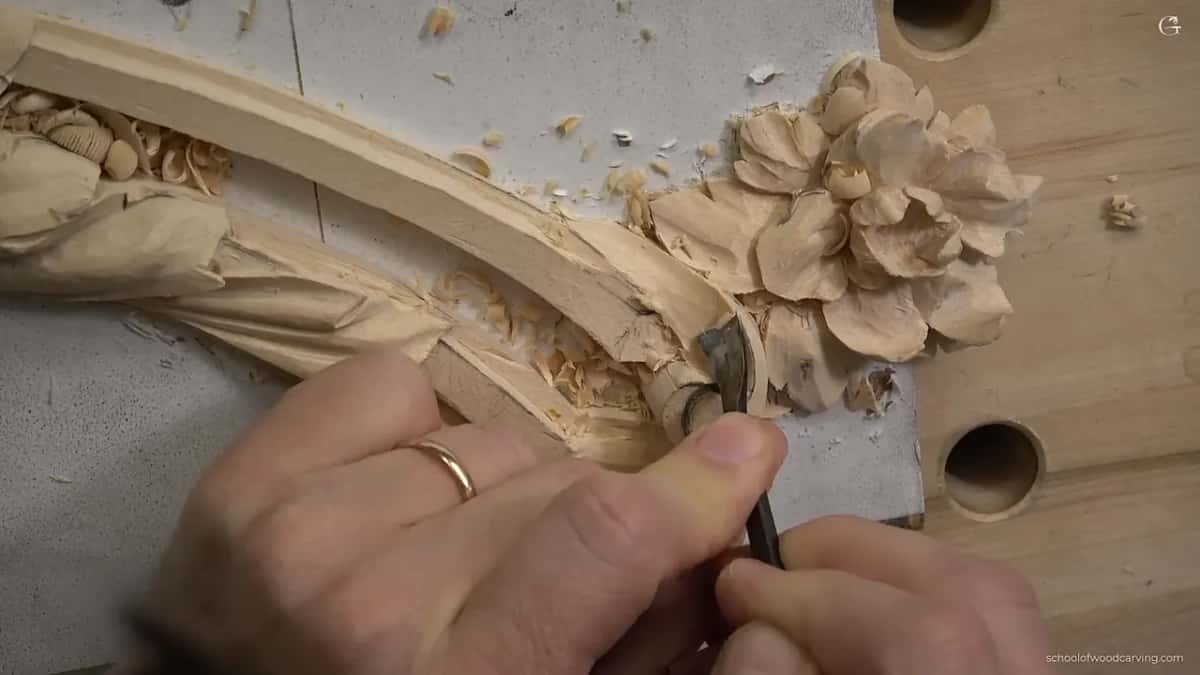
Then I covered the rust. Don't save on the gel, and don't be cheap when you put it on. Really cover it.
The reaction starts right away. I wasn't sure the camera could catch it, but you could see it working already, and a couple of minutes later the steel underneath was getting lighter.
One small bottle, eight ounces (about 240 ml), has done many of my tools, and it still looks full. You don't use a lot. Someone in the chat asked what is in it. I had to get my glasses to read the label, and it said phosphoric acid based.
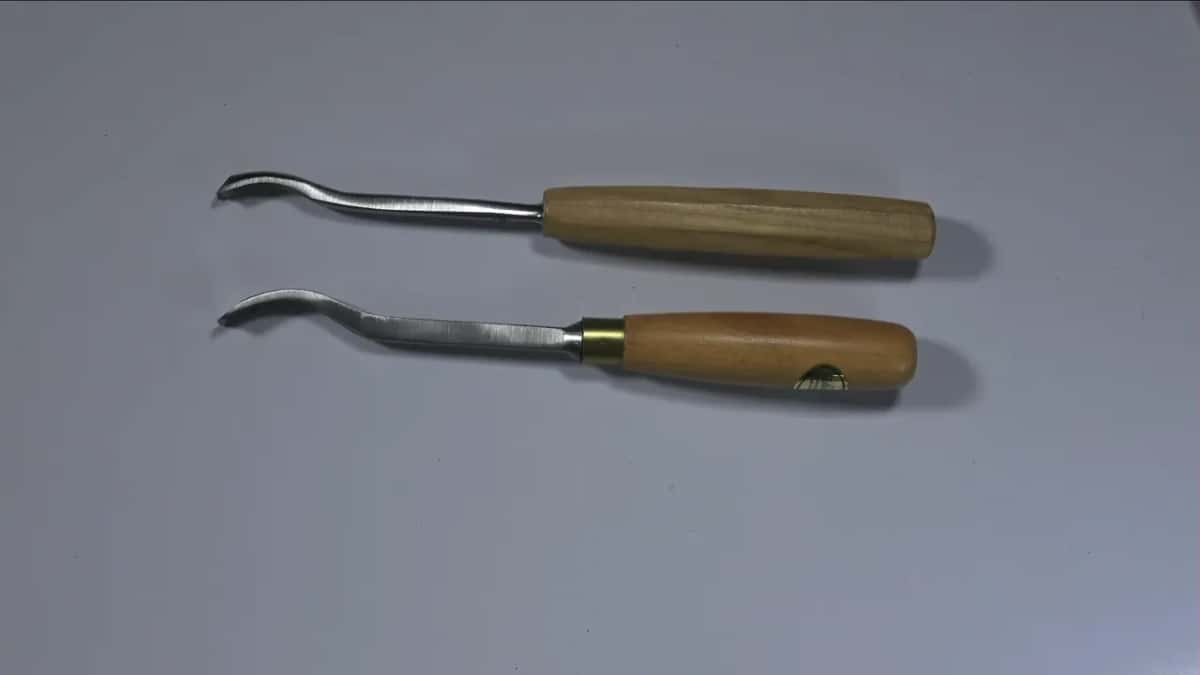
What do you need on the bench before you start?
Besides the gel, I had four things within reach, and every one was cheap or came from the kitchen.
Item | Note | When |
|---|---|---|
Paper towels underneath | Any protection for the workbench will do. | Before anything. |
A cheap brush | An artist's brush gets into the tiny groove. | For brushing. |
Kitchen dish scrubber | Scotch-Brite, a heavy one, and no sandpaper. | After waiting. |
Cheap vinyl gloves | That gel is dangerous stuff on skin. | At cleanup. |
The rust gel | Brush it on, then wait fifteen minutes. | Every coat. |
Some oil afterward | Machine oil works, and penetrating oil isn't needed. | When you finish. |
The scrubber is the stuff you wash your dishes with, Scotch-Brite. It comes in light, medium and heavy duty, and mine was one of the heavier ones. For gloves I use vinyl, the cheapest kind you can find.
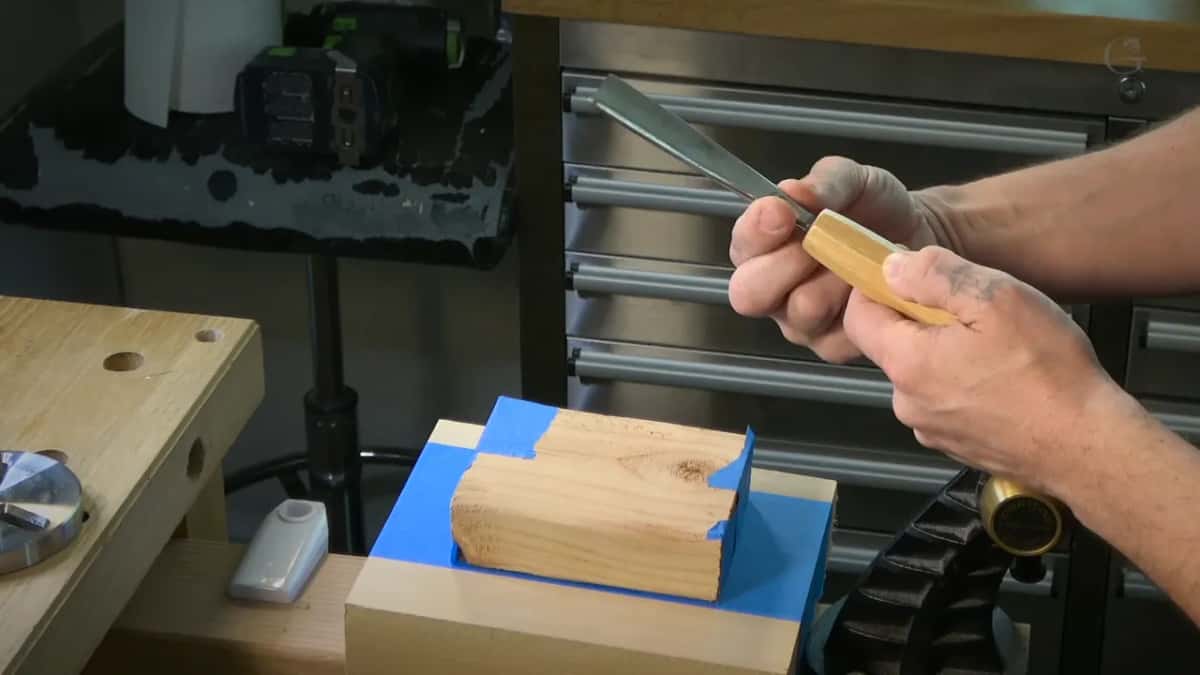
How many coats does a badly rusted gouge need?
In most cases one coat of 15 minutes or so is probably done, and the worst cases take two or three. Mine was one of the bad ones.
After the first 15 minutes I put my gloves on and went over it with the Scotch-Brite. All the rust is gone, I said, and it did not destroy anything. Then I looked closer. There was some kind of paint inside, and most of the rust was gone, but there was still some. Inside, it had just eaten away at the metal, so the gel went on a second time.
If the rust went a little deeper than you expected, apply it twice. Absolutely no problem. Two times, three times, and then you see the result much better, and how many it takes still depends on how old the tool is.
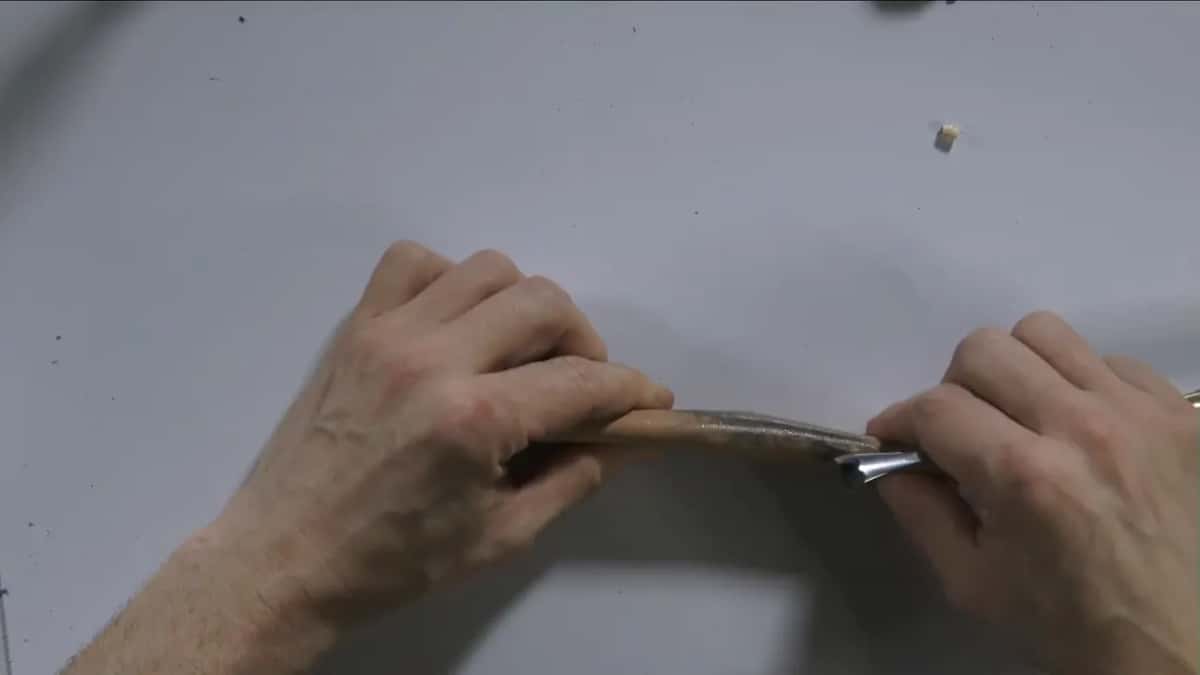
The second coat came off after about 10 minutes. I should have waited five minutes more, but the rust was mostly gone, and I told the chat this was a severe case. A third coat went on.
While it sat, I showed the opposite side. That side was clean already, and I hadn't done much to it. Now you could see the logo, the arrow, with no problem.
I said I could leave the gel longer, half an hour or even an hour, and that would probably take most of it out. Three coats at 15 minutes each is 45 minutes together. Not a big deal.
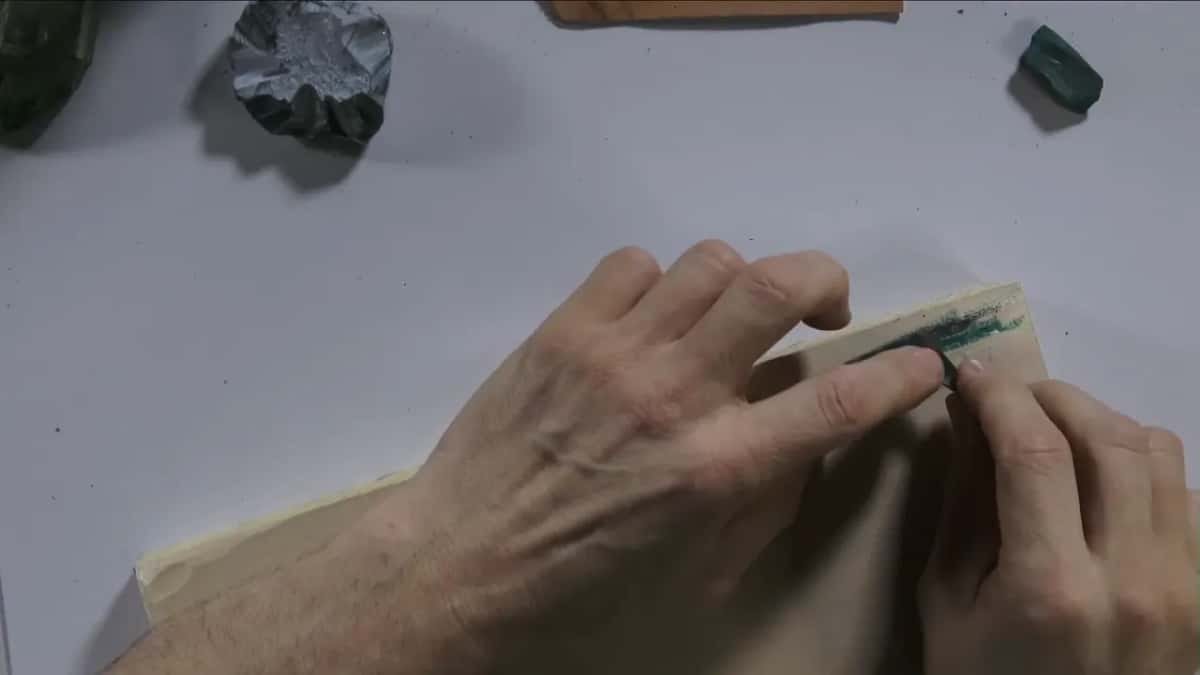
I asked the chat if they liked that we did this live. Nothing was prerecorded, and I did not fake the result, because I know some people do that.
At the end I showed it one more time. You can take it to the extreme and clean it even more, and it gets shiny as new. Mine looked just like brand new. The next stream started with a look back at the same gouge, really clean and nice, and I said some of the rust had eaten away the metal, but it should still be fine. That stream went on to the pointing machine.
Why scrub with Scotch-Brite and not sandpaper?
Scotch-Brite was all the scrubbing this tool got, and from the start the idea was to clean it without destruction, without damaging the anatomy of the tool.
Near the end I said it plainly. I did not sand anything, and I didn't take that logo away.
I'm going to be honest with you about one thing. Earlier in the stream, before any gel went on, I used sandpaper on the back so the camera could see the mark. I hate to use sandpaper on old tools, and I said so while I did it.
Under the dirt was an arrow and another letter W. A mark like that W means an original William Butcher, a maker in Sheffield, England, and where else would the best tools come from, to my mind, than Sheffield? His logo was a cross. Almost like a Templar's cross, I said. I think this one is most likely late 18th century, maybe the beginning of the 19th, from before his brother Samuel came on board.
Is rust gel safe on bare hands?
Gloves come first, because that stuff is so strong it can destroy your skin. The cheapest gloves will do, and you really don't have to get the surgical kind. They matter a little while you brush the gel on, and they matter more later, when you clean it off.
Someone in the chat reminded me about safety glasses. Good idea, and I had mine right there. An even better idea is to not touch yourself after using the gel. Take the gloves off and throw them away, and don't leave them lying around your children or grandchildren.
What keeps a cleaned gouge from rusting again?
A wipe of oil protects the steel, and pretty much any type of oil will do it.
A viewer wrote in while the gel was working. He always wipes his gouges with oil after using them, he said, or they will oxidize. Yes, absolutely. That was the next thing I wanted to show, and he jumped on board too quickly.
I use a normal machine oil. It doesn't have to be a penetrating oil. It's made for protection, a traditional protective oil from France, and you don't have to use a French one. Any oil is still going to work.
What if the old handle is loose too?
Take it apart. Then either reuse the old handle, or get a new one in a shape you like.
The William Butcher still had its original handle, an 18th century English one, which I really love. There's a notch for your finger. The ferrule was original too, and kind of loose, and when I cleaned a little bit around it you could see a crack in the handle. Wood moves. It expands, it shrinks, and even a good solid ferrule could not hold the force of it.
I really love to make my own handles. One tool I bought came with no handle at all, so I turned one myself from a Brazilian wood, not ipe, a different one, and put my own ferrule on it. On a new set I reviewed in Schaaf Wood Carving Tools, one handle was a little loose, and I said I can always replace a handle.
For gluing, Titebond holds really well, though it's not my preferred way. I like a clear resin epoxy. It doesn't have to be expensive, and you can buy it online or at a local hardware store. Some epoxies are too flexible and some are too much like glass, and those aren't good. Mine is a medium, and it holds forever.
If you plan to bang on the tool with a mallet, I'd go with the Titebond, because it's more flexible and it moves. Either way the ferrule has to be really tight, and you can glue it in place too, with epoxy or Titebond. How a good gouge is put together, ferrule and all, I went through on the August 2021 livestream, and my handle choices came up on the April 2020 livestream too.
Is an old rusty gouge worth the work?
For me it is. Somebody asked if I could grind new tools out of old ones. I said I could do more than grind. I can reshape one, put it back in the heat and redo the whole thing. The steel is still there, still excellent, and I can do the blacksmithing myself with no expensive equipment. The tools themselves, maker by maker, are in All About Tools for Wood Carving.
Another viewer asked if I ever make tools myself. I used to. When I was in jail in Russia for my beliefs, there were no sharp tools, so you had to make your own. The knives were small, maybe 10 mm (3/8 in) at the most. Simple gouges we made from just nails, and you have to heat treat them.
For specific jobs today I don't need to make any. I have a lot of tools. The edge on a cleaned gouge is its own job, and the Carving Tool Sharpening course covers it, while more questions from the chat, answered the same way, sit in the techniques and Q and A course.
The coats, the waiting and the scrubbing are all in this lesson, in the order they happened, with the chat asking questions the whole time and the antique tools from the stream before. Access opens it and every other lesson in the school, and the Livestream events course has the rest of these streams, and the start page helps you pick a first course. The arrow on the back of that William Butcher reads clean now.
How it's done
- Cover the bench. Paper towels go down first, or any other protection you have for the workbench under the tool.
- Put on cheap vinyl gloves. Surgical ones are more than you need.
- Brush the gel on. An artist's brush reaches into the small groove, and the rust should be covered completely, since there's no reason to save on that stuff.
- Wait a quarter of an hour. Or twenty minutes on a badly rusted tool, with the reaction starting right away.
- Go over it with Scotch-Brite. Kitchen scrubber, no sandpaper. Then look closely down inside the curve.
- Apply it again if rust is left. A second coat or a third is sometimes needed, as on a severe case like my William Butcher, and each one gets the same wait.
- Throw the gloves out and oil the steel. Keep the used ones away from children and grandchildren, then wipe the tool down with any oil you have on the shelf.
Frequently asked questions
How long should rust gel sit on a carving gouge?
Fifteen minutes for one coat, and maybe twenty if the tool is badly rusted. My William Butcher got three coats in all. The second came off after ten minutes, five too early by my own count, and the worst cases add up to around 45 minutes.
Can you leave a chisel in vinegar overnight?
Overnight is how the vinegar method goes, in a plastic water bottle, and by morning the rust has likely gone. Leave a gouge in much longer and you lose real steel, since vinegar dissolves iron along with the rust. Then all you do is clean up.
Do you need sandpaper to clean rust off a gouge?
For the cleaning I used none. A kitchen Scotch-Brite pad took the gel off after each coat, and the maker's arrow and W were still there when I finished. Early on I did sand the back a little, only so the mark would show on camera.
What to carve next