
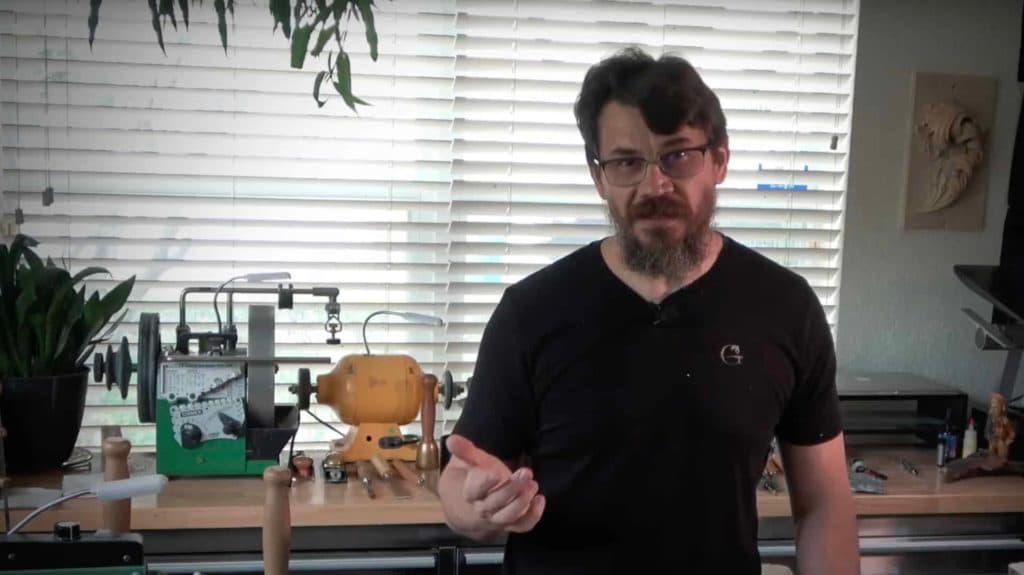
Alexander Grabovetskiy, woodcarver, School of Woodcarving · Published 2021
How do you develop your own style in wood carving?
Quick answer: Developing a style of your own in wood carving starts with copying, the way I answered it on a live stream. Begin with the old masters, copied as close as you can. Then widen your tools and practice every day. Even a careful copy comes out a little different, like my handwriting did, and that difference is yours.
Your own wood carving style is what grows out of years of copying the old masters, the way my handwriting grew out of copying one teacher's letter A. Somebody asked about it in the chat near the end of one live stream in this lesson. The next morning I gave a whole stream to it, and I called it one of the best questions people can ask.
Have you ever copied a carved leaf out of a book, line for line? Did it still come out a little different from the picture? That small difference is where your own hand shows up.
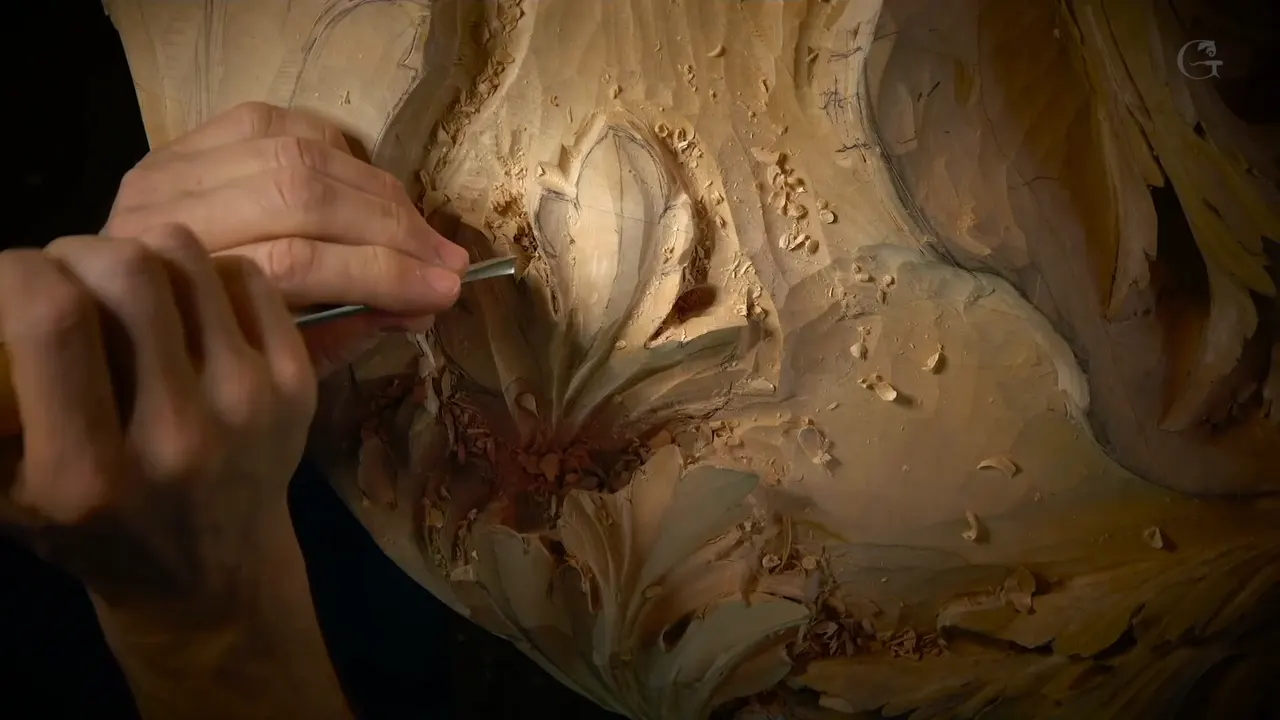
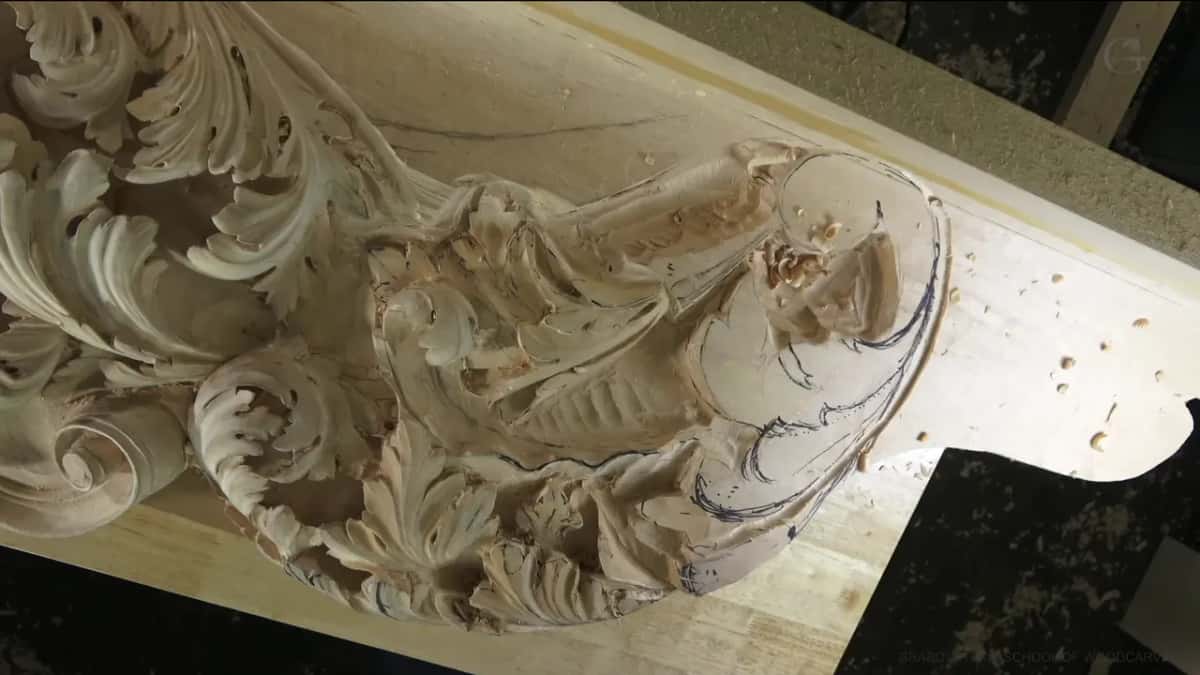
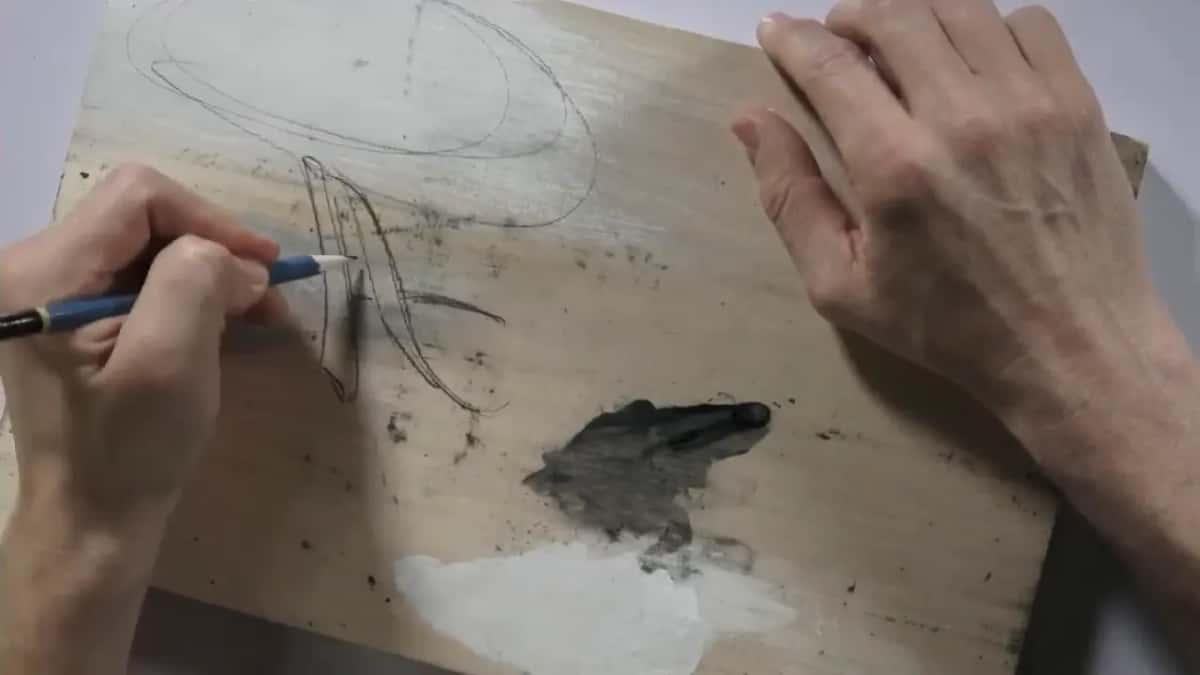
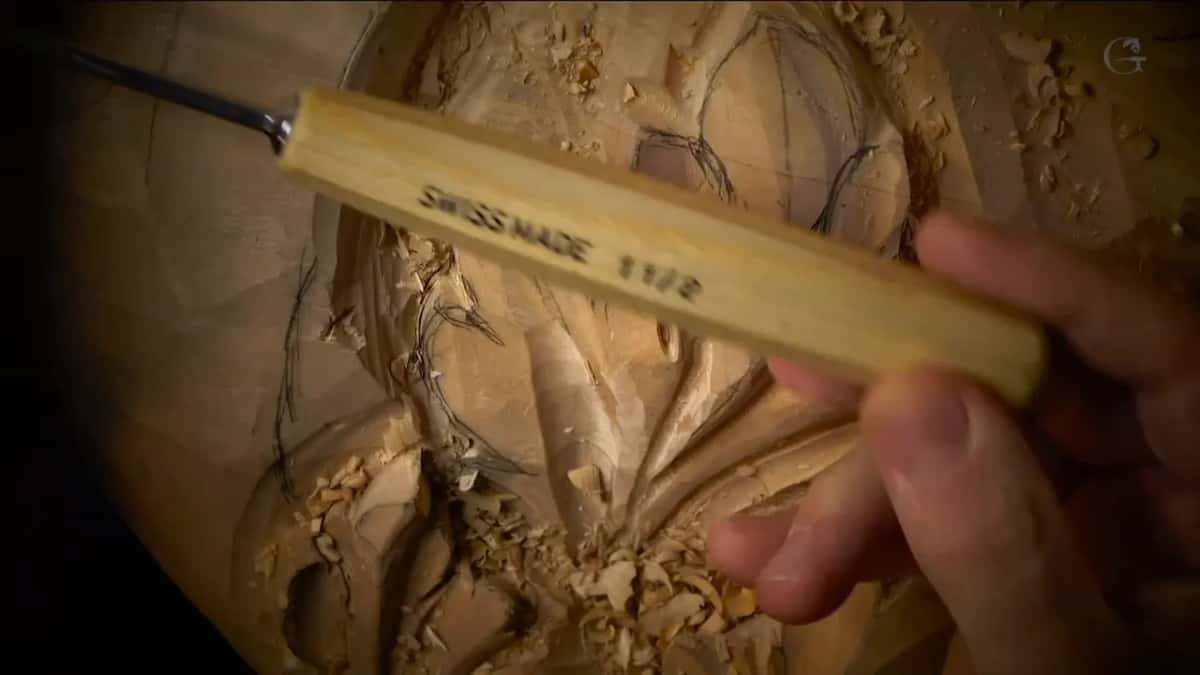
Below are the four points I gave that morning, in the order I counted them on my fingers, and the school story I opened with. None of the pictures come from the stream. They come from my lessons on Vimeo, and they show my work in a few different styles: letters, Venetian acanthus, flowers.
The morning's answer at a glance
Copy the old masters first, exactly.
Even a careful copy comes out in your hand.
Tools set the borders.
Practice a little each day.
Study stone carving as well as wood, and the bodies Michelangelo made.
My flowers carry no fruit, by choice.
Where does a wood carving style come from?
From copying, in my experience, and the best proof I have is a pen. When I was eight or nine, at school in the Russian part of the USSR, one of our homeworks was handwriting. You took a pen and wrote, pretty much every night. We went to school early in the morning and came home late, dark to dark, and then the pen came out.
My father would sit me at a table by the window, on a chair, with the homework, and he wanted me to develop really good handwriting. I was slow. Any eight year old is slow with a pen. Then he would come over, smash my paper and tell me to write it again, three, four, five, six times, sometimes even more.
It wasn't about mistakes. I didn't make too many of those. It was about the style, how it looked.
At school a lady teacher wrote the letter A on the blackboard and told us, that's a letter A, that's the way you write it. I tried to write it just the way she did. And whatever my teacher did, I still developed my own way of writing the letter A.
Carving works like that, I said. The piece on my bench that morning was Italian 15th century style, Venetian. People who follow me still catch my hand in it, the way you would catch a person's writing. Even if you try to replicate something, it's still going to be your own. The question was legit, I said, and the answer works for any kind of art, carving included. Every carver goes through it, and every painter too, oil or acrylic, it doesn't matter.
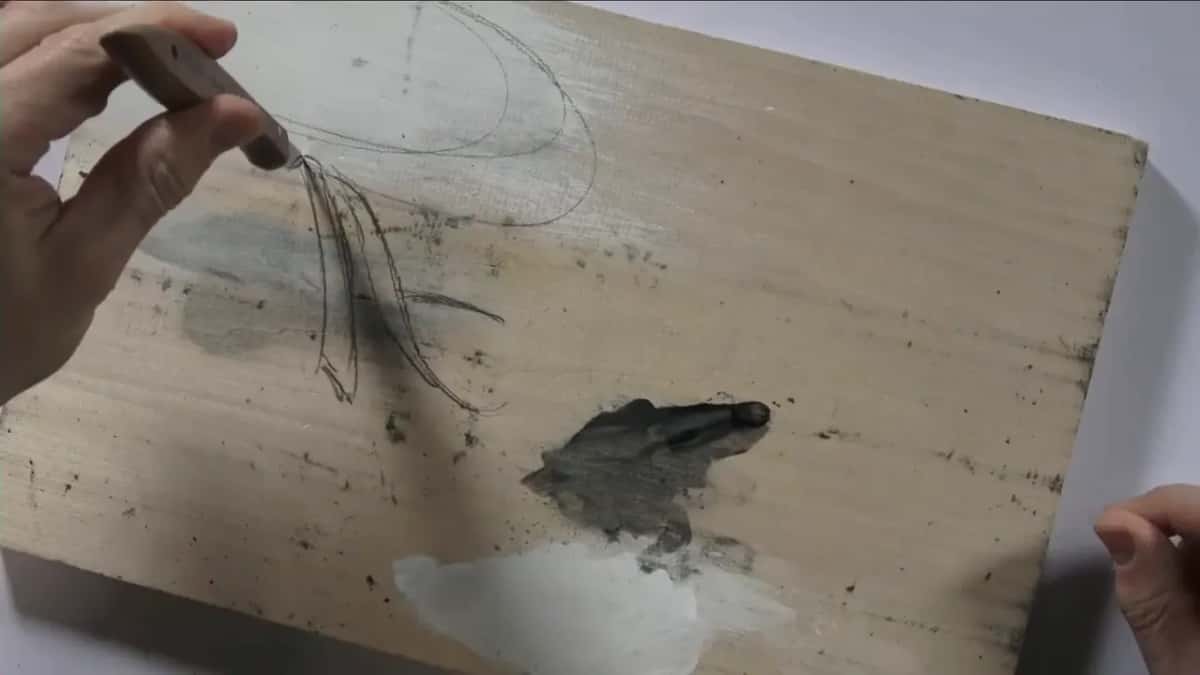
I have something like police all around the world. Not the police, just people who know my work and recognize it. If somebody takes my picture, posts it on a website and claims it's theirs, those people email me about it.
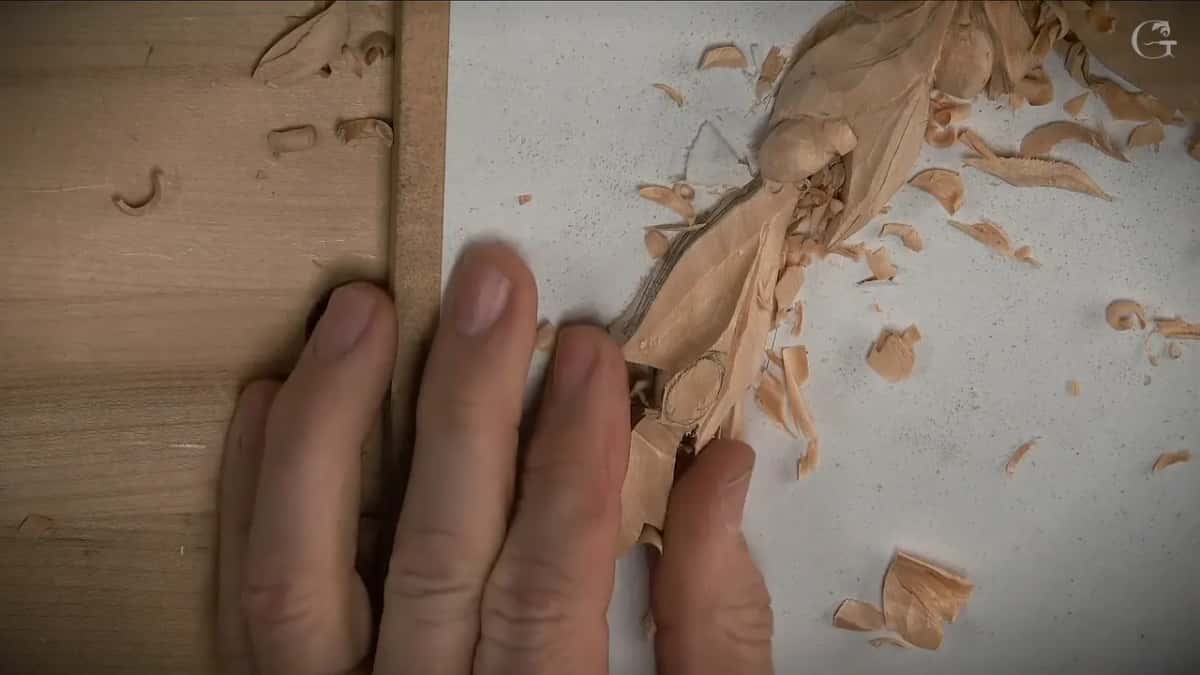
In a stream from April 2020 I carved a letter A with a carving knife, and the pictures of letters on this page come from it.
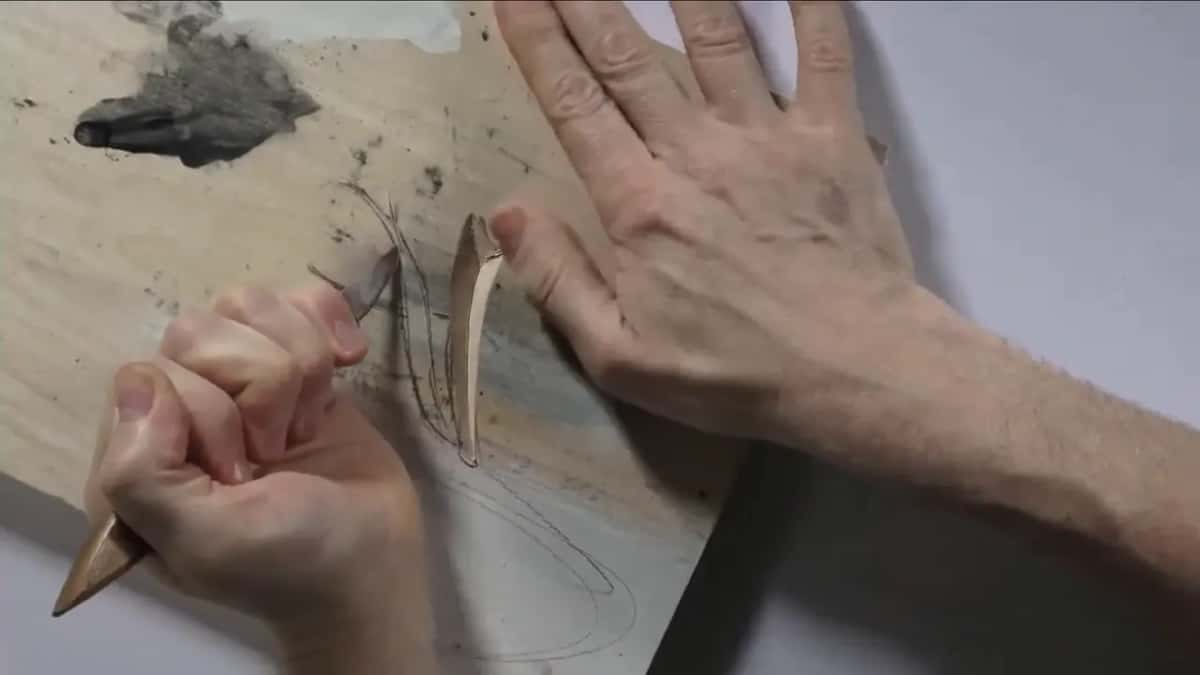
Why are there no fruits in my flower carvings?
I wanted a style of my own, and that's the whole answer I gave. People write to me, in emails, in text messages, on Facebook: you're just like Grinling Gibbons, just the flowers and so on. I'm not, really.
Gibbons was a great woodcarver. He lived in England, he achieved greatness in what he did, and he loved flowers. He also put in a lot of fruits, a lot of different fruits. I never do that. I could, I'm okay with it, but I wanted to develop something of my own. Flowers, yes. Fruit, no.
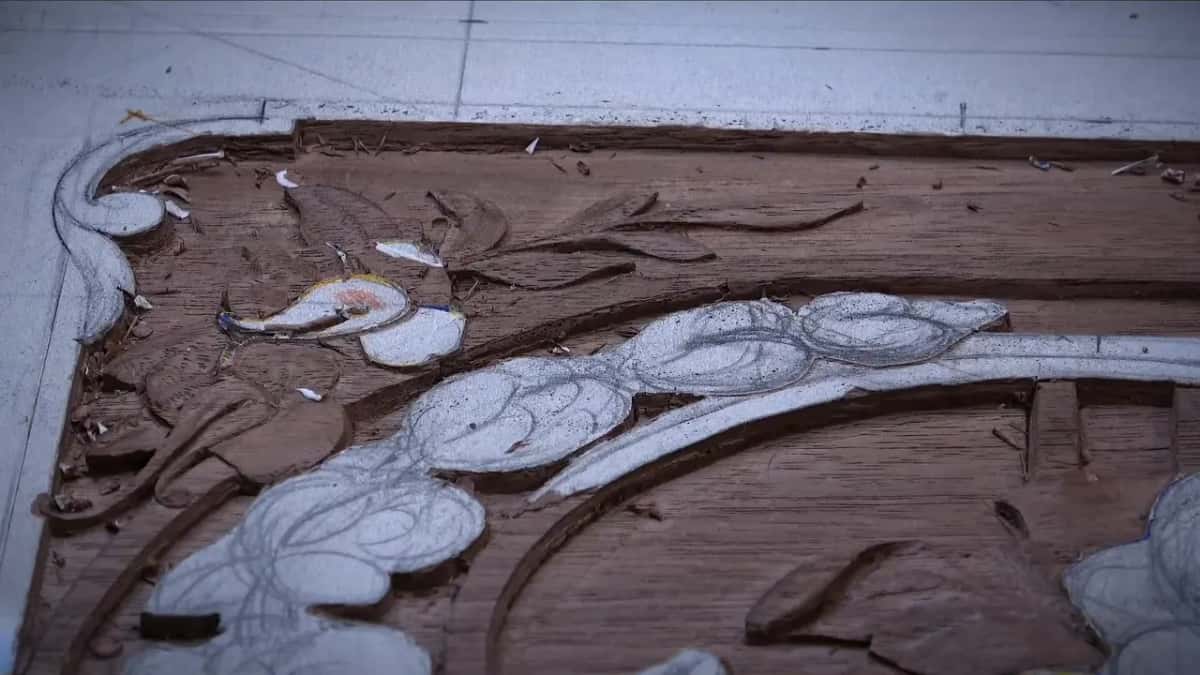
Whether it matters, I told the chat I don't know. I want it to be unique. Hold up one of my panels and you can see some kind of French acanthus movement in it, and the sunflowers I have carved I called absolutely my style. Some guys try those sunflowers too, and they love that.
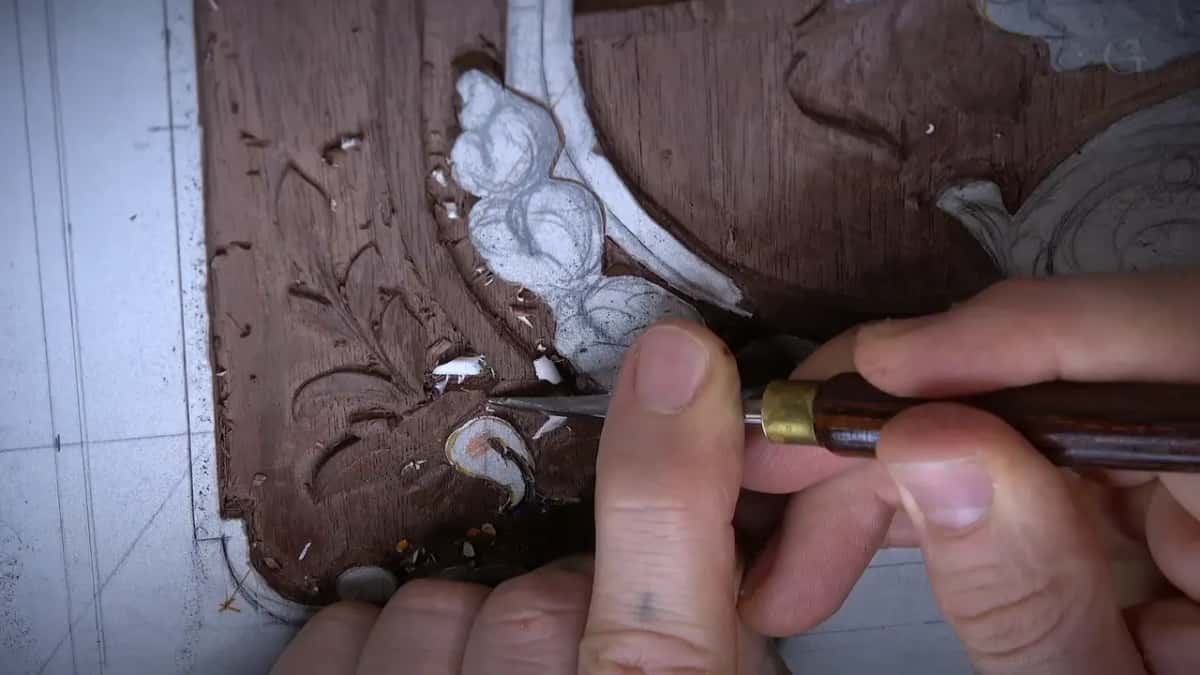
Whose work should you copy first?
The old masters, the long dead ones as much as the living. Step number one is to look at what other masters did. Study Gibbons. Go after the German woodcarver of the 15th century, Tilman Riemenschneider. Google it, nowadays it's easy.
My teacher used to send me to a library to dig for pictures of old work. Just study from those guys, he would say, and see how they did it. At the beginning you won't see the difference between an acanthus leaf carved by one master and a leaf carved by another. The more you study them, the more you catch it.

Don't stop at wood carving. Study stone carving, too. See what Michelangelo did with the human body, how he approached the veins, how beautiful he made his statues. If you're in Europe, go and look at buildings from the 17th and 18th century. They used lots of flowers. Look at the stone, and you'll learn a lot.
A day earlier, when the question first came up in the chat, My first answer there was a joke. I don't know, I said, nobody knows. Then came the real one, what my own teacher told me. Study the work of the old masters, and you'll see what is more appealing to you. You'll understand the philosophy behind that art.
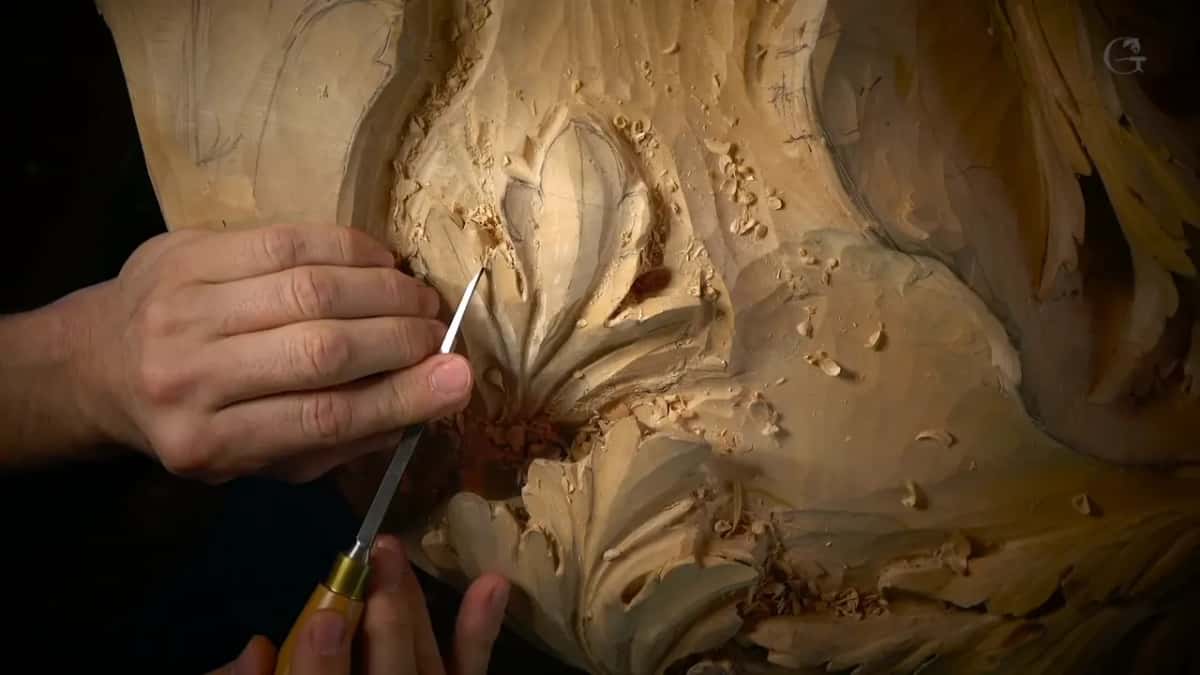
Then start replicating what they've done, little by little. Take somebody else's work and try to do exactly the same thing. You'll start to understand the way of thinking. I know it sounds stupid, I told them, but there is a way the brain goes, a way of thinking. It doesn't come overnight. You do it every day, the same thing, replicating, and little by little a style of your own comes.
How do your carving tools shape a style?
A lot. That was the second side of my answer, and it's only my own understanding: the style you establish connects to the tools you have. If I have half a thousand tools, I have a lot more ability to develop something unique. If you have only 20, you're still going to be able to carve. You're just limited to 20.
Tools train your hands. So try different tools, different shapes, even different brands. Brands can be confusing, though. The day before, while recording for my school, I used a number 3 by Henry Taylor and a number 2 by Pfeil, and they were the same sweep. Study first which tools you need, and don't buy the same tool twice under two names.
Keep 20 tools and never buy more, and you're kind of boxed in, and how your style develops will depend on those 20. All masters collect tools over a lifetime. One master from Europe asked me on the phone how many I had, and I said about half a thousand, maybe a little more. How I keep that many on a bench is a lesson of its own. And I said on the stream that 200 more tools will open those borders.
Read David Esterly. He wrote at least two books about Gibbons and his work, and in the second one he talks about how Gibbons expanded his tool collection. Compare the work Gibbons did when he was really young with the work right before he died, and the difference in quality and in style is huge. I think it's connected to tools.
How much practice does it take?
Every day you can manage, and on my fingers it was point number three. Just practice. I carve pretty much every day myself. It's so simple, practice and practice and practice. I had read a book about ten thousand hours, then another, then a third with the same number, and I'm not sure it's true. That many hours and then boom, you become a master. It's not like that, and the lesson on mastery goes into why.
One of the musicians said it this way. If I don't practice for one day, I notice. One week, my wife notices. One month, the public notices.
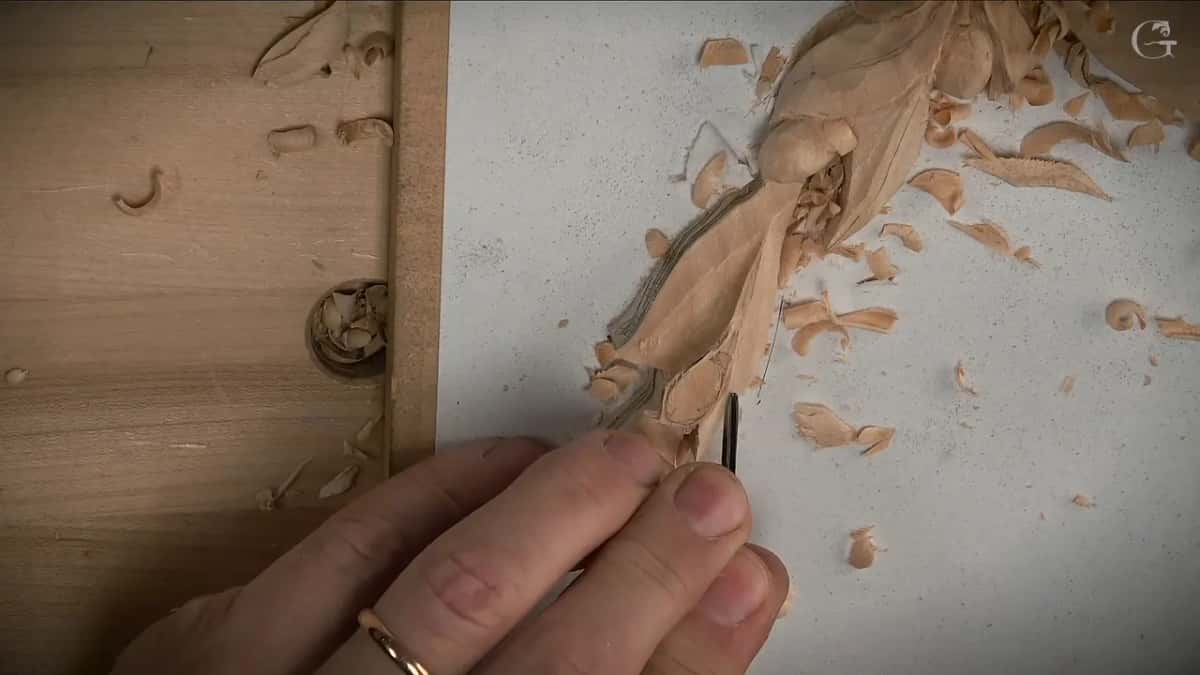
I know finding the time for a hobby is a pain point. It doesn't take much. Get 20 minutes a day, or thirty, and it takes you to the next step. If you have half an hour for Facebook, or Instagram if you're younger, or TikTok if you're younger yet, you can always find half an hour for carving.
I called that one the hardest of the four. While I counted them I laughed, because I had used the wrong finger, and my children make fun of me for that. You shouldn't use that finger, at least in the Western world.
| Point | Said | Start |
|---|---|---|
| Old masters | Copy what they carved, line for line, in wood and in stone | Gibbons, Riemenschneider, Michelangelo's stone |
| Your tools | Different shapes widen what your hands can carve from a block | Study what you need first |
| Daily practice | Twenty minutes a day takes you up to the next step | Time you spend on Facebook |
| Older videos | Watch my hands and listen to why I carve that way | My school, not YouTube |
Can you learn from more than one school?
You can, and I told people to do it if they can afford it. My school is only one school. You're never going to hear me say bad stuff about other schools, and I don't look at them as competitors. The Western world is based on competition, in politics, in business. I would never say my stuff is much better than somebody else's.
Carving I know, I've done it pretty much all my life, and my teaching style is absolutely different from other schools, and that doesn't make me better or worse. Some of you are members of my school and of other schools too. Take classes everywhere you can. It opens your brains, and you'll understand why I do it my way and why they do it theirs.
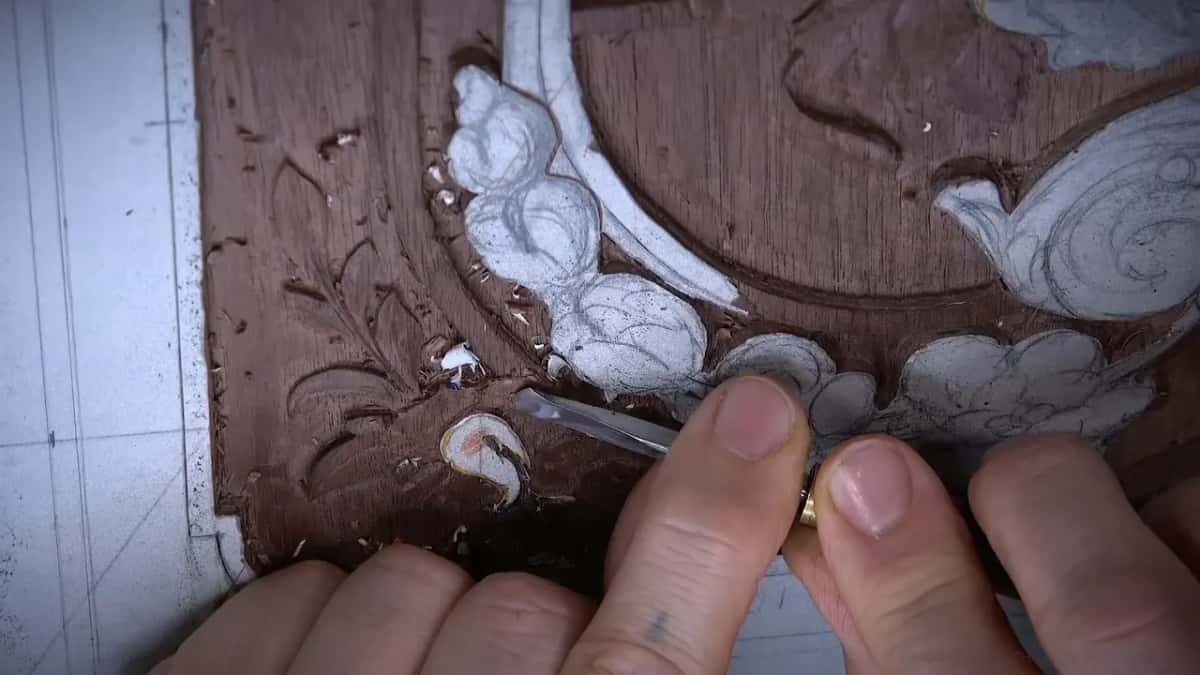
Watching a master is the letter A again. You try to replicate it, and it still doesn't look exactly like the teacher's. Some people watch my hands again and again. In the school I'm mumbling sometimes, not explaining too much, and maybe it's boring. People still rewatch the same video just to see how I'm holding my tool and how close to the edge I'm getting.
Somebody in the chat put it as learning their ways, making them yours, then running with it. Right on the money, I said the next morning. The day before I had added that it's more than that: you learn the way of the masters, and then you develop your own.
I also told an old story about a young man who studied under one famous master, then another, and after fourteen years of carving decided to learn by himself. My close was that it still was a good idea to learn from those masters.
Where do my older videos fit in?
Point number four was to watch some of my older videos, and you'll catch some stuff from them. But if you're trying to learn carving from me on YouTube, you won't, because I'm not teaching carving there. That's more like philosophy. I said I keep sending people on, Facebook over to YouTube, YouTube over to the school site. You'll understand my approach, not the practical part.
The practical part is on the school site, thousands of video segments, enough to get lost in. I said the school works like an old European apprenticeship with modern technology. There I take you into my shop, onto real projects for clients. Most of you are never going to carve what I carve, but by watching my hands and listening to why I'm doing what I'm doing, you learn a lot. Access opens every lesson, and the lessons map shows where each course sits. The Venetian work is in lessons like Venice Room 65 and Venice Room 55, and the flowers in Furniture Panel 20 and Chamomile and Bow Rosette 2.
A man who already carves for customers wrote to me after one year in the school, and he said he learned a lot, especially the way a piece gets developed.
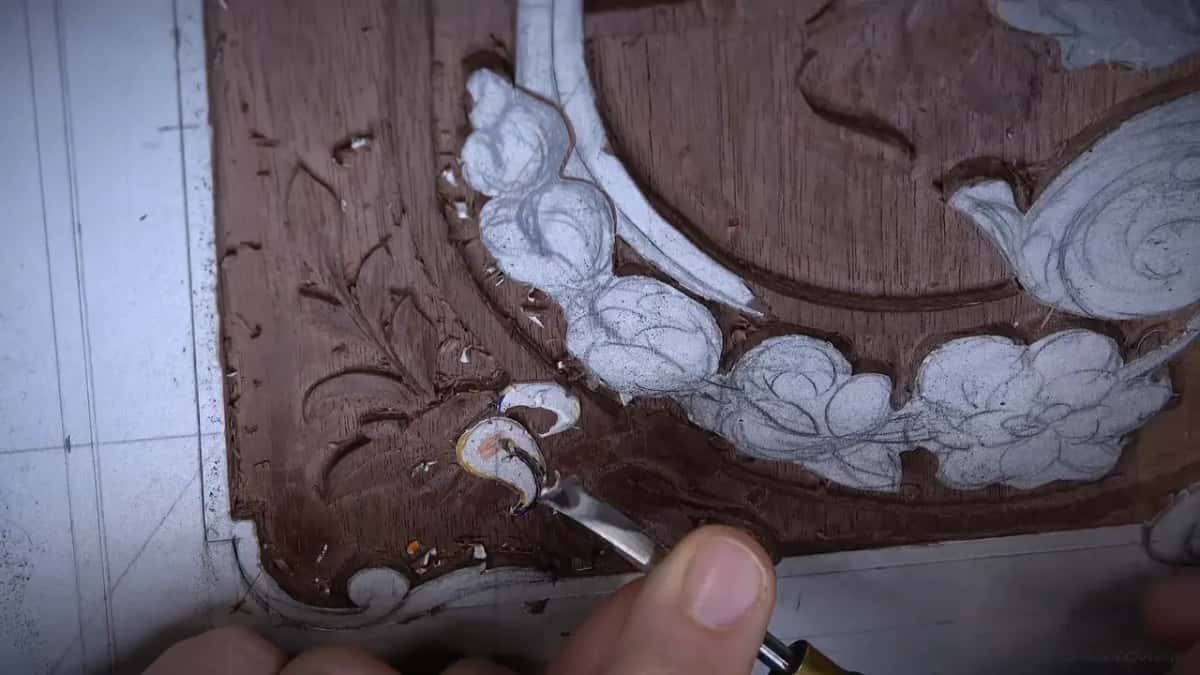
Even copying, my hand stayed mine. My flowers still carry no fruit, and my letter A came out my own. The livestream course holds the rest of these talks, and Principles of Design is where I teach the rules of a design, for the day you want them.
At least people like my handwriting. Some days it's better, some days worse.
How it's done
- Look at old work until masters look different. Gibbons and Riemenschneider in wood, Michelangelo in stone. Two acanthus leaves by two masters will seem alike at first, and after enough looking they stop seeming alike.
- Repeat one master's piece. Pick a carving that appeals to you and copy it as closely as you can, every day.
- Know your needs before buying tools. New shapes and sweeps widen what a hand can do. A gouge you already own, sold again under another brand, is not a new shape at all.
- Carve a little every day. Take the minutes from Facebook or TikTok.
- Rewatch a carver's hands. Play one video again and watch only the grip and how close the steel gets to the edge.
Frequently asked questions
Is copying another carver's work wrong?
Copying is where I told people to begin. Take somebody else's work and repeat it, and you start to understand how that master thinks. A careful copy still comes out in your own hand, the way my letter A did at school when a lady teacher wrote hers on the board.
How many carving tools does a personal style need?
Twenty tools will still carve. You stay boxed in by them, though. In that stream I put mine at a little over five hundred, and I said 200 more would open those borders. Before buying, decide what you actually need, and skip the same sweep sold under a second maker's name.
Which old masters should a beginner study?
On the stream I named Grinling Gibbons, Tilman Riemenschneider, a German carver of the 15th century, and Michelangelo for the stone. Old European buildings carry flowers in stone too. My teacher sent me to a library to dig up pictures; today a search engine does it in seconds.
What to carve next