
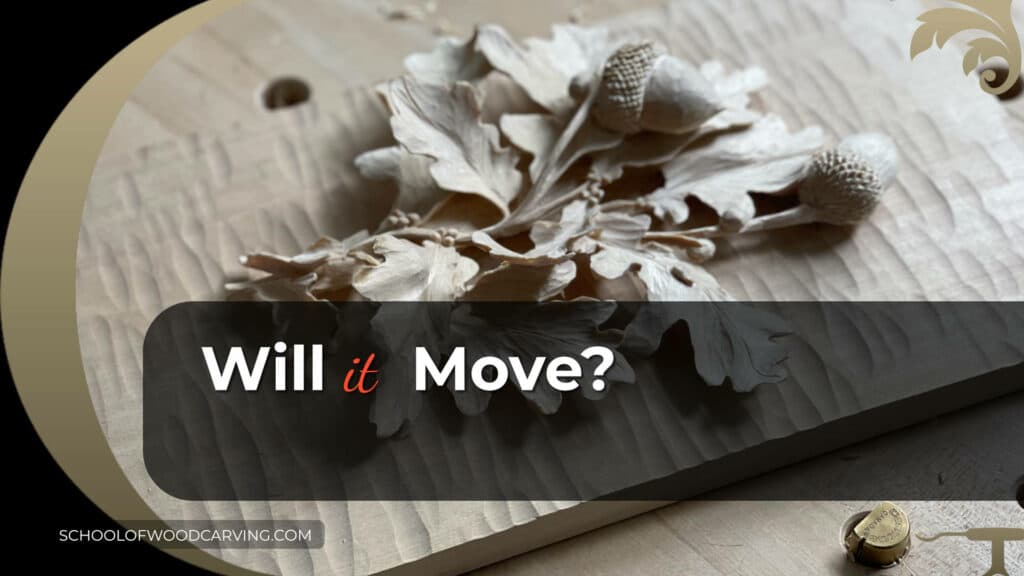
Alexander Grabovetskiy, woodcarver, School of Woodcarving · Published 2023
Does it matter which side of a board you carve a relief on?
Quick answer: Choosing a face of the board is a minor decision on a thick piece you excavate deeply, since the digging breaks the long fibers. It matters on a panel only six or seven millimeters thick. I make the face nearer the center of the tree my carving surface, so I break the force pulling toward the heart.
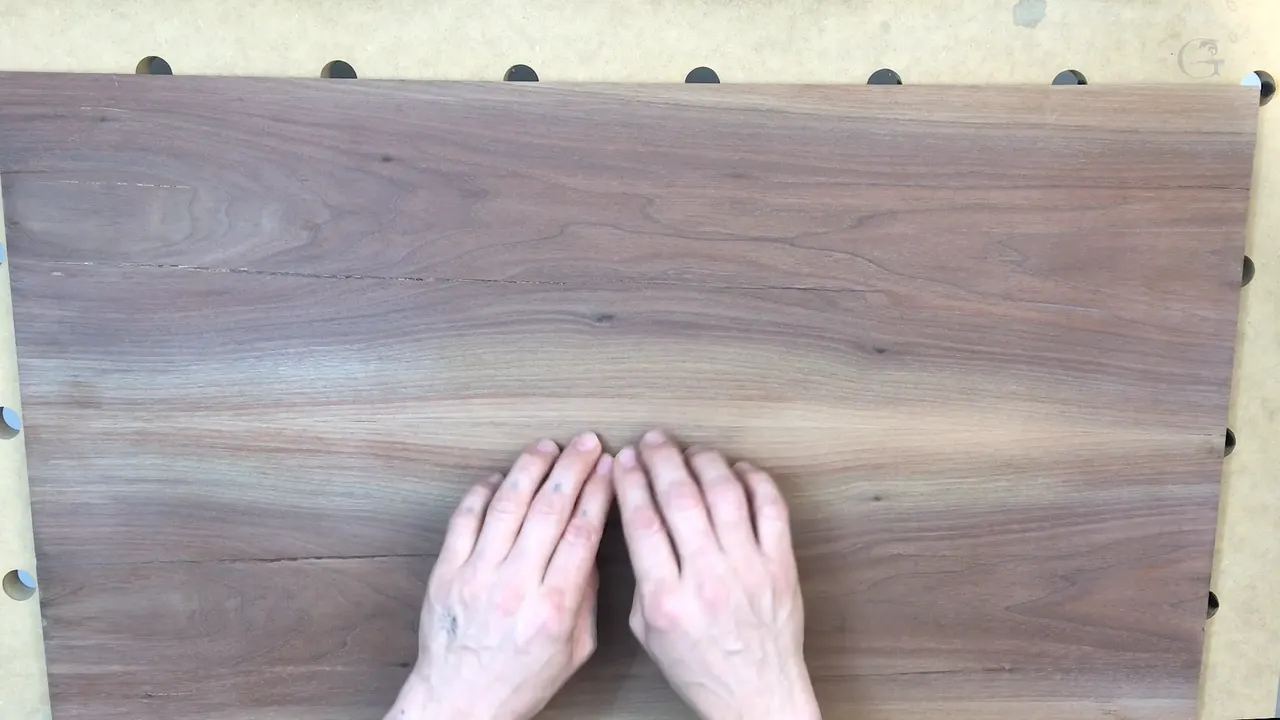
The side of a board you carve a relief on is a small question on a thick carving and a real one on a thin panel. Excavate a big piece deeply and it hardly matters. On a thin relief panel it does, and there I carve the heart side, the face that grew nearer the center of the tree.
It is the old bark side up or down question. A student of my school sent it to me by email, and I have to answer it again and again in my in-person classes, so I took it on in the November 2022 livestream.
Then I missed one part. One of the comments helped me remember, and a week later I came back with a version two, this lesson, and tried to go a little deeper. Like I promised, I'll try to do more live streams, since I sent my project away and I'm taking a little rest. When you're doing a live stream you really don't remember everything. I said I would try to answer a little deeper, and I wasn't sure it was even possible.
In November I put the question like this. Do you place your carving on top and leave the bottom as the background, or flip the board upside down and make the other face the surface you work on? How do you attack that piece of wood when you are carving it? That is the big question.
Do you want a carved panel to hang flat for years? Would you like to know why a deep carving behaves and a thin one does not? Then the side of the board is where to start. I'll give you both answers, thick and thin, and the result I showed for the second one.
What the two streams settled
With deep excavation on a thick piece, in my opinion the side hardly matters, because all that digging breaks the straws inside the board.
A thin panel is not excavated as deep, so it tends to move.
There the heart side is my carving face, and the bark side becomes the back.
A new board carries a weakness for years, kiln dried or not.
The least movement comes from quarter sawn boards, and plain sawn boards warp the most.
When one board is too narrow, laminate and flip the grain on every other board.
Why does a new board keep moving after you buy it?
A brand new piece of lumber, or timber if you're in England, carries a weakness for at least about 10 to 15 years. Wood is excellent material. I love how it smells and I love the grain, but the fibers in a new board are still fresh. It could be dry, it could be kiln dried, and they are still not dead and not stabilized yet.
So when I have the chance, I let it wait. I keep a whole stack of lumber on top of my sauna and leave some of it there for years, while the fibers go through their seasonal expansion, puffing up and going back, puffing up and going back, depending on the weather outside.
Florida is a different case. It's always hot and humid there, summer and winter, so the wood doesn't really move as much. That's what I noticed, anyway. Maybe I'm wrong. Wherever you do have seasons, wood will adapt to its environment, and it is going to cup, warp and twist on you, all kinds of crazy stuff.
Inside, a board is like the straws at McDonald's. A whole bunch of them run the way the growth rings run. It's really a pipe system inside the lumber, and the juice used to go back and forth through those straws. Once you saw the tree, you take away that supply. No more juice, and the wood starts drying out.
As the spaces between the straws dry, everything is pulled toward the center, toward the heart somewhere, from all of the sides. At least that is how I understand it. In the November stream I put it the same way, the straws compacting and getting really close to the center when the air is dry. Then the board starts moving.
On the stream I grabbed my iPad and drew a board for you, then asked you which way it would warp. The force goes from all of the directions toward the center while it dries and dries. I drew my answer on that board. You have to see the picture in the lesson. I hope it makes sense.
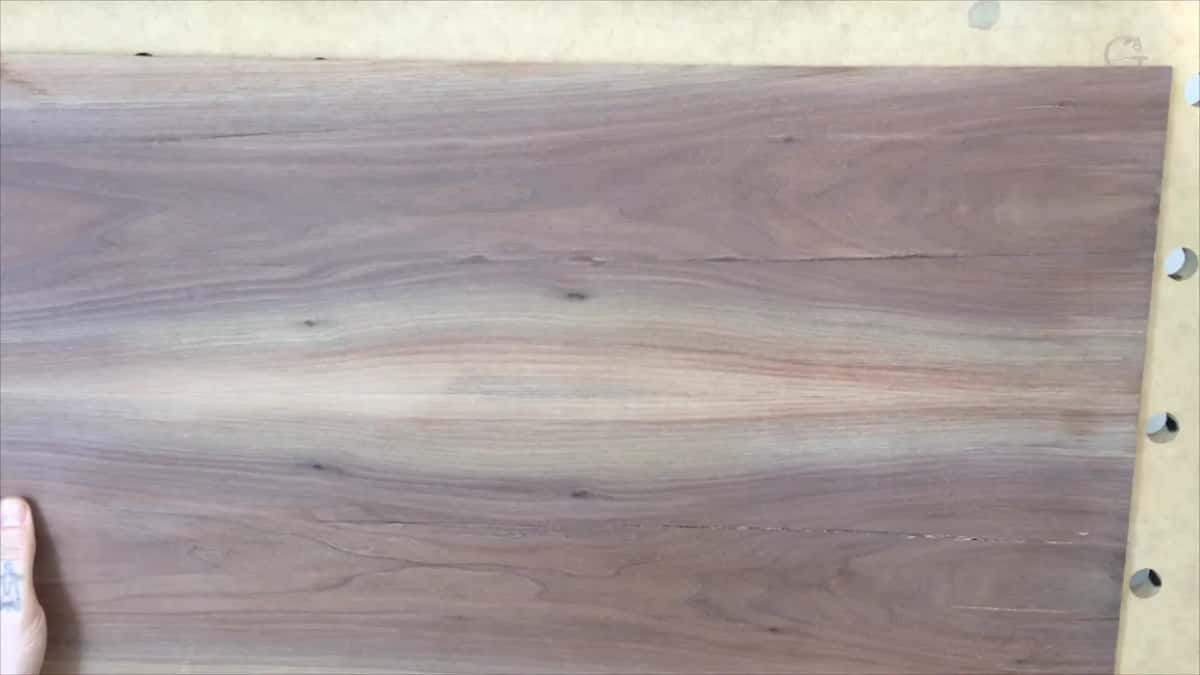
Which boards warp the most?
Plain sawn boards do the most warping, twisting and cupping, and they are what you will most likely buy. The people who slice a log at the sawmill have several ways to do it, and the three I named on the stream are plain, quarter sawn and rift cut.
Look at the edge of a quarter sawn board and the grain looks really consistent, always the best option. But the normal board, whatever they sell, is plain sawn, as I said in the November livestream. The rest of the sawing and stacking story, including how a glued panel splits, is on the Livestream events course page.
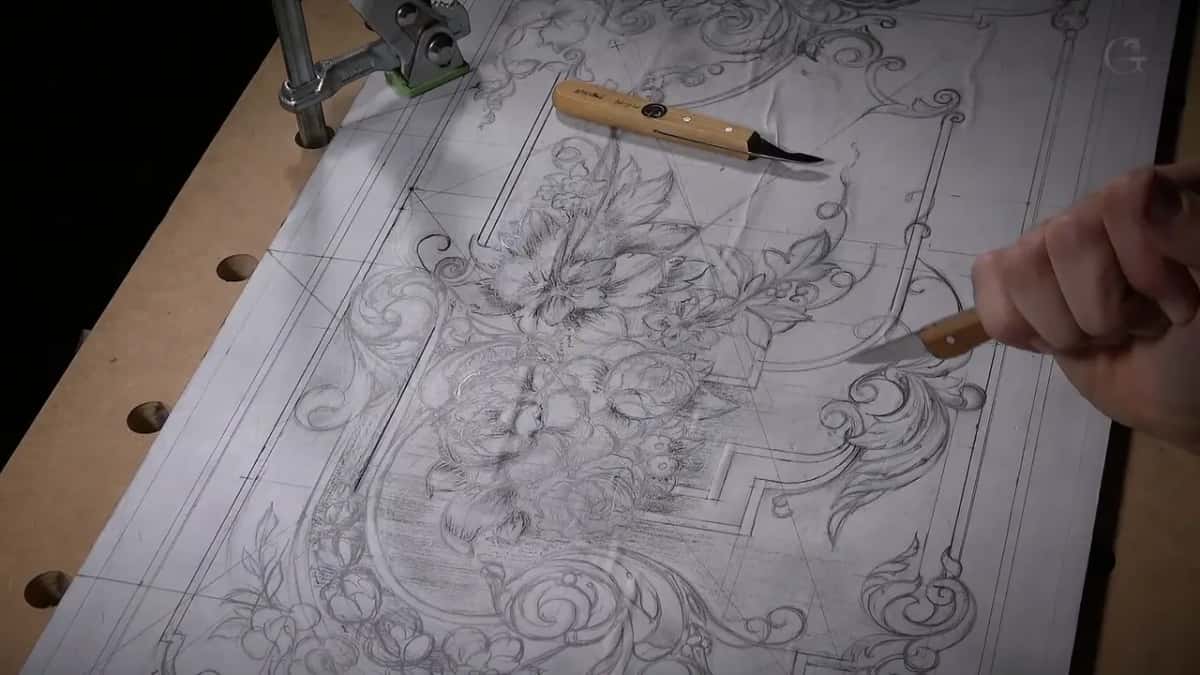
Does the side matter on a deep, thick carving?
In November my answer to the student was about which side to attack the piece from, this side or the opposite one. In my opinion it doesn't really matter which side you carve when a thick piece is excavated deeply. The piece behind me has a lot of excavation right underneath, really deep, and that is how you break that force. You excavate a lot, you remove a lot of fibers, you break those straws. It will still move a little, but not much, and it won't cup like crazy.
That's my opinion, and you don't have to agree with it. I said the same in November, and I added that I could be wrong. I think I know what I'm talking about, because I've done carving for a long time.
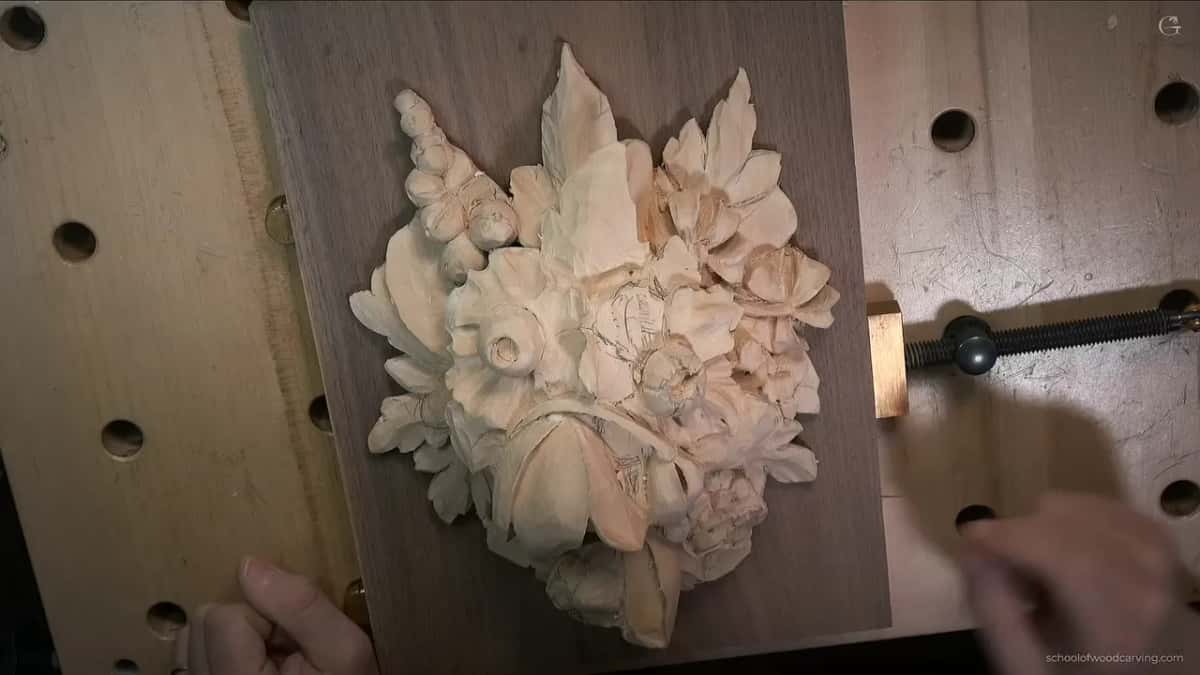
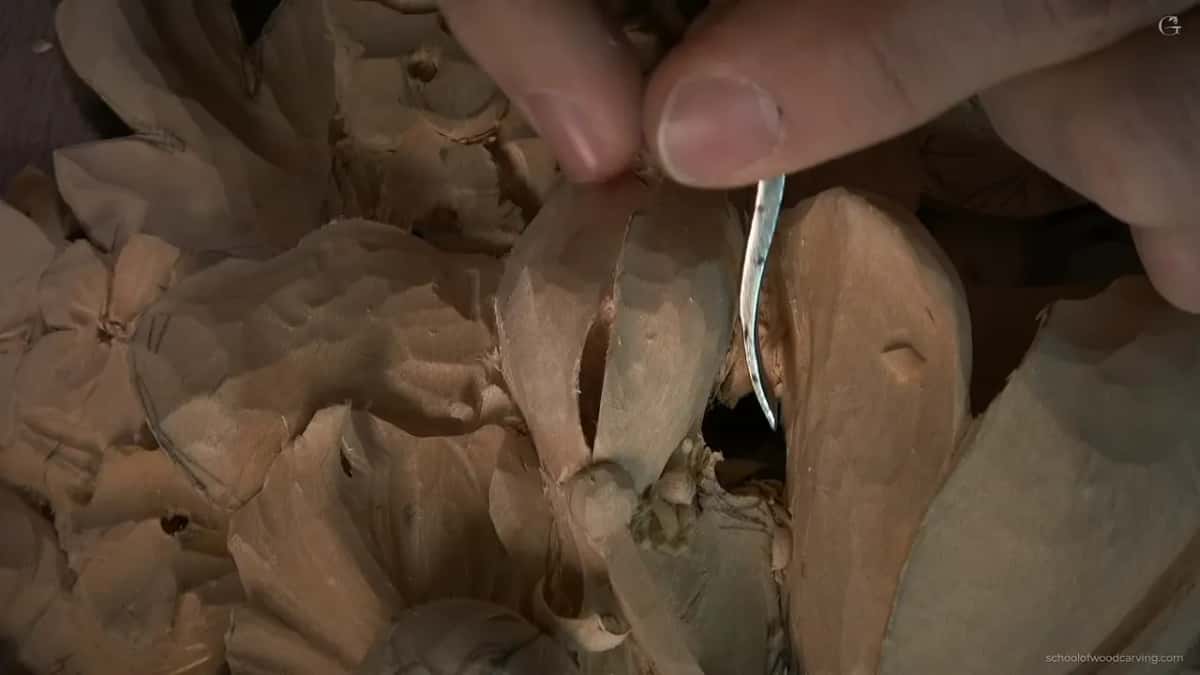
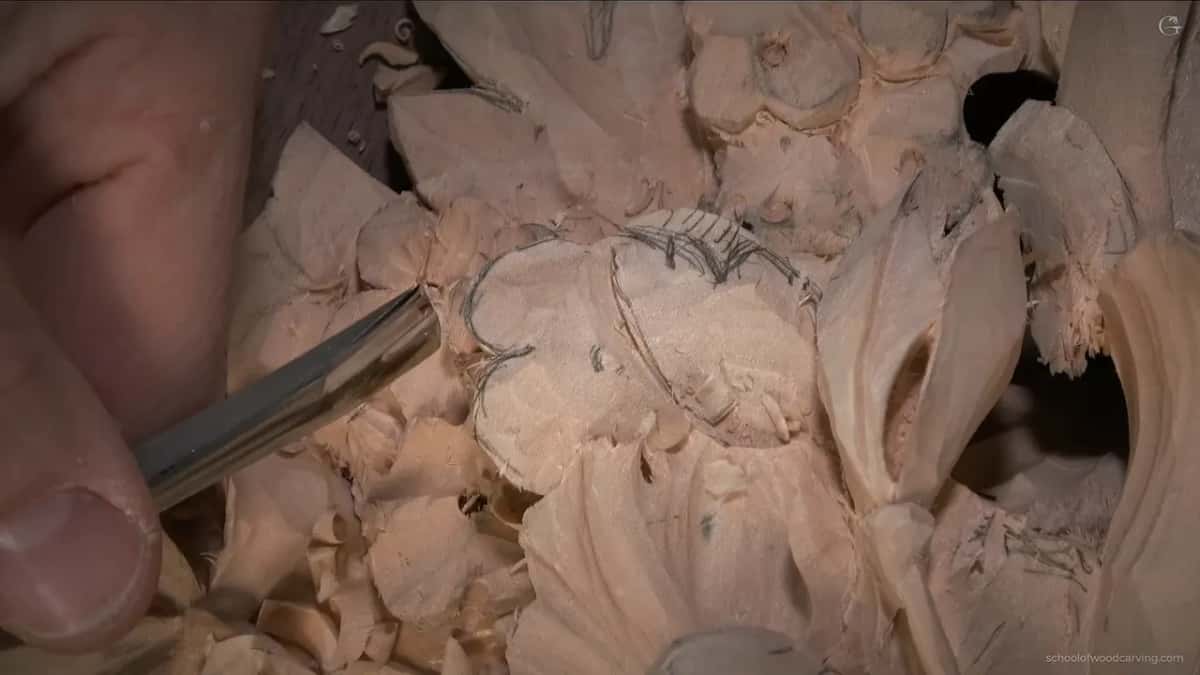
The piece in my hands that day came from one of my classes in Maine, a true Grinling Gibbons carving. I held it a little closer to the camera so you could see it better, and said I should smile. We didn't finish it, and we didn't expect to finish it. It's full 3D, about six inches (15 cm) all together, and a project like that should take at least four or five weeks full time. In class we did the main excavation, the preliminary idea, and I said I'd finish it in my studio, probably change the background, excavate much deeper and get better details.
The carving I talked about in the November stream was about three inches (76 mm) thick from its upper point. I did not glue pieces together, so at least the upper part is solid wood. It was the type of project we did that year in a class I taught at Marc Adams School, an oak design with a couple of acorns, a somewhat complicated one. Some people in that class had never carved before. I almost called it a fundamentals class, but it wasn't really that.
In December someone in the chat said the oak leaves and acorns behind me should be a lesson at the school. It's not filmed. Maybe someday I will film it, but that is one of the advantages of taking the classes in person with me. Some of the stuff is done in person, and I'm not filming it. Somebody wanted to buy another Gibbons style piece from a class at Marc Adams School, and they bought it from me, and that one is already gone.
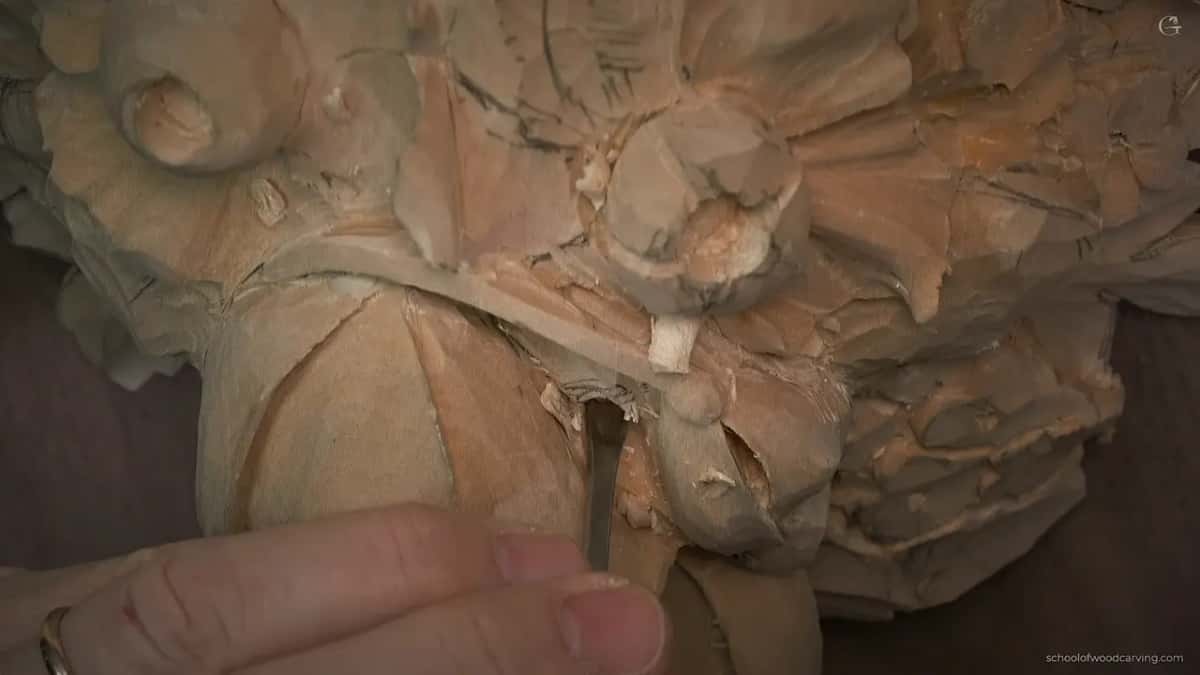
You can watch that kind of digging in my Grinling Gibbons class in Maine, lessons like Maine class 11 and Maine class 16. Hollowing out the back of a carving is a separate job, and Carving Grape Onlay 12 covers it.
How is a thin relief panel different?
A shallow panel is different because the excavation is not as deep, and wood has a tendency to move. I mentioned it in November, but I did not tell that part in depth.
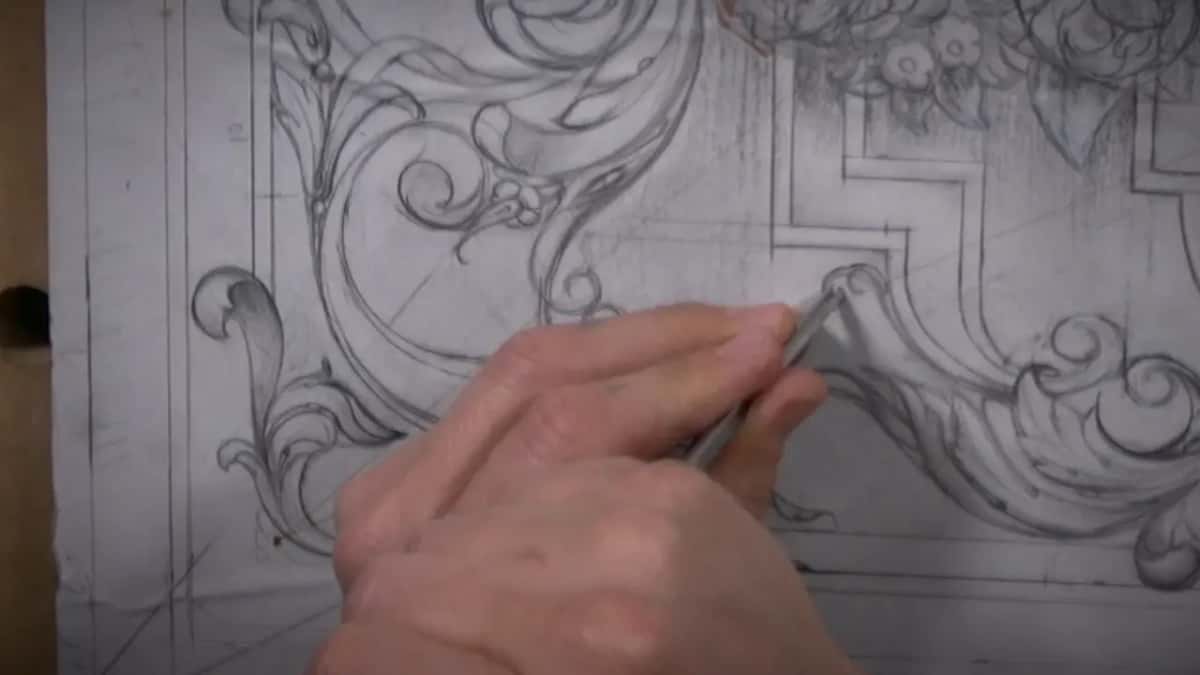
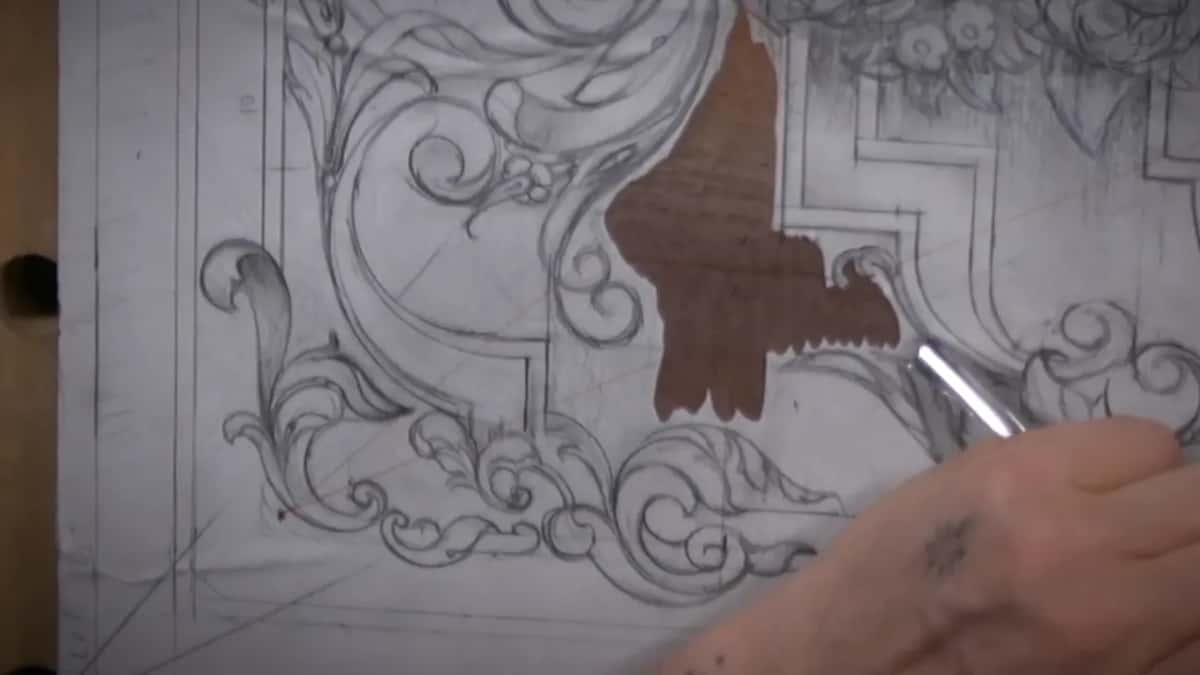
Take a panel like a furniture panel. The one on the stream was only about a quarter inch, maybe 5/16 of an inch, so we're talking about six or seven millimeters at the most. It's walnut, excellent wood for carving, by the way. So the question is legit. From what side should you attack it?
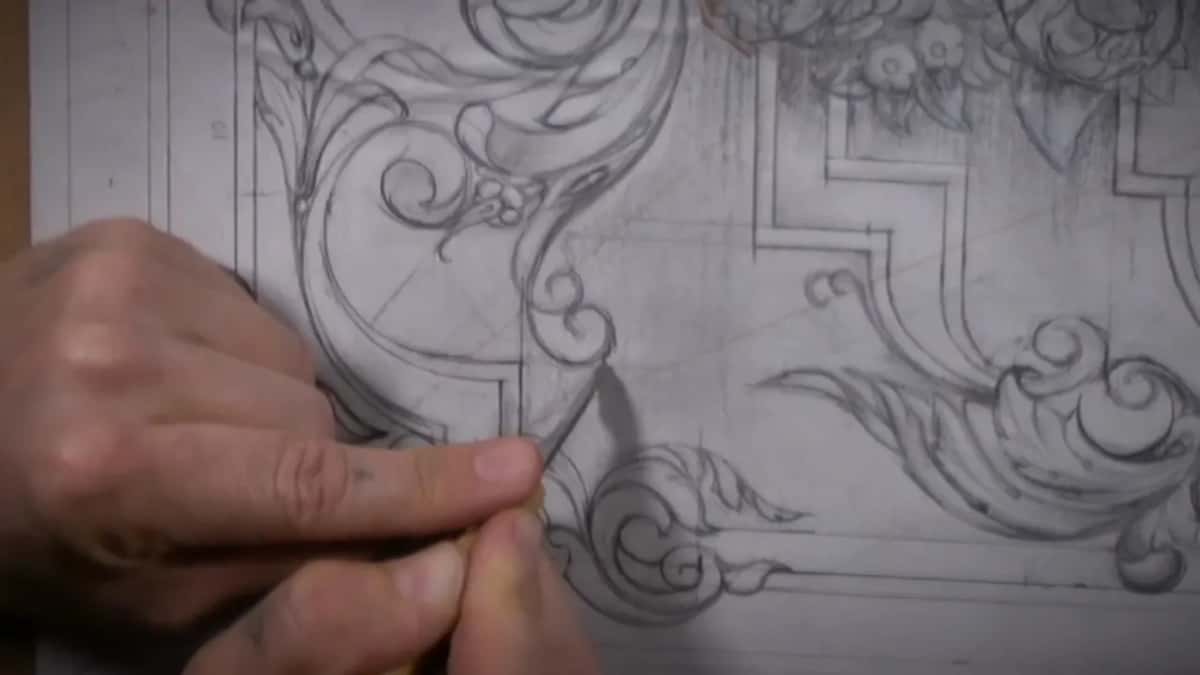
The panel I talked about in November was a really low relief, one I had been working on for quite a long time, because I was too busy. That panel is only about a sixteenth of an inch (1.5 mm) deep. Some parts are maybe 3 mm (1/8 in), and some maybe about 5 mm (3/16 in). Obviously that's going to move.
Put both streams side by side and they come out like this.
| Board | Description | Example | Verdict |
|---|---|---|---|
| Full 3D carving | Really thick, with a lot of excavation | Maine class | The side hardly matters, moves little |
| Thin furniture panel | About a quarter to 5/16 inch thick | Walnut panel | I carve the heart side there |
| Low relief panel | About a sixteenth of an inch deep | November panel | That one is going to move |
| Quarter sawn board | Always the best option, it moves less | Consistent grain | Still moves, only not as much |
| Plain sawn board | Most likely what the lumber yard sells | Normal board | Most of the warping happens here |
What if the lumber yard has no wide boards?
Then you laminate, unless you find one wide solid board, and it all depends, of course, on what type of woodworking you do. I spoke with an excellent furniture maker, one who builds 18th century reproduction furniture, and he told me he always tries to get a solid piece of wood. It's good if you can get it.
Most likely the lumber yards don't have really wide boards. The most you can get nowadays is nine inches (23 cm), 10 (25 cm), maybe 12 (30 cm), and once in a while 14 (36 cm). For a full panel, the best solution is to laminate and flip-flop the orientation of the grain, one board this way and the next one the opposite way.
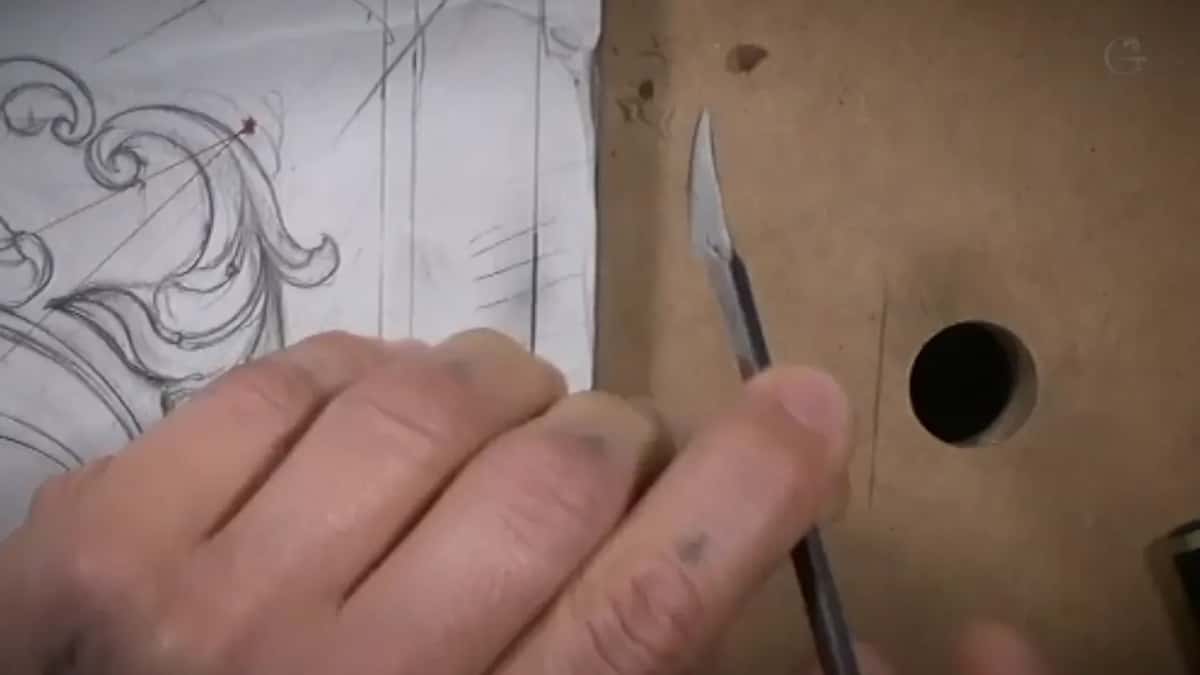
The best is always quarter sawn. It still moves, just not as much. The walnut board in Designing Furniture Panel 1 was resawn and glued opposite, like an open book.
But what if you don't have the taste for gluing up pieces? You're a high-end woodworker, you want to carve a solid panel, and you found one board for it, not rift cut or quarter sawn.
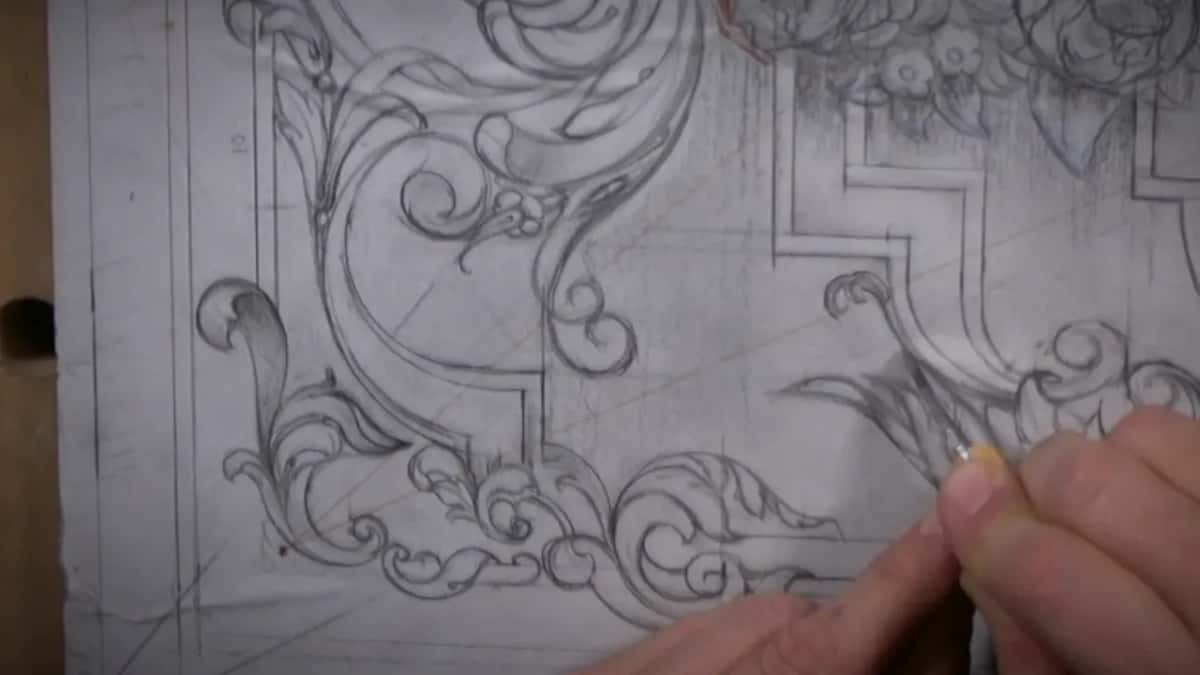
Bark side up or down on a carved panel?
Heart side up, as your carving face. I carve the face nearer the heart of the tree on a thin panel, and the bark side becomes the back.
Think about it logically. Everything goes to the center, to the heart of the wood, and it dries from the outside going in. You have to break that force. For me the answer is easy. On a relief carving it is always the heart side.
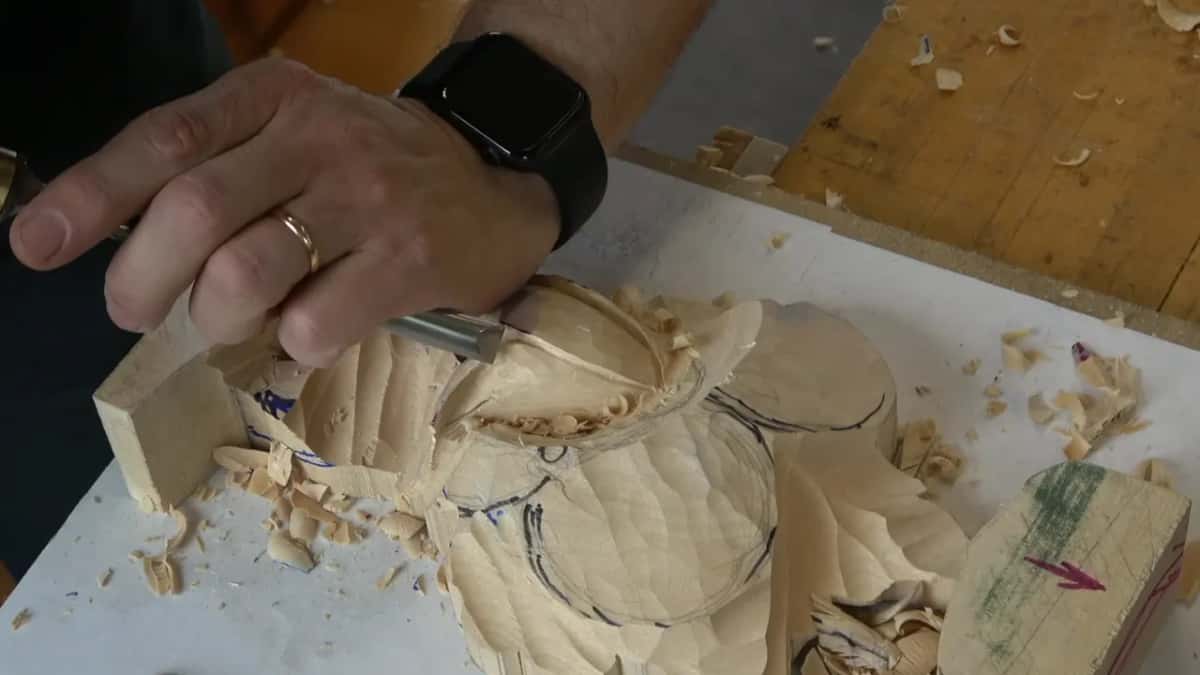
I'm not trying to be smart, but I've done that for a while, and I know it's going to work. I showed the result on the stream. There is absolutely zero movement if you see that panel from the side.
Two pieces are glued together there, book matched, and you can see it on the back side. If I look at the grain, logically it's supposed to move. It doesn't, because I attacked it from the right side.
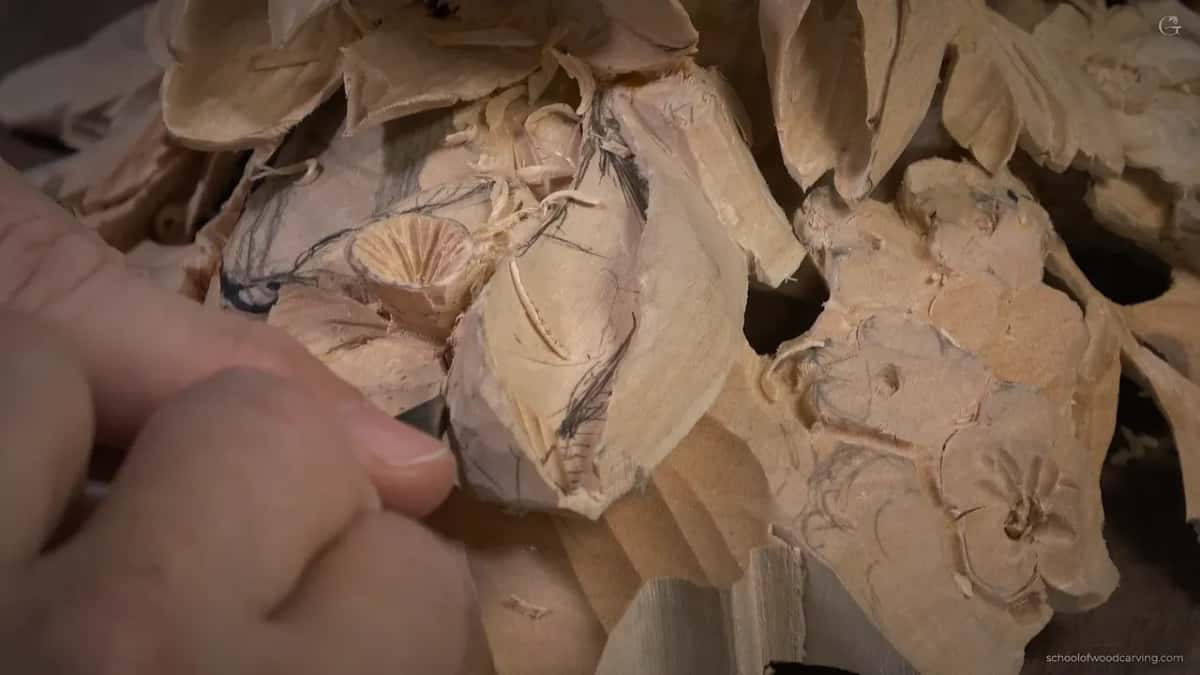
If you are getting a raw board ready, my article on how to prepare raw wood for carving walks through the whole job, and another one explains what causes wood warping and cupping, with warping in the general sense.
I also told the students of my school I would work more on the Maine piece, make some changes and more excavations, and put it online. And I was still filming a new beginner project then, a butterfly plate in an ancient style.
If you have more questions, ask me in a comment, or just give me your opinion, which is fine. Not by email, please. I get so many emails that sometimes I don't even check them until there are two thousand, three thousand, five thousand, and then I almost select all and delete them. Comments I read. My computer has a glitch and doesn't always show me every comment live, but I catch them later.
Would you like to watch a walnut panel carved from the first pencil line? Every stream of this course is in Livestream events, and the furniture panel and the Maine class sit beside it on the tuition page.
How it's done
- Judge how deep you will go. Before you choose a face, decide whether this is a full 3D piece with deep excavation or a shallow relief panel. The deep one barely cares which face you pick, and the thin one does.
- Check the edge grain. On the edge, quarter sawn grain looks really consistent. Most boards you buy are plain sawn, and plain sawn is where the warping mostly happens.
- Let the lumber wait. Store new boards somewhere for years when you have the chance. Mine sit in a stack on top of the sauna.
- Laminate when one board is too narrow. Glue boards together for a full panel and flip-flop the orientation of the grain, one board one way and the next board the opposite way.
- Put the carving on the heart side. Make the heart side your carving surface on a thin panel and let the bark side be the back. Everything pulls to the center as the wood dries, and you are breaking that force.
Frequently asked questions
Is quarter sawn lumber worth hunting for?
The best option is quarter sawn, I said on the stream, because it moves less. Even so, it still moves a little. Most of what a lumber yard hands you is plain sawn, and plain sawn is where most of the warping and cupping happens.
How wide do lumber yard boards come now?
The most you can get nowadays is nine inches, 10, maybe 12 (about 23 to 30 cm), and once in a while 14 (36 cm). For a panel wider than that, the best solution I gave live is to laminate boards and alternate the grain, board by board.
Will kiln dried wood stop moving?
Kiln dry is dry, but the fibers in a brand new board are still fresh, not dead and not stabilized. Wood keeps that weakness for at least about 10 to 15 years, as I said live. My own stack waits on top of the sauna for years.
What to carve next