

Alexander Grabovetskiy, woodcarver, School of Woodcarving · Published 2021
Should a wood carver get a scroll saw or a band saw?
Quick answer: Picking a saw for carving is a matter of thickness and project for me. Up to two inches of stock belongs on the scroll saw, so below eight quarters it is probably the way to go. Figurines sawn on four sides, furniture legs and thicker work want the band saw. I own both.
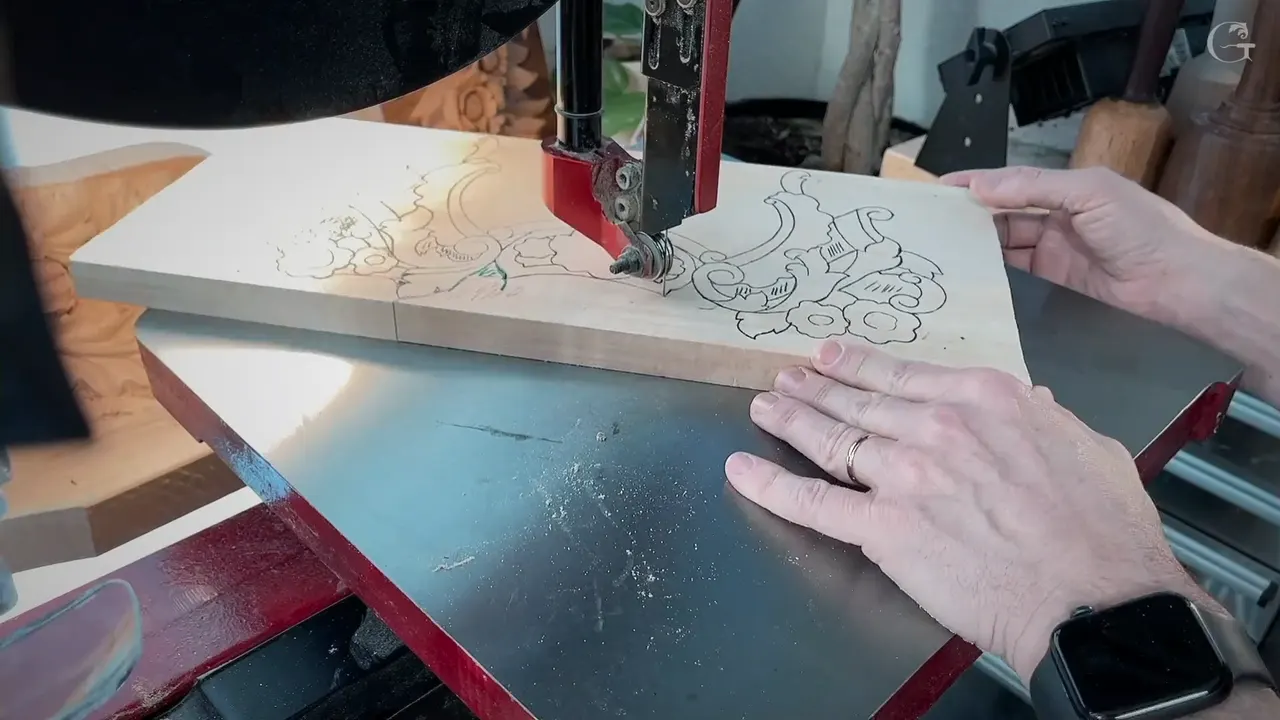
Choosing between a scroll saw and a band saw is a decision I make by the thickness of the wood and by the project in front of me. My scroll saw takes about two inches (51 mm). The small pieces for my Venice columns stood 6 1/4 inches (159 mm) high, and no ordinary blade would turn their tight curves cleanly. So on one of my live streams I took the scroll saw vs band saw question apart, holding a small offcut up to the camera.
Does a clean outline save you gouge work later? And a tall blank, does it need a saw that can take its height? Then the saw belongs to the carving, even if it never touches a leaf. I'll give you the figures I measured on camera and the way I choose between the two machines now. It sits with the other streams in the Livestream events course.
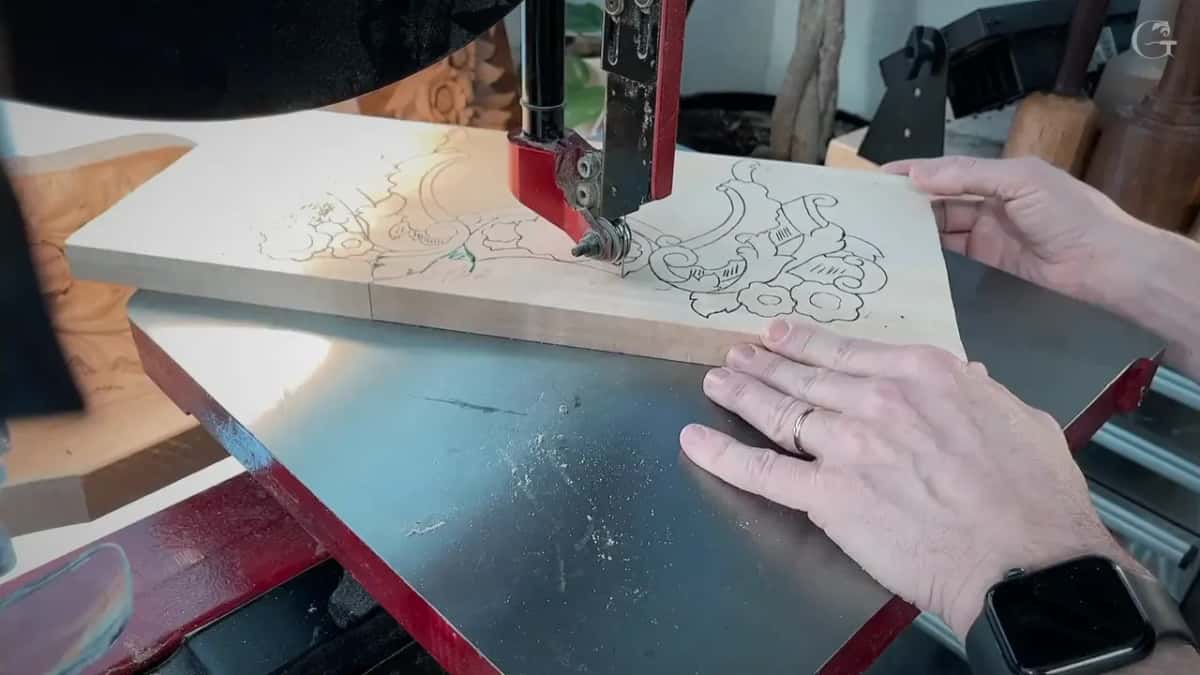
What I settled about the two saws
Stock under eight quarters belongs on the scroll saw.
The smallest blade on an ordinary band saw is 1/8 inch (3 mm), and in a tight turn it can only wiggle around the line.
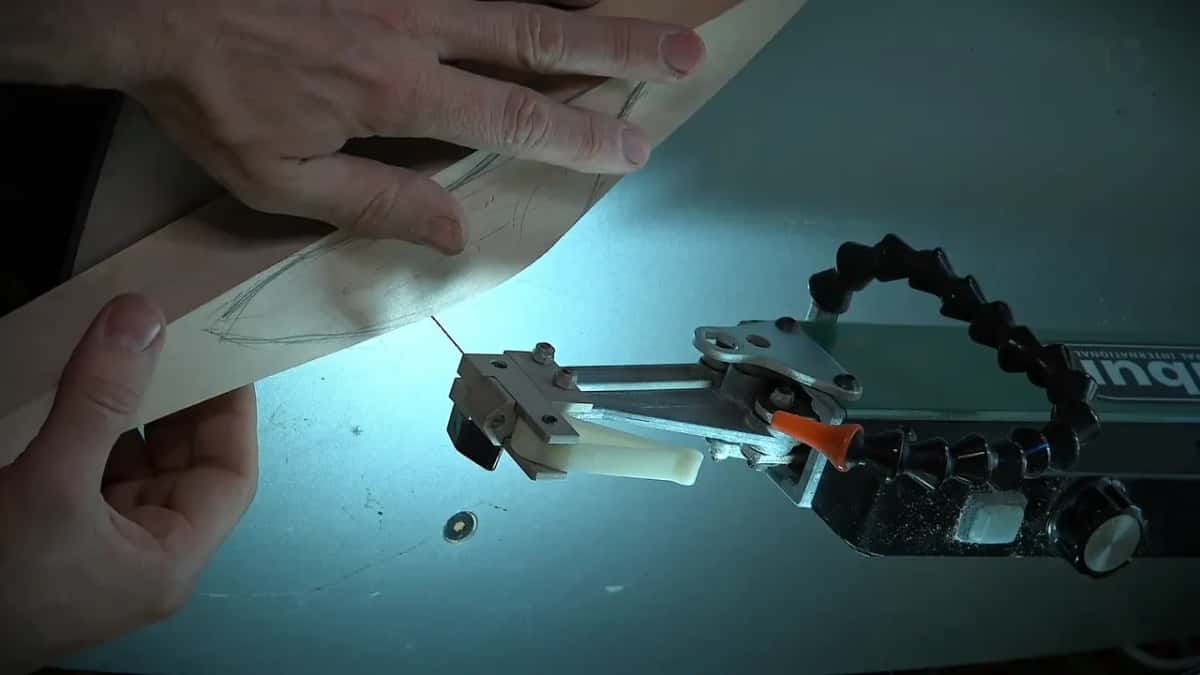
A teacher at the school showed me a 0.5 mm blade.
The Pegas runs that kind of blade in a grooved guide, upper and lower, and the pieces I sawed on it came off square.
Even so it cannot pierce.
Figurines, Queen Anne legs and moldings are band saw jobs, and I keep both kinds of saw.
Why were tight turns in tall stock a problem for me?
The columns of my Venice Room project take small pieces applied on them, and those pieces stand that tall. Four go into one section. A small movement runs inside the cavity there. More pieces go on the upper part, a lower part goes on the other side of the column, and the whole thing is too big to show you on camera.
I'm not filming the columns for the school site. There is nothing new to show, because it is the same idea members already saw in other places. One small piece goes on the top. Another goes all the way in the opposite direction.
I'd just started that part the same day, and the process is easy, the same one you saw before. Somebody asked in the first video of this lesson how far along the whole project was. Way behind, I said. About four columns were still to do, I think, plus some other compositions, and the second piece I was doing without recording, because it goes a lot quicker that way.
Until this year the trouble was the tiny curves. About two inches fits under my scroll saw, and I have absolutely no problem with two. And six and a quarter? There is just no scroll saw with that capacity, and I believe every one of you who carves probably has the same problem. So how can you get those really tight turns?
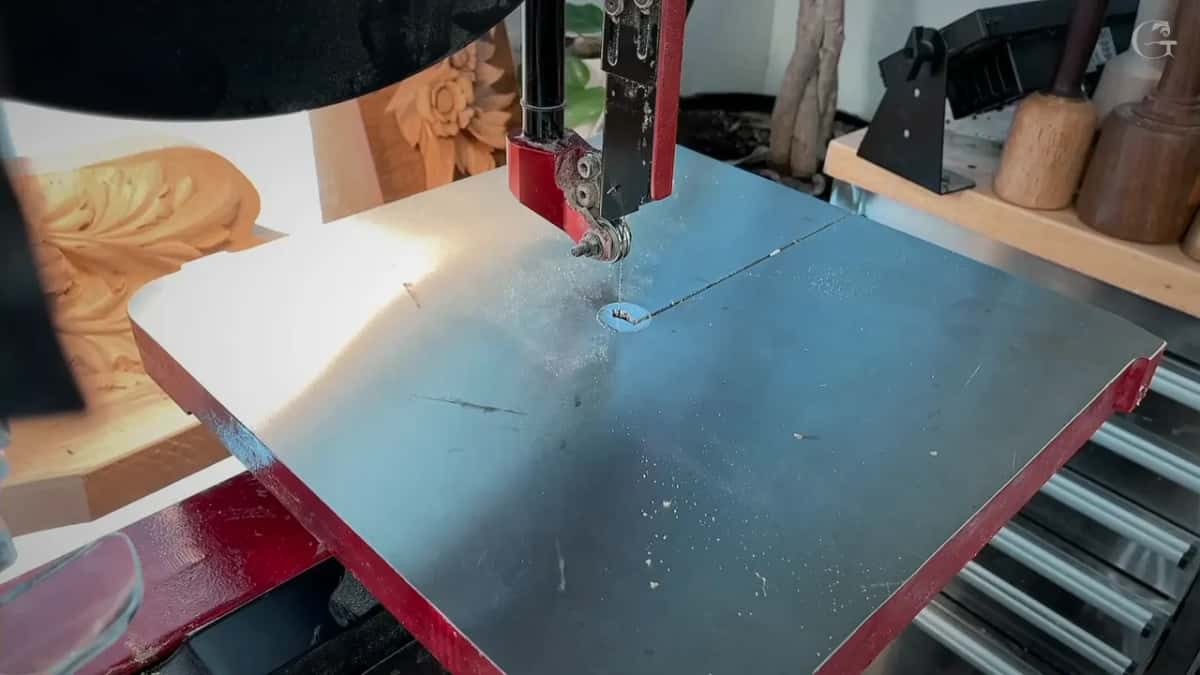
A normal band saw takes the height and loses the curve. On one of those the smallest blade you can fit is 1/8 of an inch. I have a huge band saw that takes pieces 24 inches (610 mm) high, so height is not what stops me. In a tight turn an eighth of an inch lets you wiggle around the line, but you cannot get a really clean result. I don't know about you, but I break those blades too.
What did a band saw teacher show me in April?
Let me tell you a story. In April I was teaching at the Marc Adams School of Woodworking, one of the biggest schools in North America, pretty much. Several classes run there at once. Another teacher there was Jeff Vollmer, and for over 30 years he has made his living only with the band saw. He writes books about it, too.
He brought a whole trailer from his house. He lives about an hour and a half from the school, in Ohio, I believe. In that trailer was his own band saw. Not a big one, but really, really heavy, and he brought it just to show it.
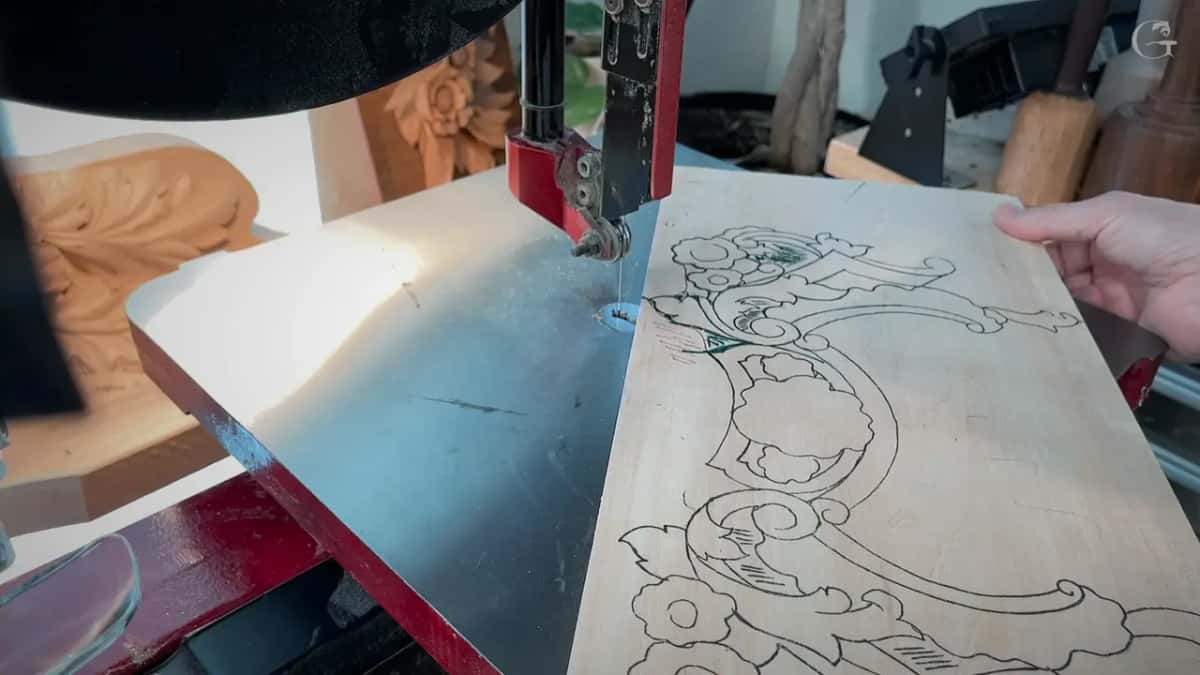
Then came the big surprise. The blade on that saw was only about half a millimeter, around 1/50 of an inch. Not 1/8. Half a millimeter. With a blade like that, I said, I'm able to do pretty much any tight curve.
He didn't use it at school, because the school has normal ones. Really good ones, but nothing compares to this one.
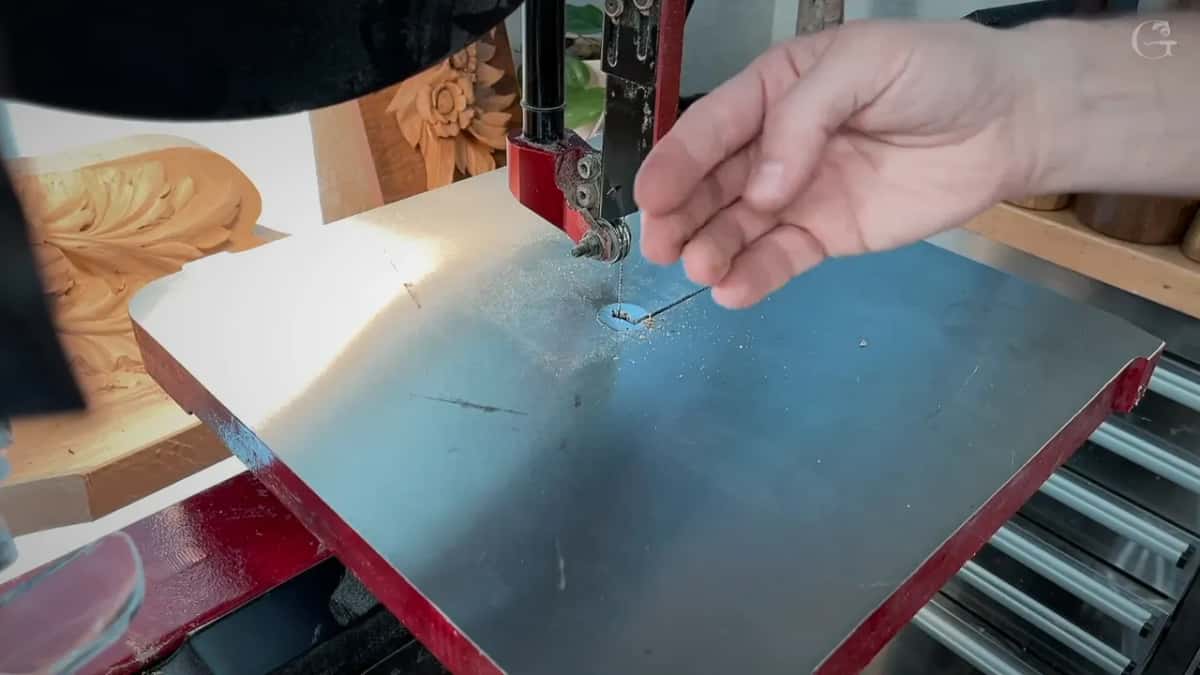
Why I ordered a Pegas right away
I flew home on Sunday and got in about 1 a.m. on Monday. Right when I woke up, I ordered that saw. I had absolutely no doubt it would be the best saw I ever had, and no band saw on the market, I said, can do what this one does. The brand of it is Pegas.
Nobody pays me to say so. I'm not sponsored, I don't make one penny on it, and there is no paid promotion anywhere in this. I came to you as a brother to a brother, or a brother to a sister.
A couple of days before the stream I had sawn some small pieces on it. I found one of the offcuts and held it up. With the thinnest blade, I said, you can go as tiny as possible. See how tiny that piece is? Those curves get that tight. I also played a short video of how I made those pieces, so you could watch the blade go around. When the clip ended I called it amazing, on stock that tall.
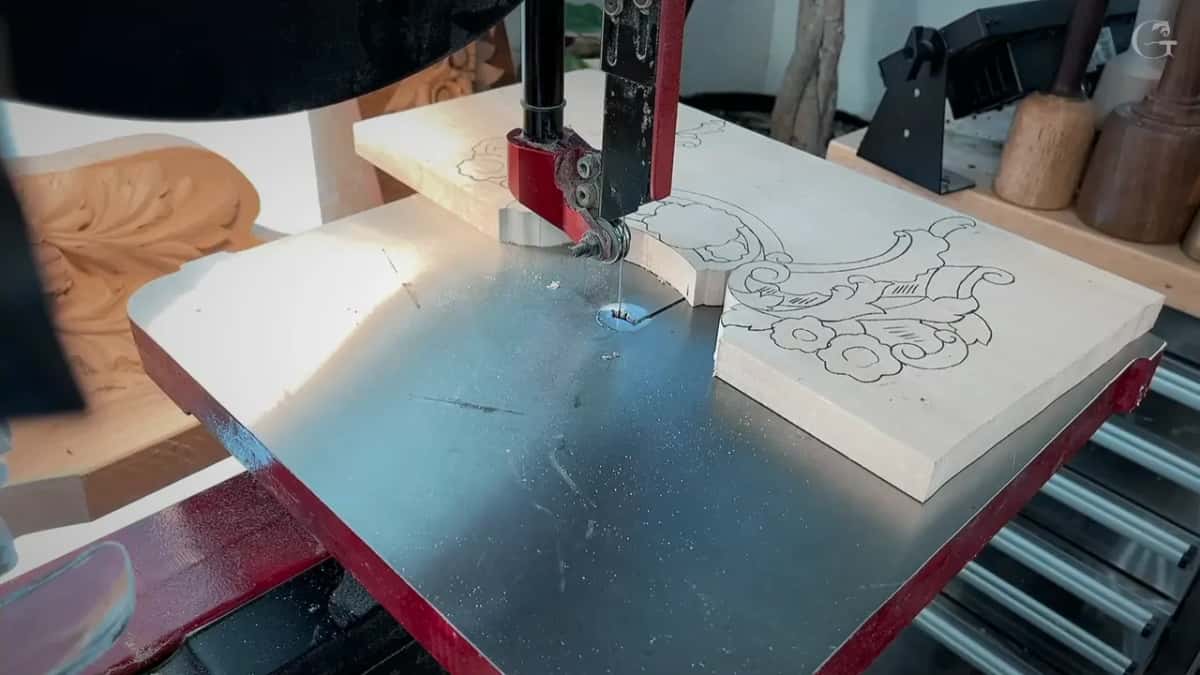
How much wood fits under the Pegas scroll band saw?
Just in case you had a question about capacity, I measured it on camera. Width under the arm is about 13 1/4 inches (337 mm). Height clears 6 3/8 inches (162 mm), but six and a quarter is the safest figure, I'd say. If the piece fits, you rotate it and turn it all around, just like on a band saw.
And the model? As far as I know this brand has only the one. Search for the Pegas scroll band saw by that name and you will find it. Really it is a band saw, but the name says scroll saw. On the stream I tried to get the label in view so you could read it.
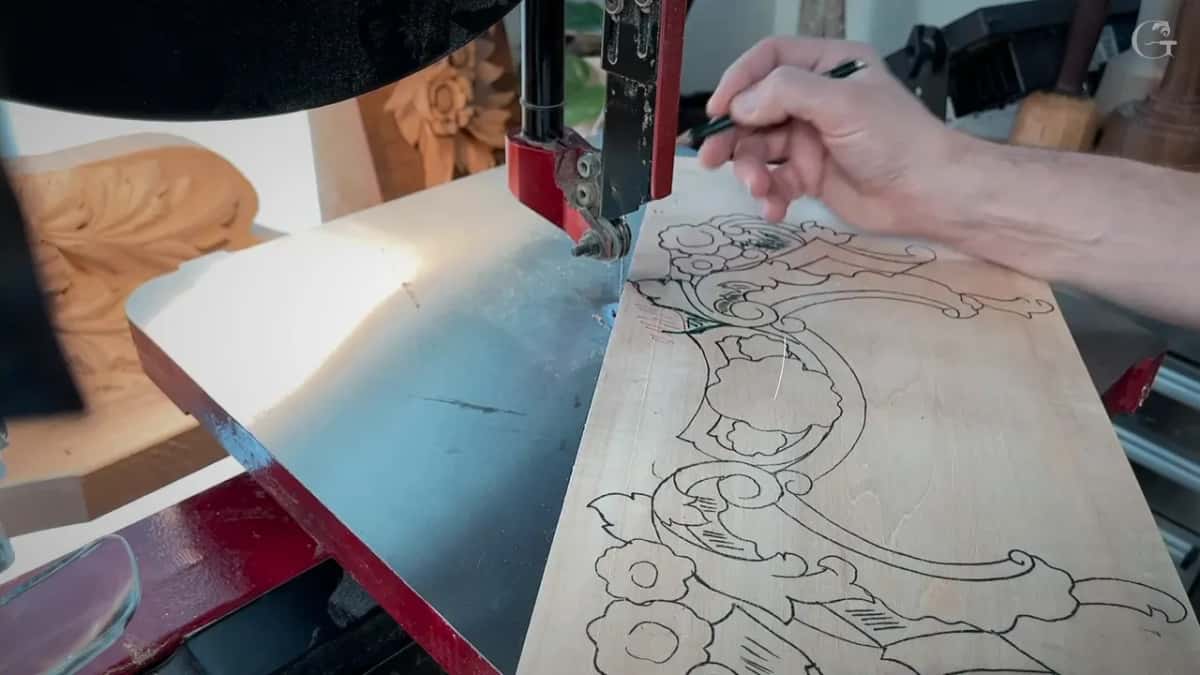
Blades come in two widths, the half and the full millimeter. Besides the saw itself you have to buy some blades, and I bought extra ones. In most cases the one millimeter blade, about 1/25 of an inch, still turns those tiny curves with no trouble. Stable, too. I had absolutely no problem with it whatsoever.
I can't give you an Amazon link for it. A hardware store in Atlanta sells it, I believe, as a drop ship, so you order and wait until it comes to you from the maker directly.
If you have that saw, a lot of problems are solved, I'd say, especially if you carve pieces that are not that big.
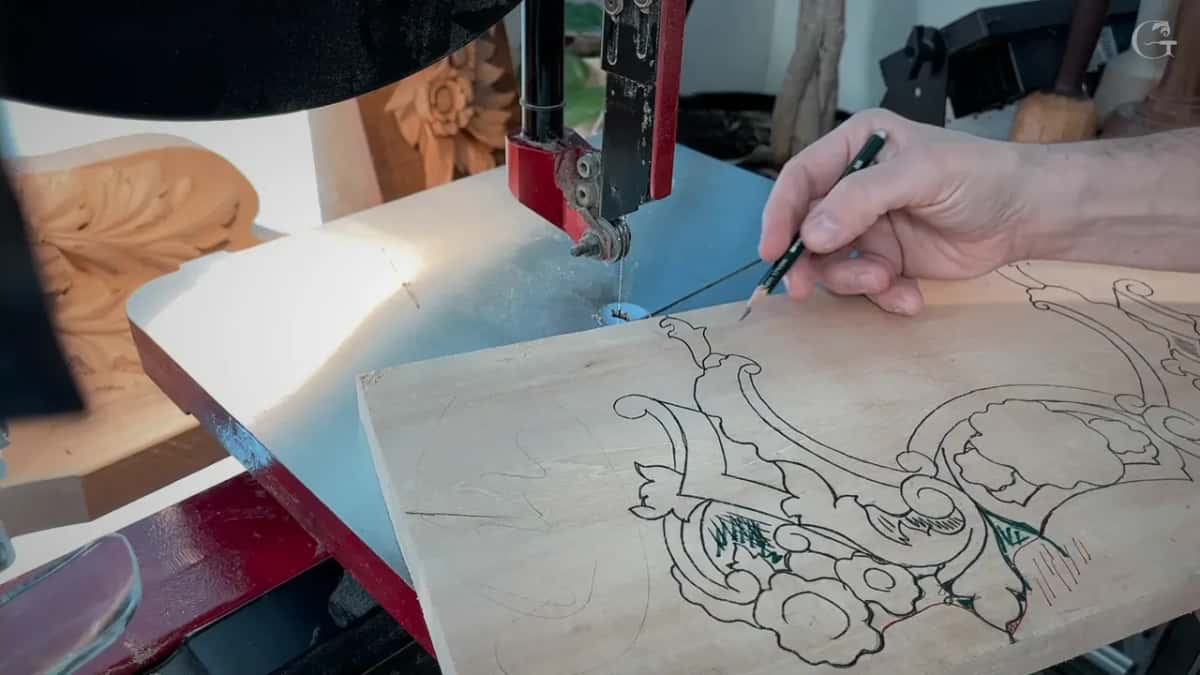
Why won't the thin blade go on a normal 14 inch band saw?
Two parts of the Pegas are built around that blade, which is why a bare blade on a normal 14 inch (356 mm) band saw, a Rikon or any other, is not going to work. One part is a specialty guide. That blade goes right inside a groove in it, in the upper guide and the same way in the lower one. The other part is the wheel itself, built a little differently from other band saws.
In my opinion that guide is why they got such good results. It holds the blade really stable. I checked the sawn pieces with my angle, and they came out absolutely perfect, 90 degrees all the way.
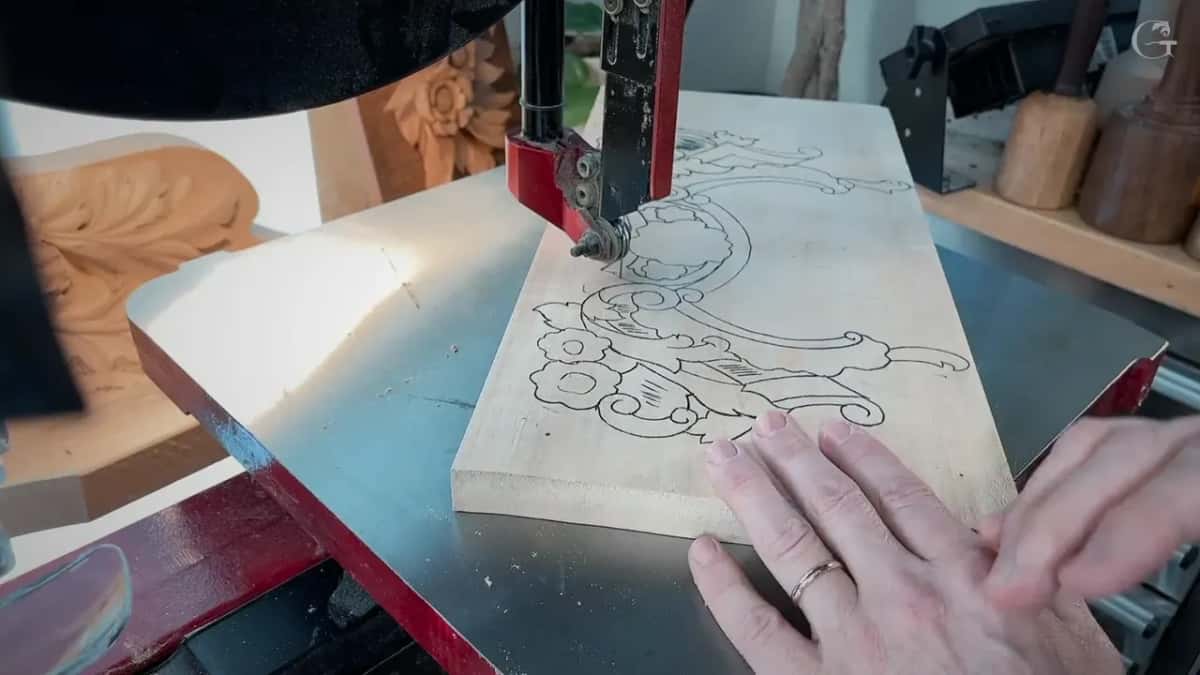
The blades follow the same rule. The only brand that works with that saw is made by Pegas, because it all comes down to the channel and how the blade uses that guide. You shop for the saw and its blades from the same place.
What can a scroll saw do that a band saw can't?
A scroll saw can work inside a closed shape, and a band saw stays on the outside perimeter. Someone in the chat said you cannot pierce through with the Pegas, and I said yes, absolutely you cannot. It is a band saw, obviously.
In lesson 1 of the floral and molding panel I showed the scroll saw side of it, with loop cuts like water drops that reach the cavities and niches in one pass.
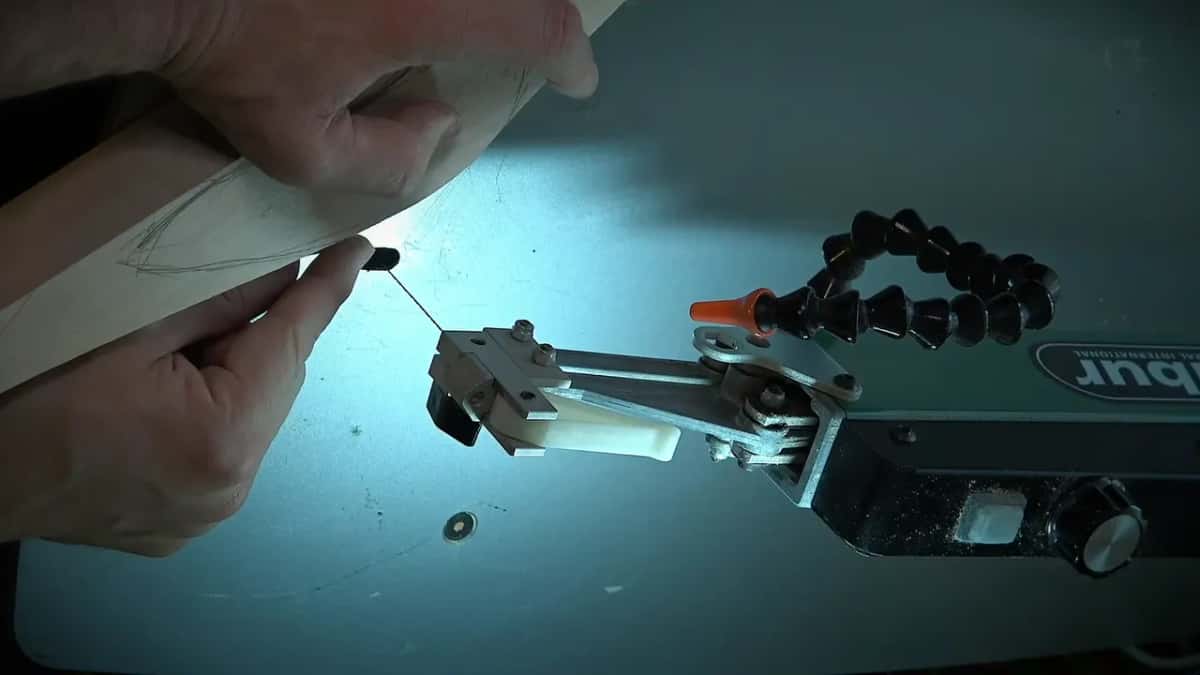
That's why I call the scroll saw a must-have for me. I do a lot of scrolling.
Scroll saw vs band saw, picked by the thickness of the work
A viewer asked which one I would buy if I could have only one. It depends on the projects. If you carve nothing thicker than two inches, eight quarters in lumber, a scroll saw is probably the way to go, and you are going to save some money.
Some carvers saw around all four sides of a block, the people who carve figurines or caricature, the Santa Claus carvers. For them a band saw wins.
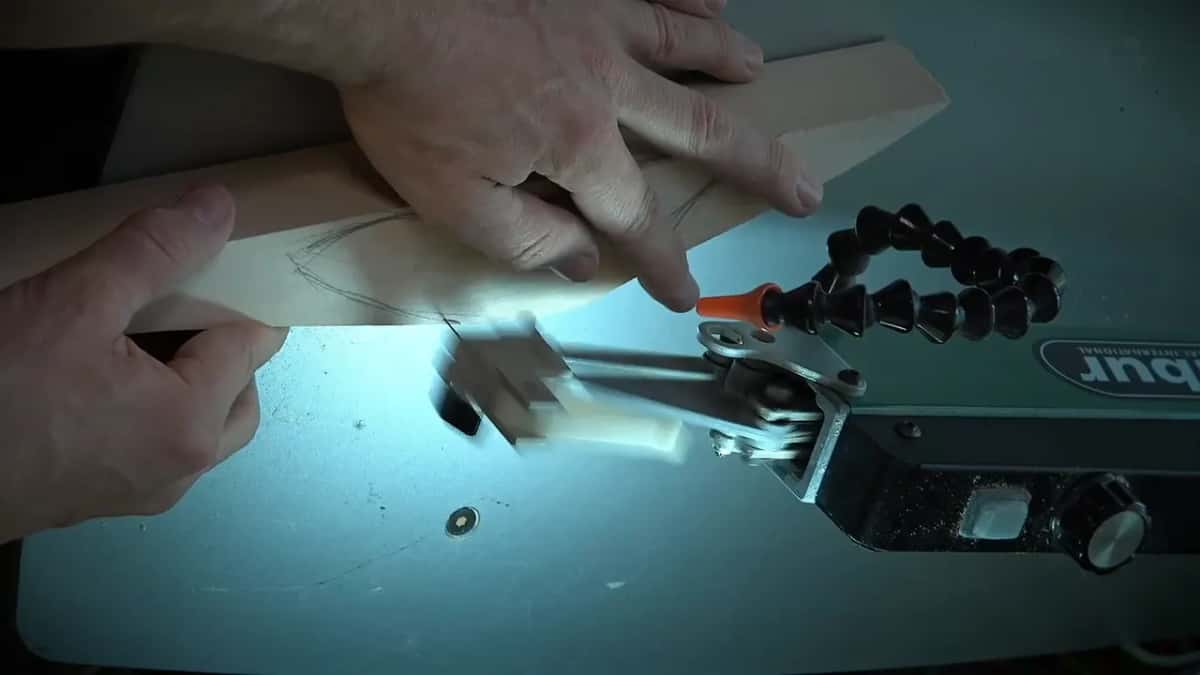
Furniture makers too. Say you are doing a Queen Anne leg with a really big curve, with more going on than the acanthus leaf, maybe a really nice profile molding at the top. A band saw job. And not just a band saw, I said, but this band saw, because of the curve.
Two inch stock, then, goes to the scroll saw. Thick stuff, six inches (152 mm) and furniture, goes to a band saw.
Laid side by side, the four saws I talked about sort out like this.
Which saw | What it did for me, or could not do | Where I put it to work |
|---|---|---|
The scroll saw | Two inches of stock at most, and all my scrolling | Flat stock up to eight quarters |
Ordinary band saw | Smallest blade one eighth inch, so tight turns only wiggle | Tall pieces, but no clean curve |
That Pegas machine | Its thin blade turned the tightest curves I needed there | Small pieces applied on the columns |
My big saw | Takes pieces 24 inches high, used on the column blanks | Thick stock like the Venice columns |
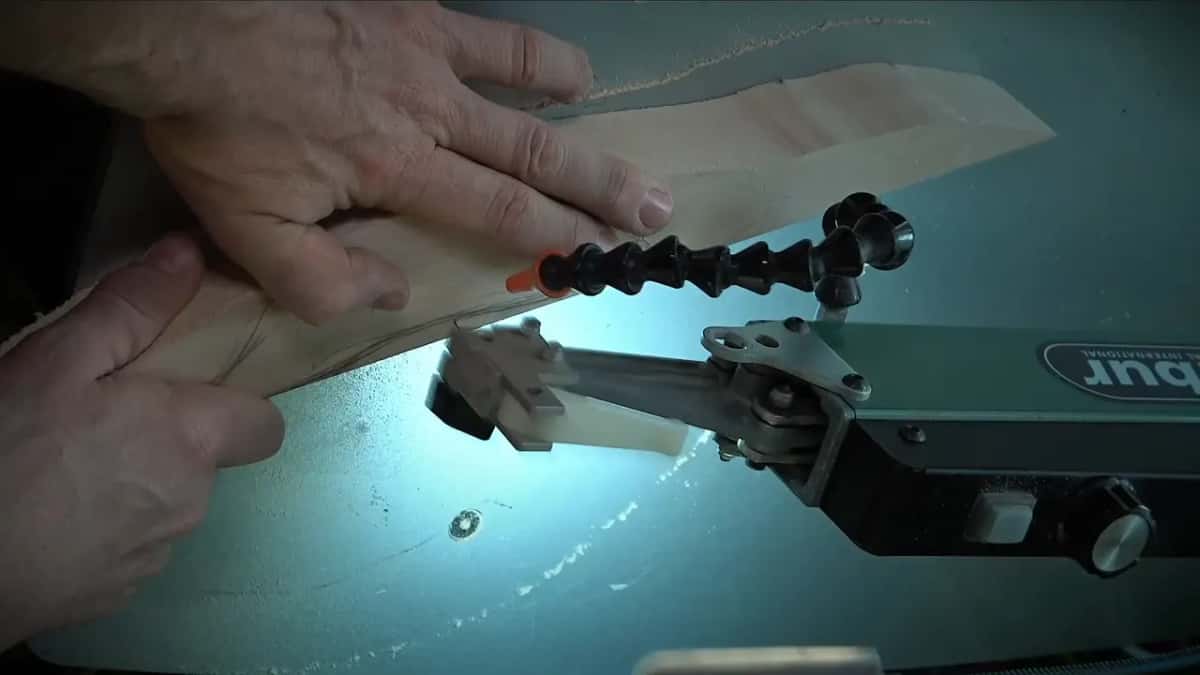
For me there is no picking one. I don't think I can live without both of them, although I used to live without this band saw. Two more band saws sit in my garage, and the big one is the 24 inch. I use them all the time. The day before that stream I used the big one on the columns I'm working on.
Could you saw these shapes by hand instead?
I could do all of it by hand, not a problem whatsoever, which is why I have wood carving tools. But if a machine saves me a lot of time, I use it. Before this saw I had to be really creative about getting those tiny curves. The carving tools have their own course if you want to see what comes after the saw.
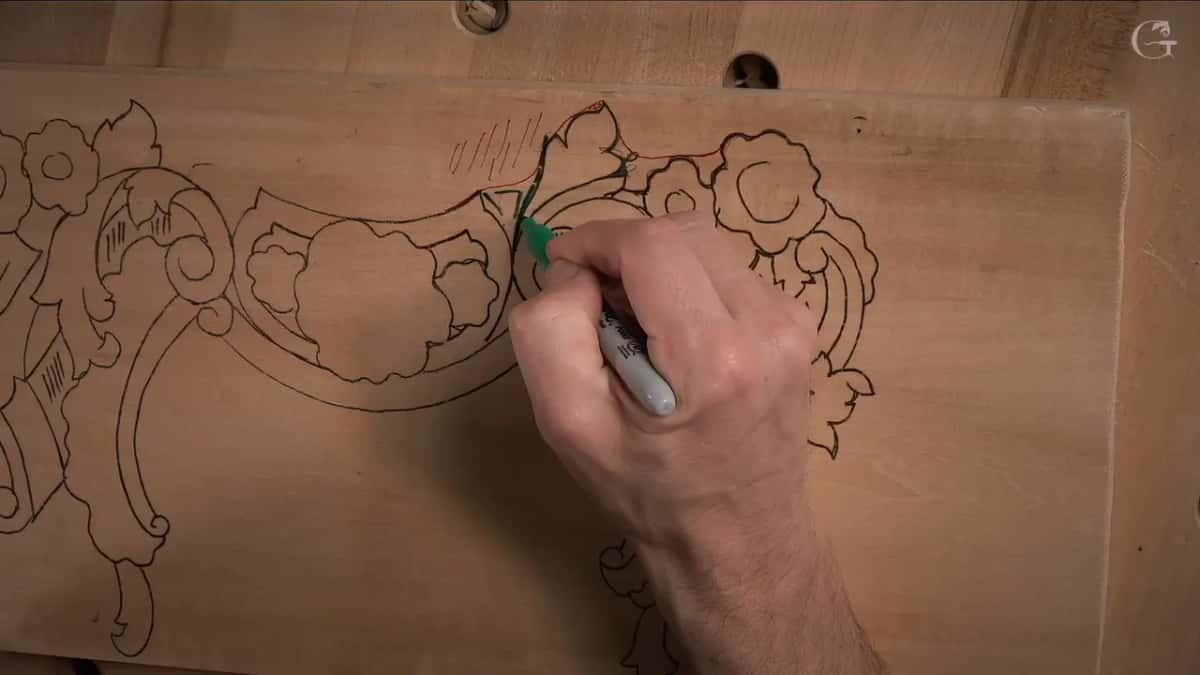
All four pieces for two columns, with one more column still to do, took me about an hour at the most. That covers the sawing and the cleanup together.
In the first video of this lesson I was working on the back of the second Venice piece, removing what I don't need. From the back side it is pretty much undercutting, if I can get in there and remove the excess material.
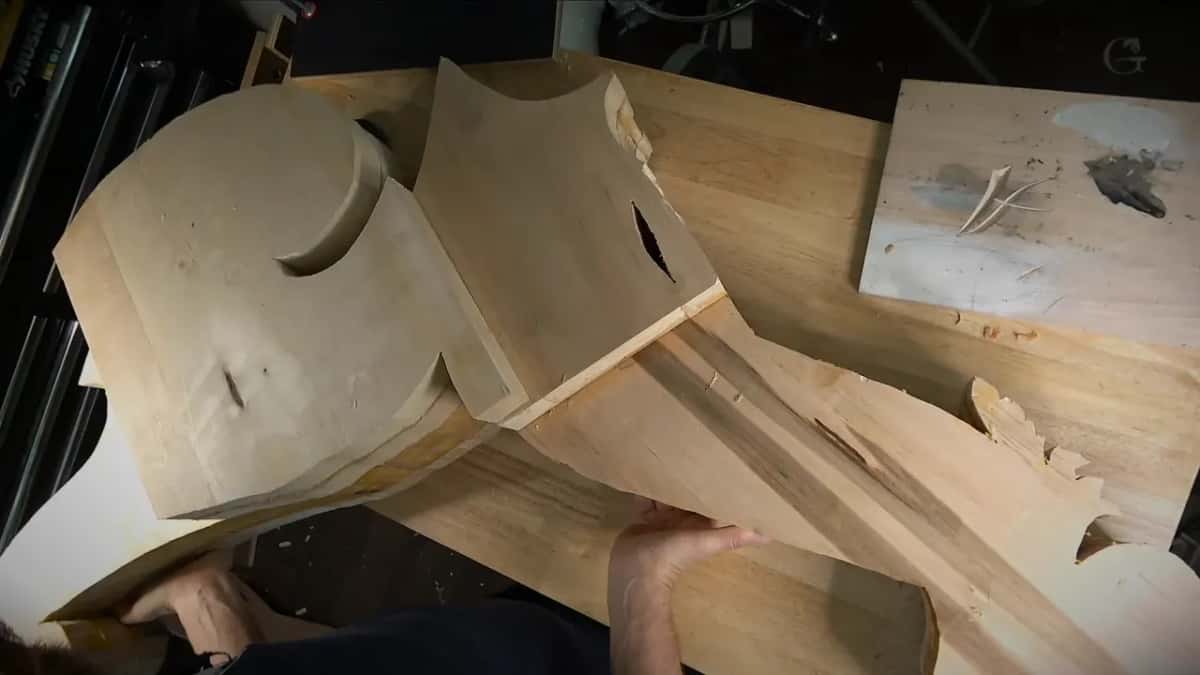
Whether a carver needs power tools at all has its own answer on the course page for these streams, where I talk about rotary tools and dust. Earlier that year, in the April 2021 stream, I mostly carved and talked about a couple of tools. In the August 2021 stream I put carving tools side by side.
Why tell everybody about one saw?
I'm just a wood carver who had a problem and found the solution, like a homeless guy who finds a source of bread, then goes to the other guys and tells them where to go and get it. That is the only intention. I said more than once that I'm not selling or promoting anything.
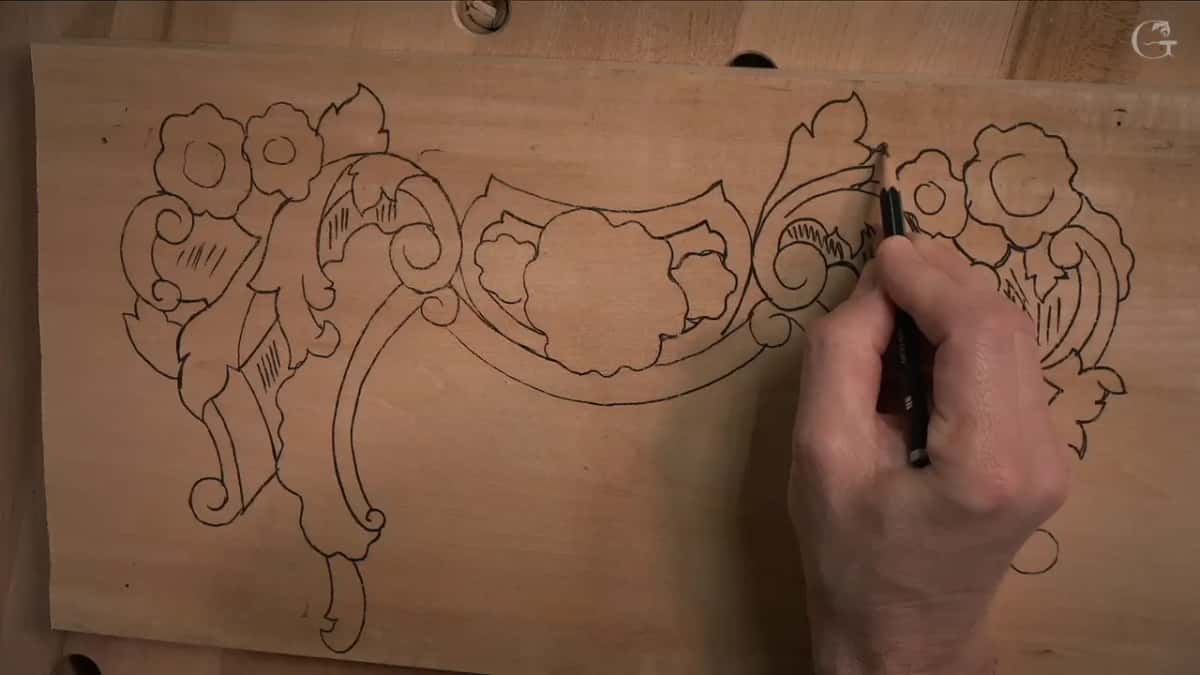
Don't buy the cheap one if you are serious about a band saw. A good one is a one-time investment, and it's going to last you, I don't know, forever.
I closed that stream asking everybody to stay safe, be careful and give a gift of a smile to someone today.
I teach in person too, at schools like the one where Jeff showed me his saw. Online, the lessons map shows where every lesson sits, and full access opens the carving that starts once the saw stops, in the floral and molding panel and the rest.
How it's done
- Measure the tallest blank. Two inches or less fits the scroll saw. Anything much taller needs a band saw with the height for it. Mine for the Venice columns stood 159 mm, just over six inches.
- Match the machine to the work. Figures sawn around four sides, a leg with a big curve and a molding profile all go to a band saw. Flat scrolling stays on the scroll saw.
- Check throat and height. Measure under the arm before planning blanks. Mine gave about 337 mm (13 1/4 in) across and 159 mm (6 1/4 in) up, and I treat that last figure as the safe one.
- Skip the cheapest band saw. Pay once for a serious machine that will last.
- Buy the maker's blades. Only its own blades fit the Pegas guide, so get some extra with the saw, the way I did when I ordered mine.
- Run the one millimeter blade. In most cases it still turns the small curves, I said, so the half millimeter one is not always needed.
- Check the sides for square. Hold an angle to each piece once it comes off the saw, as I did, and look for a true 90 degrees.
Frequently asked questions
Can a band saw pierce a hole in the middle of a board?
Piercing is the difference I gave on the stream. When someone in the chat said the thin Pegas cannot go through the middle of a piece, I agreed, absolutely, since it is a band saw built for the outside perimeter. The scroll saw handles the closed shapes, with loop cuts made in one pass.
How thick a board will a scroll saw take?
Mine stops near 51 mm, two inches. Below eight quarters, I told the viewer, the scroll saw probably suits you, and it keeps some money in your pocket. My column pieces stood more than three times that, so they went elsewhere.
Will that thin blade fit a regular 14 inch band saw?
Buying the blade alone and putting it on a normal saw will not work, I said. On the Pegas it rides in the groove of a special guide, upper and lower, and the wheel is made a little differently too. Only the maker's own blades fit, so you order them through the maker.
What to carve next