

Alexander Grabovetskiy, woodcarver, School of Woodcarving · Published 2020
What should you check in a basswood board before you buy it?
Quick answer: Checking a basswood board before you pay is reading two places. The wide face should be clean, the way mine was, free of black marks and streaks. The end shows the growth rings, and there I want a rift cut or a quarter sawn board, since a straight cut is going to cup.
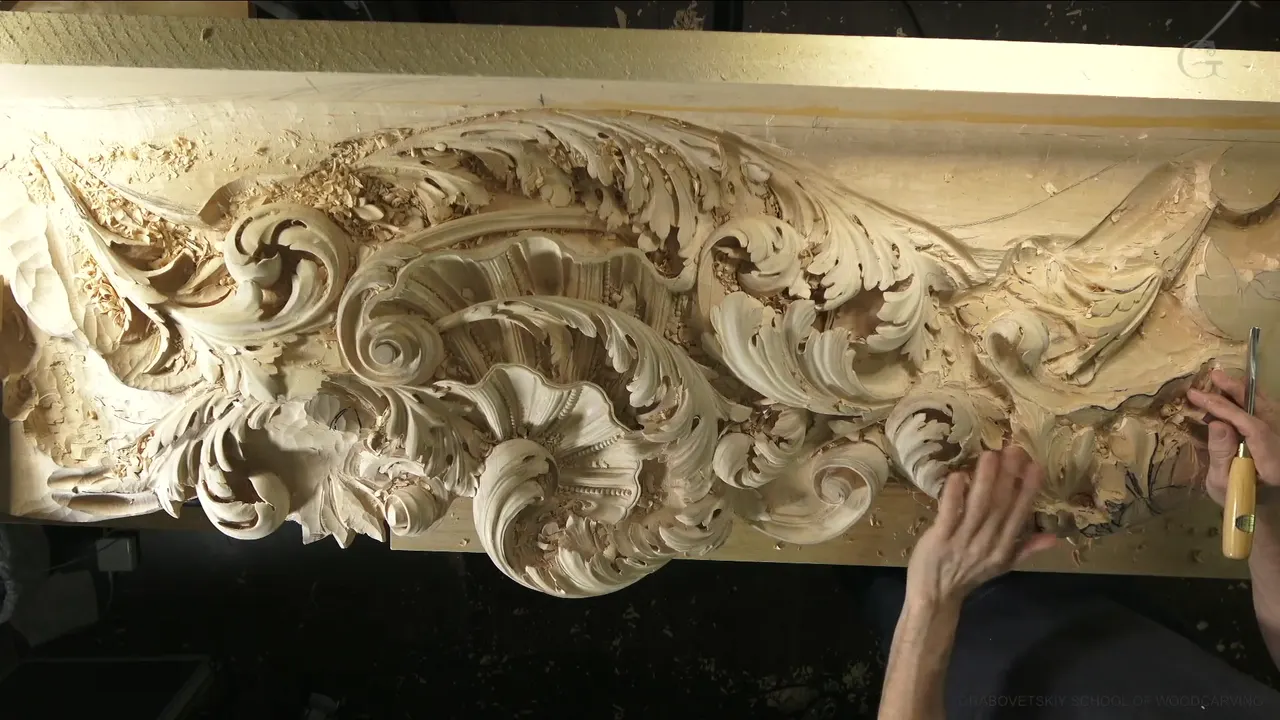
Checking basswood for carving before you buy it is two looks, one at the face of the board and one at its edge. The face should be clean. On a live stream in April 2020 I called my own boards perfect wood, without a black mark or streak in them. At the edge I read the rings and look for quarter sawn or rift cut, and a straight cut I try not to buy, because it's going to move a lot.
Someone on Instagram once asked me if I knew a good supplier of basswood blanks. Yes, absolutely I do. It all depends where you're located, I said, and that answer, place by place, lives in my questions and answers lesson. This page starts where it stops.
Do you want a board that stays flat on your bench for years? Would you like to know where it's soft before your gouge finds out? Then look over the face of the board and its edge too, and keep reading for what each one told me.

The short list for a basswood board
A clean face, free of dark marks.
Rings on the end that say quarter sawn or rift cut.
Wood from near the middle of the log moves less.
Dark spots mean the wood is a little mushy there, and that was okay.
Limewood I kept over ten years, I believe, went darker and pinkish.
All of it air dried.
Why buy basswood for carving from a hardwood yard?
A lumberyard that sells to furniture makers carries wood a construction yard doesn't. It's unique wood, I said in that Instagram answer, and they don't usually sell it to construction companies. Such a yard deals in hardwoods, and it usually can't sell you just one board.
For my own work I went further, and I'm going to be honest with you about what it took. On another April stream I told people that to get wood like mine you had to be carving commercially. I had to go to a commercial place north of me, and I paid thousands and thousands of dollars for one shipment of wood, because I used a specific wood, limewood or basswood. I wasn't trying to save.
That yard used to be local. Then it moved its warehouse to Orlando, Florida, and I had to order from them and wait until they got the right wood for me. I placed special orders, and they got the basswood for me.

Why does a minimum order matter on a small job?
A yard like that wants a minimum, and on a commission I passed it on. On an April 2020 stream about what to charge for carving I said I charged for material separately, and I also charged a minimum for the material, because I knew I had to buy a minimum from the lumberyard. It had been $300 a couple of years before that stream. By then, $500.
Even on a smaller project that needed a specific wood, the minimum went into my price. I didn't want to pay out of my pocket and just keep that material.
How do you spot clean basswood?
Clean basswood shows almost no grain, and nothing dark runs through it. When the question about my wood came up on that stream, I talked about the boards I work with. Take a look at my wood, I told them, it's actually perfect wood. There wasn't a black mark or a streak in it. Absolutely gorgeous wood, I called it.
In the first workshop of my First Cuts course I described the same wood for a beginner. There is a grain in basswood, of course, but almost none of it is visible. It's soft enough, and it still holds the detail. I called it one of the best and suggested it for the first knife cuts.
Gray streaks are a story of their own, about rain, roots and which states my boards came from, and it's told in my live streams course. The Wood Database keeps a page on the species with its numbers, and our wood guide page on basswood answers whether it's good for carving at all.
What does the edge of a board tell you?
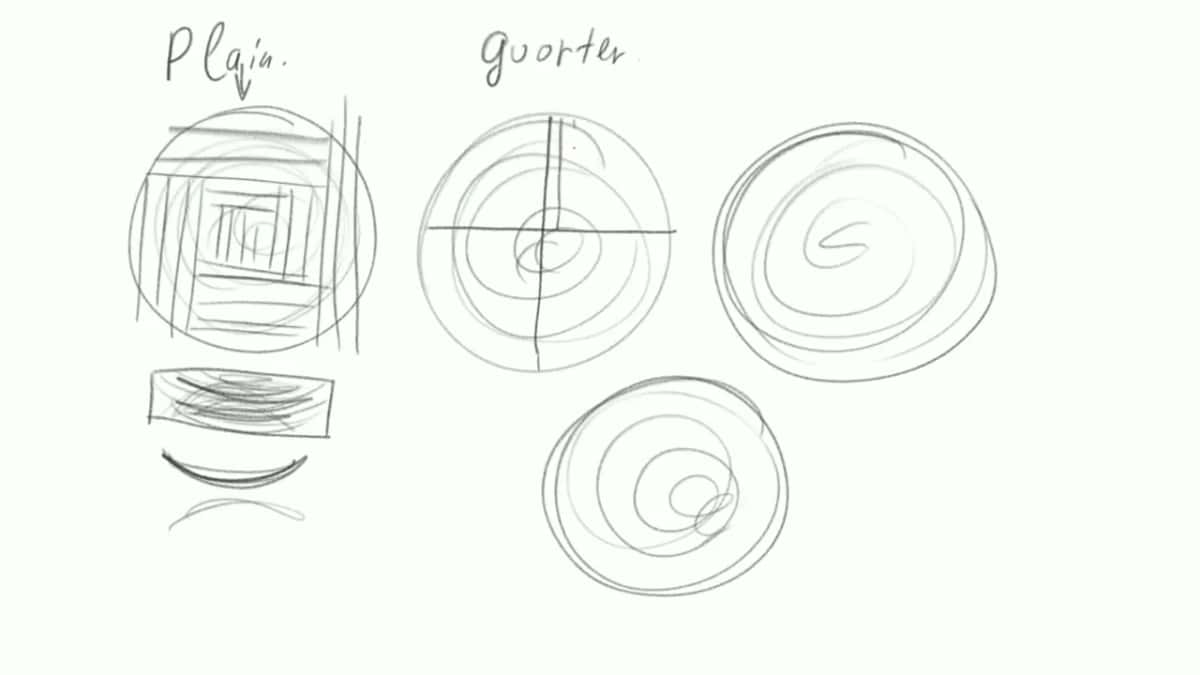
How the log was sliced. On April 13, 2020, someone on the stream asked about the wood I use, and my answer was that when I buy wood, I look at the edge. I don't cut logs myself. I read the rings.
Then I pulled up the computer and drew it. Slice the log straight across and you'll see really pronounced rings at the end. If it's a straight cut, it's also dangerous, I said, because it's going to cup. I try not to buy it.

Quarter sawn and rift cut are the other two, and sometimes they look almost the same. Either way, the rings tell you. Those two boards I would definitely buy. Which cuts a yard has all depends on the supplier of wood.
On the stream about wood movement, someone asked if I was afraid of movement on a piece that big. My short answer was oh, no, I'm not at all, and even if it moves a little bit, it's okay. In years I did not have any problem with huge movement. Of course, it still moves. It still puffs, it still shrinks.
I drew the whole log on the same stream, live sawn, plain sawn, quarter sawn and rift cut. It sits in the live streams course. On a thin panel, which face you carve is its own question, answered in a December 2022 stream lesson.
Does wood near the heart of the log move less?
Closer to the center you get, the less the wood moves, and near the outside of the log it moves a lot more. I said that on the April stream about wood movement, and then I told a story about pine.
Let me tell you a story. I had a project once with heart pine, and it's hard as a rock. The client ran a company that tore down huge multi-story factories from the 19th century on the East Coast and saved the old heart pine posts. That wood came from the middle part of big pine trees, and it doesn't move too much.
He sliced those posts into veneer, about an eighth of an inch, 3 mm, and sold it to flooring companies. They laminated it on top of plywood and sold it as really expensive flooring. Then he asked me to carve a table for his office. It was huge, about 12 feet (3.7 m), I believe, and it took me a long time. I broke lots of gouges carving it by hand. You could hardly drive a nail into that wood.
The same thing applies to basswood, I said, as well as to pine. The closer you get to the center, the tighter the rings, and there's a lot less movement.

Is a dark spot in basswood a bad sign?
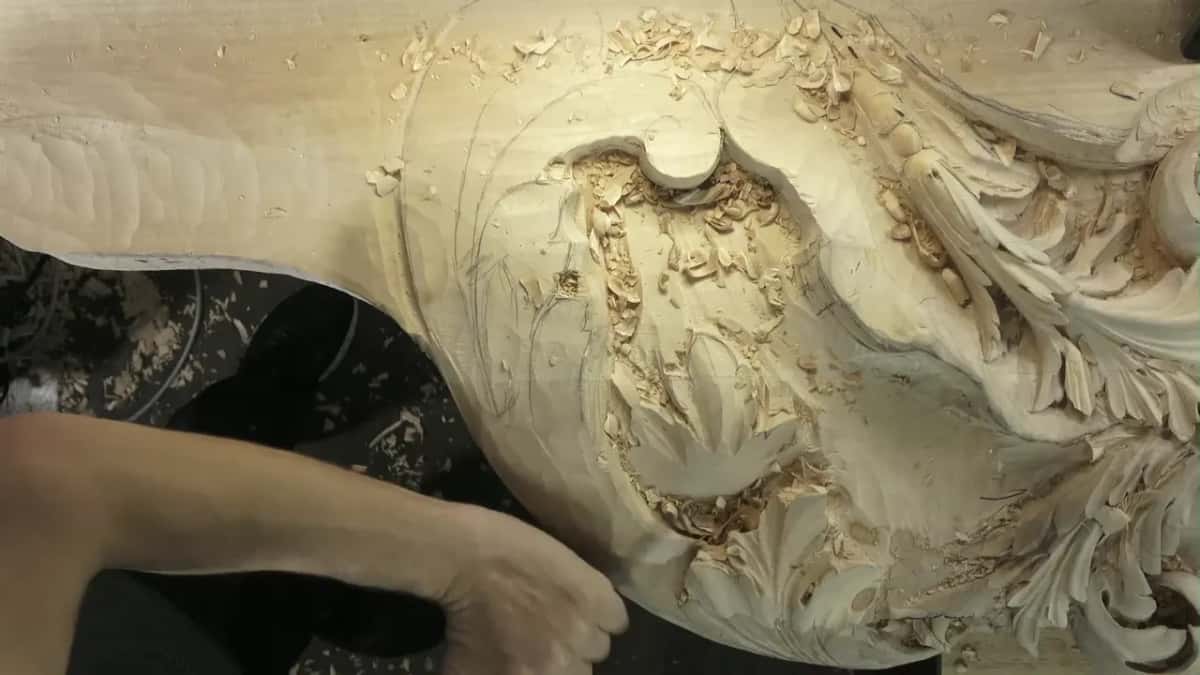
A dark spot told me the wood was a little mushy right there, and I said that was absolutely okay. That was workshop 83 of my Venice Room course. If you know a little bit about the property of basswood, I said, you know a dark spot like that means the material is a little mushy. You can tell it by the color.

Then I took one of my favorite tools, a skew, and got rid of some of it.
Color and softness can shift inside one board too. In workshop 63 a darker stretch of lime carved softer than the lighter wood beside it, and in workshop 83 another spot felt much denser, which is not really common for basswood. Both sit on my page about a hard spot inside one board.

Does limewood change color as it gets older?
Mine did. In the first lesson of my Hashemi Flowers course I talked about the piece on my bench. It's a beautiful piece of limewood with some kind of darker color, I said. I'd had that piece for a long time, over 10 years, I believe, and it developed a really rich, darker, almost pinkish color.
If I can say pinkish, I added. But it is somewhat pinkish.
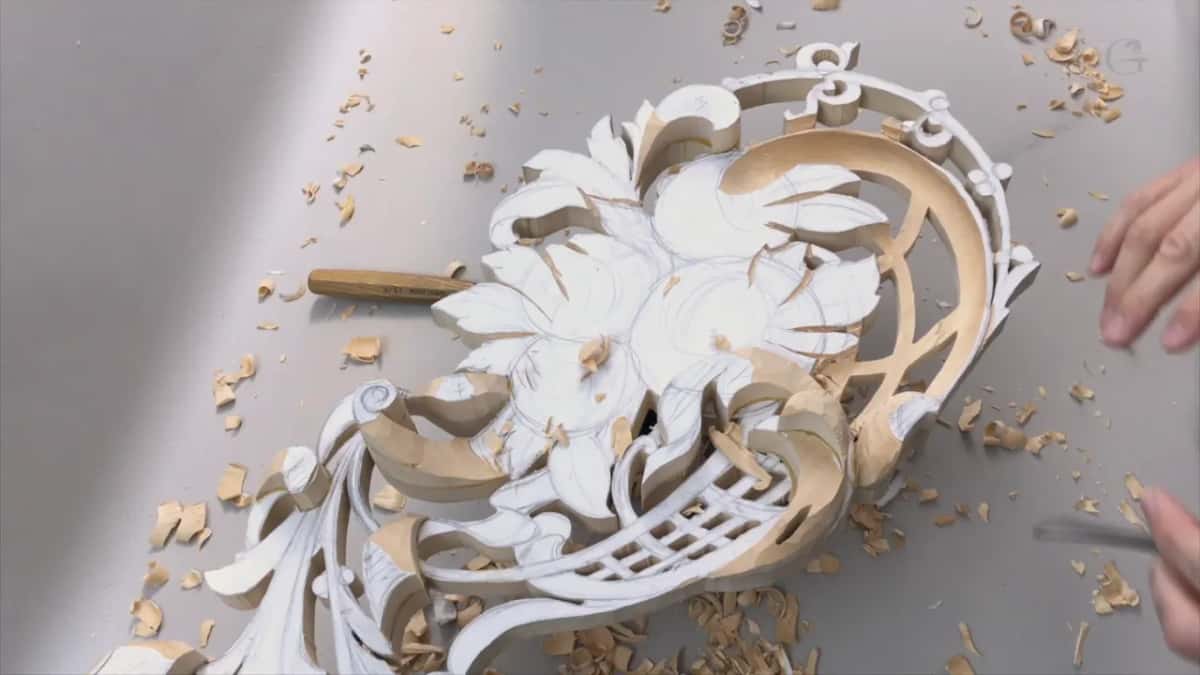
Your hands darken wood too, and even with absolutely clean hands, a reaction happens inside the wood when you touch it. It gets darker, as I said in this same questions lesson.
What is tiger limewood?
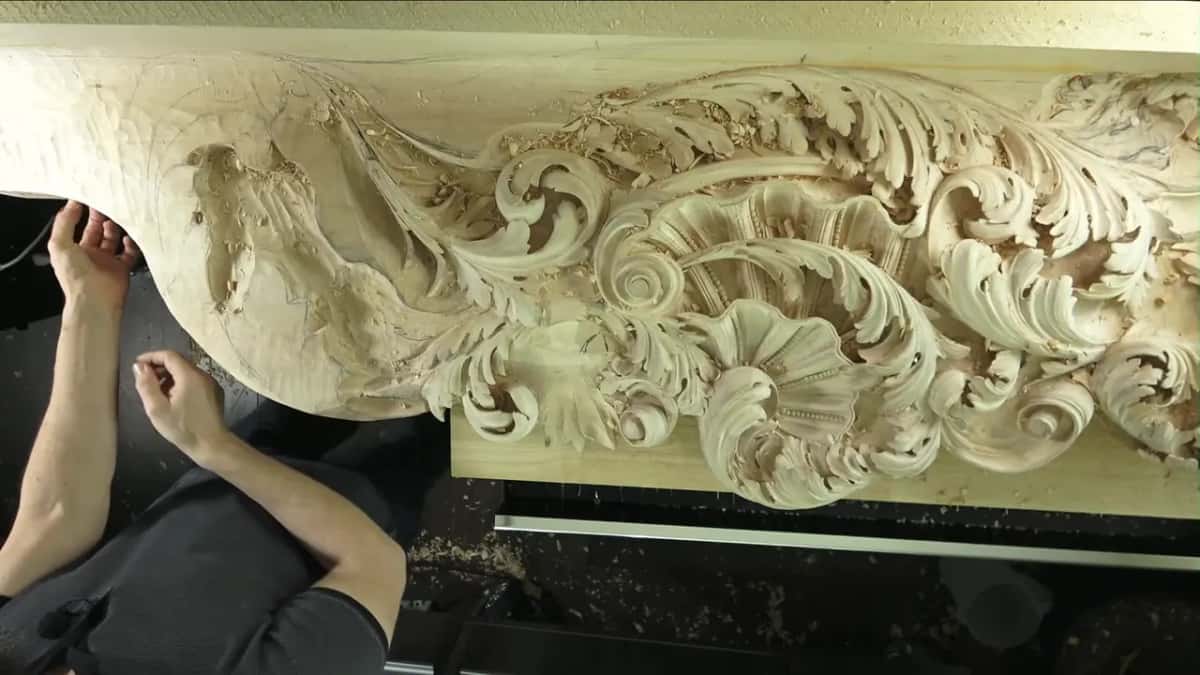
French limewood, rift cut, with flames you can still see in it. On the movement stream I said I keep some really unique boards in my shop, and some are French limewood, rift cut, and you can still see all the flames. You can call it the tiger limewood, because it was cut the right way.
By then some of my boards had sat in the shop over 10 years, and a few 20 to 25. How long, and why, is in the parent lesson.
Should basswood be kiln dried or air dried?
Air dried, for me. On one April stream someone from Washington State asked whether moisture worried me on a carving that big. I do and I don't, I said. I don't, because I'm wise when I'm gluing pieces together, and I'm paying attention to grain. Second, my wood is all seasoned. It's all air dried, and there is a big difference between kiln dry and air dried, natural dryness.
What you usually get from a lumberyard is kiln dried, I said on another stream. They use a big stove and just cook it out. But I found that it moves a lot more. So when I buy wood, I put it in my shop and don't touch it. I get basswood years ahead of a project.
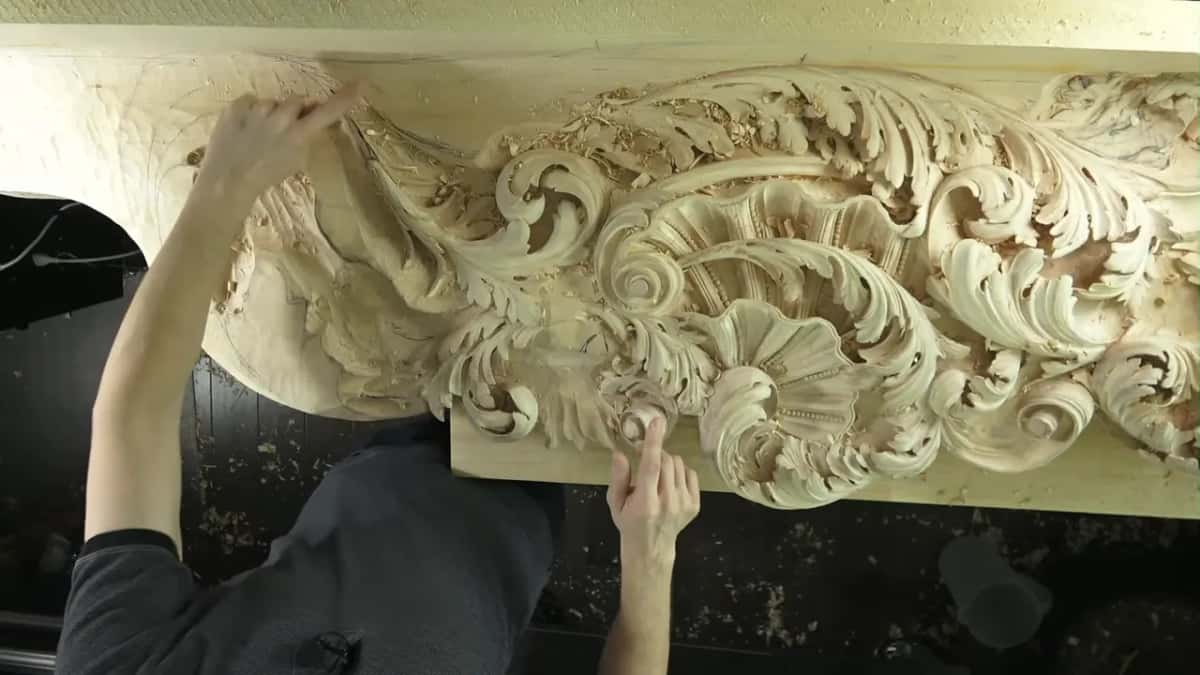
Here it is in one place, with the video where I said each thing.
| Where I look | My words about it on the stream | Which video |
|---|---|---|
| The board's face | Perfect wood, clean of marks and streaks | Creating Shadows |
| The board's edge | I look for rift or quarter sawn | April 13 |
| Darker spots inside | A little mushy, which is absolutely okay | Venice 83 |
| An old board | Turns rich, darker, almost pinkish in color | Hashemi Flowers |
| Visible flames inside | Rift cut French limewood, the tiger limewood | Wood movement |
| How it dried | All my wood was seasoned, air dried | Questions stream |
What can't the yard show you?
How the tree lived. Even with the same basswood or limewood, the history of those trees was different, I said while carving a Corinthian acanthus leaf. A new piece of lumber can feel absolutely different from one you carved the week before. It also depends where it was growing, closer to the water or not.
On that movement stream, someone asked if the boards I glue up come from the same tree. I really don't know, I said, because I'm not harvesting. I have no way to know which trees those boards came from, and besides, it doesn't really matter.
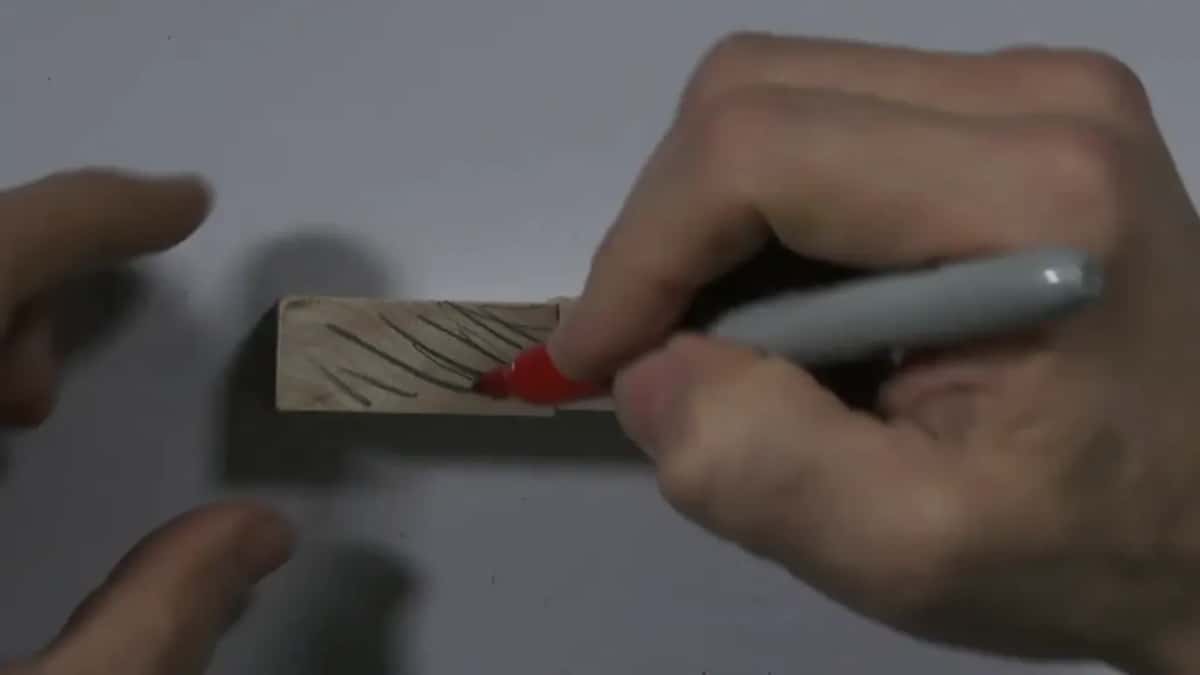
Some pieces are a piece of cake to carve. Then in workshop 78 of the Venice Room I got one of the difficult ones, even basswood, and it gave me resistance with super sharp tools. Knots are the other surprise. When you see a knot, your grain splits a lot easier, as I said on a furniture panel, so I had to be really careful how I came at that area with the router plane.
What if basswood is hard to find where you live?
In Australia and New Zealand it has to be shipped in. I have students in Australia and New Zealand, and on the April 13 stream my answer was that you can't get basswood there. They have to go to European stores and ship it. And in the Venice Room, workshop 52, I said the only way to get basswood or limewood in Australia is to ship it in, and they have to pay a premium for that. It's a big problem.
On that same April stream I named one more wood for carving, jelutong, and I said I think I'm pronouncing that correctly.

Where can a beginner get a small plank?
A craft store in your town probably has some. In that same beginner workshop I said you'll need some type of plank of basswood, and in the United States there's a store called Michaels where you can buy basswood planks. Woodcraft, or woodcraft.com online, has planks too. Outside the States, I'm pretty sure you can find some suppliers, I said.
The smaller the piece you buy, the more expensive it gets, I said on another April stream. Yes, you spend less money, but it's more expensive.

Every stream and lesson I quoted is inside the school, next to the rest of the techniques course. When a board in front of you looks strange, that's where you can watch me read mine.
How it's done
- Read the wide face. I want the face clean, the way my own boards were when I paid for them, with nothing dark running through the wood.
- Turn the board on its side. Check the end grain. The rings there show how the log was sliced.
- Pass on the straight cut. Really pronounced rings mean a straight slice, and that one is dangerous because it cups. I would definitely take a rift or quarter sawn board over it.
- Leave it alone in the shop. New wood goes in the shop, and nobody touches it. Some of mine sat there a decade and more.
Frequently asked questions
Can you tell soft basswood by its color?
On one board you could. In workshop 83 of my Venice Room course I said an area was kind of mushy, and you could tell it by the dark color. A little mushy was absolutely okay there, so I took a skew to it and kept going.
Is kiln dried basswood good for carving?
Kiln dried is what a lumberyard usually sells, and I found that kind moved more for me. Every board of mine was air dried, natural dryness. New wood sat untouched, and I got my basswood years ahead of any project.
Do boards from the outside of the log move more?
A lot more, I said on a stream about it. The nearer the heart you get, the tighter the rings and the less the board moves. Heart pine posts cut near the center of big trees were hard as a rock, and I said the same rule holds for basswood.
What to carve next