

Alexander Grabovetskiy, woodcarver, School of Woodcarving · Published 2020
Is a carving copied from someone else's pattern still your own work?
Quick answer: A copied carving is still your own work in the tool marks, which no one can replicate, while the design belongs to whoever drew it. I like it when people show a copy and mention the design isn't theirs. In my school, members copy my patterns on purpose, and I certify the carving.
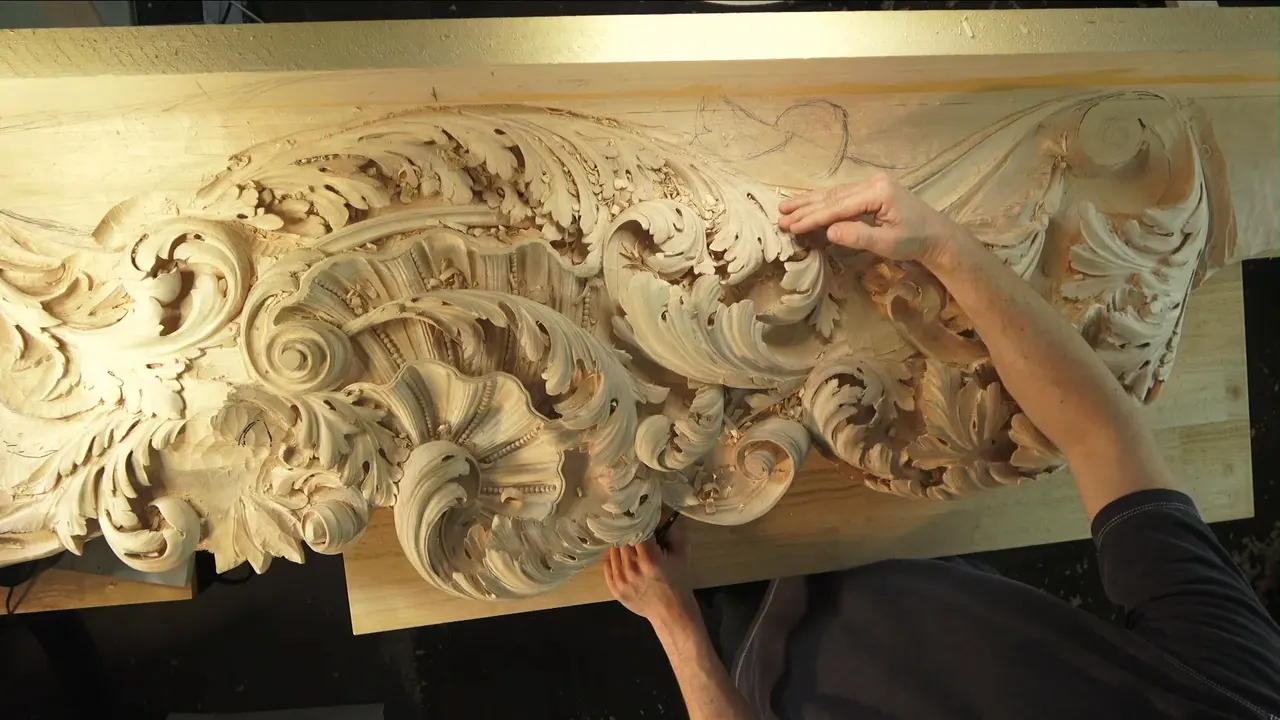
A carving copied from someone else's pattern is still yours in its tool marks, because nobody can replicate those. The design belongs to whoever drew it. So if you copy someone else's wood carving pattern, I like seeing you show the finished piece and mention that the design isn't yours.
Somebody asked me this on a livestream in April 2020, whether it is better to be original or copy others, and the answer became a short part of my questions and answers lesson. It all depends what you mean, I said. Sometimes I don't quite understand what it means to be original. You're still you.
Have you ever held somebody's pattern next to a fresh block of basswood? Did you wonder if the carving would count as yours when it came off the bench? Copy it, and say whose design it is when you show it.
Below are the lines I said about copying, in that answer and in several other courses, with the lessons where you can hear them, and the copies I made myself.
Six things I said about copying a pattern
Tool marks can't be replicated, so a copy still comes out yours.
Naming the designer is what I like to see.
Members of my school copy my patterns, carve them, and send me pictures for a certificate.
A copy for learning only has to be close.
Try to repeat a carved flower and the second one comes out different, even from the same hands.
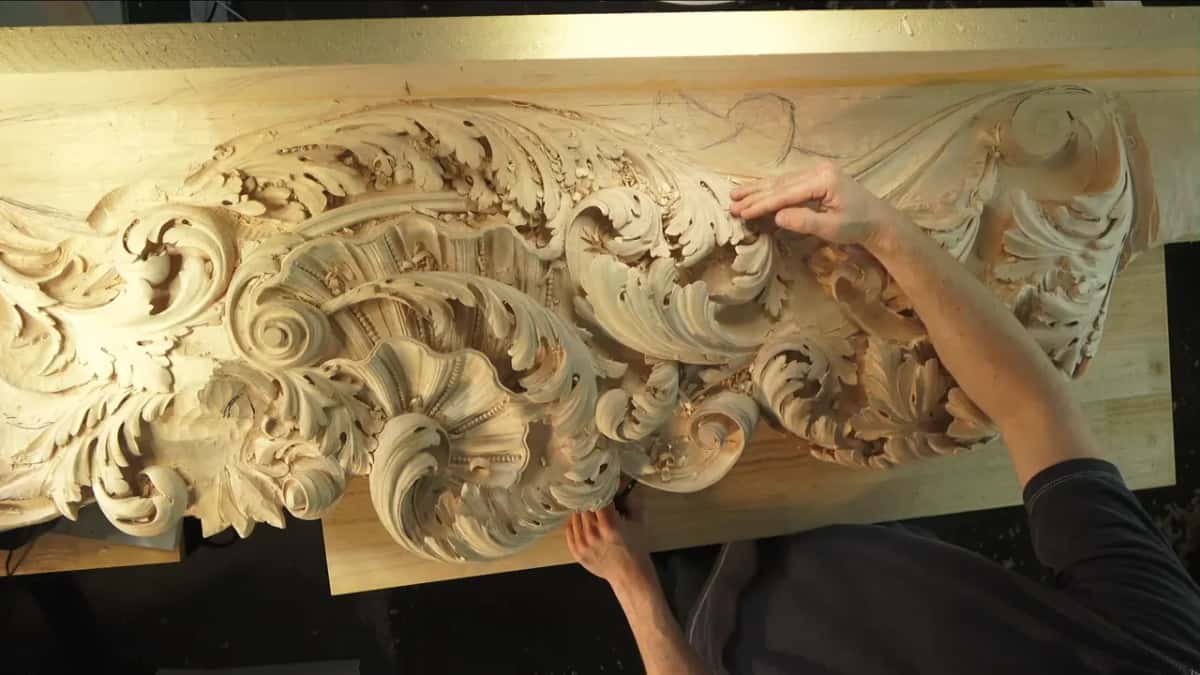
I copied one Venetian molding from a picture.
What makes a copied carving original?
Your hands.
You're still original even if you copy another carver's work, because you can't replicate the tool marks. It's going to be only you.
On a Hashemi flower in lesson 47 I came at the same point from the other side. I showed a number four about 10 mm (3/8 in) as one example, then told the camera that whatever tool you feel like using at that moment is absolutely fine, because you won't end up with exactly the same flower as mine. That is one of the really important things, probably, to understand. Seconds later I went further. Even when you try to replicate the same flower, it's not going to be the same every time you do it. Copy what you carved before and it still comes out different, so every flower turns out a different flower.
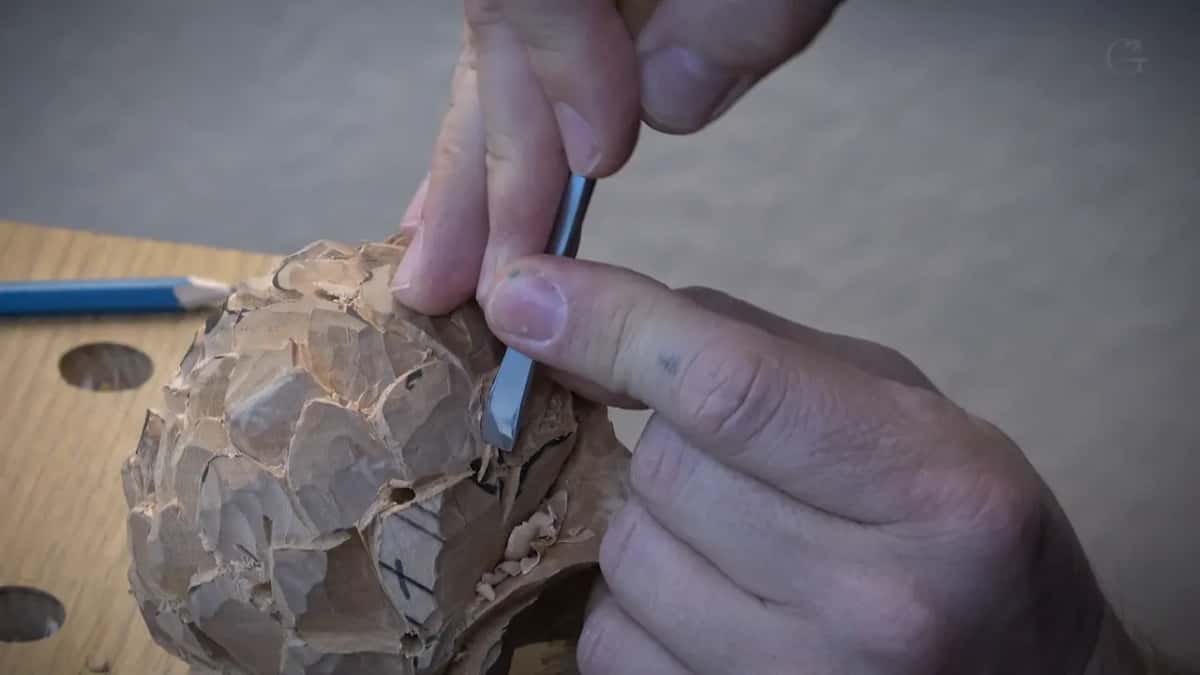
I called that the beautiful thing about carving flowers. Right after, I dug in with a number one, double beveled, which means it has a bevel on both sides.

Should you say whose design you copied?
I'd like you to.
During a different livestream a few days later, someone in the chat asked what to do with no drawing ability, and whether it's okay to copy another person's work. Absolutely one of the best questions anyone could ask me, I said, and I was glad they asked it. First of all, I don't like the idea of copyright. I do like it to a certain degree. I like it when people present work and mention it isn't their design, if they copied it from somebody. That is okay. And I asked the chat how else you will learn if you don't copy.
The law is a separate matter. The U.S. Copyright Office says copyright protects original works of authorship as soon as the author fixes them in a tangible form, and that it protects the expression, never the ideas or methods behind it. Its fair use index adds that courts weigh fair use case by case, with no set amount of a work that is always safe to take. Selling a copy of another carver's design is something nothing in these lessons takes up.
Why do my members carve my designs on purpose?
On my school site, copying my work is exactly what people do. I have a certification program, just to get the certificate if the work is done. That way I see if a person is able or not. In that same April answer I said I encourage you to start with copying, because you'll understand much better what the other carver did, the logic behind it, and why they did it the way they did.
In that later stream I gave more detail. I provide downloadable links to my patterns. People download them and carve them, then submit the pictures to me, and I give a certification for the carving itself. What they do is copy. They copy my designs, which I encourage.
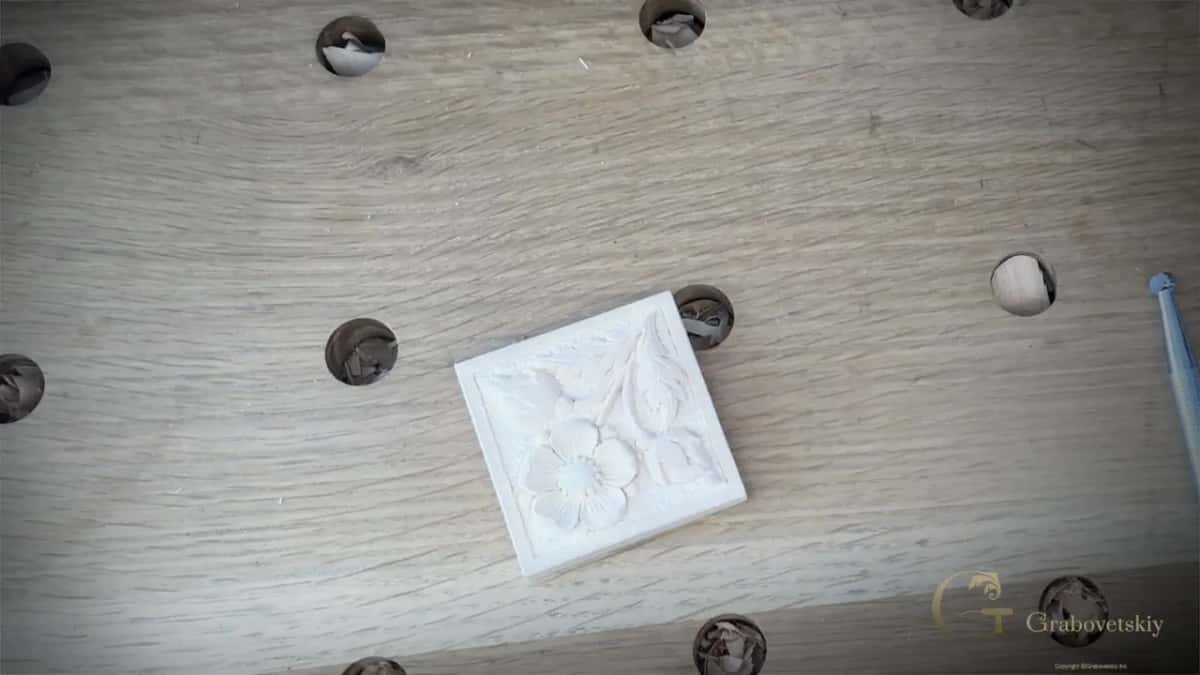
At the end of lesson 7 of my flower rosette course I walked through it. You make pictures of your progress and upload them with a button. I take a look and assess whatever progress you've made, then I give you a certification of completion for that course, which I called a step in an ongoing program.
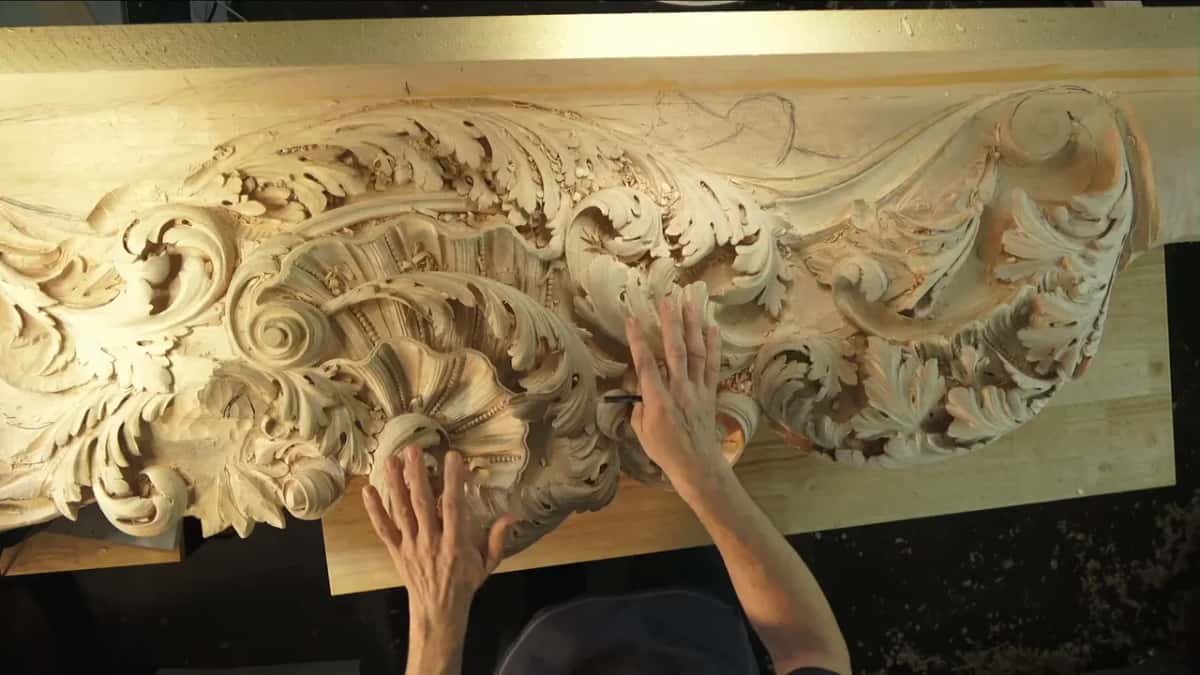
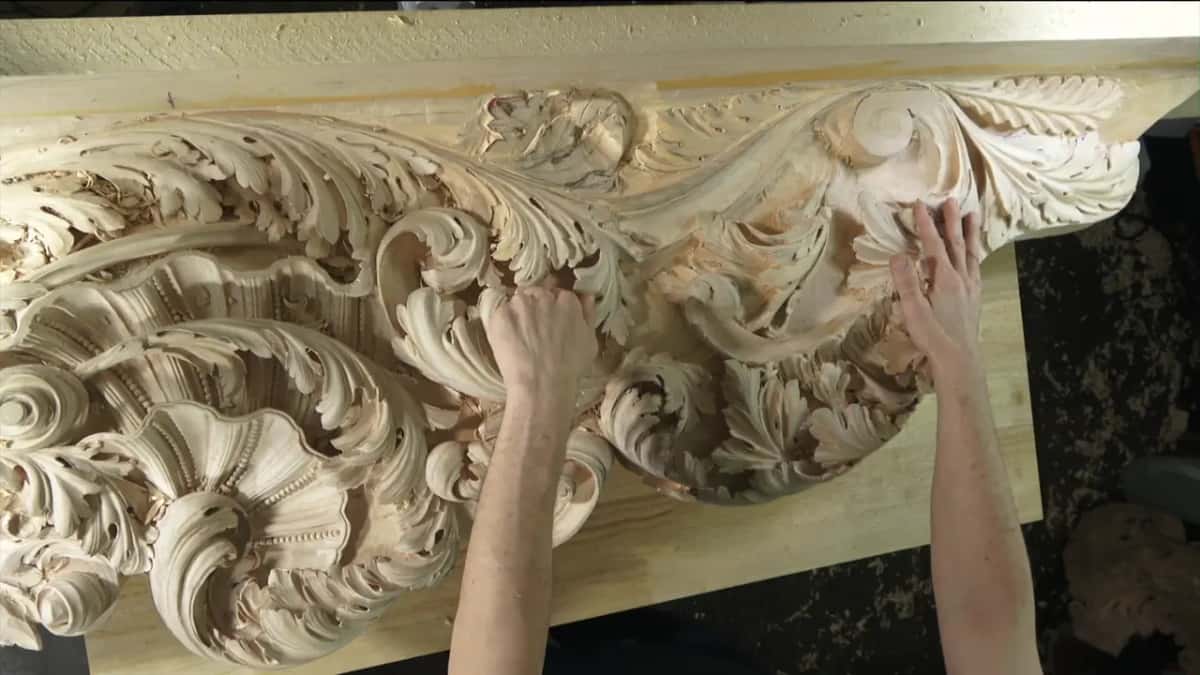
My Venice Room is a different story. It's not homework, I told a question and answer stream that April, and I'm not expecting anybody to repeat what I do there. What you could do is take a snapshot and replicate some parts of it, because it's a unique acanthus. Acanthus leaf is not just acanthus leaf, I said. This one I was developing for Venice of the 15th and 16th century, and the whole thing goes into a room in a private house, all the way to the ceiling.
How exact does a copy need to be?
Close, not exact.
At the start of Carving Hazelnuts 2 I asked you to keep a copy right by you on the workbench, so you can always reference it and see exactly what is going on. Please don't try to copy exactly, I said next, because it's not necessary and you're not trying to replicate anything. I did that drawing quite a few years ago, for another class.
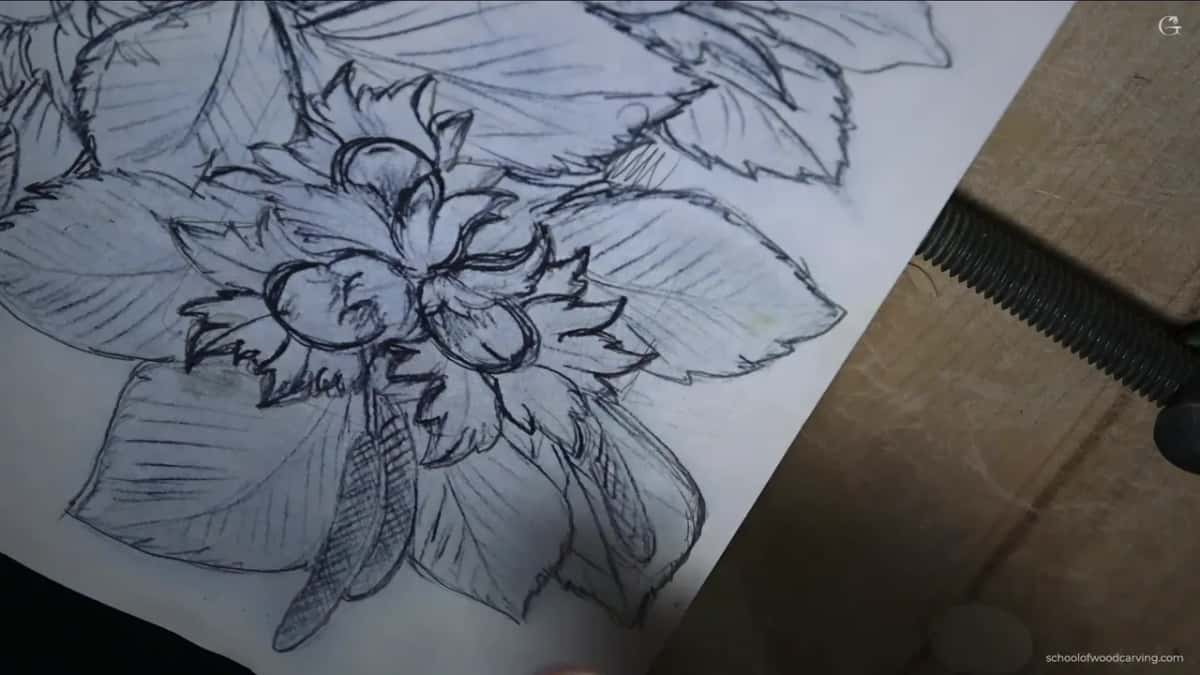
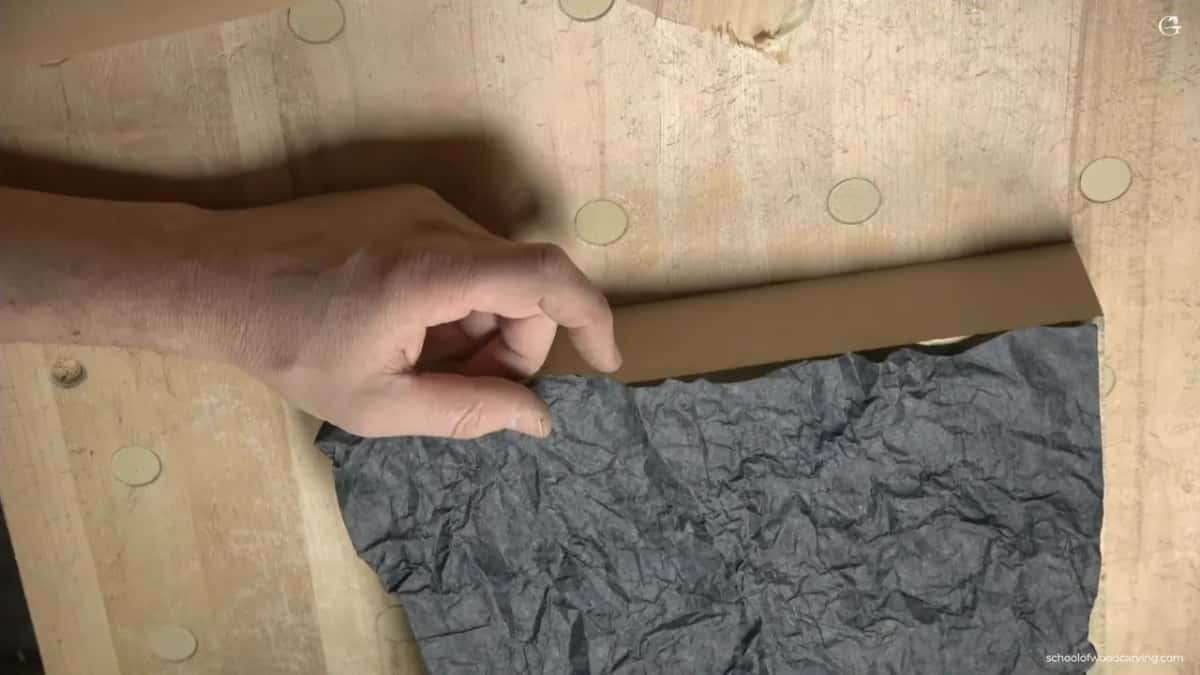
In the first hazelnut lesson the pattern sits in the materials tab, and you can glue a copy right on top of the block. I went a different route. A really old piece of carbon paper carried just the main lines across, and an extra copy stayed on my bench where I could see it and draw. My carving wouldn't be exact to my own pattern either, only pretty close. What I was after was a realistic looking hazelnut.
Copying has a hard side, too. Carving the Venice Room in workshop 50, I said that when you look at someone's lines and don't know the final result you're after, it can get really confusing. If you didn't design it yourself and you're trying to repeat somebody else's work, sometimes it gets so complicated that it's almost impossible to figure out what in the world he is trying to do right now. The movement on my bench that day was about to flip, rotate and open up, and I wasn't sure I could keep its height.
| The copy | What I said about it on camera | Where to watch it |
|---|---|---|
| My school patterns | Members carve them, send pictures, and I certify the carving | Livestream, April 2020 |
| Hazelnut drawing | A copy on your bench, but skip copying it exactly | Carving Hazelnuts, lesson two |
| One Hashemi flower | Repeat it and the new flower is not the same | Hashemi Flowers, lesson 47 |
| Mirrored floral half | A flipped phone picture, and it does not need to be perfect | Floral and Molding, lesson five |
| Venetian molding profile | Copied as best I could, working off a picture | Venice Room, workshop 148 |
| Greek acanthus leaf | Romans just copied it, then added subdivisions and pipes | Roman Acanthus, lesson one |
Do I copy anyone myself?
Personally, I do not copy anybody else's work. I said that in the same April 8 answer, and in the next breath I said I encourage you to do it. Nothing wrong with that.
I have copied on camera, though.
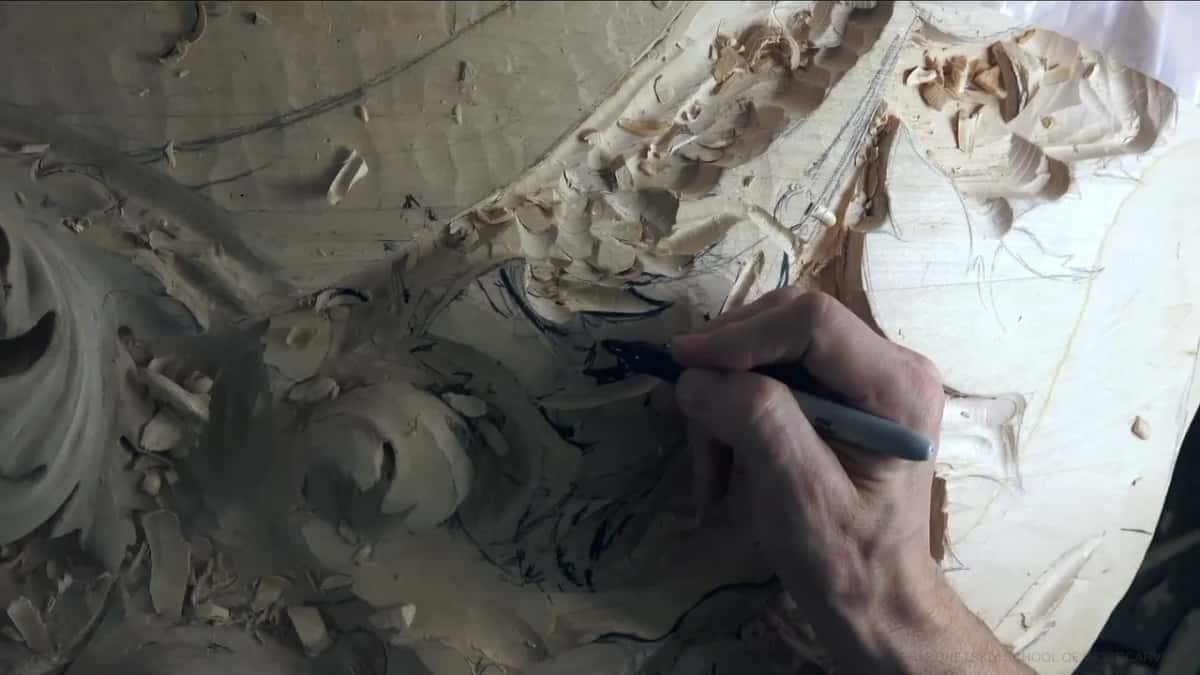
In workshop 148 of the Venice Room I needed a molding profile and couldn't find any modern ones. So I checked the Venetian style of the 16th century. A building in Venice is still there, and I copied its molding to the best of my ability, from the picture, without going there.
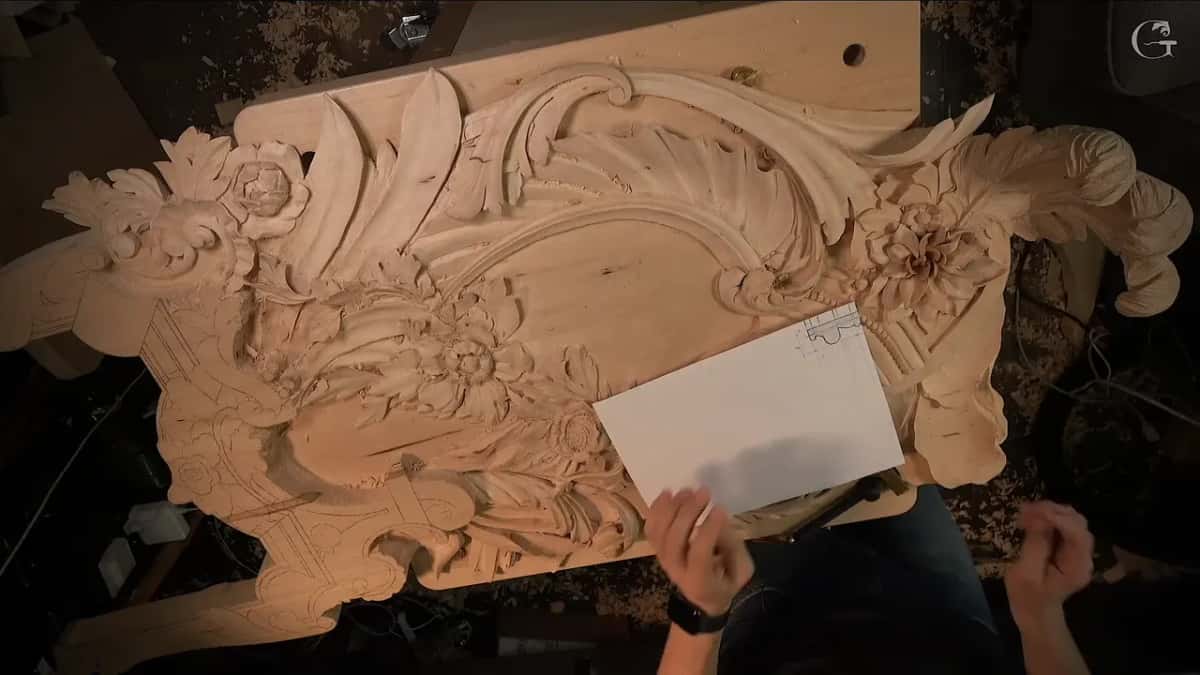
One section of that room was on my bench during a live stream in April 2020. I'm not copying, I told the chat, and I developed the design myself. But I do have to be authentic to the original Venetian design of the second part of the 15th century and the beginning of the 16th, in the acanthus, the concaves and convexes, and the way the scrolls twist. Some really big architects look at it, and they say if it's okay or not. For normal people it doesn't make a big difference. For architects who are really picky about authenticity, it's really important, down to the tools you're using, the movements you're using, and even the finish.
I copy my own pieces, too. Working on a panel in Floral and Molding lesson five, I made a picture on my phone again and flipped that image, so I could reestablish the drawing and place it right beside the work. For me, I said, it's just a matter of copying, and it doesn't have to be perfect. Still, it makes life much easier.
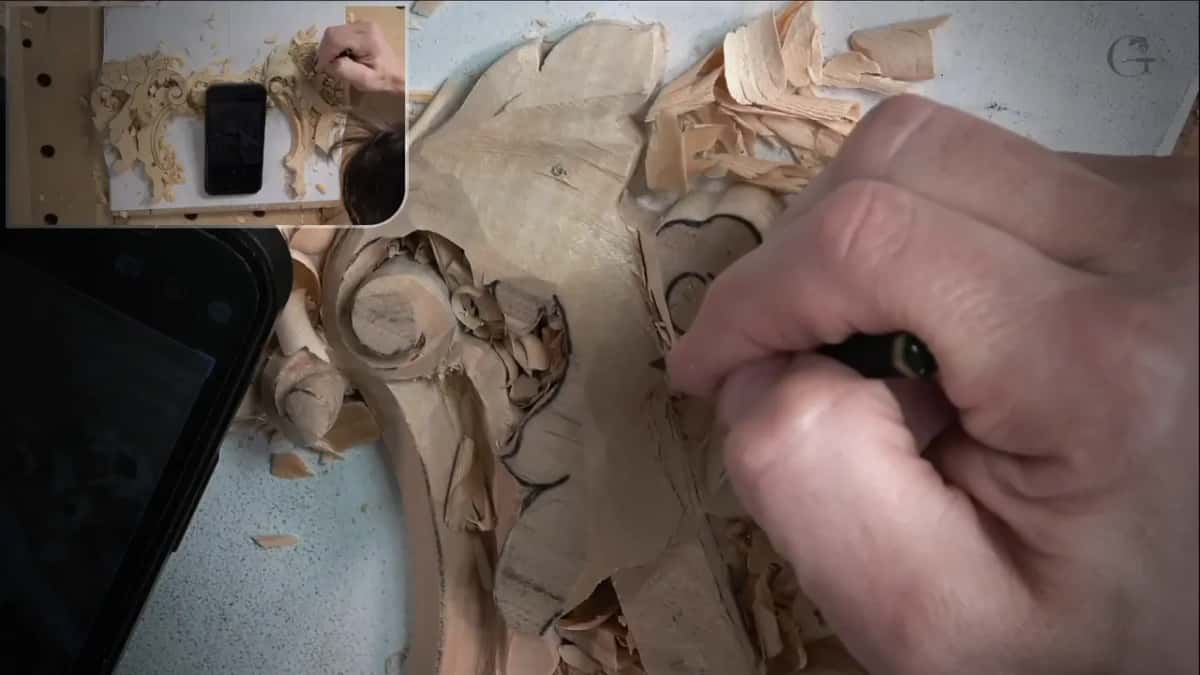
The first lesson of Chamomile and Bow Rosette goes the same way. It's always a good idea, I said there, to have a piece already made. I can always reference it and almost copy it, although it's not a copy, because it's flipped to a different direction. Then I picked up one of my favorite tools, a pointing machine, so I could measure.
The Romans did it too, as I tell it in Roman Acanthus 1. They took the acanthus leaf from Greek architects, and at the beginning, before Christ, you can't even see the difference between the two. They just copied it. Later they added subdivisions and a lot more pipes, and on that leaf I mark the pipes with a red pen to see how many there are.

What if you can't draw the pattern yourself?
Copy it anyway.
On that later stream I said not too many people are actually able to draw. Personally, I believe you can learn to draw if you know some laws, some rules, and it's not that complicated. You train your hands and your movements in the right position. Earlier in that same stream I said I can take a pencil and draw whatever movement I need right on a piece of wood, and I do that all the time. Not every one of you does, and moving a pattern onto a curved surface, a concave or a convex, is a huge challenge. Plastic, or vinyl, was the solution I showed that day, one of many.
My answer to whether it's okay to just copy was absolutely yes. Look at someone's work and copy whatever movements they use, and you'll understand the logic of that artist or that furniture maker. Copying the movements, I said, is a must.
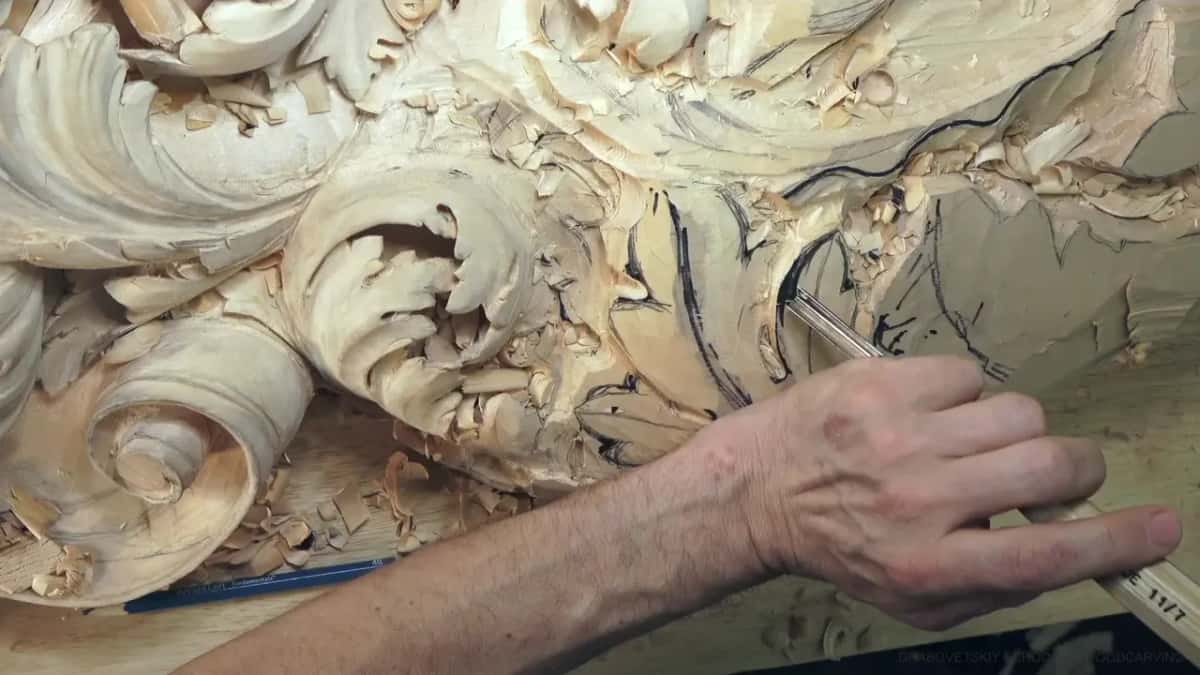
It was actually my teacher who first told me that. He said I really have to study old work, especially to work in a Baroque style and a Rococo style. We grew up in the Soviet Union, and the whole country was on lockdown, so we couldn't travel anywhere. All we could do was study pictures in some of the books, or spend some money and go to St. Petersburg to study the work in the Hermitage.
Study, draw, and carve, he would tell me. Then came the longer version, repeat what you already studied, draw it, and carve.
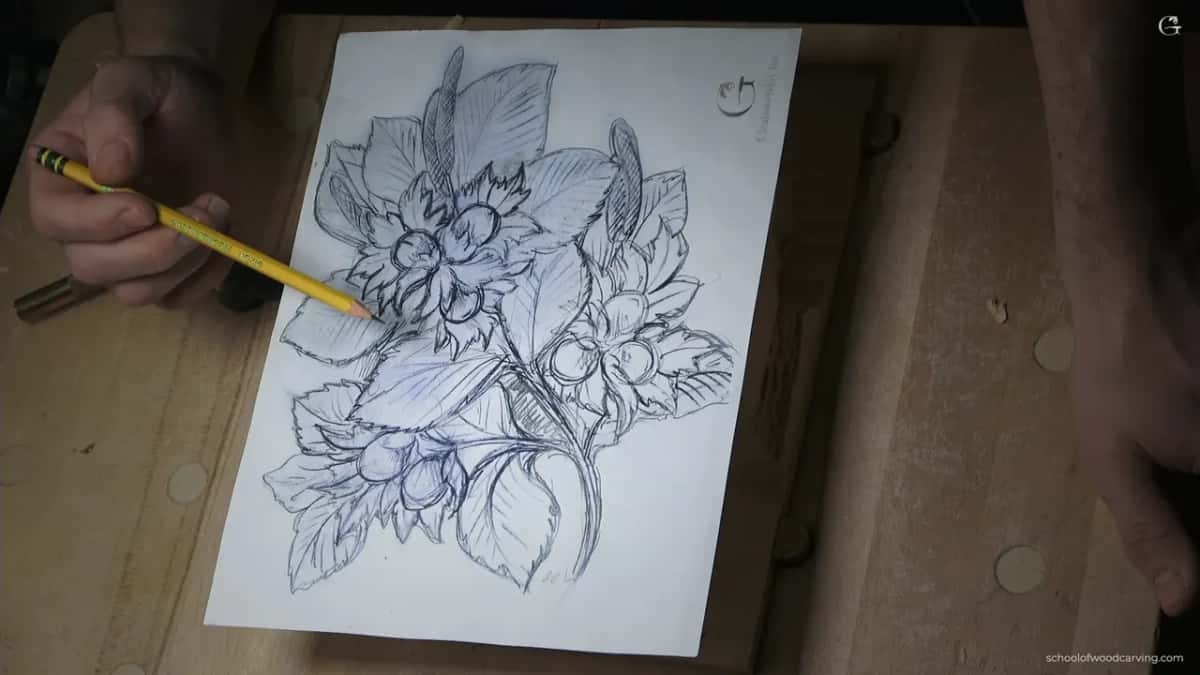
I love to draw my designs by hand. On the Greek acroterion I said I could take a design to AutoCAD or SketchUp, or even Illustrator, but drawing by hand trains my hands and my drawing skills, and that way I can feel like a human being did it. Later I printed it to scale, glued it on top of limewood or basswood, let it dry overnight, and took it to my scroll saw.
The acanthus traveled the same way, I said in that answer. People went places, looked at the work, brought the idea home and developed their own flavor of the leaf. Vikings in 10th century Norway put acanthus movements on their boats, and I asked how they would even know that idea without traveling far and trying their best to copy it, with pretty much just a knife and an axe. Copying is the only way to learn and develop some more.

Whose carving is it when you finish?
Yours, with another carver's design inside it. The tool marks came from your hands, and the design keeps the name of the person who drew it. Every lesson named on this page sits inside the school, and my techniques course holds more questions and answers like this one.
That whole April 8 answer ran about a minute and a half on camera.
How it's done
- Get the pattern from the lesson. The hazelnut lesson has the pattern in its materials tab. Glue a copy right on top of the block, or do what I did and carry the main lines across with an old piece of carbon paper.
- Keep a second copy on the bench. Have a second copy right beside you on the workbench, so you can always look at it and see what is going on.
- Don't chase an exact copy. Please don't try to copy exactly, because it's not necessary. My own hazelnut was never going to match my pattern exactly either, only pretty close.
- Photograph your progress. Make pictures of your progress and upload them with the button at the end of the course.
- Let me assess it. I take a look, assess whatever progress you have made, and give you a certification of completion for that course.
Frequently asked questions
Do I have to credit the carver whose pattern I used?
I'd like you to. When people present their work and mention the design came from somebody else, that kind of copying is okay with me. The idea of copyright I don't like, though I do like it to a certain degree. Selling a copy is something my lessons don't get into.
Will my copy look just like the carving I copied?
Close, maybe, but not the same. Your tool marks can't be copied by anybody, so the piece belongs to your hands. Even when you try to carve a flower like one you did before, the new flower turns out different, and on a Hashemi flower I said whatever tool you feel like using is absolutely fine.
How does your certification work for a copied pattern?
Members download my patterns, carve them, and upload pictures of the progress with a button once a course is done. I look at those pictures, evaluate the progress in them, and give a certificate for the course. Those copies coming in show me whether a person is able.
What to carve next