
Alexander Grabovetskiy, woodcarver, School of Woodcarving · Published 2020
When should you glue a broken piece back on a wood carving?
Quick answer: Gluing a broken piece back on a wood carving is worth it when that piece still carries your design and gives the carving depth. If the work is still preliminary, or the part never had to be connected, leave it off. Sometimes a break simply becomes a change of design, carried a little lower.
Wood carving repair with glue is the right call when the broken part still carries the design you want. Early in the work I leave it off. Same with a part that never needed connecting. The glue is the simple part, and it comes out of a small bottle on my bench.
Did a leaf tip just come away under your gouge? Are you holding that little piece between two fingers right now and wondering if it is worth the trouble? Keep it. I glue some pieces back and I let others go, and in each case on this page I said why, with the camera running.
Glue or leave it, in six lines
- Anything that gives the carving more depth gets glued back on.
- If I like my original design better, the glue keeps it.
- Too early in the work, I let the piece go and open the area up.
- A free curl that needs no connection can stay loose.
- Crunchy wood with hidden micro cracks breaks on its own, and I glue those.
- Sometimes the break just moves the idea a little lower.
Is wood carving repair just glue?
Pretty much. During my April 2020 livestream somebody asked how I fix a part I chip by accident, and my whole answer took less than a minute. It is just pretty much glue. I use a small bottle of it, and I glue the piece back if I need to glue it back.
Somebody also wanted to know whether it had ever happened to me. Absolutely, I said, more than once in a row. I broke some stuff. Right before that question I had been telling people about the schools where I teach in person, the Marc Adams school, Maine and Tampa.
Now read that answer again, slowly, because the little word if is what this page is about. Some glue, maybe an extra support and a night of drying is the plan I talked through on the Greek acanthus, lesson 13, before I glued it off camera. Here I want the other half, the reasons I gave at the bench for gluing a piece or for walking away from it.
When is a broken piece worth gluing back?
Any time the carving looks better with it in place. Let me tell you a story. In workshop 42 of the Venice Room I was opening a separation with my number 3 back bend, and a piece came away. Not what I want to see, I said, I need to glue it.
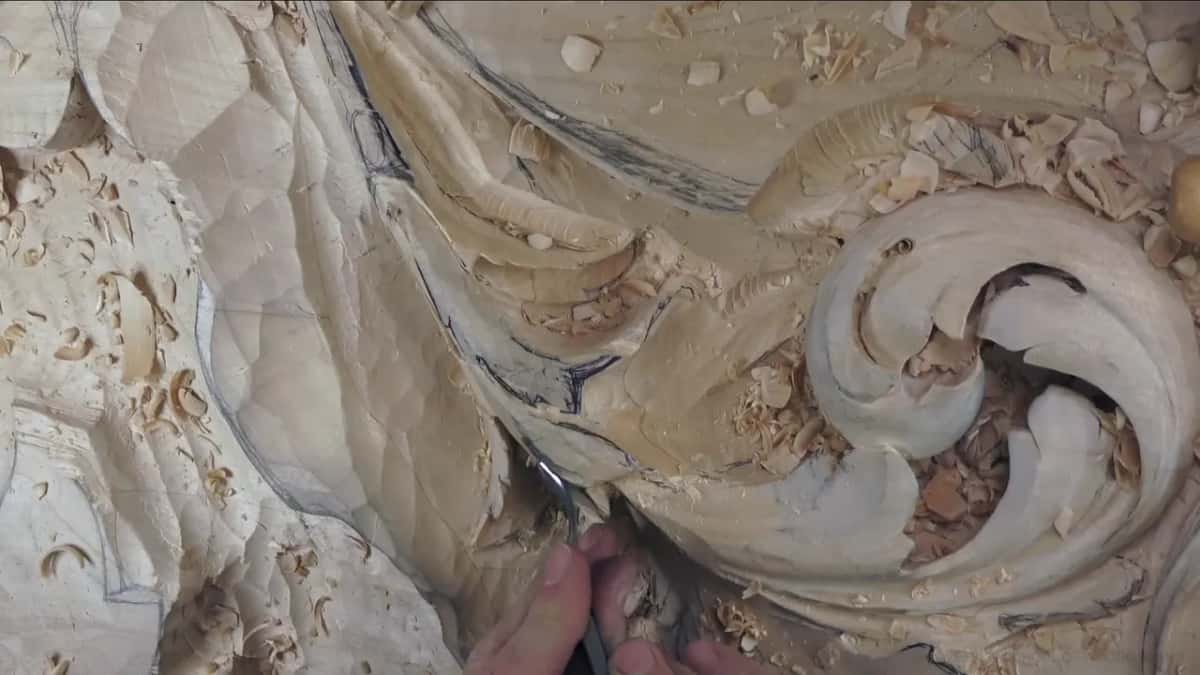
The honest part came next. Leaving it like that was an option, I said, just working my way in, and the carving would still be looking good. But with that part, it is going to look more three dimensional, so it went back on. I used Titebond 2, and since that panel is going to be paint grade, I said it should not be any problem.
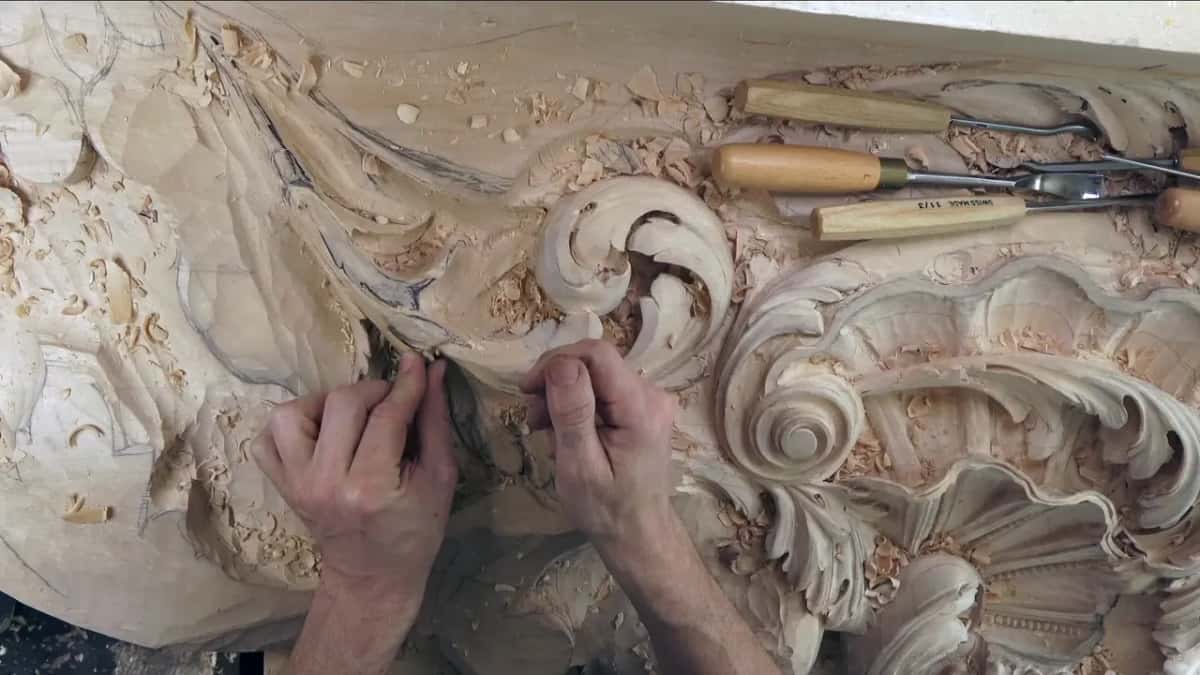
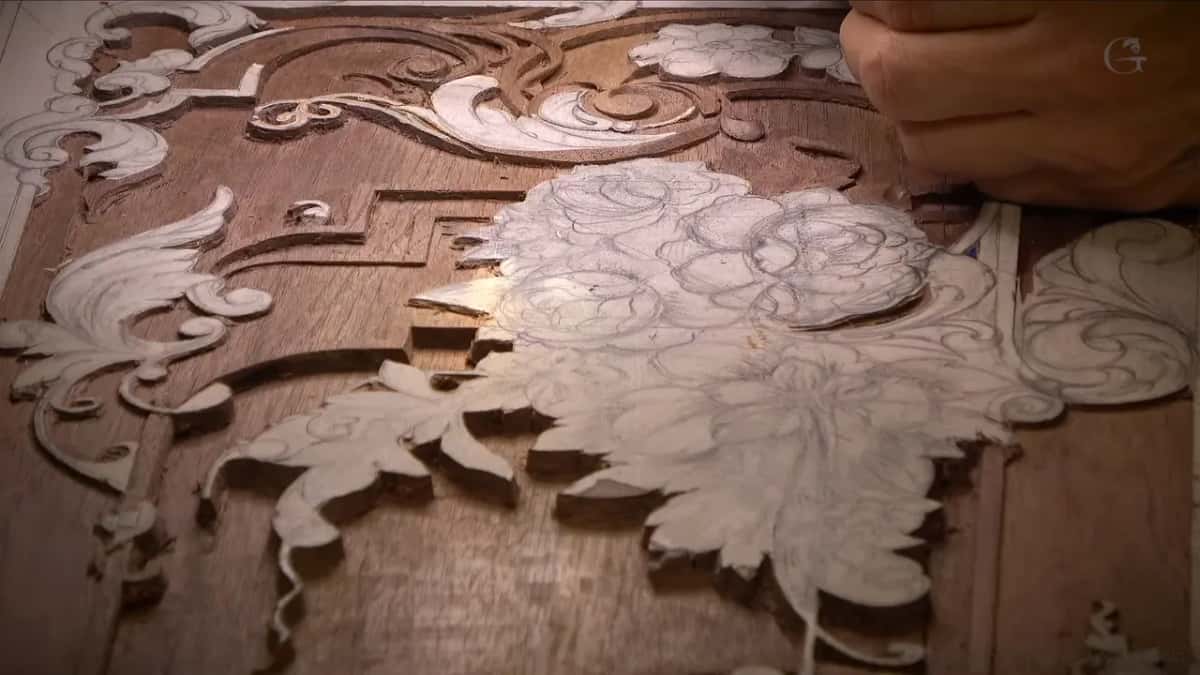
Under the gouge it can be even smaller. Undercutting a small flower on a furniture panel, a detail about one millimeter thick, I had a number 11 at half a millimeter (0.02 in) in my hand, and something happened that should not happen. I put a little Gorilla glue on a toothpick, the kind that is like super glue and dries really quickly.
Should you glue it if the leaf looks fine without it?
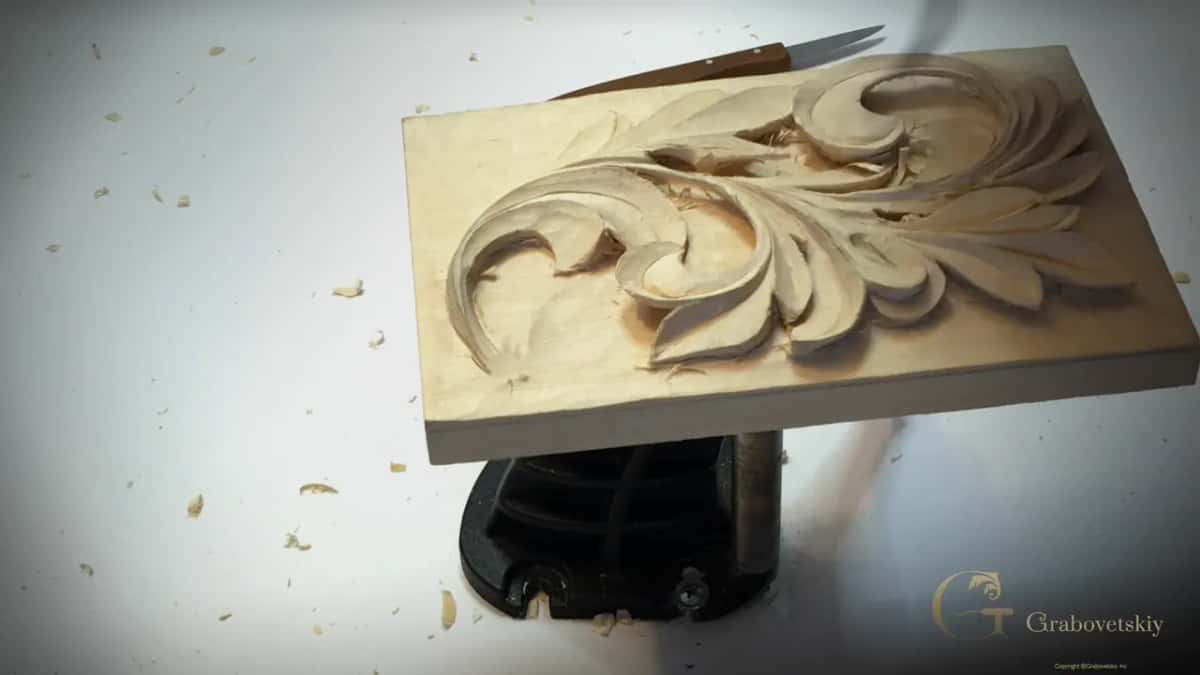
For my Greek acanthus leaf I did, and the reason was the drawing. One piece had already broken, and I was careful not to hit it again before the glue, so it would not come off completely. I knew that was a mistake I should not make. In the next part I completely broke it anyway, so I kept the piece to glue it off camera.
In lesson 14 the gap turned out to be useful. Because that piece was out, I could undercut the section behind it, a place I could not even reach before, with the same 5 mm (3/16 in) tool. There was a lot of junk underneath, and that was okay. That is a true 3D.
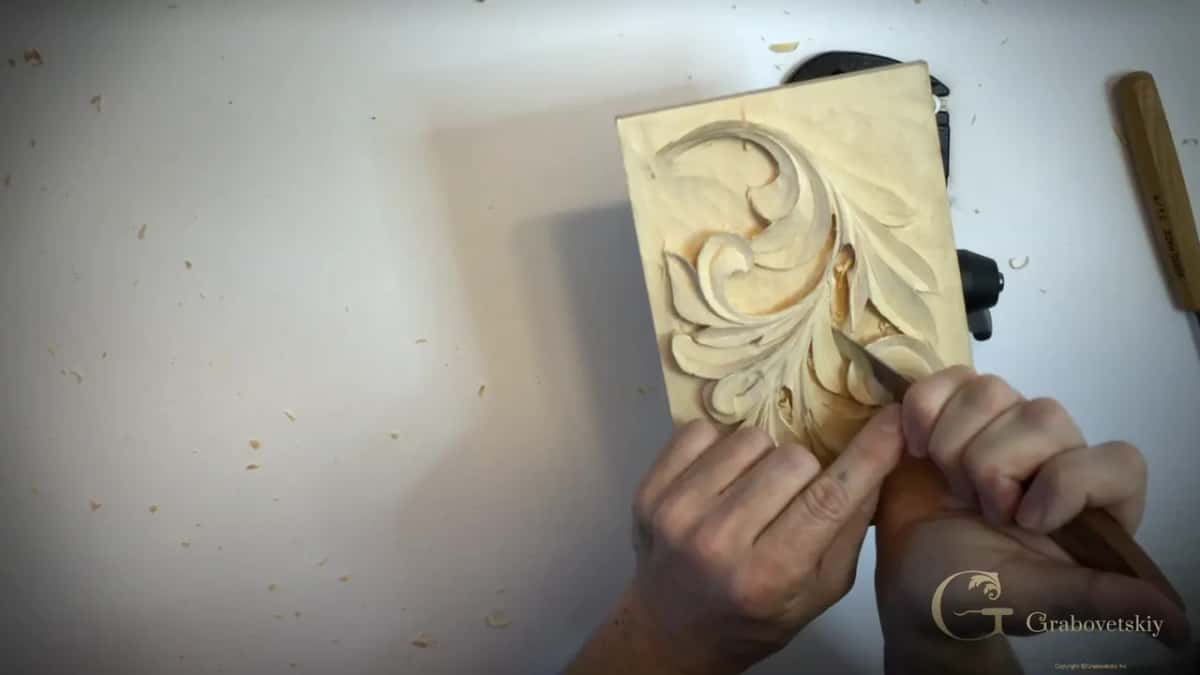
Then I left that section alone until I fixed what I broke. The leaf would still look nice without the piece, I said. I kind of like the original design, though. So I went back and fixed it, hoping it would look the way I planned it.
When is a carving too early for glue?
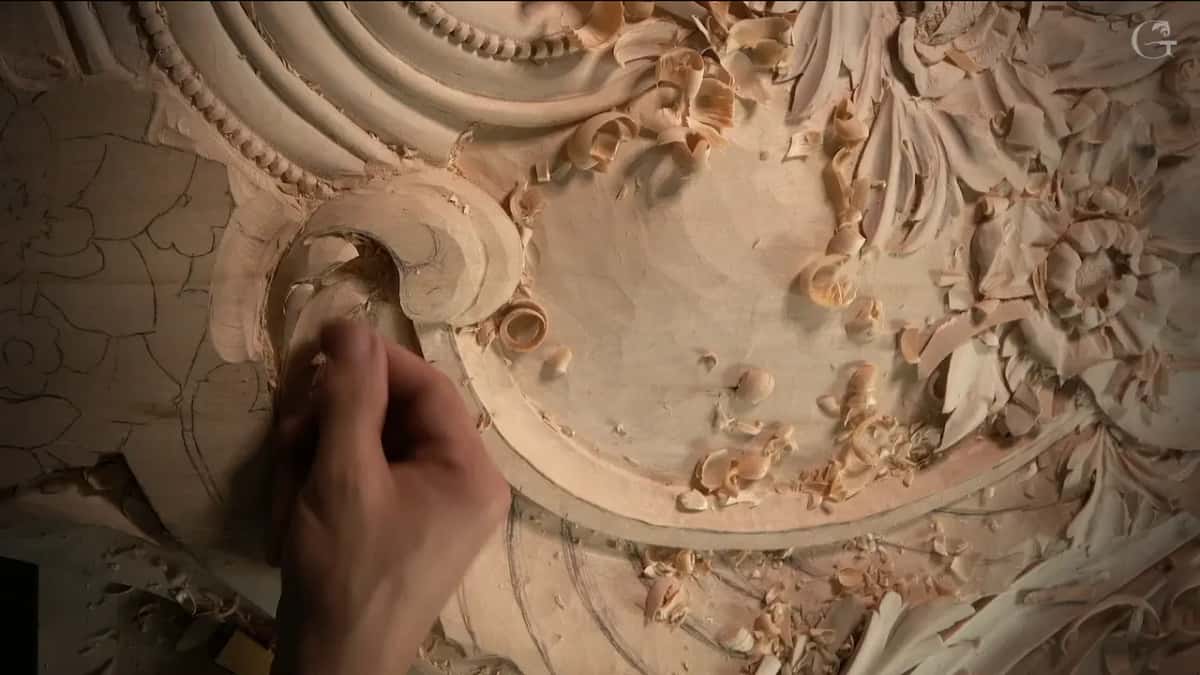
At the preliminary stage, the way my panel was in workshop 143 of the Venice Room. A number 7 went in too fast, and a part I did not really want to lose came off. Maybe I could lose it, I said, I think I could, it would just be lighter.
I could put that part back with glue, but it is too preliminary. My bad. Still, the break gave me a chance to open up that area a little more, and my separation moved over in a new direction, with plenty of separations still to come. I rushed that one, and I told you so.
Back in workshop 4 of the same room, something broke underneath because I had not relieved the triangle first. I still had plenty of material there. At that stage it was not really a mistake, I said, but in general, working on details, it would be a big one.
On a floral panel with a molding, a real production piece, a part came off. Gluing it back to restore it was possible, I said, but the reason I made that mistake was pressing too hard, and I was rushing, with several conversations that morning in my head. In this case I did not really need the glue, since plenty of material was left. So I changed to a number 6, 3/8 inch (10 mm), with a really long bevel, and went on digging.
What if the broken part never had to be connected?
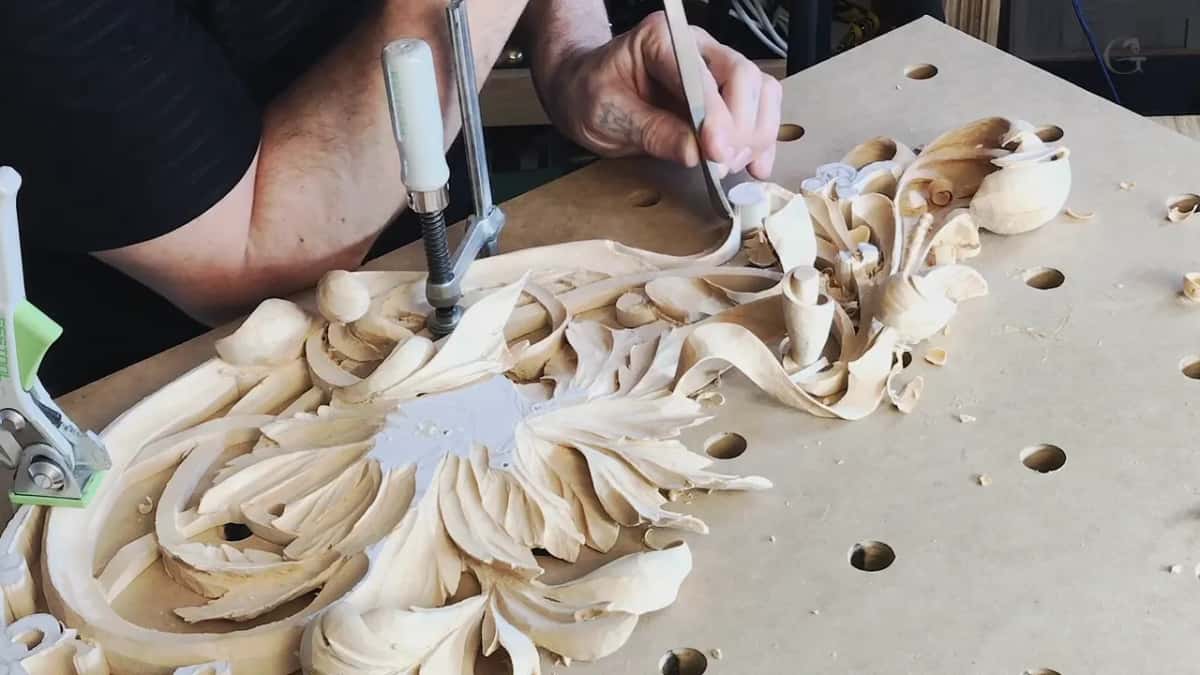
Then it can stay apart. One part of my Hashemi flowers panel had separated from the main part a few days earlier, while I was showing you how to clamp from the side. I was not too careful that day.
I decided not to glue it. One solution was to glue it and connect it to the piece beside it, but on the other hand, it does not have to be connected, and it still moves on its own. After that I went on shaping that curl round again with a number 7, one inch (25 mm) wide, careful not to break the free part, since it still needed an undercut later.
Do I ever reach for glue without a second thought?
Often, on fragile work. A Hashemi flower of mine had an excavation about half an inch (13 mm) deep underneath, and I told you the part would be really fragile, and that breaking it is possible, because I have done it many times. So what, I said. It goes back on with glue, though it is better not to break it.
Working a Roman acanthus leaf, I almost broke a part and told you that if you ask me how to fix it, here is the fix, glue. Sometimes it happens. Later in that same lesson it did break, while I gave a scroll an extra shadow line, and I said it was okay, the glue would fix it, and I needed to be careful at the end, especially at the fragile pieces.
On an oak dining table apron I said much the same, working little by little, before a number 7 started toward the center. Especially with oak, you do not want to snap it. If you snap it, glue.
Is there a spot where glue cannot save you?
There is, and you find it by thinking before the tool goes in. Workshop 16 of the Venice Room had me flipping one shape above another, and I said that if I mess up there, I cannot put it back with glue. Better not to make mistakes in an area like that, so I took my time and thought about every pass. Some stuff you can glue back, I said on the Greek acanthus, but many times you really cannot.
Is a very thin piece worth the glue?
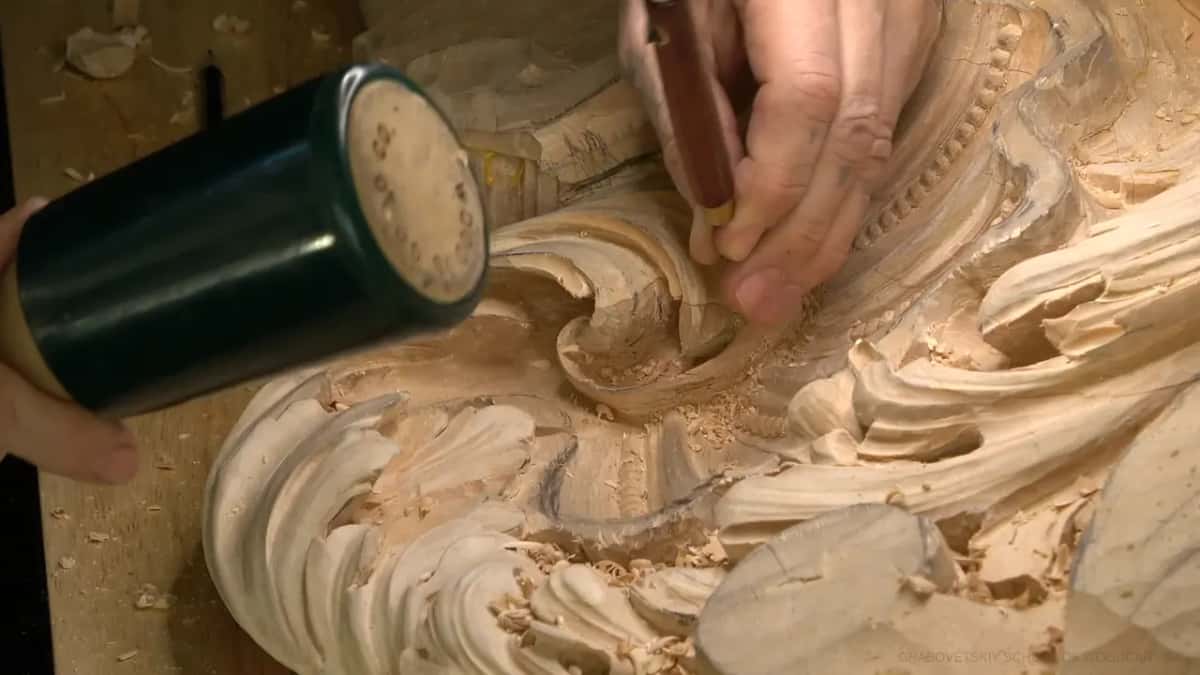
Thin pieces make me hesitate, and in workshop 78 I said so. Something I had broken earlier was less than a sixteenth of an inch thick, about 1.5 mm. I can glue it, I said, but I am not sure it is going to be a good idea. Maybe I will just glue it back. For the moment I left it alone, and I said I would glue it off camera.
Before a thin part ever breaks, you can soak it with thin super glue, the way I did on a fragile rosette, or with a penetrating epoxy.
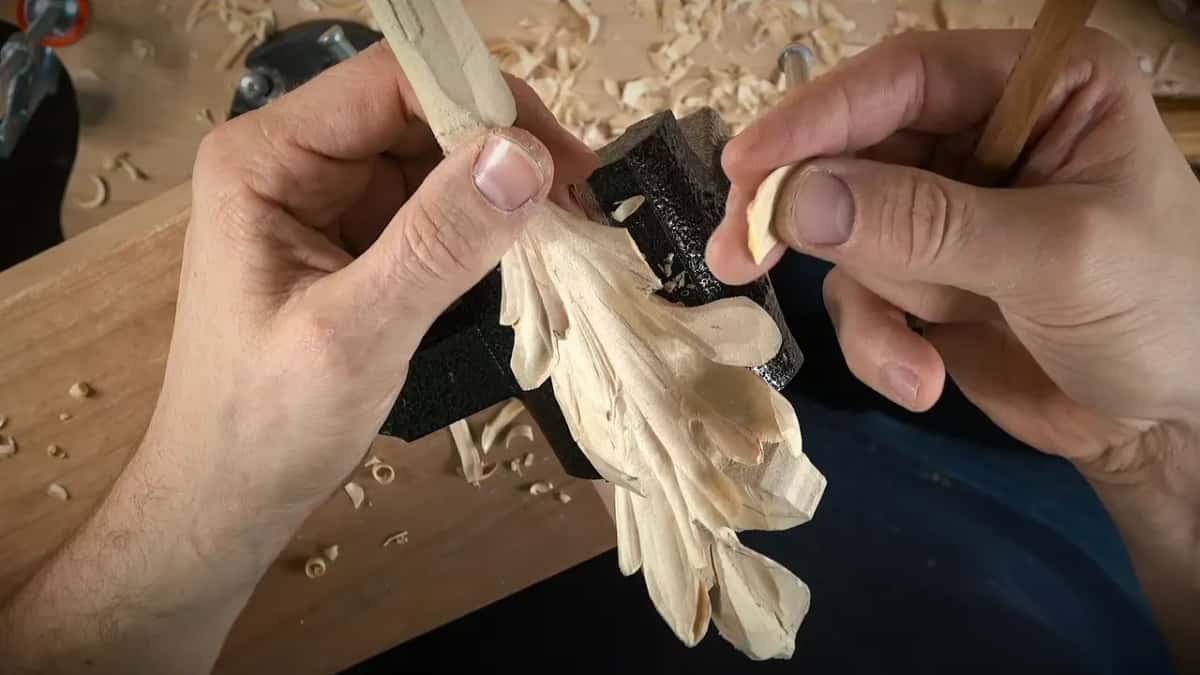
When does a break become a new design?
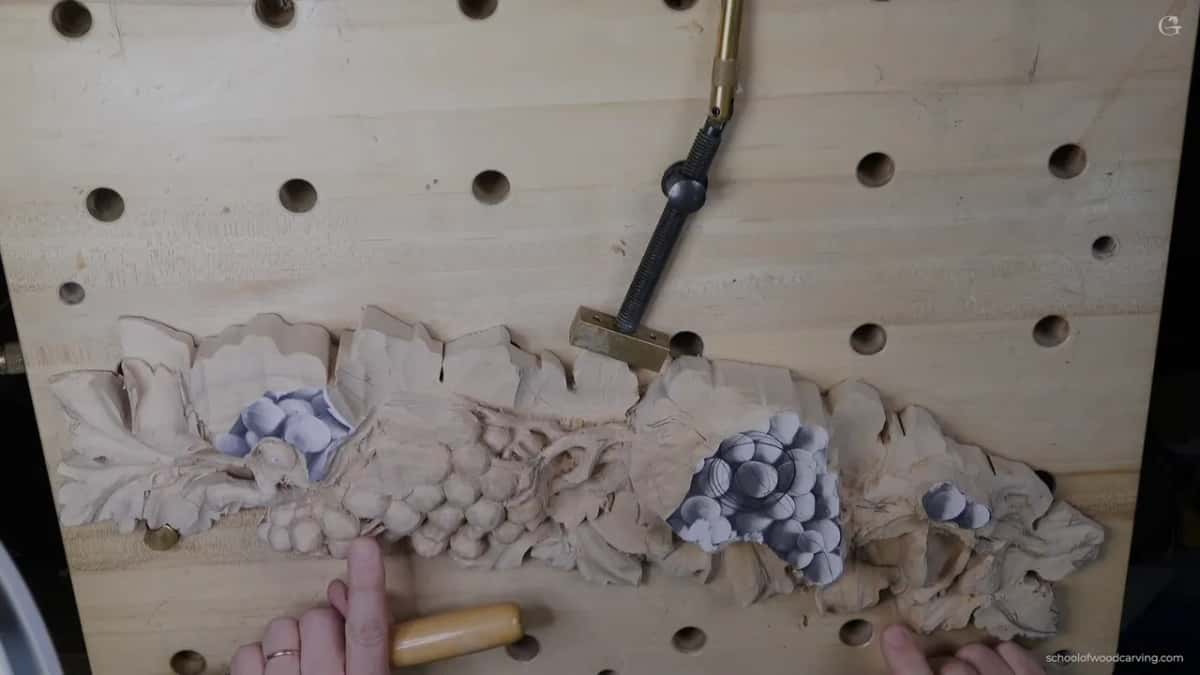
Once the piece is gone and the idea can still live a little deeper. On the grape onlay, lesson 10, I was working a fragile spot, number 11 at half a millimeter (0.02 in) in my hand, and I could see it moving. Oops. I just broke that thing.
That means change of design, I said right away. I had attacked from the wrong side, because I did not want to move my workbench just because of the cameras, and without the cameras I would simply rotate the piece and attack it the right way. I would not tell anyone, I said, and then I told you. I kept my idea anyway. Same movement, with that part lowered slightly, so it sits a little deeper. Not the end of the world.
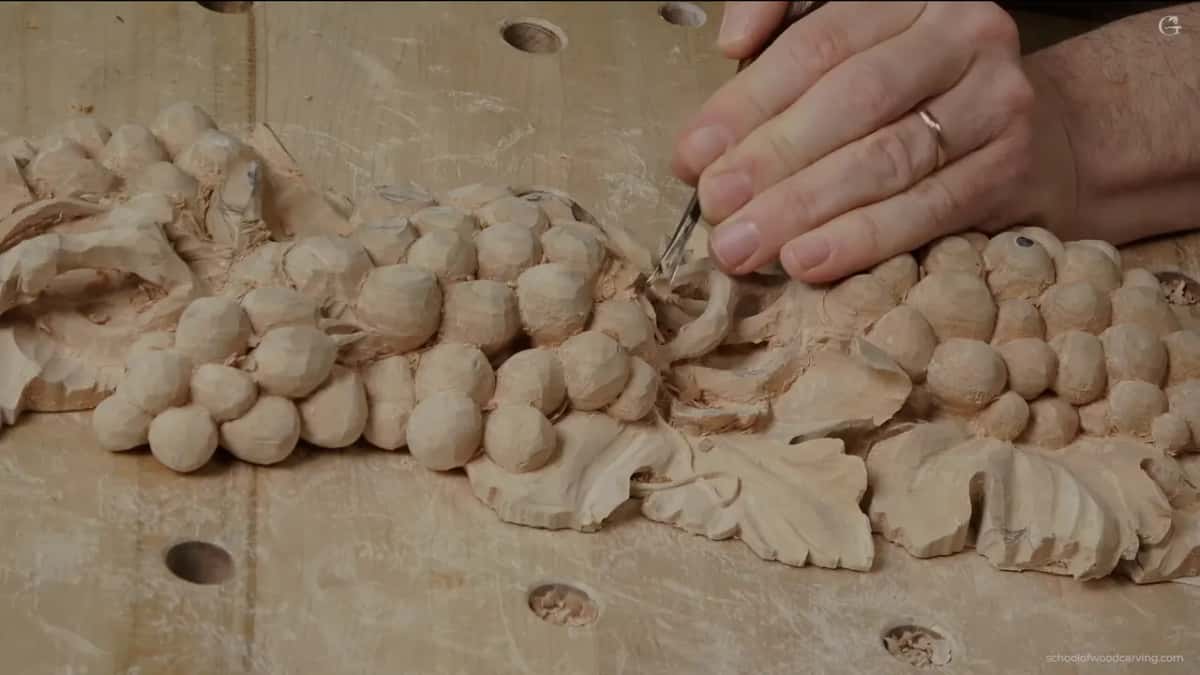
A little part of a shell went the same way on another Venice Room panel, in workshop 37. I had to lower that down and take care of it. Not a big deal, I said, but something I do not like to see.
Can the wood break a carving without your help?
Yes, and on my acacia and olive wood lily box it did more than once. I lost a small detail right at the edge, and I said I could glue it on again with no problem at all. It is not a mistake, I said. I could be more careful, I could, but the wood is really crunchy. I should take more time around a small section like that, I said, and it was okay.
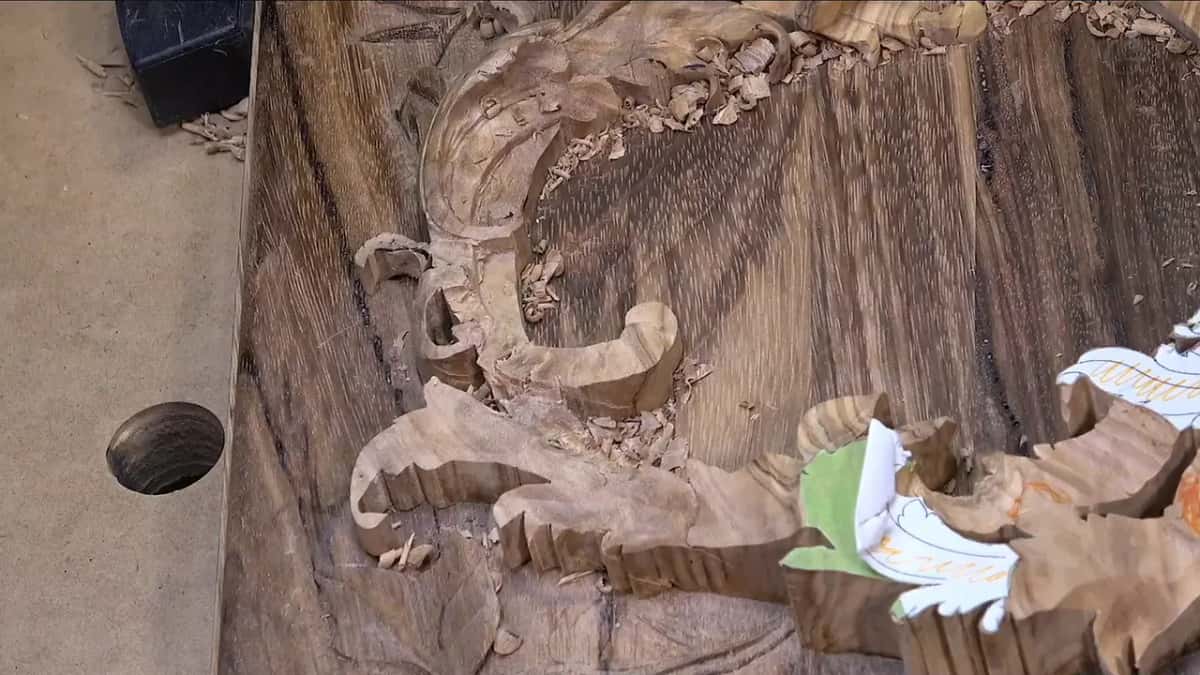
A fragile area came apart in workshop 5, where there was no glue underneath. That happens sometimes, and not because of a mistake of the wood carver. Inside the wood there are small micro cracks, and sometimes you cannot see them at all. I pressed the piece down and did not even clamp it.
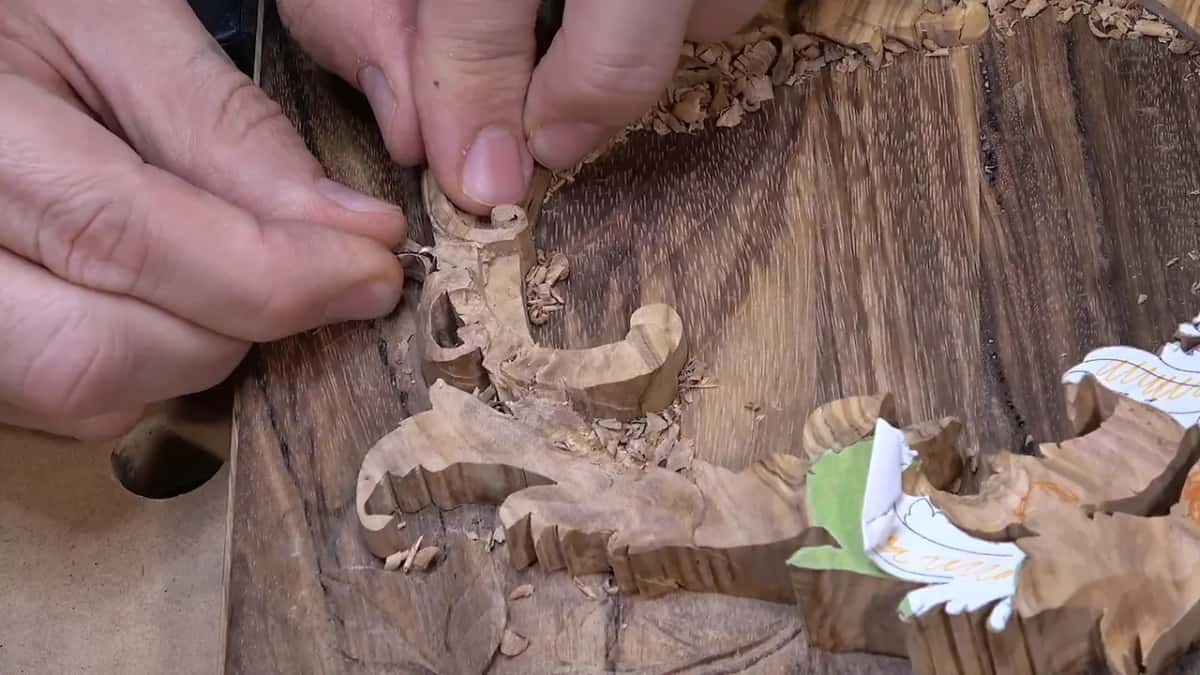
Another time it broke again because, I guess, there was not enough glue on the bottom, and in workshop 7 it felt like there was no glue under a part before it went, exactly what I was afraid of. I glued that one straight to the background as well. It just happens. What can you do?
Has a carving ever broken off the bench?
Mine have, and none of it happened under the gouge. My sample grape onlay has open spots with small connecting points, and I broke one because I took it on an airplane after teaching a class. The people who check things at the airport are not too careful. On another trip, from the Marc Adams school, one small part did not survive.
Later in that course I broke some fragile parts just by placing the piece somewhere while I worked on something else. All of those parts are fragile.
Which breaks did I glue, and which did I leave?
| Break | What I did at the bench | Why |
|---|---|---|
| Venice Room 42 | glued it back on with Titebond 2 glue | more three dimensional with it, and paint grade |
| Greek acanthus 14 | undercut through the gap, then glued the piece | looks nice without it, I liked the original |
| Workshop 143, Venice | let the part go and opened the area | too preliminary, and it gave the separation room |
| Hashemi flowers 19 | left the curl apart and kept on rounding | it does not have to be connected there |
| Grape onlay 10 | lowered that part slightly and kept the idea | I attacked from the wrong side that day |
| Lily box 5 | pressed it down with glue and no clamp | micro cracks in the wood, not my mistake |
| Venice workshop 78 | left it for now, glued it off camera | under a sixteenth thick, unsure it was wise |
Before the bottle comes out
When a piece comes off in my hand, I keep it and look at the carving without it. Does it carry the design, how far along am I, and does it need to hold on to anything? Then I glue it, or I carry the idea a little lower.
Every lesson named here sits inside the school, and Access opens all of them, along with the rest of the questions and answers in this techniques course.
How it's done
- Keep the piece. On my Greek acanthus I kept the broken piece to glue later, off camera.
- Look at the carving without it. Twice I said the carving would still look good without the piece, and twice I chose the glue anyway, once for depth and once for the original design.
- Think about how far along you are. At a preliminary stage I let the part go and opened the area up instead.
- Ask if it needs connecting. A loose curl on my Hashemi flowers panel stayed apart, since it moves by itself.
- Carry the idea lower when the piece is gone. Hold on to the same movement and lower that part slightly, as I did on the grape onlay after a break.
Frequently asked questions
Can a snapped part of a carving be glued?
Yes, and a small bottle of glue sits on my bench for exactly that. Whether the piece deserves to go back is the harder call. I put it back when it adds depth or keeps a drawing I like, and I let it go while the work is still preliminary.
What glue works for a broken wood carving?
Mine comes from a small bottle. For a paint grade piece in the Venice Room, Titebond 2 put the part back, and I expected no problem under the paint. A furniture panel once got Gorilla glue from a toothpick, the sort that acts like super glue and dries fast.
Do professional carvers break their own work?
Absolutely, and I have broken some stuff myself. On a Hashemi flower I said I have done it many times. In workshop 143 I let a number 7 go in too fast and lost a part, and I told everybody watching that I rushed it.
What to carve next