

Alexander Grabovetskiy, woodcarver, School of Woodcarving · Published 2020
Do you need gloves to keep hand oil off a wood carving?
Quick answer: Keeping body oil away from a wood carving is a choice the finish makes. Under paint or stain I do nothing. On bare wood I lay a paper towel or a cloth over each finished section. White painter's gloves work too, but in them I can't grab my handle, so most of the time I don't.
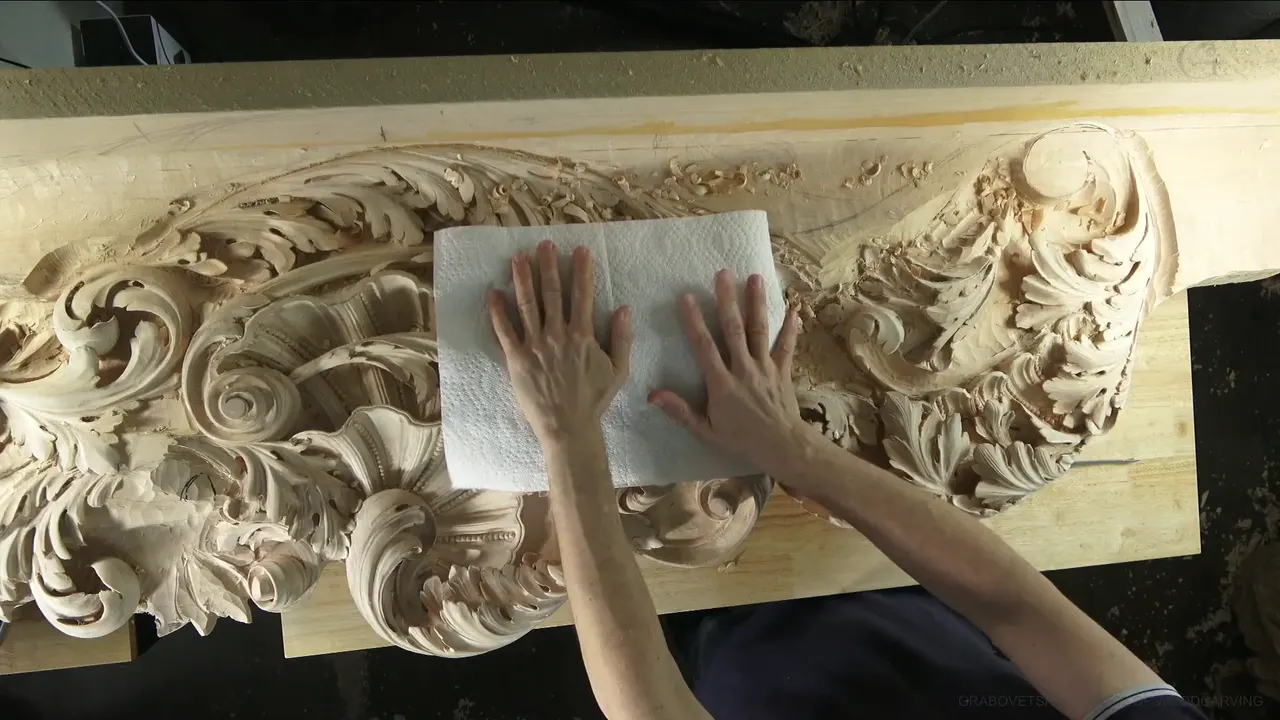
Protecting a carving from hand oil is a choice the finish makes for you, at least in my shop. If the piece will be painted, or I plan to stain it, I'm not doing anything about my hands. On bare wood I cover each section I finish, with a cloth or a paper towel, and keep carving the next one. Gloves come out only sometimes.
Do your hands touch the wood all day while you carve? And would you like the part you finished an hour ago to keep the color it had when it came off the gouge? How much that touching matters depends on the finish you have planned. A viewer asked me exactly this on a live stream in April 2020, with the big acanthus panel on my bench.
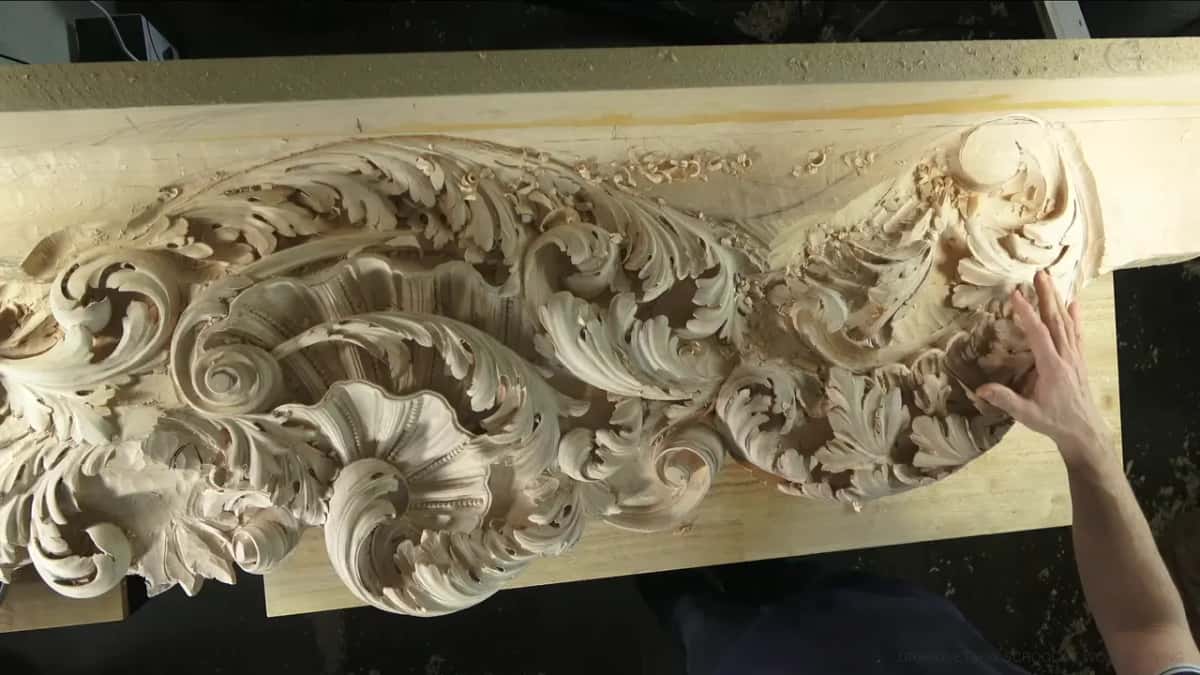
What I do about my hands on a carving
- Painted or stained work, I leave alone.
- Bare wood gets covered, section by section, as each one is done.
- A paper towel is soft and light, and a normal cloth snags on the carving.
- Clean hands still darken the wood a little, because touching sets off a reaction inside it.
- White painter's gloves keep the wood clean, but I lose my hold on the handle in them, so I usually go without.
- None of these gloves will save your hands.
Do you need to protect a carving from body oil?
It depends on the project, and on how I'm going to finish it. That was the first thing I said when the question came in, and I said it twice. The panel on my bench that day was paint grade, a carving that's going to be painted, and for a piece like that I don't do anything. Same answer for a piece headed for stain. Still, I added that it's a good idea to protect it anyway.
How paint grade and stain grade differ is a subject of its own, and it lives on the paint grade and stain grade page. Here I care about the bare wood.
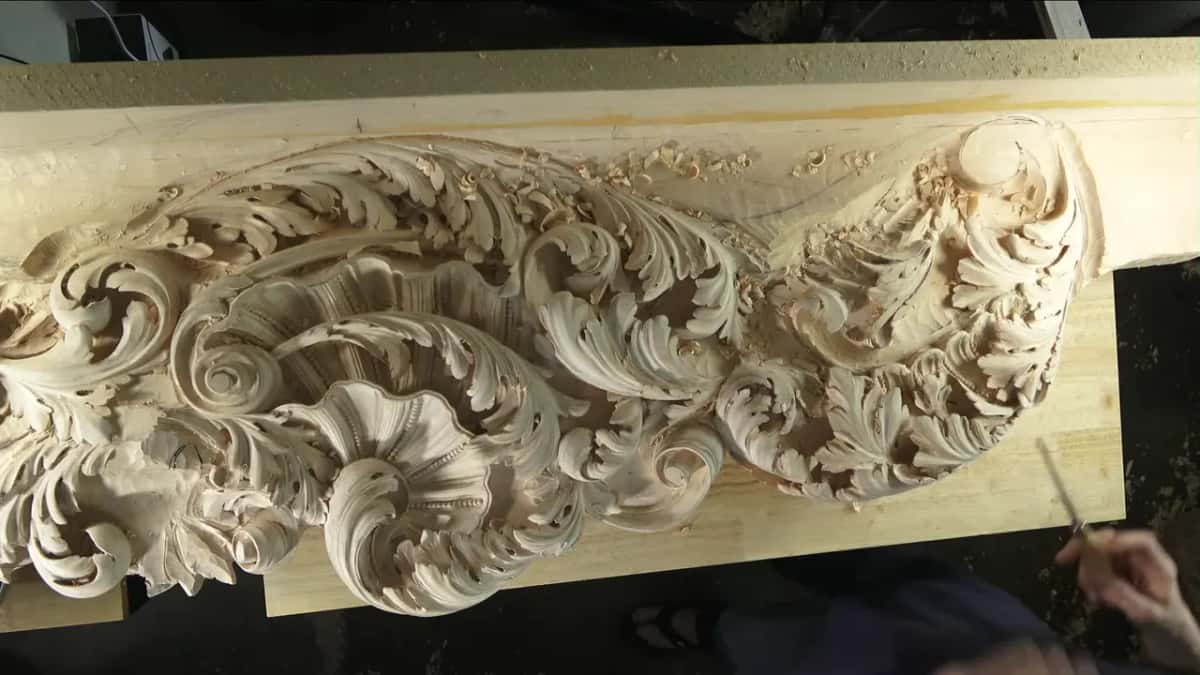
Dust was the other half of the viewer question, and it was the easy half. I'm just using hand tools, so there is no dust in my shop to settle on anything. On a furniture panel I said a router plane is satisfying to use, first of all because it does not create dust, and I really don't like dust in my shop.
Hands got the longer answer. From hands, I said, it is a good idea to protect a section once it is done, if you're not planning to put any stain or any paint on it.
Why does the wood go darker where you touch it?
Body oil itself, I said in that answer, is not the biggest problem. What happens is oxidation, a reaction inside the wood when you touch it, and the spot becomes darker. You can have absolutely clean hands. I clean mine all the time, and it still happens. But I don't see a big problem in it, and if you really worry about it, you protect the wood.
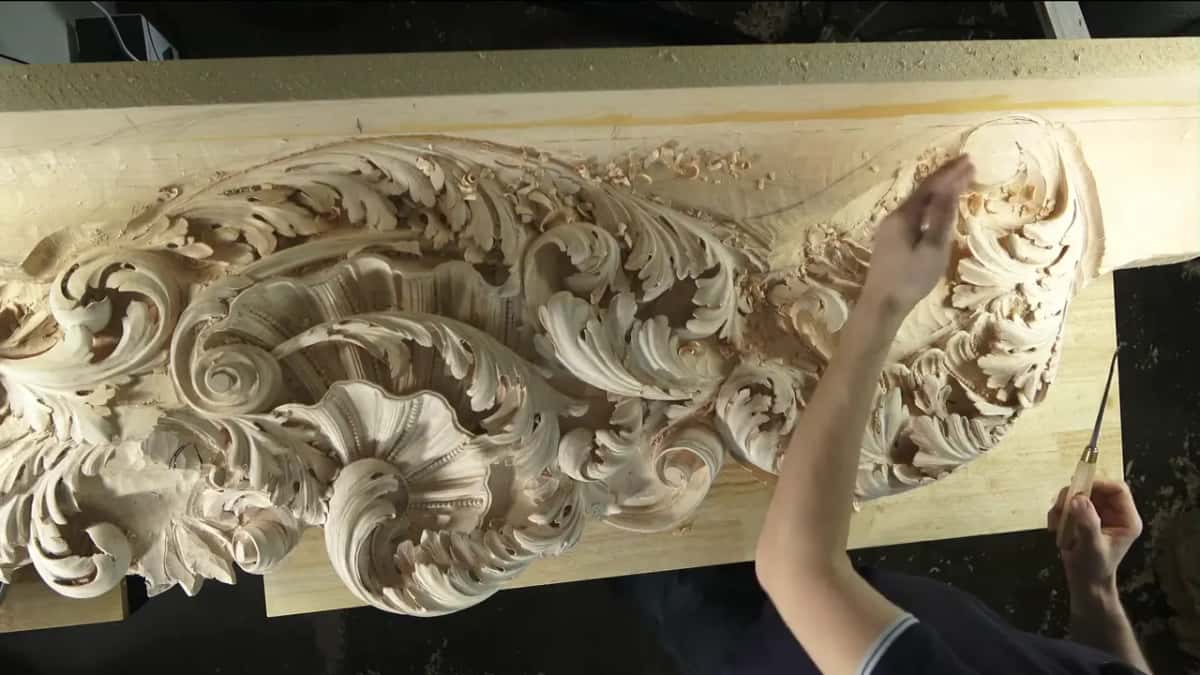
My Roman acanthus lesson goes further into those black marks. They look like dirt, as if you had dirty hands, and that's not necessarily true. Really clean hands are always a good idea, but you are going to see exactly the same effect even if you wash your hands all the time. Whatever body oils you carry stay in the hands no matter how often you wash, and I compared what they do to the wood to a natural patina.
In a Modern acanthus class I pointed at a black spot on my own leaf. So many people had come and rubbed on it that the wood had gone dark there. That's not dirt, I told them. It was oxidation from the oils in their bodies, washed with soap or not. I hadn't said a word about touching until that point, because in every class everybody touches the piece.

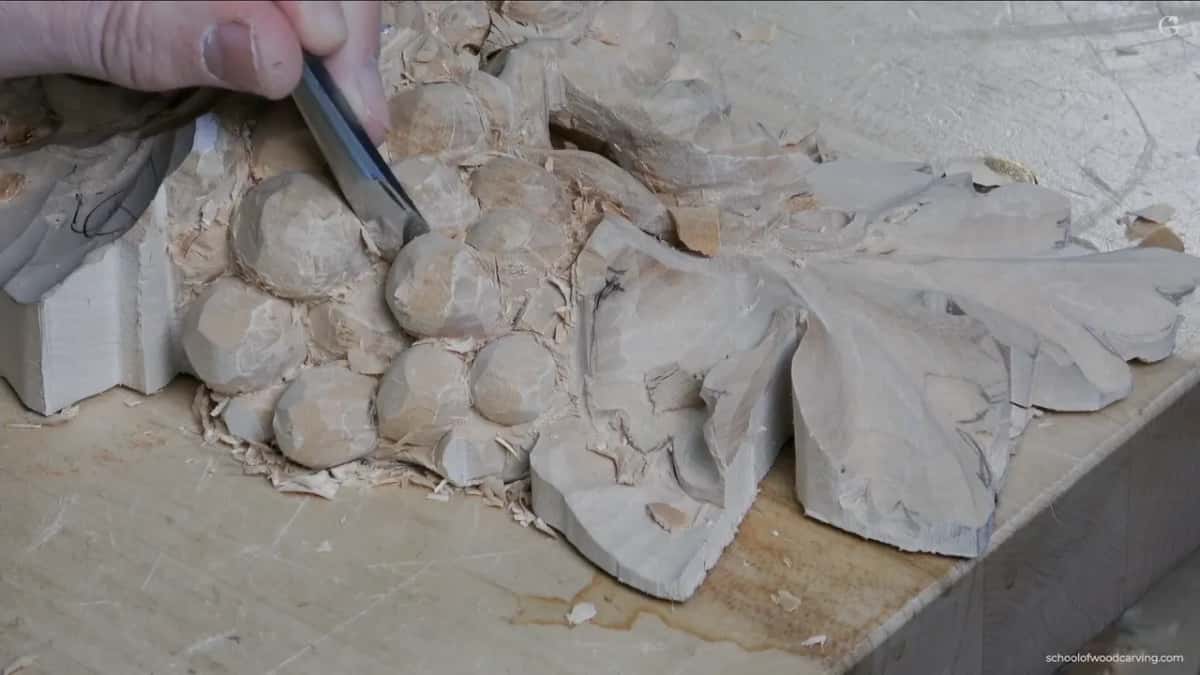
The grape onlay got it in one line. Patina is sometimes good and sometimes it's not good, especially if your hands are not too clean.
What do you lay over a finished section?
Either a cloth or just a paper towel, laid right over the part you finished, and you continue to work on the next part. That way you protect it. While I talked on the stream, I unfolded one and laid it flat on the acanthus panel with both hands.
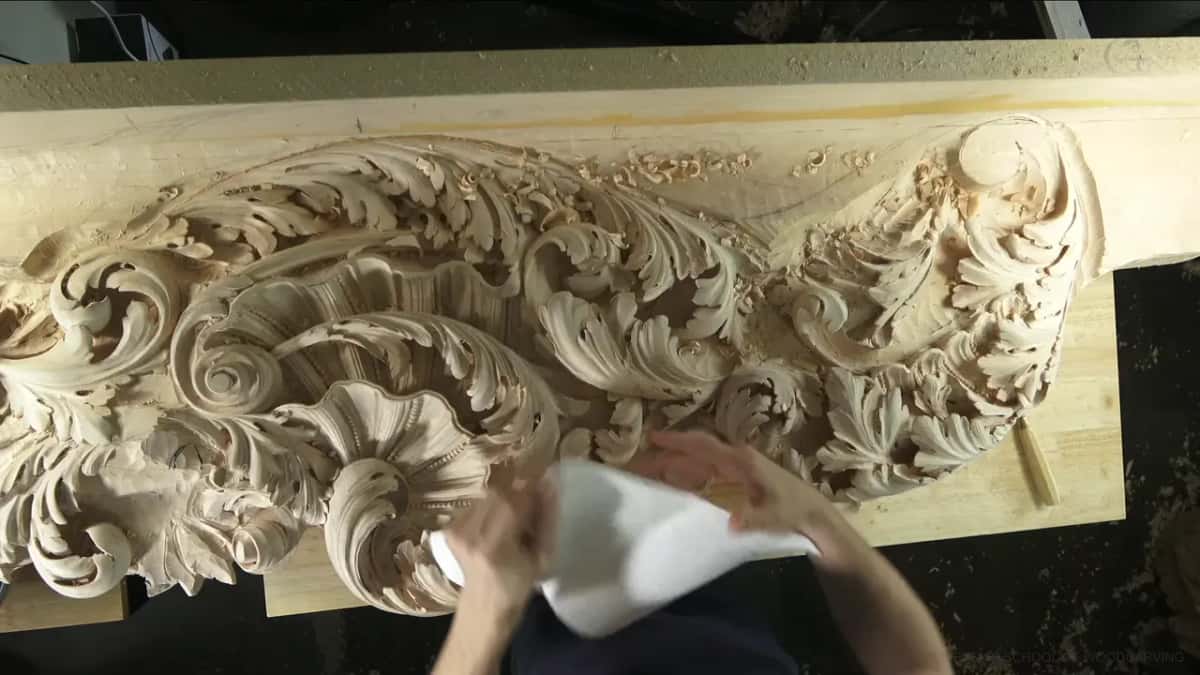
Hope it answers your question, I said. Then I said let me continue to carve, and went straight into a problem. I could not carve upward right there, because a chunk was in my way, so I had to switch to another tool.

In the Tray of Blessing lessons a student reminded me that I had talked about the oils in our hands, and asked whether I ever put something down over the wood. Paper towel, yep. It's soft enough, and not as heavy. With a normal cloth you're going to catch the corners, and with the paper towel you're not going to do anything.
Protecting the wood was already on my mind in that lesson. Just before the question, I had placed the middle finger of my left hand to guard the wood itself, in case I slip somewhere.

The Modern acanthus students got the same advice in plainer words. Be really careful how much you touch the wood. Use a napkin or just a paper towel to cover the part you already did, especially the place where you have to put your hand down, and then carry on carving something else.
And on the grape onlay I held off on the final cleaning for the same reason. I would not clean it right away, because you're still going to touch it, and whatever reaction happens between the body oils and the wood will make it look somewhat dark. So I clean only at the end, unless you cover it with a paper towel or something. There was a second reason too. Maybe I'm not going to like something and change it, and if I change something, I'm going to spend too much time.
Do gloves for wood carving keep the wood clean?
They keep it clean, and that is what mine are for. This page is about keeping skin off the wood, and if you came for gloves that stop a blade, the page on carving toward your hand is the one you want. On the Hashemi panel I said more than once that my gloves would not save my hands, so you still have to be really careful how you carve.
My April 2020 answer called gloves a good idea too, and sometimes I carve in white painter gloves. The problem with gloves is that I can't grab my handle. Most of the time I don't wear them.
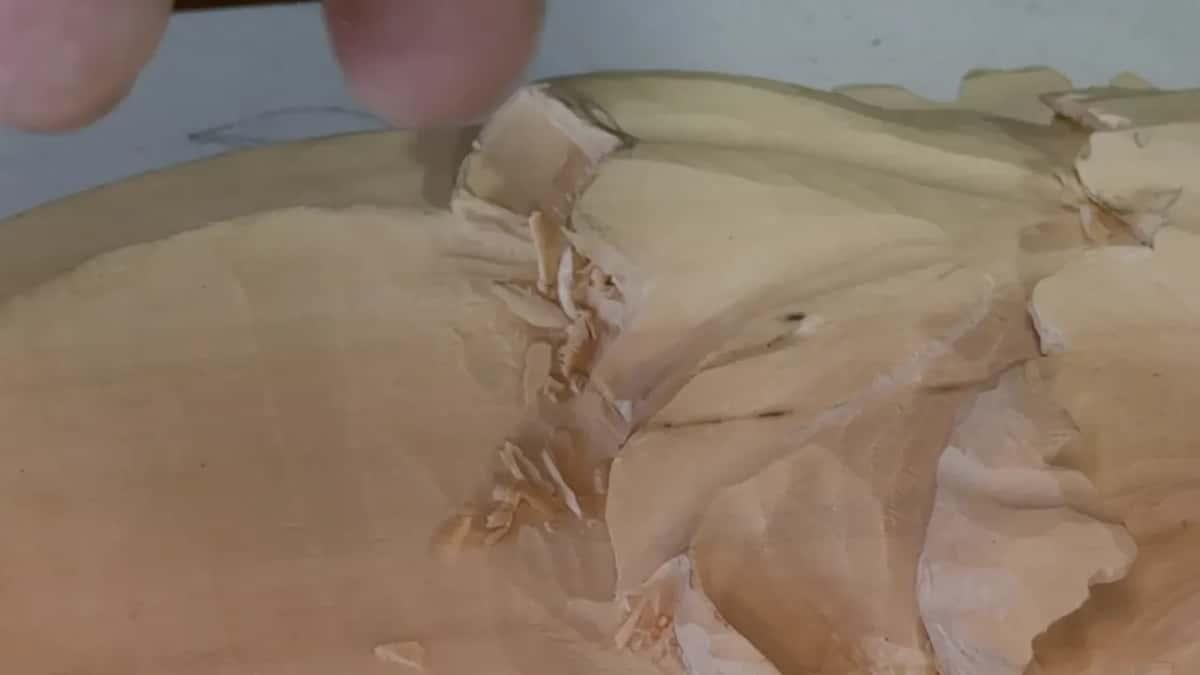
The Hashemi flowers panel was one place where I did, and in workshop 13 I said why on camera. It does not matter how clean your hands are, you still have body oils, and I did not like the look of that wood once it got touched, especially since some areas I knew I could not even reach later to clean. So I took rubber gloves, any rubber gloves, but powder free, the medical kind. They did nothing for my hands. In them I could touch freely and keep the piece really clean.

Then I went right back in with the gloves on, all the way down into a really deep excavation with a 10 mm #9 gouge. A tiny Dockyard, a #8 at 1/8 inch (3 mm), made the concave after it. That pass went against the grain, and I said it was okay.
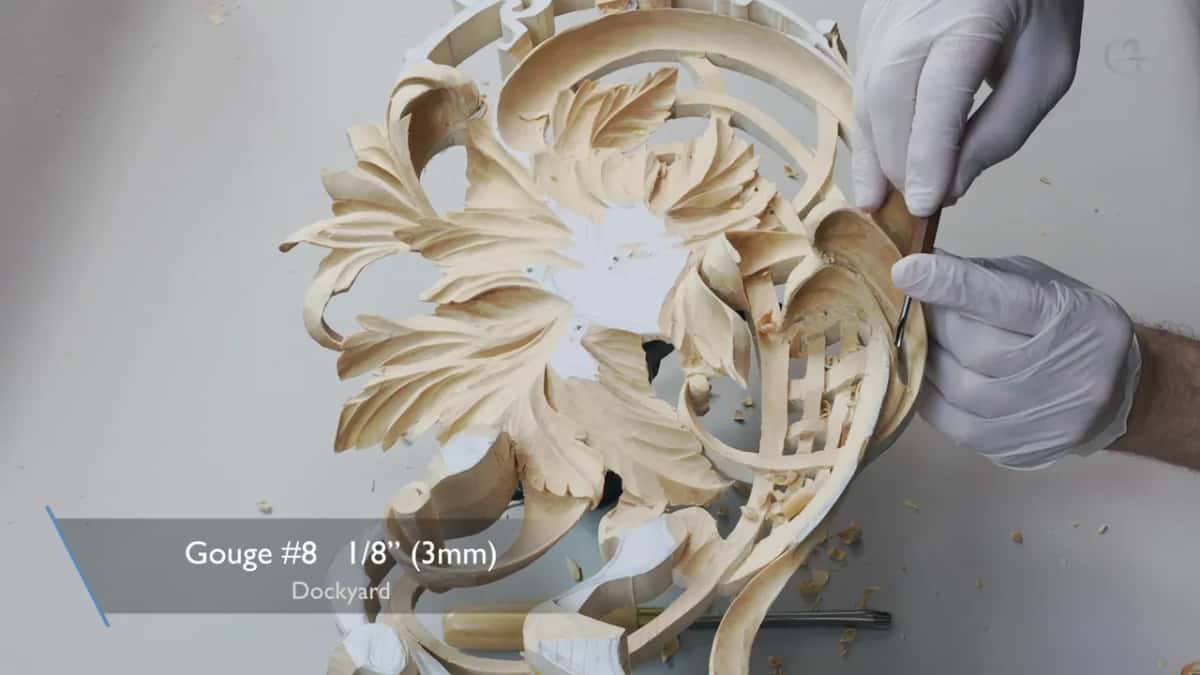
Two workshops later, in Hashemi 15, I showed another way. Cheap white cotton gloves, bought in bulk on Amazon, that you can even wash. I'm not always using them, I said, just when I'm working on fragile pieces like that one. In those white gloves I picked up a big number five, one inch (25 mm), an Ashley Iles by the card on screen, and took a lot of material off safely. For heavy waste I pointed to gloves with rubber applied on them, from any Home Depot or Lowe's, because they give you better grip. They're really bright, but you can have a lot of control in them.

The white ones, I admitted, do not have too much grip in my hands. Still no problem with them on the details. For the Roman acanthus I said gloves make sense at the later stage, and I liked the rubberized painter ones for that job. Right after that I went back to the edges to refine them a little and make them nicer.
Can you feel the gouge through a glove?
Bare hands feel it better, and I learned that by trying several kinds. I told that student, in those Tray lessons, that I used to carve in painter gloves, the white, really thin ones, the cloth kind and not the rubber ones. The thing is, with any gloves I just don't feel the tool. For some reason it is not connecting to my hand.
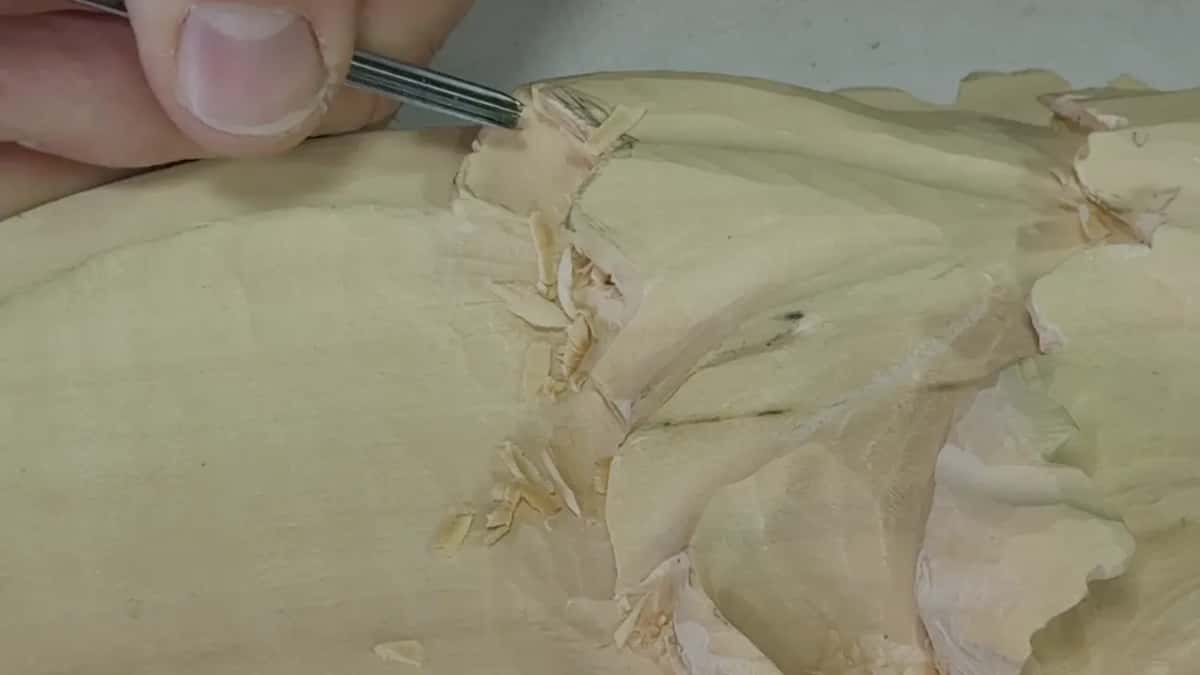
I tried rubber gloves as well, because you feel much better in them. Something still sits in between, blocking, and there is no connection between my hand and the tool. It is like the continuation of my hand goes missing. Bare, the tool feels like a continuation of my hand. I feel it. I am in a battle with my soldier, and every gouge in my army of tools is one of those soldiers.
Someone in that class also mentioned inspector gloves, real thin white cotton, made so an inspector can still feel.
Latex came up in the 1903 acanthus course too. Gloves made of latex also work well, I said. But when you wear them all day long, it feels really bad. With my own hands I feel my tool much better, so I would rather cover the part I have done. Every class touches the work, because you feel more with your hands than you see with your eyes. You can detect a thousandth of an inch with your hand, about 0.025 mm.
At Hashemi 15, with little grip, I called the white gloves no problem for the details. Both things are true of me. On that panel I wore gloves, and on most days I don't.
What goes between your hand and the wood
| Barrier | Verdict | Source |
|---|---|---|
| A paper towel | Soft, light, and it won't catch the corners | Tray of Blessing, lesson 6 |
| A plain cloth | Laid over finished work while I keep carving | April 2020 live stream answer |
| White painter gloves | Clean wood, but no grip on my handle | The same April 2020 stream |
| Rubber medical gloves | Powder free, and I could touch it freely | Hashemi Flowers, workshop 13 panel |
| Gloves with rubber | Better grip for taking a lot of material | Hashemi Flowers, workshop 15 again |
| Latex all day | Works, but all day long feels really bad | Modern acanthus class, lesson 7 |
| My bare hands | Bare, the tool connects right to my hand | Same Tray lesson, bare handed |

When is covering worth the trouble?
When the piece will stay unfinished, bare wood with no paint or stain over it. To close that April answer I showed a piece that has never been finished. I never applied any finish on it. And yes, I had to protect it, absolutely. During the Modern acanthus lesson I mentioned flowers of mine with no finish on them, and said it's better to keep hands away from work like that.

On one Venice Room panel I ran a big number three toward the pencil mark, and I didn't think it was enough. It looked like I had done something, but not really, because I had only taken off the oxidation, the dirt that had built up there. Not good. I said I would probably go deeper, maybe with a smaller number seven just around that pipe.
A pencil dirties a piece as well. In Hashemi workshop 43 I said your piece becomes really dirty after too much use, and that a V tool works as a marking tool instead. Another Hashemi lesson has me trying to avoid pencil as much as possible, using it only because I was filming. On a furniture panel I liked charcoal for marking, though it left my hands dirty and it is really hard to get rid of. The Tray class heard me ask for fewer pencil marks, because you can see how that becomes dirty.
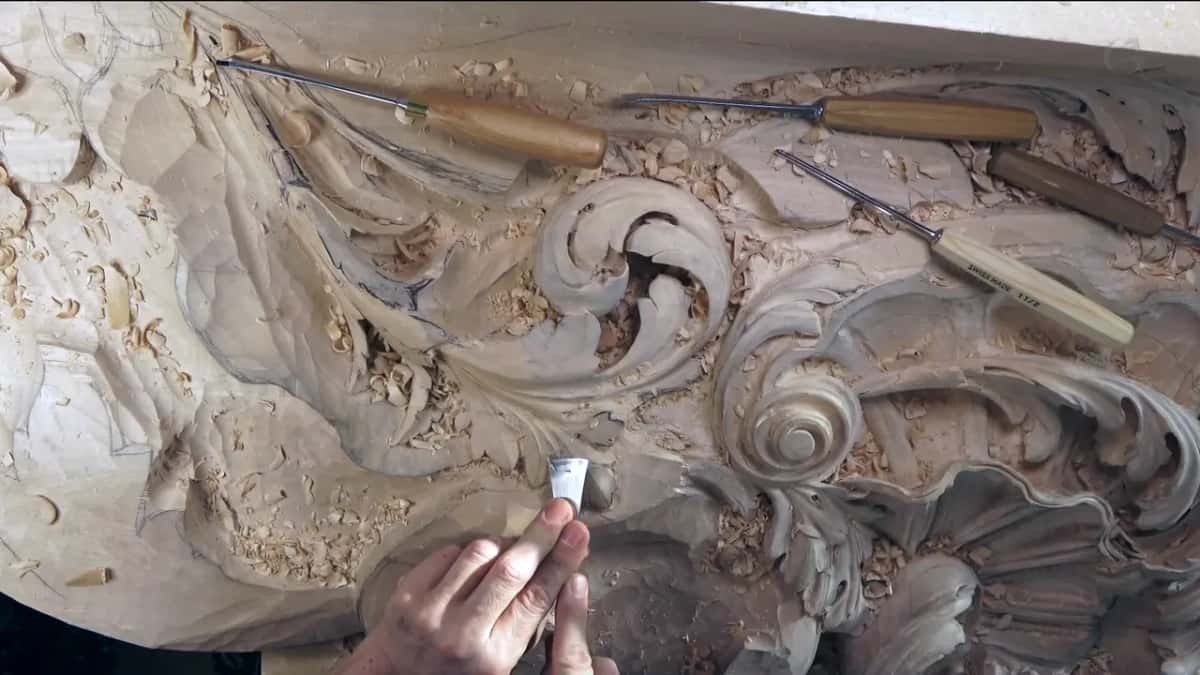
Six more short answers sit in the Questions and Answers lesson, where basswood, gouges and copying all get their turn. If you want me at your shoulder while you learn this, that is what tuition gives you. Before you stain anything, decide what that piece will wear.
How it's done
- Settle the finish first. Know whether the piece gets paint, stain or nothing at all, because that choice tells you how careful your hands need to be.
- Leave painted and stained work alone. On paint grade work, or a piece headed for stain, carry on without a cover.
- Drop a paper towel on each finished section. Lay one over the part you completed and move to the next part. Paper is light and soft, while a heavier cloth snags on carved corners.
- Put your hand down on the towel. Rest your palm on the paper where you have to lean, instead of on bare finished wood.
- Pick gloves for the job, if any. Thin white cotton suits fragile detail work. Rubber coated ones hold the handle better when big chunks are coming off.
- Clean last. Leave the final cleaning until the very end.
Frequently asked questions
Does washing your hands stop the dark marks?
Clean hands help, and mine get washed again and again. Touching still sets a reaction going inside the wood, and the spot goes darker. Soap or no soap, I told one class, you still produce body oils, so I would rather cover the finished part.
Do painter's gloves protect your hands from a gouge?
Not the ones I use. Rubber or cotton, they keep stains off the wood, and I said on camera they would not save my hands. A glove made to stop a blade is a separate subject, covered on the page about carving toward your hand.
Is dust a problem when you carve by hand?
My shop stays free of it, because I use only hand tools. When a viewer asked whether I cover finished work against dust, I answered from dust, no. Body oil was the part of that question worth a paper towel and a longer answer.
What to carve next