

Alexander Grabovetskiy, woodcarver, School of Woodcarving · Published 2020
Do you need different carving tools for oak than for basswood?
Quick answer: Carving oak with gouges you bought for basswood is possible, though not with every one. I keep low and higher bevels within reach. Oak most likely needs a mallet, which wants the higher bevel, while an extra long bevel or a thin walled tool can break in hardwood.
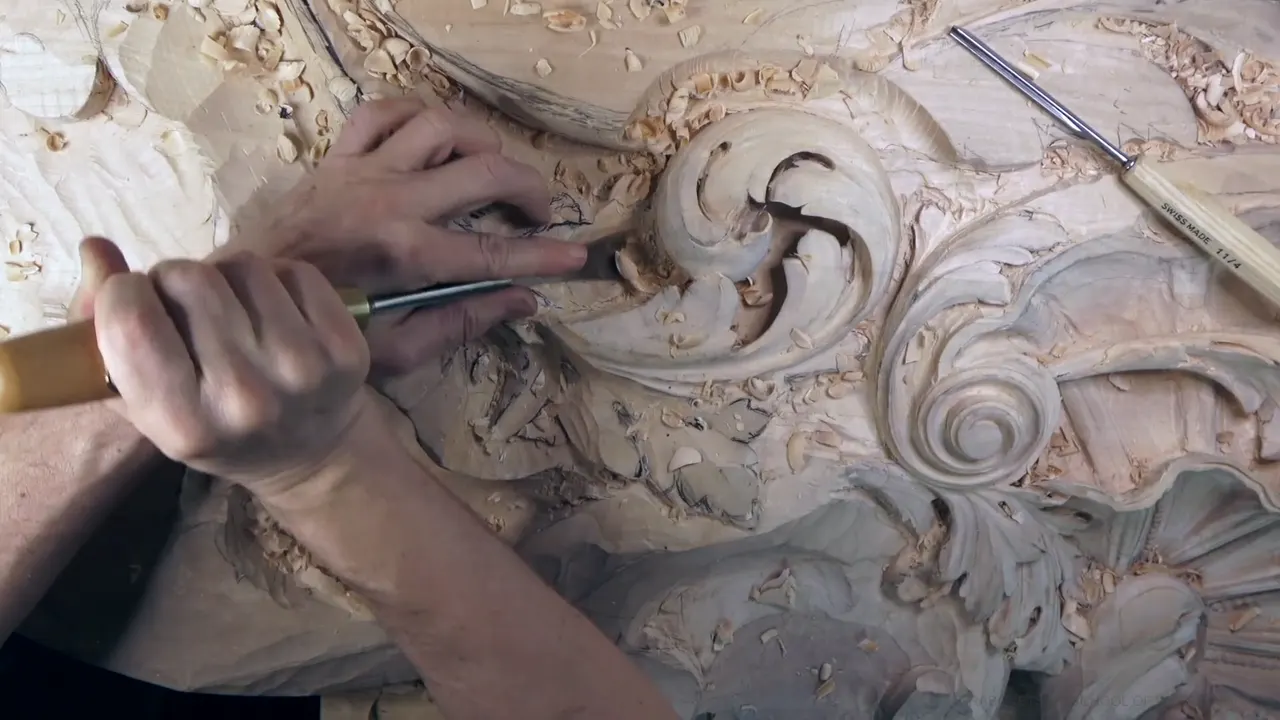
Oak wood carving tools, in my shop, are the same kinds of gouges I use on basswood, with the higher bevels kept for oak and the thin walled ones kept away from it. I keep gouges with a low bevel and gouges with a higher one side by side in my arsenal. In one Venice Room lesson I told students it is a good idea for a hobby carver too, as soon as you want to carve more than basswood and limewood.
Is there a set of gouges on your bench that you sharpened for basswood? Have you looked at a board of oak and wondered if they will go into it? Most of mine do. A few of mine stay out of oak on purpose, and I name each one below with the lesson where I said why on camera.

What goes into oak, and what stays with basswood
- A higher bevel on any gouge you plan to drive with a mallet, since oak is likely to need one.
- Long, low bevels still carve oak by hand, as long as you slice and never force them.
- My really long ones stay out of hardwood, because there they break easily.
- Thin walled tools that I love for basswood and lime can break easily in harder wood.
- Every tool of mine gets a micro bevel inside, which gives a thin point its strength back.
- Both kinds are worth owning for a hobby, too.

What did I tell the viewer who asked about oak?
A viewer on one of my livestreams in April 2020 asked what angle I would recommend for oak. Stropping was the subject that day, and I answered in about a minute and a half.
First, I'm not measuring the angle. I'm just eyeballing. Of course, oak is a harder wood, and to carve oak you most likely have to use a mallet. How thick your mallet is matters too, because you have to set up that bevel for the way you want to hit.
But the best bevel for me is the same, mallet or not mallet. Place your hand underneath the handle and grab it. Your knuckle is supposed to almost touch your piece of wood, and the edge is supposed to be grabbing the material already. That is the best bevel.

If you want to be really technical, it comes to about 18 to 22 degrees. I'm still not measuring. On my micro tools lesson I put it another way: there are different opinions about what degree a bevel is supposed to be, but the main idea is that the tool is supposed to grab the wood.
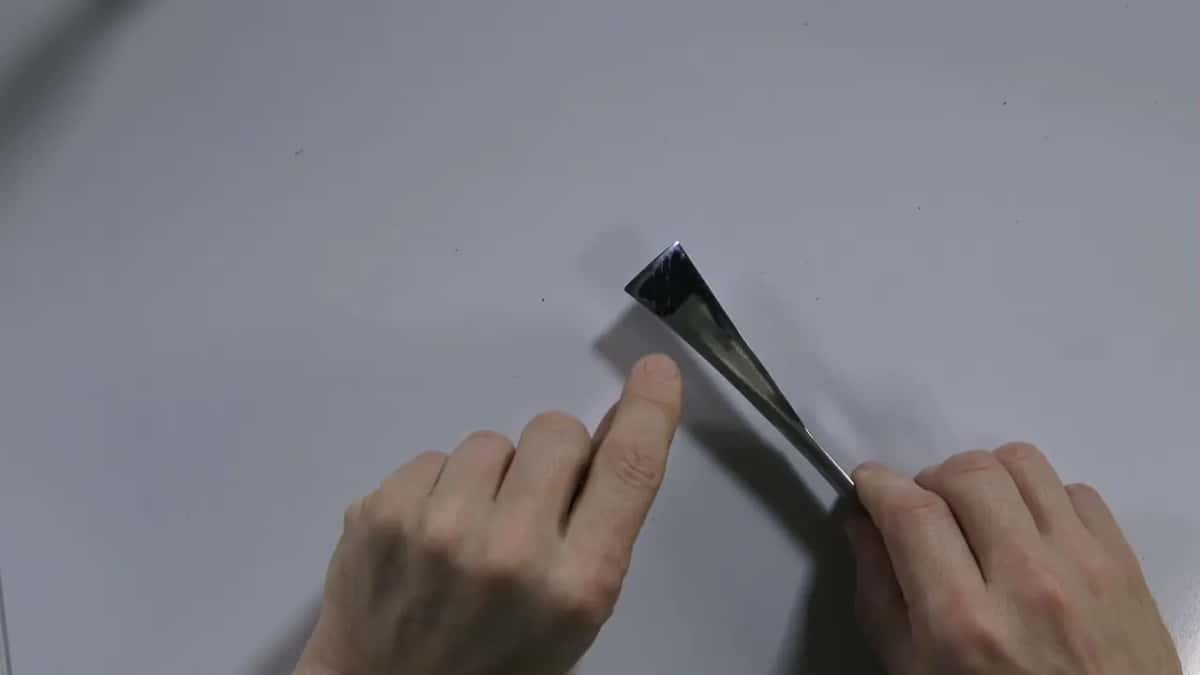
Next I turned one tool to the camera. Some of my bevels are really extreme, a lot lower, and that one shows a really big bevel, with a permanent marker line on it that I had drawn to show how long the bevel runs. One of the best bevels I like, I said. I like really long bevels.
After that I told everyone it was not the subject of the day and went back to stropping. The answer sits in the questions and answers lesson of my techniques course, and the whole stream is in my April 2020 livestreams.
Why does a mallet change the bevel on an oak gouge?
The head of the mallet needs room. In my sharpening class in Maine I said that sometimes you need a higher bevel, if you are planning to use a mallet a lot. You have to think about how thick the head of the mallet is when you hit, so the tool has to stand high enough for that head to miss the surface. Then the bevel is slightly higher.
A carver's mallet has a round head set in line with the handle, so its face can meet the tool from any angle you swing. On another stream, sharpening a U veiner, I said the high bevel a new tool comes with is not really wrong. It all depends what type of carving you do. For hardwood carving you want a little higher bevel, because you are using the mallet.

Before the oak question that day, I said the metal of one maker is great, but the problem I have with all of the brands is the bevel a brand new tool comes with. Then I showed what that feels like by hand. The bevel is really short and really high. I raised the handle about four inches (10 cm) above the surface and still wasn't grabbing anything, and at about five inches (13 cm) it finally grabbed the material. No bueno.
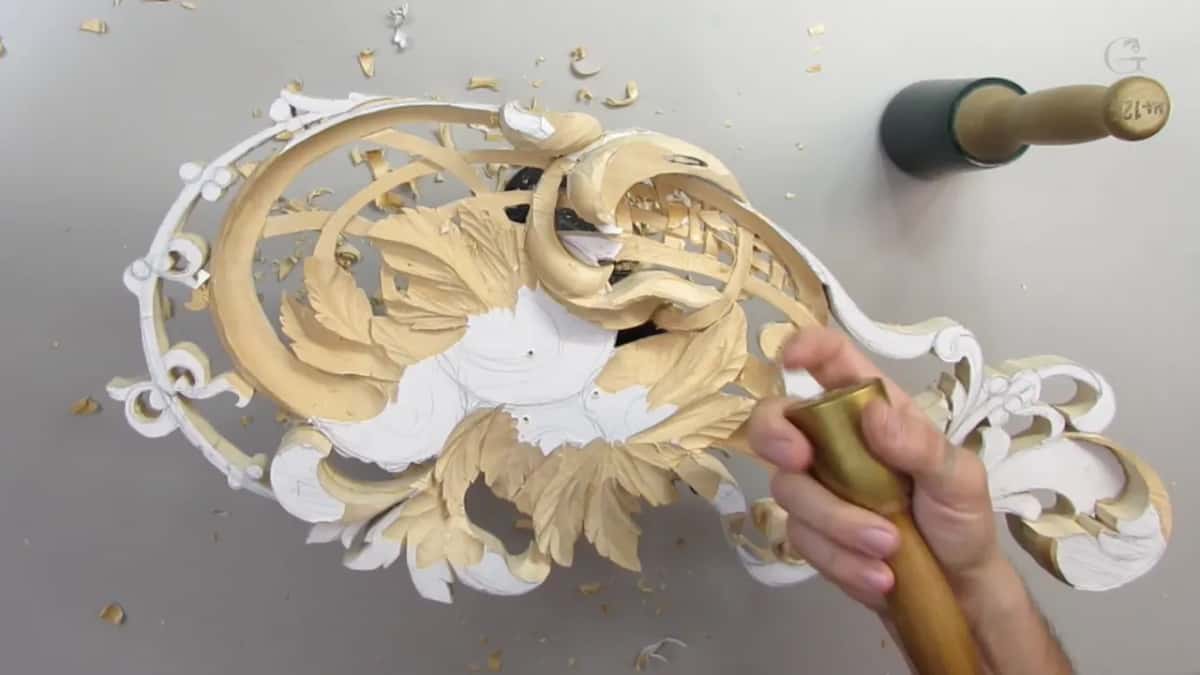
For hardwood by hand I also showed a short bevel with its heel rounded away, and why the tools I strike keep their corner, in a lesson of its own. And on oak I find a brass mallet much easier, heavier and smaller, though most of the time I use rubber to save my handles, as I said in the Hashemi flowers.
Can a long bevel gouge carve oak by hand?
With care, yes, and I do it. Carving the Hashemi flowers, I held up a tool and said almost all of my tools carry a long, long bevel. One tool there I use more for the mallet, and when I carve by hand, I use the long bevel. Short bevel I use for harder woods, like oak. And the long bevel I use almost everywhere, pretty much. Actually, on oak also.
Both lines are mine, said a few seconds apart. A really low bevel makes it a lot easier to slice through the fibers, with a lot less resistance, and that is why my hand keeps picking the long one up.
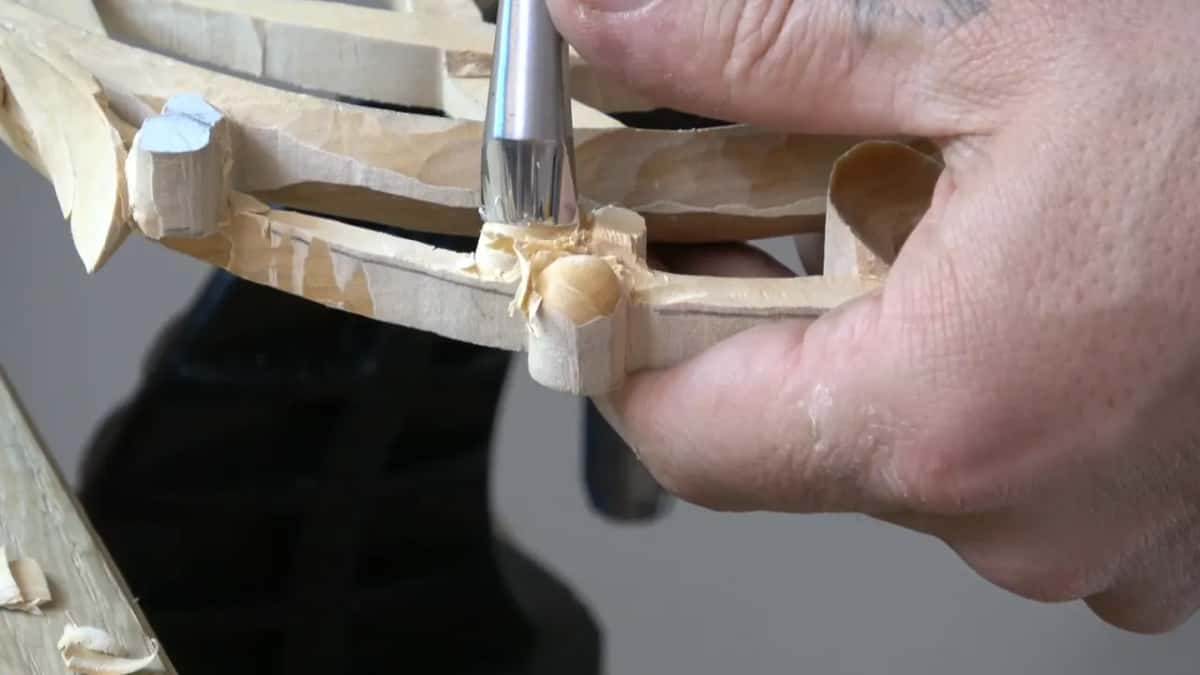
In the Maine class I picked up a point from the room, that it depends on the wood. Take oak, a hardwood: you can break the edge, because the point gets weak. Not necessarily, I said. We set the main bevel first and then a secondary micro bevel on the inside, still low enough, and that point becomes really strong, so you can still use it on a hard wood. How long a bevel should run, and what the micro bevel is for, fill that whole lesson.
A minute later came the rule for hand work. If you're using a lot of just the hand pushing, the lower bevel always wins.
Back on the Hashemi flowers, at a weak spot in the wood, I said to be really careful and not press too much. Slicing, slicing, and slicing. That's the secret, and I said to make every pass a slicing one.
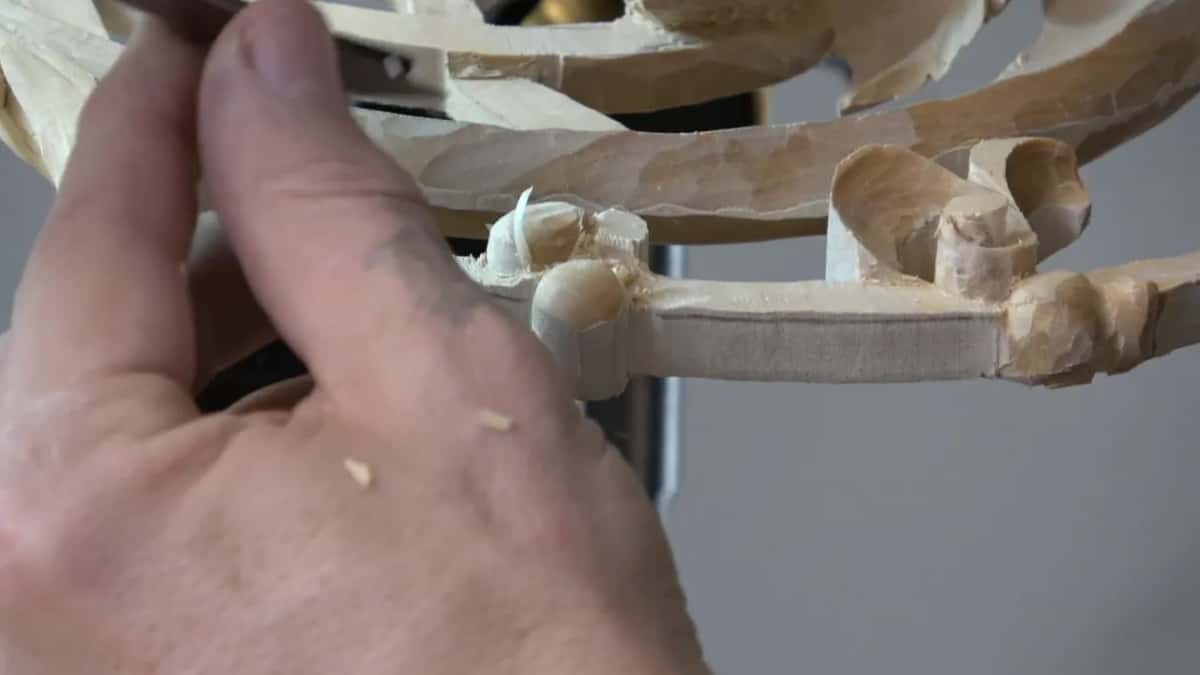
Which of my gouges would I not take into oak?
Two kinds. The Venice Room shows both, and in lesson 41 I was pushing a number seven with a really long bevel down into the soft wood of that panel. Sometimes it just stopped, and you could hear that stopping point.
That bevel is really long. When I have to crank the tool, it does that, and I said I could actually break it if I force it too much, because I have almost no metal at the end.
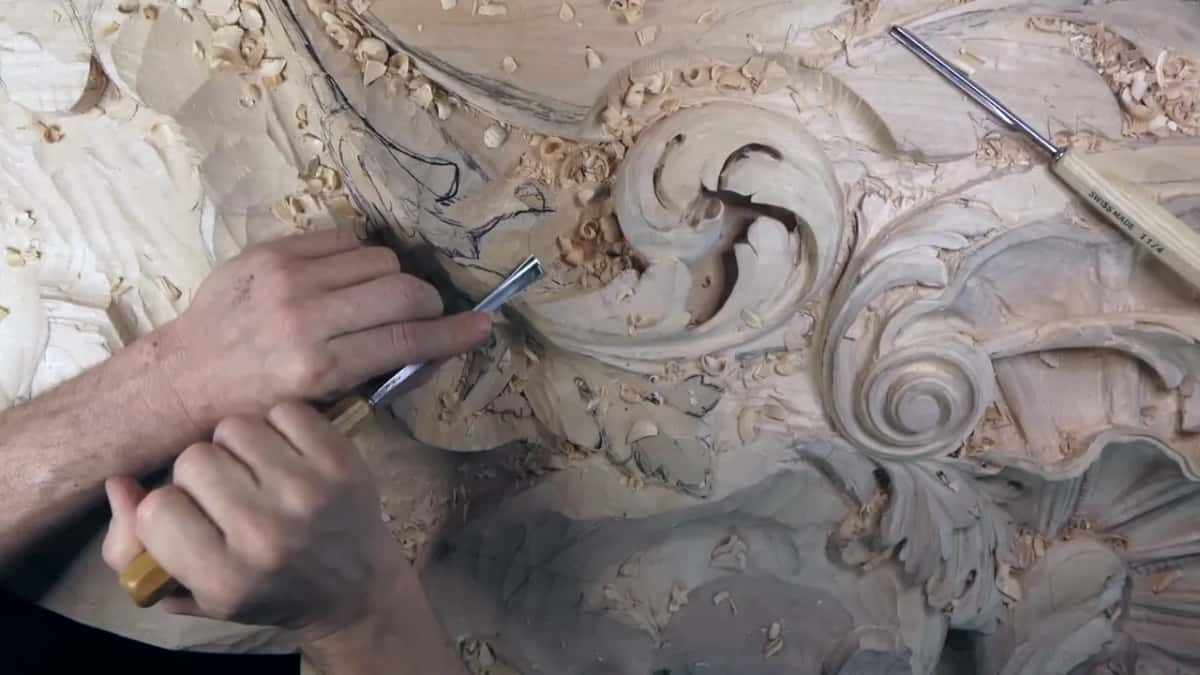
So on some of my tools I have a long bevel and on some a higher bevel, and it all depends on the job I'm doing right then. With a bevel as long as that one, I wouldn't go into a hardwood, because you can break the tool, and it's easy to break.
So I picked up a different number seven with a little smaller bevel. Much better, and it no longer stopped. Still kind of long, but not as long, and a shorter one would have been better there, I said, but it was okay.
Later in the same lesson a number seven came out that is really, really thin. It slices through the fibers really easily, but I have to be really mindful how deep I go with it.
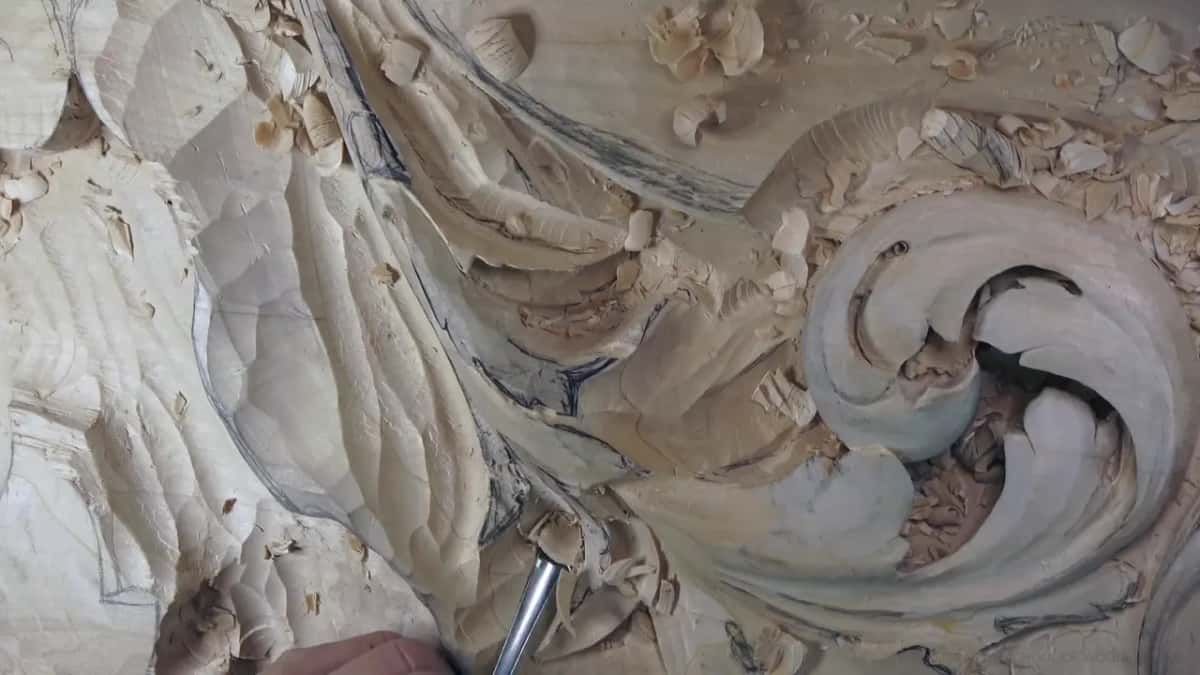
The second kind is thin walled steel. In lesson 61 I was using a Henry Taylor tool from one line of theirs that I love, because the tool is super light, the weight and the walls of the tool itself really thin. For a softer wood, lime or basswood, it is a really good tool. For harder wood, I said, thinner tools like that can break easily. That's my own experience with that one light line, and for the panel in front of me it was just awesome. Super awesome, I said, and then asked on camera if that is even a word.

Which oak wood carving tools does a hobby carver need?
Both kinds. Back in lesson 41 I said it's a really good idea to have low bevel tools and higher bevel tools in your arsenal, if you're able to afford it. Of course, that is if you're not doing it just for a hobby, I added.
But even for a hobby, if you wish to work with more species of wood than the basswood and the limewood, it is always a good idea. On the harder woods you really can't use too low a bevel. You're going to break it.
My straight gouge sharpening lesson puts a number seven by Ashley Iles next to a second gouge of the same thickness and about the same profile. I reground one low for lime and basswood, and the one I didn't touch goes to oak, because it's much stronger.
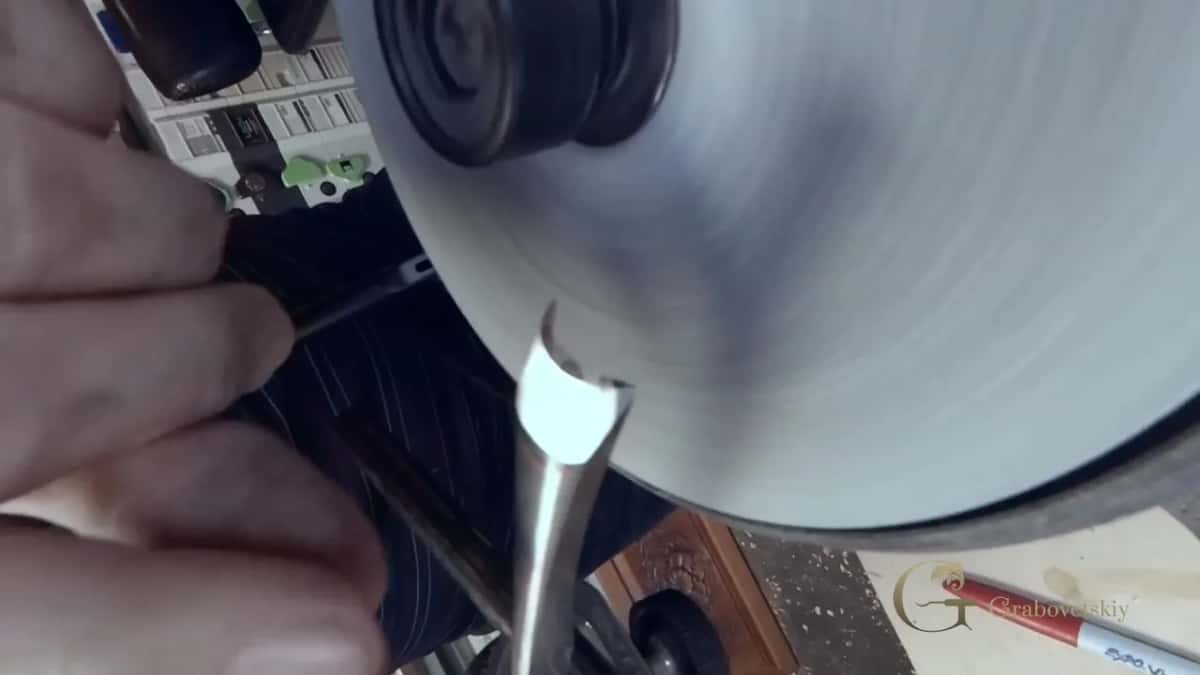
In part two of that lesson I took a gouge that had never been ground. It wasn't new. I used it for a long time on oak, with the factory angle on it, and that day I changed the angle. On my Work Sharp, a workhorse for me, it didn't take long at all, and I can change angles quickly for a different type of job.
One gouge can cross over, too: sharpening a spoon gouge I said I stay on the longer bevel even for hardwood, and sometimes use the same gouge on both.
| Gouge | On oak, in my hands | Lesson |
|---|---|---|
| Higher bevel gouge | Goes under the mallet and stays much stronger. | My Maine class and the straight gouge lesson. |
| Long low bevel | Slices by hand with a lot less resistance. | Hashemi flowers, with my line about oak too. |
| Really long bevel | It is too easy to break on hardwood. | Venice Room lesson 41, before the shorter seven. |
| Thin walled tool | Breaks easily in harder wood, great in lime. | Lesson 61, with a light Henry Taylor tool. |
Is oak hard to carve?
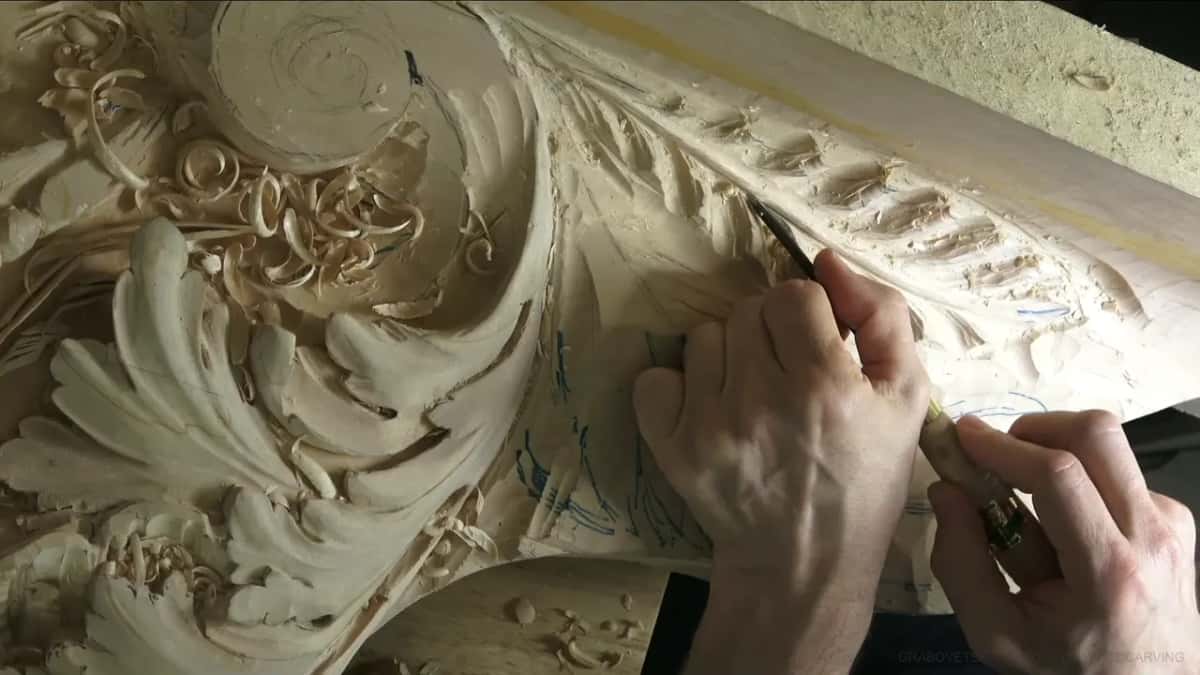
Harder, yes. On another stream a viewer wrote that he expected lime to be easier than oak because of the grain. Absolutely, I said. Oak is a lot harder wood, and lime wood, which is the best wood, is pretty much absolutely easier. Lime and basswood come from one genus of tree, with wood that is white, fairly soft and with very little grain, which is why carvers like it.
I still love carving oak, a genus of some 475 species, especially English brown oak, and walnut and cherry too. But on most of my projects, if I have a chance to carve basswood, I definitely just use basswood. Which oak you have matters too, as I told a viewer who hates carving it. White oak I don't like either. English brown oak just carves beautifully.
Old Europe sorted it differently, as I told students on my antique style rosette. Lime was considered a hardwood there, and a soft wood meant something like pine. In England the cheaper carvings were done in pine and the more expensive ones in oak at the beginning; after the 17th century it would be limewood. Grinling Gibbons brought that idea to England from old Europe, I said. He was born to English parents in Holland and moved to Deptford, England, around 1667.

On the Greek acanthus I said they call lime a soft wood, but it's not really soft, and you'd be surprised how nicely it keeps the detail. You can damage oak, walnut or cherry, and lime too. Botanists still file lime with the hardwoods, which simply means wood from flowering trees, and some hardwoods, balsa for one, are softer than most softwoods. The Janka hardness test puts a number on it, the force needed to press a steel ball 11.28 mm (about 7/16 in) across halfway into the wood.
Poplar sits below oak for me. On acanthus over moldings I suggested not to use poplar, since it is okay but a little harder to carve and does not feel good, and I said cherry is much better, or even oak. And one oak job you can watch is a white oak dining table apron, carved little by little, again and again, especially with oak, so nothing would snap.
Every lesson named here, the Venice Room panel and the white oak apron among them, opens with Access to the school. Then go and look at the bevels on your own gouges.
How it's done
- Check the bevel with your knuckle. Hold the gouge from underneath and set its edge on the wood. Your knuckle should almost touch the surface as the edge starts to grab the material.
- Decide how you will hit. On oak a mallet will probably do the hitting. Allow for the thickness of its head, so the bevel on those gouges comes out slightly higher.
- Keep low bevels for pushing by hand. When the work is mostly hand pushing, the lower bevel wins, on oak as well as on basswood.
- Add the small inside bevel. Set the main bevel first. Then add a small secondary bevel on the inside, so a long, low point stays strong enough for hardwood.
- Keep both kinds within reach. Own both kinds if you can afford them, and leave the longest bevels and the thinnest steel for the soft woods.
Frequently asked questions
Is oak difficult to carve?
Lime is far easier, and when a viewer told me he expected exactly that because of the grain, I agreed, absolutely. A mallet will most likely come into the work on oak. And I still love carving it, especially the English brown kind.
Can gouges sharpened for basswood go into oak?
Most of mine can, with care. Give a higher bevel to any gouge you hit with a mallet, since the mallet head needs room above the wood. By hand a lower bevel still wins, and I keep long bevels on oak too. Really long ones stay out.
Why would a carving gouge break in oak?
Too little steel at the point. An extreme bevel leaves almost no metal at the end, so forcing it into hardwood can break it, and the thin walled tools I love for lime break easily there too. A small second bevel inside makes a long point really strong again.
What to carve next